

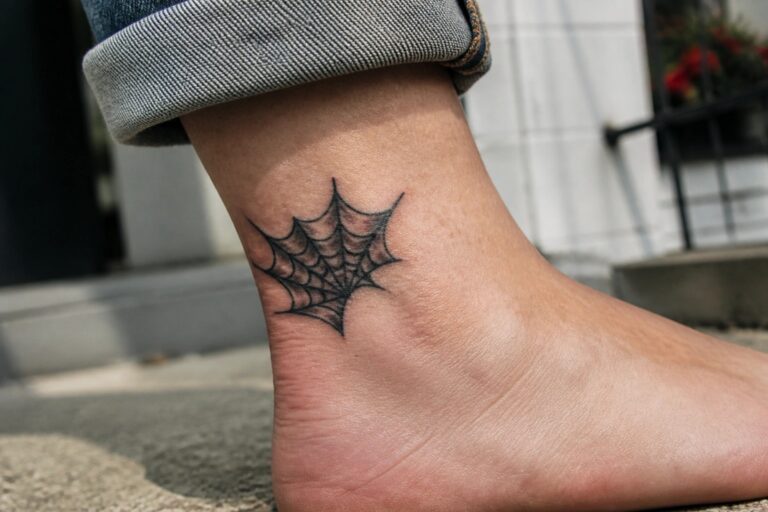
I have always loved how traditional spider web tattoos bring that old school charm with their bold lines and shading. My own collection has a few similar pieces and they still feel fresh every time I look at them. These designs hold up so well over the years which makes them a smart pick if you want something lasting. I rounded up 18 of my top ideas to show just how versatile they can be.
Spider web tattoo on the ankle
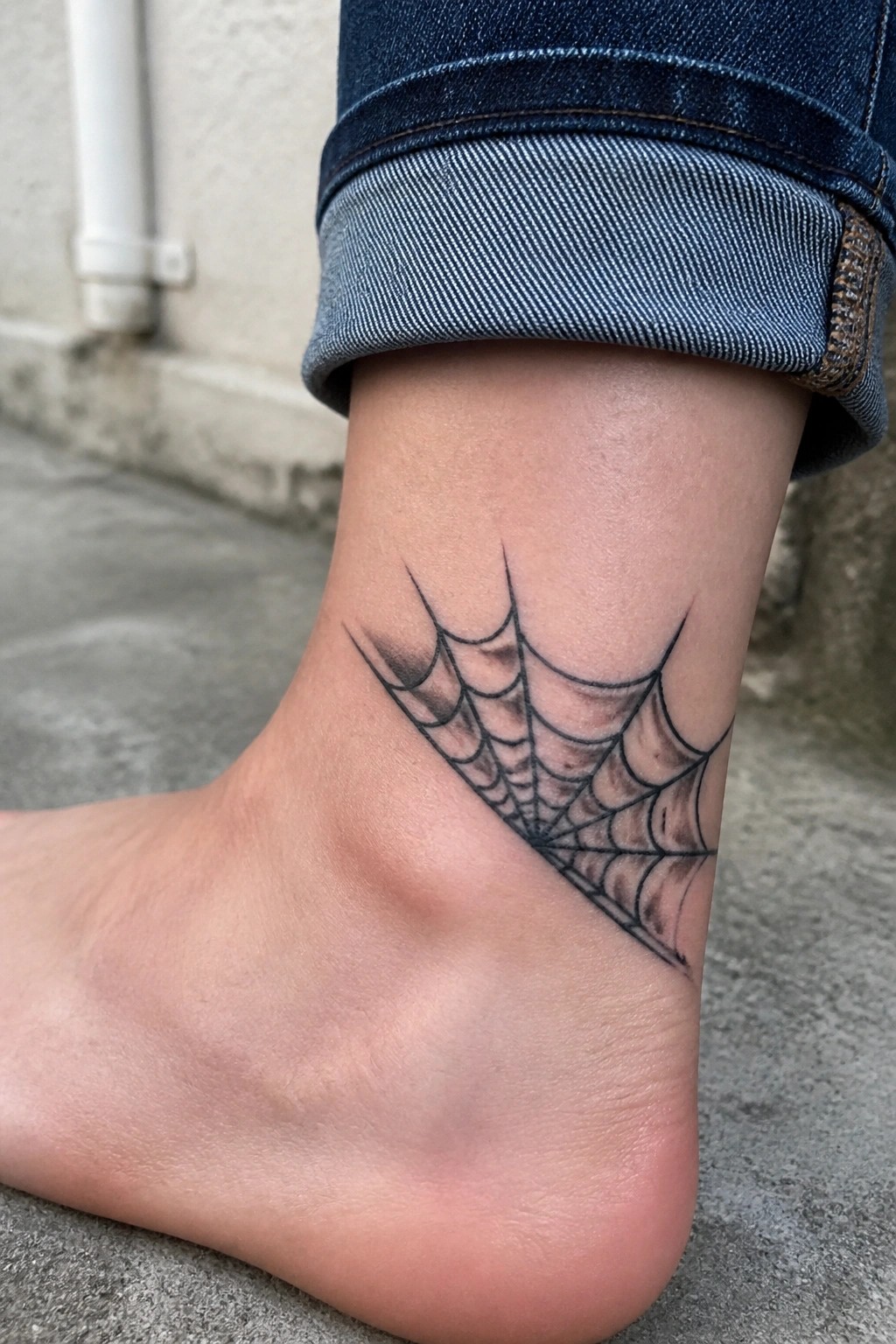
An ankle placement lets the web spread across the side of the foot without taking up too much room. The bold lines keep the shape clear even on a smaller area. Classic shading adds depth to the strands while staying true to traditional style.
I think the shading here stays controlled so the tattoo does not feel heavy. It reads as a straightforward traditional piece that should hold up well.
Spider web tattoo on the inner forearm
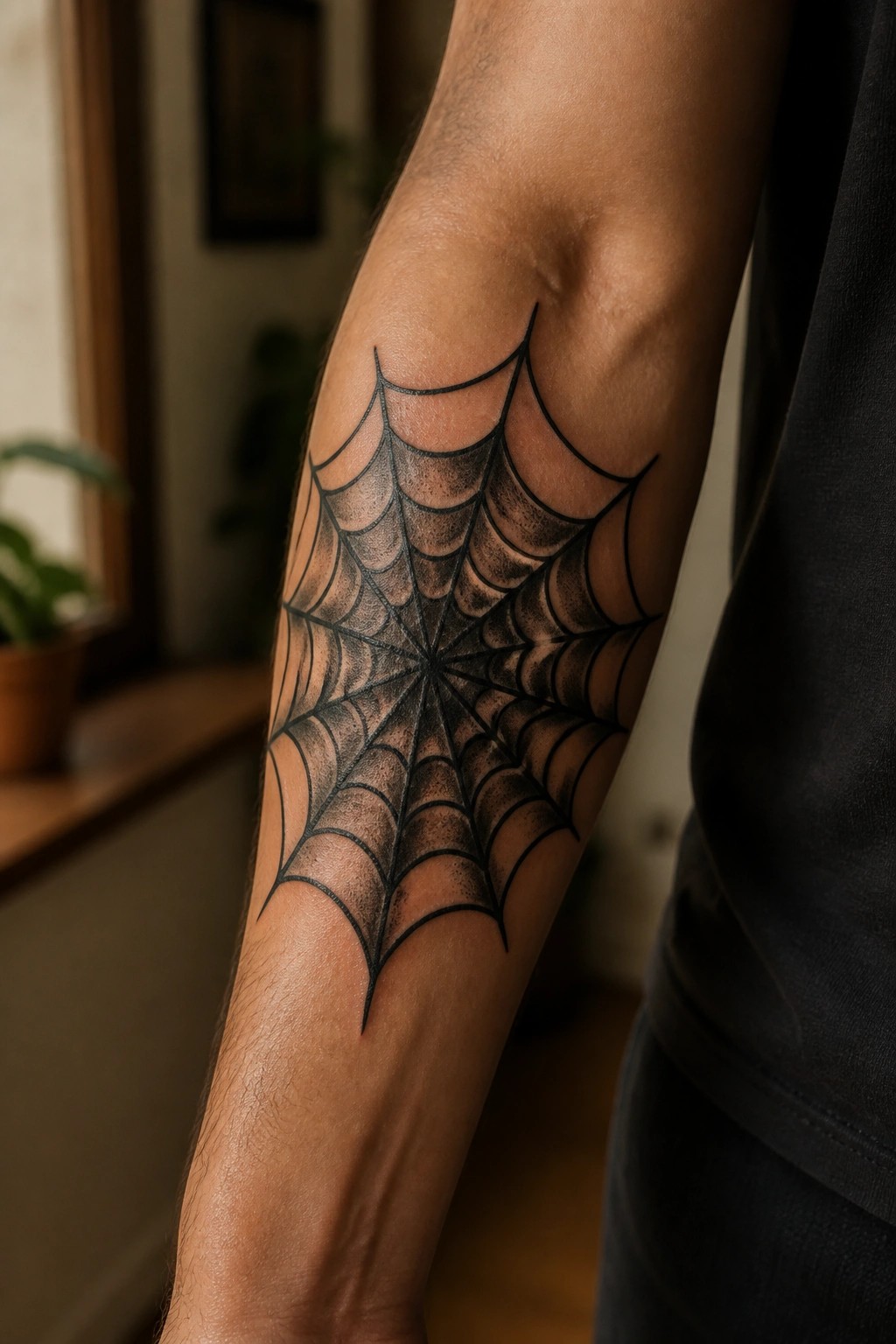
The inner forearm gives this web enough space to spread evenly from the elbow down. The center sits just below the joint so the lines stay straight when the arm bends. Bold outlines hold the shape even on moving skin.
I like how the shading stays simple but still gives the web some weight. It works as a clean traditional piece without extra details getting in the way.
Spider web tattoo on the shoulder
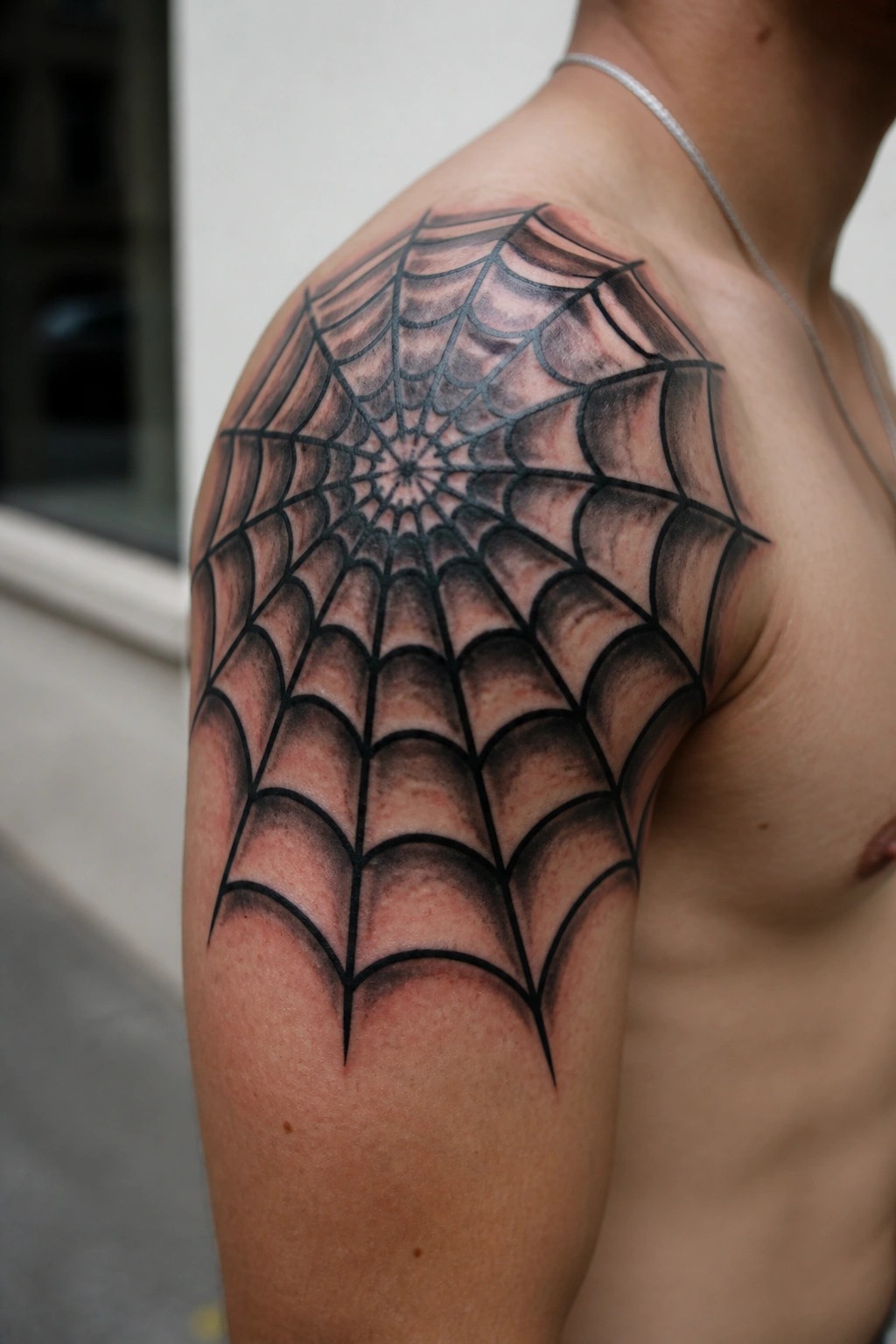
The shoulder gives the web room to spread out from a single center point. The curved surface helps the lines follow natural body contours without forcing the pattern into a flat shape. Bold outlines keep the strands clear while shading fills in the gaps between them.
I think this placement lets the design feel balanced instead of stretched or cut off. The scale also matches the area so the web reads as one complete piece rather than a small patch.
Spider web on the shoulder
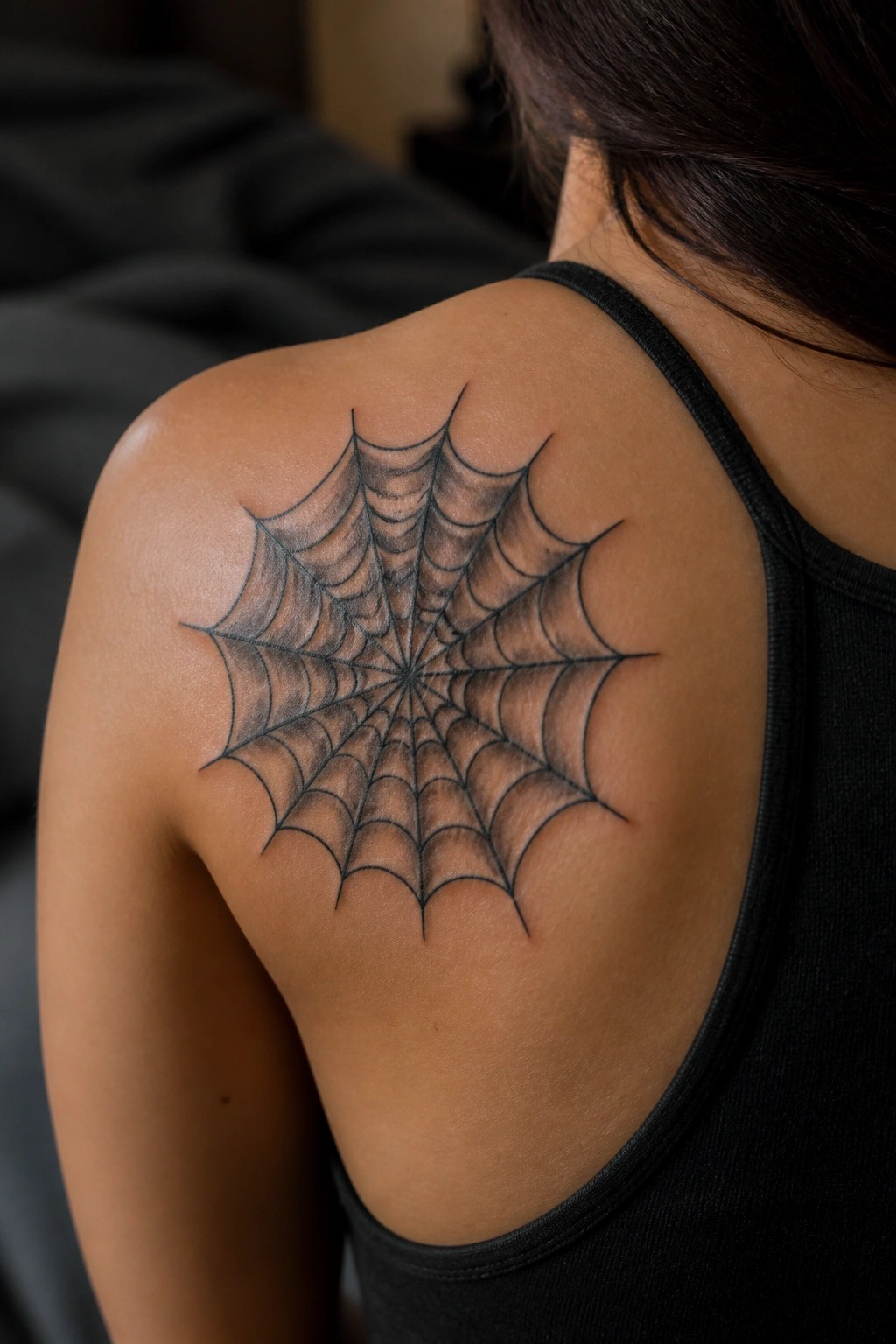
The shoulder gives the web room to spread in a full circle. Lines stay even as they move out from the center and the shading adds depth without crowding the skin.
I think this placement keeps the design balanced because the curve of the shoulder supports the round shape. The result feels straightforward and easy to read from a distance.
spider web tattoo on the hand
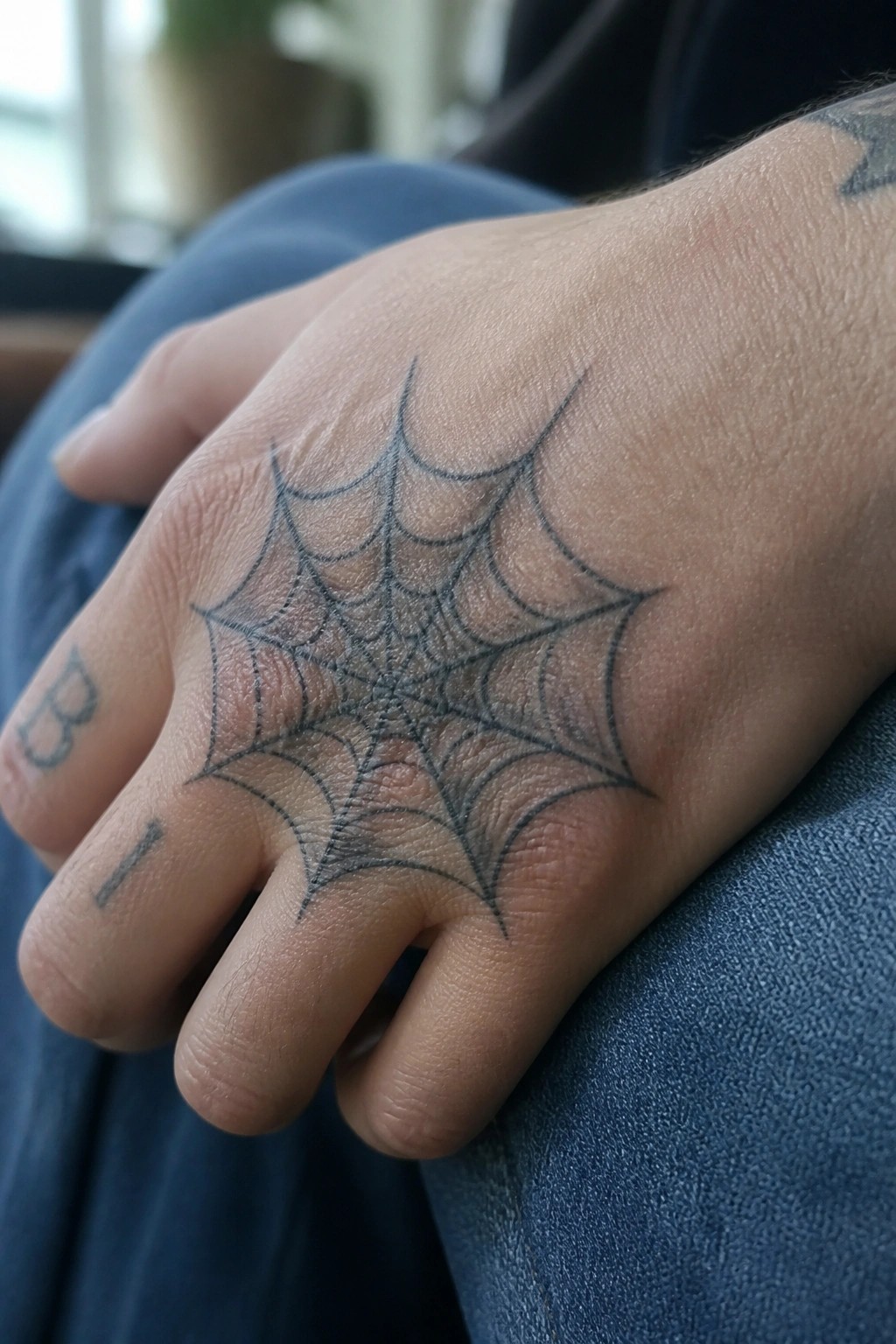
The back of the hand works well for a spider web because the area is flat enough for the pattern to expand evenly. Bold lines keep the web readable even as the hand flexes or rests.
This size fills the space without reaching the fingers too much. I think the traditional approach makes the whole thing feel sturdy rather than delicate.
Spider web tattoo on the forearm
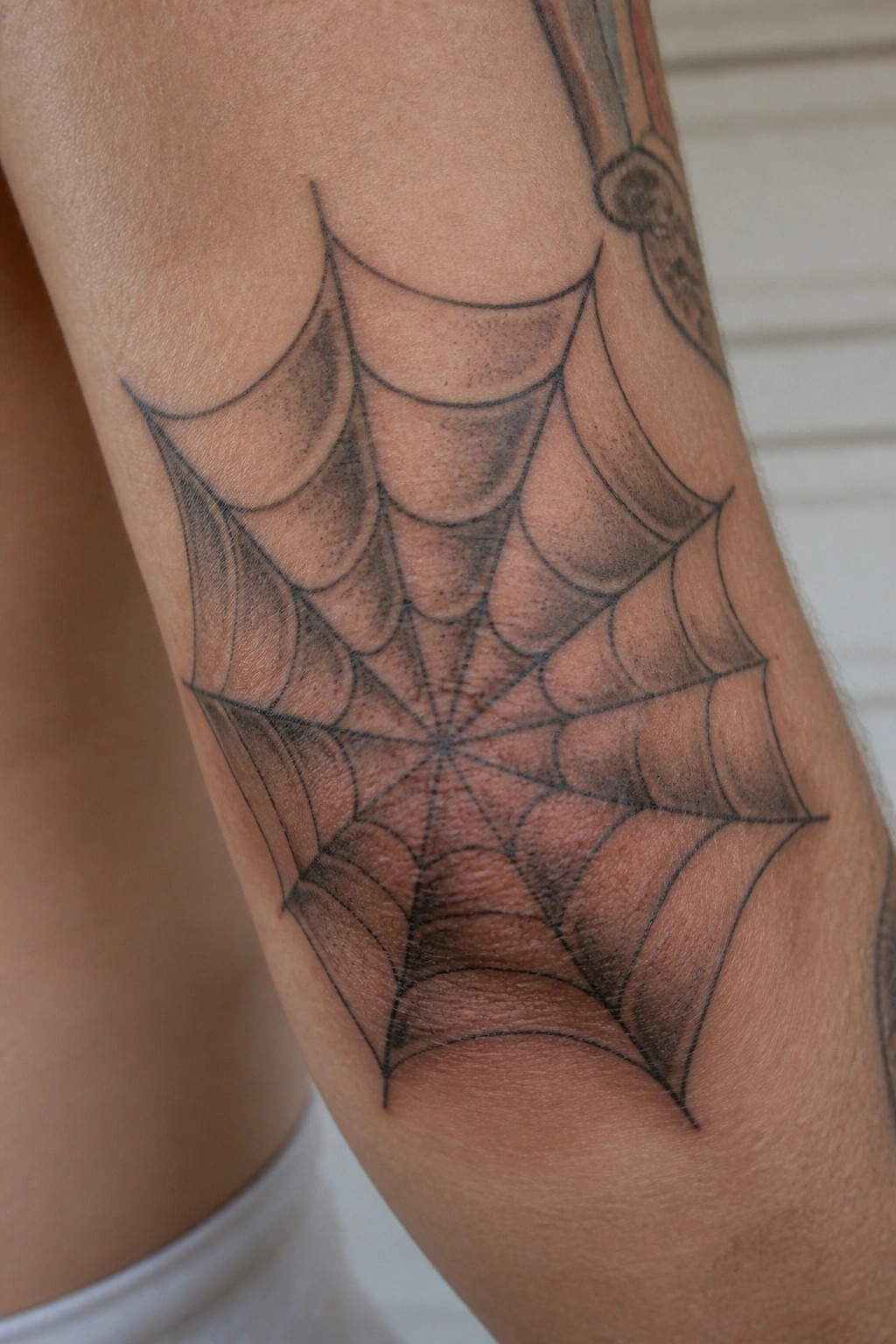
The spider web sits on the forearm and follows the curve of the arm. Bold lines form the main structure while shading fills in sections for added depth. The size stays moderate so the design fits the space without stretching too far.
This placement keeps the web readable when the arm bends or turns. It also lets the lines stay steady instead of bunching up in one spot.
Spider web tattoo behind the ear
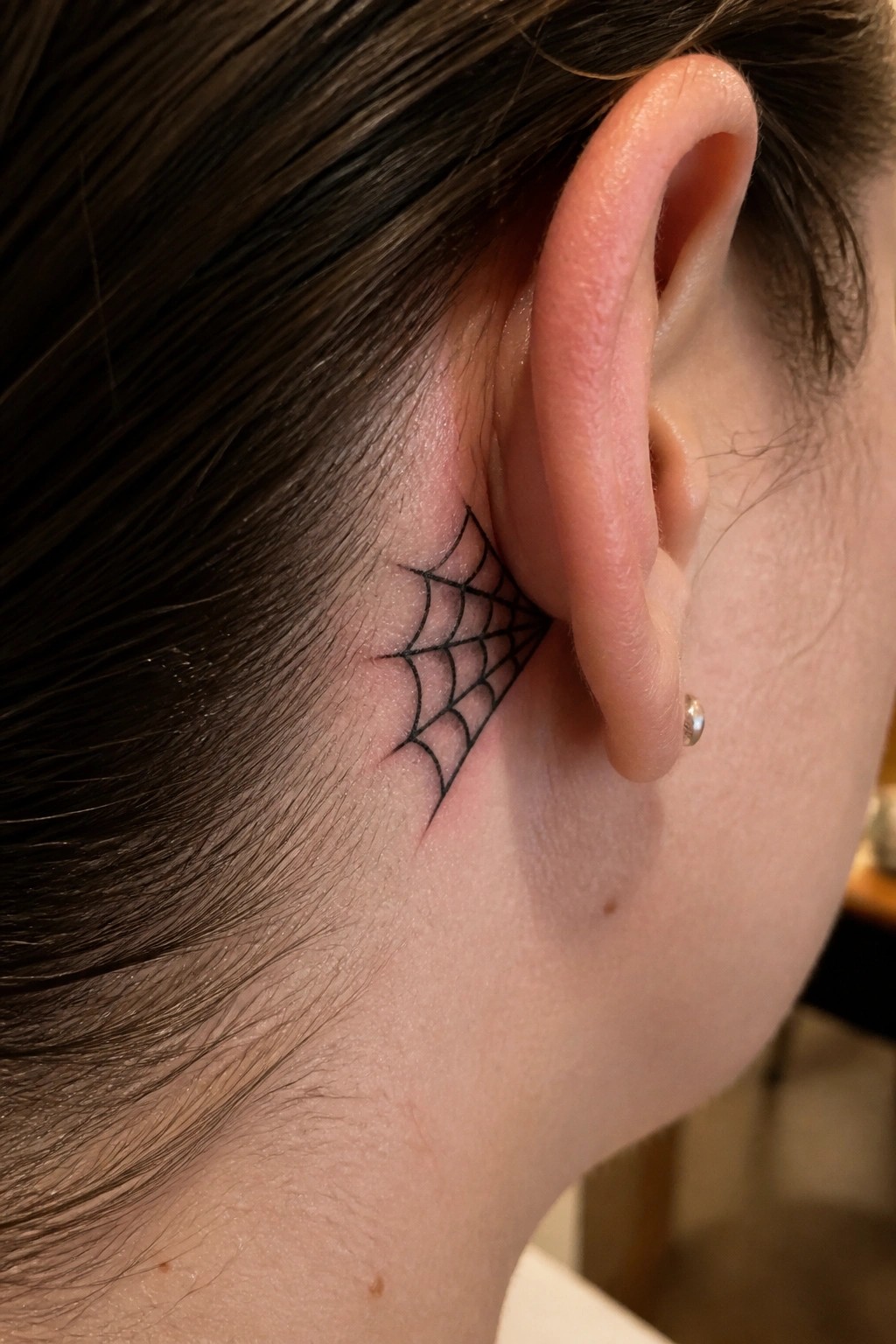
The design sits tucked behind the ear along the hairline. Bold black lines form a compact web that fits the curve of the skin without stretching too far. The small scale keeps the pattern clear even in a narrow space.
I think the placement works because it stays subtle most of the time yet stays easy to see when the hair is pulled back. The traditional lines also hold up well in an area that sees little sun.
A spider web tattoo centered on the upper back
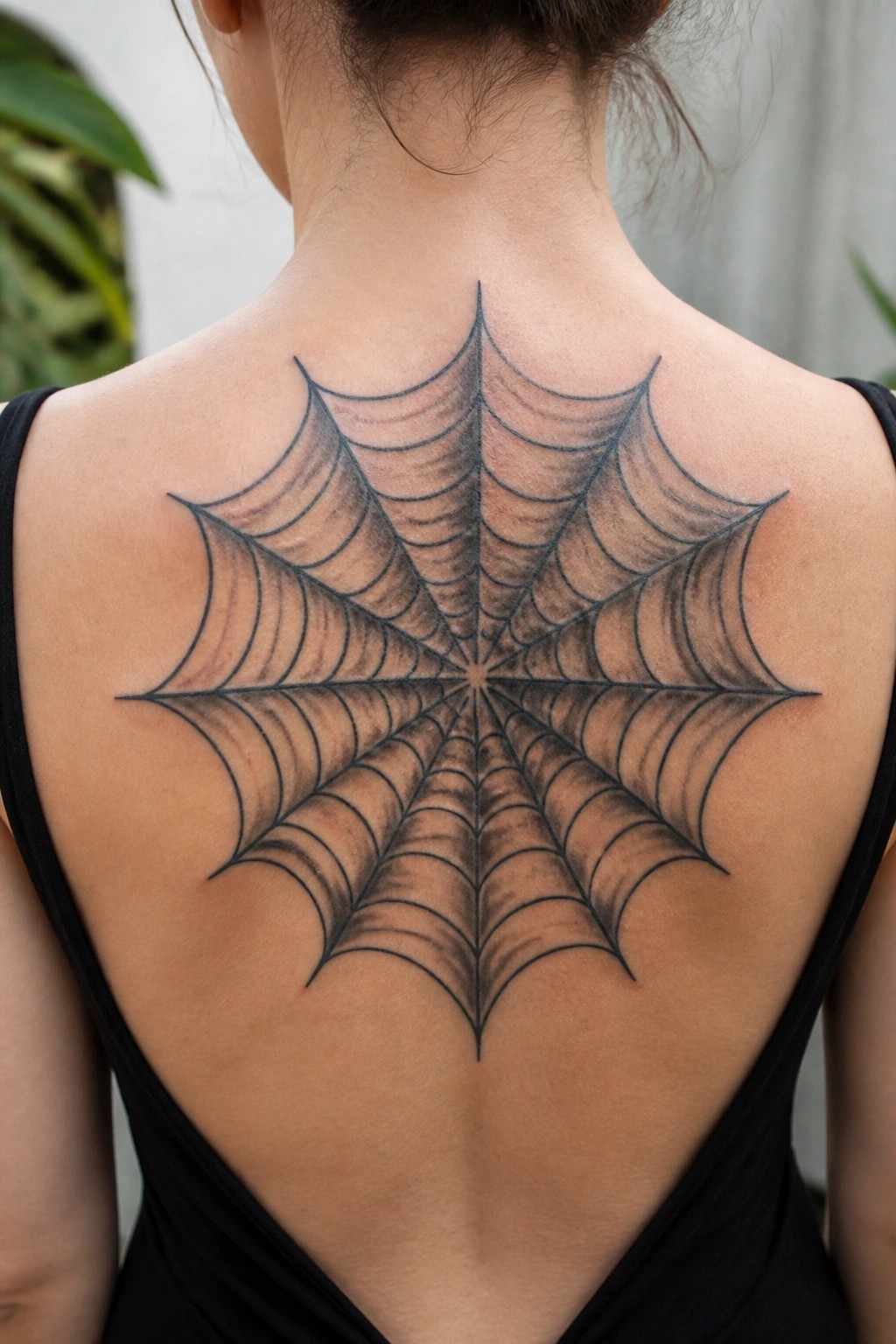
The design sits right in the middle of the upper back. It spreads out evenly with straight lines that reach across the shoulder blades. Bold outlines and simple shading keep the whole thing clear even at this size.
This spot works because the flat surface lets the web stay symmetrical without any distortion. I think the scale feels right since it fills the area but leaves room around the edges.
Spider web on the side torso
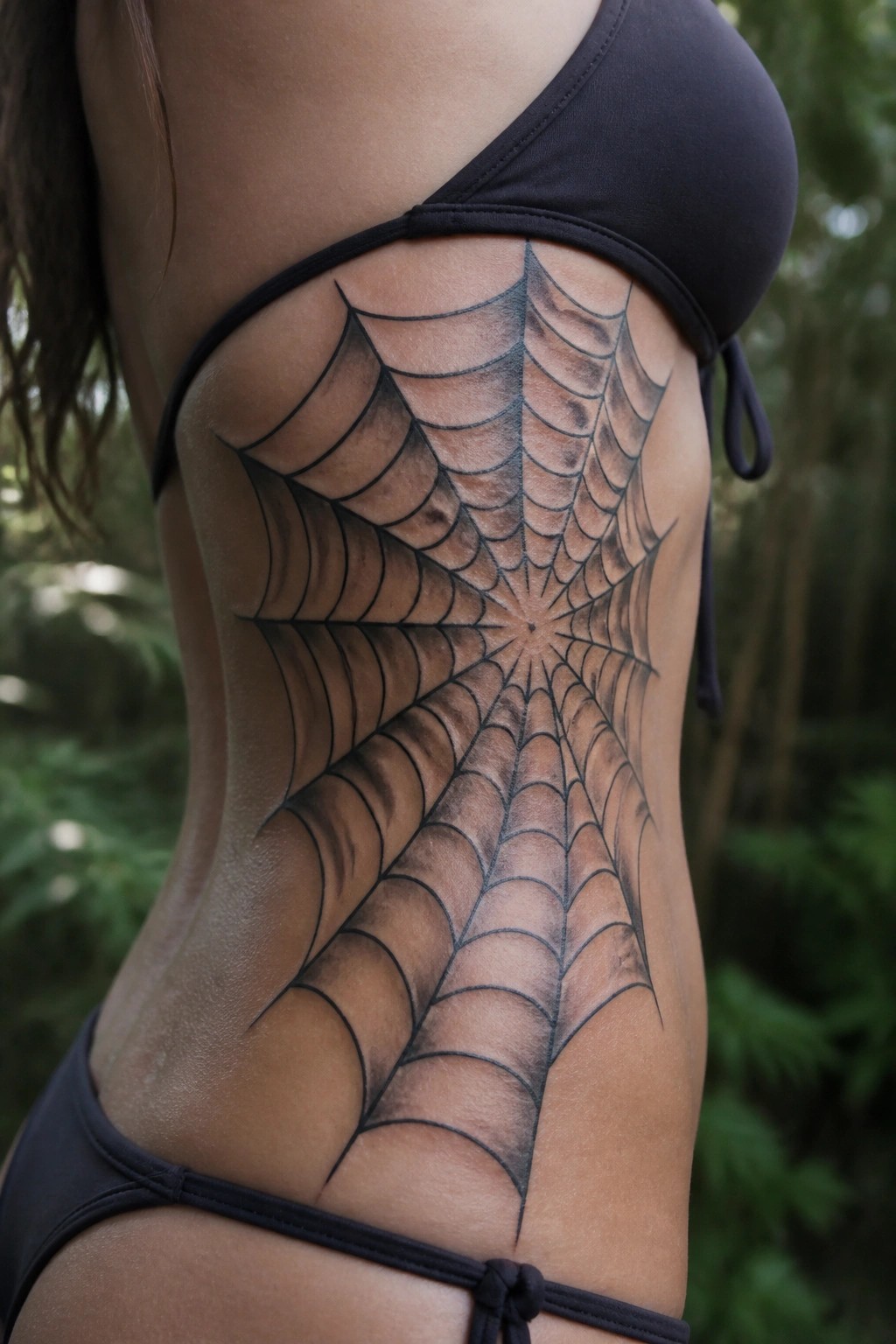
The side torso gives a long vertical space that fits a full spider web without crowding the lines. The center sits near the middle of the ribs so the web can expand outward in all directions. Bold outlines keep the shape clear while the shading adds some depth to the sections.
I like how the placement lets the design follow the body’s natural width instead of fighting it. This makes the tattoo feel balanced even when the person moves.
Spider web tattoo on the ankle
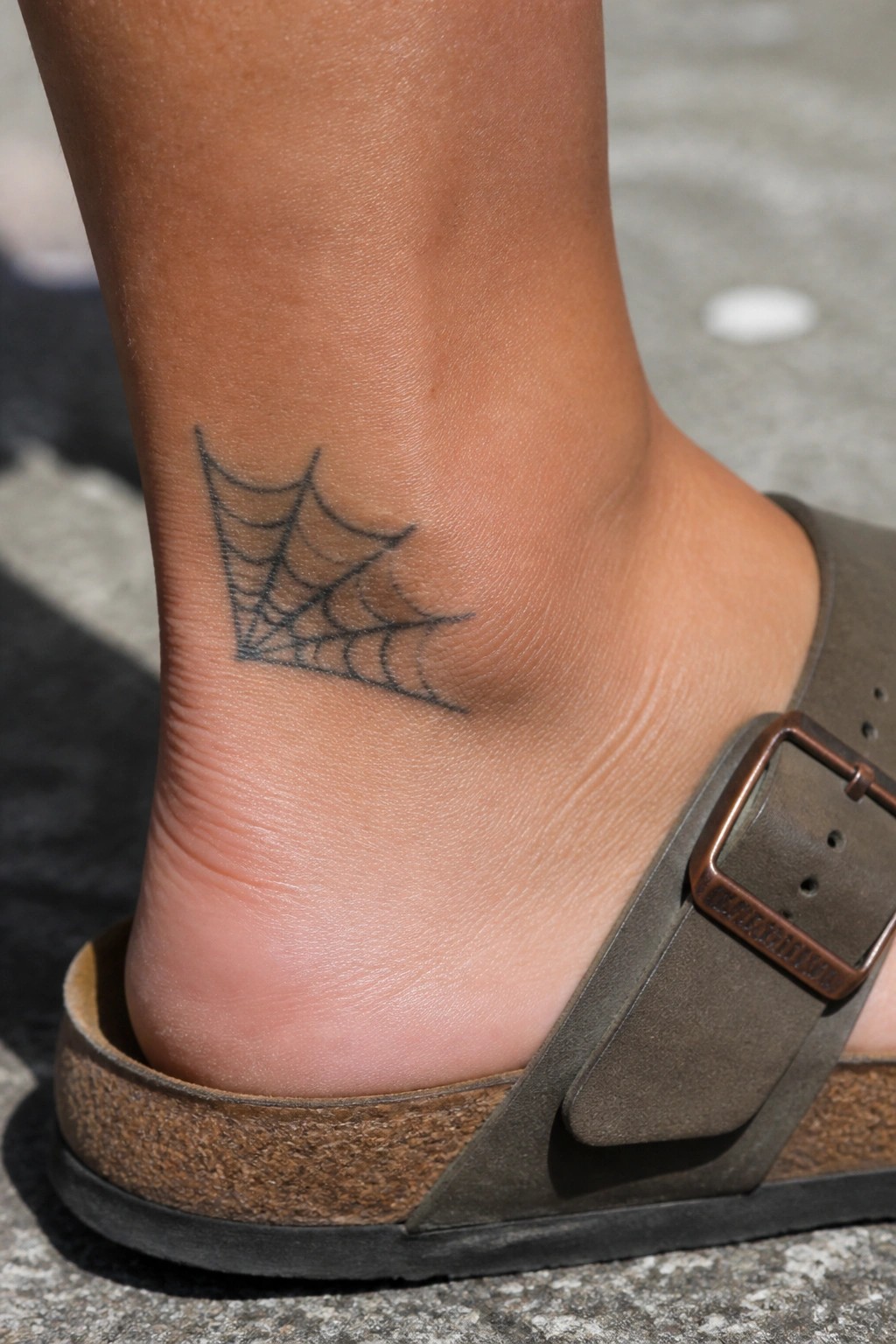
The ankle works as a natural spot for this kind of web design. The triangular shape sits neatly against the bone without spreading too far. Bold lines keep the pattern clear even in a compact size.
I think the traditional style fits because it stays simple and readable at this scale. The placement also lets the tattoo stay visible with low shoes while staying easy to cover when needed.
Spider web tattoo on the lower back
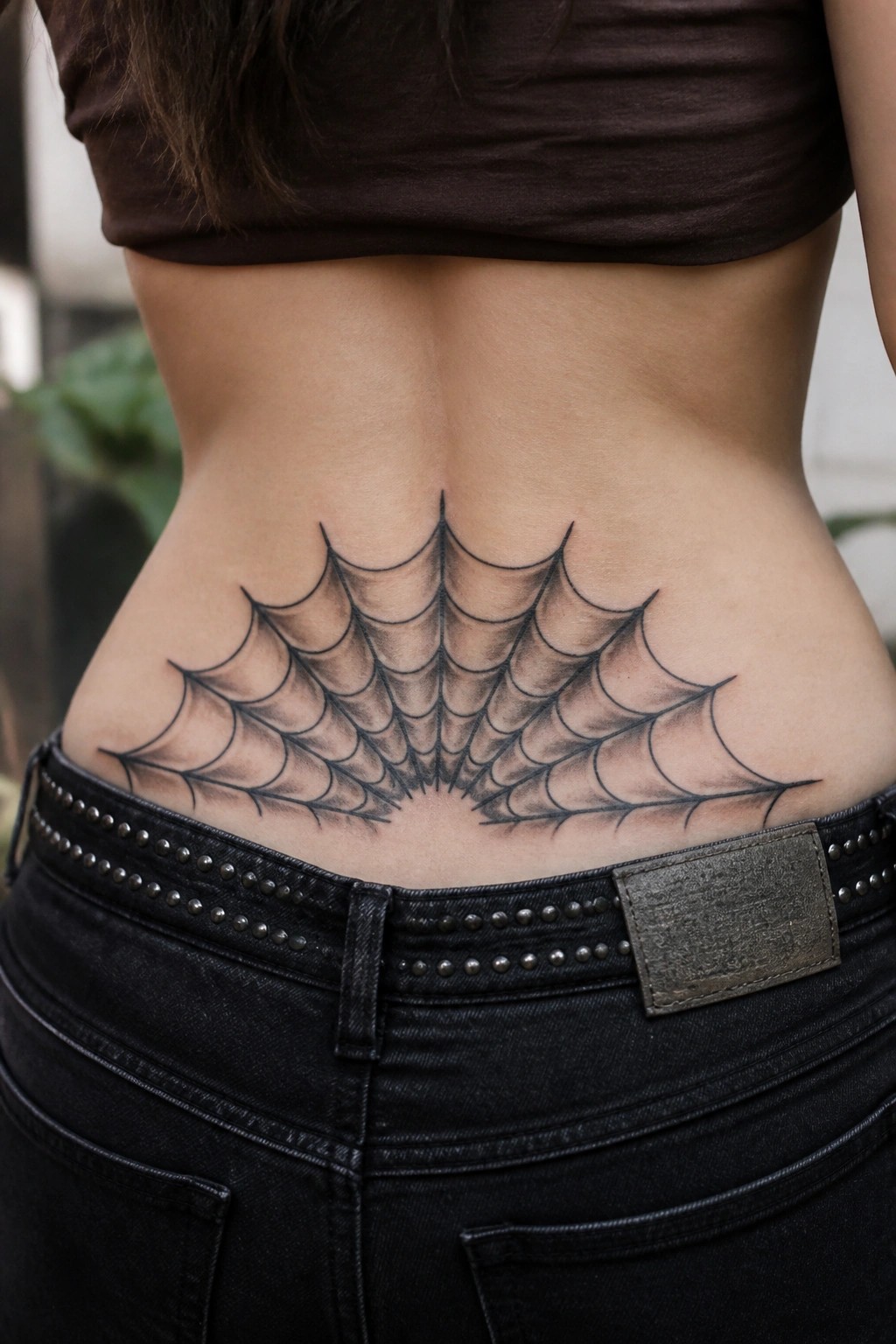
The lower back gives this spider web enough width to spread out evenly from the center. The design stays contained above the waistband while the lines reach toward each side. Bold outlines keep the shape clear against the skin.
This spot works because it offers a flat surface that holds the web’s symmetry without distortion. I think the medium scale prevents the shading from getting lost while still leaving room around the edges.
Spider web on the thigh
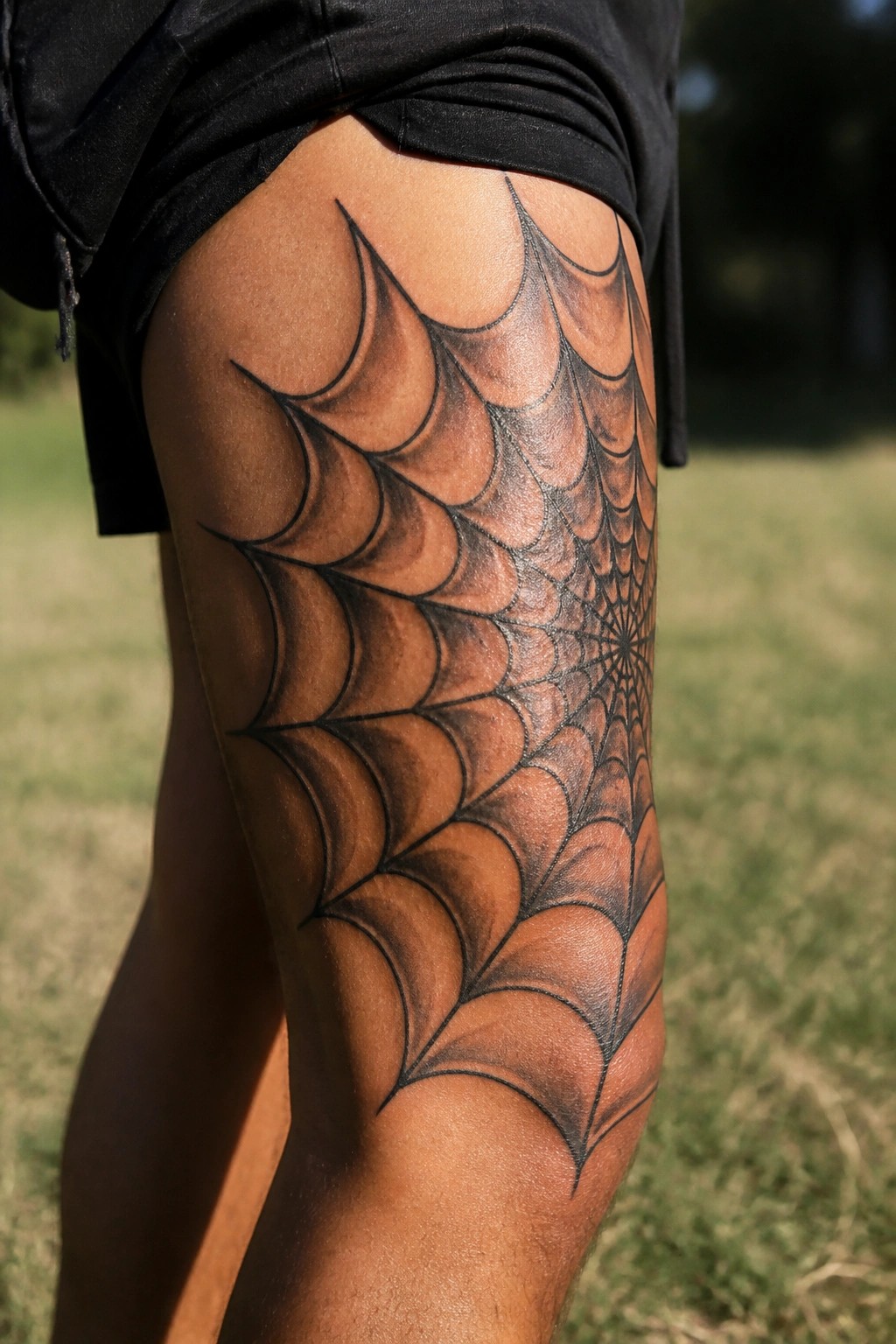
The thigh offers enough room for a full spider web to spread out without feeling cramped. Bold lines create the main structure while shading fills in the curves to match the leg’s shape. This placement keeps the design visible even when the person is moving or sitting.
I think the scale works well here because it lets the center stay sharp instead of getting lost in smaller areas. The web looks balanced across the muscle without needing extra elements to fill space.
Spider web across the chest
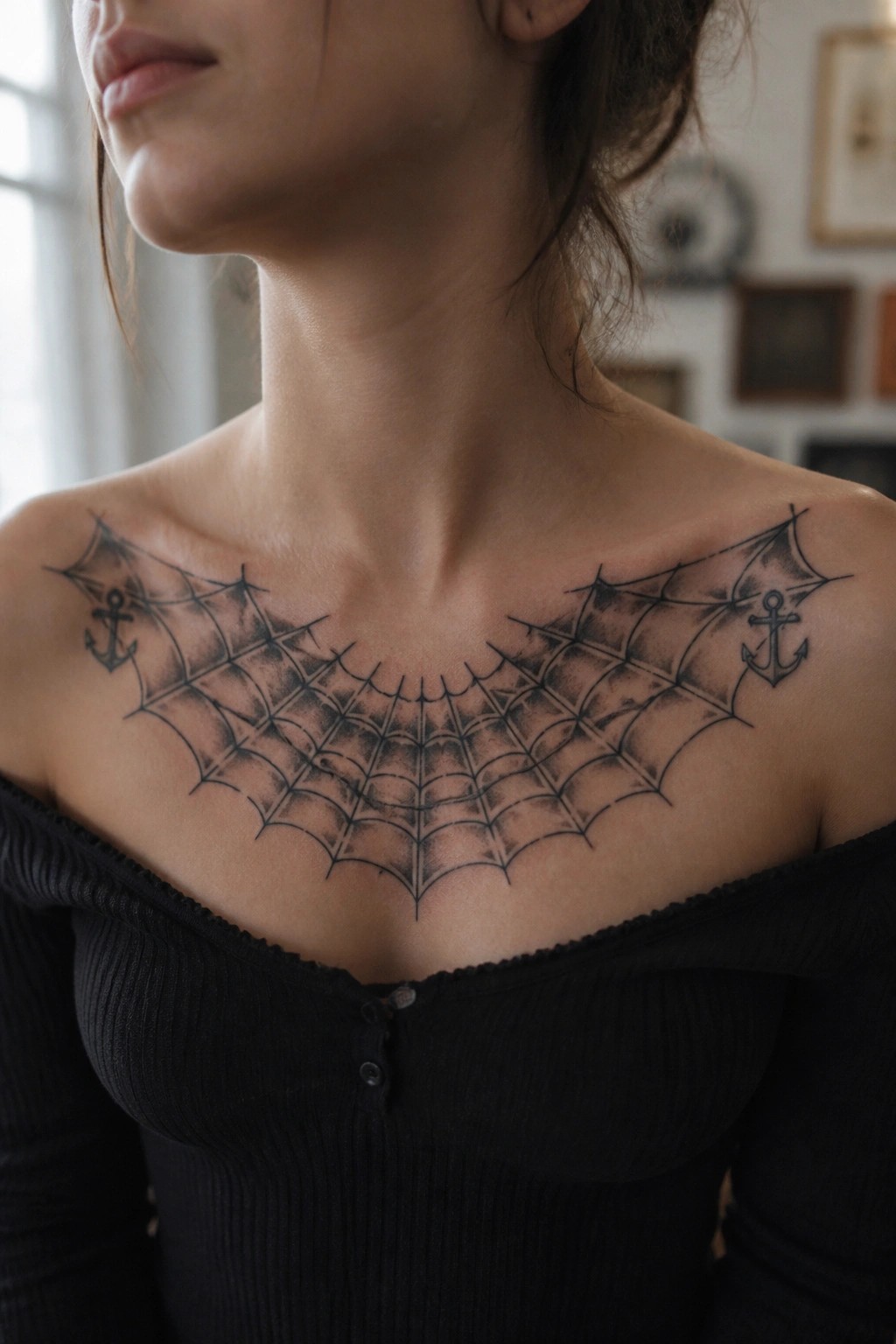
The spider web covers the upper chest from shoulder to shoulder. Anchors sit at each outer edge. Bold lines and simple shading keep the whole piece readable even at this scale.
I think the chest placement works because it gives the web room to spread without crowding. The anchors add a steady frame that stops the design from feeling too open.
Spider web tattoo on the wrist
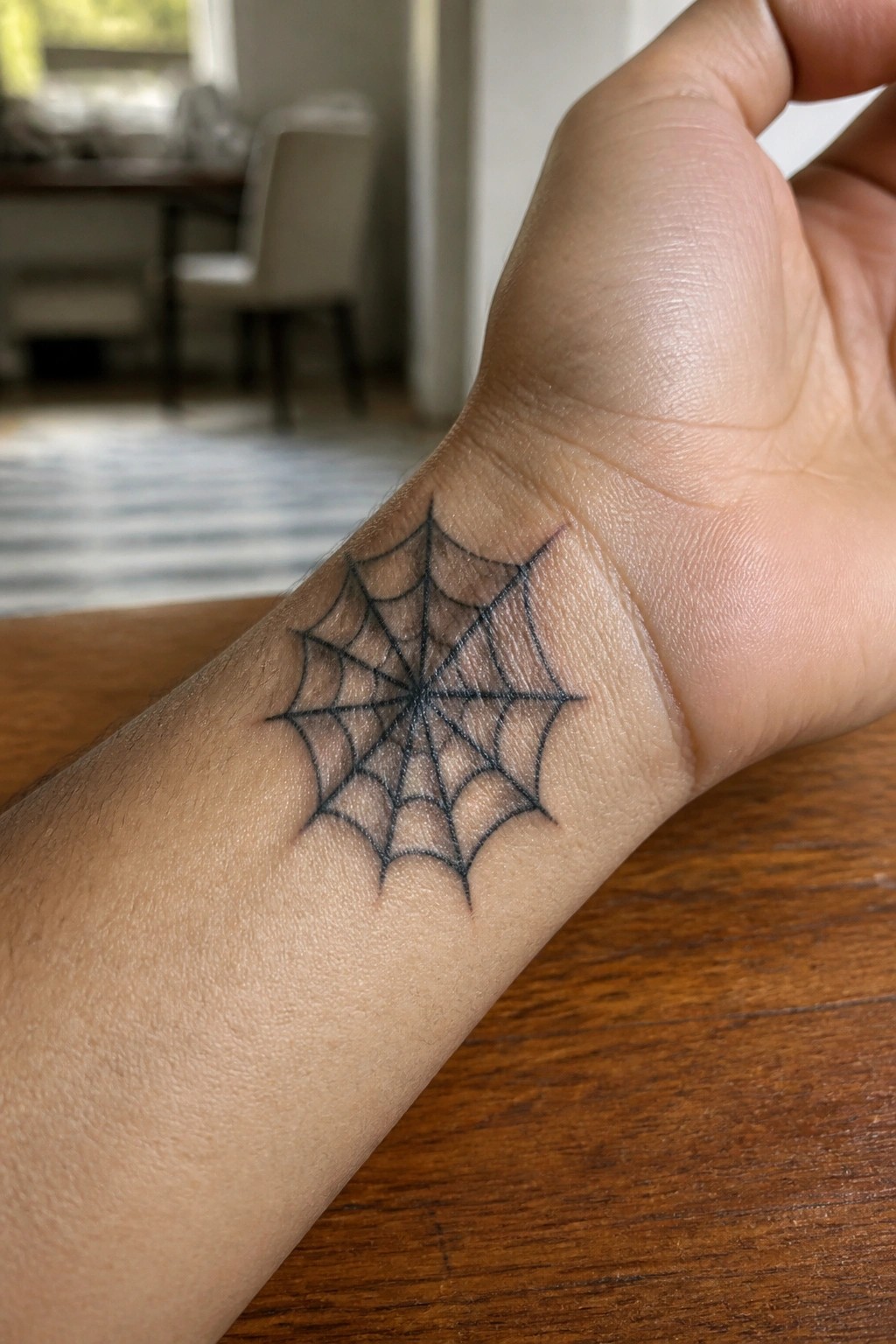
The wrist gives a spider web tattoo room to sit without taking over the whole arm. This spot keeps the design visible during daily movement yet easy to cover with a sleeve or watch. Bold lines help the web hold its shape on the flatter surface of the skin.
I think the small size stops the pattern from feeling crowded. The simple radial layout stays readable even when the wrist bends.
A spider web tattoo on the upper back
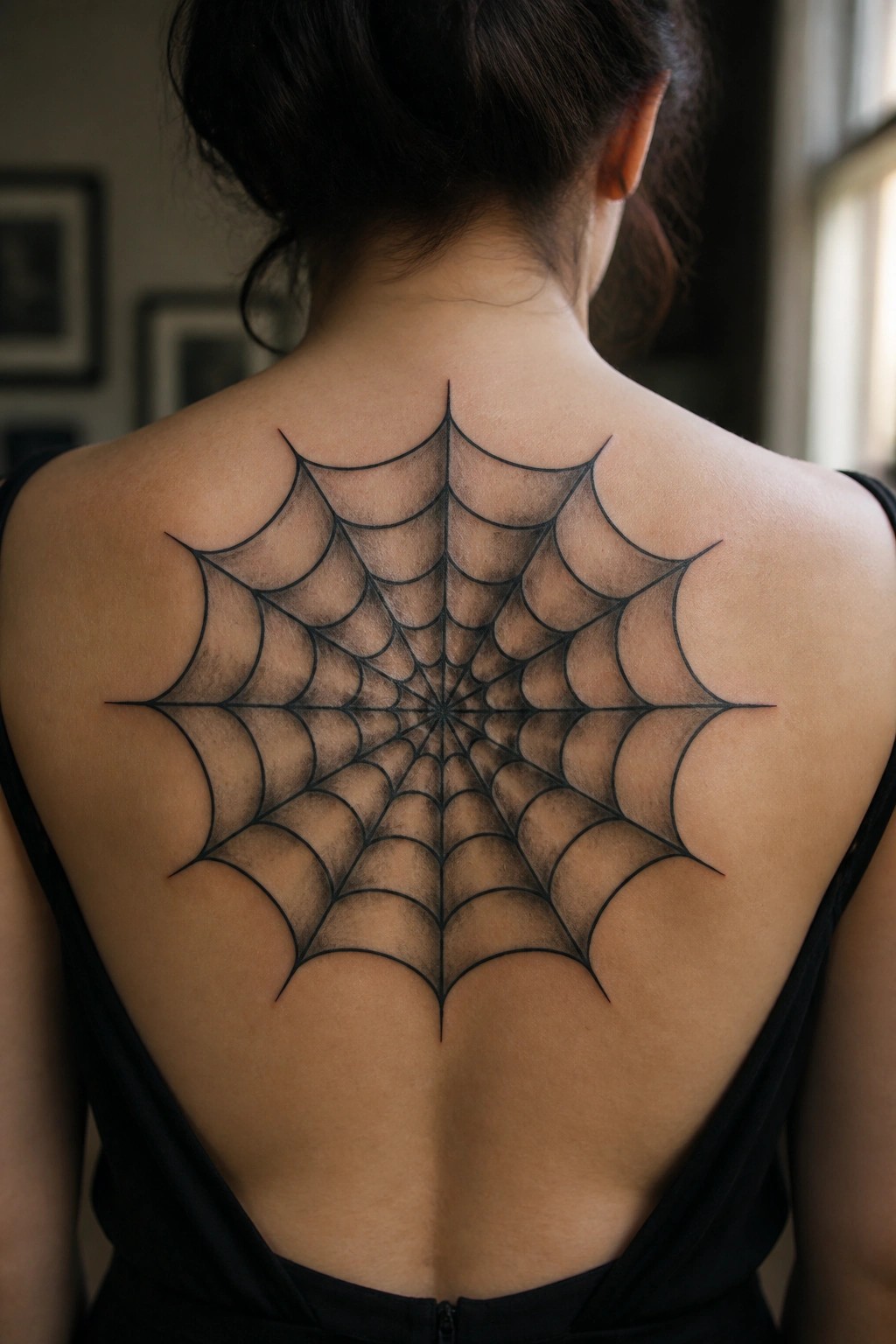
The tattoo sits centered between the shoulder blades. Bold lines form a full web that spreads outward from the middle of the upper back. This spot gives the design space to stay symmetrical.
I think the scale works because the web stays readable without needing extra detail to fill the area. The placement also keeps the focus on the lines rather than forcing the shape to follow curves.
Spider web tattoo on the hip
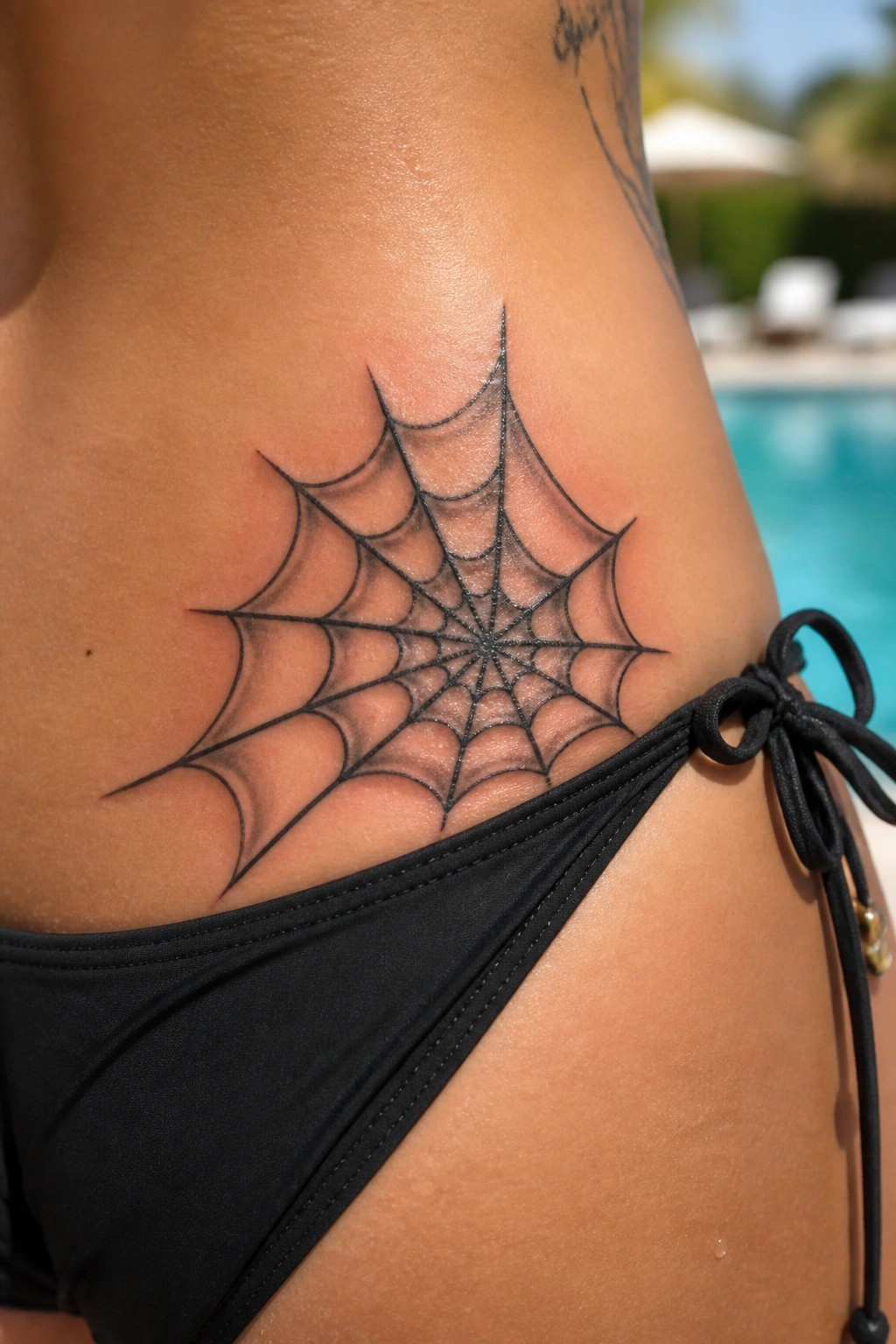
The tattoo sits on the side of the hip just above the waistband. Bold lines form the web and spread outward with some curves to follow the natural shape of the area. Classic shading gives the design a bit of depth while keeping the focus on the structure.
I think this placement lets the web stay readable without needing extra detail. The size feels balanced for the spot since it covers enough skin to show the full pattern but leaves room around the edges.
Spider web tattoo along the spine
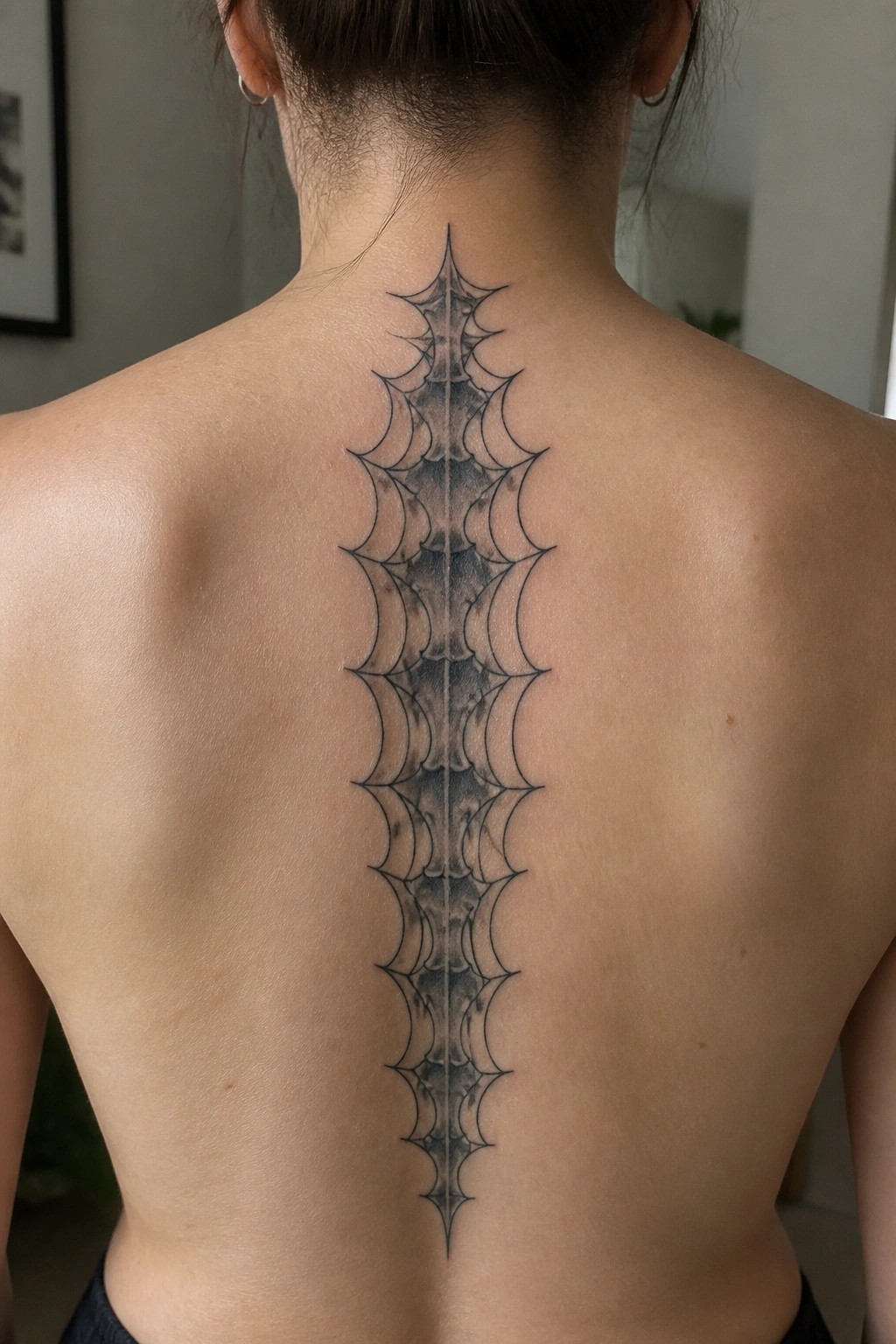
The spine works well for this kind of spider web because the design can run straight down the center without needing extra adjustments. Bold lines form a series of connected sections that stay balanced on both sides. The length covers a good portion of the back while keeping the focus narrow.
I picked this placement because it lets the web stretch out naturally and stay readable at full size. The shading stays light so the lines do most of the work.
Spider web tattoo on the back of the neck
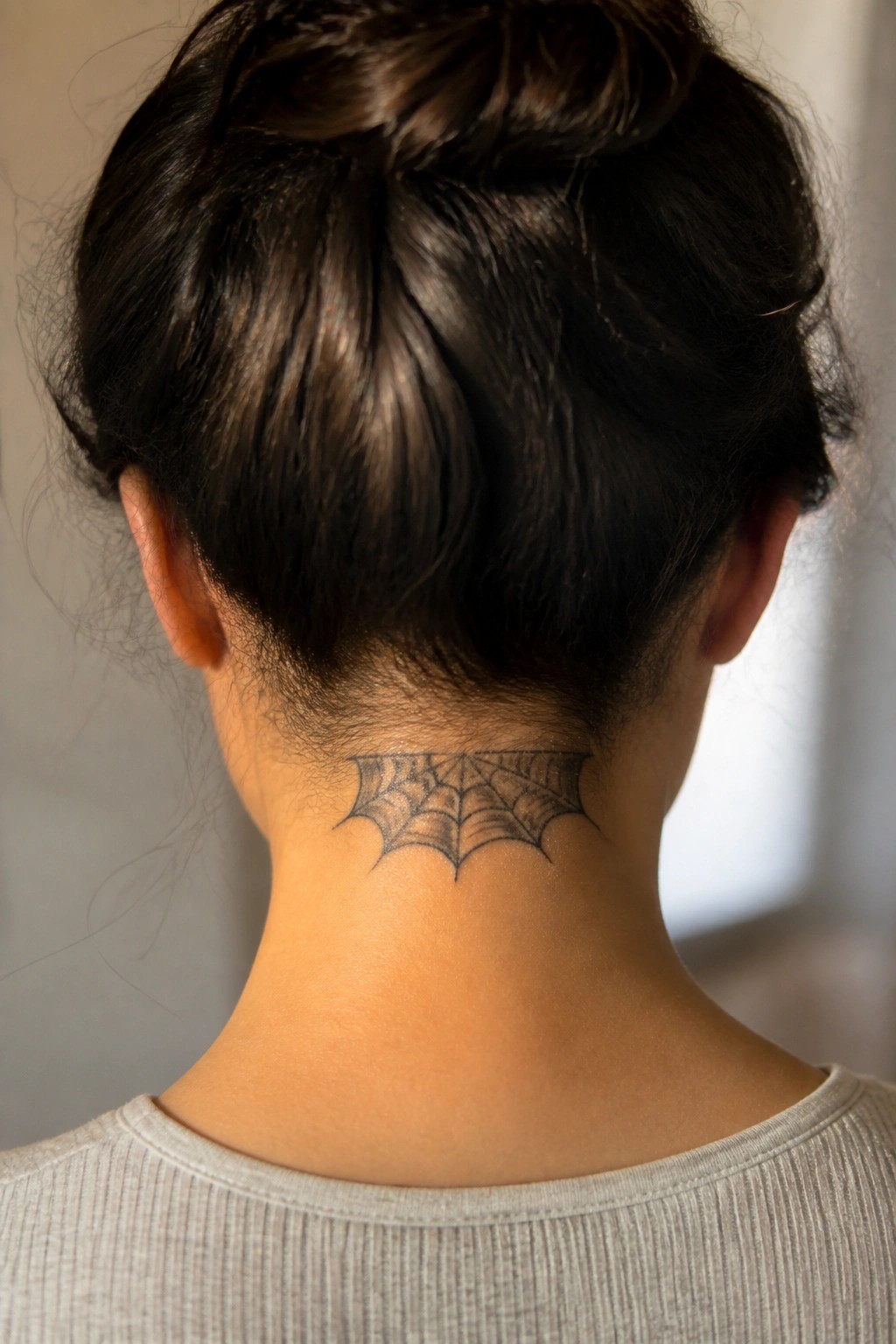
The back of the neck gives this spider web a natural spot to sit without competing with other details. Hair can cover it most days but the design shows clearly when pulled up. Traditional bold lines keep the shape readable even at this small scale.
I think the placement makes sense because the flat surface lets the shading sit evenly. It avoids the distortion that can happen on more curved areas like the shoulder.
Frequently Asked Questions
What does a traditional spider web tattoo typically symbolize? Traditional spider web tattoos often represent patience, creativity, and the interconnected nature of life. The bold lines emphasize strength and structure while the classic shading adds depth that highlights personal growth or overcoming challenges. Many people choose this design to mark a significant life phase or as a reminder of resilience.
Where are the best placements for spider web tattoos featuring bold lines and classic shading? Popular spots include the elbow, shoulder, or back of the hand because these areas allow the bold lines to stand out clearly against the skin. The classic shading technique works especially well on larger surfaces like the forearm or chest where the artist can create smooth gradients without distortion from body movement.
How do I decide which of the 18 ideas suits my style best? Start by considering your pain tolerance and lifestyle since areas with bolder line work require more sessions for crisp results. Review the shading details in each idea and match them to your skin tone and daily activities. Consulting with a tattoo artist experienced in traditional styles helps refine the choice to ensure the design ages well over time.
What aftercare steps are most important for maintaining bold lines and classic shading? Keep the tattoo clean with gentle soap and apply a fragrance free moisturizer several times a day. Avoid sun exposure and tight clothing that could rub against the fresh ink. Follow your artist’s specific instructions for the first few weeks to preserve the sharpness of the lines and the smoothness of the shading.
How painful is it to get a spider web tattoo in the traditional style? Pain levels vary by placement with bony areas like elbows or ribs feeling more intense due to the needle work needed for bold lines. The classic shading process can add discomfort on larger pieces but sessions are usually broken into shorter appointments. Many clients find the outline phase the most challenging while shading feels more like a steady vibration.
