

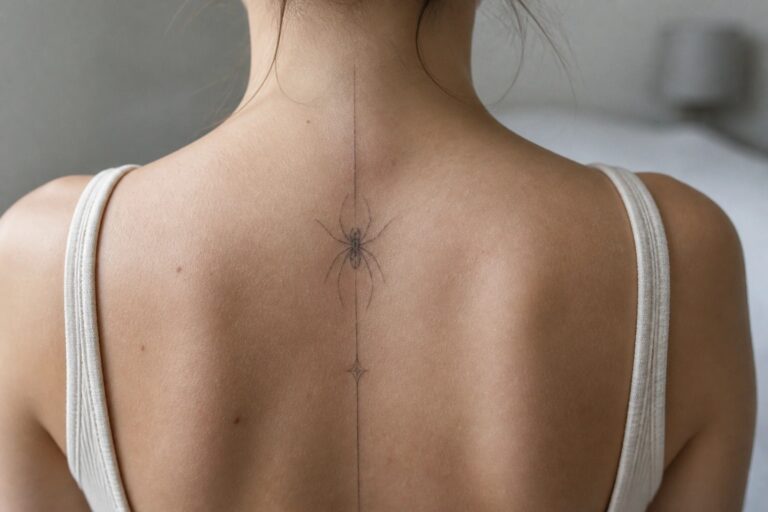
I have always been drawn to tattoos that follow the spine in a graceful way. Spider themes with a web flowing vertically add such a fun twist to the whole look. My favorite part is how they can appear so intricate yet remain totally wearable. These ideas really showcase some creative takes that I wish I had seen sooner.
Spider tattoo running down the spine
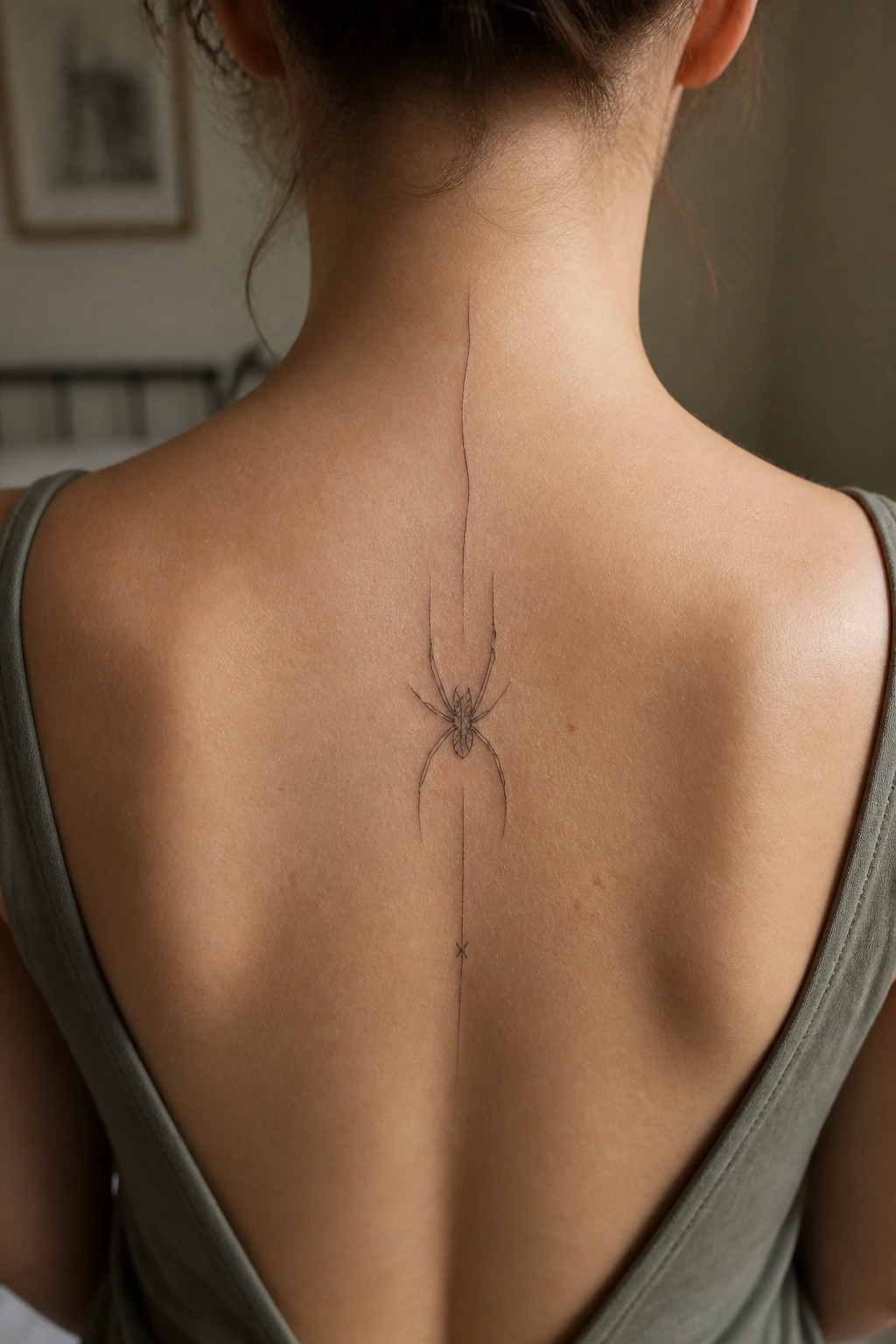
The spider sits right on the spine with a thin line stretching from the neck all the way down the back. Its body faces downward and the legs spread out in a balanced way. The fine line style keeps everything light and narrow so the tattoo follows the spine without spreading wide.
I think the vertical line makes the placement feel intentional instead of just putting a spider anywhere on the back. It turns the whole piece into one clean flow rather than a single centered image.
Spiders stack along the spine
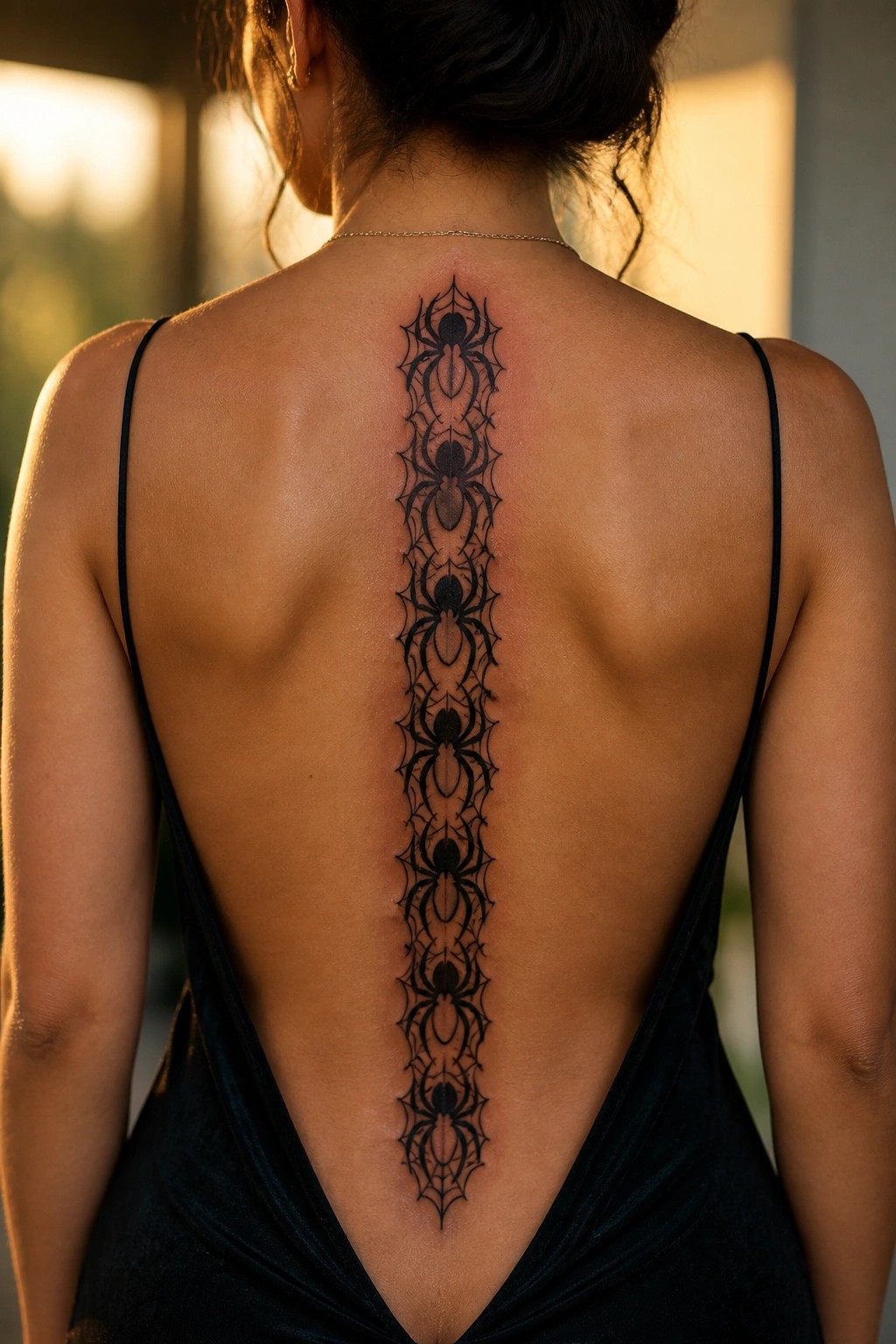
The spine creates a natural path for this design. Multiple spiders sit one above the other and link through thin web lines. The black ink stays solid and the shapes stay clear even at full length.
I think the even spacing helps the whole piece stay balanced instead of looking crowded. It reads well because the vertical layout matches how the back moves.
Spider web flows down the spine
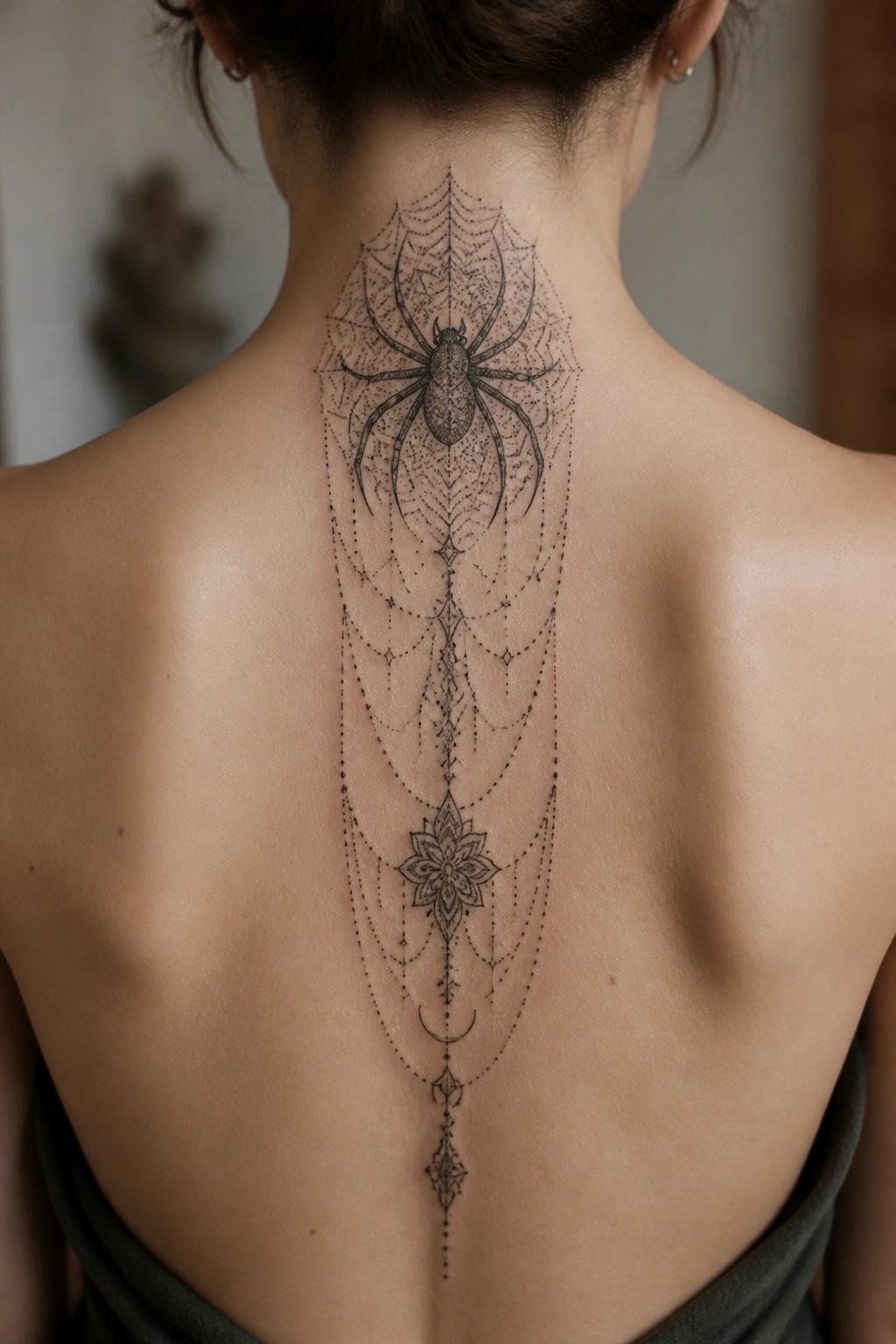
The tattoo starts at the neck and runs straight down the spine in a single vertical line. A spider sits inside its web near the top, with dotted lines and small shapes pulling the eye lower. A mandala shape appears partway down to break up the web pattern.
This placement lets the web hang naturally without needing extra curves. I think the length keeps the design from looking too busy in one spot while still showing clear detail from top to bottom.
Spiders line up along the spine
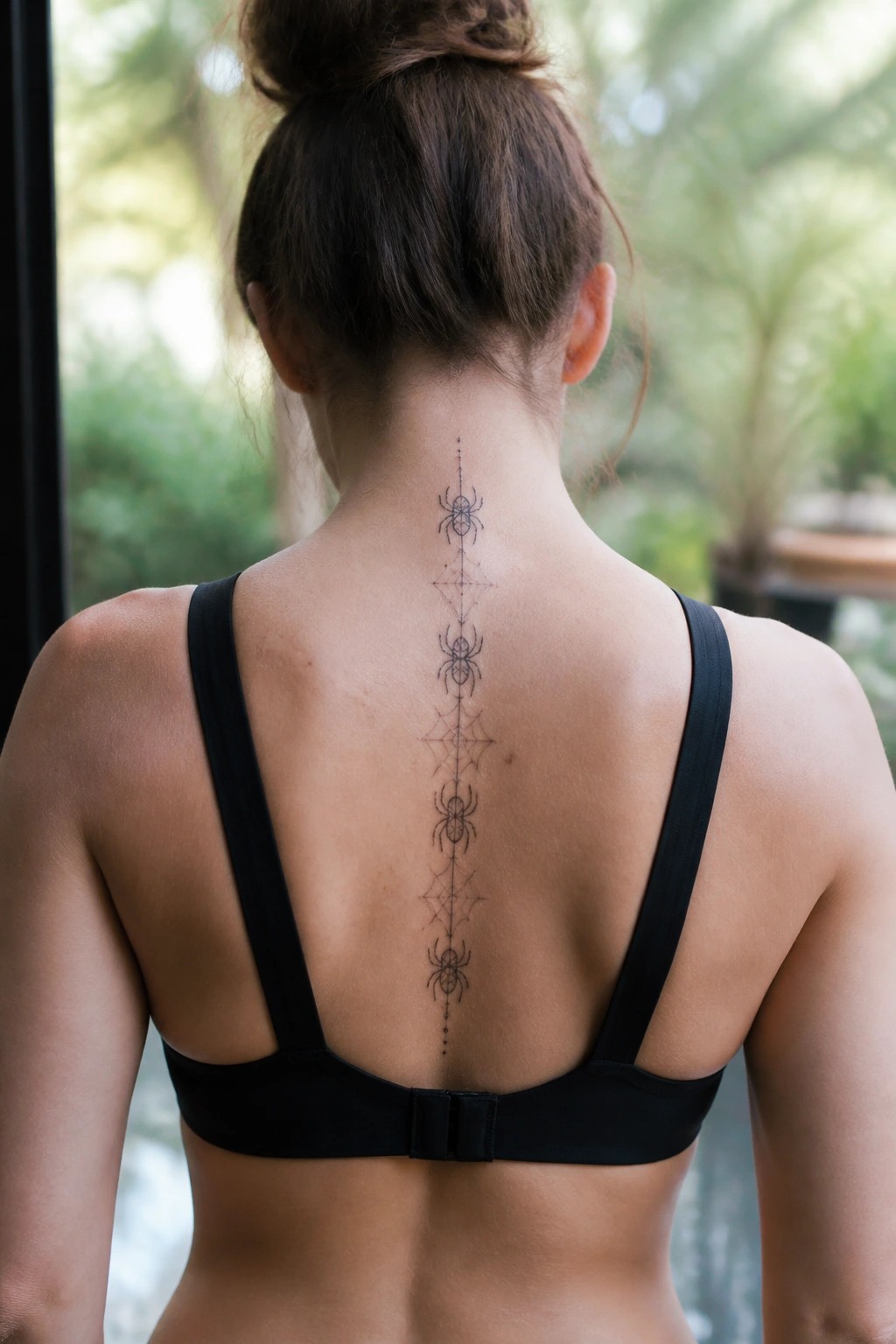
The tattoo sits straight down the spine. Spiders appear at regular intervals with thin connecting lines and small web shapes between them. The ink stays fine so the design does not overpower the back.
I think the centered placement works because it lets the vertical row feel balanced. The spacing keeps each spider clear while the whole piece stays compact from neck to lower back.
Spider tattoo running down the spine
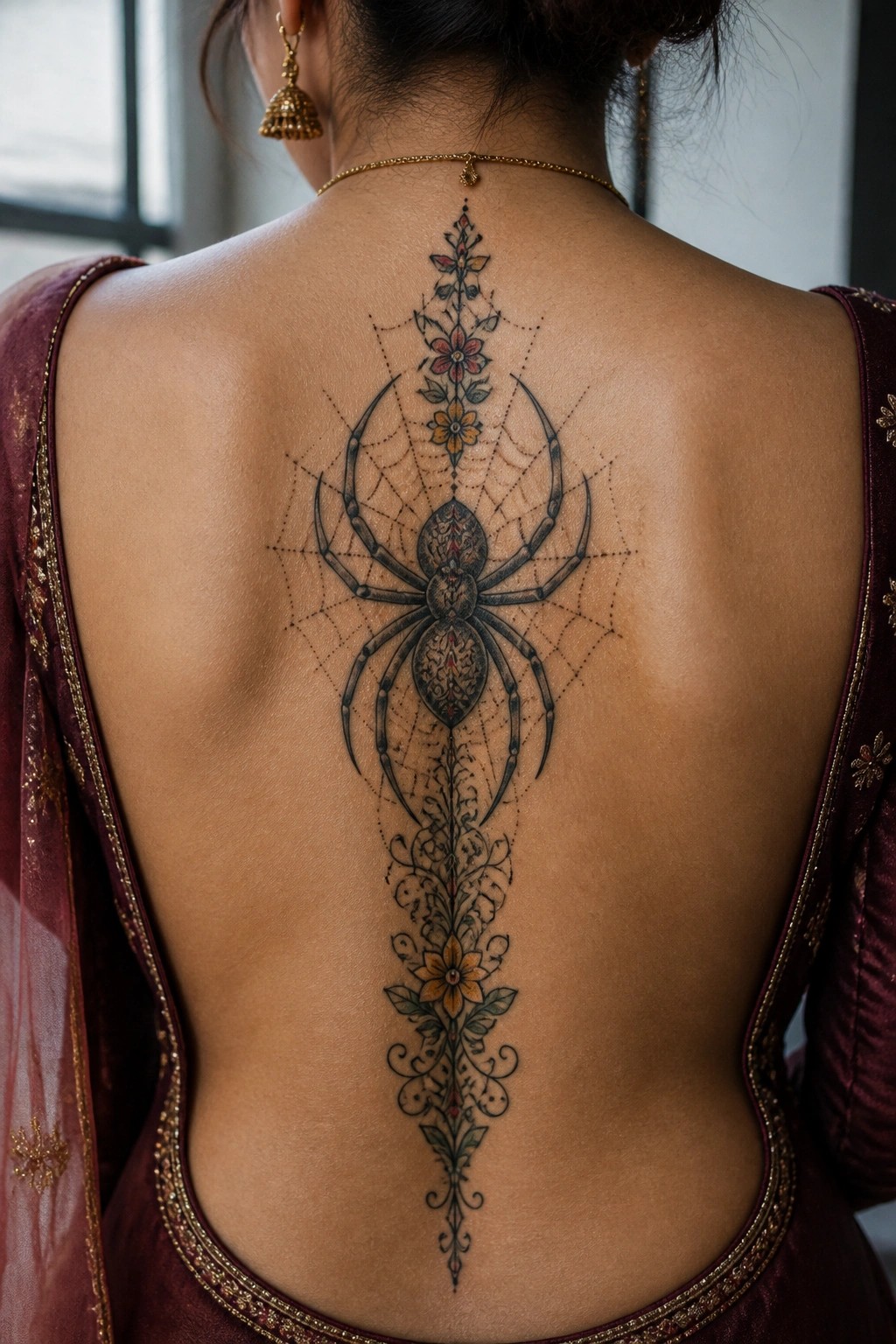
The tattoo follows the spine from the upper back down toward the lower back. A spider sits centered on the spine with its legs and web lines spreading outward in a symmetrical pattern. Flowers sit above and below the spider to stretch the design into a longer vertical shape.
This layout uses the spine as the main anchor so the whole piece stays balanced. I think the vertical flow keeps the spider readable even at this scale without needing extra shading or color.
Spider tattoo placed along the spine
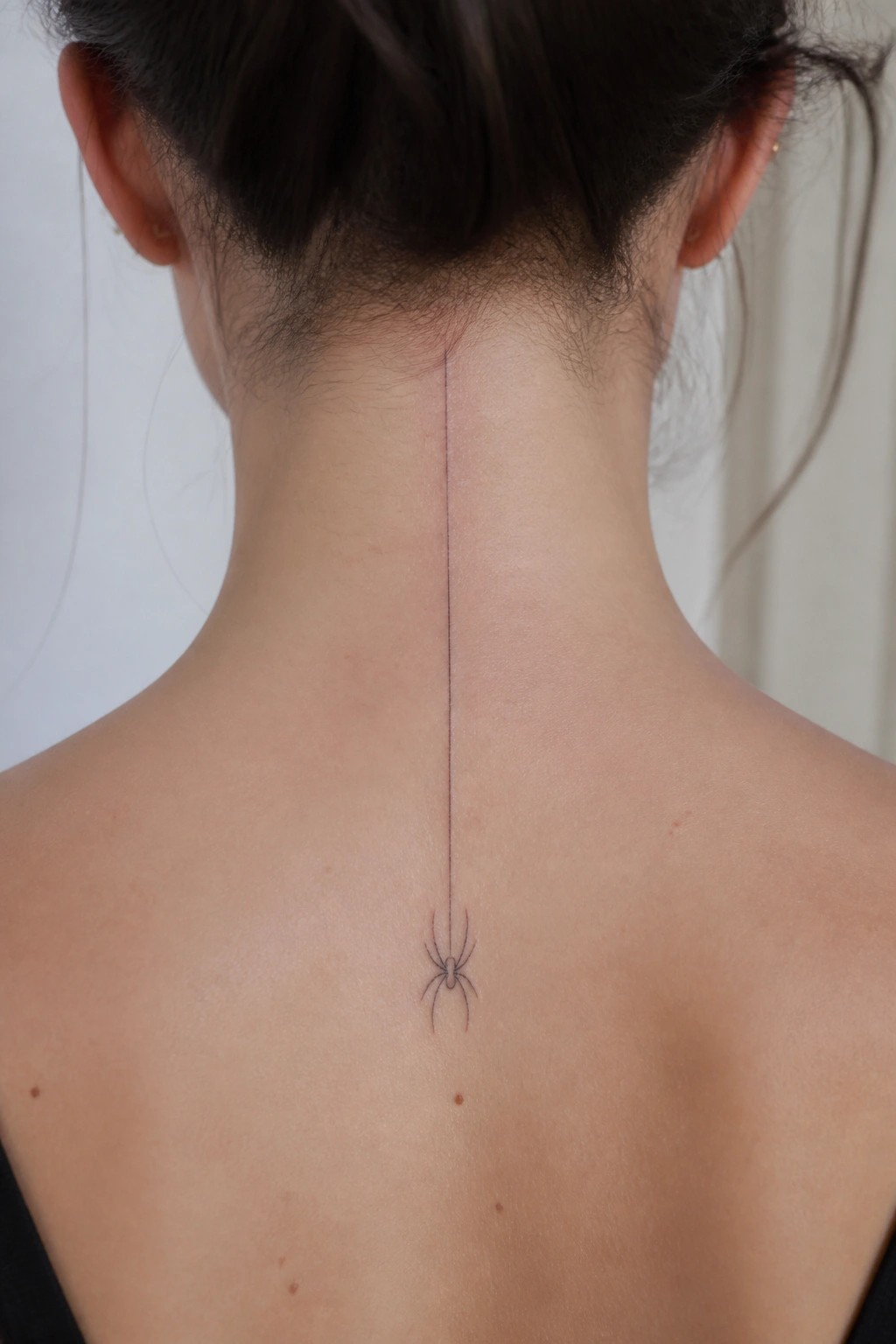
The design starts near the neck and runs straight down the center of the back in one thin line. A small spider sits at the lower end where the line stops. This keeps the tattoo narrow and centered without spreading out to the sides.
The placement works because the spine gives the line a clear path to follow. I think the scale stays readable even though the spider itself stays quite small.
Spider tattoo with web lines down the spine
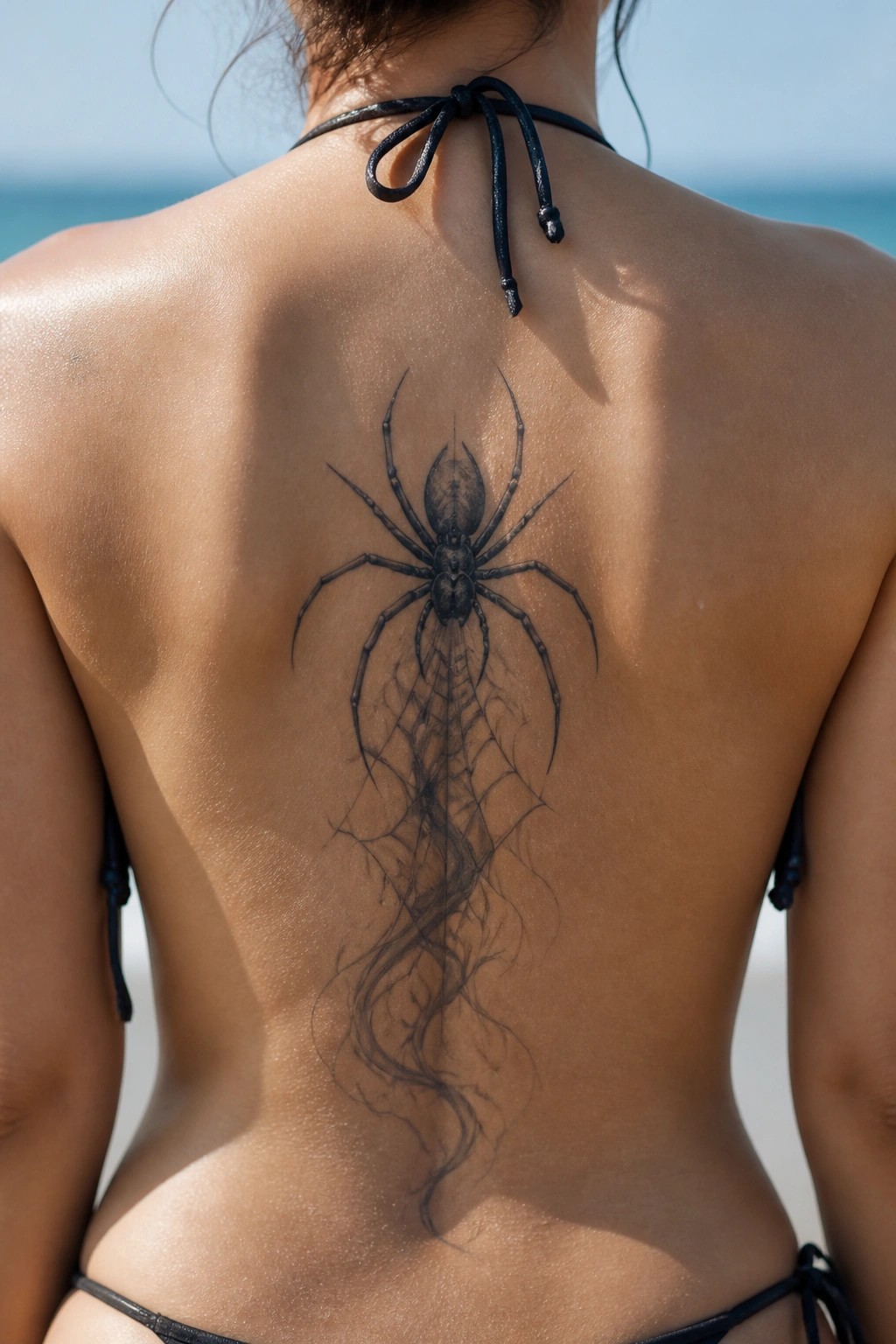
The spider sits high on the upper back with its body aligned to the spine. The legs extend outward on each side while the web trails down in loose vertical strands. This layout keeps the design narrow enough to follow the center of the back without spreading too wide.
The flowing lines of the web help the tattoo stretch longer without adding bulk. It gives the piece a sense of movement that works well on this part of the body. I think the scale stays balanced because the web thins out as it goes lower.
Spider tattoo running down the spine
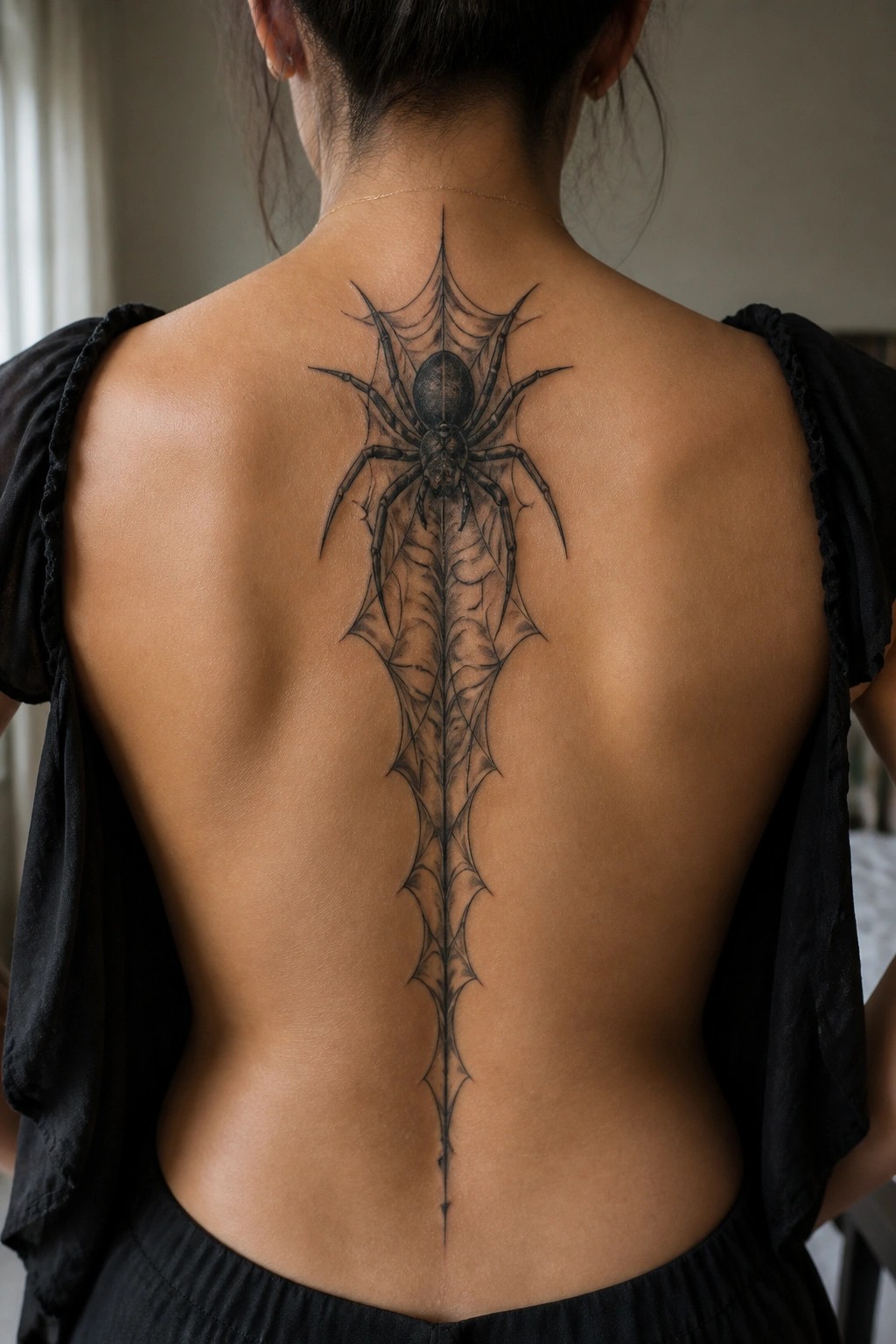
The spider sits at the top of the back right on the spine. Its web stretches straight down in a narrow vertical shape that follows the center line. This keeps the whole piece contained and balanced from neck to lower back.
I think the placement works well here because it gives the spider a clear spot at the top while the web adds length without spreading out. The vertical flow makes the tattoo feel like it belongs on the spine rather than just sitting on it.
Spider design runs down the spine
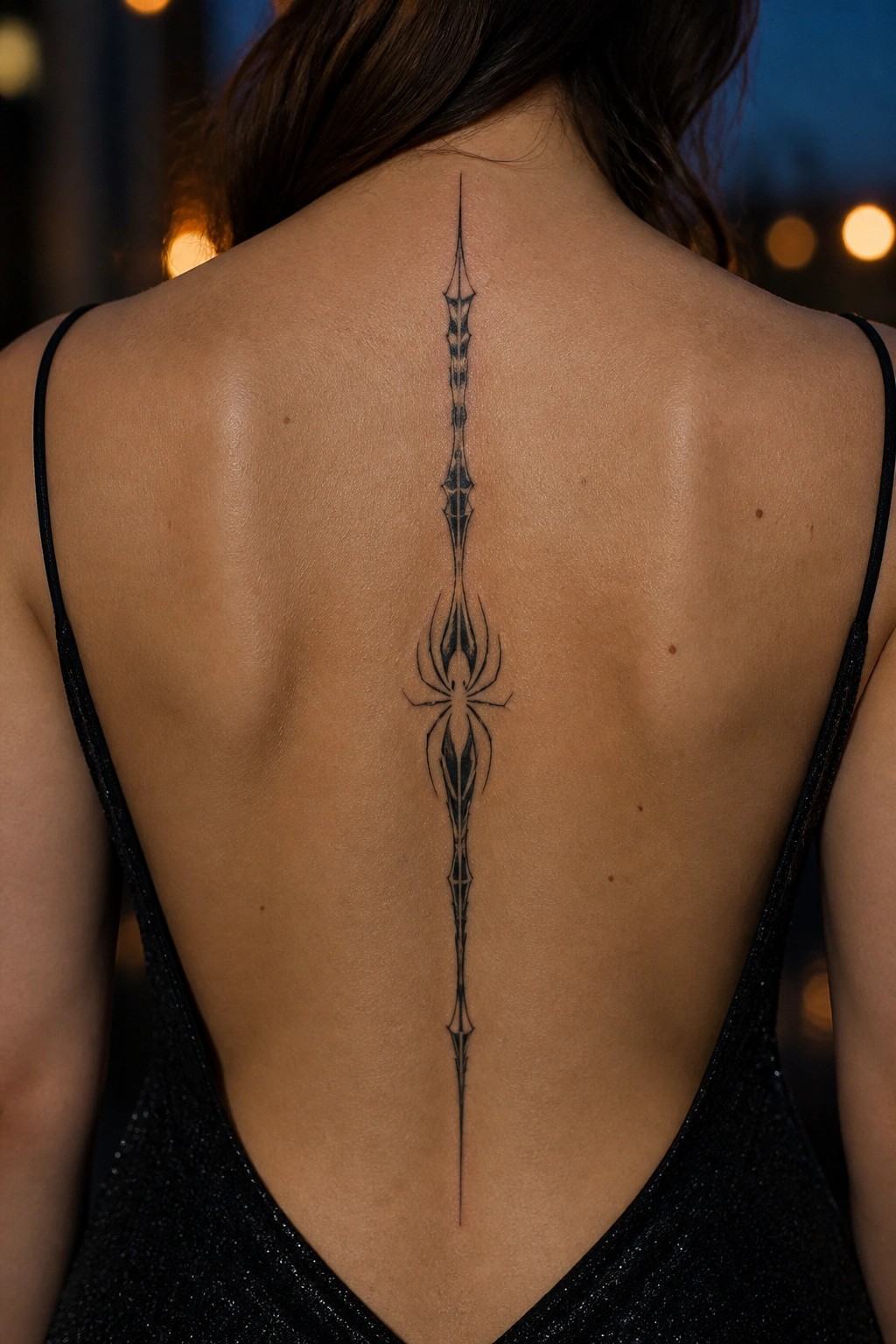
The tattoo starts near the neck and drops straight down the spine in one long line. A spider sits at the center while sharp geometric shapes stretch above and below it. The whole piece stays narrow so it fits the shape of the back without spreading out.
This layout keeps the spider readable even though the tattoo is tall. I think the thin lines help it stay clean instead of looking crowded.
A spider web runs straight down the spine
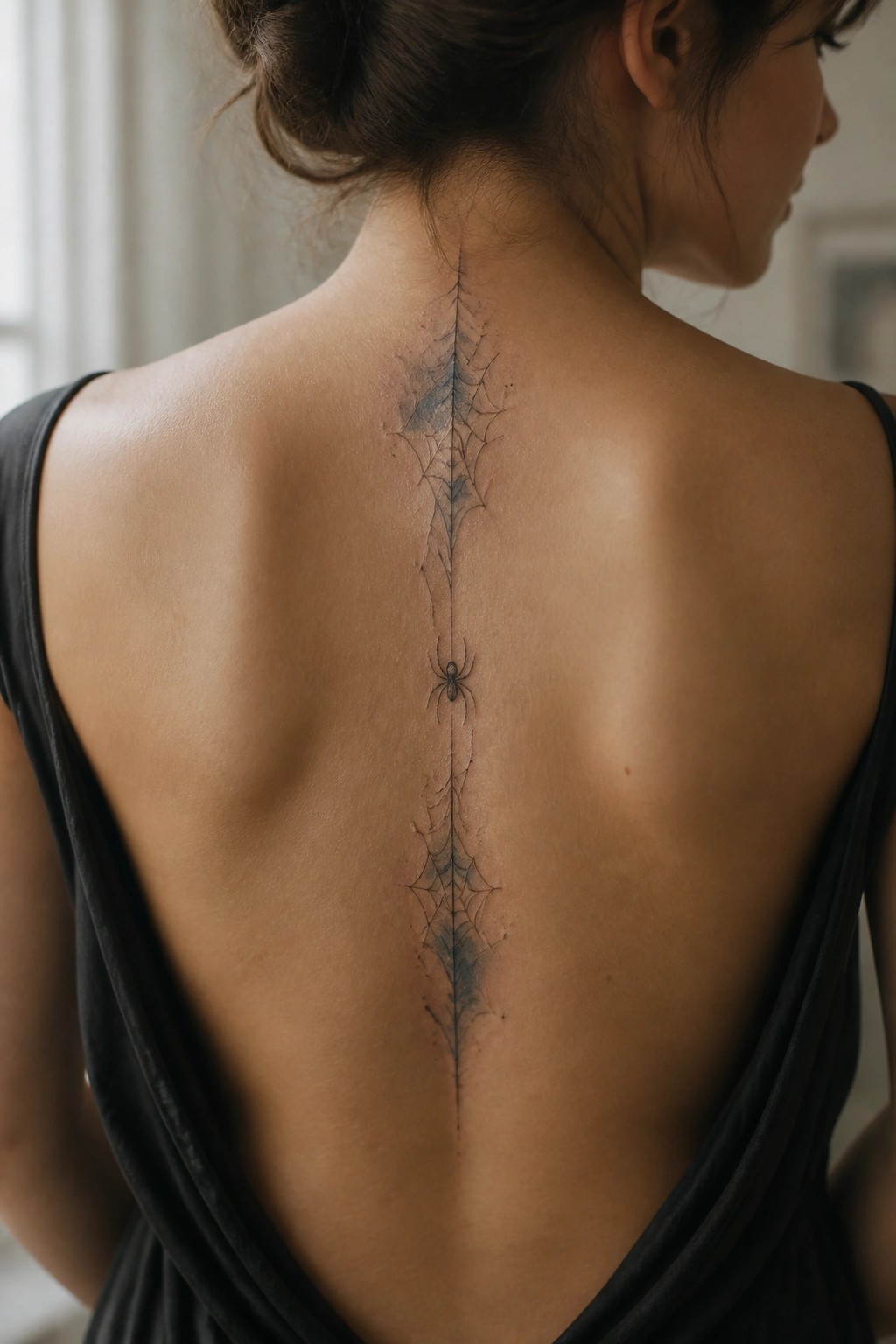
The design starts high on the neck and drops in a narrow line all the way to the lower back. Thin web strands stay centered on the spine and create one clean vertical path. A small spider sits near the middle to anchor the whole piece.
I think the placement works because the web can stretch without needing extra width. The light shading at the top and bottom also helps the lines fade naturally into the skin.
Spider web tattoo down the spine
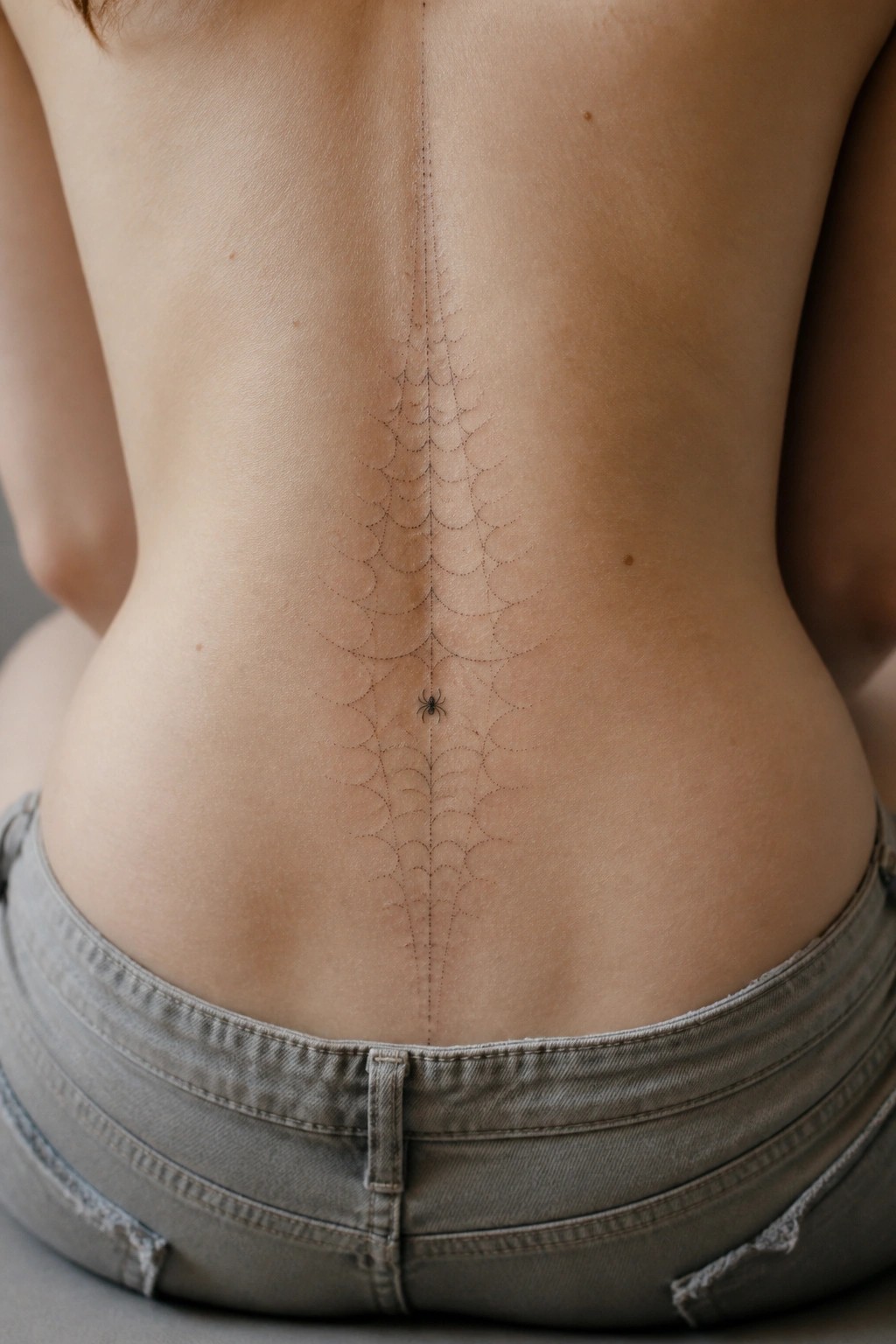
The web runs straight down the spine from upper back to lower back. Thin lines create even arcs on both sides that stay centered without extra shaping. A small spider sits near the base to finish the piece.
I think the placement lets the design follow the body line on its own. It keeps the web readable at this length without crowding.
A spider and script run down the spine
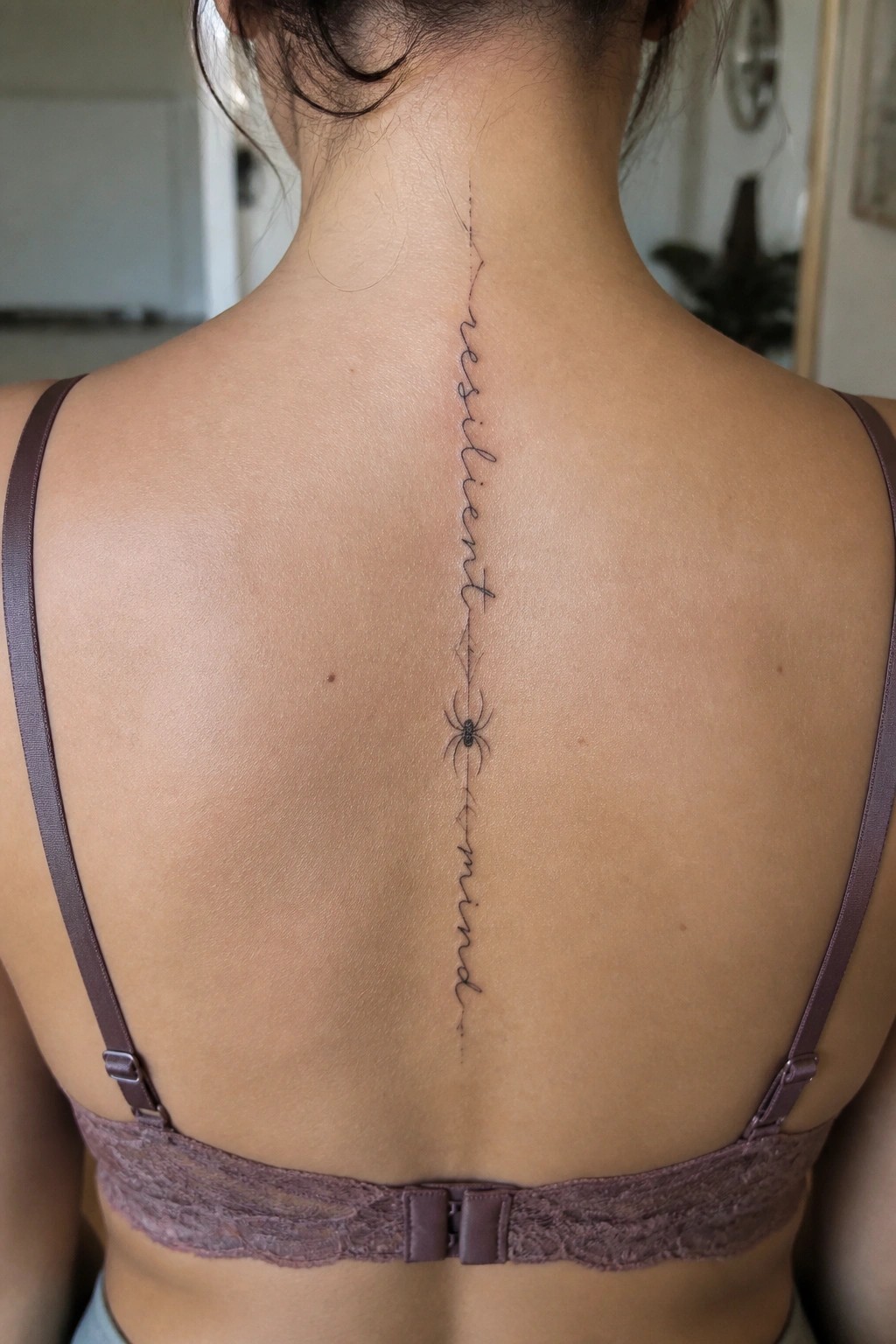
The tattoo sits centered along the spine and stretches from the base of the neck downward. Thin script spells out the words resilient mind while a small spider rests at the midpoint. The vertical layout keeps everything narrow and contained.
I think this placement works because it turns the spine into a natural guide for the script. It also lets the spider sit exactly where it needs to without extra filler. The whole piece stays readable even though it covers a longer area.
A spider web tattoo down the spine
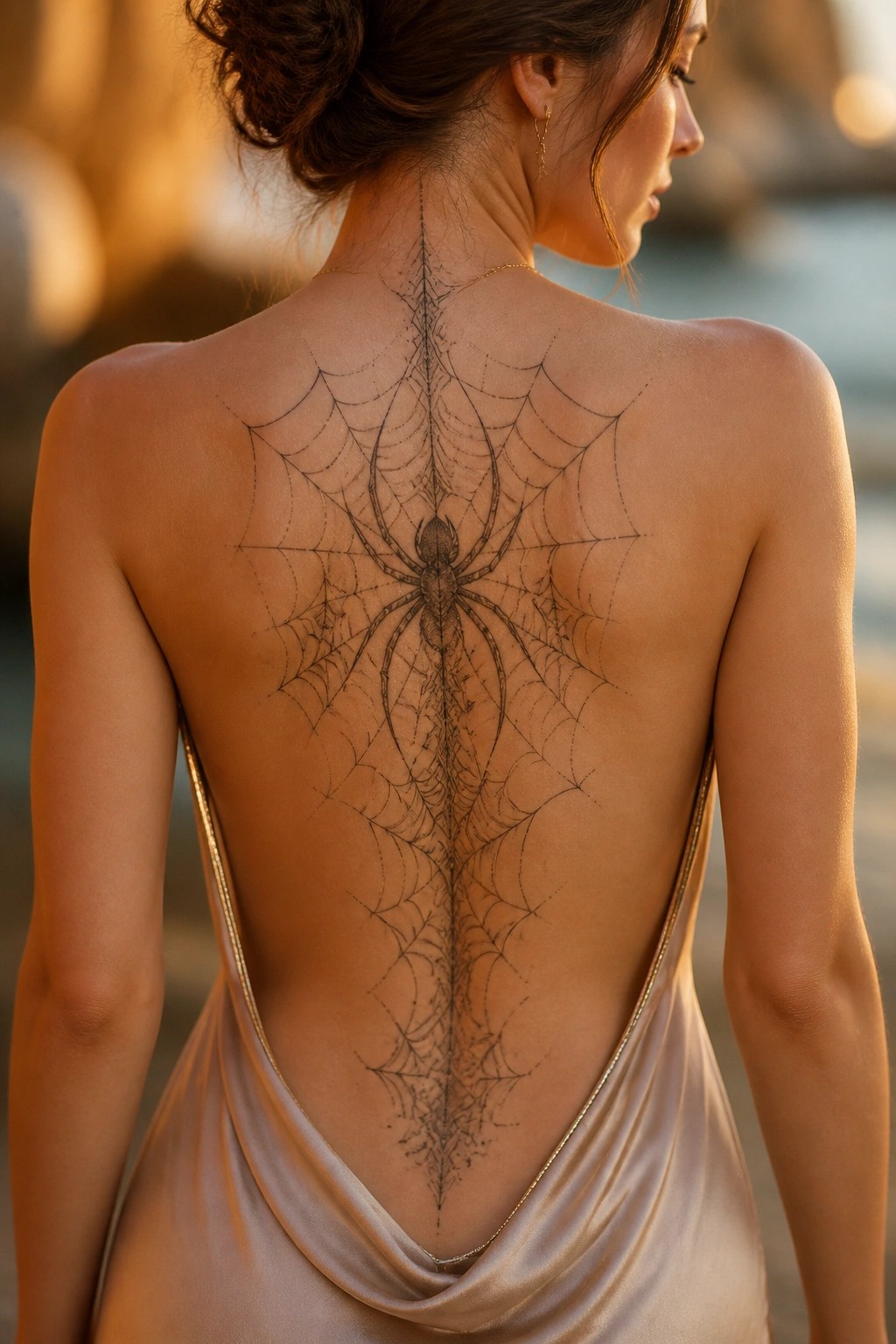
The tattoo runs straight down the spine from the neck. Thin lines create a web that spreads outward across the back with a spider placed at the center.
This layout keeps the web balanced without extra details on the sides. I think the vertical placement works because it uses the spine as the main anchor point.
Spiders lined along the spine
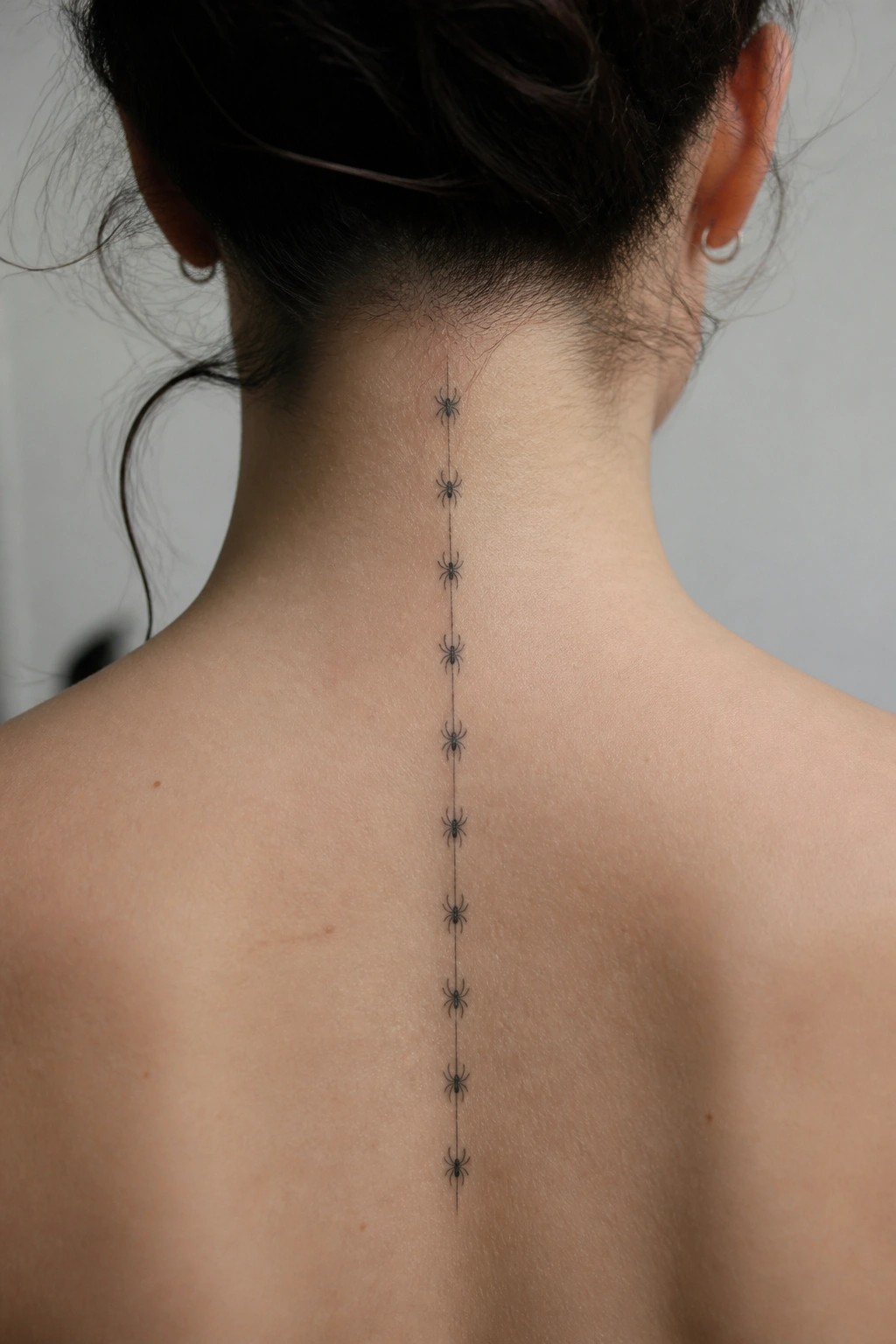
This tattoo sits in a straight line right down the spine. Small spiders sit one after another with a thin connecting line between them. The placement follows the body’s center from the base of the neck downward.
The simple vertical layout keeps the design balanced and easy to follow. I think the even spacing works well here because it stops the spiders from looking scattered.
Spider and web design runs down the spine
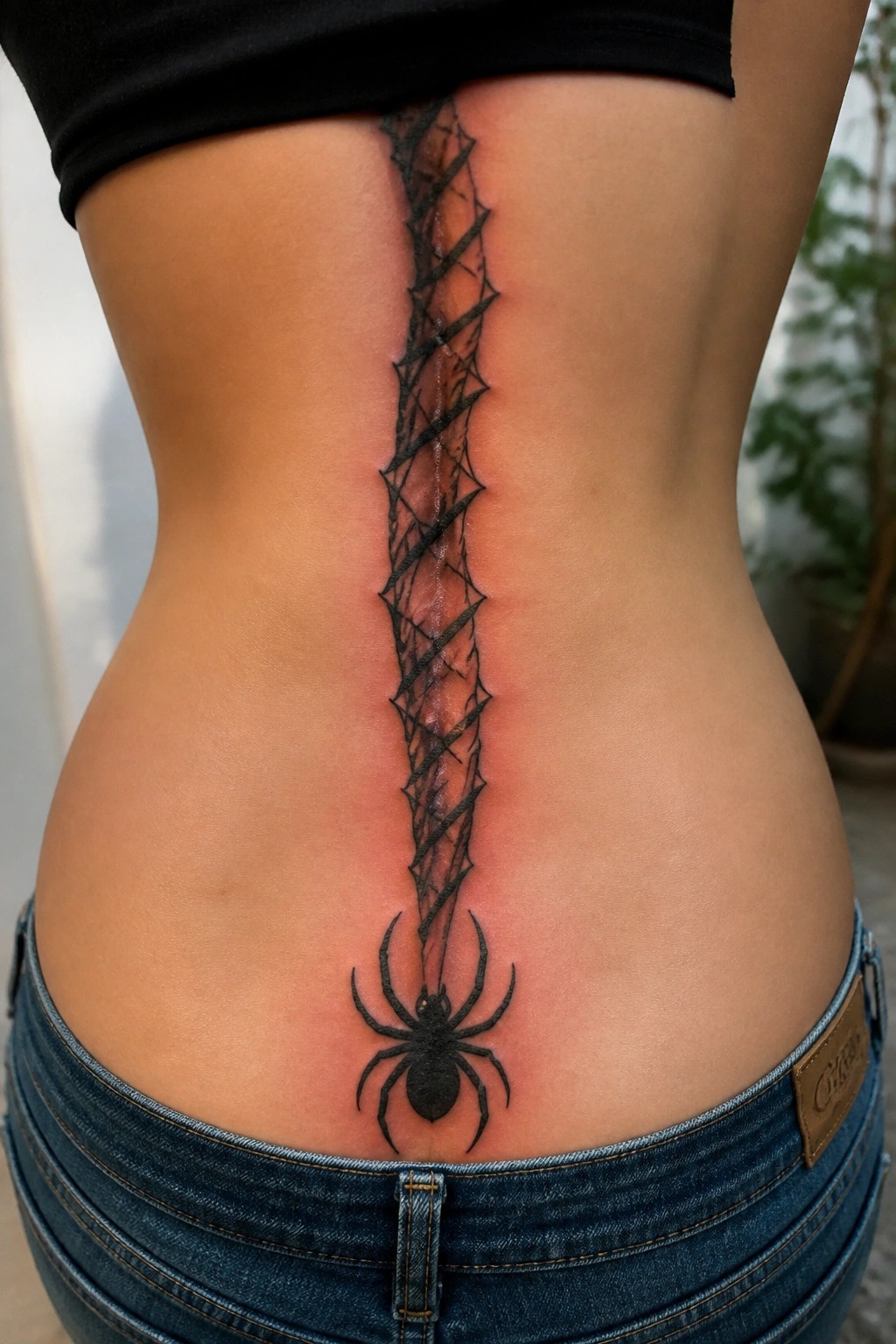
The spider sits right above the waistband. From there a web pattern stretches upward in black lines that follow the spine. The placement turns the natural length of the back into the main structure of the tattoo.
I think this works because the straight vertical path keeps the web readable without extra shading. The lower spider gives the design a clear starting point that matches the body shape.
Spider web tattoo along the spine
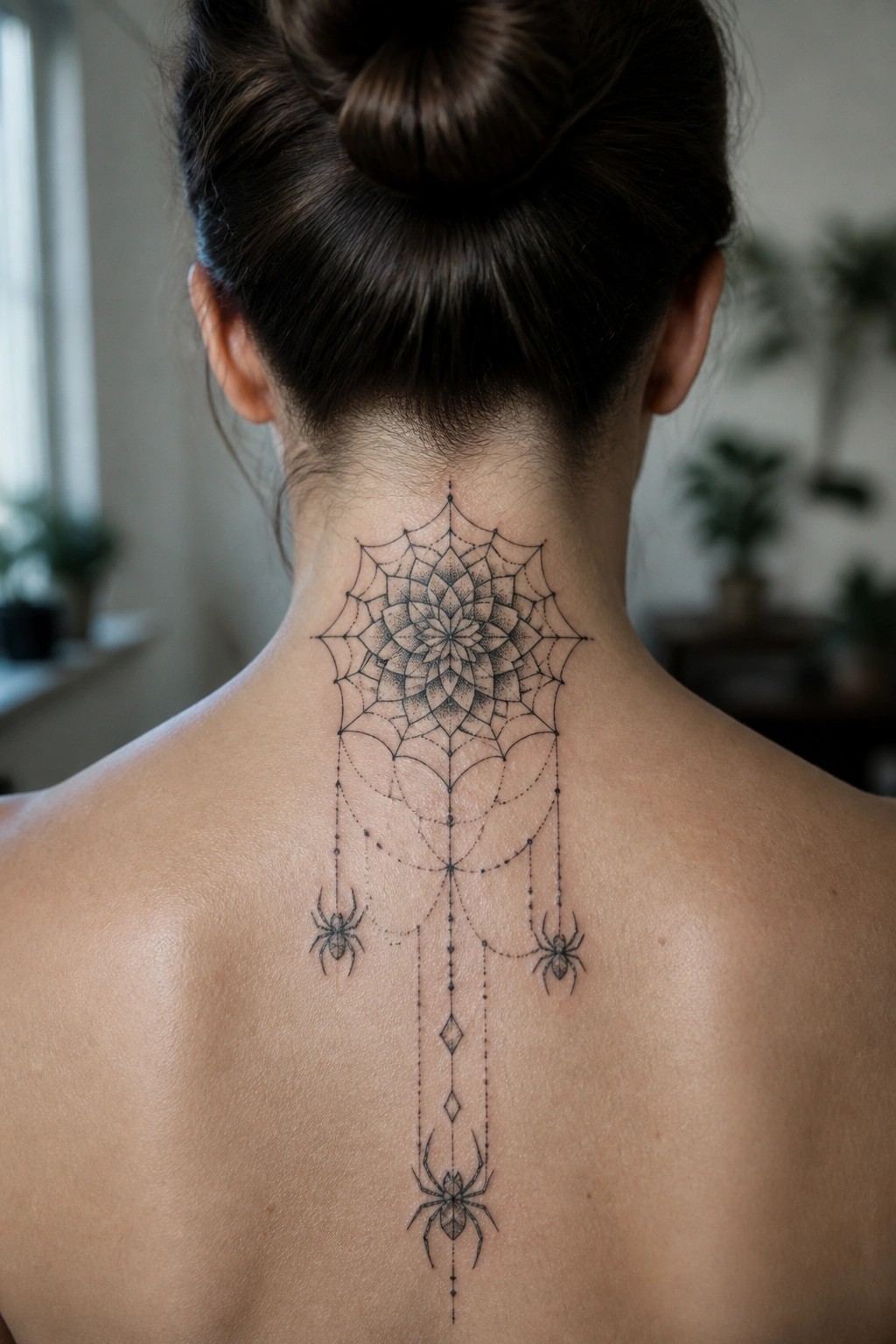
The design starts at the base of the neck and extends down the upper back. A round web sits at the top with thin lines that trail lower. Small spiders hang at different points along those lines.
This placement lets the web stay centered while the spiders follow the spine. The vertical drop keeps the piece from spreading too wide. I think the spacing between the spiders stops the design from feeling crowded.
Spider and web along the spine
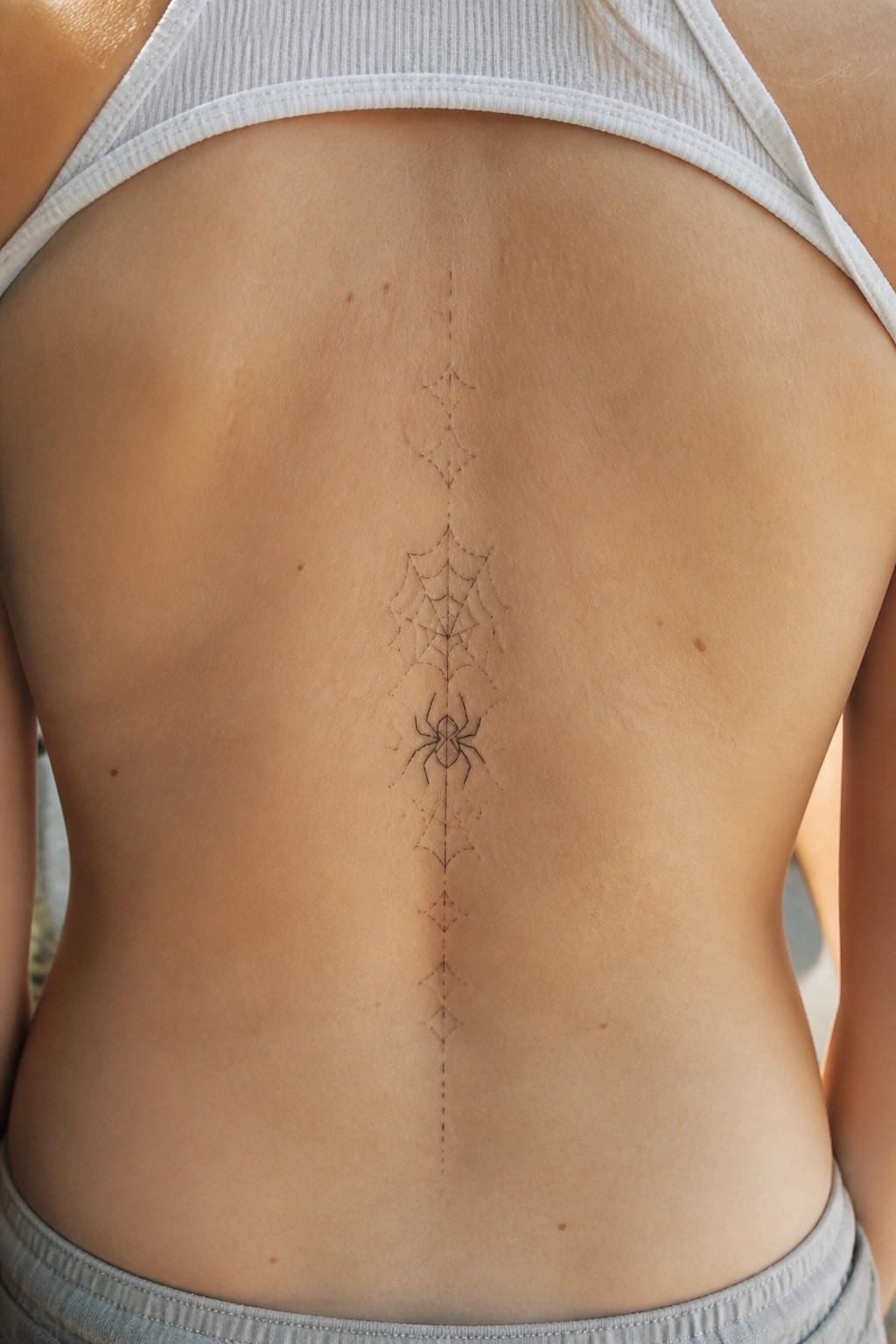
The spine gives this design a straight path from top to bottom. A small spider sits in the middle while the web stretches upward in a narrow shape. Thin lines and a few dotted marks below keep the length balanced.
This approach works because the vertical layout matches the natural shape of the back. The result stays easy to read without extra detail or shading.
Spider web tattoo along the spine
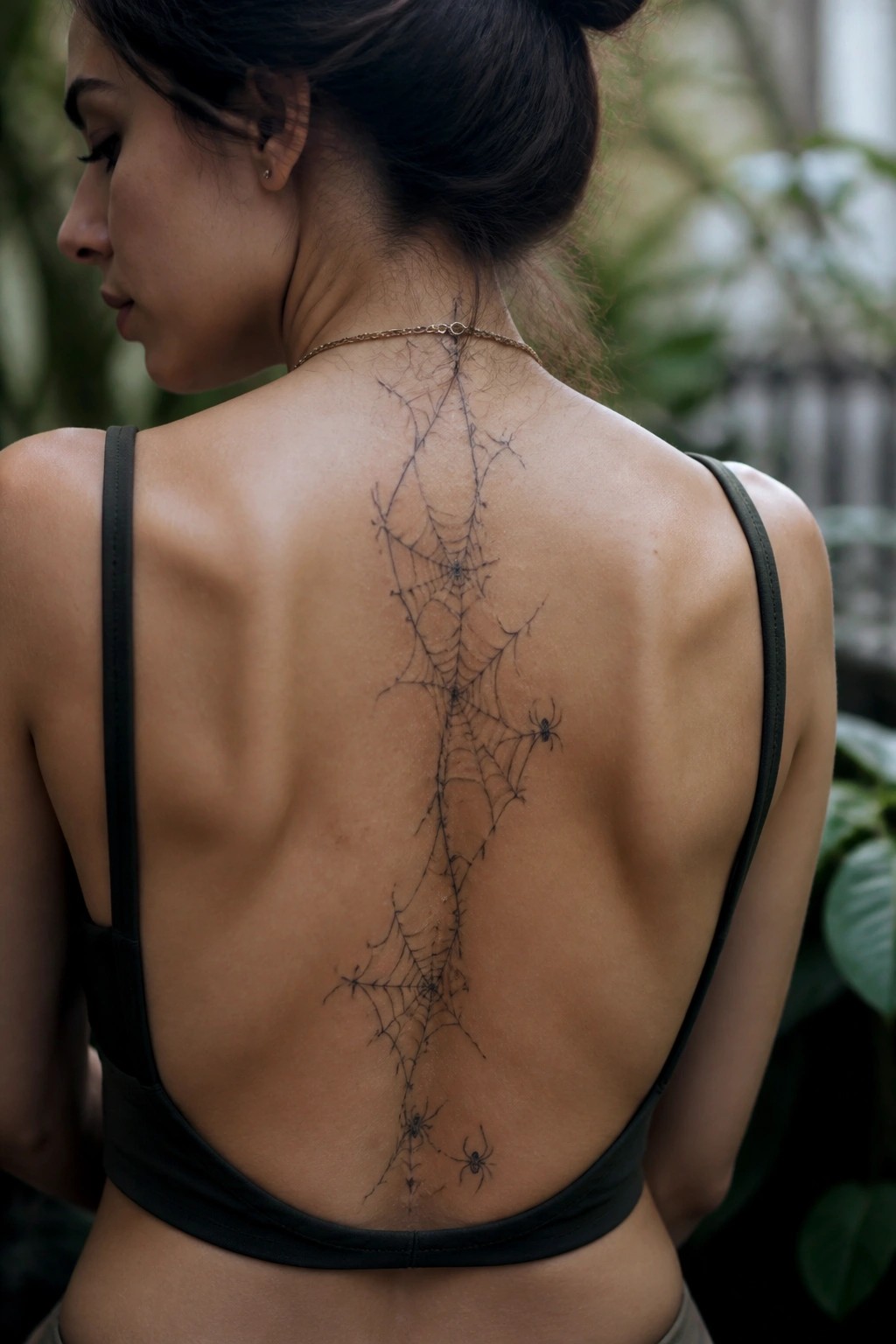
The design sits right on the spine and runs from the base of the neck down toward the lower back. Thin lines form the web while a few small spiders rest on the threads at different heights. This placement lets the web stretch in a straight vertical line without extra filler.
I think the long shape works because it matches how a web naturally hangs. It also keeps the focus on the center of the back instead of spreading out to the sides.
Spider sits in an oval frame along the spine
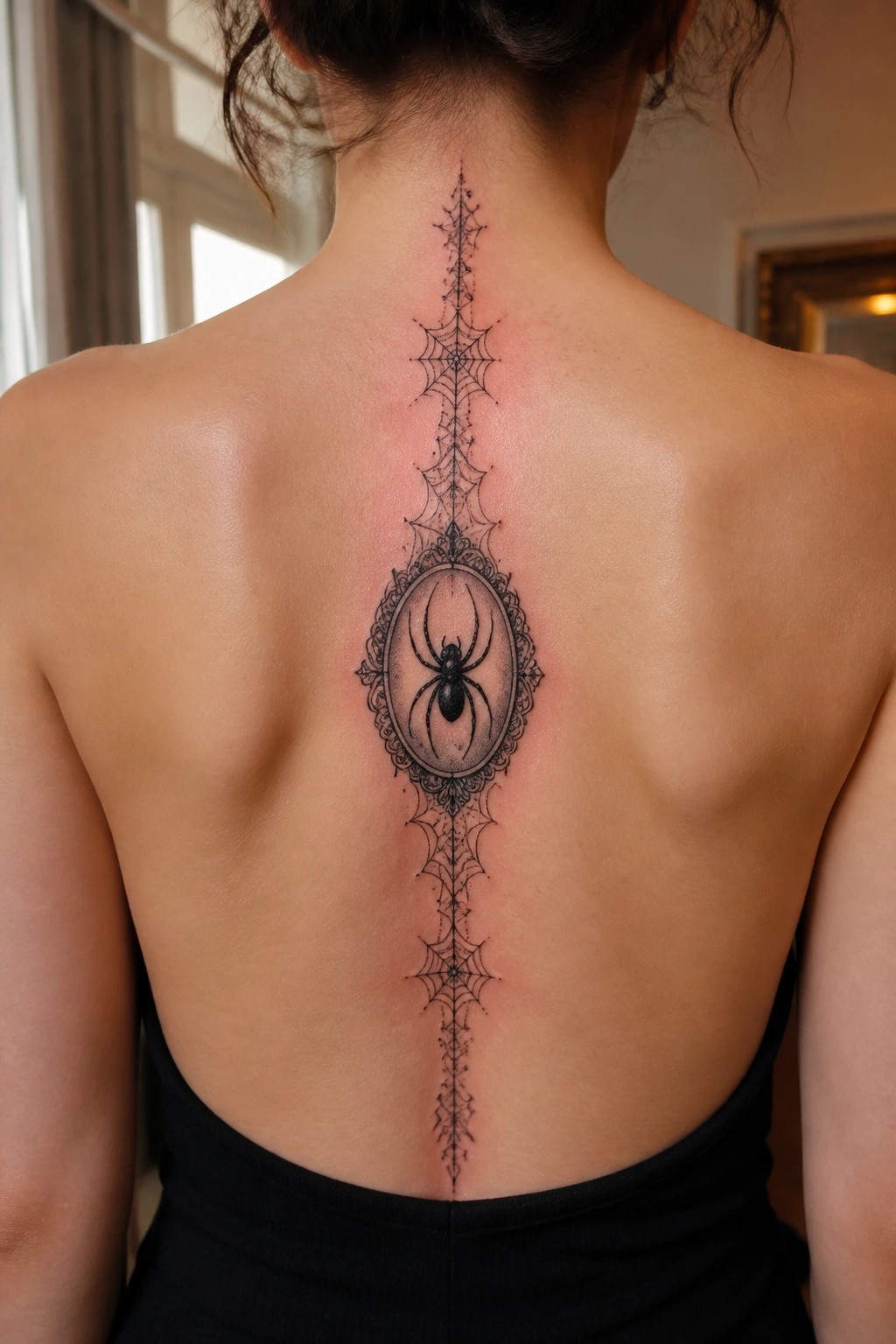
The tattoo follows the spine from the neck down to the lower back. A spider rests inside an oval frame at the center, with web lines extending upward and downward to create a single vertical flow.
I think the spine placement works because it keeps the web lines straight and easy to read. The oval frame also helps the spider stand out as the main point without needing extra shading or color.
Spider tattoo along the spine
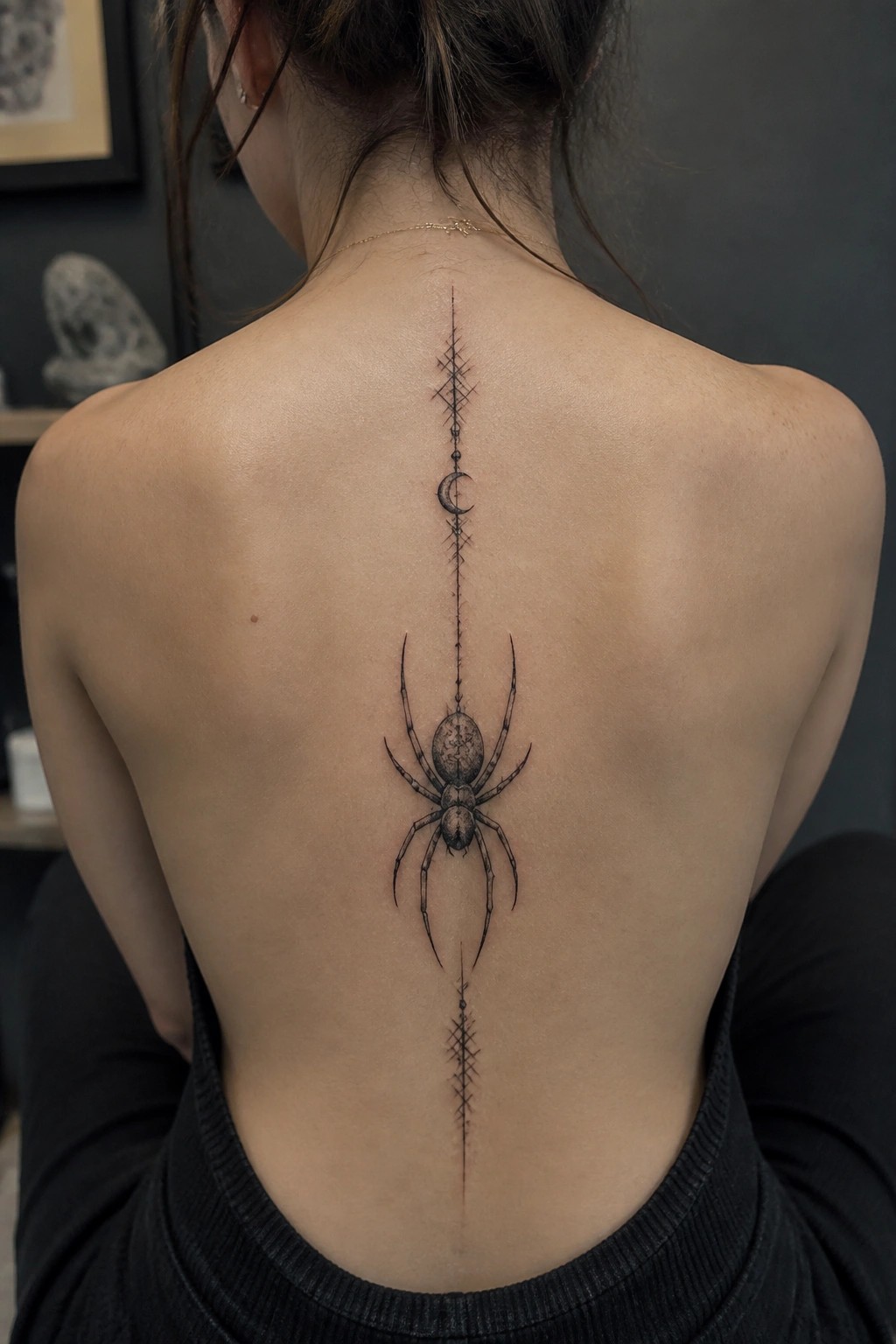
The spider sits right in the middle of the back. A straight line runs up and down the spine with small marks and a crescent moon placed above the spider. This keeps the tattoo narrow and centered from top to bottom.
The line gives the spider a clear path to follow along the back. I think it stops the design from feeling scattered.
Spider and dotted line down the spine
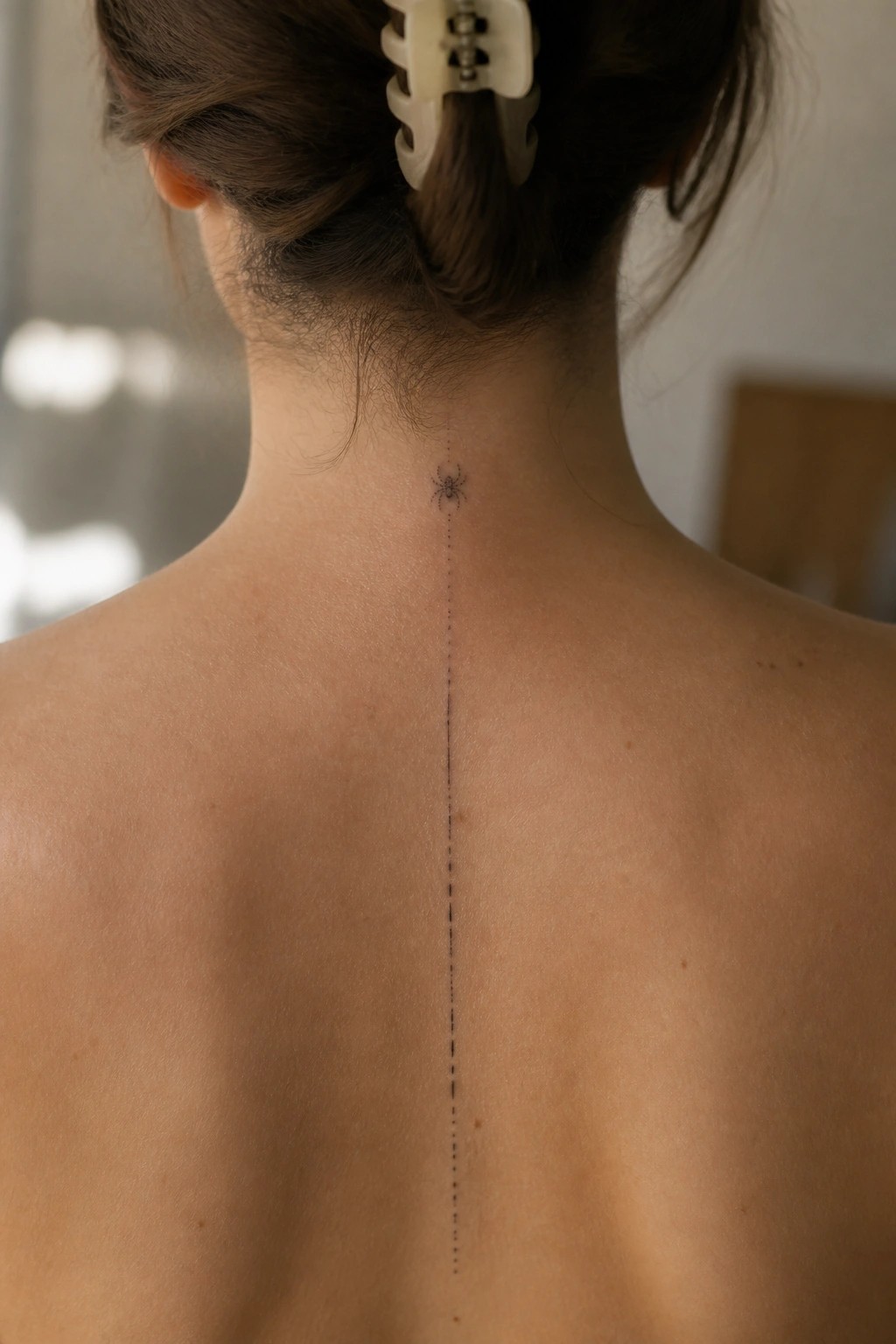
A spider sits at the nape of the neck. From there a thin dotted line drops straight down the spine. The design stays narrow and follows the body’s center line without spreading out.
I think this placement works because the spine gives the dots a clear path to travel. The spider stays small at the top while the line adds length without extra detail.
Spider spine tattoo with web patterns
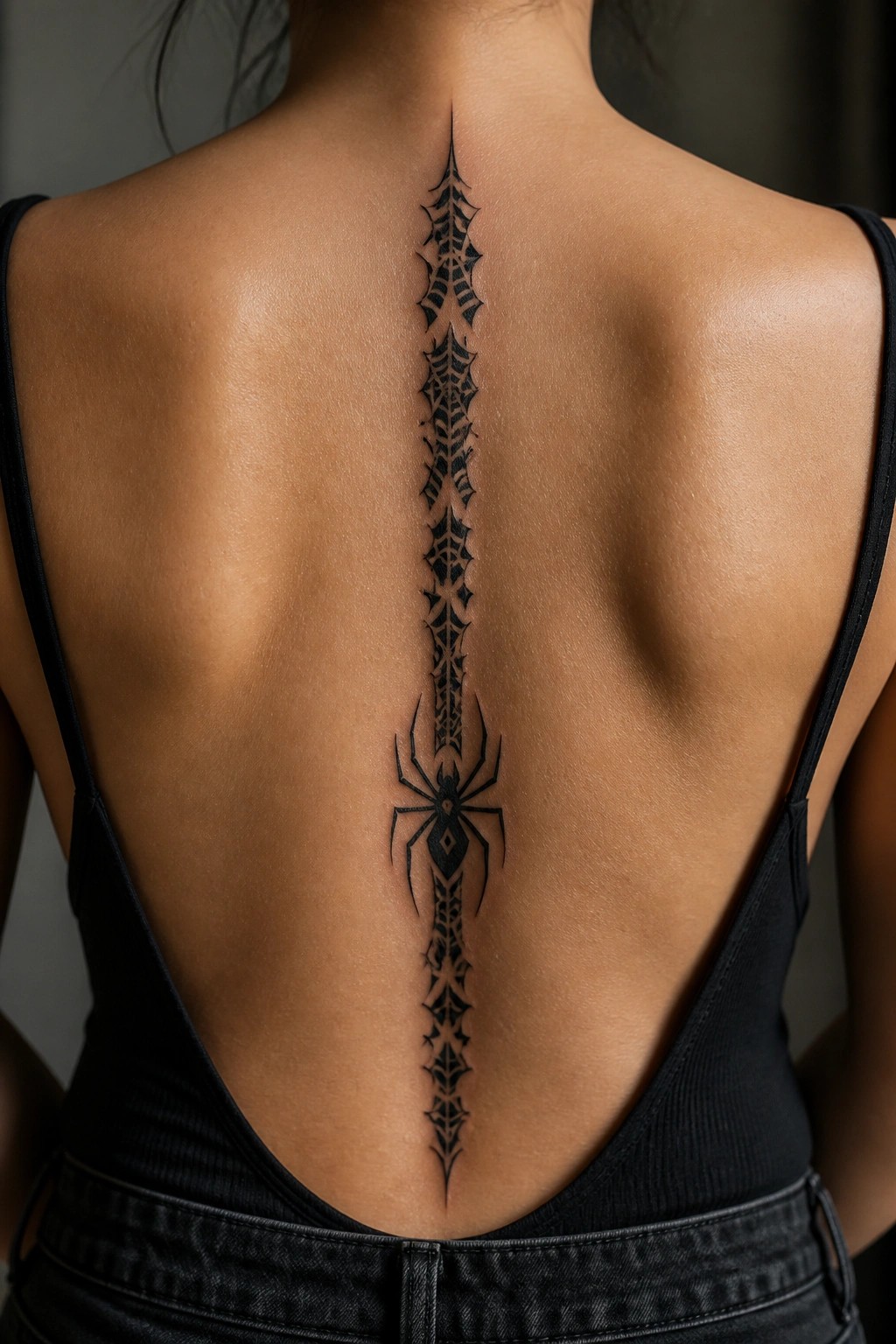
The tattoo follows the spine from the upper back down to the lower back. A spider sits in the center with a series of web shapes extending above and below it. This creates a single vertical line that stays narrow and contained.
I think the spine placement works because it gives the web a built in path to follow without extra elements on the sides. The spider at the bottom keeps the design grounded while the patterns above add length.
Frequently Asked Questions
1. How painful is getting a spine spider tattoo with a vertical web flow? The spine area tends to be quite sensitive because of the proximity to bone and nerves. Many women report it feels like a steady scratching or burning sensation that builds over time. Sessions are often broken into shorter appointments to manage discomfort and allow the artist to maintain precision in the web lines.
2. What aftercare steps help a vertical spine tattoo heal smoothly? Clean the tattoo gently with unscented soap twice daily and apply a thin layer of fragrance-free moisturizer. Avoid tight clothing or waistbands that rub the area for the first few weeks. Sleeping on your side or stomach can reduce pressure while the skin settles and the ink sets.
3. How can I make sure the web-like design follows my natural spine curve? Work with an experienced artist who specializes in fine line work. They will often use your actual spine as a guide during the stencil phase and adjust the web spacing so the lines flow without forcing straight edges. Bringing reference photos of your back in different positions helps them plan the layout accurately.
4. Will the tattoo remain sleek and clear as I age or gain weight? Spider and web details hold up well when placed along the spine because the skin there experiences less stretching than areas like the stomach or thighs. Choosing a skilled artist who uses consistent line weight and appropriate ink depth helps the design stay sharp over time. Regular touch-ups every few years can refresh any fading edges.
5. What clothing choices work best once the tattoo has healed? Low-back tops, dresses, and swimsuits highlight the vertical flow nicely without covering the artwork. Sheer or mesh panels can also show subtle parts of the web during everyday wear. If you prefer more coverage, high-waisted bottoms let you reveal the design only when you choose.
