

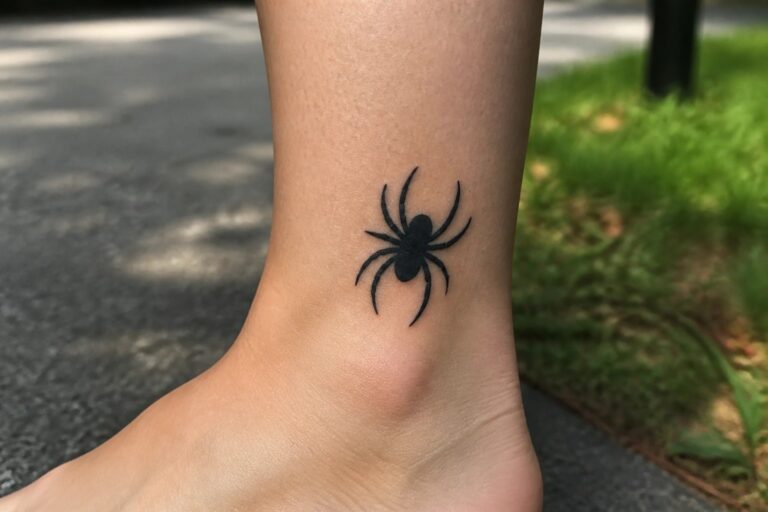
Spiders give me the creeps in real life but their tattoo versions are totally awesome. I think blackwork makes them perfect for high contrast looks that women will adore. My go to advice is always to choose designs with bold ink for maximum impact. These 25 ideas showcase unique takes that feel fresh and exciting.
Spider tattoo on the ankle
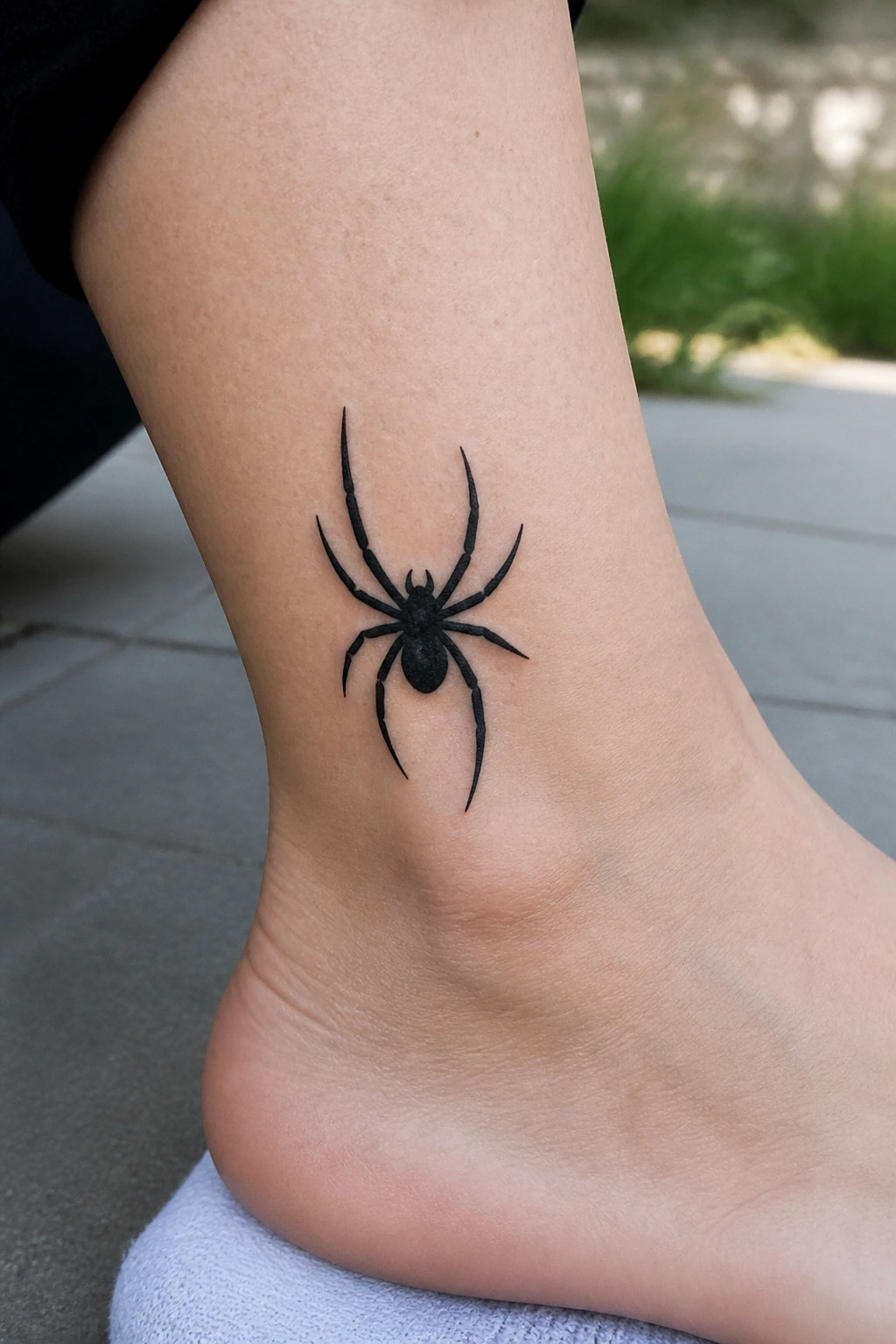
The ankle gives this spider tattoo a good spot to sit without crowding. The legs extend across the bone and stay clear even at this size. Black ink fills the body solidly so the shape reads from a distance.
I like how the placement lets the spider look like it belongs there instead of floating on flat skin. It keeps the design simple while making the most of the area.
A spider tattoo on the chest
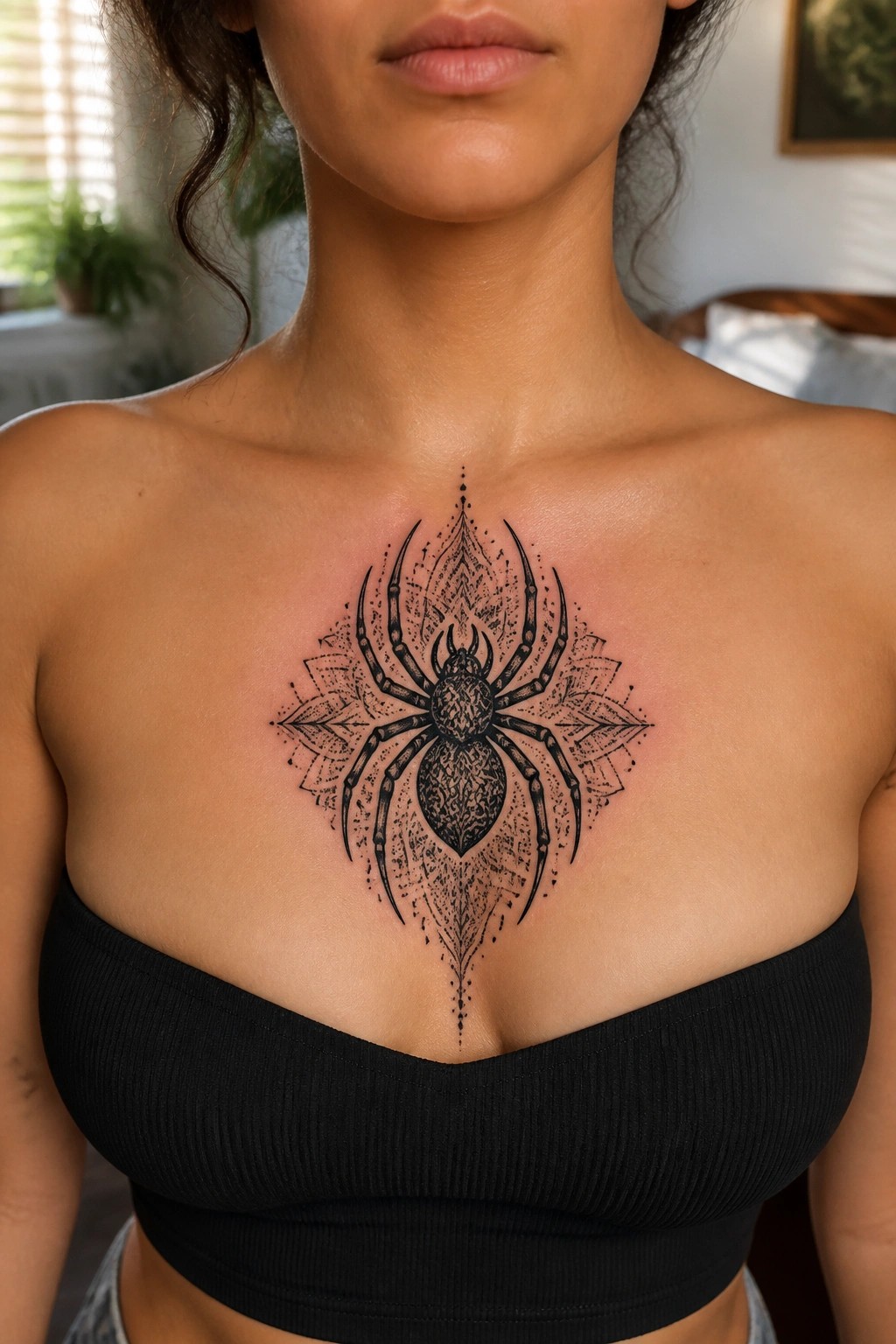
The spider sits centered on the upper chest. Blackwork lines and dotted shading build out the body and legs while a mandala style frame spreads around it. The whole piece stays symmetrical and fills the space between the collarbones and the top of the bust.
This spot keeps the design steady as the body moves. The scale lets the fine lines stay clear without crowding the area. I think the placement works because it gives the spider a natural focal point right on the midline.
Spider tattoo behind the ear
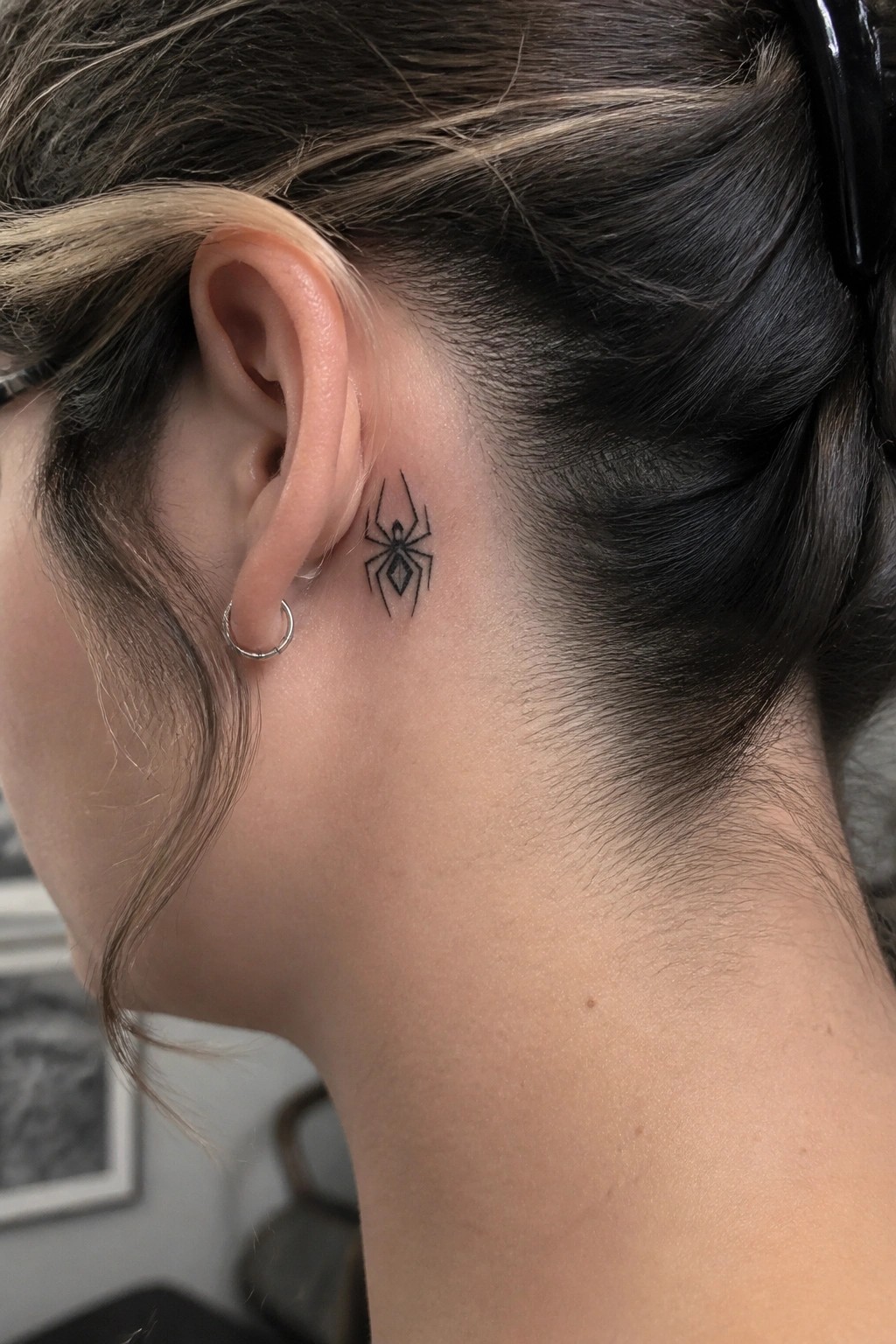
A spider tattoo sits right behind the ear on the neck. The small scale lets it fit into the narrow space without overlapping the ear or hairline. Black lines keep the shape simple and easy to read.
This spot gives the option to show the tattoo or hide it with hair. The design stays clear even when viewed from the side.
Spider on the elbow
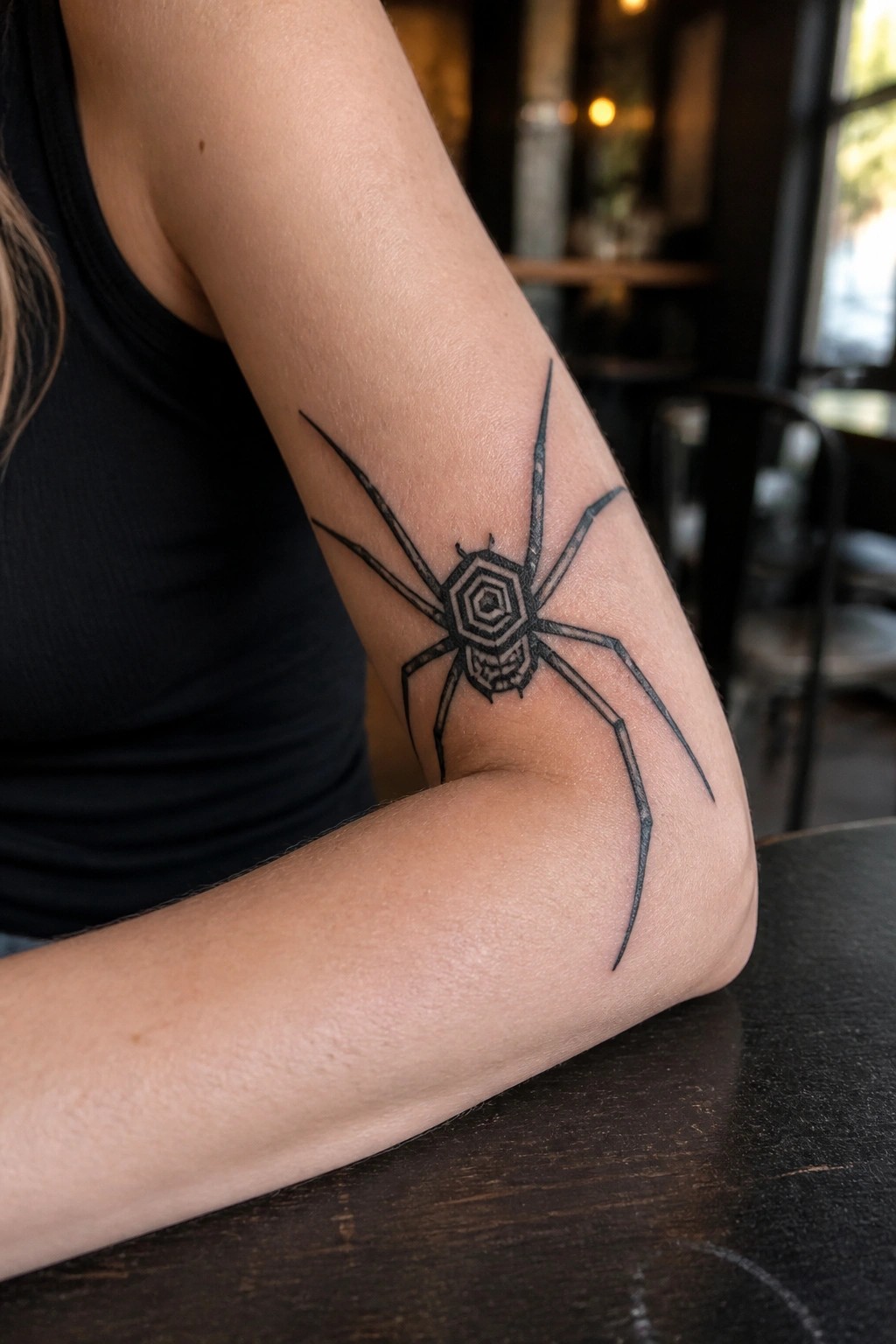
The elbow gives this spider room to spread without crowding the lines. Legs reach along the arm in both directions while the body sits centered on the joint. Blackwork keeps the geometric pattern bold and simple.
I like how the placement uses the natural bend to make the legs look active. It stays readable even when the arm moves.
Spider tattoo placed along the spine
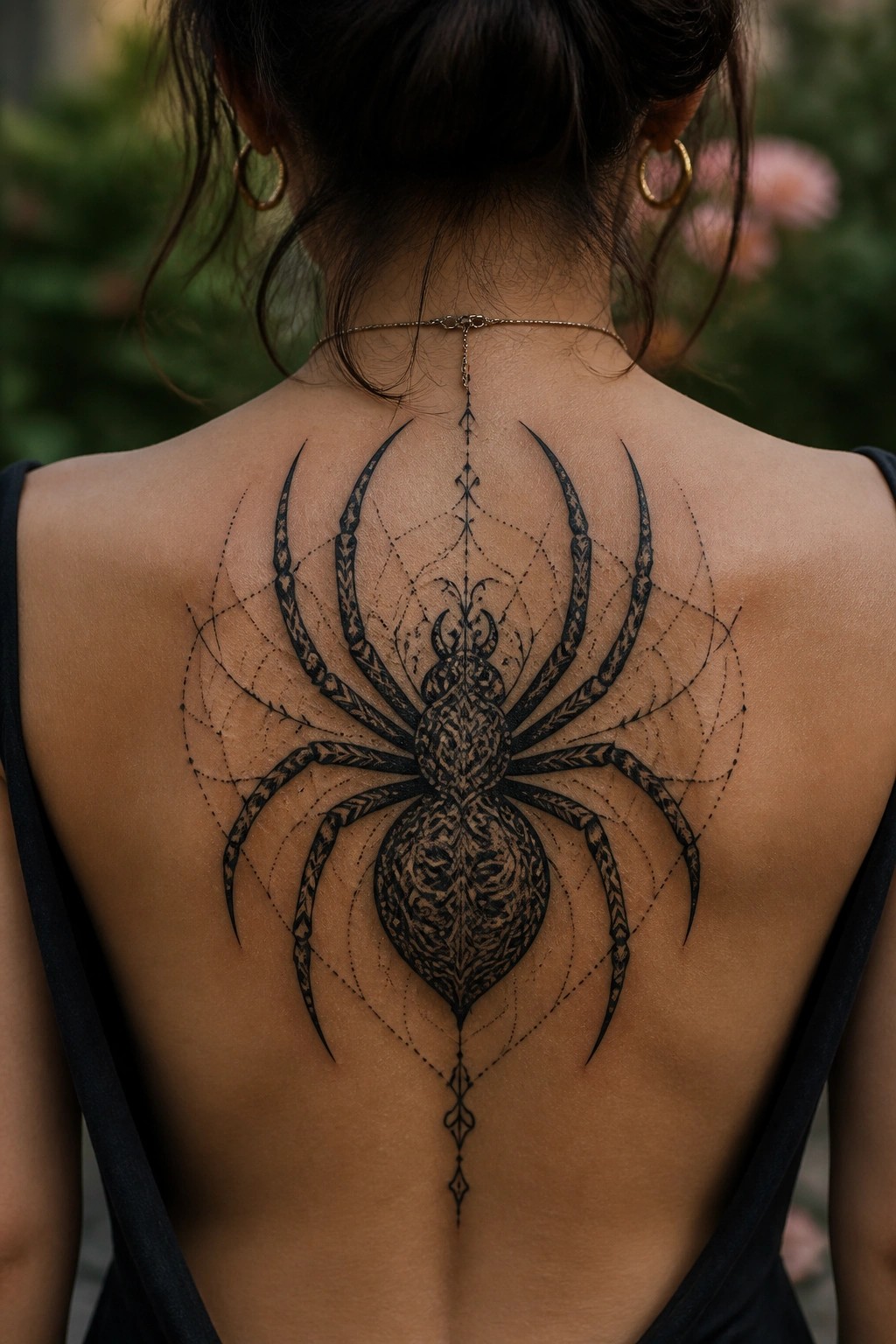
The tattoo runs vertically down the middle of the back. It begins near the neck and extends toward the lower back with the spider body centered on the spine. The legs reach out evenly to both sides.
This layout keeps the design symmetrical and easy to read at a larger scale. The blackwork lines stay sharp without bunching up near the shoulders or waist. I think the straight placement gives the tattoo a steady look instead of making it feel scattered across one area.
Small spider tattoo on the inner wrist
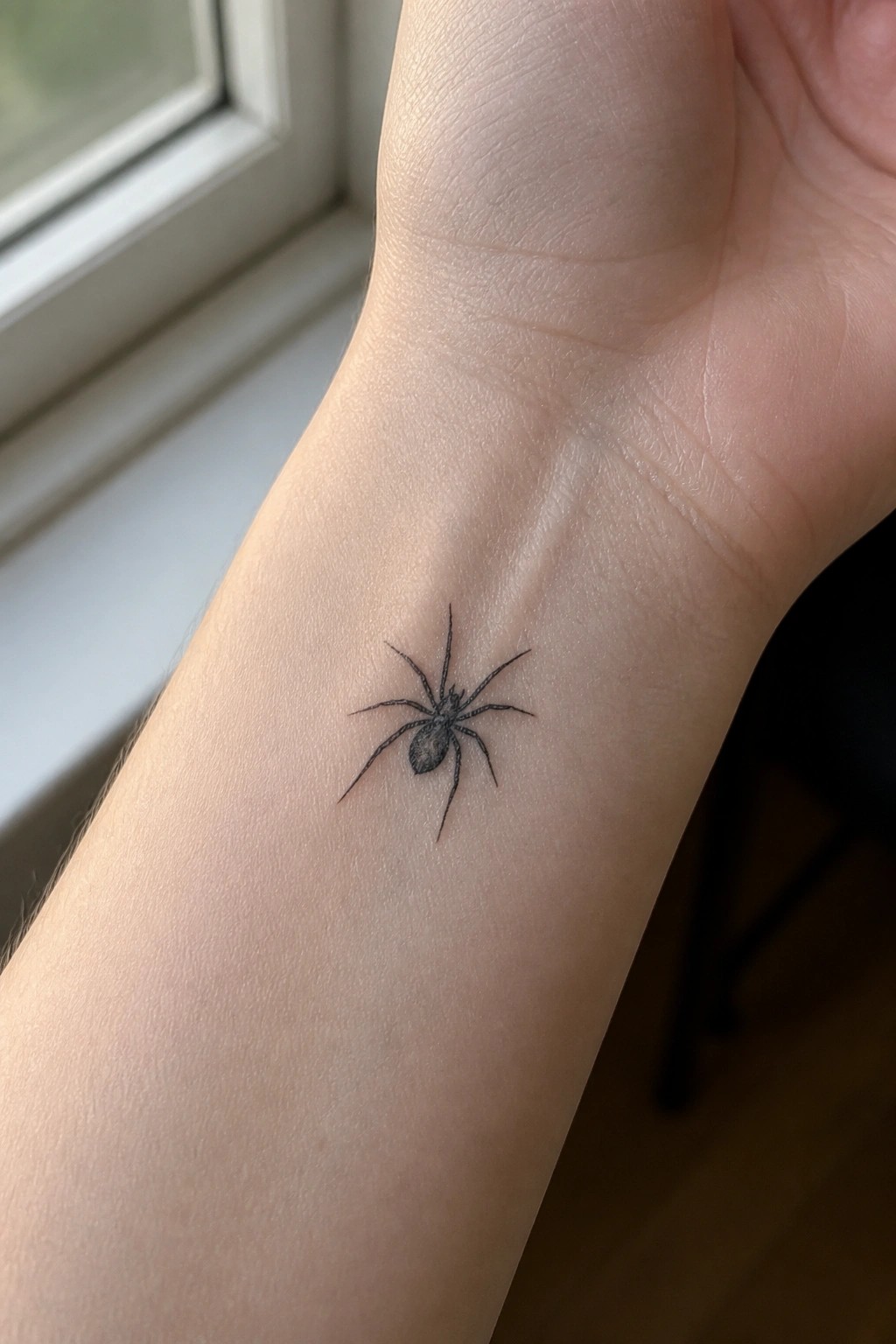
The inner wrist works well for a compact spider because the area stays flat and visible from most angles. A small scale keeps the legs from stretching too far across the skin. Blackwork lines hold their shape here without needing extra shading to stand out.
I like how the placement keeps the tattoo personal while still readable up close. It avoids the busier look that can happen on curved spots like the forearm.
Spider tattoo placed on the side
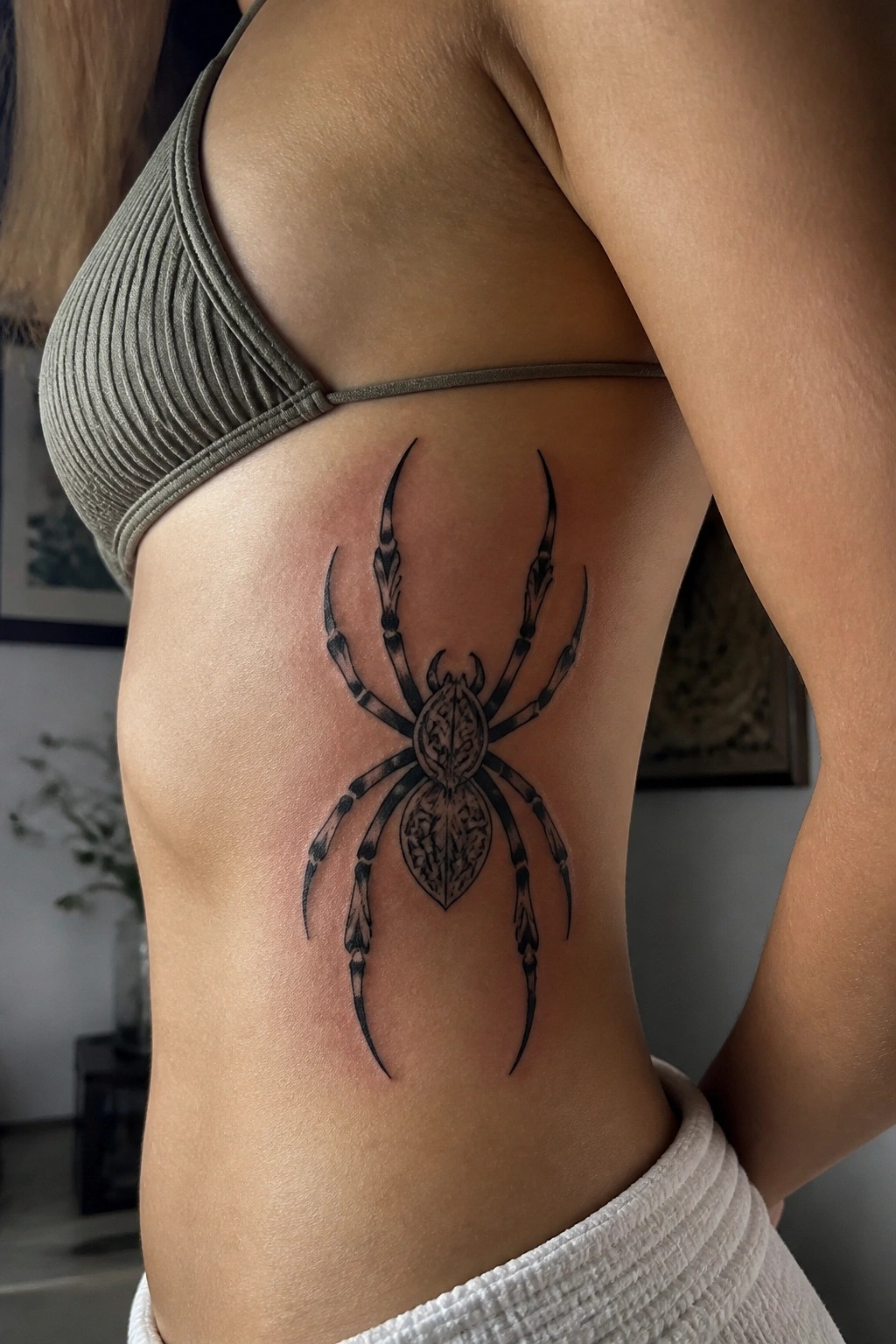
The spider sits on the side of the torso just under the ribs. This spot lets the legs stretch out along the natural curve without crowding. Blackwork lines stay sharp here because the skin is fairly flat and stable.
I think the placement gives the design enough space to show its full shape while keeping it easy to cover. The size feels balanced for this area and keeps the patterns readable.
Spider on the side of a finger
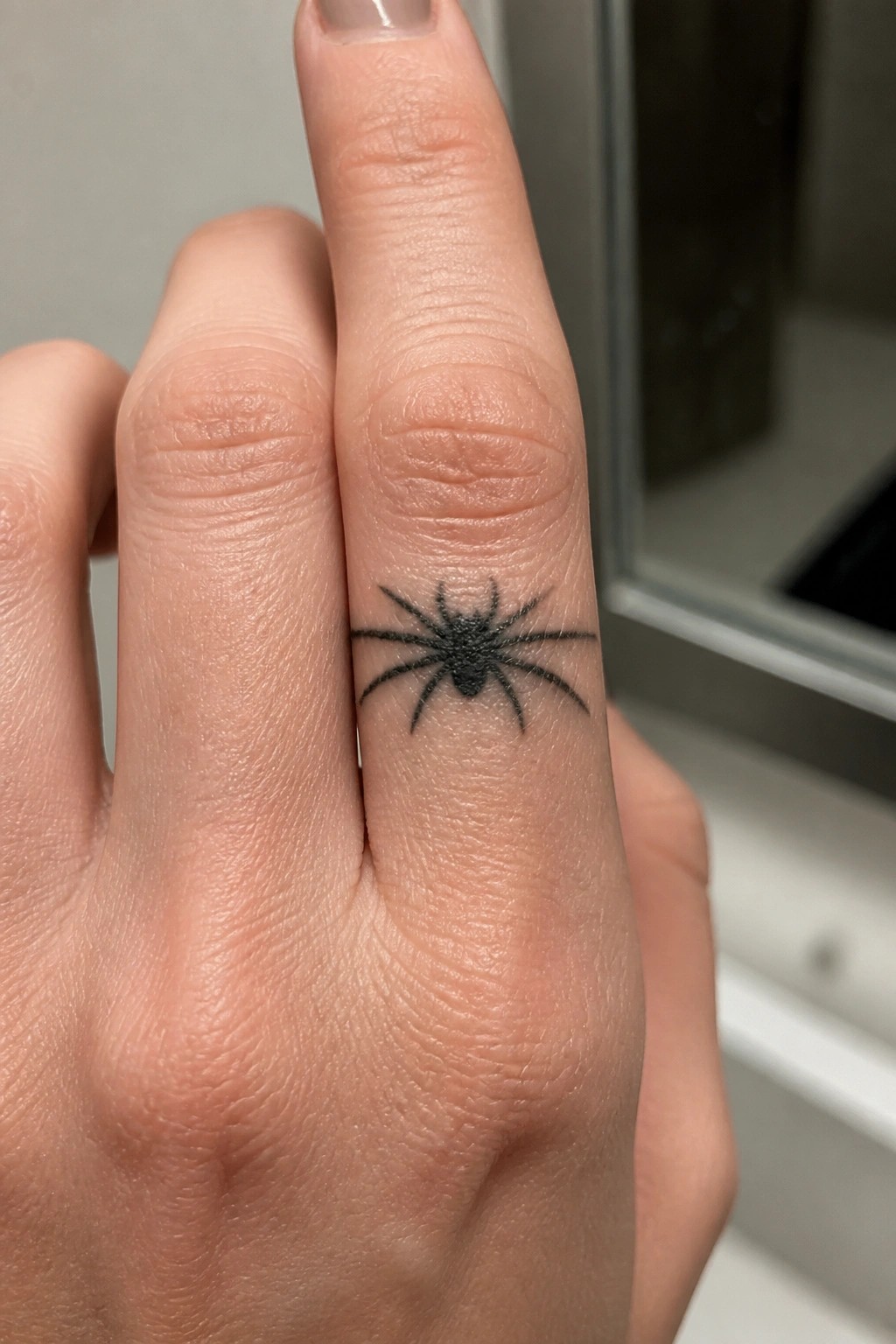
A spider placed on the side of the finger stays compact and contained. The blackwork approach uses solid fills and clean lines that hold up well on this narrow spot. The design avoids extra details so it does not feel crowded.
I think the side placement makes sense because it lets the tattoo appear or disappear depending on hand position. The scale stays practical while still giving the spider clear shape.
Blackwork spider on the thigh
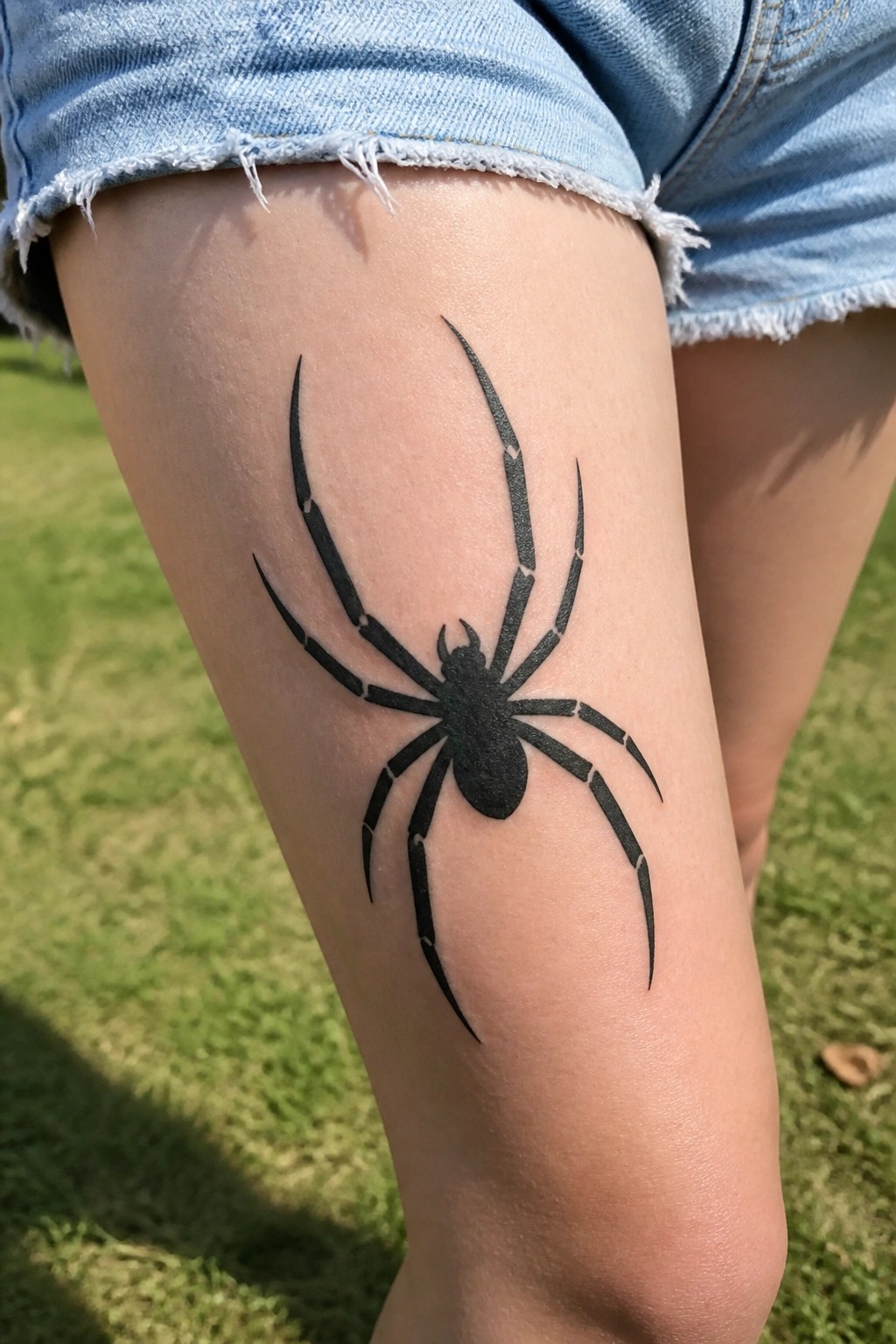
The thigh gives enough room for a spider this size without crowding the legs. Thick black lines and solid areas create the high contrast the style needs. The design sits flat on the skin and holds its shape when the leg is straight or bent.
I think the scale works because it lets the spider read clearly from a few feet away. Smaller versions on tighter spots often lose that same punch.
Spiders stacked along the spine
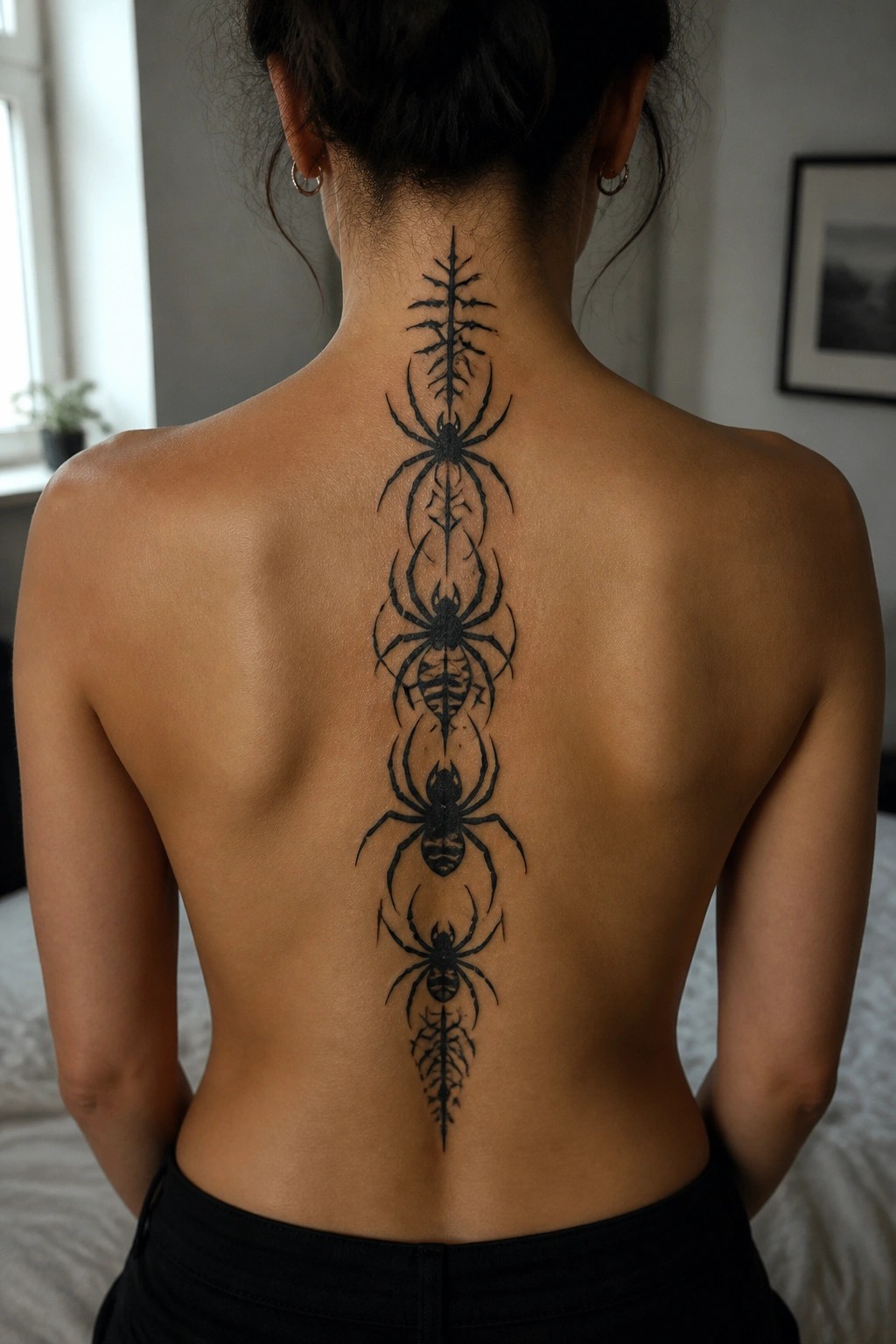
The tattoo sits right along the spine from the base of the neck down to the lower back. Multiple spiders are lined up vertically with matching shapes connecting them in a straight column. The blackwork style keeps the lines bold and the spiders evenly spaced.
This setup works because the spine gives the design a clear path to follow without extra adjustments. The stacked arrangement stays readable from top to bottom even though it covers a long area. I think the choice of spiders in a row makes the whole piece feel more structured than scattered.
Spider tattoo on the shoulder
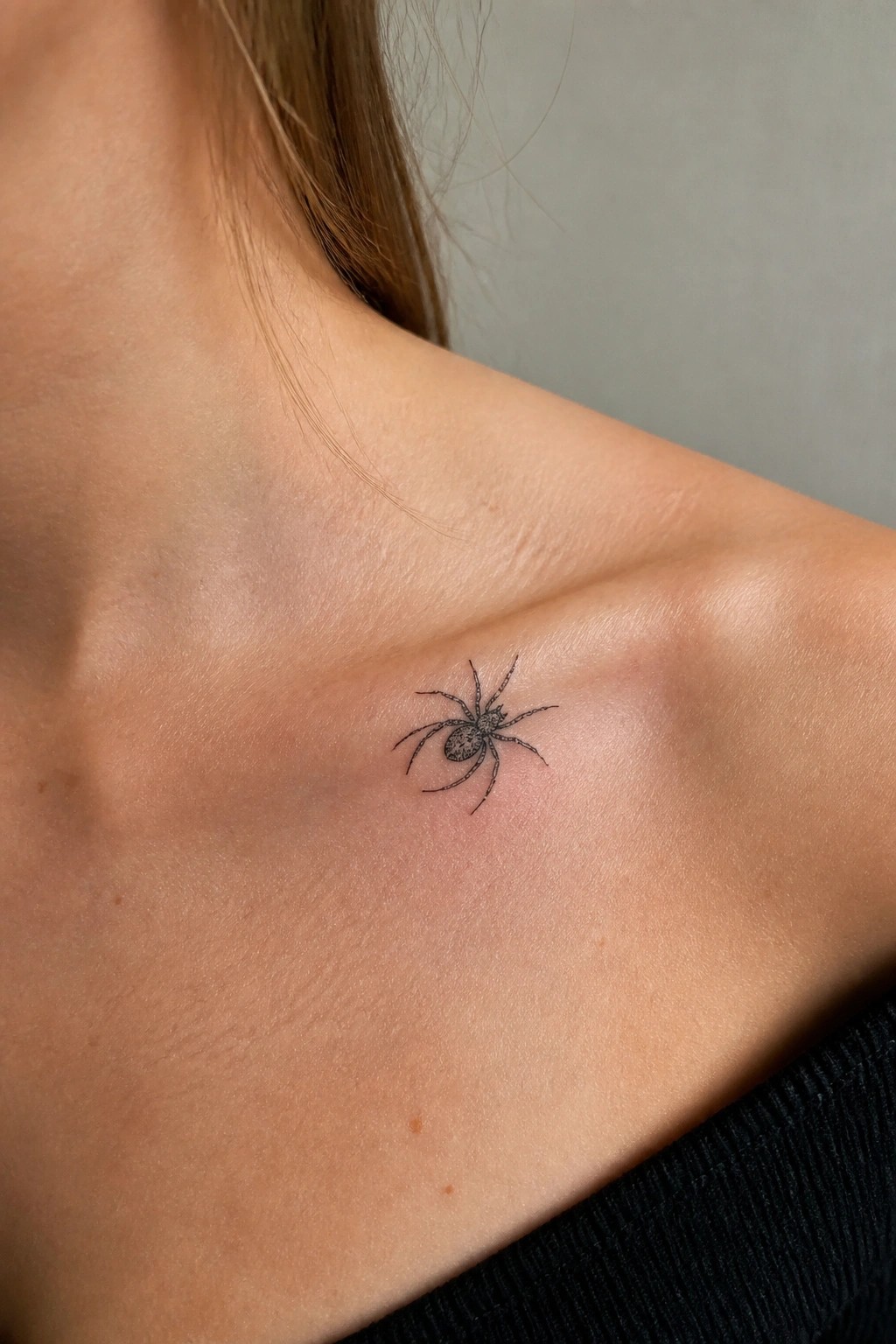
A small spider sits just below the collarbone on the shoulder. This placement keeps the design contained in one area without spreading out. The black ink lines stay sharp and easy to see.
I think the shoulder works here because it gives the spider room to sit flat without distortion. The scale stays balanced and simple at the same time.
Spider tattoo across the shoulder
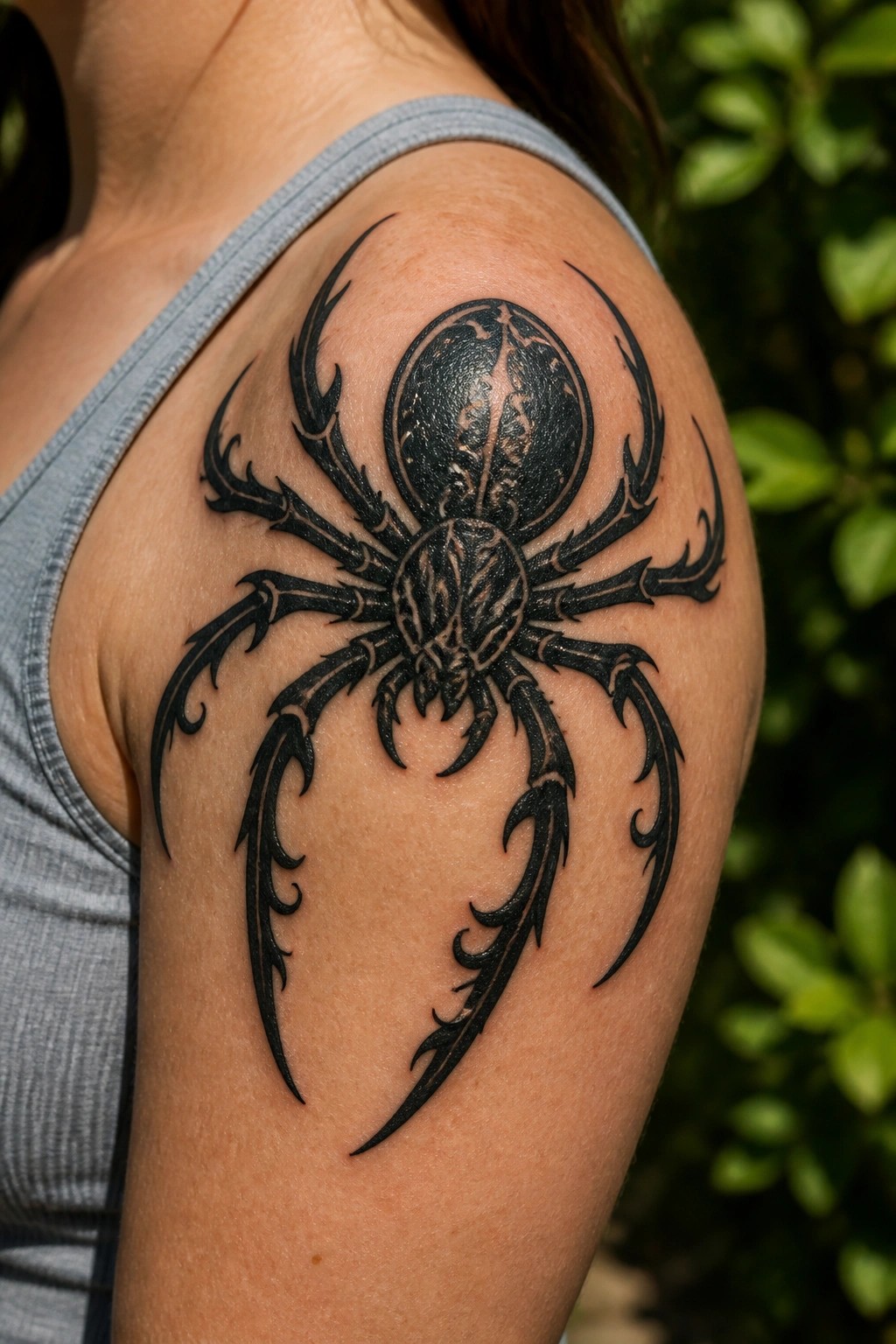
The tattoo places the spider right on the shoulder cap. Its body sits at the highest point while the legs spread down the arm and around the curve. This lets the design use the natural round shape of the area.
The size keeps the lines bold and easy to read from a distance. I think the placement works because it gives the spider room to stretch without looking cramped.
Spider tattoo on the ankle
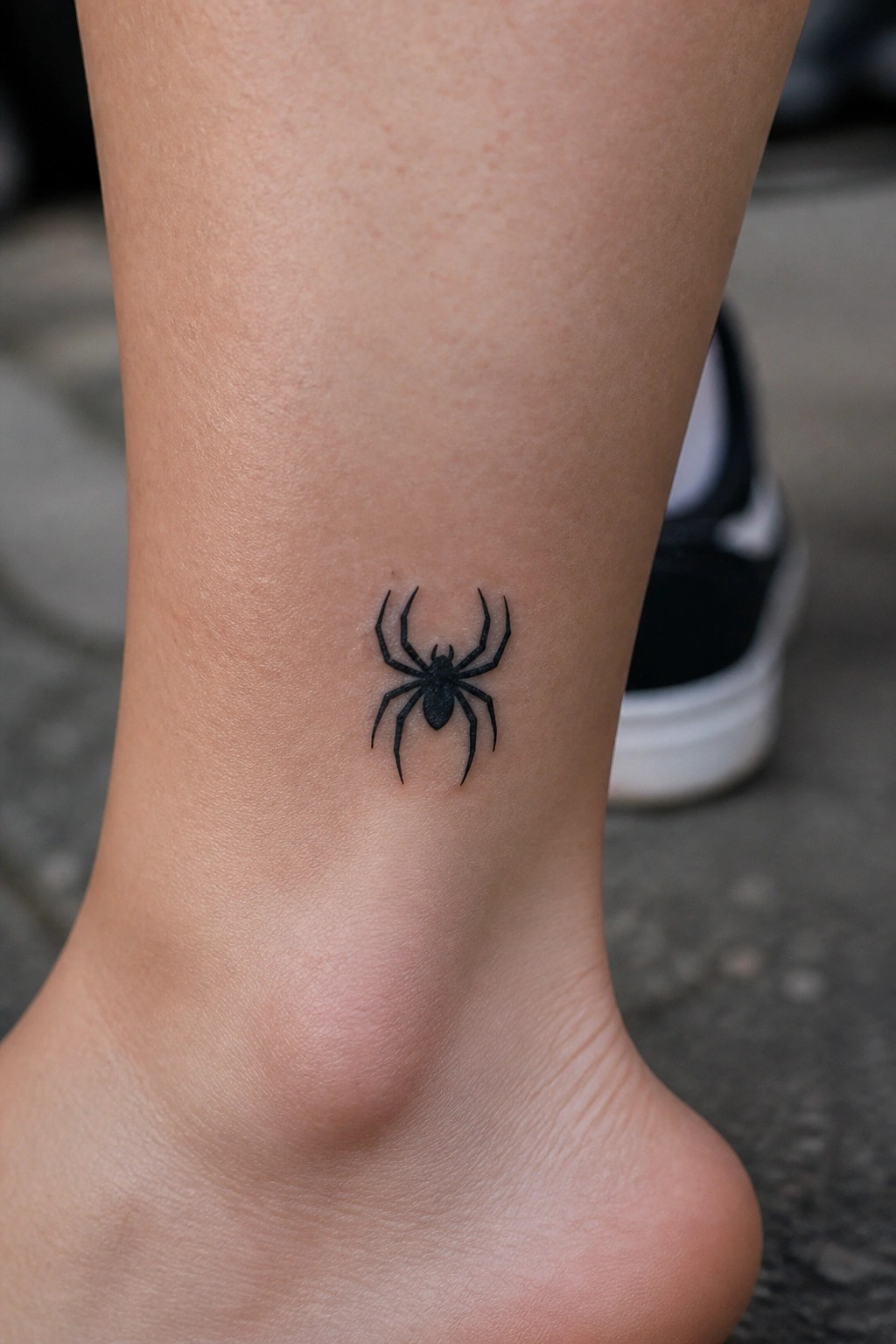
The ankle makes a practical spot for this spider. The small size fits the area without overwhelming it. Black ink gives the design strong contrast.
I think the placement works because it keeps the tattoo subtle yet easy to notice. The spider stays simple and direct in this location.
spider tattoo on the hip
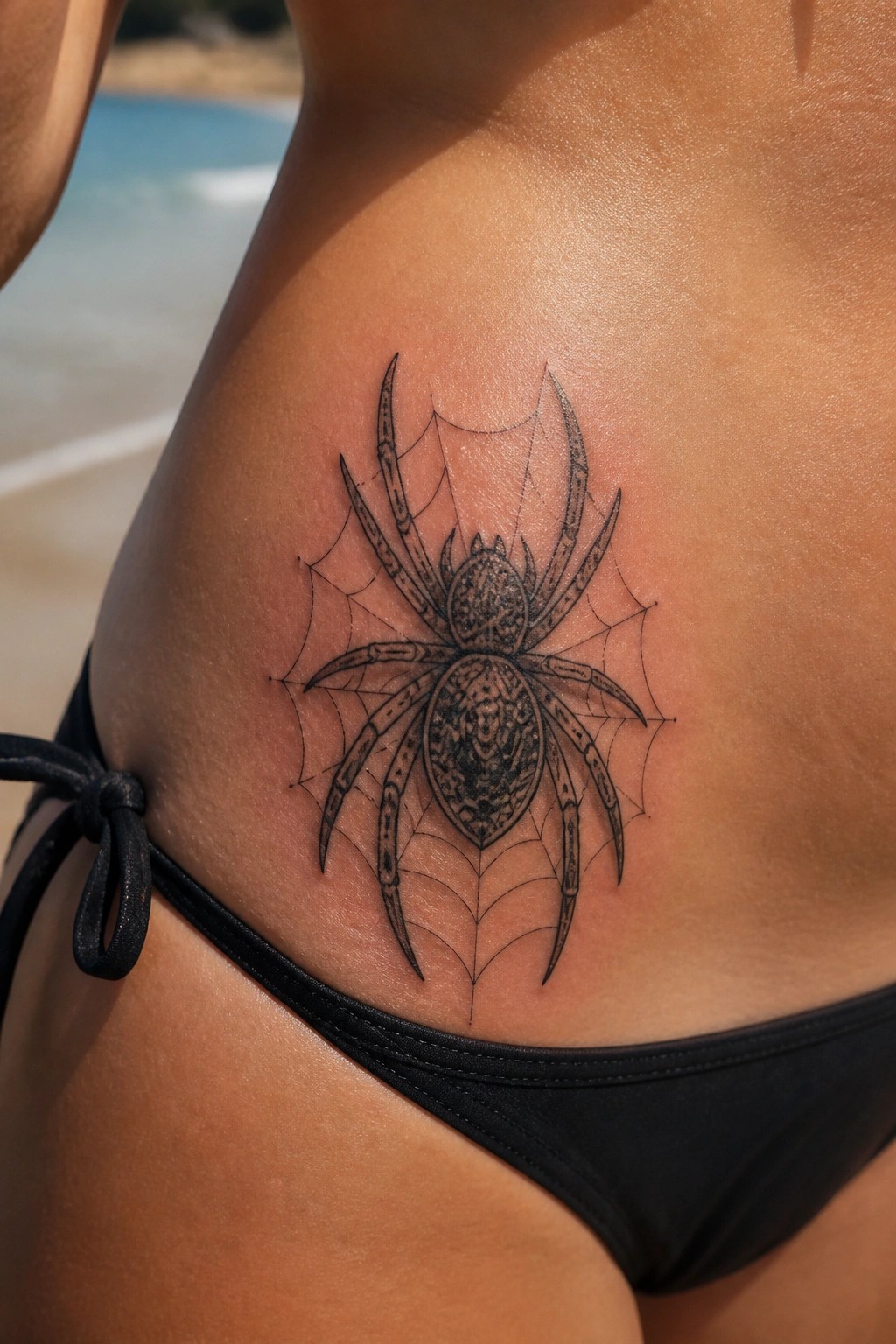
A spider and web design sits on the hip just above the bikini line. The placement lets the web spread across the skin in a natural way. Black lines keep the spider clear and the overall shape contained.
I like how the hip curve supports the web without forcing any awkward angles. This spot also makes the tattoo simple to show or hide depending on clothing.
Spider tattoo centered below the neck
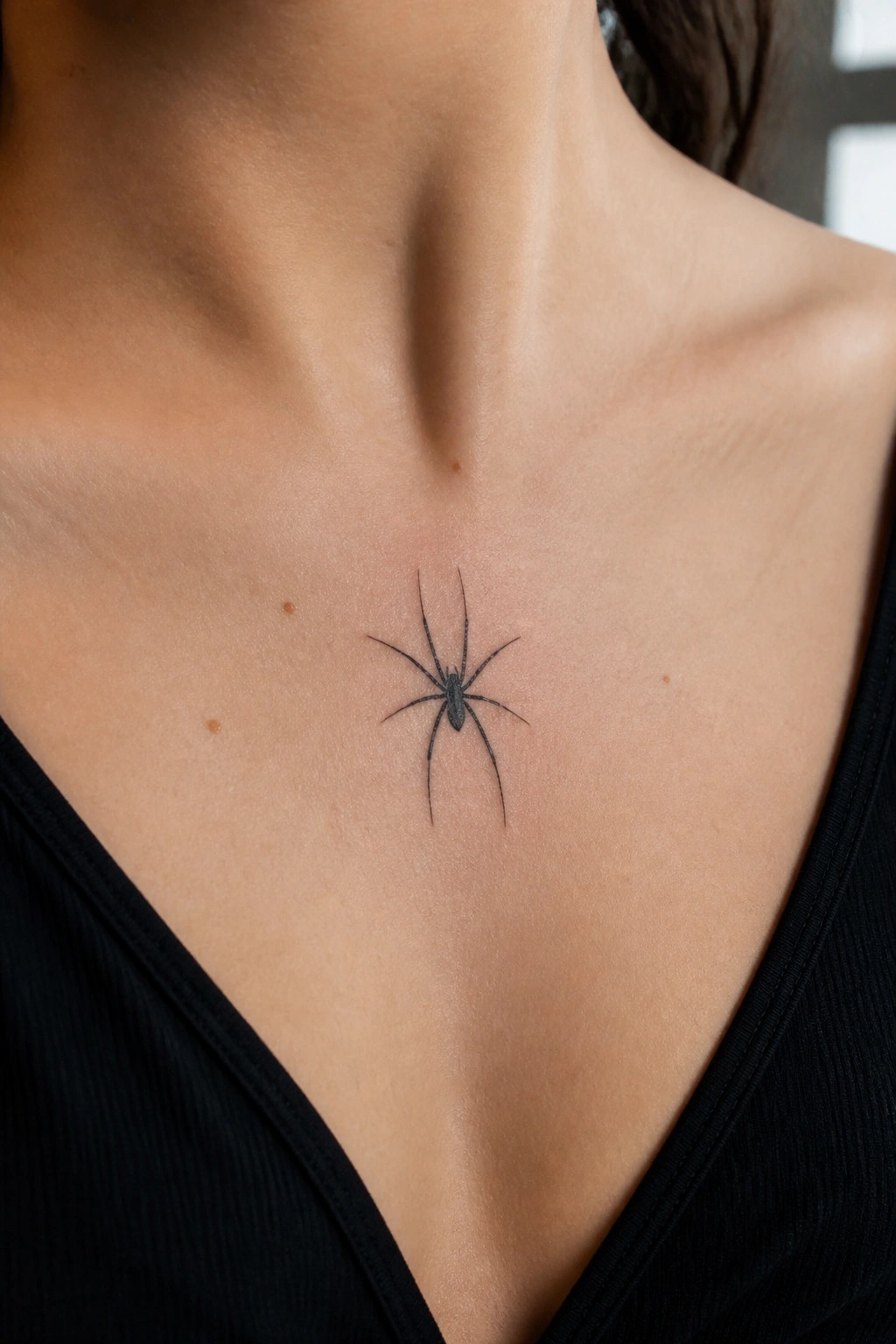
The spider sits directly in the middle of the upper chest. Thin black lines keep the legs and body defined without filling in extra space. This spot puts the design right where the skin stays flat and open.
I think the central placement helps the spider stay balanced and visible. The size also keeps the lines readable even from a short distance.
Spider tattoo centered on the leg
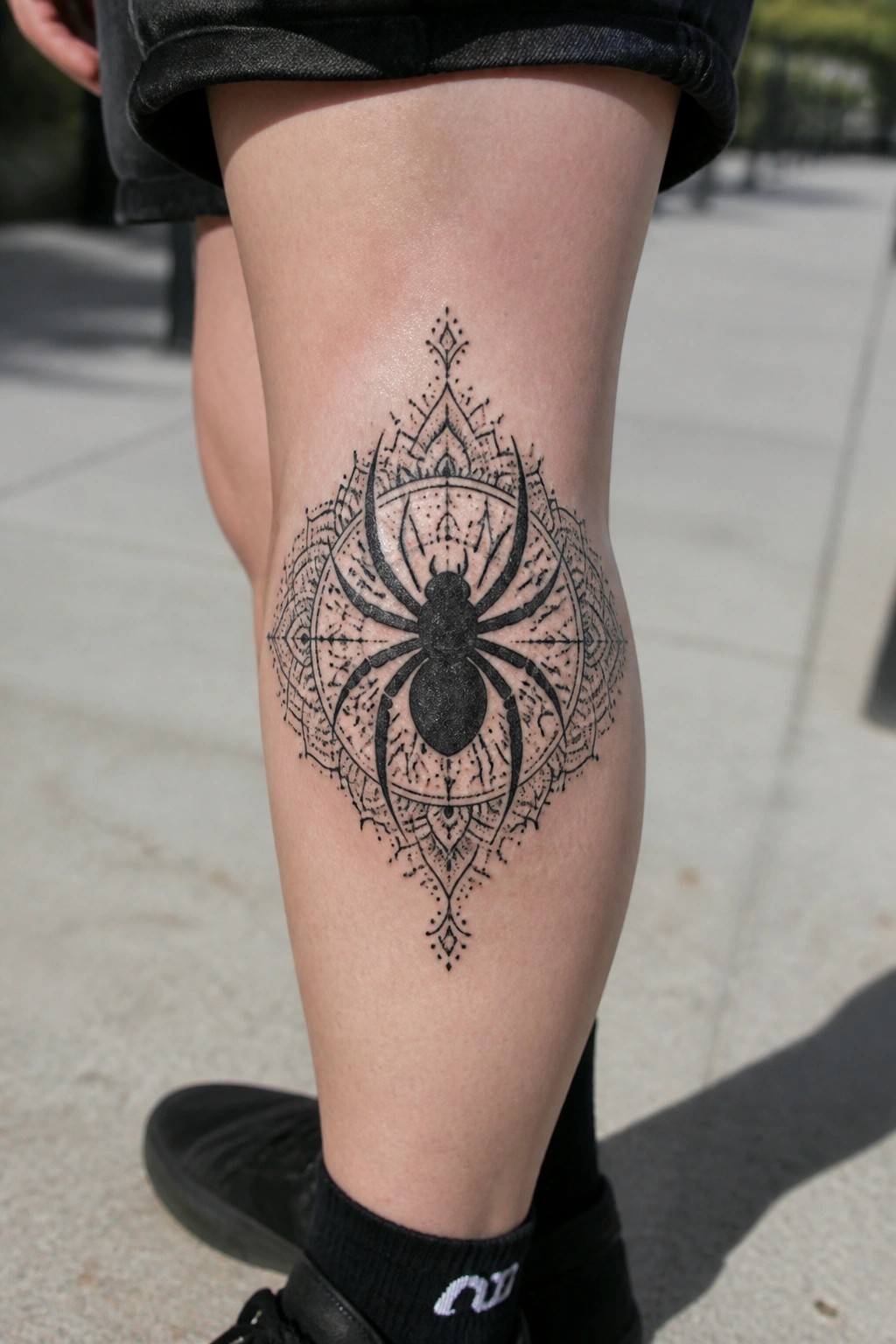
This placement puts the spider right at the front of the leg where the skin stays relatively flat. The circular frame around it stays balanced and the full design shows without much distortion. Blackwork lines keep the spider bold in the middle while the outer patterns add structure without crowding the space.
The size works because it covers enough area to show the details but still leaves room around the edges. I think the leg spot keeps the whole thing readable even when the person moves.
Spider tattoo on the lower abdomen
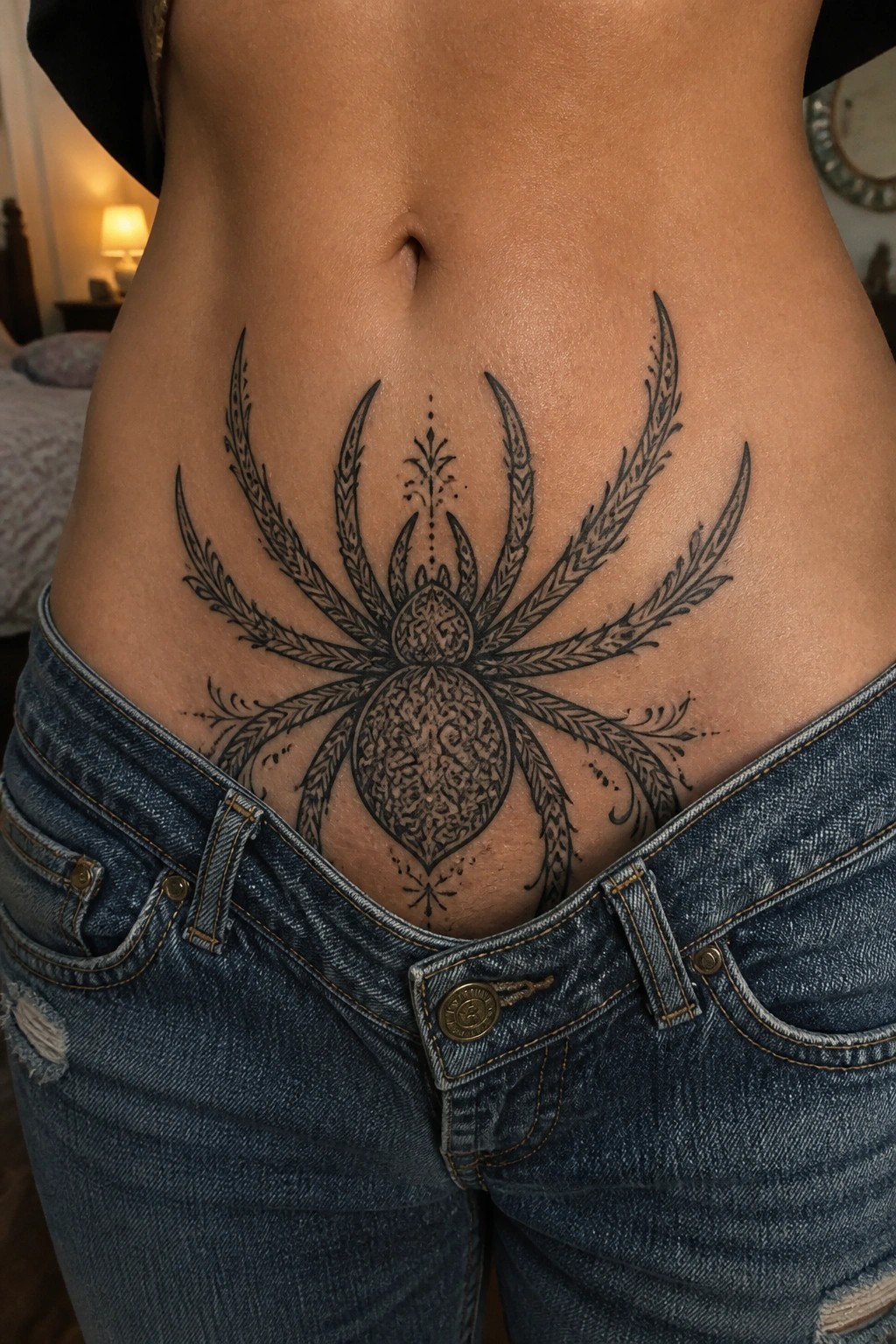
This spot lets the spider stretch out evenly from center to sides. The flat surface keeps the legs from bunching together. It also gives the body enough room for the inner patterns to stay visible.
I chose this placement because the design needs width more than height. The result stays easy to read even when the skin moves.
Spider tattoo on the back of the hand
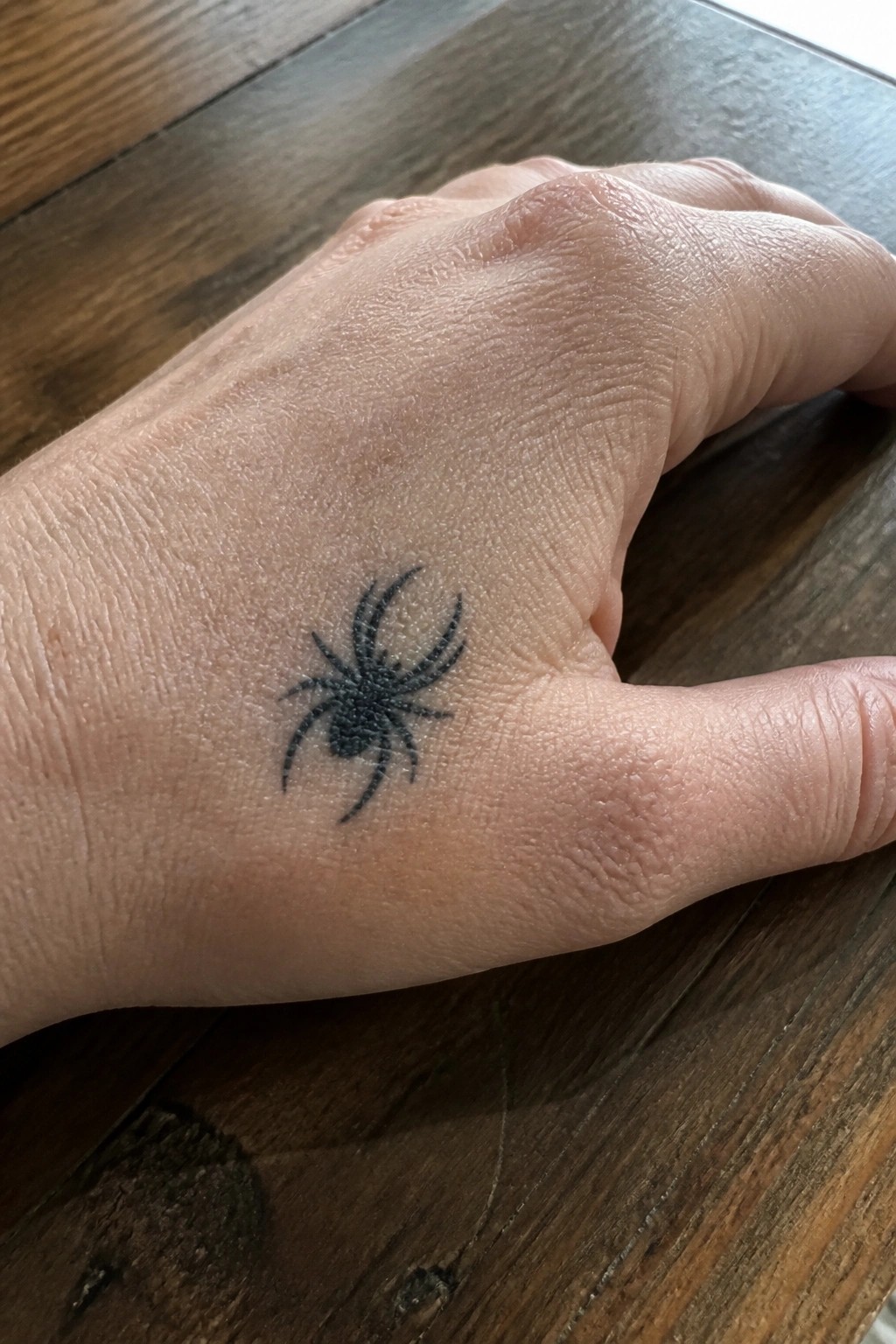
The back of the hand places this spider in an open area. Its small scale keeps the tattoo neat on the skin. Blackwork lines give it strong contrast.
I think the hand works for this idea because the spider stays noticeable without filling much space. The simple shape holds up well in that spot.
Spider tattoo on the upper arm
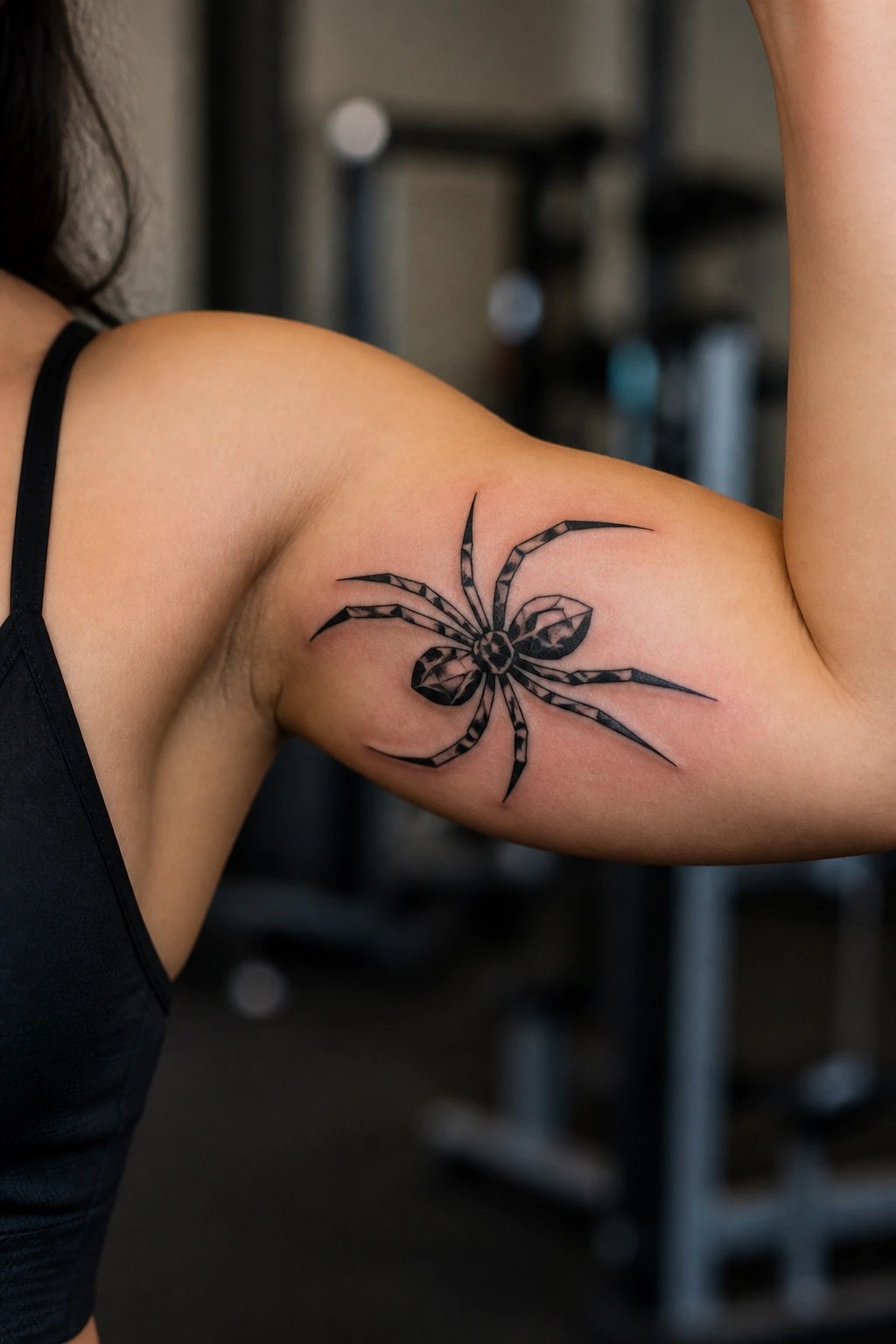
The upper arm gives this spider enough space for its legs to stretch out in a natural spread. Blackwork lines and geometric shapes keep the whole piece sharp and easy to read from a distance.
The medium size helps the design sit comfortably without crowding the area. I think the placement makes sense because the spider stays visible even when the arm is at rest.
Lower back spider tattoo
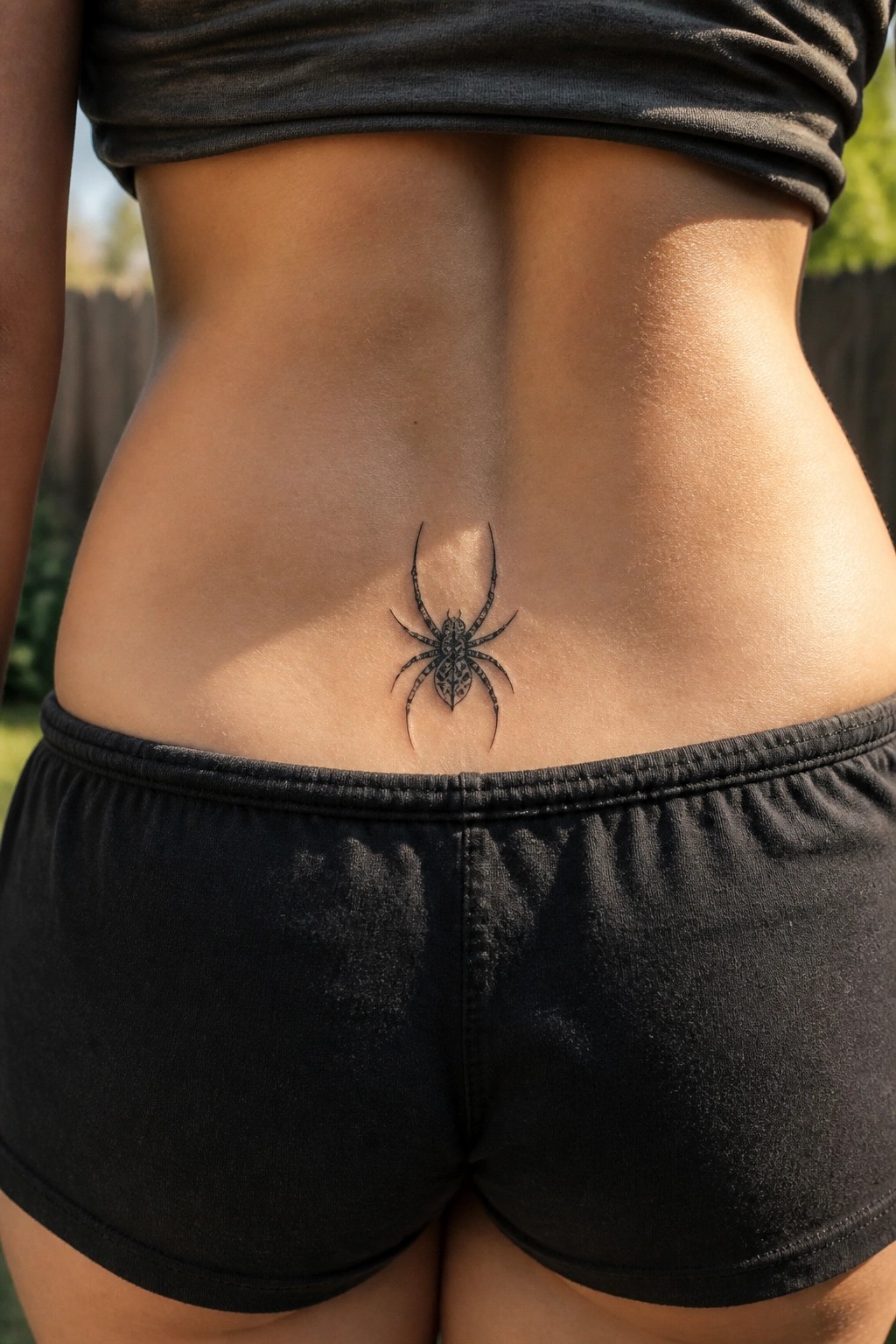
The spider sits centered on the lower back just above the waistband. Black lines shape the legs and body with light internal patterns. This spot lets the design stay visible when wanted but hidden under normal clothing.
I think the placement works because the spider stays compact and balanced on flat skin. The blackwork lines stay clear without needing more room to spread.
Spider on the upper back
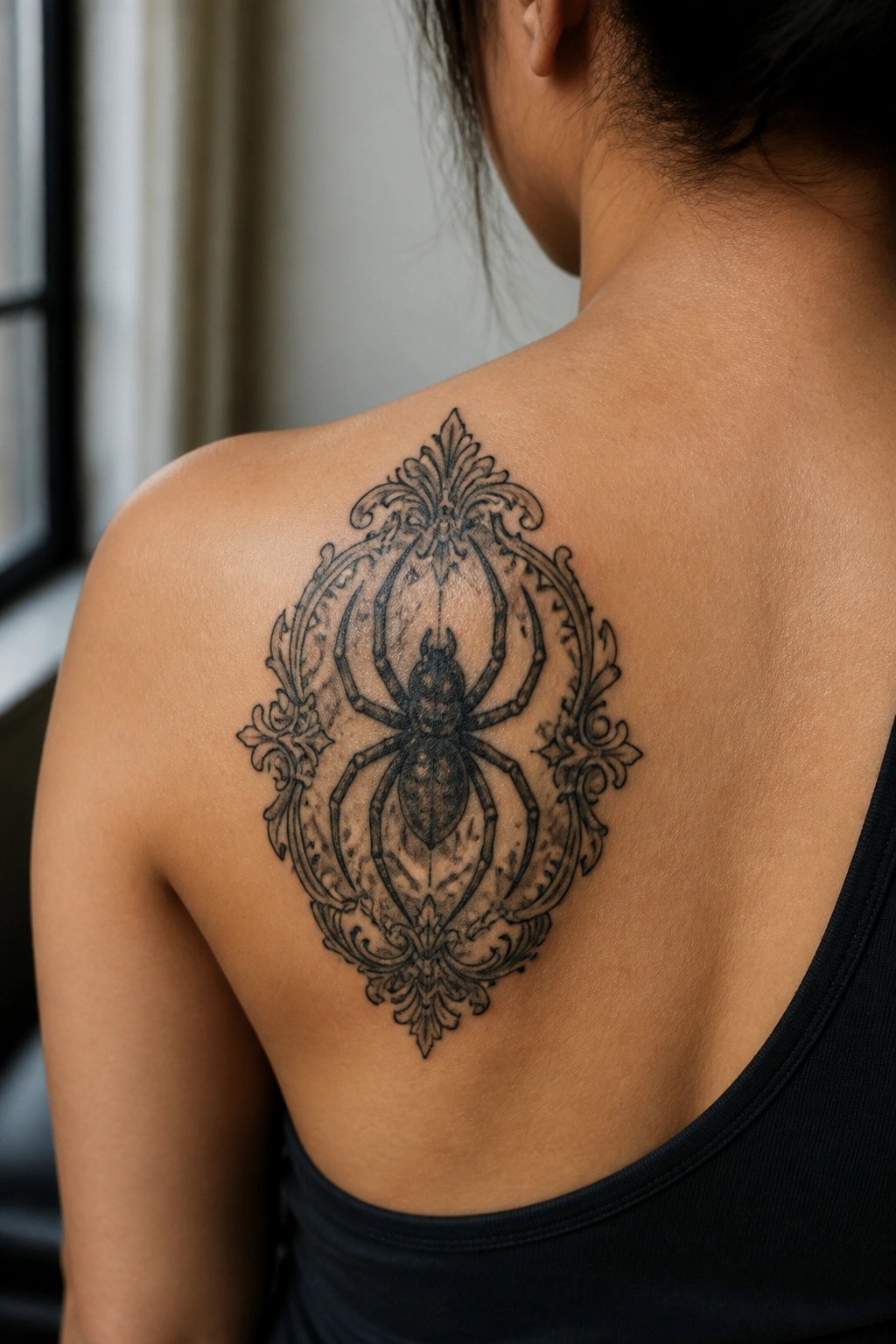
The upper back works well for this kind of design because it gives a flat space for the full frame to sit evenly. The spider sits centered with the decorative border built around it in solid blackwork. This keeps the whole piece balanced without needing to wrap around curves or joints.
I think the scale helps here since the details stay clear even from a short distance. The frame adds structure so the spider does not feel lost on its own.
Spider tattoo on the upper arm
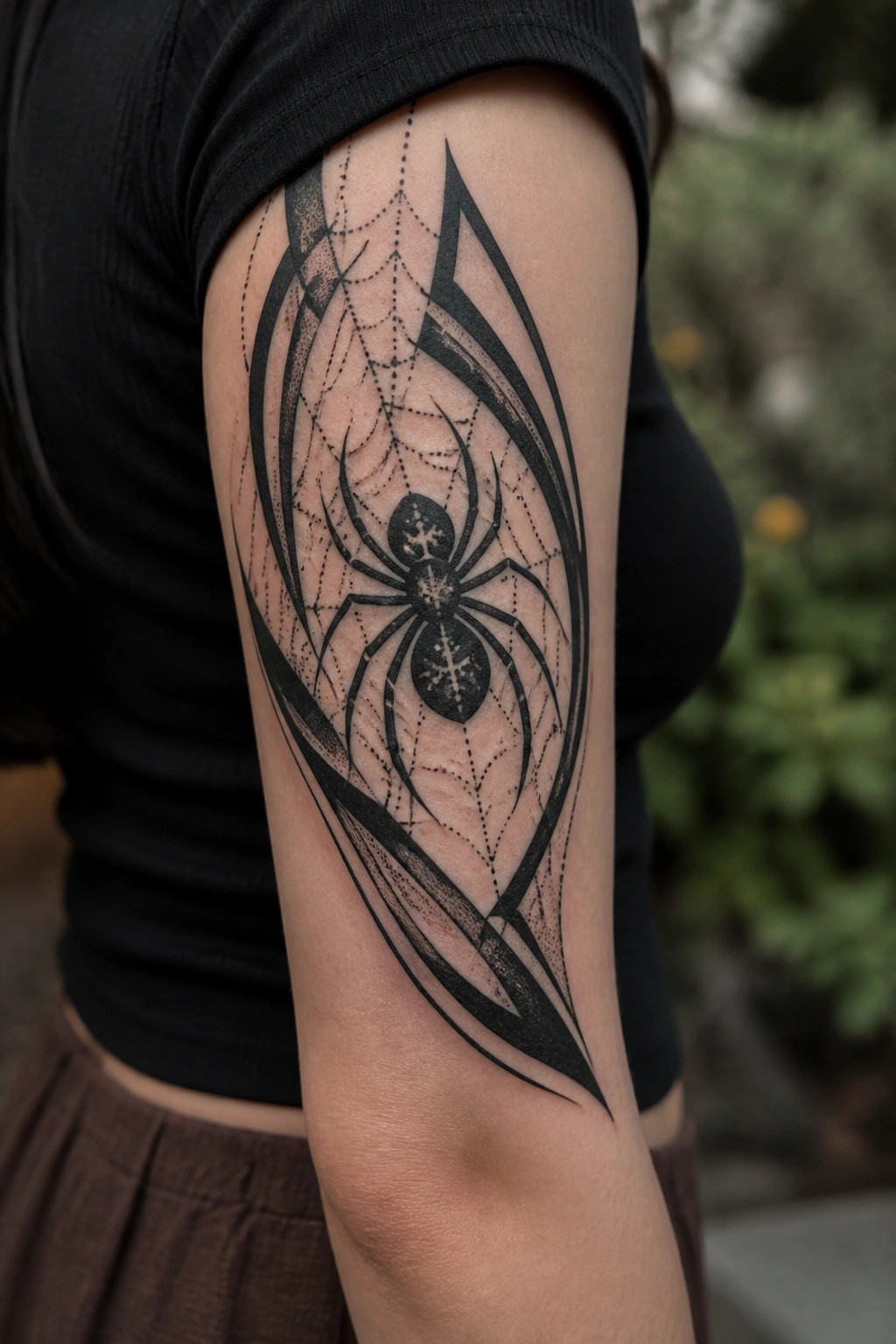
The upper arm gives this spider tattoo room to stretch vertically. The placement lines up with the arm’s natural shape so the web sits evenly. Bold black lines keep the whole piece visible even from a distance.
The central spider draws the eye without extra elements fighting for attention. I think the scale works because it fills the space without crowding the skin.
Blackwork spider covers the upper arm
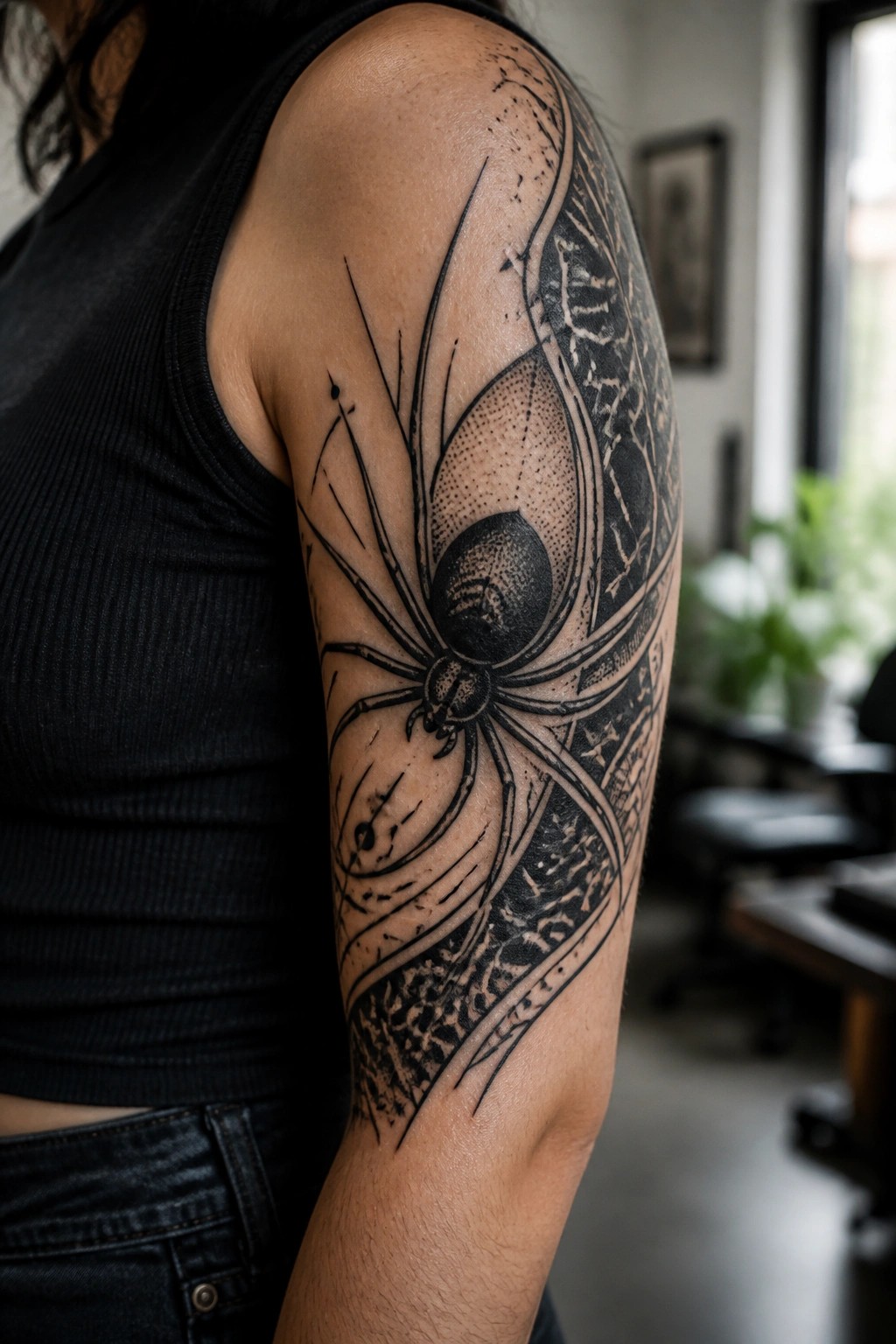
The spider sits across the shoulder and upper arm. Its legs stretch outward and follow the natural lines of the arm. Thick black shading on the body gives the design strong contrast.
I think the size works well here because it fills the area without crowding the skin. The placement keeps the whole piece visible from most angles.
Spider tattoo stretches across the upper arm
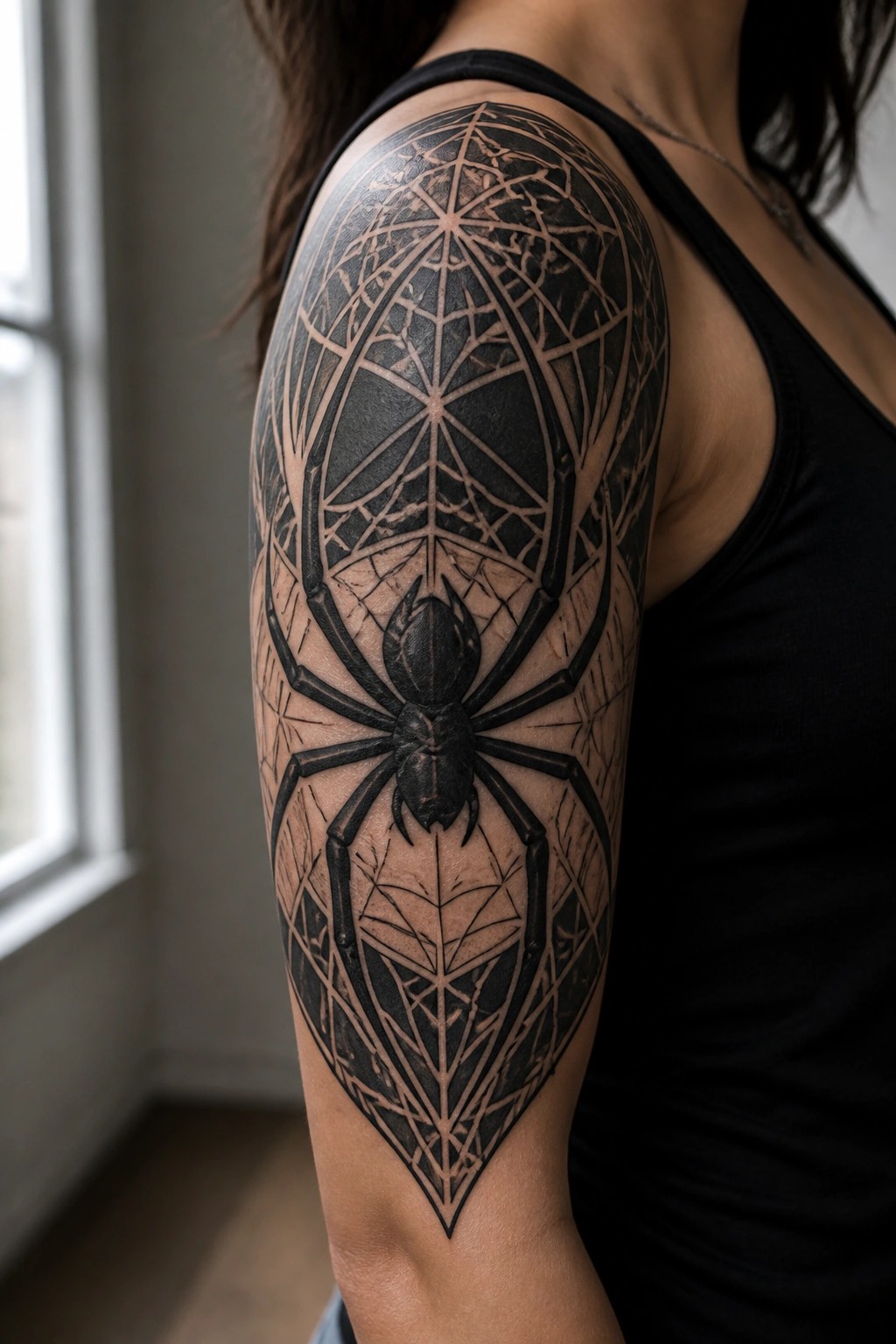
The design puts a large spider at the center of the upper arm. A web pattern spreads outward in straight lines and fills most of the visible space. Blackwork shading keeps the spider solid while the outer sections stay lighter.
This spot works because the arm gives enough room for the full web without crowding the shoulder joint. The scale also helps the main lines stay bold once the tattoo heals.
Small spider on the inner wrist
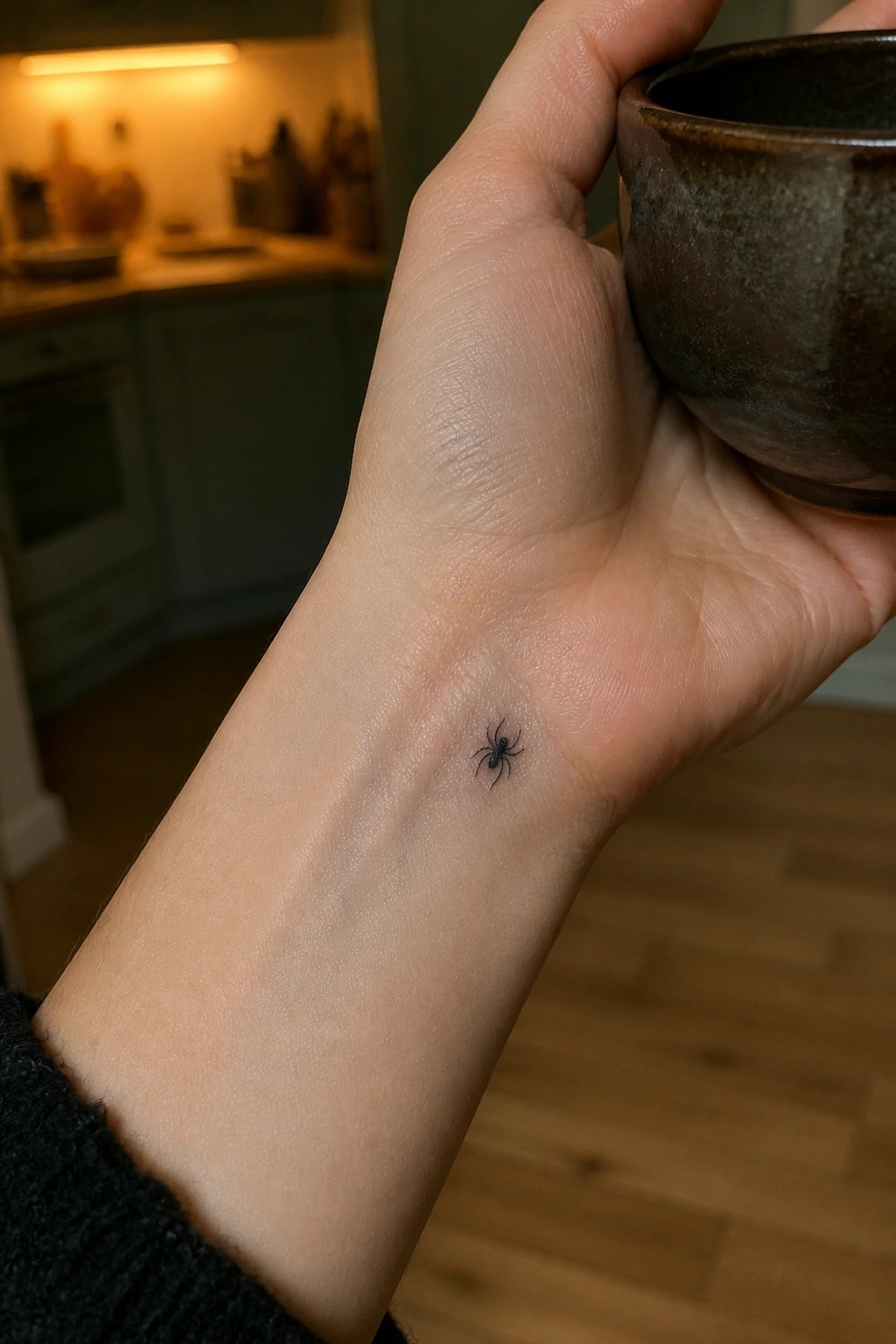
The inner wrist keeps this spider tattoo out of direct view most of the time. A compact blackwork spider works in that spot because it needs little room and stays simple. The size stays small enough that the design does not compete with daily movement.
I chose this placement because the wrist skin holds fine lines without spreading. It also lets the tattoo stay personal instead of becoming a statement piece. The plain style keeps the focus on the shape rather than extra detail.
Frequently Asked Questions
1. What is blackwork tattooing and why does it work well with high contrast ink for spider designs? Blackwork involves using solid black ink and dense linework to create bold patterns without shading or color. This style produces strong visual impact because the deep black stands out sharply against skin tones, making intricate spider legs and webs appear crisp and detailed. High contrast ink enhances this effect by ensuring the design remains clear even as it settles during healing.
2. Which body placements suit these spider tattoo designs best for women? Popular spots include the inner forearm, upper back between the shoulder blades, ribcage area, thigh, and ankle. These locations allow the geometric patterns to flow naturally with body curves while remaining easy to conceal or display. The article highlights how certain designs adapt to curved surfaces like the hip or collarbone for balanced proportions.
3. How long does it typically take to complete one of these blackwork spider tattoos? Most designs from the collection require two to four hours depending on size and detail level. Smaller spiders on wrists or ankles finish faster, while larger web integrated pieces on the back need multiple sessions. Artists often recommend spacing appointments to allow skin recovery between passes for optimal ink saturation.
4. What aftercare steps help blackwork spider tattoos heal with maximum contrast? Clean the area gently with unscented soap twice daily and apply a thin layer of fragrance free moisturizer. Avoid sun exposure, tight clothing, and submerging in water for at least two weeks. Consistent moisture prevents scabbing that could pull out ink, preserving the sharp lines and solid fills that create high contrast.
5. Are the designs in the article customizable for personal meaning? Yes, many spider motifs can incorporate subtle elements like geometric backgrounds or negative space to reflect individual stories. Discussing adjustments with an experienced blackwork artist allows modifications to scale, leg positioning, or added patterns while keeping the high contrast structure intact.
