

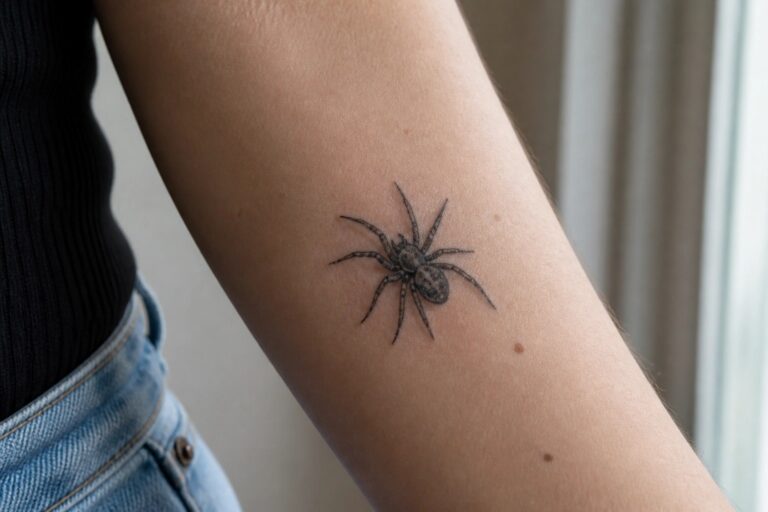
I think realistic spider tattoos bring such a cool mix of edgy and artistic vibes to any look.
My own experiences with tattoo inspo have shown me how those tiny details like legs and shadows make all the difference in creating texture that feels alive.
If you are into designs that stand out these ideas for women highlight some truly lifelike options worth considering.
A small spider on the forearm
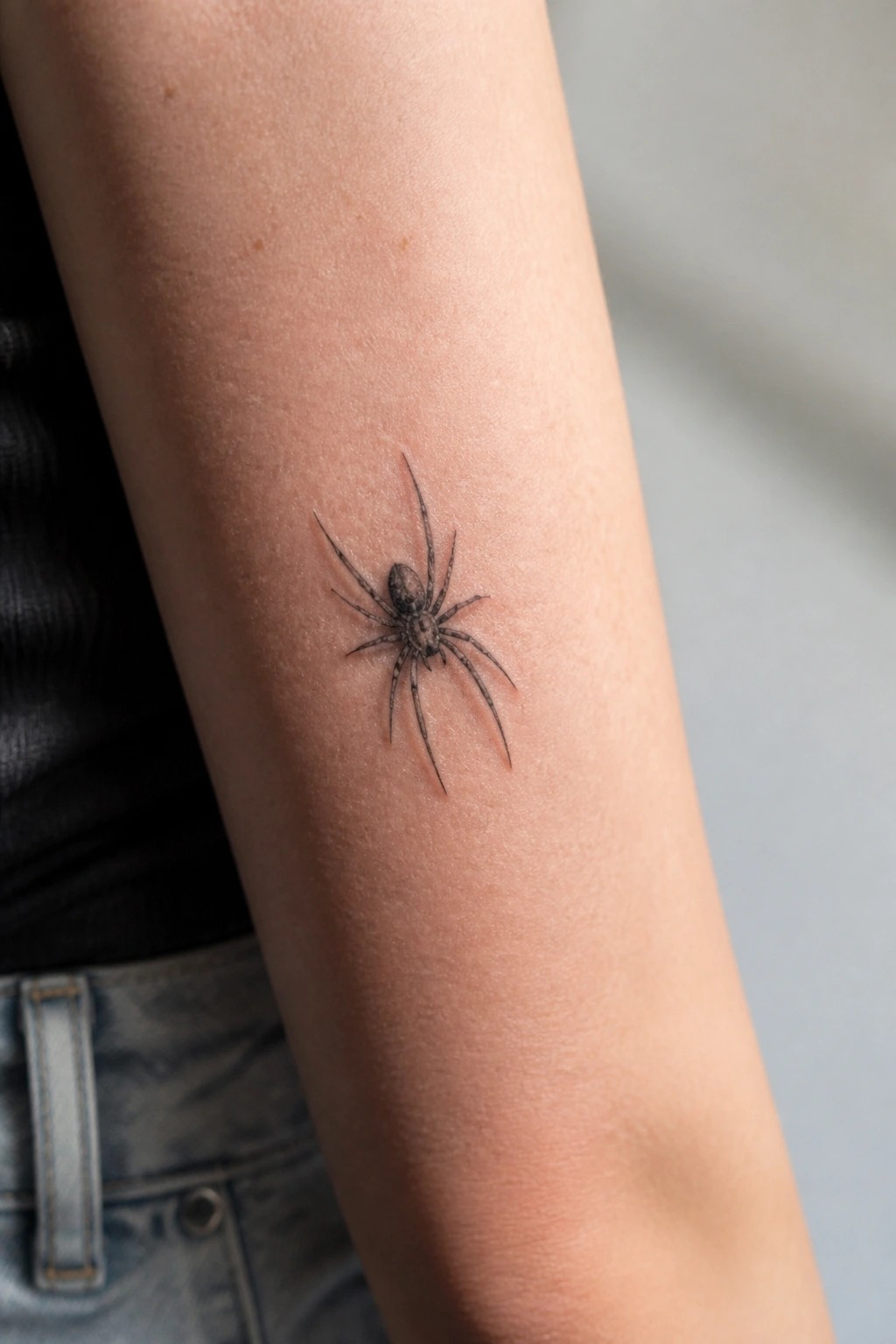
The inner forearm gives this spider a flat area where the legs can stretch out evenly. The compact size keeps everything in proportion without crowding the skin. Black and gray shading defines the body and joints clearly.
I like how the placement lets the tattoo sit naturally along the arm. It stays easy to show or hide based on clothing. The realistic style works at this scale because it avoids any need for extra detail.
Spider tattoo on the side
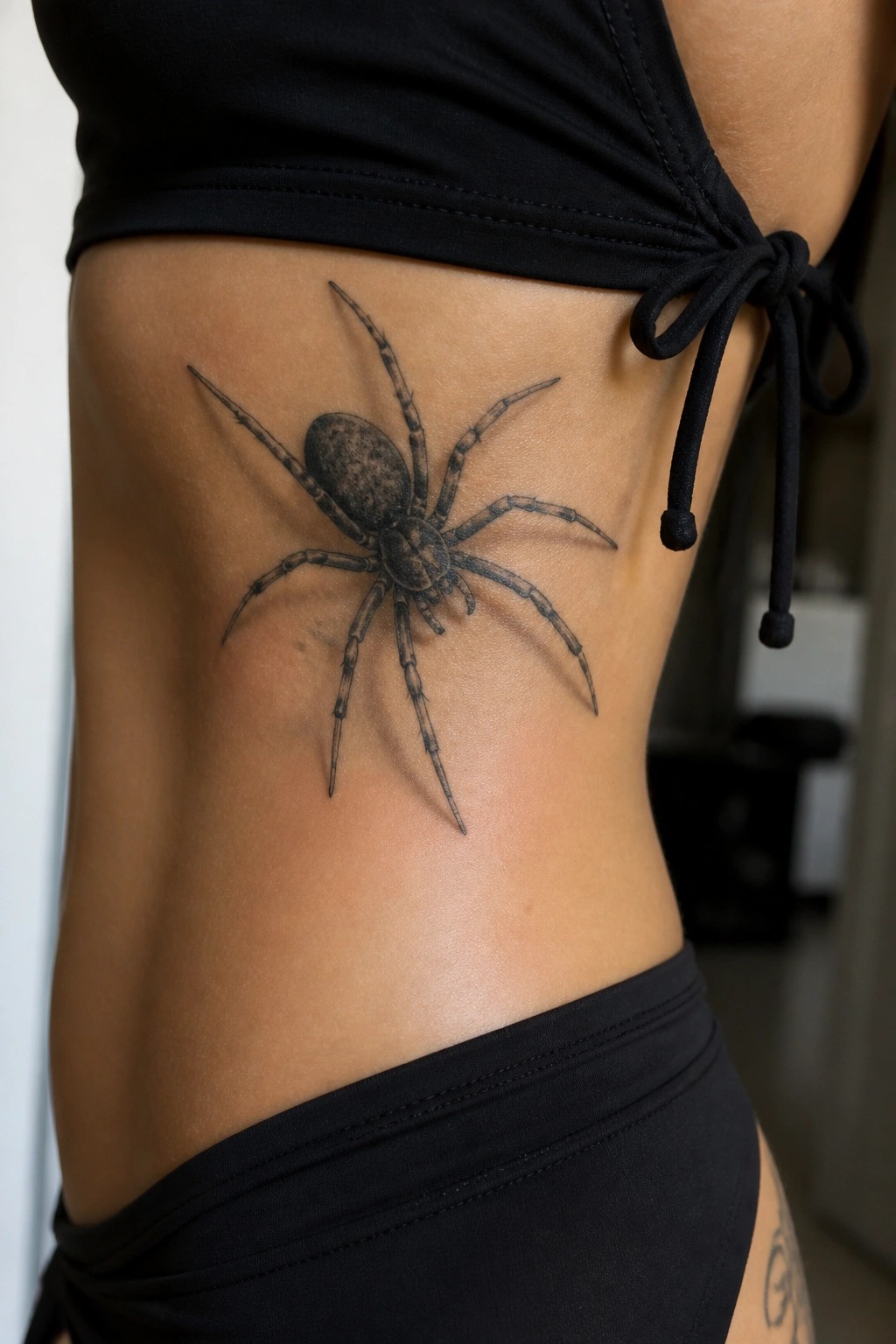
The spider sits on the side of the torso right below the ribs. This spot lets the legs stretch out across the skin without looking cramped. The size feels right for showing the full body and all the leg details at once.
I think the placement works well here because it follows the natural line of the body and gives the spider room to look balanced. The black and grey shading helps the shape stay clear even on skin that moves a lot.
Realistic spider on the ankle
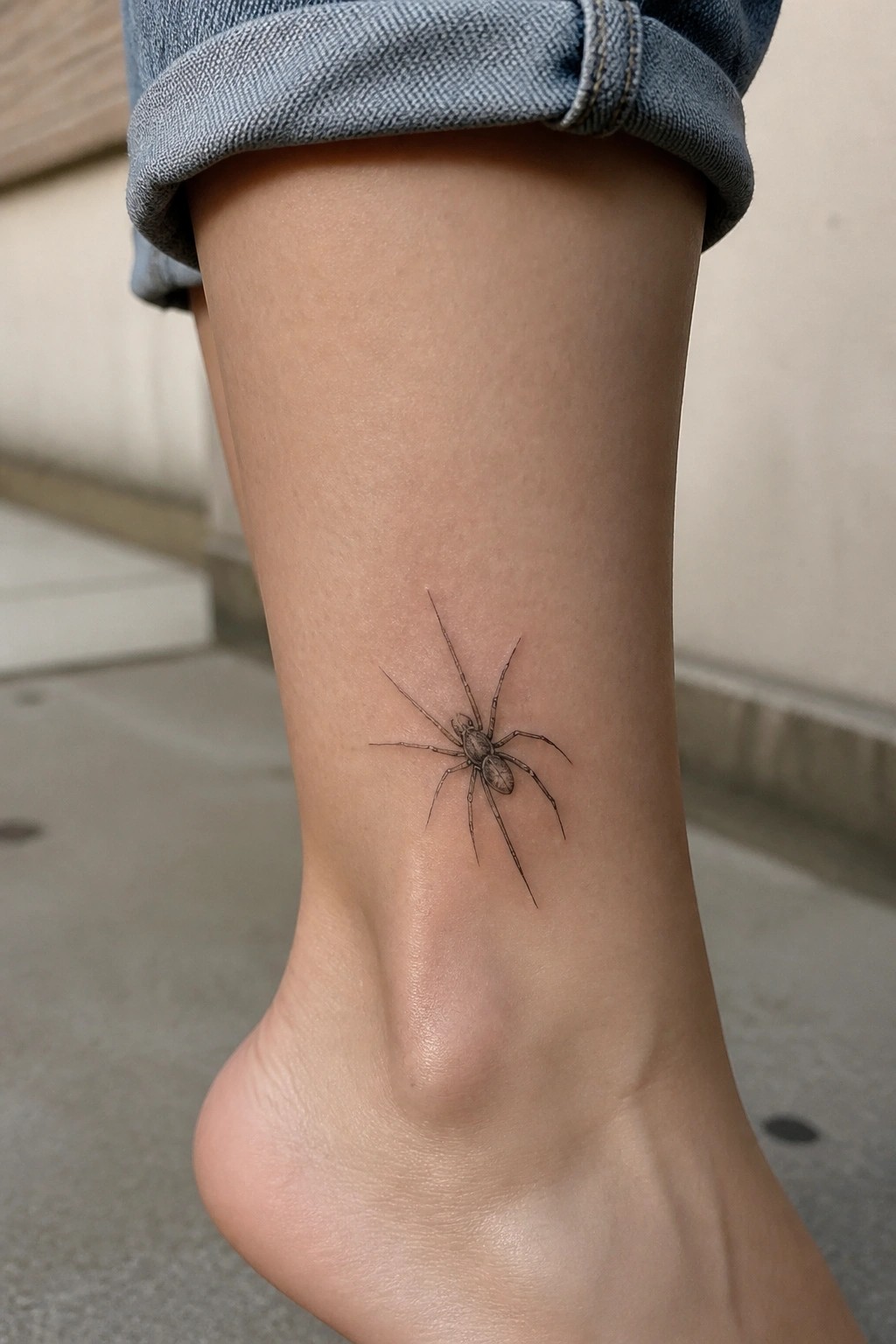
The tattoo sits on the side of the ankle. This spot lets the spider’s legs stretch out along the skin without crowding the area. The realistic shading gives it a clear shape even at a small size.
I think the placement works because it keeps the design visible but contained. The fine lines stay readable without extra elements around them.
A spider tattoo on the thigh
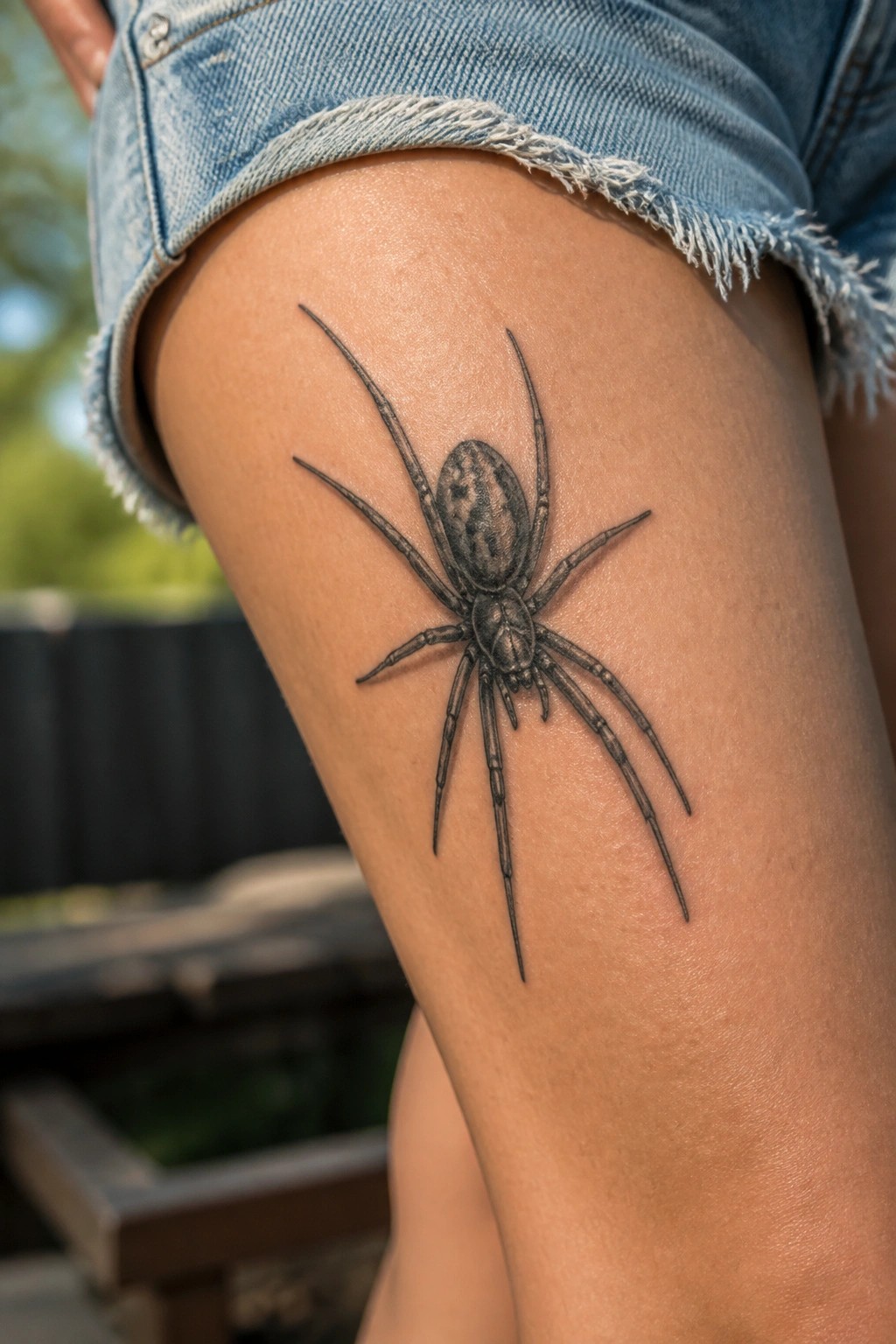
The thigh gives enough flat space for a spider to sit with its legs fully extended. Black and grey shading builds texture on the body while keeping the legs thin and sharp.
This size feels right for the area and stops the design from looking cramped. I think the placement helps the whole tattoo stay clear even when the leg moves.
Realistic spider tattoo on the thigh
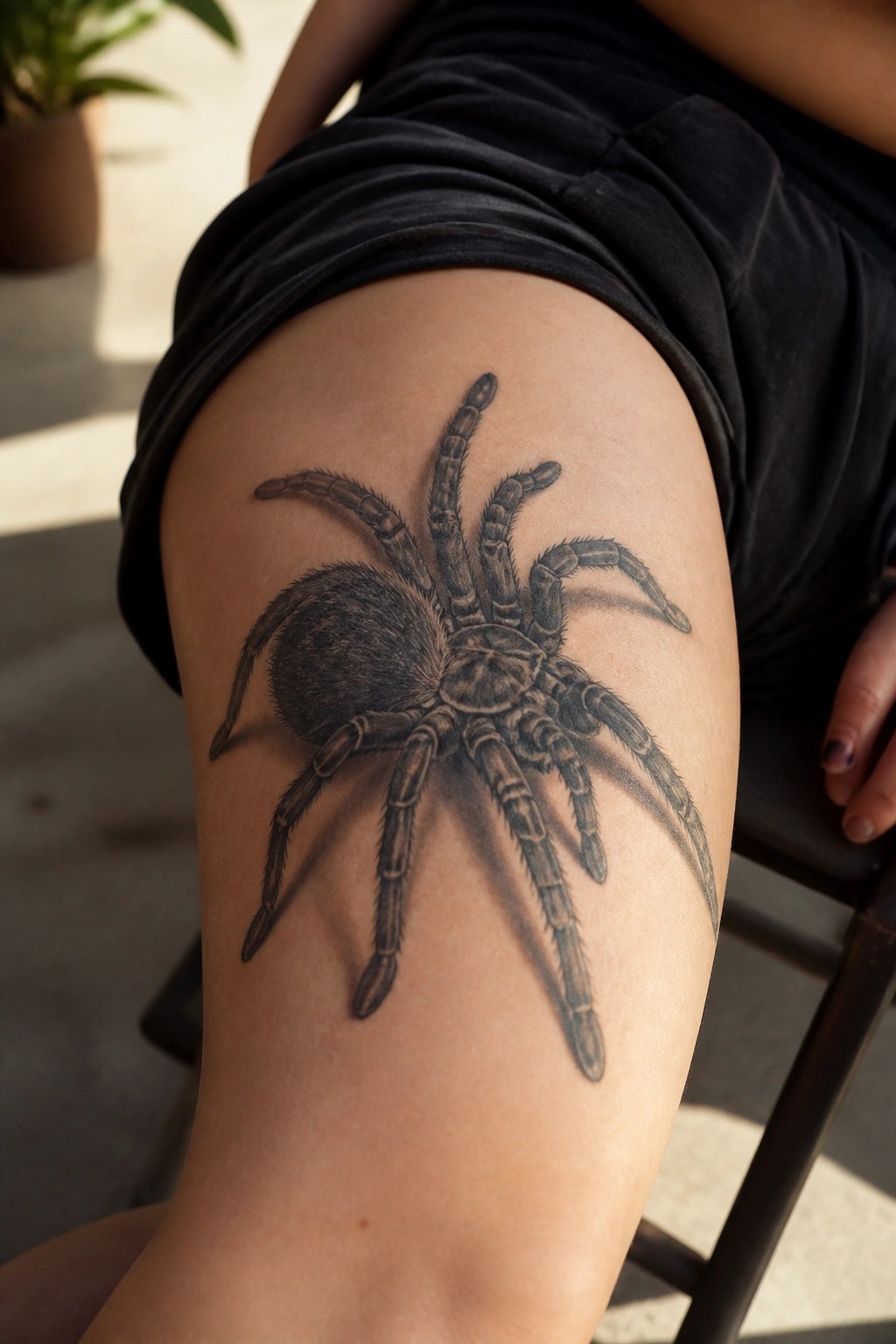
The thigh gives this spider room to stretch out with all eight legs. Its body sits centered while the limbs reach in different directions across the skin. Black and gray shading builds the round shape and the texture along each leg.
I think the size works here because it keeps the spider looking balanced instead of cramped. The placement also makes the whole piece easy to see when the leg is straight or bent.
A large spider on the upper back
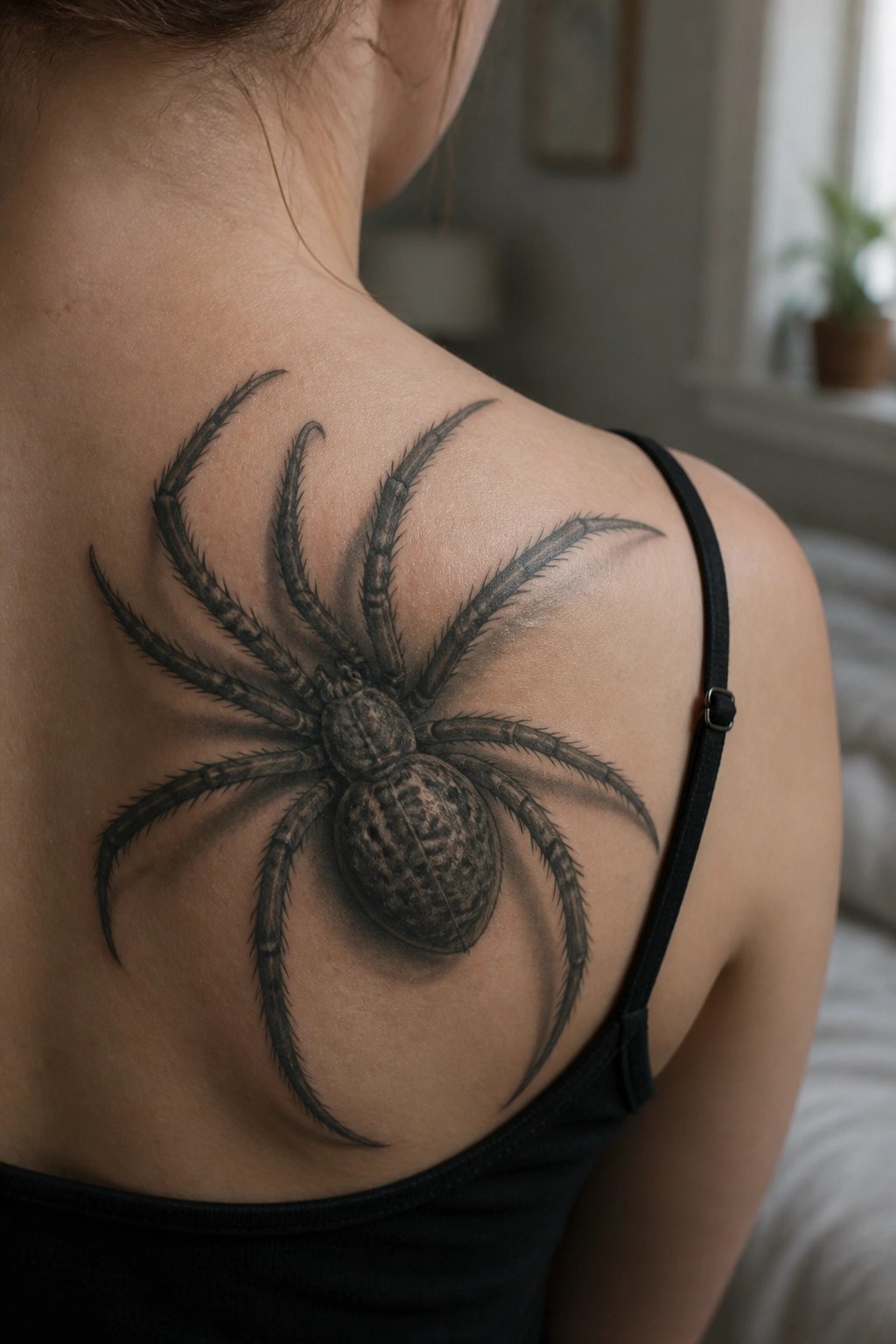
The spider sits across the upper back with several legs reaching toward the shoulder. Its body shows clear texture through shading while the legs extend outward at different angles. The overall size lets the design fill the space without looking crowded.
I think the placement works because it follows the natural shape of the back and shoulder. This keeps the spider readable even when the person moves.
Spider tattoo on the inner wrist
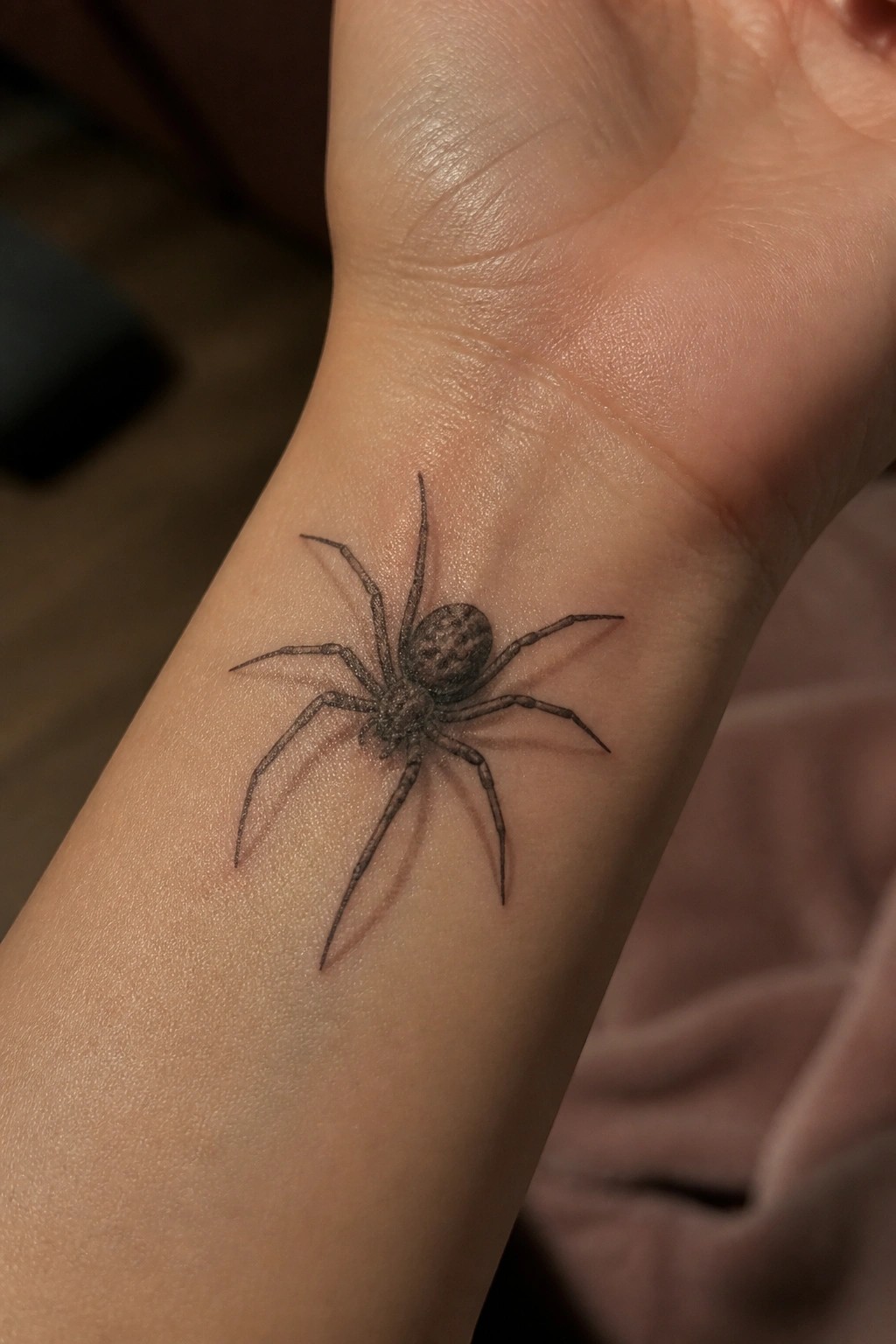
The spider sits on the inner wrist. This placement keeps the design visible from most angles while staying compact. The legs stretch out in a natural way that matches the shape of the area.
I think the size helps here. It leaves enough room for the body texture to show without crowding the skin.
Spider tattoo on the hip
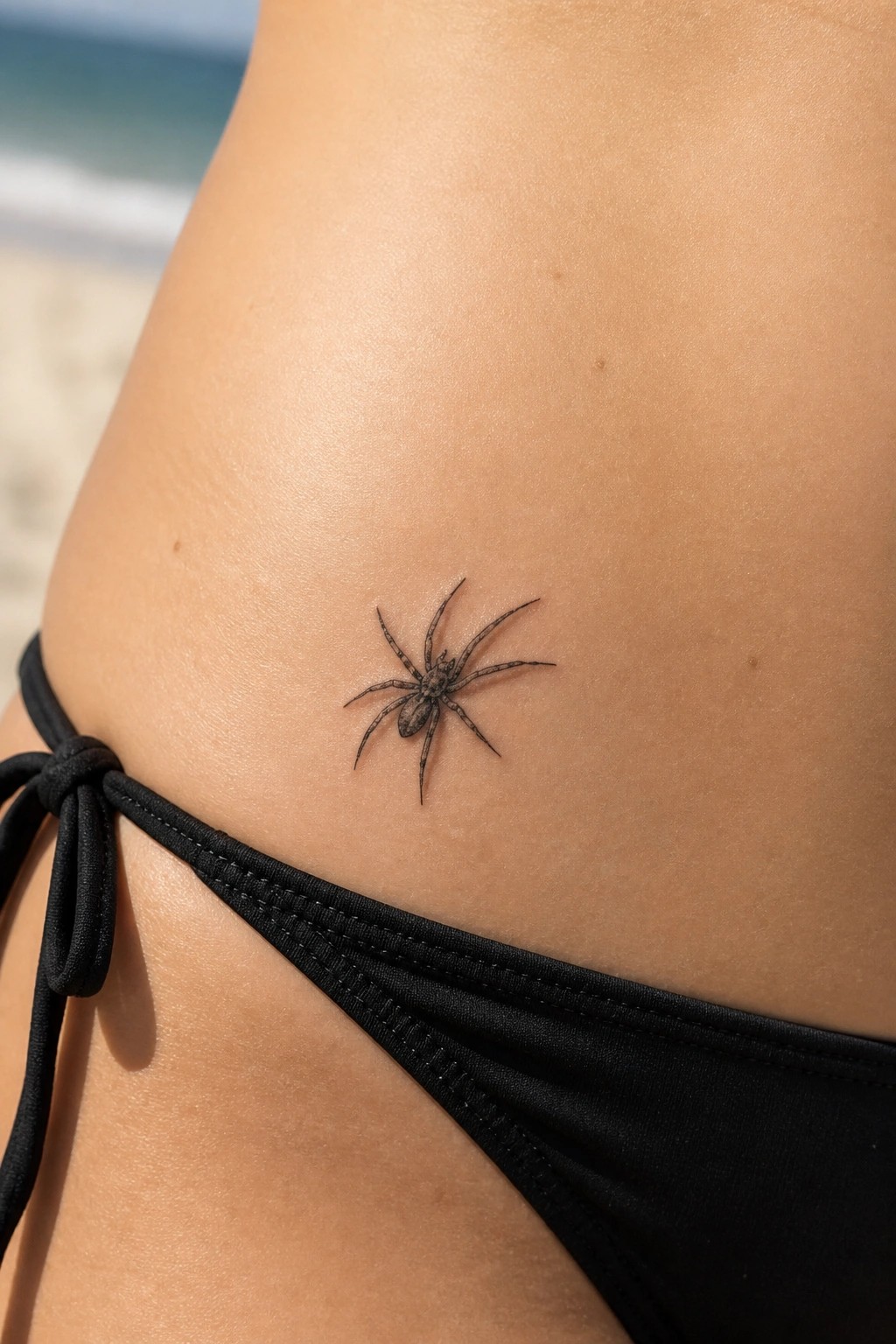
The spider sits just above the hip bone near the waistband. Its legs extend outward in a relaxed pose that matches the natural shape of the skin. Black and grey shading keeps the details clear while staying subtle.
I think the small size prevents the tattoo from feeling too bold in this spot. The placement also makes it easy to show or cover depending on clothing.
Spider on the forearm
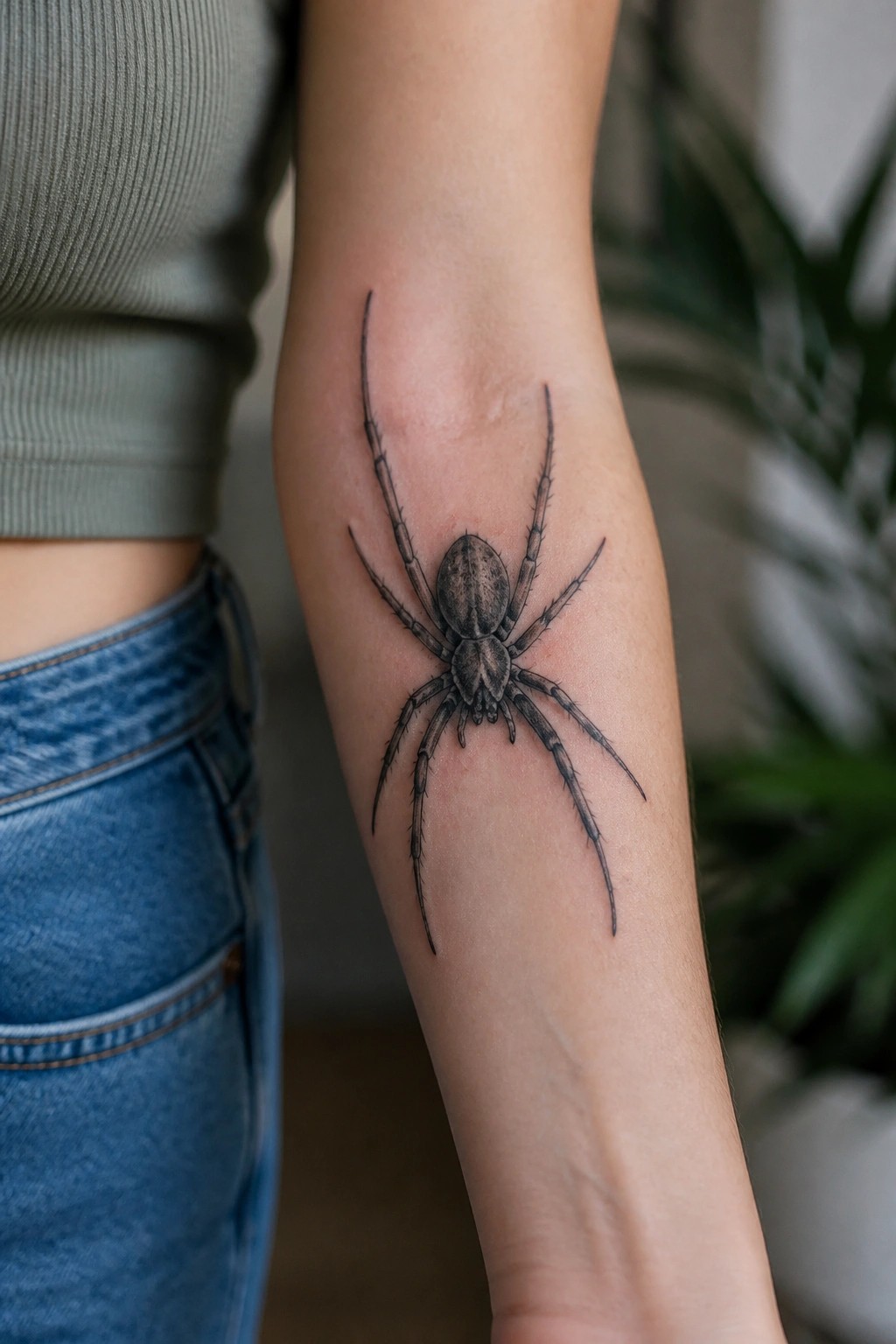
The spider sits on the inner forearm. Its body faces upward while the legs stretch outward along the skin. Black and gray shading adds depth to the shape.
The forearm gives enough space for the legs to spread without looking cramped. I think this placement keeps the whole design easy to see at a glance.
Spider tattoo on the foot
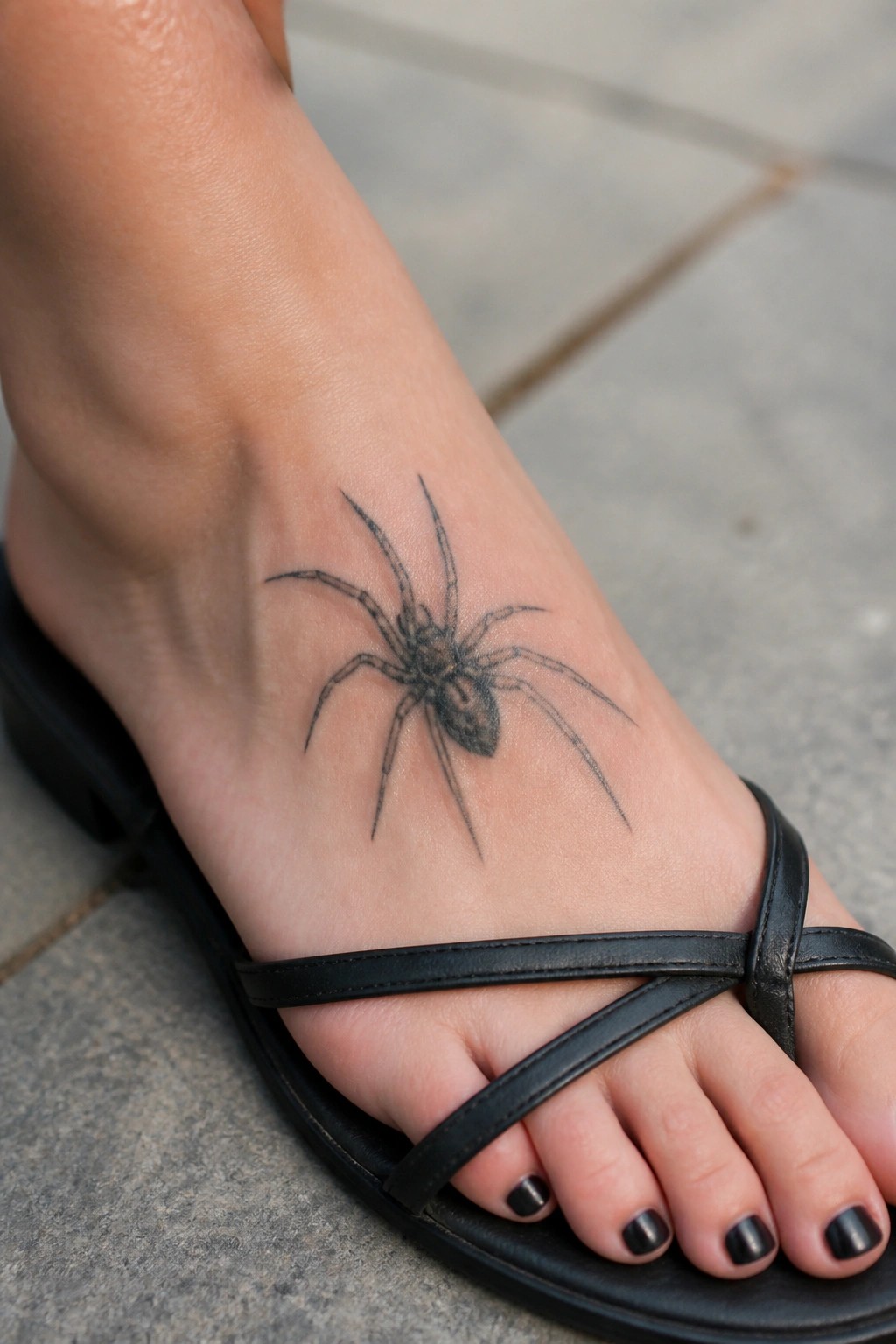
A spider tattoo on the top of the foot lets the legs spread out across the skin. The placement uses the flat area well so the body stays centered while the limbs reach toward the toes and ankle. Black and grey shading gives the spider some depth without extra color.
I think this spot works because the design stays readable even when the foot moves. The size also keeps the tattoo from dominating the whole area.
Spider tattoo on the ribs
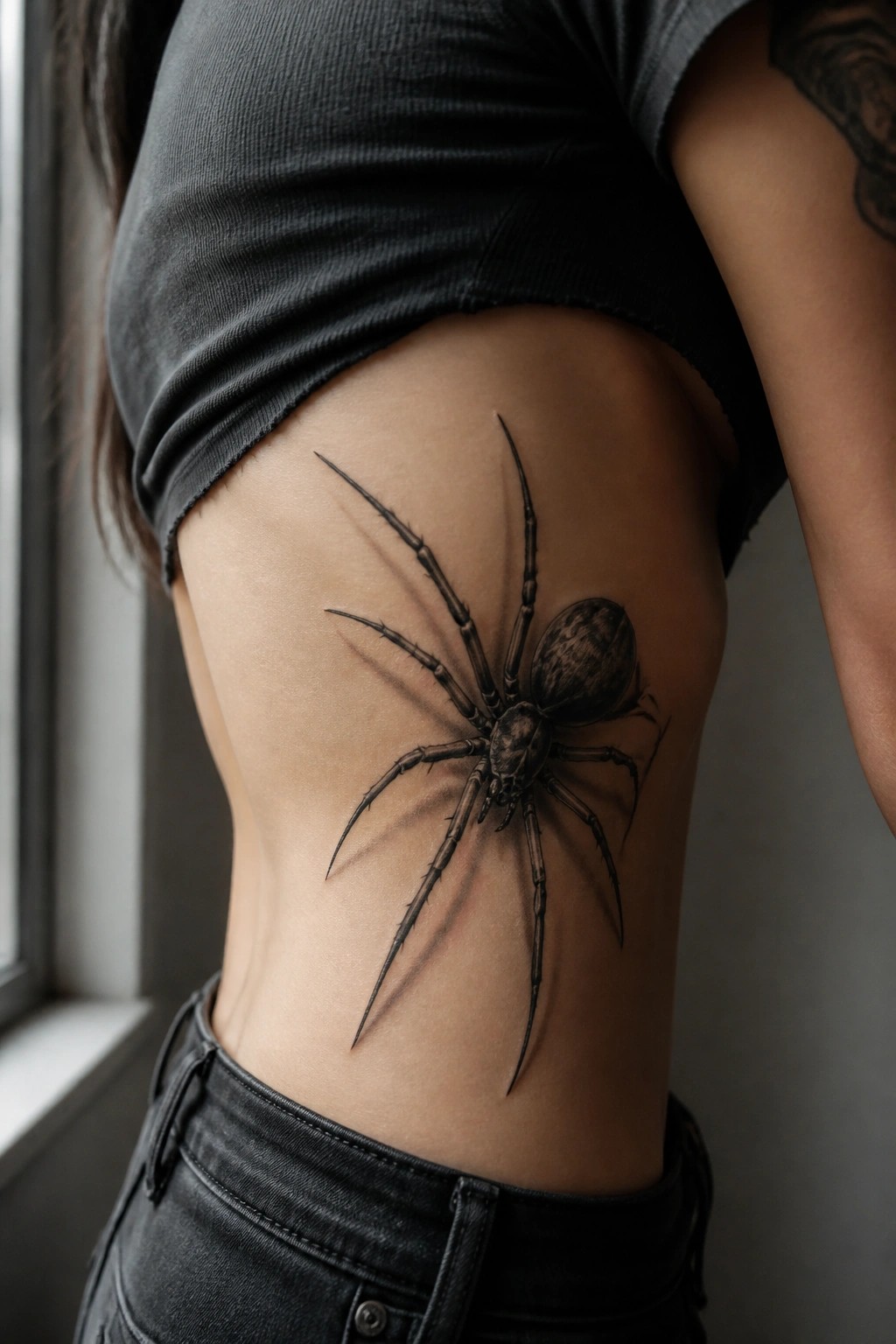
A spider tattoo on the ribs takes advantage of the curved surface to spread the legs outward. The position lets the design sit naturally without needing extra adjustments. The black and grey shading gives the body some weight while the legs stay thin and sharp.
I think this works because the scale matches the space without crowding the skin. The placement also keeps the spider visible even when arms are down.
Small spider tattoo behind the ear
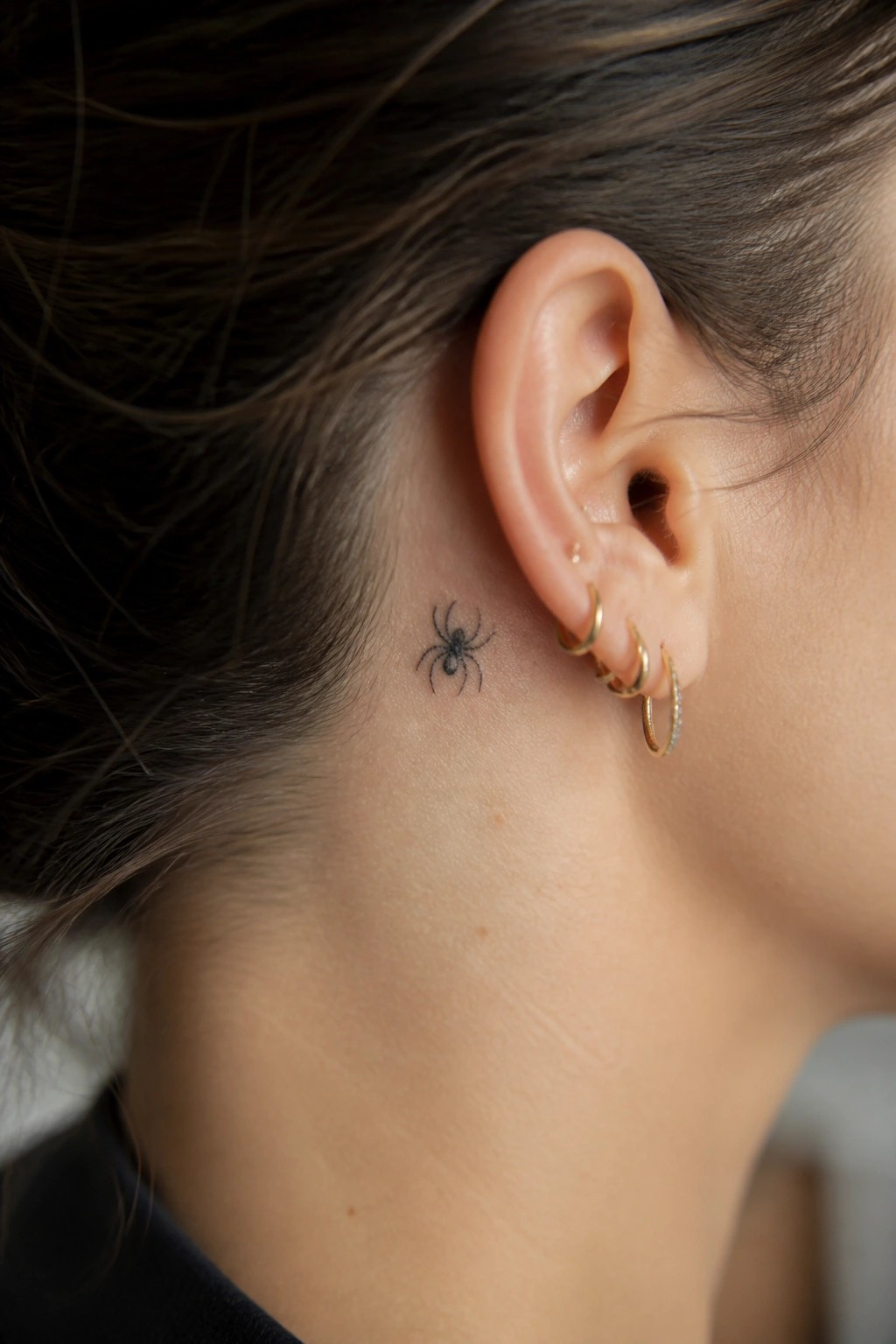
The spider sits just below the ear on the side of the neck. It stays small and uses basic black lines without extra shading. This spot keeps the design out of view most of the time.
I think the placement works because the limited space forces a clean and simple approach. It gives someone a low key option that still shows up when hair moves.
Spider tattoo placed on the forearm
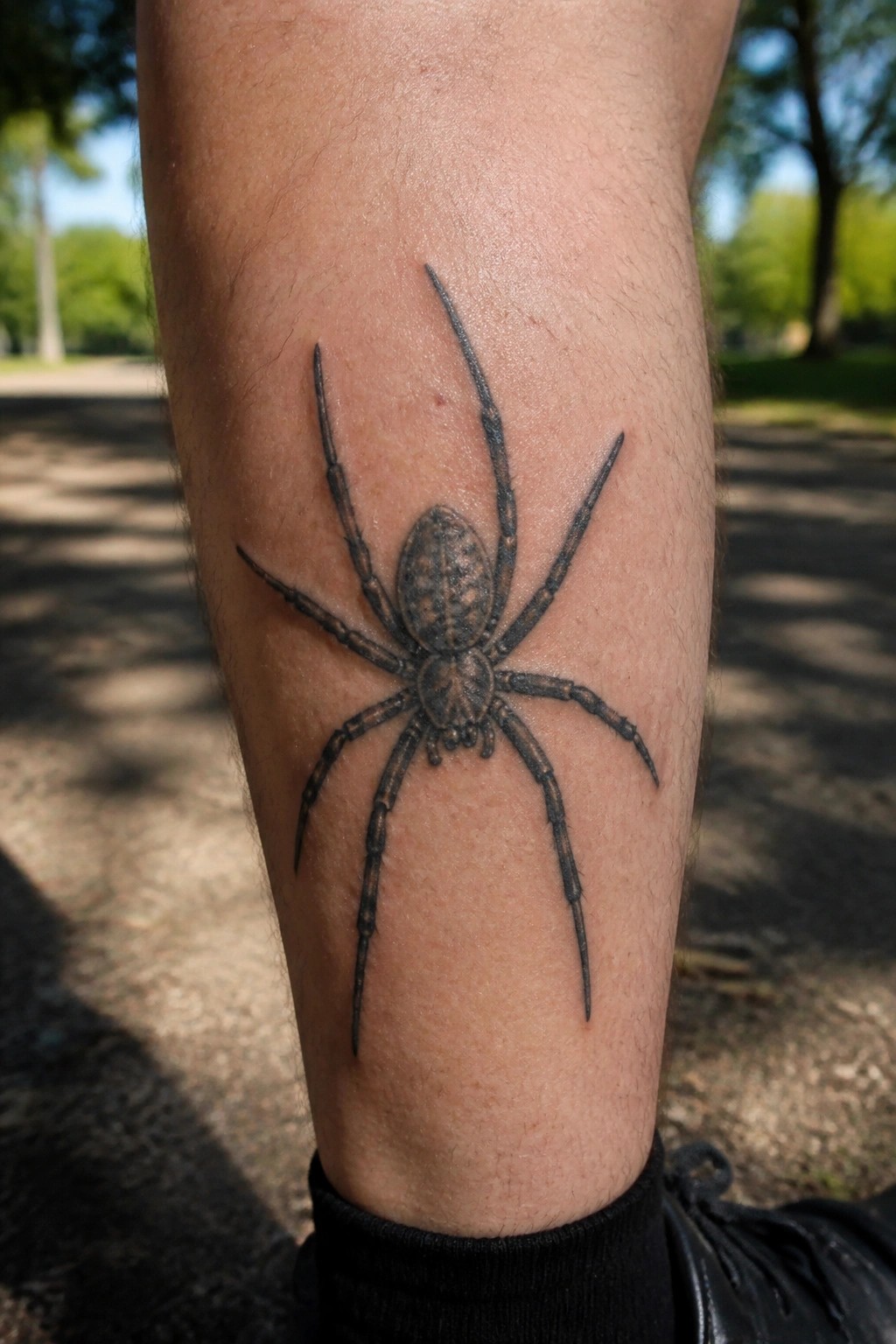
The spider sits on the inner forearm with its body centered and legs spreading along the skin. This spot lets the design stretch out naturally without crowding. The black and gray shading gives the spider a solid, lifelike look.
I think the placement works because the arm gives the legs room to extend without feeling cramped. It keeps the tattoo readable even at this size.
Spider tattoo along the spine
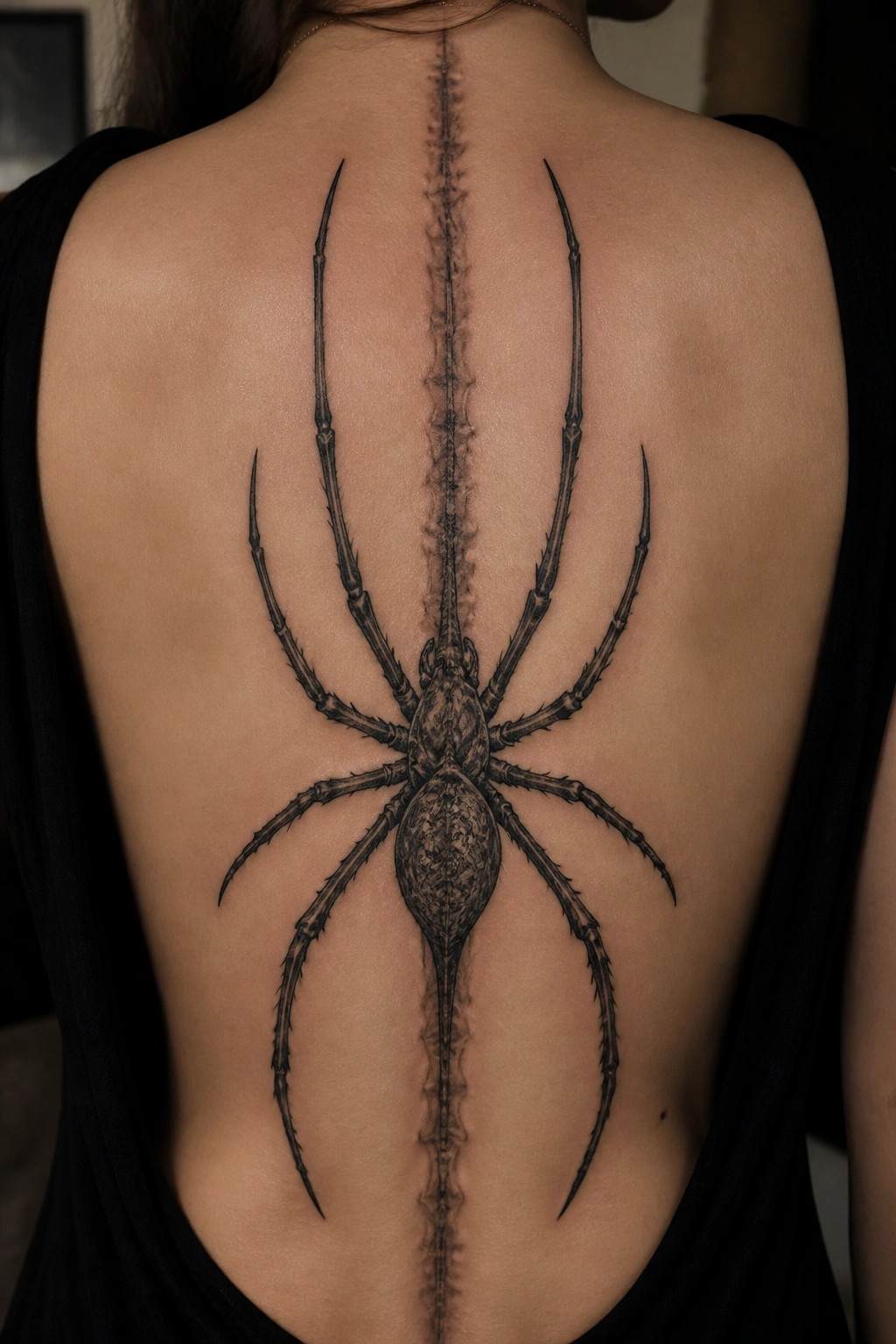
The spider sits directly on the spine so its body lines up with the natural center of the back. The legs reach out evenly on both sides and follow the shape of the shoulders and lower back. This placement turns the spine into part of the design instead of just a background.
I think the size fits because it fills the area without feeling cramped at the edges. The black and grey shading keeps the legs clear while the faded line down the middle helps the whole piece stay balanced.
Small spider tattoo on the finger
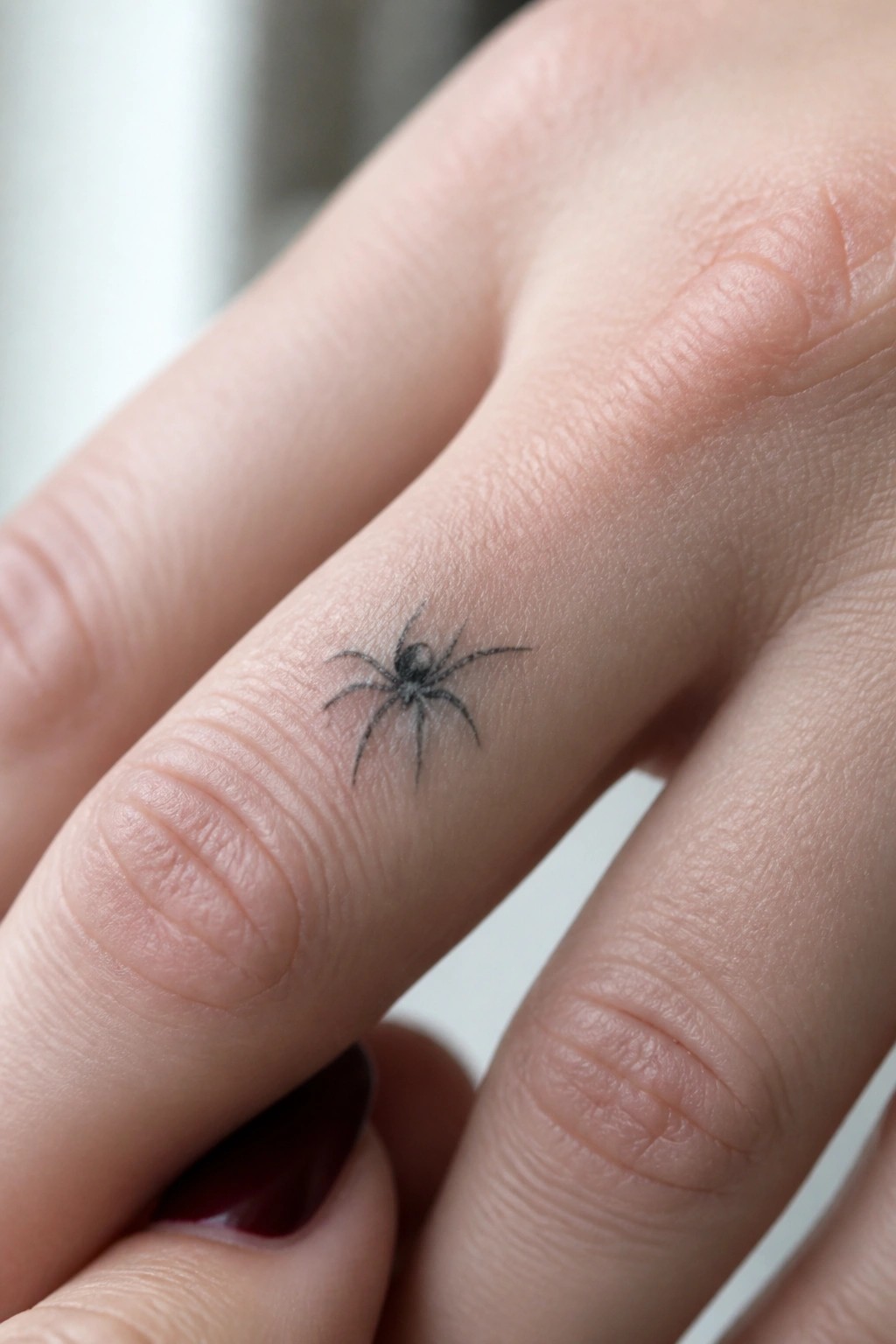
The spider sits on the side of a finger in a compact size. Its legs stretch out across the skin while the body stays centered in the narrow space. Simple black shading adds just enough texture to make the shape stand out.
I think this placement works because the finger keeps the design small and easy to hide when needed. The result feels straightforward without extra elements.
Spider tattoo on the lower back
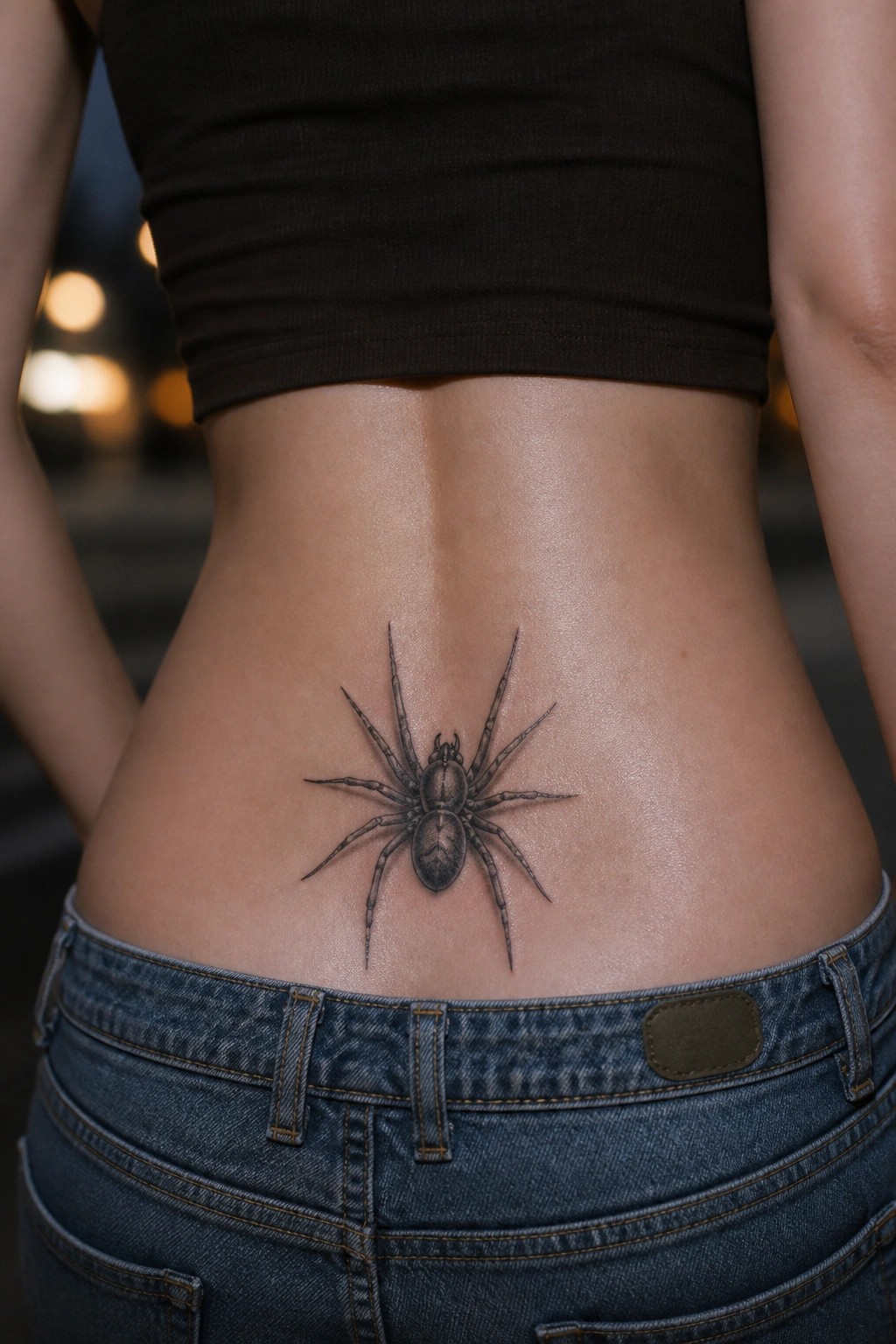
The lower back works for this spider because it gives the legs room to spread without crowding. A realistic black and gray approach fits the area since the skin stays fairly flat and shows the shading clearly.
I think the centered spot keeps the whole piece balanced on the body. It also lets the design stay visible with low-rise clothing while still being easy to cover.
Spiders spread over the shoulder
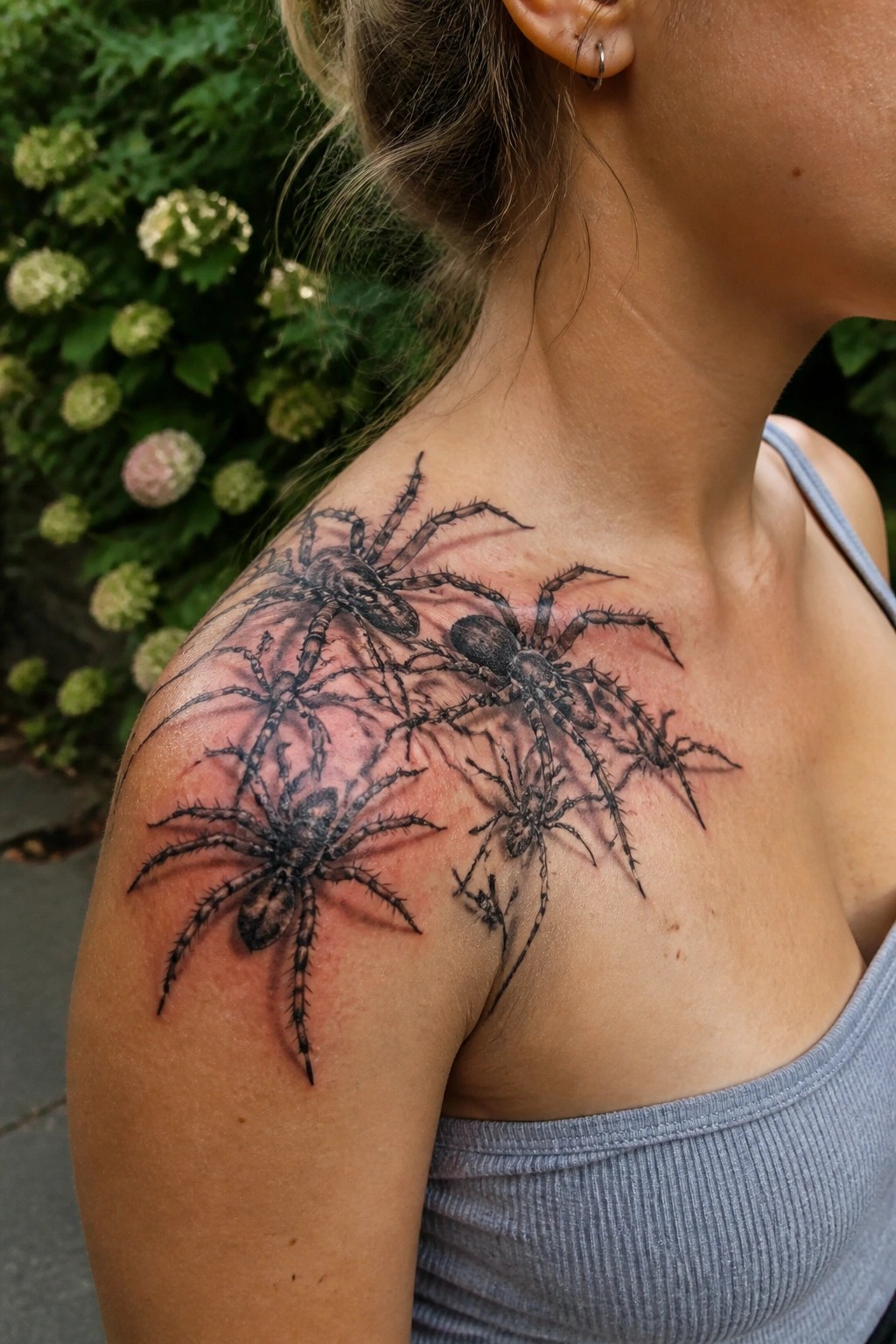
The shoulder gives this cluster of spiders enough space to sit across the top of the arm and edge onto the chest. Different sizes overlap naturally in that area. The placement keeps the group readable while letting the design follow the body’s shape.
I think the larger spiders placed higher up help anchor the whole thing. The smaller ones below keep it from looking too heavy in one spot.
Realistic spider on the thigh
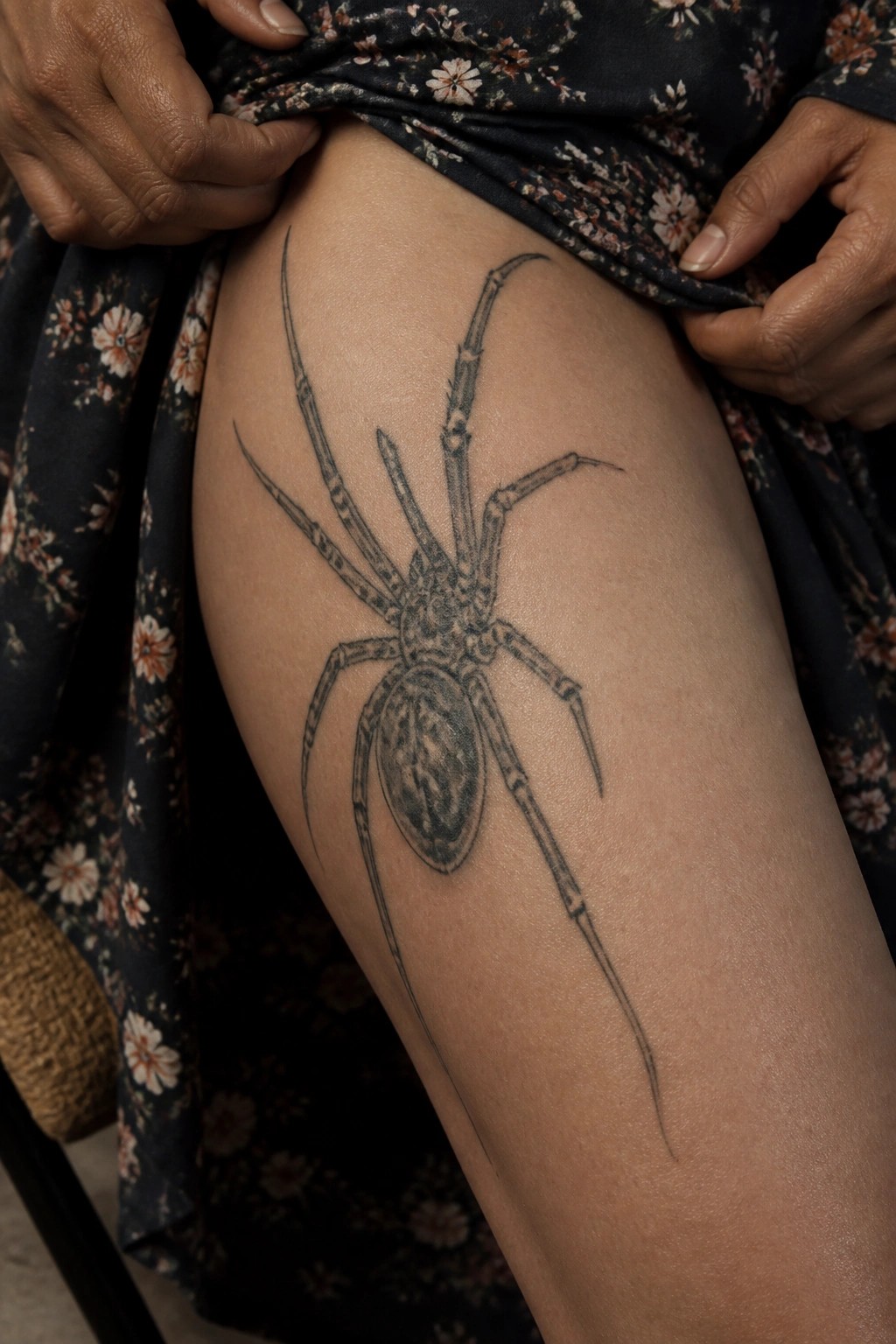
The spider sits on the upper thigh with its body centered and legs extending outward. Black and grey shading builds texture across the abdomen and joints. The legs reach toward the knee while staying contained within the area.
This placement gives the design enough space to spread without crowding. I think the scale keeps the spider readable while fitting the leg’s natural width.
Frequently Asked Questions
What are the best leg placements for a realistic spider tattoo that emphasizes lifelike texture and shadows? The calf and ankle areas work well because the skin is relatively flat and allows artists to layer fine lines for spider legs along with soft shading to mimic depth and movement. The thigh offers more space for larger designs where shadows can be built gradually to create a three dimensional appearance, though the skin there moves more during the session so precise line work requires an experienced hand.
How long does it usually take to complete a detailed realistic spider tattoo with textured legs and shadows? Most sessions range from two to four hours depending on size and complexity, since the artist needs time to build gradual shading for shadows and add individual hairs or leg segments for texture. Larger pieces may require multiple appointments spaced weeks apart to allow the skin to heal between layers of detail.
What aftercare steps help preserve the fine shadows and lifelike texture in a spider leg tattoo? Keep the area clean with fragrance free soap and apply a thin layer of recommended ointment several times a day for the first two weeks. Avoid sun exposure and tight clothing that could rub the fresh ink, because shadows and tiny texture lines fade faster when the skin is irritated or overly dry during healing.
How can someone find an artist who specializes in realistic spider tattoos for women? Look at portfolios on tattoo studio websites and social media for examples that show clear leg details and soft shadow work rather than bold outlines. Schedule consultations with artists who have experience on different skin tones and ask to see healed photos of similar pieces to confirm they can capture subtle texture without blurring over time.
What symbolism might a realistic spider tattoo carry that appeals to women seeking personal meaning? Spiders often represent creativity, patience, and resilience because of their web building habits, which can resonate with themes of strength and independence. The realistic style with visible legs and shadows allows the design to feel personal rather than cartoonish, letting the wearer connect the image to their own experiences of overcoming challenges.
