

We may earn from ads and some links. How we work.
A back tattoo can feel like a favorite piece of art I want to frame without hiding a single detail.
I love designs that grow around the original ink, adding fresh flowers, fine-line accents, or a little drama while letting the first tattoo stay in the spotlight.
These 18 ideas show how to extend a back tattoo with plenty of personality and zero artistic crowding.
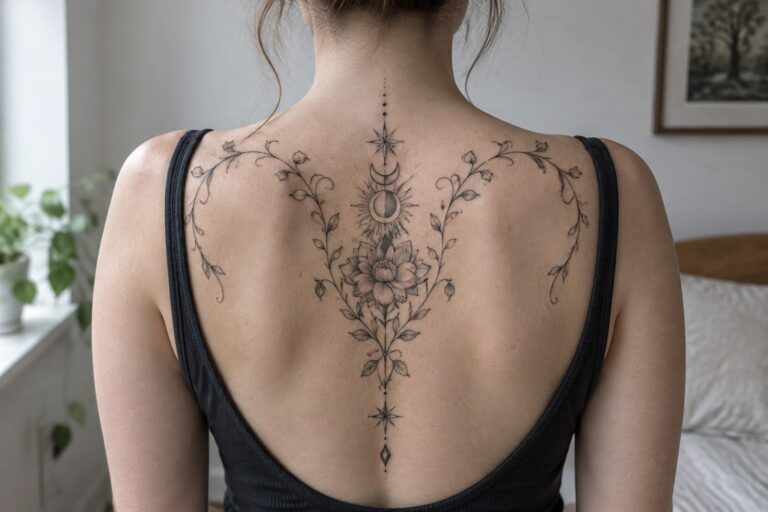
Fine-line botanical back tattoo

The spine gives this botanical tattoo a clear center, while the leafy branches spread across the upper back without covering the whole area. A small star and crescent moons add a few simple details around the lotus.
I’d keep the original lotus visible and extend the design with fine-line leaves along the spine or shoulders. That adds coverage while keeping the main flower easy to see.
A watercolor floral tattoo down the back
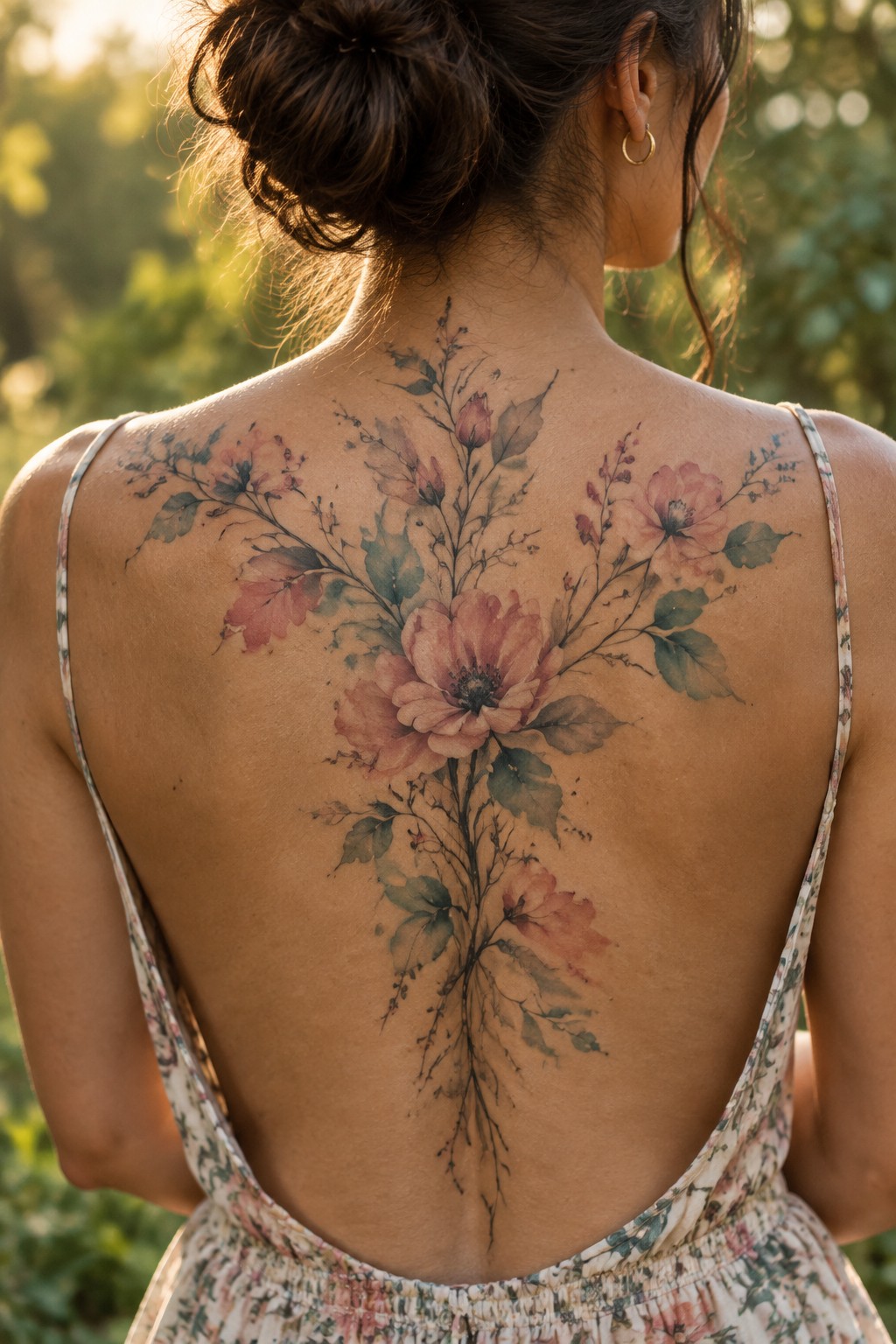
A large floral tattoo spreads across the upper back, then narrows into a stem that runs down the spine. The muted watercolor colors keep the design soft while the long central line gives it room to grow.
I’d extend a tattoo like this with smaller leaves or fine branches along the lower spine, leaving the main flowers untouched. That keeps the original artwork easy to see and makes the added detail feel connected.
A geometric back tattoo that extends from the neck
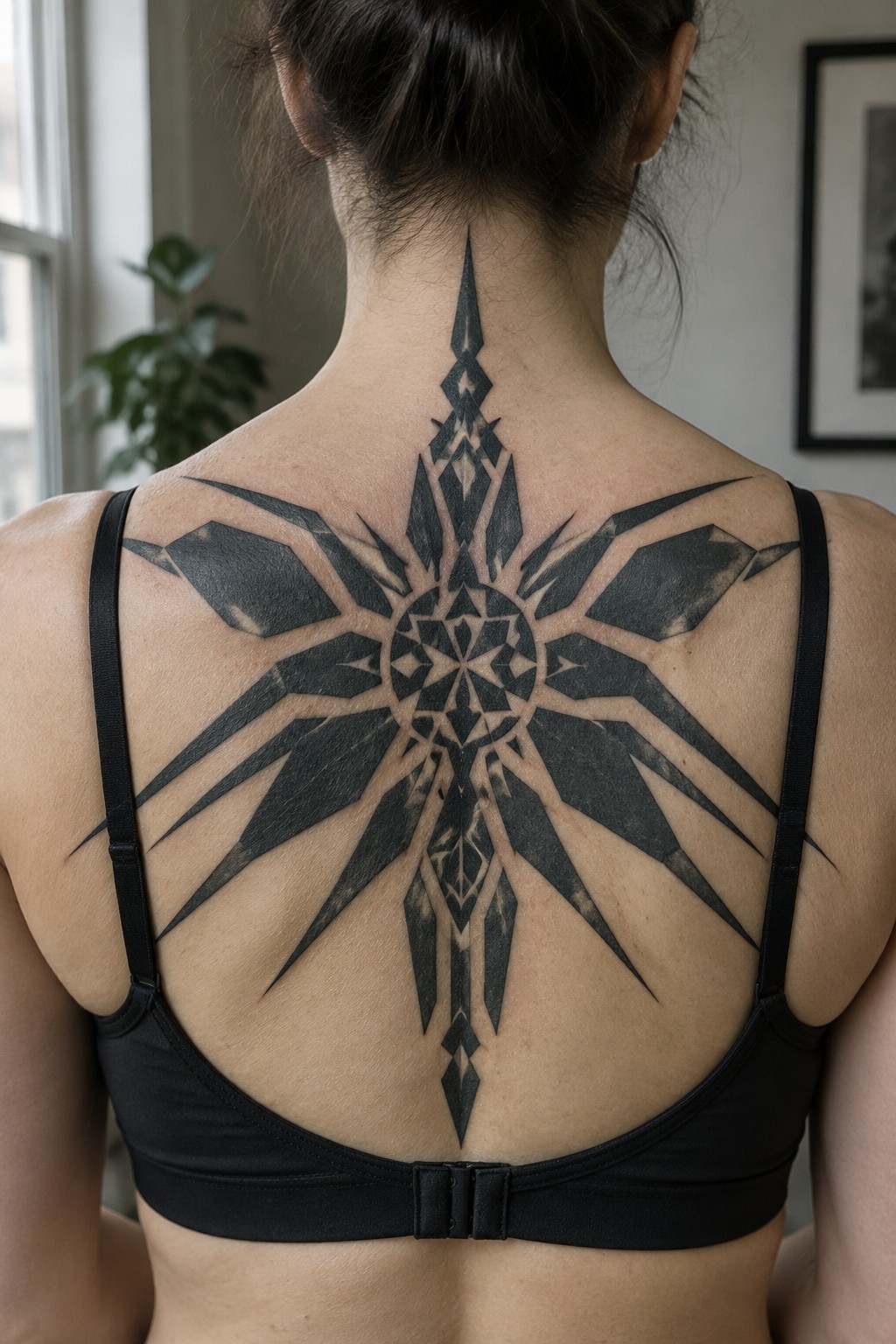
The large black geometric tattoo begins at the nape and spreads across the upper and middle back in a symmetrical, starburst-like pattern. Its narrow central line connects the neck detail to the larger design, so the original artwork can remain visible as the tattoo grows downward.
I’d keep any additions along that center line or in the open spaces between the main shapes. That gives the extension room to develop without crowding the bold pattern across the shoulders.
A lotus tattoo centered on the upper back
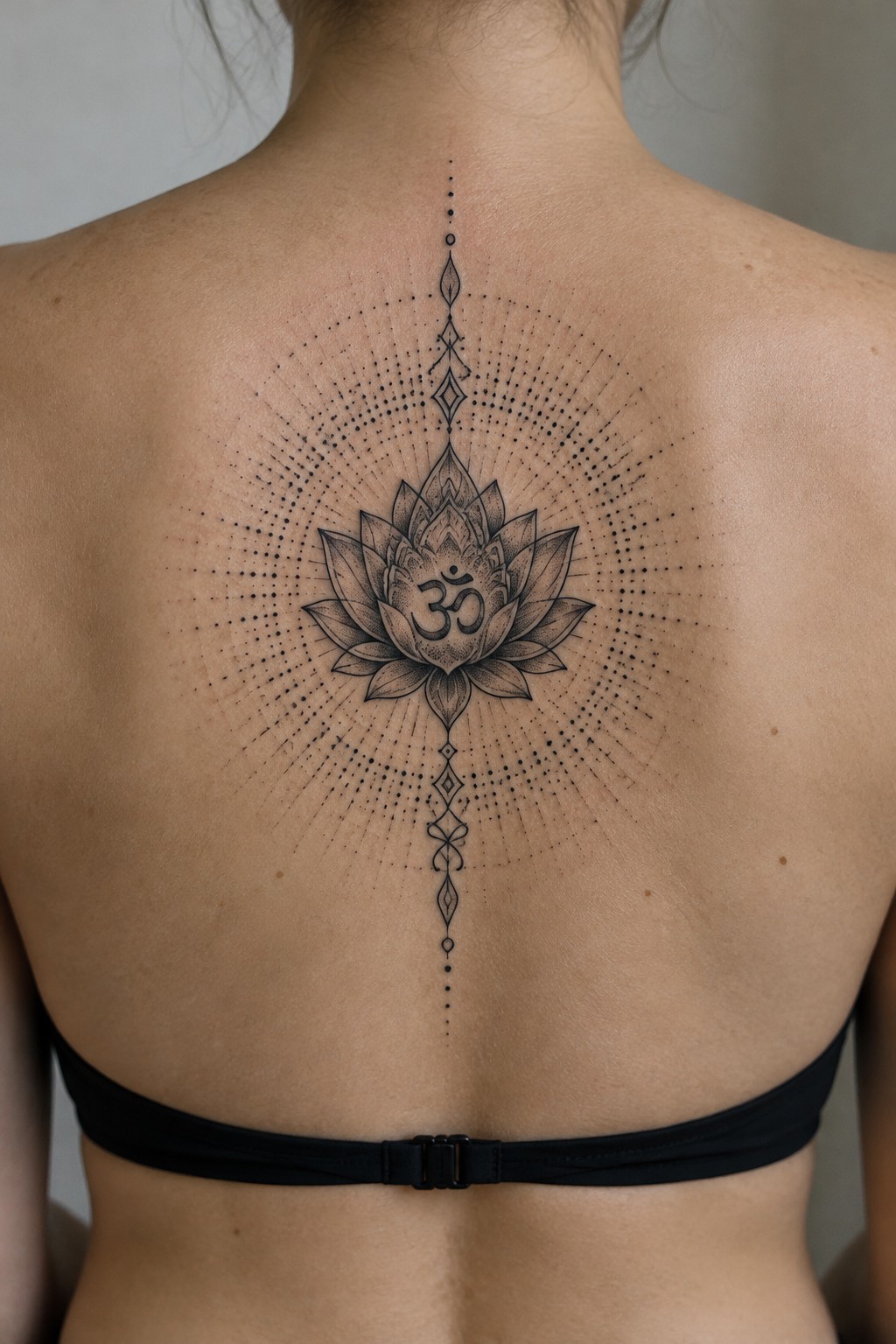
The lotus sits at the center of the upper back, with fine dotwork radiating around it and a narrow ornamental line extending up and down the spine. That layout leaves the flower as the focal point while giving the tattoo room to extend vertically.
I’d keep any added work light and along the existing spine line so the lotus remains visible. The fine black details also make it easier to build onto the design without crowding its center.
A floral back tattoo extending onto the shoulder

A fine-line floral arrangement starts near the upper back and branches across the shoulder onto the upper arm. The connected flowers and leaves create a natural path for extending a back tattoo without covering the open space in the center.
I’d keep the new work along the same outer route so the original back artwork remains visible. Muted color and matching dark outlines can help the added section feel connected.
An ornamental spine tattoo

A fine-line ornamental pattern runs from the nape down the center of the back, ending near the lower back. Its symmetrical curls and small floral details give the long design a clear central line.
For extending a back tattoo, this format leaves the original artwork visible while offering room to add matching motifs above or below it. I’d keep any additions light and centered so they support the existing pattern rather than crowd it.
A Japanese wave and geisha back tattoo

The large Japanese-style tattoo covers most of the back, with blue waves framing a central geisha and cherry blossoms. Its layout leaves the figure easy to spot while giving the surrounding artwork room to extend across the shoulders and lower back.
I’d keep the geisha as the focal point if adding more ink, and build any new elements into the existing waves rather than over her face or kimono. The muted blue and black palette also makes it easier to extend the scene without distracting from the original artwork.
A fine-line spine tattoo with a small botanical center

A thin line running down the spine gives this small tattoo a clear vertical shape, with a pointed botanical motif at its center and tiny stars along the line. Its narrow layout leaves room to extend the tattoo up toward the neck or farther down the back without covering the original details.
I’d keep any added elements light and spaced out so the central motif remains easy to see. A few small leaves or fine-line marks could lengthen the design while keeping its simple feel.
A moon phase tattoo down the spine
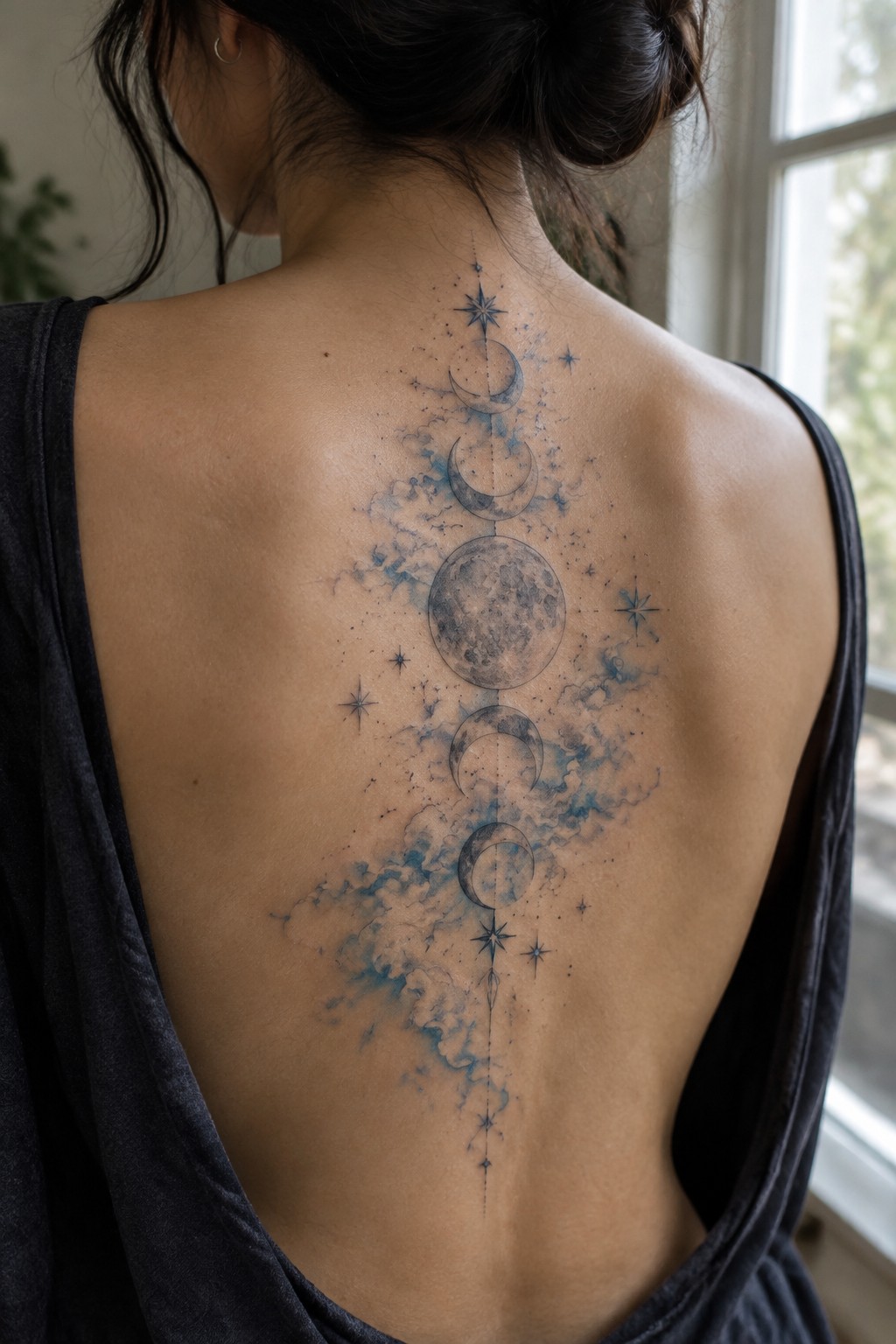
A vertical row of moon phases and small stars gives this back tattoo a clear center line from the upper back downward. Soft blue-gray shading and cloudy accents add texture without obscuring the phases.
I’d keep any extension along the same vertical path, leaving space around the moons so the original sequence remains easy to see. That approach suits a larger back piece while preserving the tattoo’s central design.
A mandala back tattoo with a central lotus
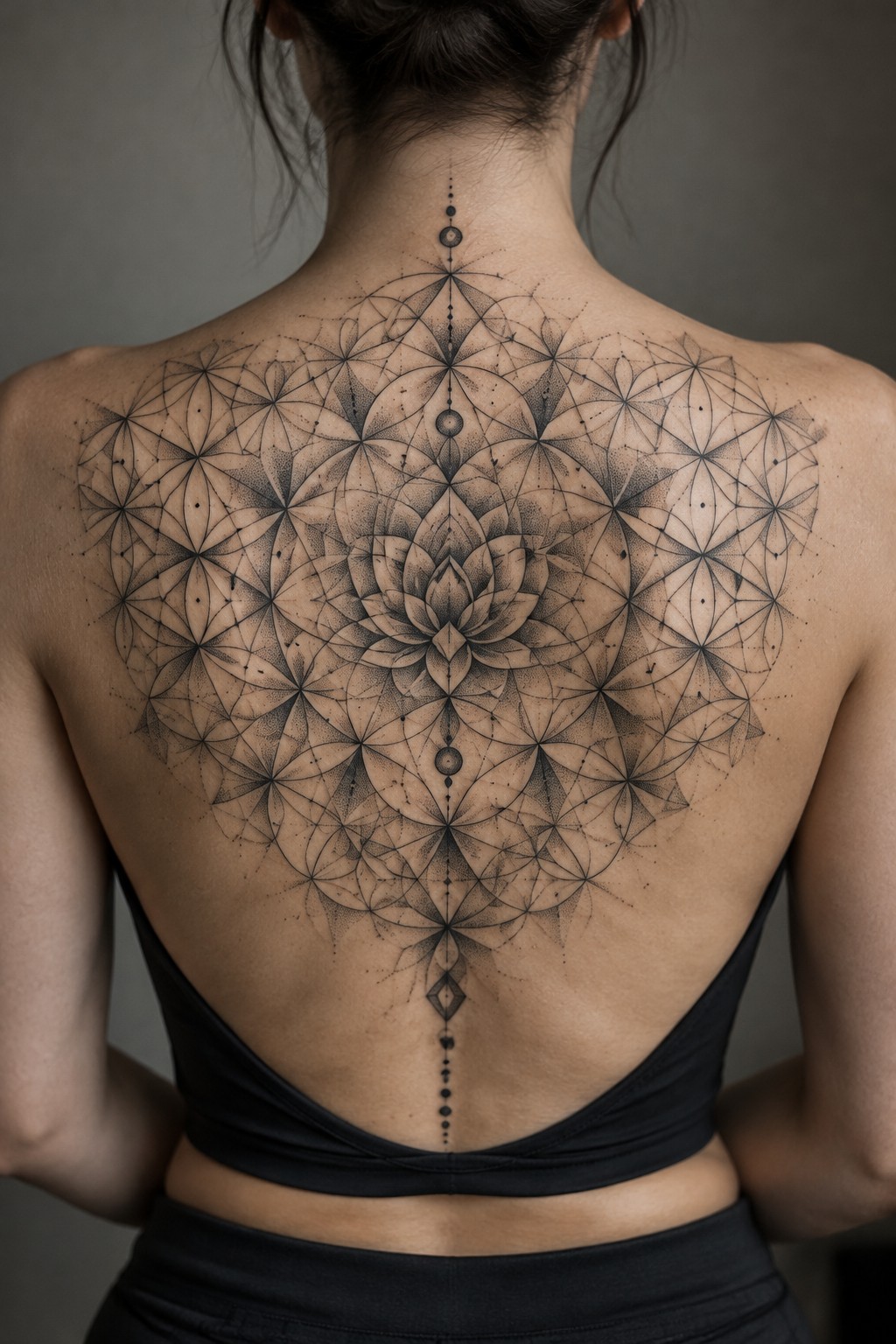
A large geometric mandala spreads across the upper and middle back, with a lotus at its center and a dotted line continuing down the spine. The fine-line pattern reaches toward the shoulders while leaving the central flower easy to notice.
I’d extend this kind of tattoo by adding matching geometry along the spine, rather than filling in the open spaces around the lotus. That keeps the original centerpiece visible and gives the design a clear direction down the back.
Ornamental and floral back tattoo

A vertical ornamental design runs down the spine, while shaded flowers spread across the upper back and shoulder. This layout extends the tattoo sideways without hiding the central motif.
I’d keep the floral shading lighter near the ornament so both parts remain easy to distinguish. It’s a useful approach for adding coverage while preserving an existing spine tattoo.
An ink wash back tattoo with a lotus centerpiece

The large ink wash shapes sweep across the back and leave the central lotus and fine spine details visible. That open space gives the design a clear focal point while the brush-like shading carries it from the shoulders toward the lower back.
I’d keep any extension loose and broken rather than filling the gaps around the lotus. That preserves the original centerpiece and lets the wash remain the main direction of the tattoo.
A script banner tattoo across the upper back

A narrow banner across the upper back gives the script a clear focal point while leaving plenty of open skin below. Fine ornamental details extend from its center toward the shoulders, so the design can be lengthened later without covering the lettering.
I’d keep any additions light and place them below the existing tattoo, perhaps with a small spine-centered motif. That would preserve the banner as the main feature.
A tribal tattoo extending across the shoulder

The broad tribal pattern starts at the upper back and sweeps across the shoulder onto the upper arm. Its connected bands and pointed shapes make it a natural choice for extending a back tattoo without covering the original work.
I’d keep any added details near the edges of the existing pattern, using similar shapes to carry the design farther down the arm or across the back. That leaves the main shoulder section visible and keeps the extension cohesive.
A leafy back tattoo across the shoulder

A fine-line vine of ivy and fern fronds stretches across the upper back and over one shoulder. Its angled path adds width while keeping plenty of the original skin visible around the artwork.
I’d extend this idea with a few small leaves along the existing branches rather than adding a dense background. That keeps the original botanical lines easy to see.
A mandala tattoo extending across the lower back
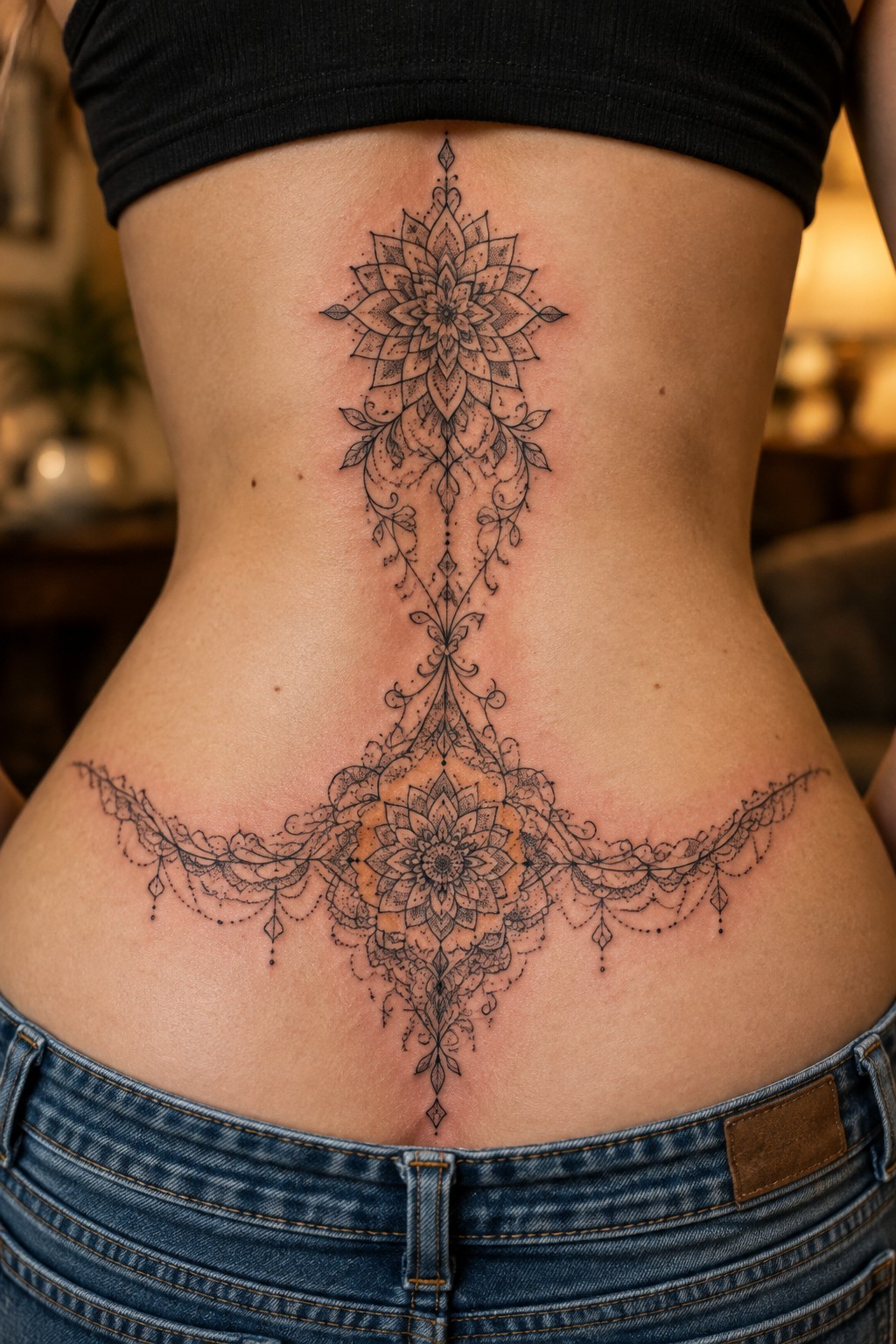
A fine-line mandala sits at the center of the lower back, with ornamental details running up the spine and stretching toward both hips. This layout gives the original central motif room to stand out while making the overall tattoo feel broader.
I’d keep the added lines lighter than the mandala so they support it without crowding its petals. The vertical details also offer a natural way to extend the tattoo farther up the back later.
A celestial back tattoo centered on the spine

A fine-line figure sits at the center of this large back tattoo, surrounded by stars, moons, and galaxy shading. The vertical row of celestial symbols draws the design from the nape down the spine.
I’d keep the central figure and spine line open if extending the tattoo, adding detail around the outer galaxy instead. That leaves the original artwork easy to see while giving the surrounding space room to grow.
An ornamental floral tattoo across the upper back

The central ornamental motif begins at the nape, then spreads into mirrored flourishes across the shoulder blades and narrows down the spine. Its fine black linework keeps the wide design connected while leaving room to extend it lower later.
I’d keep any additions along the spine or at the outer edges, so the original pattern remains easy to see. Small matching flourishes could extend the design without crowding its center.
Frequently Asked Questions
Ask your tattoo artist to treat the existing tattoo as the focal point and design around it. They can add elements above, below, or beside the original, using open skin, lighter shading, or background details to frame it rather than obscure it. Bring clear photos of the tattoo and explain which parts must remain visible.
A small tattoo can be linked to a larger piece with flowing lines, subtle shading, botanical details, stars, geometric shapes, or other motifs that suit the original. The connector does not need to touch every part of the tattoo. Leaving breathing room can help the original remain distinct while still making the overall composition feel cohesive.
Look at the original’s subject, style, line weight, colors, and overall mood. A skilled artist can echo a few of these features in the new work without copying the original exactly. If the styles differ, they may use a transition area, such as soft shading or a simple background, to help the pieces work together.
Yes. Large back pieces are often completed over several sessions. Planning the full design before starting helps ensure that each stage fits the overall layout and keeps important parts of the original visible. Ask your artist about session timing, healing breaks, and how to care for each area between appointments.
Ask your artist to assess the design across your back’s natural shape, not just on a flat sketch. They can consider how the artwork looks when you stand, move, and turn, as well as how it follows your shoulders and spine. A stencil or digital mock-up can help you review the scale, placement, and spacing before the tattooing begins.
