


We may earn from ads and some links. How we work.
I love a good tattoo transformation, especially when an old lower back piece gets a fresh new look.
These 19 before and after cover-ups show how thoughtful designs can turn tattoo regrets into something worth showing off.
I’ve picked out ideas ranging from soft and pretty to bold and dramatic, so there’s a little inspiration for every style.
Floral lower back cover-up tattoo

A large red flower and leafy branches can turn an old lower back symbol into a fuller floral tattoo. The centered layout spreads across the lower back, while the downward leaves help cover the original mark.
I’d keep the main flower bold and use smaller blooms and foliage to fill the surrounding space. The before-and-after shows how color and added detail can transform a small, faded tattoo.
A large peony cover-up across the lower back

A broad peony tattoo can cover a small lower-back butterfly and name with a single connected design. The central flower and leafy details spread across the area, hiding the old lettering without leaving it as a separate focal point.
I’d keep the new artwork wider than the original tattoo so it fully covers the lines beneath. The traditional color and dark outlines also give the floral design enough definition across the lower back.
Floral lower back tattoo cover-up
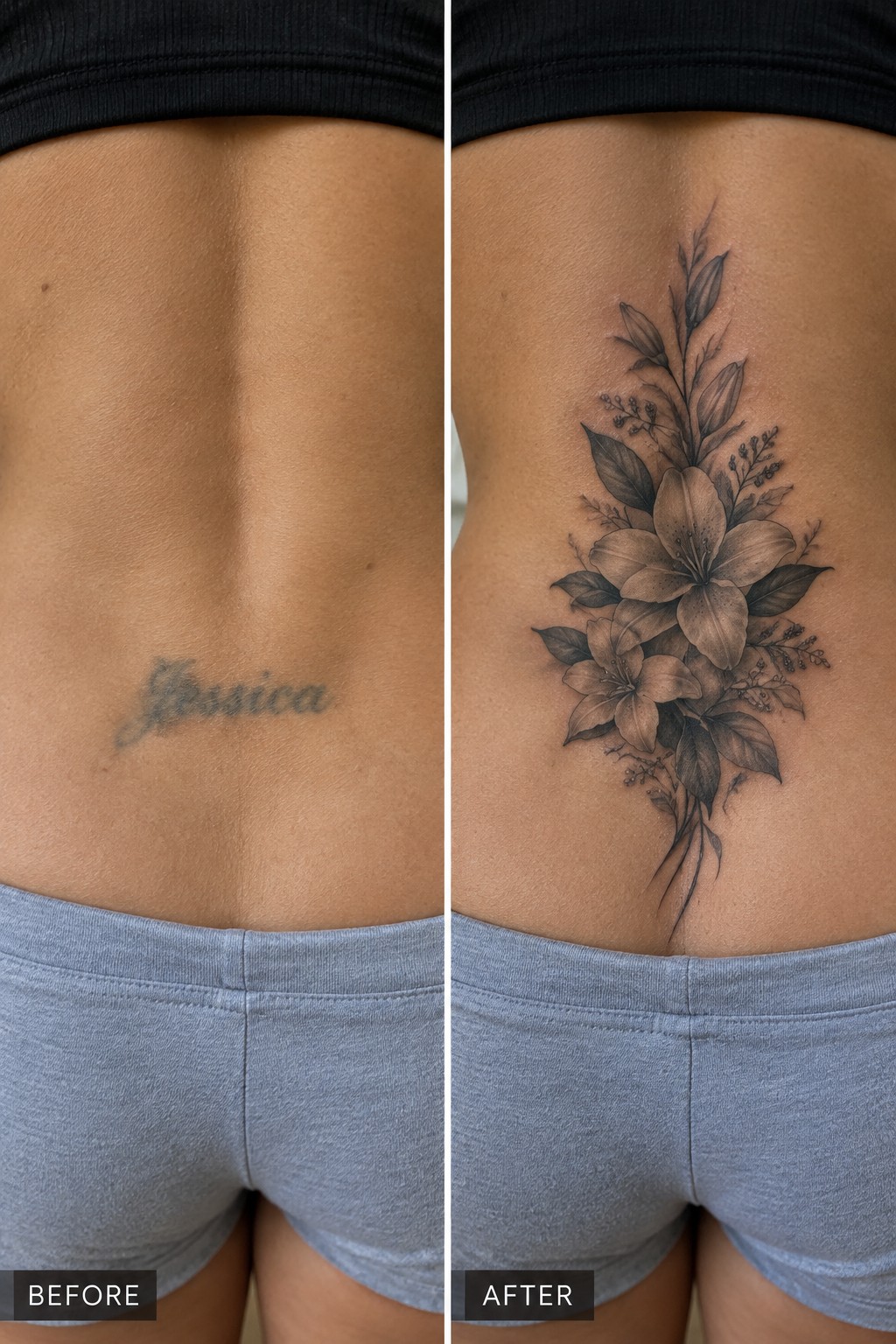
A vertical black-and-gray floral design covers the old script tattoo across the lower back. Open blossoms, leaves, and fine sprigs extend upward and downward, giving the cover-up a taller shape than the original lettering.
I’d keep the flowers as the main focus and use smaller botanical details to break up the old text. The soft shading helps the layered design feel cohesive without making the area look too dark.
A mandala cover-up for the lower back

A large blackwork mandala can turn an older lower-back tattoo into part of a much broader design. Here, layered geometric petals spread across the lumbar area, while a narrow ornamental line extends up the spine.
I’d keep the central pattern symmetrical so it can incorporate the old tattoo without feeling like a separate patch. The fine dotwork adds texture without taking attention away from the main shape.
Sun mandala lower back cover-up
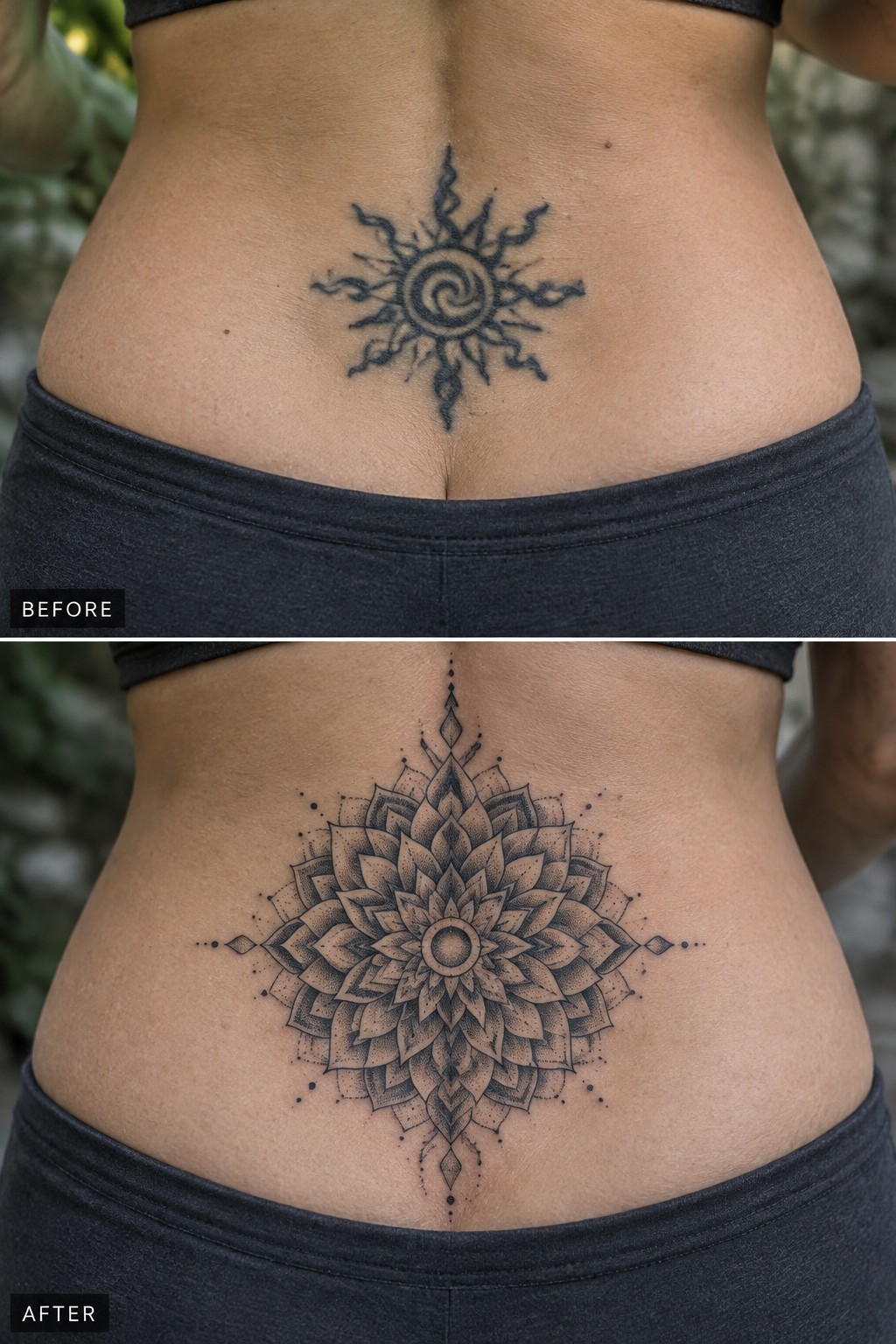
The large mandala covers the center of the lower back, replacing a small sun tattoo with layered petals and fine ornamental details. Its balanced shape spreads across the area without losing the original design’s centered placement.
I’d choose this approach when a simple old tattoo needs more coverage than a small add-on can provide. The dark shading helps build a detailed new design over the existing lines.
Phoenix lower back cover-up tattoo
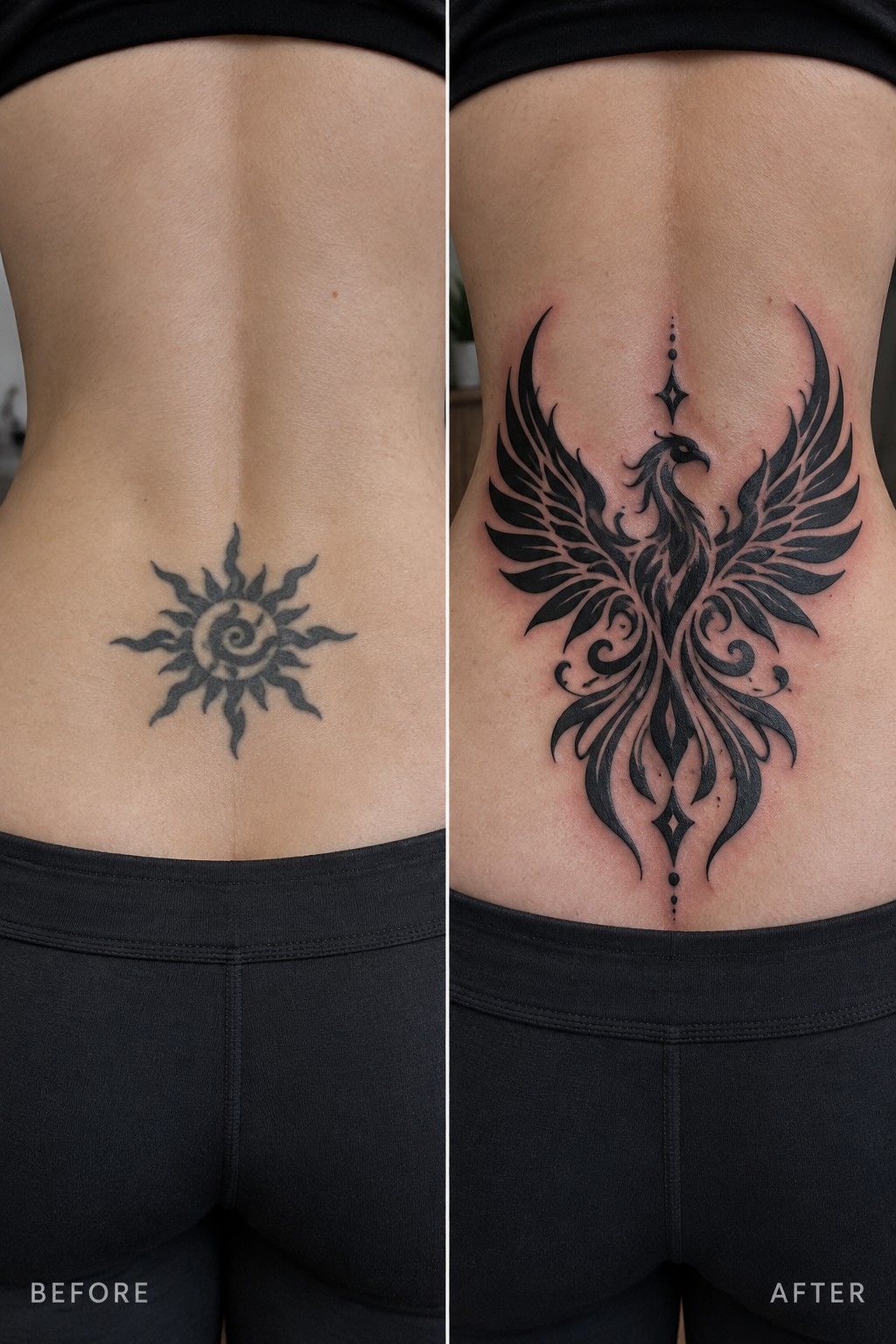
A large black phoenix turns the small faded sun tattoo into the center of a more detailed lower back design. Its spread wings and long tail fill the area above the waistband, while the vertical layout keeps the artwork centered.
I think the phoenix gives the cover-up a clear focal point without making the smaller original motif disappear entirely. Fine ornamental accents above and below help carry the design along the spine.
A Celtic knot lower back cover-up
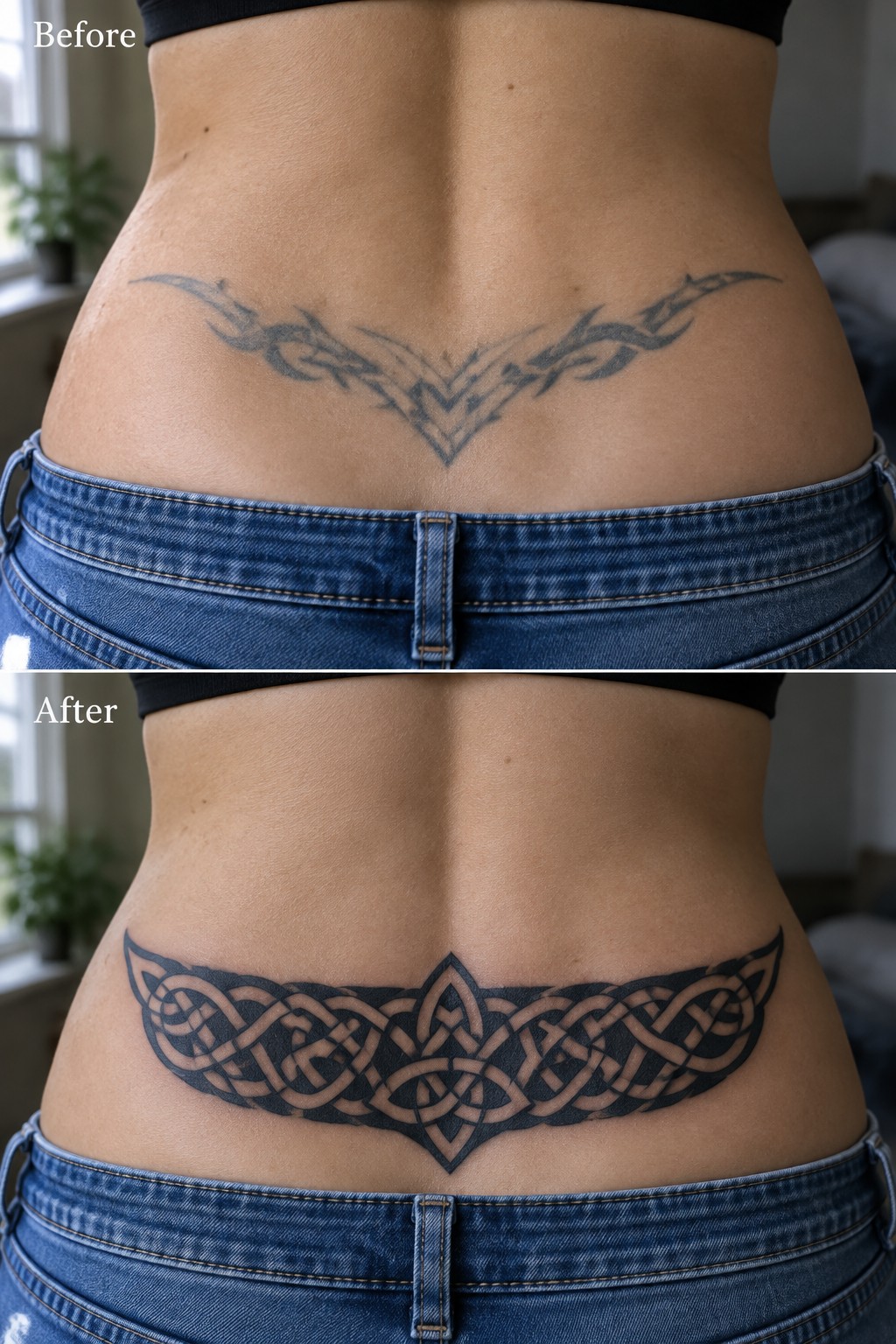
The wide Celtic knot pattern stretches across the lower back, covering the older tribal tattoo with dense interlaced lines. Its dark outline and mirrored layout help turn the faded marks into part of a more detailed design.
I’d keep the knotwork broad enough to fully cover the old tattoo, especially at the center and sides. The result feels structured without losing the natural curve of the lower back.
Celtic knot lower back cover-up
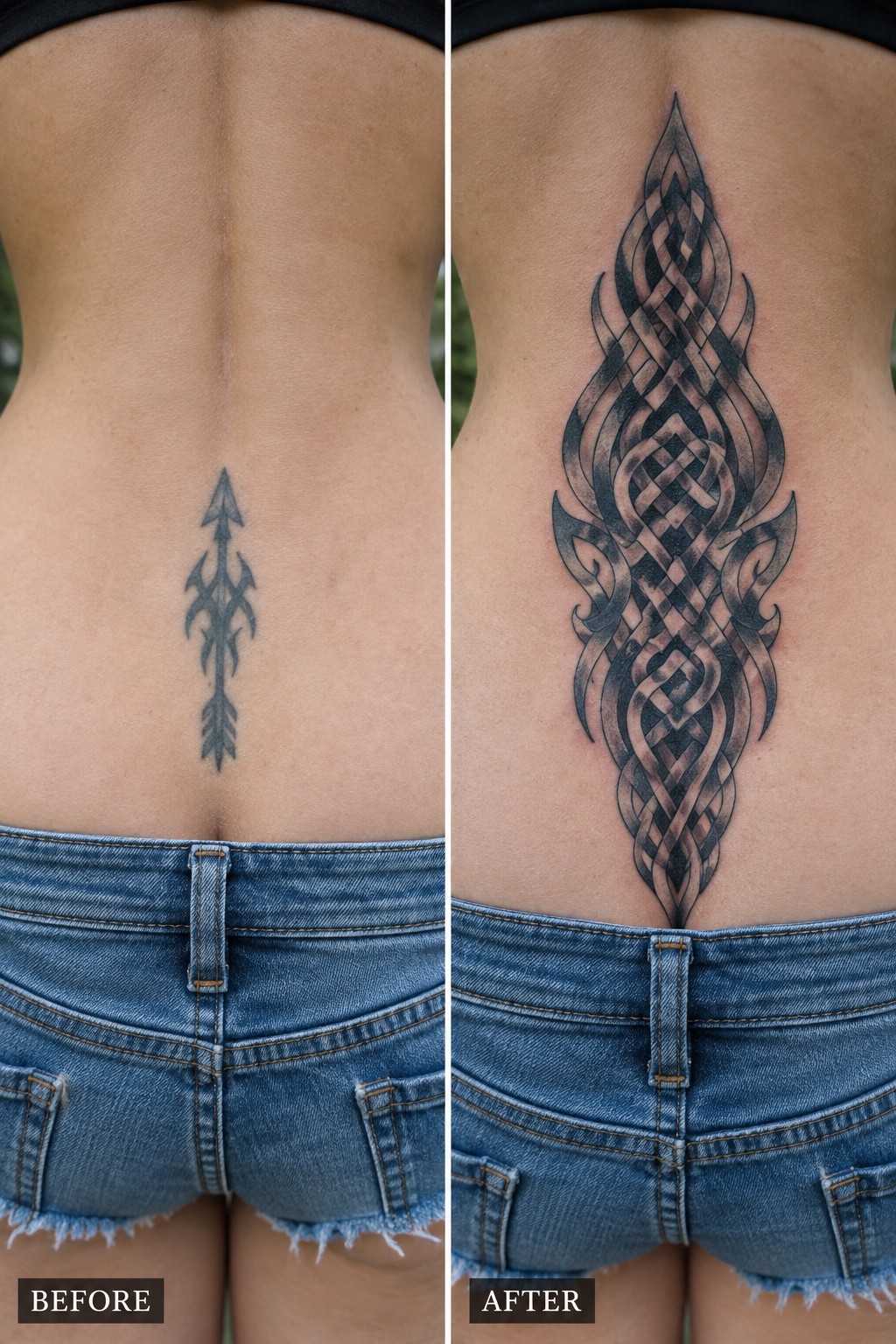
A narrow arrow tattoo can be covered with a larger vertical Celtic knot design across the lower back. Interwoven black lines and shaded sections provide enough coverage while keeping the pattern balanced.
I think the elongated shape is a practical choice for concealing a small tattoo in this spot. The pointed ends also help the design feel cohesive rather than like a patch placed over the old ink.
A seashell lower back cover-up tattoo

The large seashell and branching coral cover the small, faded dolphin tattoo on the lower back. Fine black and gray shading gives the underwater scene enough detail to replace the old outline.
I think the shell makes a strong focal point, while the coral helps spread the design across the area. The result suits someone looking for a coastal cover-up rather than a simple replacement symbol.
Ornamental peony lower back cover-up

A large shaded peony can cover an older butterfly tattoo across the lower back. The central flower and surrounding ornamental leaves create a broad, balanced design that suits the area.
I’d keep the black and grey shading varied so the petals remain distinct as the tattoo ages. The before-and-after shows how a detailed floral design can turn a small, faded tattoo into a full lower-back piece.
Floral lower back tattoo cover-up

A wide floral arrangement can cover an old centered lower back tattoo without relying on a dense block of ink. The large central bloom and smaller blue flowers spread across the waist in a soft watercolor style.
I’d keep the composition broad so it can conceal the original mark while still feeling balanced across the lower back. The muted colors and fine outlines give the cover-up a lighter look than a solid dark design.
Snake and rose lower back cover-up tattoo

A large snake winding between two red roses creates a clear new focal point across the lower back. The traditional style uses bold outlines and warm colors to cover the old tribal design.
I’d keep the composition broad enough to span the area, so the original tattoo can sit beneath the darker scales and leaves. The roses break up the design and add contrast without taking attention away from the snake.
Ornamental mandala lower back cover-up

The centered mandala covers the small faded star tattoo with layered petals and fine ornamental lines. Its vertical extensions carry the design along the spine without spreading too far across the lower back.
I’d choose this approach when a small old tattoo needs more coverage than a simple floral motif can provide. The dark linework and dense center give the new design enough visual weight to conceal the stars.
A large floral tattoo across the lower back

A broad peony and lace-inspired design covers the lower back, with the flower centered over the spine and ornamental details extending toward the hips. Its dark linework and soft shading provide plenty of coverage for an older, smaller tattoo.
I’d consider this approach when the goal is to turn a simple mark into a detailed centerpiece. The symmetrical layout gives the large floral design a balanced look without making one side feel heavier.
Lotus lower back cover-up tattoo
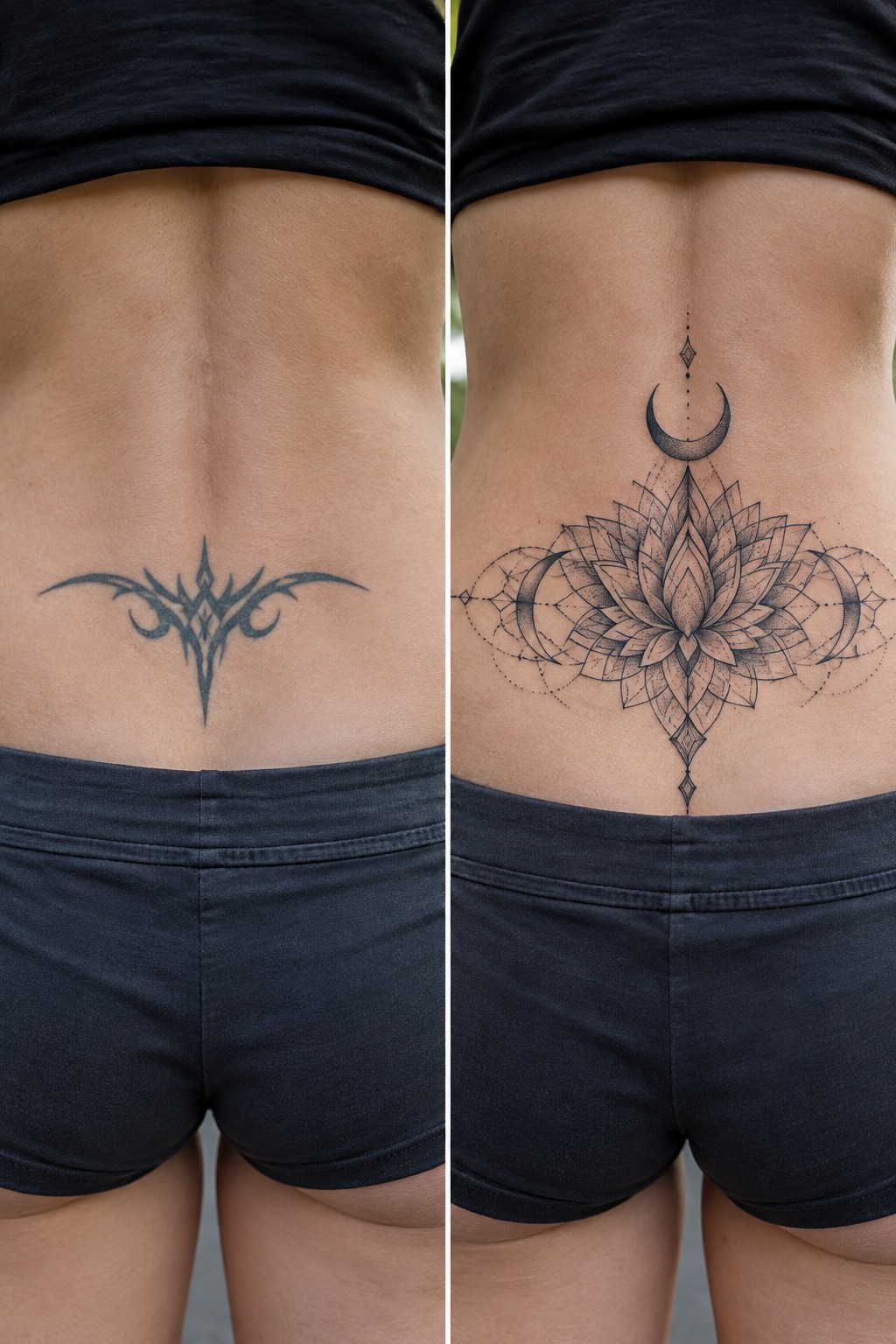
A detailed lotus centered on the lower back can cover an older, compact tattoo with a wider design. Layered petals and fine geometric lines extend out from the middle, while a small crescent moon adds a vertical accent.
I’d keep the main flower balanced across the back so it feels connected to the area rather than placed over the old tattoo alone. The fine linework gives the larger cover-up a lighter look.
Ornamental fan tattoo across the lower back

The wide fan-shaped design covers the lower back, with fine ornamental patterns spreading out from a central point. Its dark, dense linework also hides the small anchor tattoo beneath it.
I’d keep a design like this broad and symmetrical so it can cover more than a small central area. The pointed details add height without taking away from the fan shape.
Rose compass lower back cover-up tattoo

A large compass rose stretches down the center of the back, covering the older winged tattoo near the lower back. Fine black linework and a shaded rose give the design detail without relying on color.
I’d keep the central flower prominent and let the compass points extend above and below it. That layout helps the cover-up feel like one cohesive back tattoo.
Ornamental lotus tattoo across the lower back
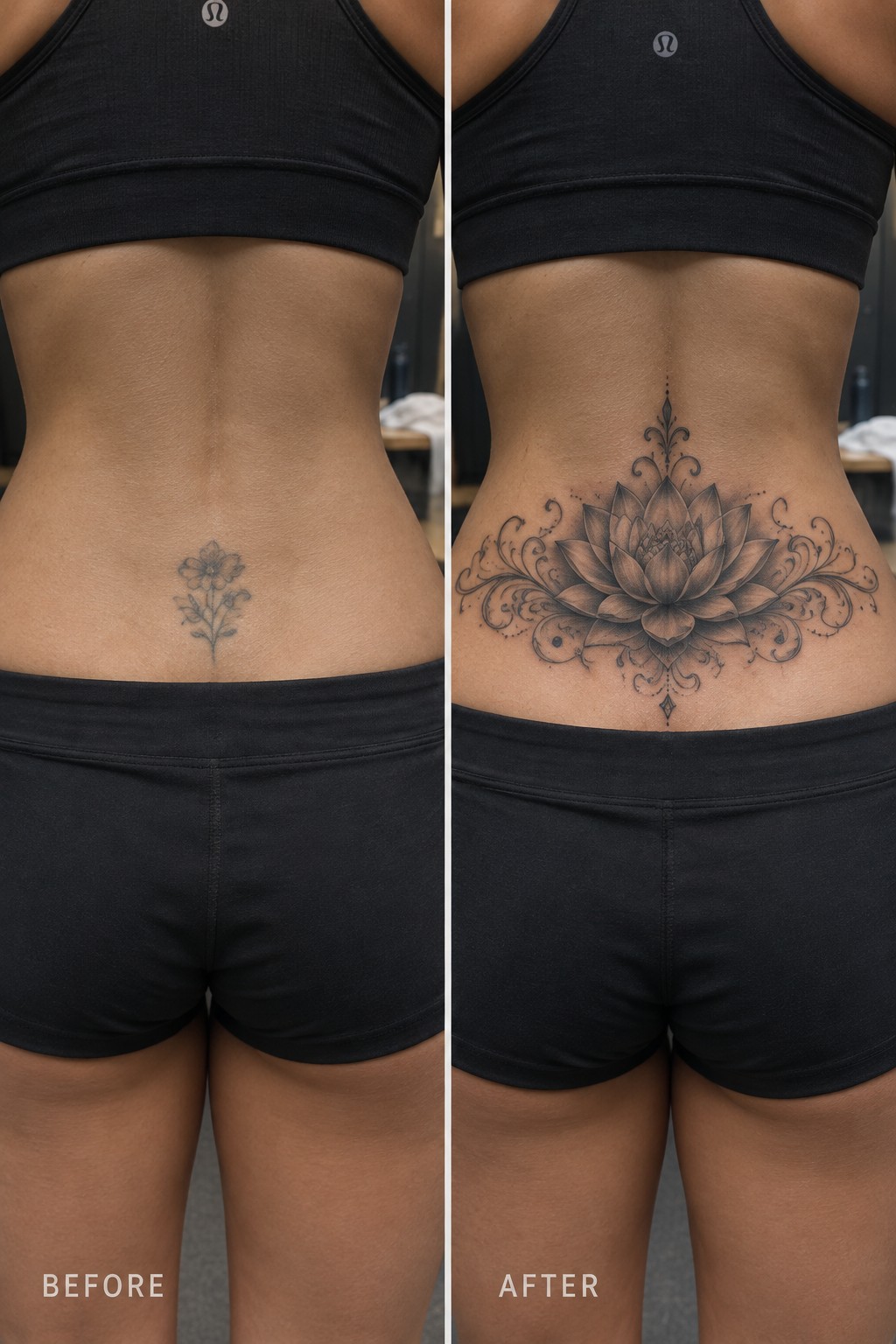
The wide lotus design covers the lower back, extending well beyond the small flower beneath it. Layered petals and ornamental scrollwork help blend the older tattoo into the larger composition.
I’d keep the design centered and broad if using this idea for a cover-up. The extra detail gives the artist room to work around the original ink without making the lotus feel cramped.
Frequently Asked Questions
Often, yes, but the result depends on the original tattoo’s size, darkness, colors, and condition. A skilled cover-up artist may use darker shading, bold outlines, and a larger design to disguise the old tattoo. Some particularly dark or dense tattoos may need a few laser treatments first to make the cover-up easier. During a consultation, ask the artist to explain what can realistically be hidden and whether any old lines might still show through.
A cover-up usually needs to extend beyond the original tattoo so the artist can incorporate its edges into the new design. How much larger depends on the tattoo and the proposed artwork, so there is no single measurement that works for everyone. Bring clear photos of your existing tattoo and be open to adjusting the size or placement to get a cleaner result.
Designs with rich color, strong contrast, and detailed shading often provide more options for hiding existing ink. Florals, ornamental patterns, animals, and flowing abstract designs can work well because their shapes and shading can be adapted to the lower back. The best choice is one that suits your taste while giving the artist enough coverage to camouflage the old tattoo.
Not always. Some tattoos can be covered directly, while others may benefit from partial laser fading, especially if the existing ink is very dark or has thick lines. Fading can give your artist more flexibility without requiring complete removal. A tattoo artist and a qualified laser professional can help you weigh the cost, time, and likely results before deciding.
Look for an artist with clear, healed before-and-after photos of cover-ups, not only fresh tattoos. Check that their examples show tattoos with similar darkness, size, or placement to yours. Schedule a consultation, ask how they plan to disguise the existing ink, and discuss the expected size, colors, number of sessions, and healing process before booking.
