


We may earn from ads and some links. How we work.
I love how Polynesian back tattoos pair bold pattern bands with beautiful flow across the back.
I’ve rounded up 21 designs that range from striking and symmetrical to soft and graceful, so there’s plenty of inspiration for finding a look that feels like you.
Fair warning, I may have a new favorite every time I scroll through them.
Polynesian shoulder and upper-back band

The broad Polynesian tattoo spans both shoulders and the upper back in layered bands of geometric patterns and spiral motifs. Its wide placement gives the repeated shapes room to form a balanced design across the back.
I’d keep the center point and band edges crisp so the pattern remains easy to follow across the shoulders. This approach suits someone looking for a large, bold back tattoo rather than a small isolated motif.
A full-back Polynesian tattoo

The broad bands cover the back from the shoulders to the lower waist, with a central line that ties the patterns together. This approach suits a large back tattoo because it gives the design room to spread across the shoulders and taper at the waist.
I’d keep the repeated shapes balanced on both sides so the main pattern stays easy to follow. The wave sections add variety without breaking up the strong banded layout.
A full-length Polynesian back tattoo

A narrow band of Polynesian-inspired patterns runs down the center of the back, from the nape to the lower back. Its repeated geometric sections create a strong vertical line while keeping the design balanced.
I’d keep the motifs bold and fairly compact so the long layout feels cohesive. This is a good option for someone who wants a large back tattoo with a clear, structured pattern.
Polynesian band tattoo across the back

A wide Polynesian-style band runs diagonally from the lower back to the right shoulder. Repeating geometric borders and circular motifs give the design a clear direction across the back.
I’d keep this kind of tattoo broad enough for the patterns to have room, rather than compressing them into a narrow strip. The diagonal placement gives the band a strong, distinctive look.
Polynesian lower-back band tattoo

A wide Polynesian band sits across the lower back, with a centered point that gives the design a clear focal point. Repeating geometric motifs make the tattoo feel cohesive across both sides of the waist.
I’d keep the central pattern balanced and the band’s edges well defined so it reads as one design. Its low placement makes it easy to cover with everyday clothing.
Polynesian shoulder-blade tattoo

The shoulder-blade band stretches across the upper back, with a slim patterned line running down the spine. Its mirrored layout gives the tattoo a clear center while keeping most of the detail across the shoulders.
I’d keep the vertical section narrow so it supports the broad band without competing with it. The black geometric patterns give the design a strong, structured look.
Full-back Polynesian pattern bands
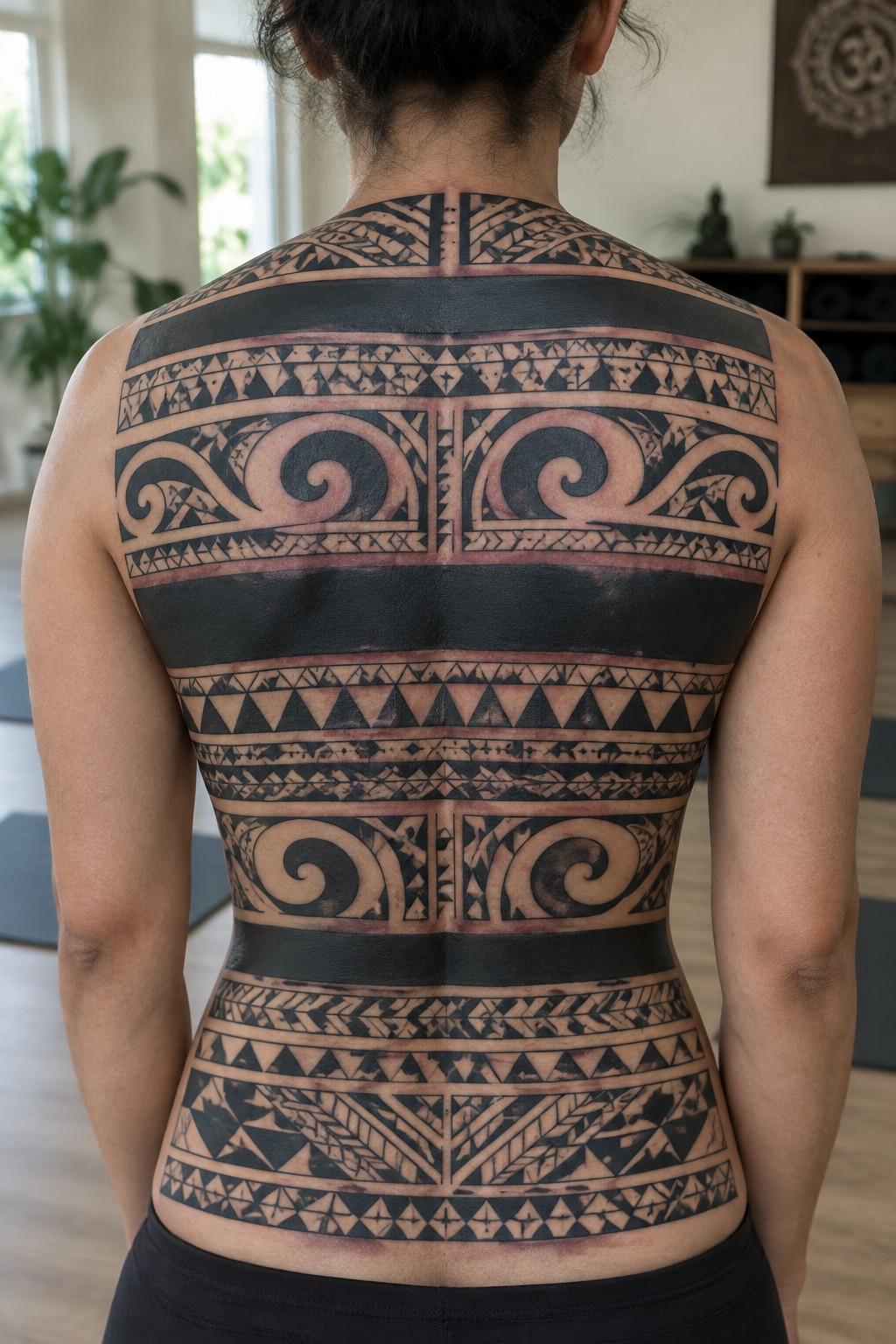
Broad black bands and geometric motifs cover the back from the shoulders to the lower back. The centered spiral panels break up the repeating triangular patterns and give the large design a clear structure.
I think the horizontal bands make the coverage feel organized rather than crowded. This approach suits someone looking for a bold, connected back tattoo with strong symmetry.
Polynesian lower-back band tattoo
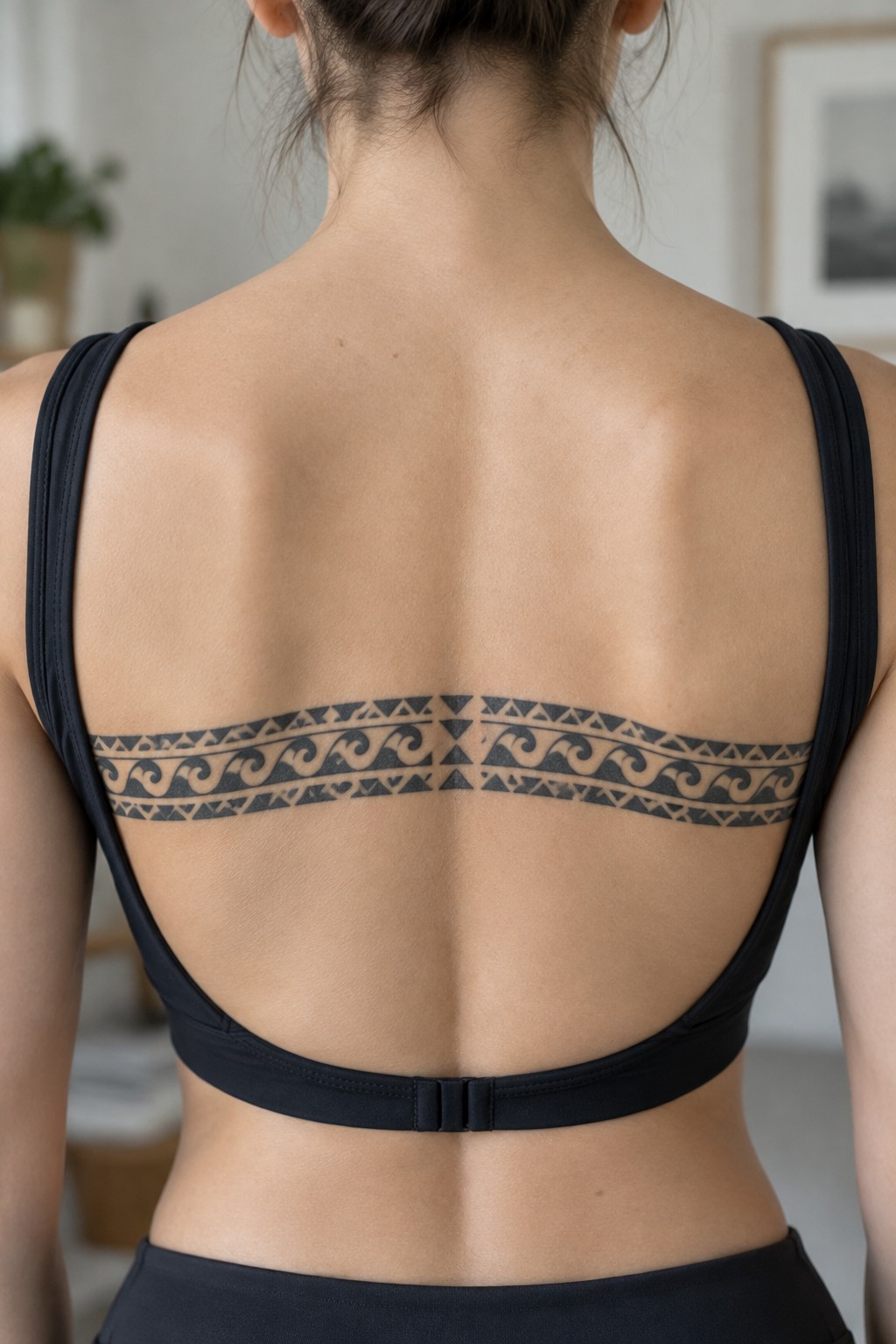
A wide Polynesian band across the lower back uses repeating triangles and curved motifs to create a clear horizontal design. Its centered placement keeps the pattern balanced across the back.
I’d keep the band’s edges and spacing consistent so the motifs remain easy to distinguish. The result suits someone who wants a bold back tattoo without covering the full area.
Full-back Polynesian tattoo bands

The broad bands cover nearly the entire back, with repeated geometric patterns and larger floral motifs across the middle. Their horizontal layout gives the detailed design a clear structure from the shoulders down toward the lower back.
I’d keep the central motifs prominent and use narrower pattern bands to connect them. That balance helps a large tattoo feel organized rather than crowded.
Polynesian band across the upper back

A wide Polynesian pattern band starts near the shoulder and curves across the upper back. Repeating chevrons and circular motifs give it a clear direction without filling the whole back.
I’d keep the band broad enough for its geometric details to remain distinct as it follows the shoulder line. This approach suits someone who wants a bold back tattoo with open skin around the pattern.
Diagonal Polynesian tattoo band across the back

A broad Polynesian pattern band runs diagonally from the left shoulder toward the right lower back. Its repeated geometric motifs and dark borders give the back a clear sense of direction without covering the whole area.
I’d keep this kind of design wide enough for the patterns to remain distinct along the diagonal. It suits someone looking for a large back tattoo with a strong, graphic layout.
Polynesian circular tattoo on the upper back

Centered between the shoulder blades, this large Polynesian-inspired tattoo uses a circular pattern with a narrow band extending toward the neck and lower back. Repeated triangles and curved motifs give the design a strong, structured outline.
I’d keep the circle centered and allow enough space between its bands so the smaller patterns remain distinct. The vertical extension adds direction without taking attention away from the main shape.
Polynesian side-back band tattoo

The broad Polynesian band runs diagonally across the side and lower back, creating a strong option for women who want a large-scale design without covering the whole back. Repeating triangles, dots, and geometric motifs give it a clear banded structure.
I’d keep the pattern flowing as one continuous piece so the sections feel connected across the torso. The dark linework gives the design presence while leaving plenty of open skin around it.
Polynesian back tattoo with a center panel

A broad band of Polynesian patterning crosses the shoulders and joins a long panel down the center of the back. The connected layout gives the tattoo a balanced, full-back scale without covering the entire back.
I’d keep the strong black borders and repeated geometric details consistent so the shoulder bands and center panel feel like one design. This approach could suit someone who wants a bold back tattoo with a clear vertical line.
Polynesian tattoo band across the mid-back
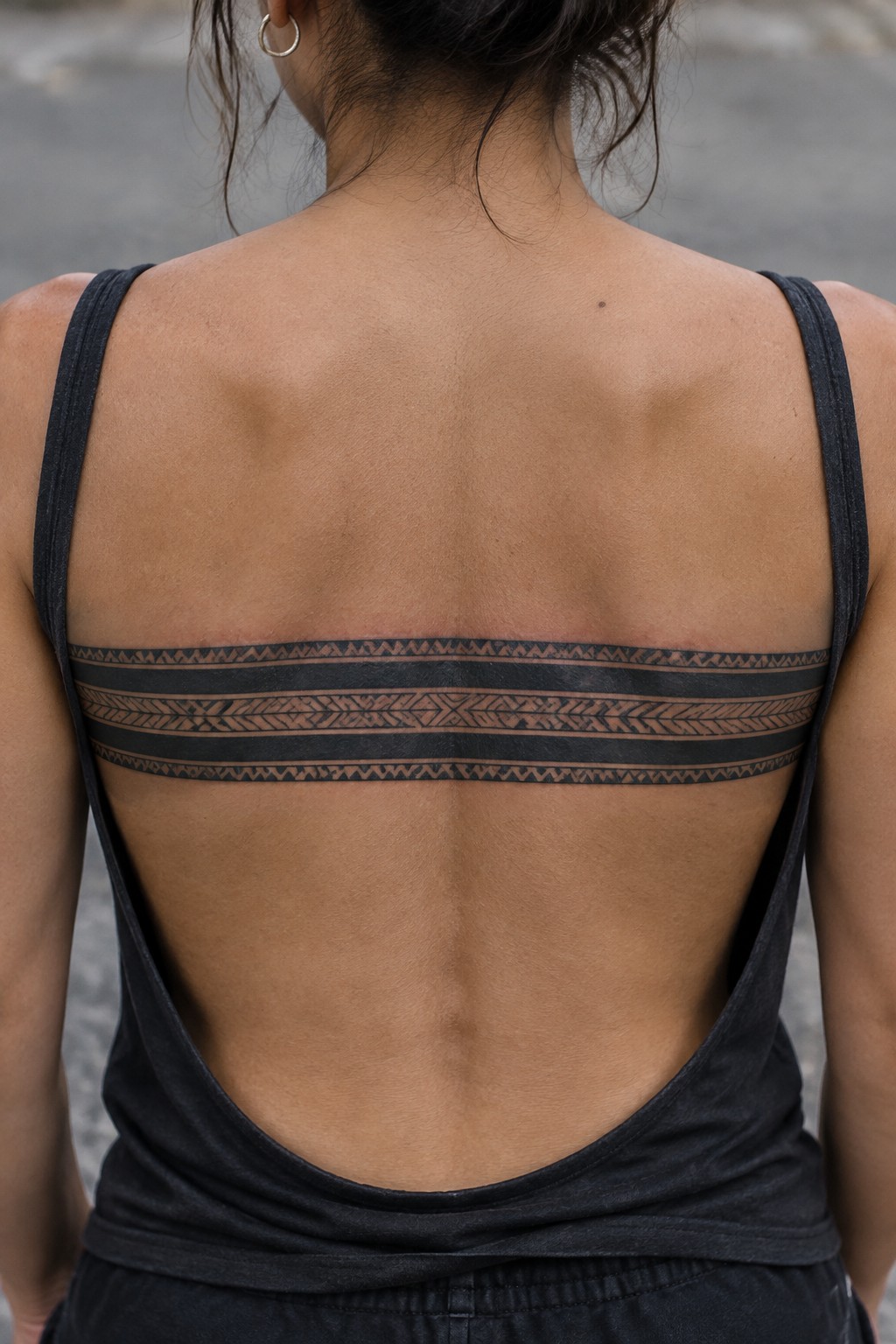
A wide Polynesian band runs horizontally across the mid-back, just below the shoulder blades. Its repeated geometric borders and central woven pattern give the design a clear, balanced shape.
I’d keep the band broad enough for its small motifs to remain distinct. The straight layout also makes this a good option for someone who wants a bold back tattoo without covering the whole area.
Polynesian tattoo down the spine

A narrow column of Polynesian pattern bands runs from the nape to the lower back. The centered placement gives each geometric section room while keeping the overall design long and balanced.
I’d keep the bands separated as shown so the different motifs remain easy to distinguish. This layout suits someone looking for a large back tattoo with a strong vertical direction.
Polynesian tattoo bands across the shoulder blades
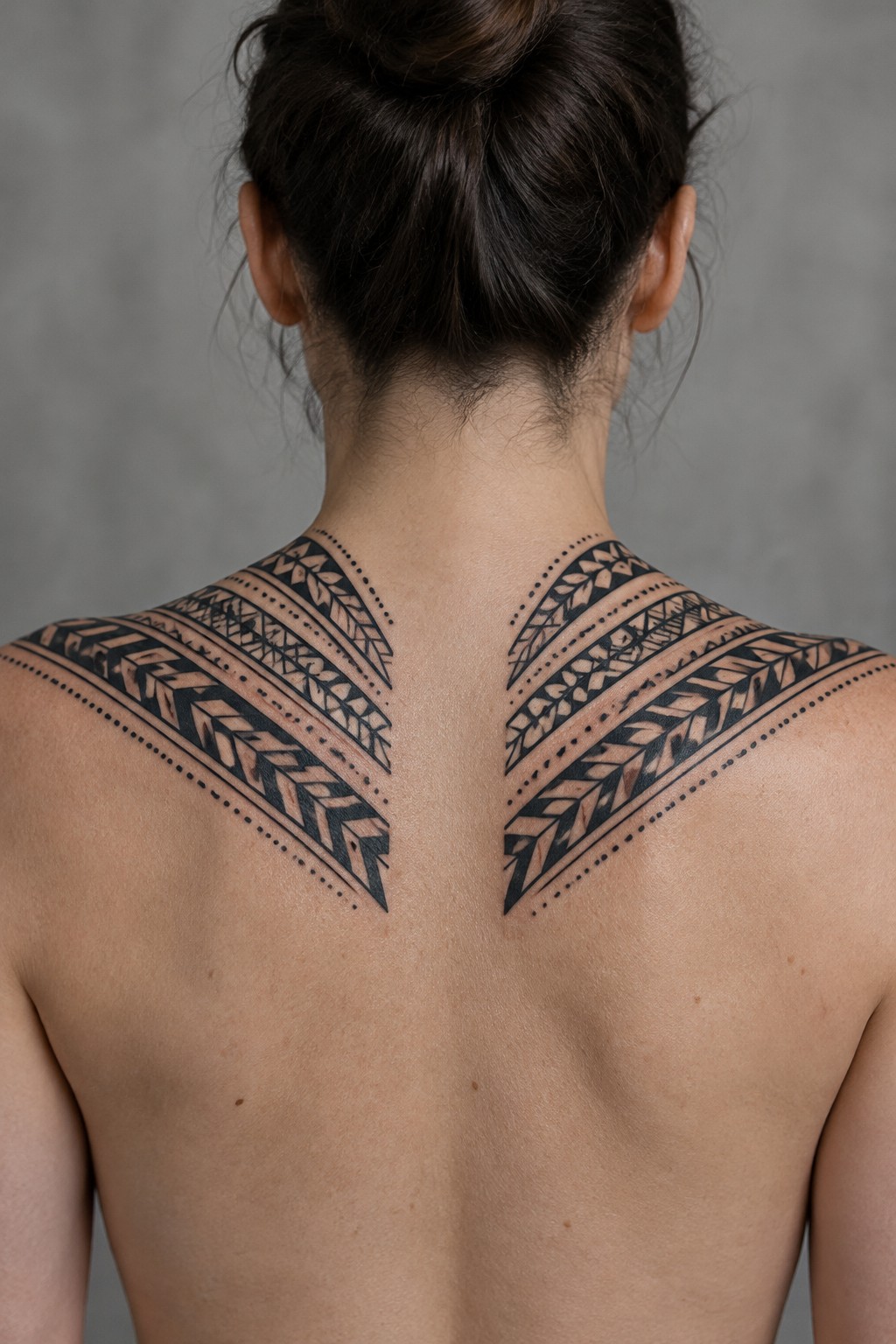
The bands begin near the base of the neck and angle outward across the shoulder blades, creating a broad, balanced upper-back design. Repeating geometric motifs and dotted borders give the pattern a clear Polynesian style without extending far down the back.
I’d keep the center open as shown, since it gives the two sides room to stand out. This layout suits someone looking for a bold back tattoo that follows the shoulders rather than covering the whole back.
Polynesian tattoo band across the lower back

The broad band sits just above the waist and follows the lower back from side to side. Repeating geometric borders frame a central panel, giving the tattoo a clear horizontal shape.
I’d keep the design centered and balanced so its patterns carry evenly across the back. The dark linework gives this large-scale idea a bold look without needing added color.
Frequently Asked Questions
Polynesian tattooing includes distinct traditions and visual languages from cultures across the Pacific, including Samoan, Māori, Marquesan, and Hawaiian. Designs often use repeating bands, geometric shapes, and symbolic motifs. Their meanings can vary by culture, community, and placement, so a pattern that looks similar to another may have a different significance. It’s worth researching the specific tradition behind a design rather than treating all Polynesian styles as interchangeable.
Pattern bands can run horizontally across the shoulder blades, curve around the upper back, frame the spine, or form part of a larger design that extends toward the shoulders or waist. The right placement depends on the pattern’s shape, your body’s movement, and how much coverage you want. Ask your tattoo artist to map the design onto your back so you can see how it will sit when you stand, bend, and move your arms.
Start by deciding what you want the tattoo to represent, then discuss those ideas with an artist who has genuine knowledge of the Polynesian tradition you’re interested in. Avoid copying a culturally significant tattoo from someone else or combining motifs without understanding their context. A knowledgeable artist can help create a design that reflects your story while respecting the symbols, customs, and communities associated with the style.
Pain varies from person to person, but areas close to the spine, shoulder blades, and ribs can feel more sensitive than fleshier parts of the back. A bold, detailed design may require multiple appointments, depending on its size, complexity, and the artist’s pace. Your artist can estimate the session length and suggest breaks. Eating beforehand, staying hydrated, and following their preparation instructions can help make the appointment more manageable.
Follow your tattoo artist’s aftercare instructions, since recommendations can vary. Keep the tattoo clean, use only the products they approve, and avoid scratching, soaking, or exposing it to direct sunlight while it heals. If reaching the area is difficult, ask someone you trust to help apply aftercare products with clean hands, or ask your artist about practical alternatives. Contact a healthcare professional if you notice signs of infection, such as worsening redness, unusual warmth, or increasing pain.
