


We may earn from ads and some links. How we work.
I’ve always loved tattoos that follow the body’s natural lines, and a curved design sweeping from the lower back to one hip has such a graceful, playful feel.
I picked out 20 ideas that range from delicate and dainty to bold and botanical, so you can find a style that feels like you.
Fair warning, I may have found a few new favorites for my own wish list.
A floral tattoo sweeping across the lower back

A fine-line branch of small flowers sweeps diagonally from the lower back toward one hip. Its curved path suits the area, while the open spacing keeps the floral design light.
I’d keep the linework delicate if adapting this idea, so the sweep stays easy to follow across the skin. The scattered dots add a little texture without making the tattoo feel crowded.
A mandala tattoo sweeping across the lower back
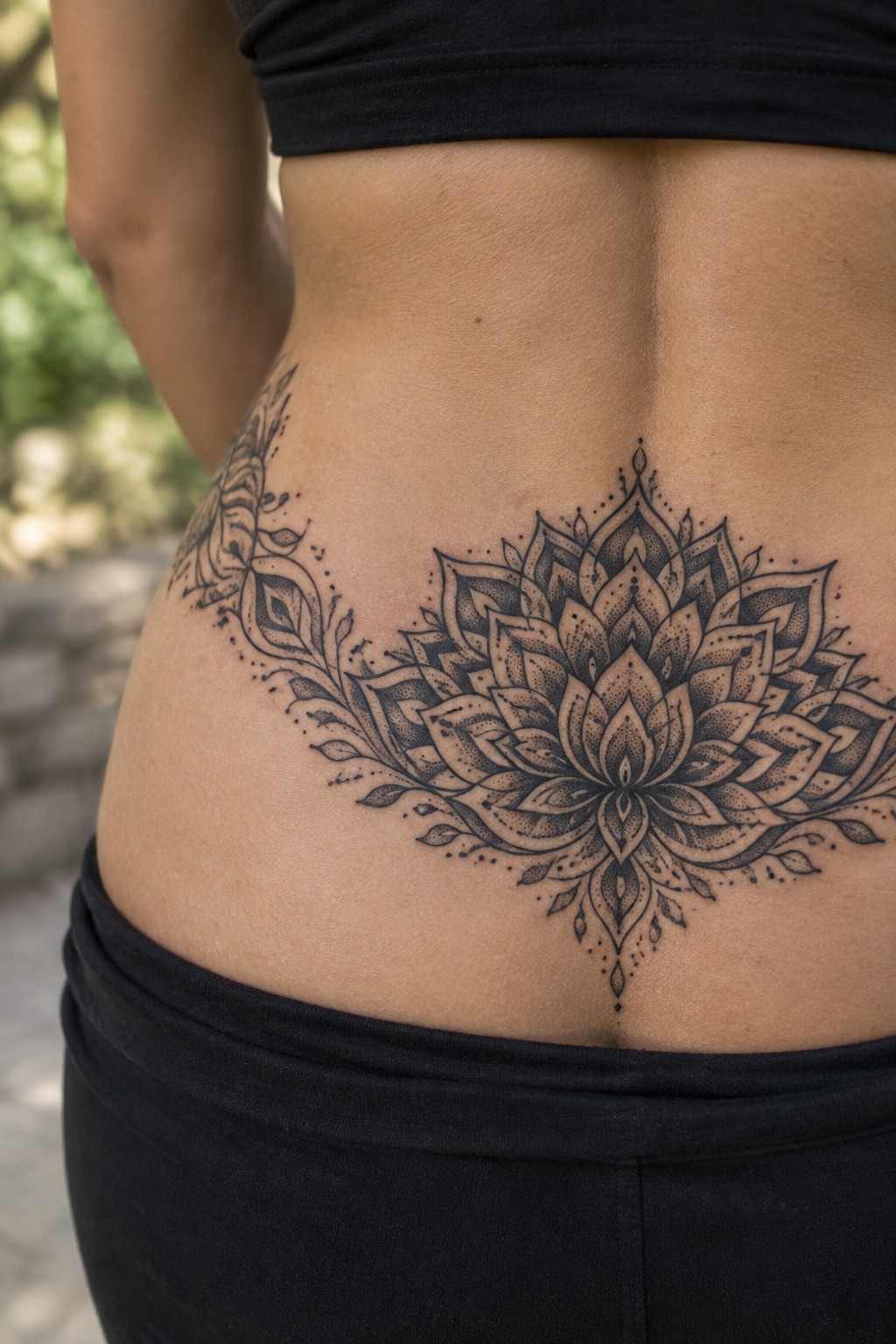
Centered near the lower back, this detailed mandala spreads outward and extends toward one hip with a fine-line floral flourish. The curved layout gives the symmetrical design room to open up without making the whole tattoo feel bulky.
I’d keep the shading light so the layered petals remain distinct as the tattoo moves across the waist. The small trailing leaves help connect the central motif to the hip.
A floral tattoo curving across the lower back and hip
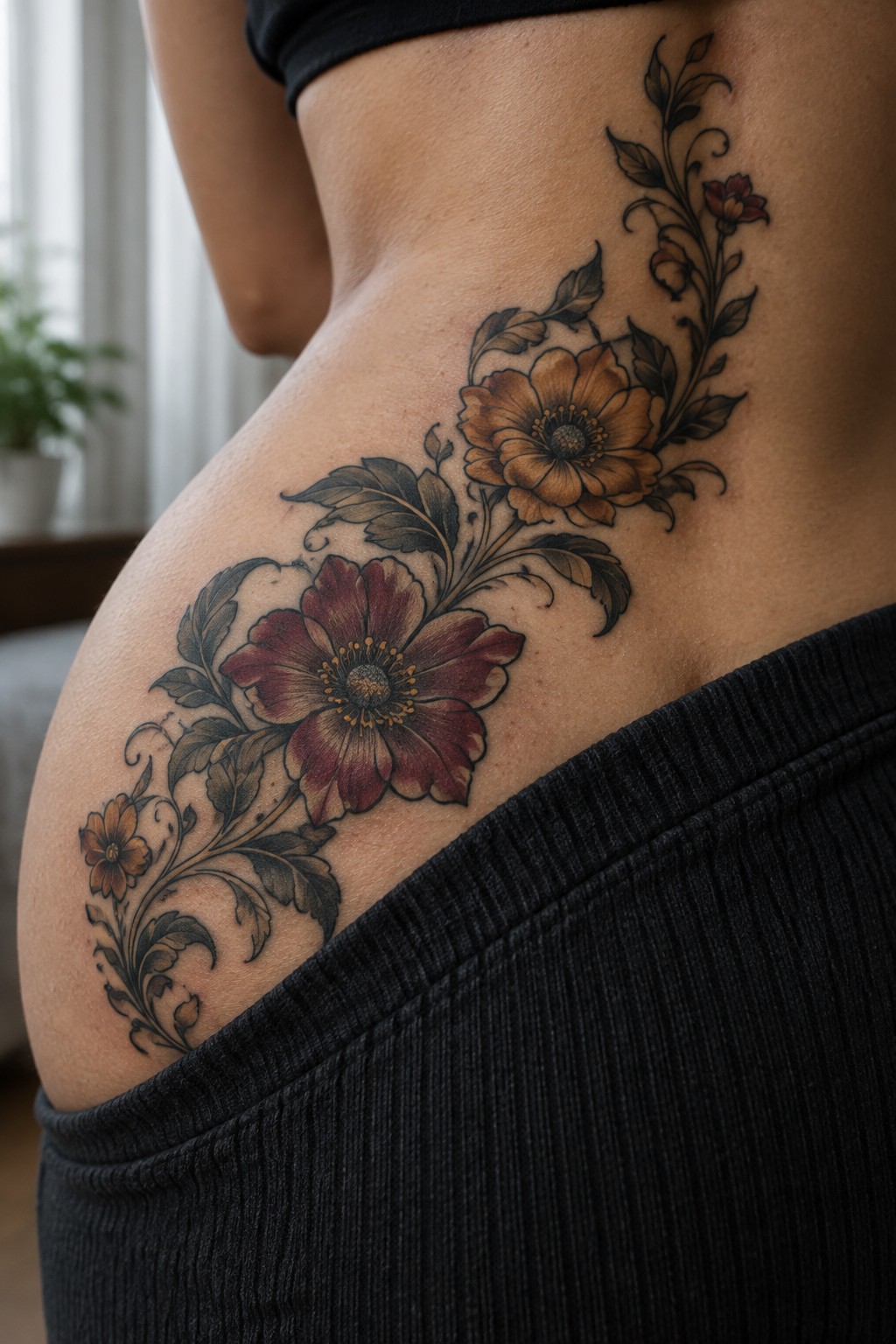
The floral design starts near the lower back and sweeps diagonally over one hip. Large shaded blooms anchor the composition, while smaller flowers and leafy stems extend the line.
I’d keep the main flowers prominent and let the finer stems taper toward the edges. That gives the tattoo a clear direction without making the full sweep feel too heavy.
A peony tattoo curving across one hip

The floral arrangement starts near the lower back and trails diagonally over the hip. Its two large blooms anchor the curve, while smaller buds and leaves extend the design without filling the whole area.
I’d keep the colors muted like these reds and olive greens so the tattoo feels settled against the skin. The open spacing between the flowers also helps the long shape feel light rather than dense.
A fine-line wave tattoo across the lower back

A slim wave sweeps from one hip across the lower back, with small crescent-like curls marking its bends. The single-line approach keeps the design light and lets its long curve suit the wide placement.
I’d keep the line delicate so the wave remains easy to read without taking over the area. Its off-center start also gives the tattoo a more natural, asymmetrical look.
A crescent moon and floral tattoo on one hip
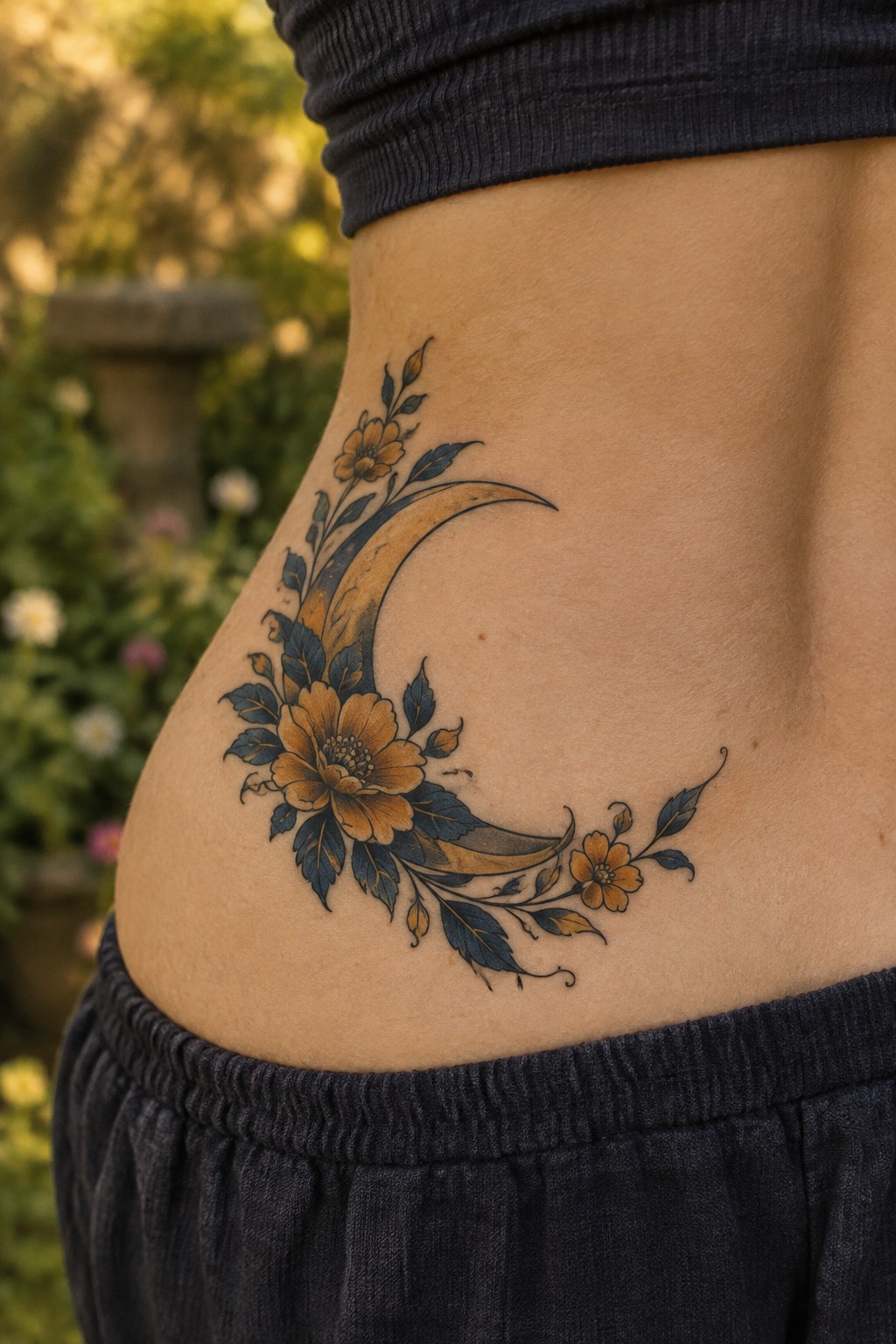
A crescent moon anchors this tattoo on the lower back, while flowers and leaves extend the design across one hip. Its curved layout fills the area without spreading far onto the back.
I’d keep the dark outlines and warm flower shading if adapting this idea, since they help the floral details stand out against the moon. The medium-sized design suits someone looking for a decorative hip tattoo with a clear focal point.
Floral lower-back tattoo sweeping to one hip

A flowing floral design starts at the lower back and sweeps across one hip. Its larger blossoms and leafy stems give the curved layout a clear direction without filling the whole area.
I’d keep the flowers spaced along the vine so the shape remains easy to follow as it wraps toward the hip. Muted color and fine outlines give this medium-to-large tattoo a soft, botanical look.
A fine-line floral lower back tattoo

The design begins near the waist and curves across the lower back toward one hip. Fine-line leaves and floral scrolls give the tattoo a light, flowing look.
I’d keep the central vine narrow so the curve stays easy to follow. Small star and dot details add interest without taking attention from the main line.
A Celtic knot tattoo sweeping across one hip

The interlaced Celtic knot forms a long, curved band from the lower back toward the hip. Its black linework follows the area’s natural shape without relying on shading or color.
I’d keep the pattern broad enough to show the woven details, especially where the design bends. That gives the tattoo a clear flow while keeping it distinct from a simple decorative line.
A script tattoo curving across the lower back

The flowing script sweeps diagonally from the lower back toward one hip, with fine flourishes and small star details extending the line. This gives a short phrase room to travel across the body without making the lettering feel crowded.
I’d keep the lettering slim so the curve stays easy to follow as the body moves. The small decorative marks add interest without competing with the words.
A spiral and wave tattoo across one hip

The spiral pattern begins at the lower back and flows into a curling ocean wave over one hip. Its broad, dark linework gives the design enough scale to connect both areas without making the wave feel separate from the spiral.
I’d keep this kind of layout mostly black and gray so the patterned sections and wave shading stay cohesive. The sweeping shape also makes it a good option for someone who wants a large tattoo that follows one side of the waist.
A script tattoo sweeping across the lower back

A fine-line script tattoo curves from the lower back toward one hip, with a long, delicate flourish extending beneath the words. The diagonal placement gives the lettering a natural sweep across the skin.
I’d keep the lettering simple so it stays easy to read along the curve. The extended line adds movement without making the tattoo feel crowded.
An ornamental tattoo sweeping across the lower back and hip
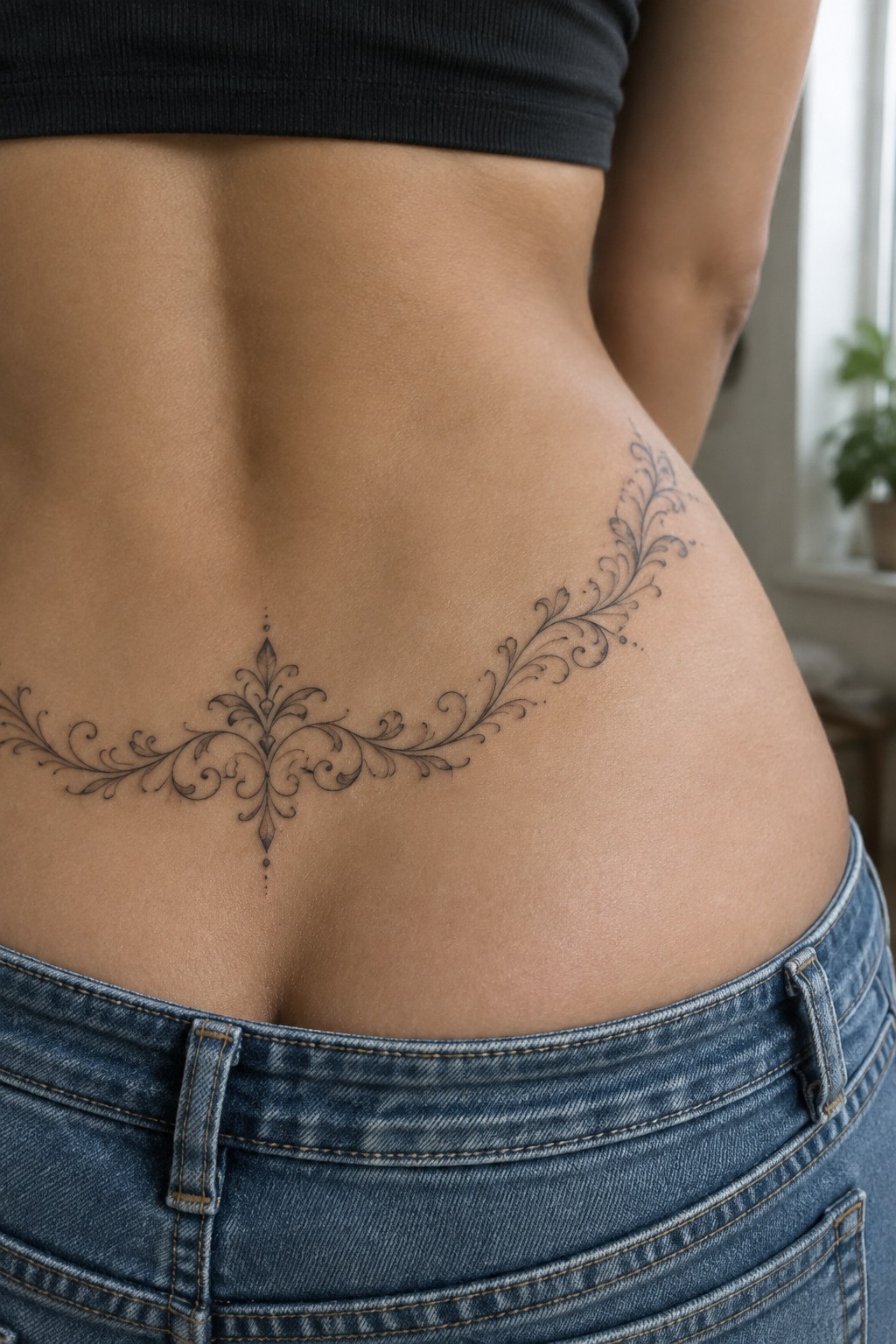
An ornamental design starts at the lower back and sweeps diagonally over one hip. Fine black lines and small flourishes give it a decorative look while keeping the central motif easy to notice.
I’d keep the linework light so the long curve remains the focus. The asymmetrical shape also makes this a good option for someone who wants a lower-back tattoo that extends onto the hip.
A moon and star tattoo across the hip
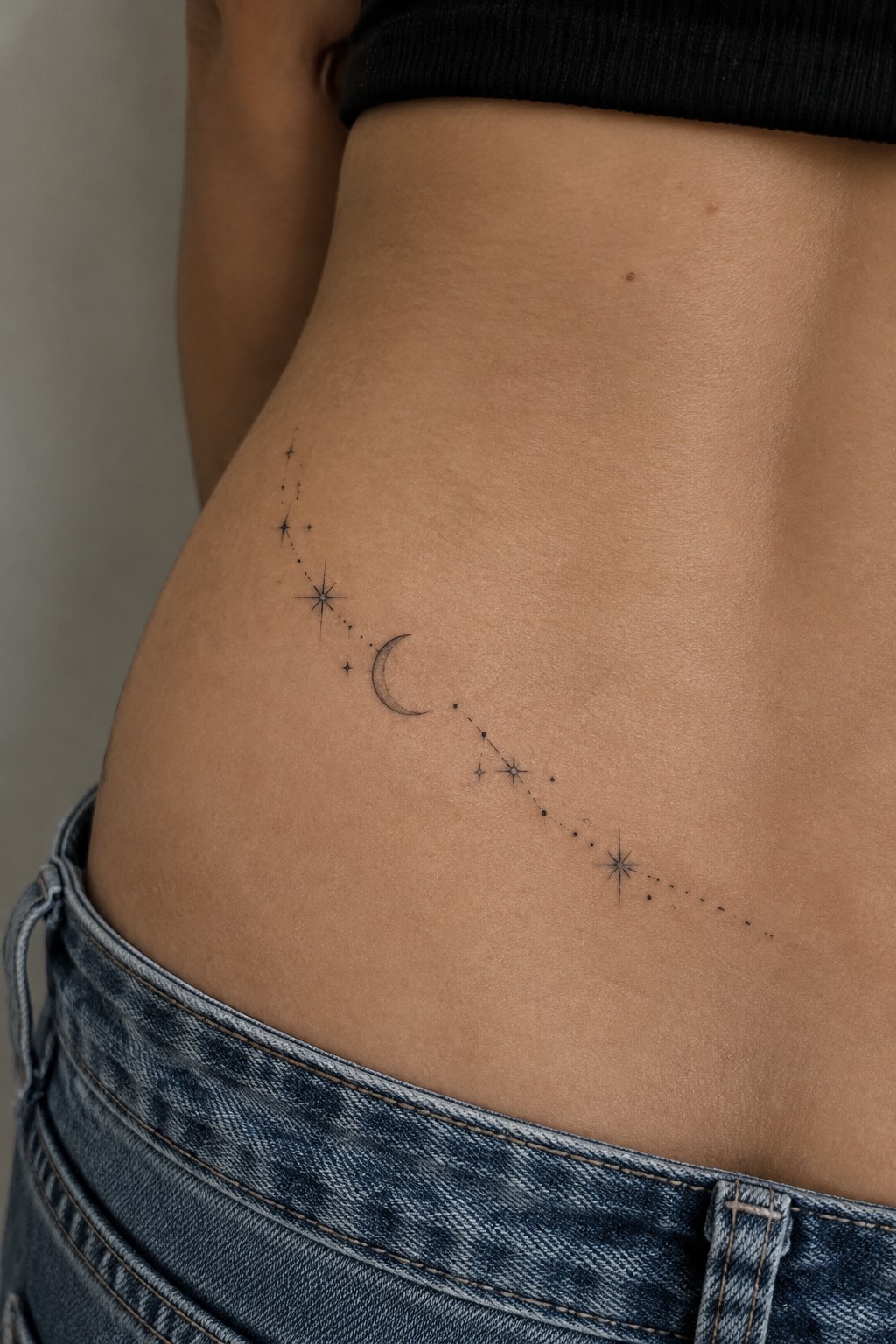
A dotted trail of stars and a slim crescent moon sweeps diagonally across the lower back toward one hip. Fine black lines and small points keep the celestial design light rather than filling a large area.
I’d keep the trail narrow so it follows the body without competing with the waistband. The mix of tiny dots and a few larger starbursts gives the curve a clear rhythm.
A geometric tattoo sweeping across the lower back
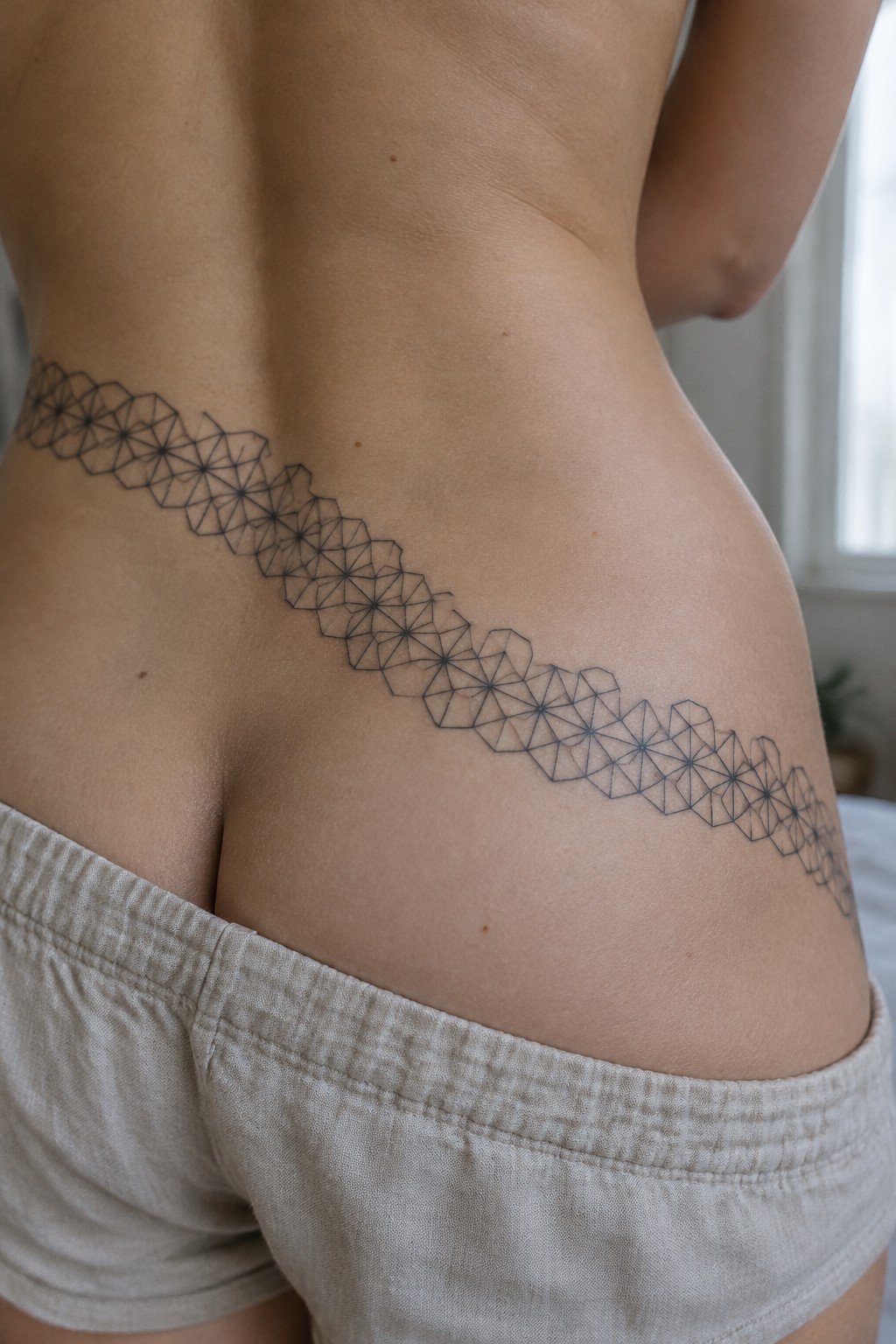
The geometric pattern runs diagonally from the lower back toward one hip, giving the tattoo a long, connected shape. Fine lines form repeating star-like details, so the design feels intricate without relying on shading.
I’d keep this kind of pattern narrow and flowing rather than filling the whole lower back. Its direction gives the hip area a clear focal point while leaving plenty of open skin around it.
A Celtic knot tattoo curving over one hip

The interlaced Celtic knot stretches diagonally from the lower back toward the hip, giving this large tattoo a natural sweep across the body. Its dark outlines and shaded sections bring out the braided pattern without adding color.
I’d keep this kind of design broad enough for the knotwork to remain distinct along the curve. The pointed ends help frame the long shape and give the tattoo a clear finish.
A compass tattoo sweeping across the lower back

A detailed compass anchors this tattoo at the lower back, while braided rope and ornamental flourishes carry the design across one hip. The wide layout gives the central compass room for its directional points and fine shading.
I’d keep the compass as the main focal point and let the surrounding details taper along the waist. That balance makes the tattoo feel connected across the back without crowding its central subject.
A floral script tattoo across the lower back

The lettering stretches across the lower back, framed by flowers that continue onto one hip. Its wide, curved layout makes the script feel connected to the floral design rather than separate from it.
I’d keep the lettering prominent and let the flowers soften its edges. The muted color gives the large tattoo a gentler look without losing the script’s presence.
A fine-line vine tattoo sweeping across one hip

A slender vine starts near the lower back and arcs across the hip, with small leaves and dotted accents branching along its path. The curved layout gives the design room to stretch without needing a large, solid area of ink.
I’d keep the linework light so the vine remains easy to follow as it turns across the body. Its asymmetrical shape also makes it a natural choice for a tattoo focused on one hip.
A dotted line tattoo sweeping across the lower back
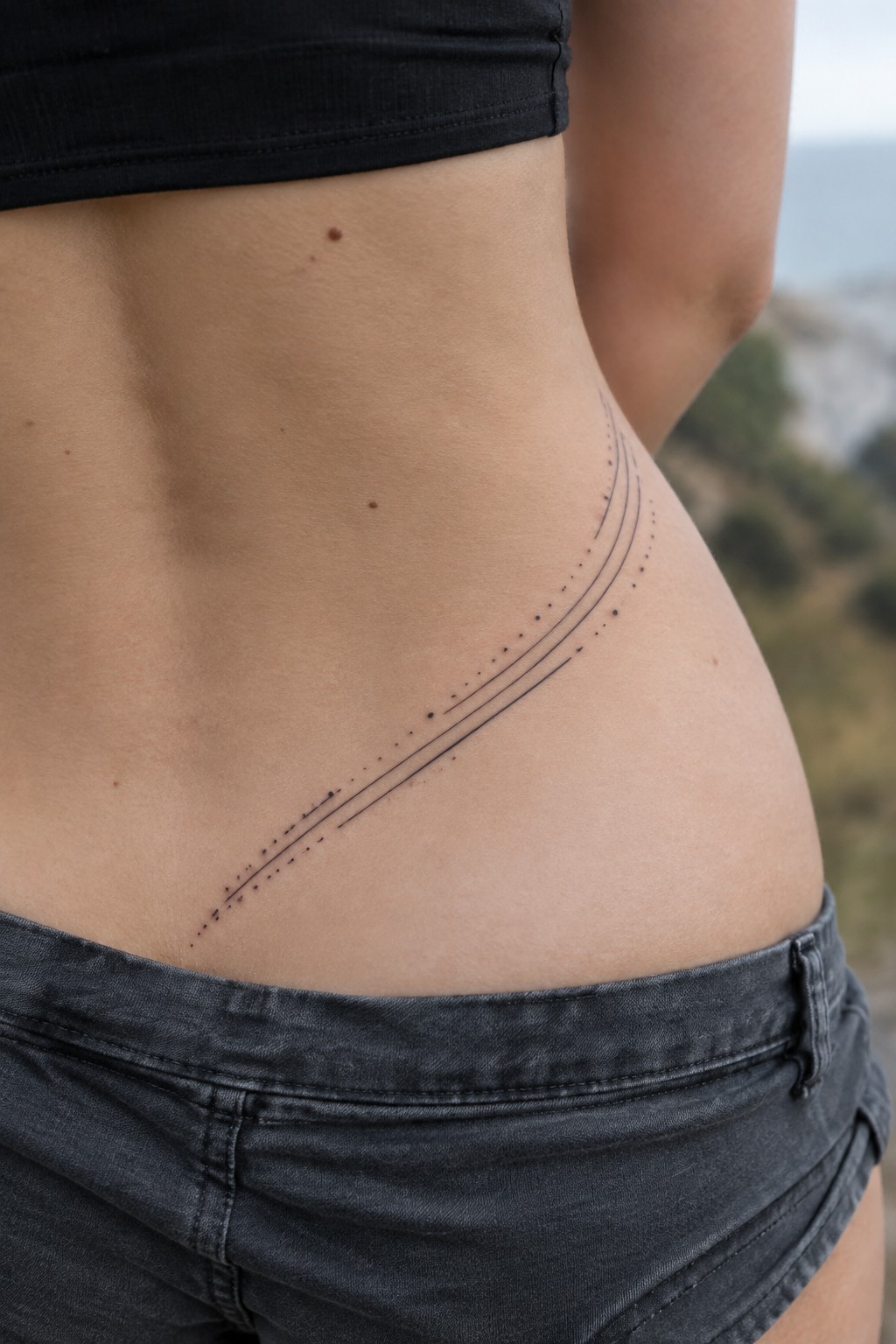
A few fine, parallel lines sweep diagonally from the lower back toward one hip, with small dots tracing the same path. The narrow design keeps the curve simple rather than filling a large area.
I’d keep the linework light so the dots and curves remain distinct. It’s a good option for someone who wants a subtle lower-back tattoo with a clear direction.
Frequently Asked Questions
A traditional lower-back tattoo is often centered and symmetrical, while a curved design follows the body’s natural lines and extends toward one hip. This creates an asymmetrical, flowing look that can feel more personalized and draw attention to the waist and hip. The design might feature florals, vines, ornamental patterns, or a fine-line motif that gradually tapers at each end.
Designs with movement tend to suit the area especially well. Flowers, leafy vines, botanical branches, ornamental curves, snakes, and abstract linework can all follow the lower back toward the hip. If you prefer something subtle, ask your artist about fine lines and lighter shading. For a bolder look, consider richer detail or stronger contrast, while keeping the design’s flow in mind.
Think about how you want the tattoo to look when you move, dress, or view it in a mirror. You might choose the side that best complements your body’s natural contours or the side you’d like to feature in photos. Your artist can help map out the direction and placement on your skin before tattooing, so you can compare options while standing and sitting.
Pain varies from person to person, and the sensation can change across the design. Areas with more padding may feel more manageable, while spots closer to bone or with thinner skin can be more sensitive. The size, detail, and length of the session also matter. Ask your tattoo artist about breaks and session length, and follow their preparation and aftercare instructions.
Consider how the design will fit your body, how much of it you want visible, and whether waistbands or clothing may rub against it during healing. Choose a licensed artist whose portfolio shows experience with curved, body-following designs. Bring reference images, but be open to adjustments that suit your anatomy. Before booking, discuss the size, placement, price, healing process, and any workplace or personal preferences about visibility.
