

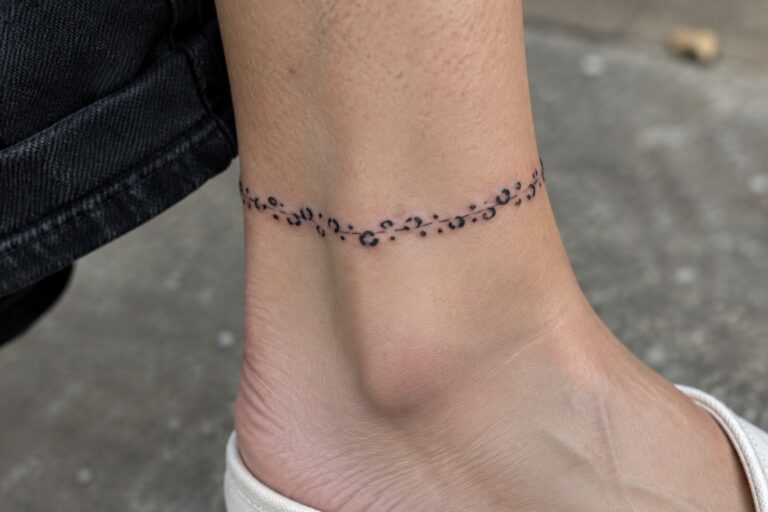
Leopard prints have always been my go to for a bold statement.
I love seeing how fine line details make these tattoos look so delicate yet powerful on skin.
These 23 ideas capture that spotted magic in ways that feel fresh and exciting.
Leopard spots form a thin band around the ankle
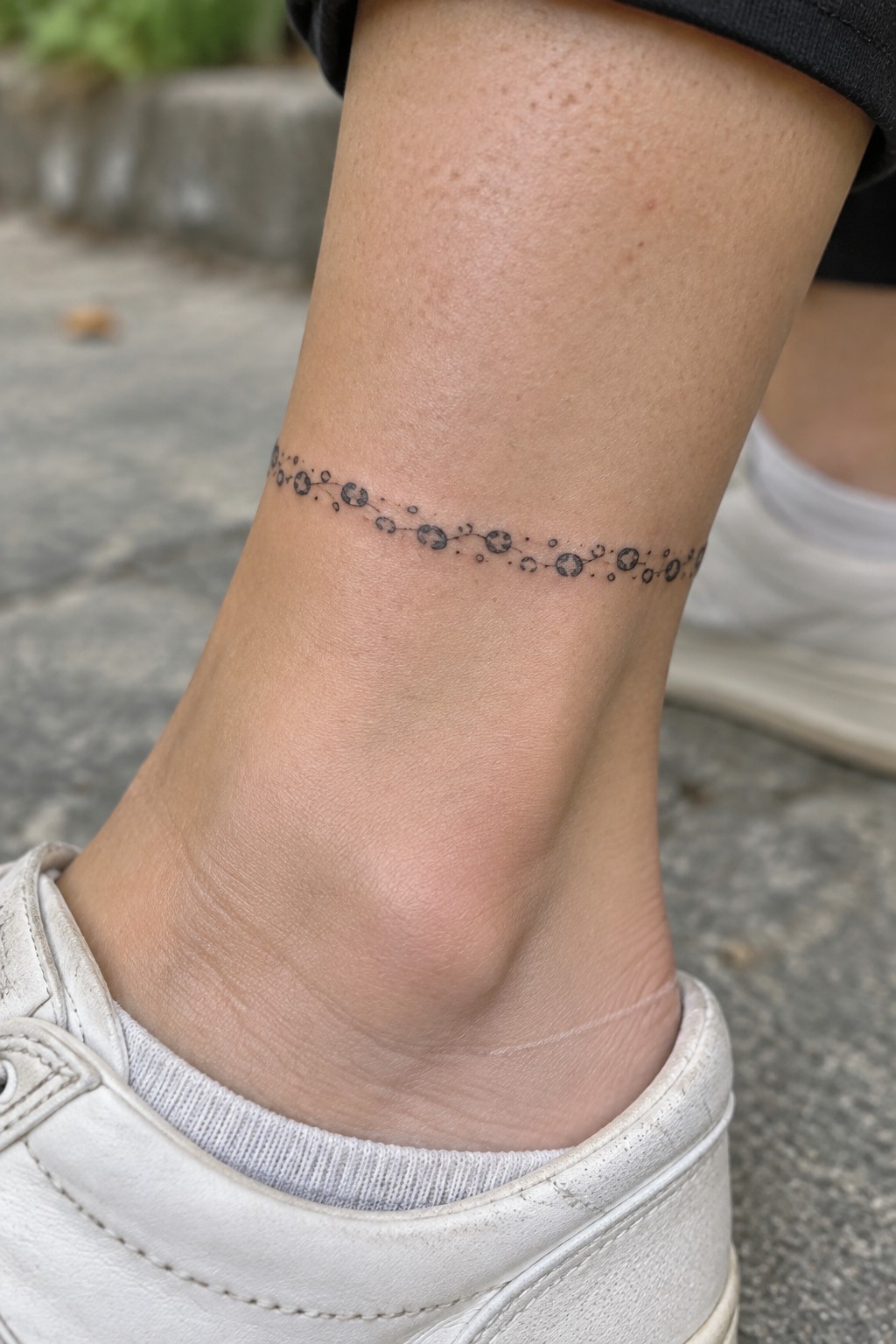
The tattoo sits across the ankle as a narrow horizontal line. Spots of varying sizes link together with fine connecting lines. This keeps the pattern simple and contained to one visible strip.
The ankle works for this layout because the narrow space matches the thin scale of the design. It lets the spots stay clear without crowding the skin.
Small spots sit behind the ear
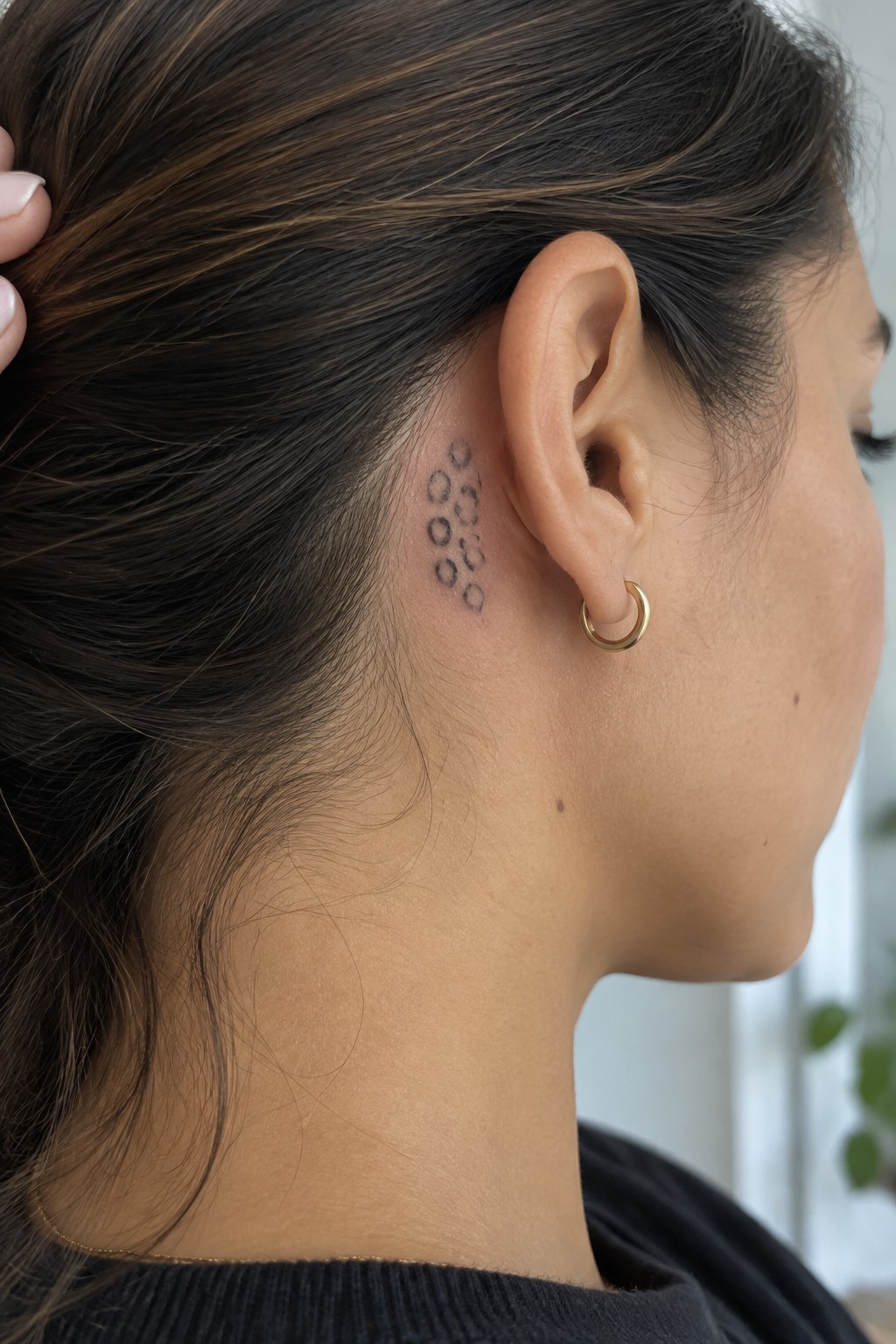
The design uses a loose group of fine circles placed right along the hairline. They follow the natural curve of the skin and stay compact so they do not overwhelm the area. The black ink is light and the lines stay thin, which lets the spots read as leopard detail without filling much space.
I like how the placement keeps the tattoo private most of the time yet easy to show when hair is pulled up. The small scale also helps the pattern stay simple instead of busy.
Leopard spots curve along the wrist
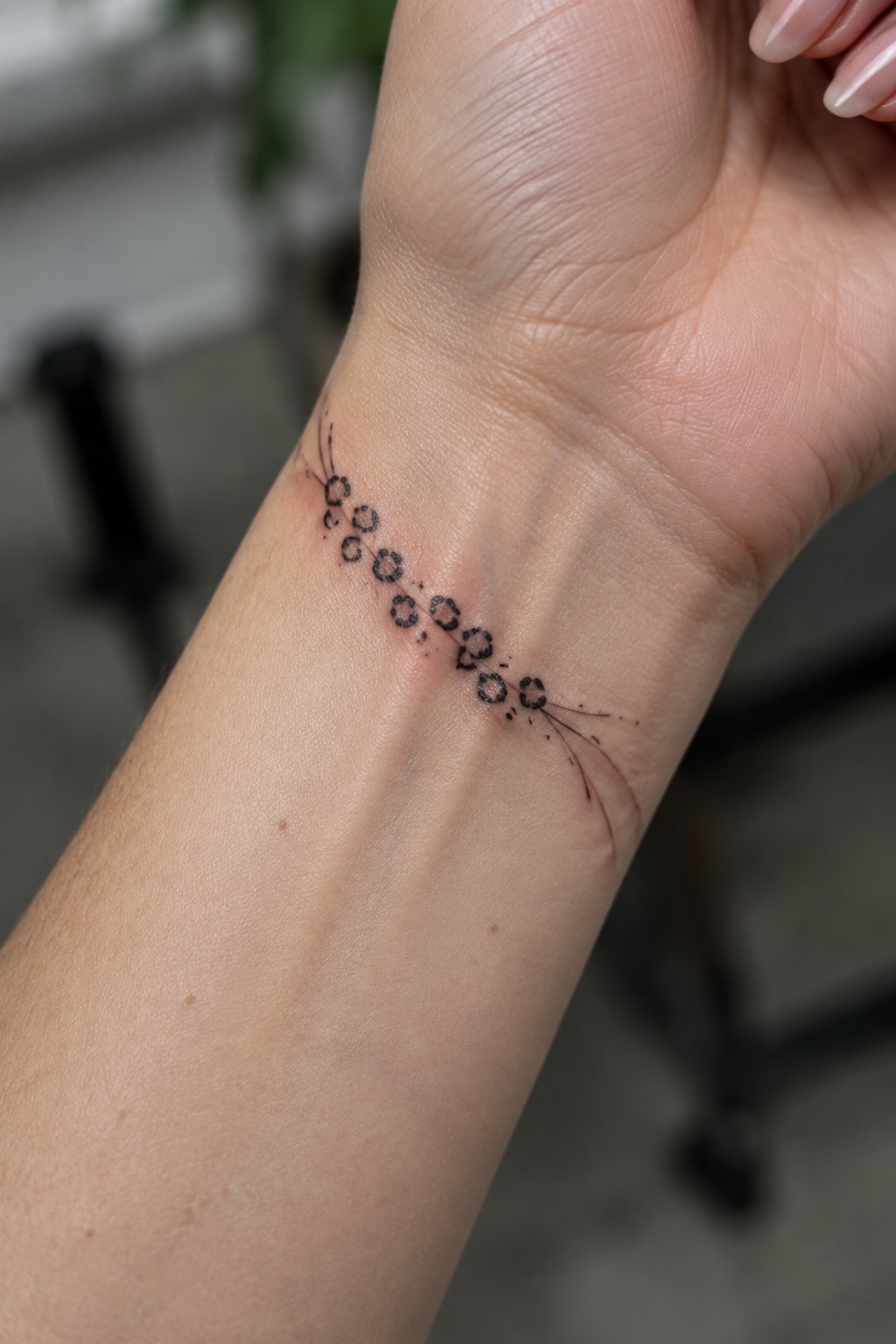
The tattoo sits on the inner wrist. It forms a gentle arc of small leopard rosettes done in fine black lines. A few thin strokes extend from the ends to suggest whiskers.
I think the wrist placement lets the spots follow the skin naturally without crowding. The scale keeps the rosettes clear while staying compact enough for everyday wear.
Leopard spots trail down the forearm
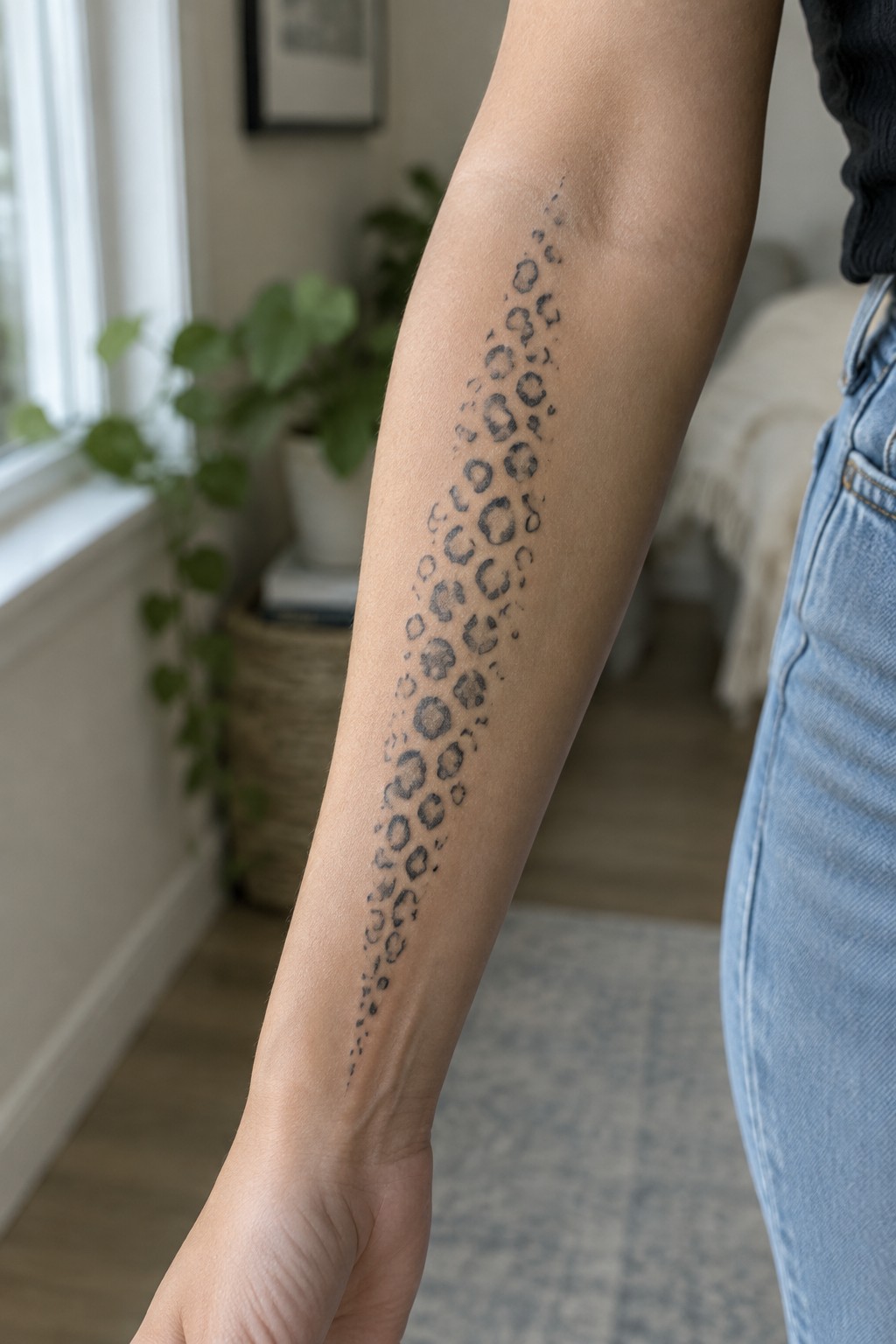
The design runs in a single vertical line along the inner forearm. Spots start bigger near the elbow and shrink toward the wrist. This layout lets the pattern stretch naturally with the arm’s length.
The fine line spots stay clear without filling the space too heavily. I think the tapering shape keeps the whole thing balanced and easy to read.
Leopard spots wrap around the finger
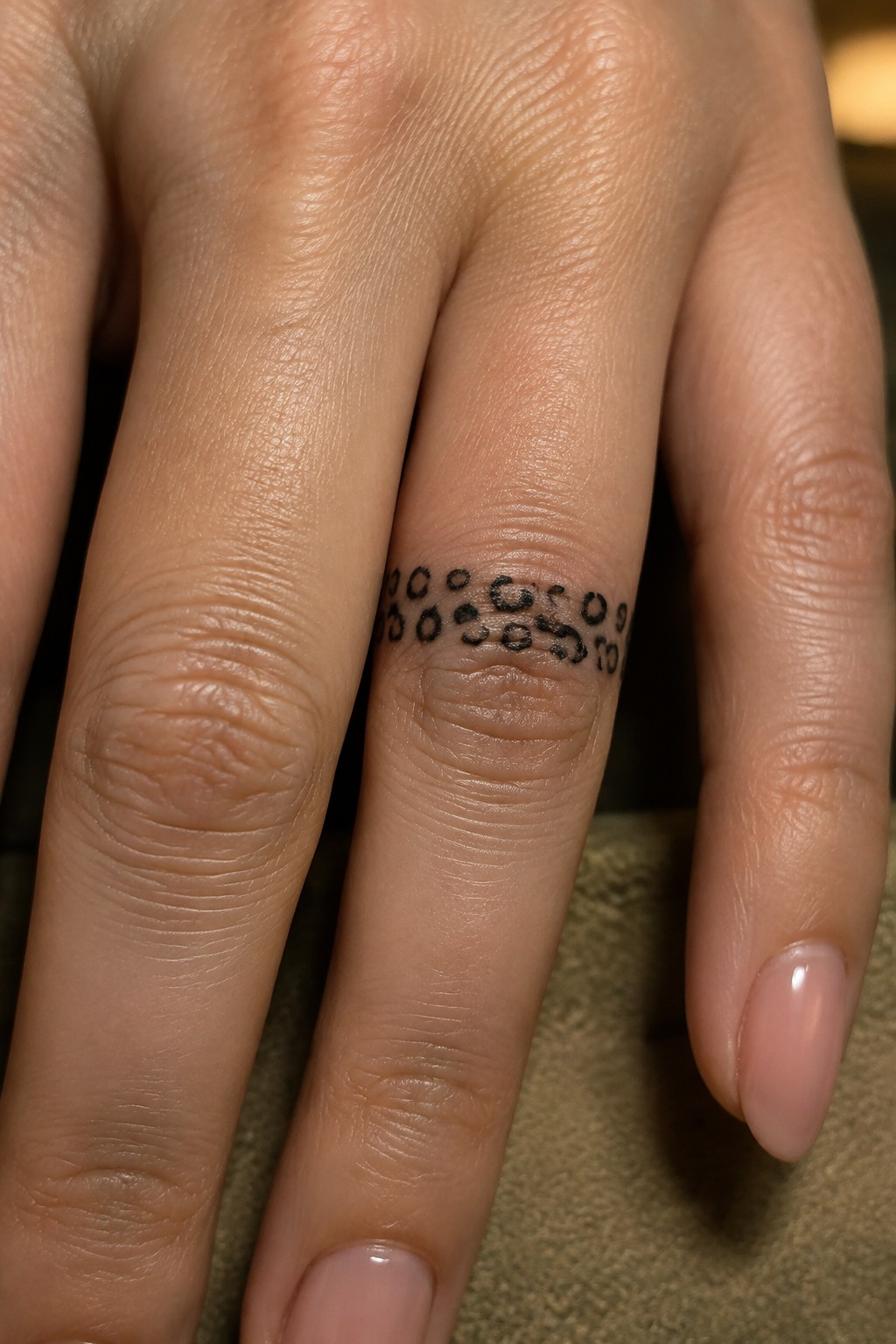
The tattoo runs along the side of the finger in a narrow band of spots. Small circles and dots create the leopard pattern without crowding the skin. This placement keeps the design thin and contained.
The varying spot sizes help it stay clear at this scale. I think the finger works for this idea because the curve gives the band a natural flow without needing extra detail.
Leopard spots across the shoulder
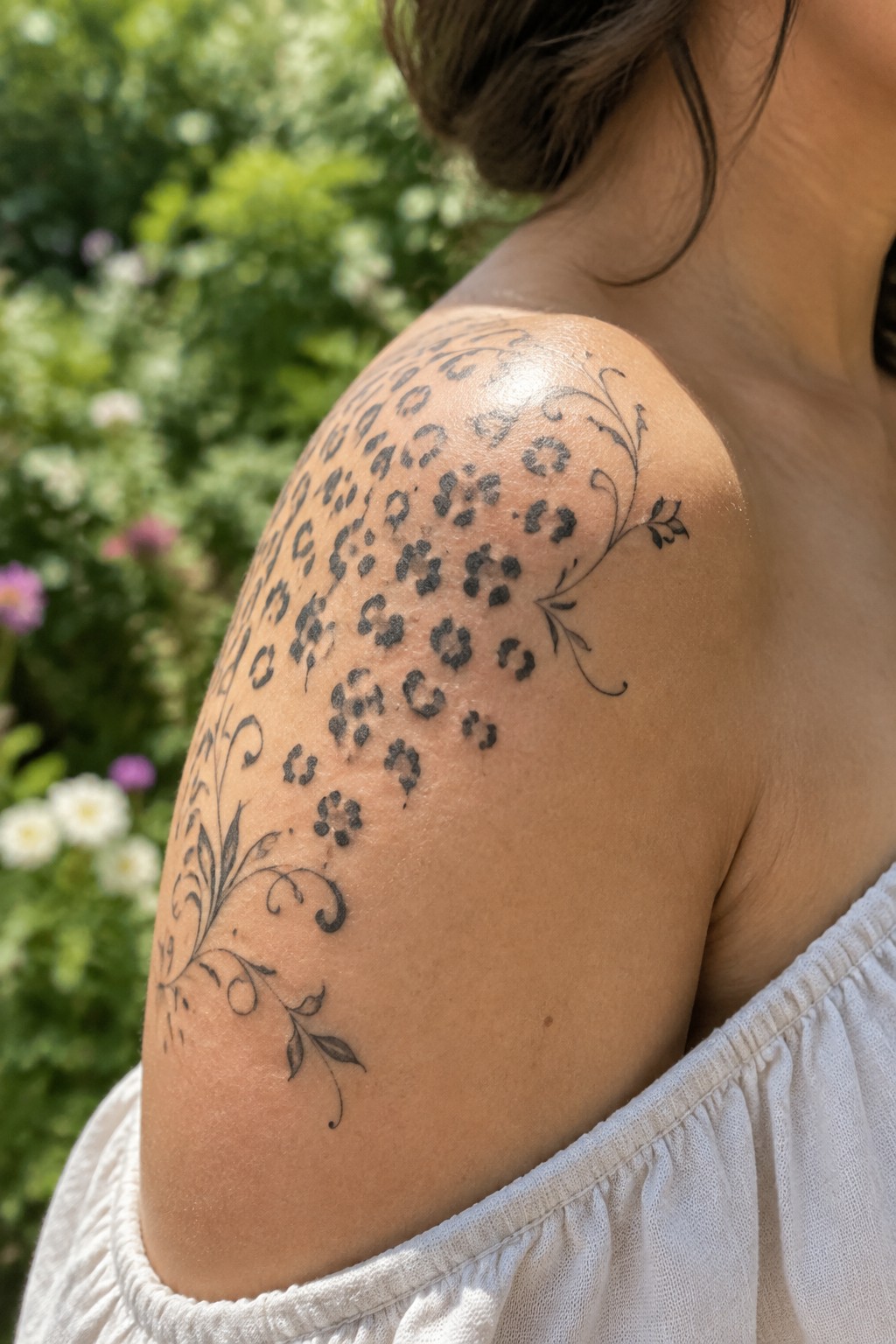
The design sits on the shoulder and spreads down the upper arm. Spots cluster near the top then thin out toward the edges with open space between them. Thin vines fill in the sides without taking over the main pattern.
This placement lets the spots follow the natural round of the shoulder. I think the open spacing keeps the whole thing from feeling crowded at this size.
Fine line leopard spots along the collarbone
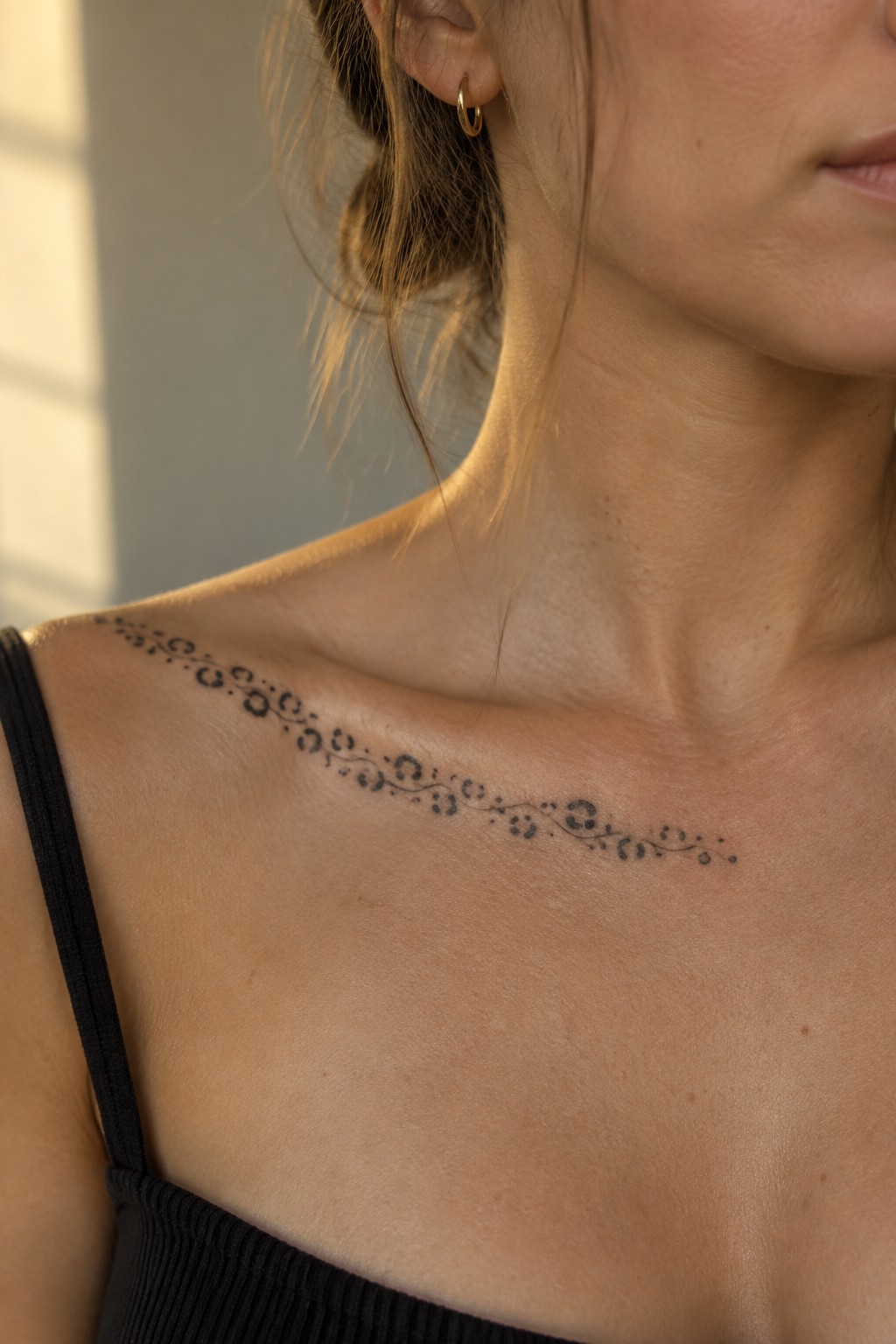
The tattoo runs in a thin horizontal line right across the collarbone. Small open circles and dots form the spotted pattern while light swirls connect them. The whole thing stays narrow and follows the natural line of the bone.
This placement lets the design sit flat against the skin without wrapping or twisting. I think the open spots keep it from looking too heavy in an area that gets a lot of light. The scale feels right because nothing crowds together or fades out at the ends.
leopard prints run around the ankle
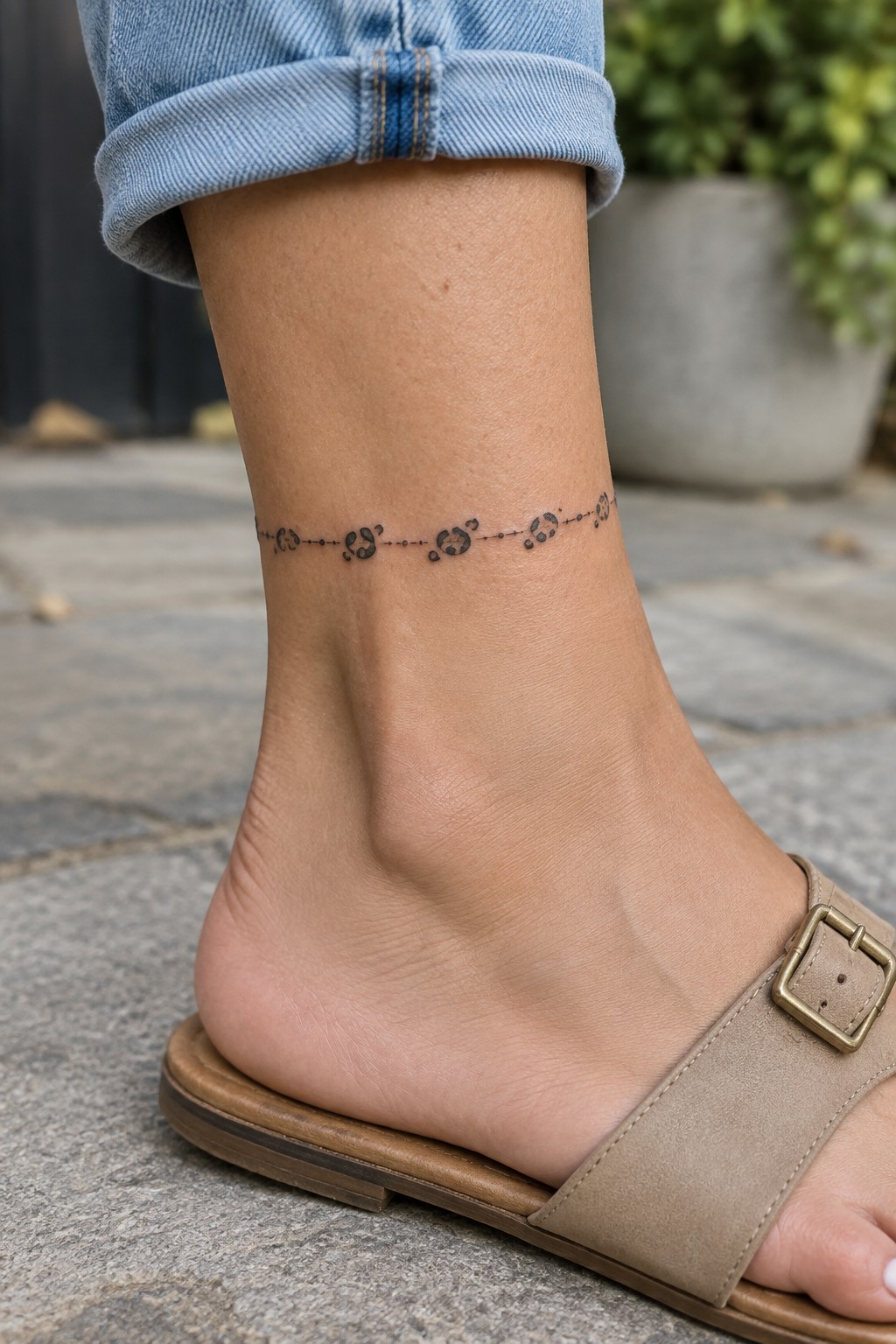
The tattoo uses small leopard paw prints linked by dots to form a band just above the ankle bone. This spot lets the design sit flat against the skin and stay visible with most shoes. The fine line approach keeps each print clear even at this narrow width.
I think the ankle placement works because it turns the prints into a simple repeating pattern instead of a single focal point. The dots help the eye follow the curve without adding extra weight.
Leopard spots flow over the shoulder blade
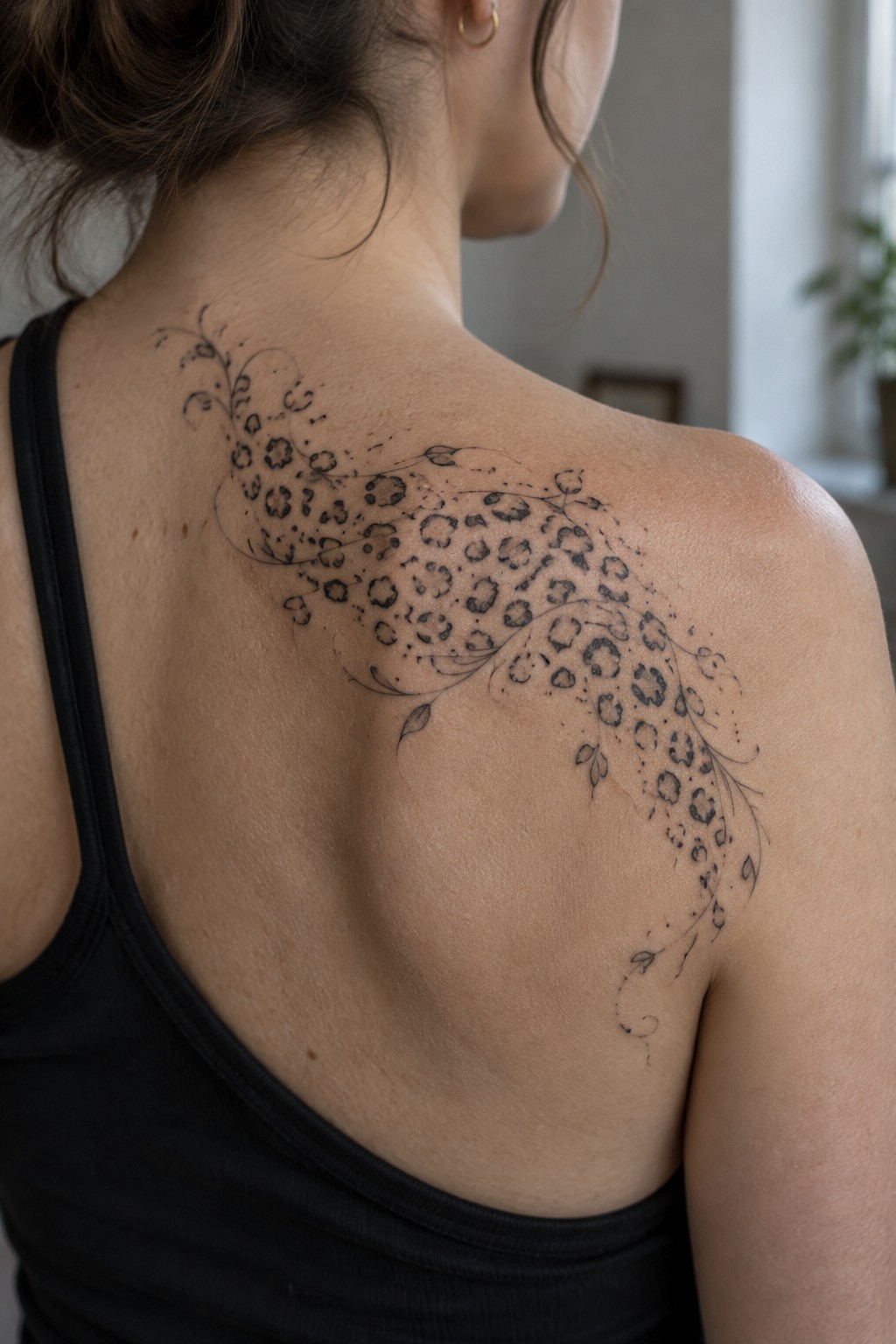
The tattoo stretches across the upper back and over one shoulder. Fine lines connect clusters of leopard spots with thin stems and small leaves. The pattern starts higher near the neck and curves downward along the shoulder blade.
This placement lets the spots follow the natural lines of the back. The fine line approach keeps the whole thing light while still showing clear detail across the area.
Leopard spots curve down the thigh
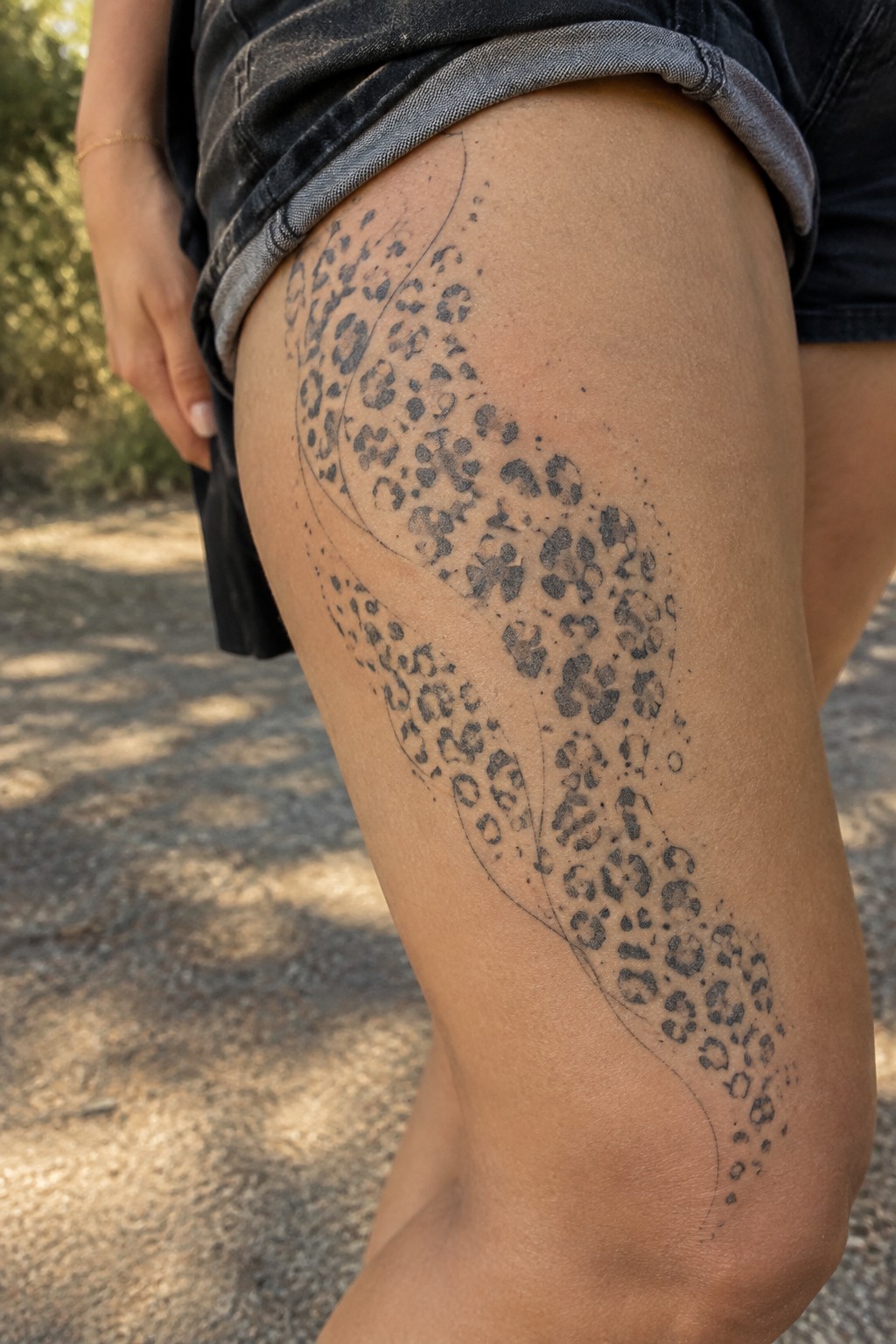
The tattoo runs along the outer thigh in a loose wave. Fine lines hold clusters of spots that vary in size and fade out at the edges. This shape lets the pattern follow the leg’s natural contour.
I think the flowing layout works well here because it avoids a rigid band. The spots stay readable even as they shrink toward the bottom.
Vertical leopard spots along the neck
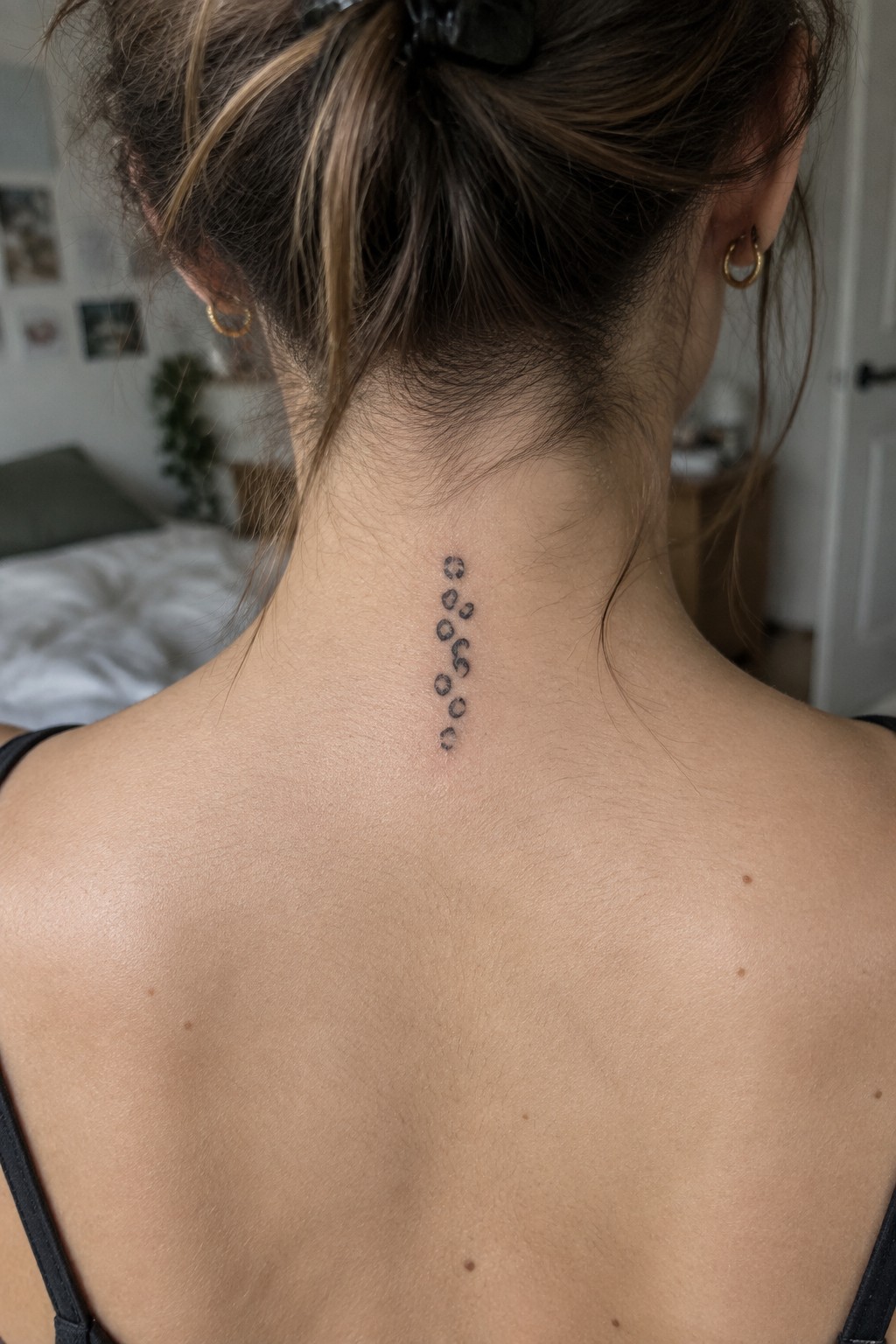
The tattoo sits centered on the back of the neck in a straight vertical line. Small leopard rosettes stack loosely from top to bottom in fine line work. This layout keeps the whole piece narrow and contained.
The vertical arrangement lets the pattern sit naturally without spreading wide. I think the simple stacking helps it stay clear even at this small scale.
leopard tattoo curving along the thigh
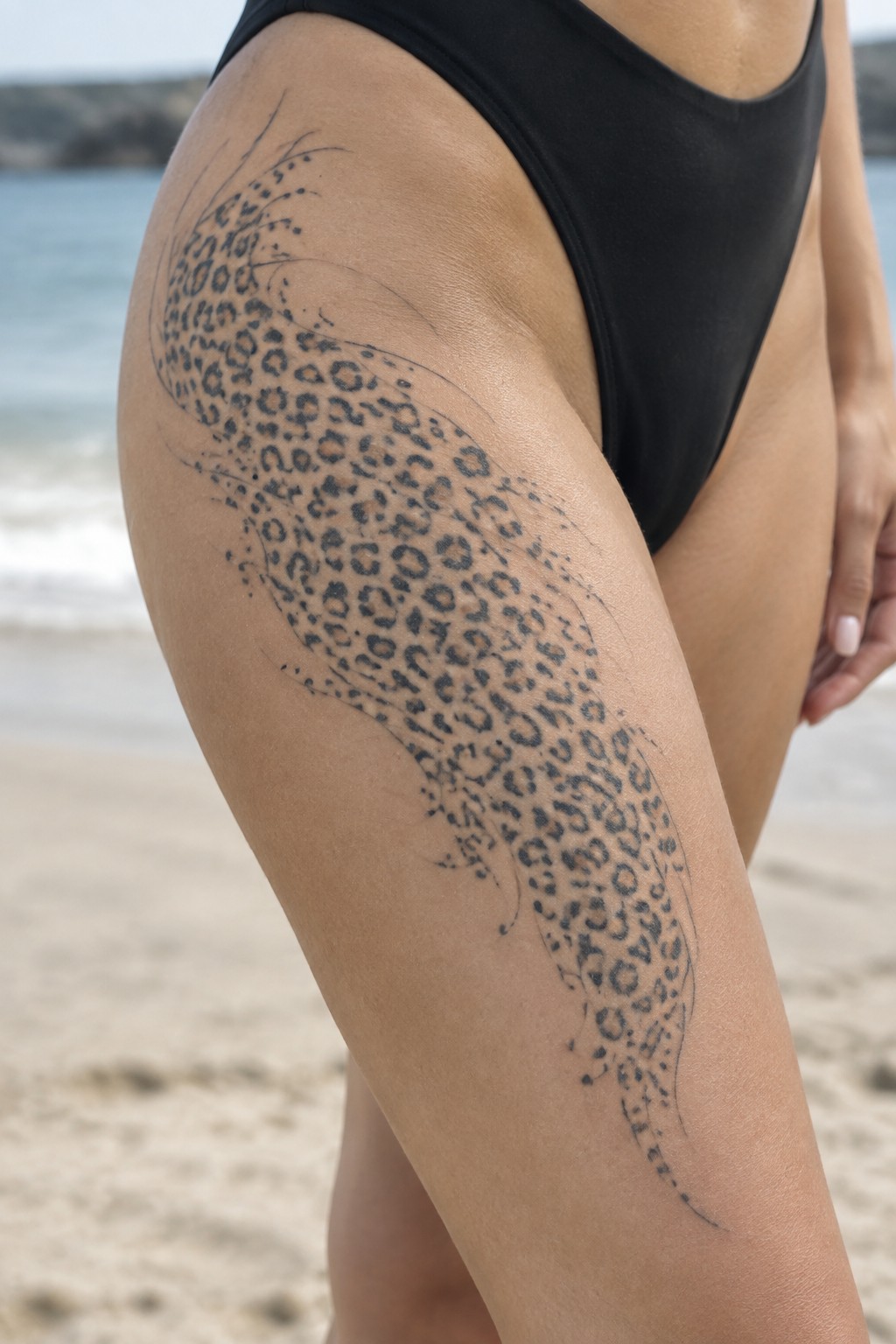
The thigh gives this leopard room to stretch out and follow the leg’s natural line. Fine line spots build the whole shape without any solid fill or thick borders. The design starts higher up and tapers lower down the leg.
That layout keeps the tattoo readable even though it covers a fair amount of skin. I think the flowing placement stops it from looking flat or forced.
Leopard spots trail diagonally down the back
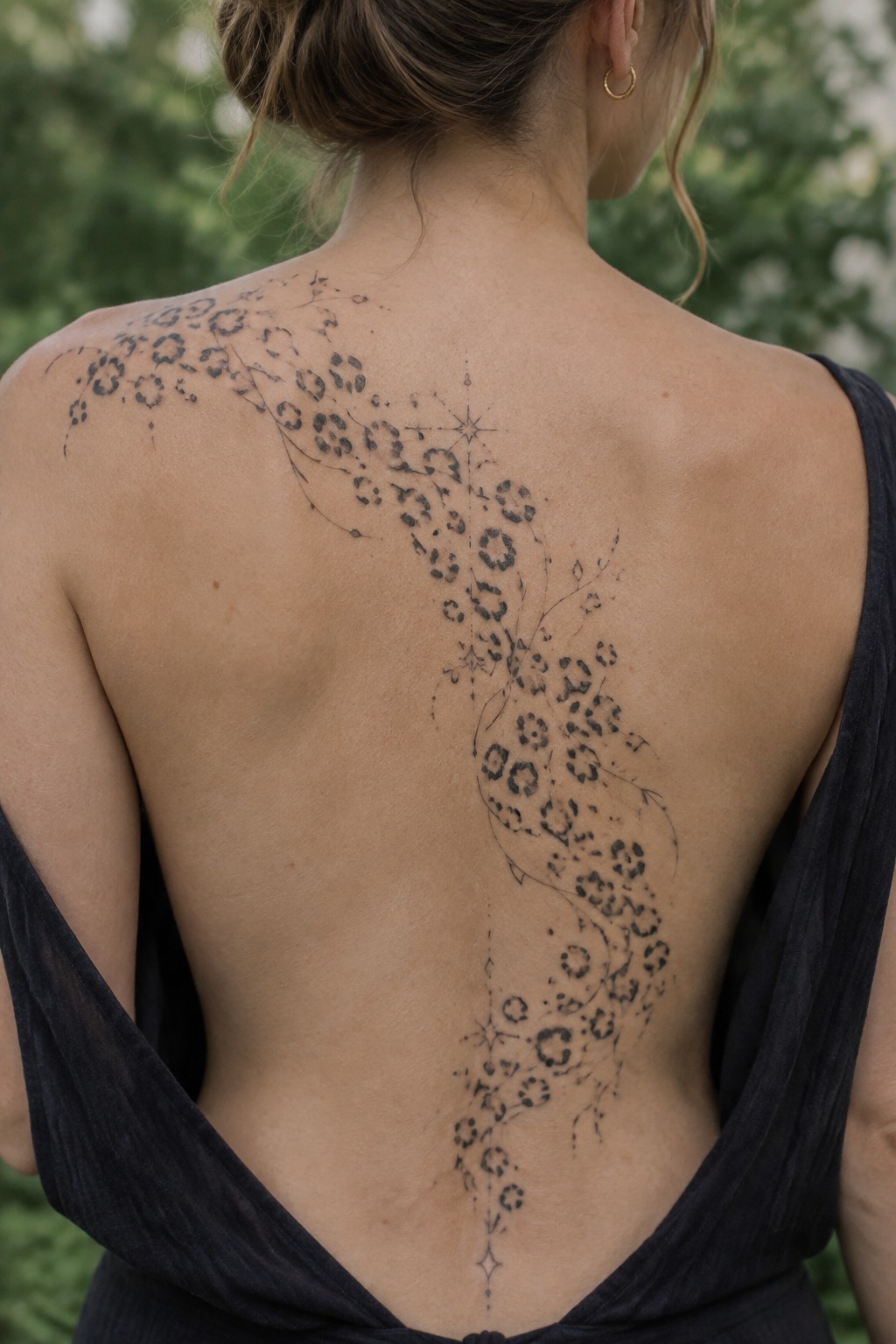
The design begins at the upper left shoulder and stretches toward the base of the spine. Clusters of fine line spots mix with small stars and connecting lines to form a loose path. The layout follows the natural angle of the back without forcing a straight line.
I think the diagonal direction stops the tattoo from looking flat on such a wide area. It also lets the spots spread out enough to stay clear instead of bunching up in one spot.
Leopard spots follow the side
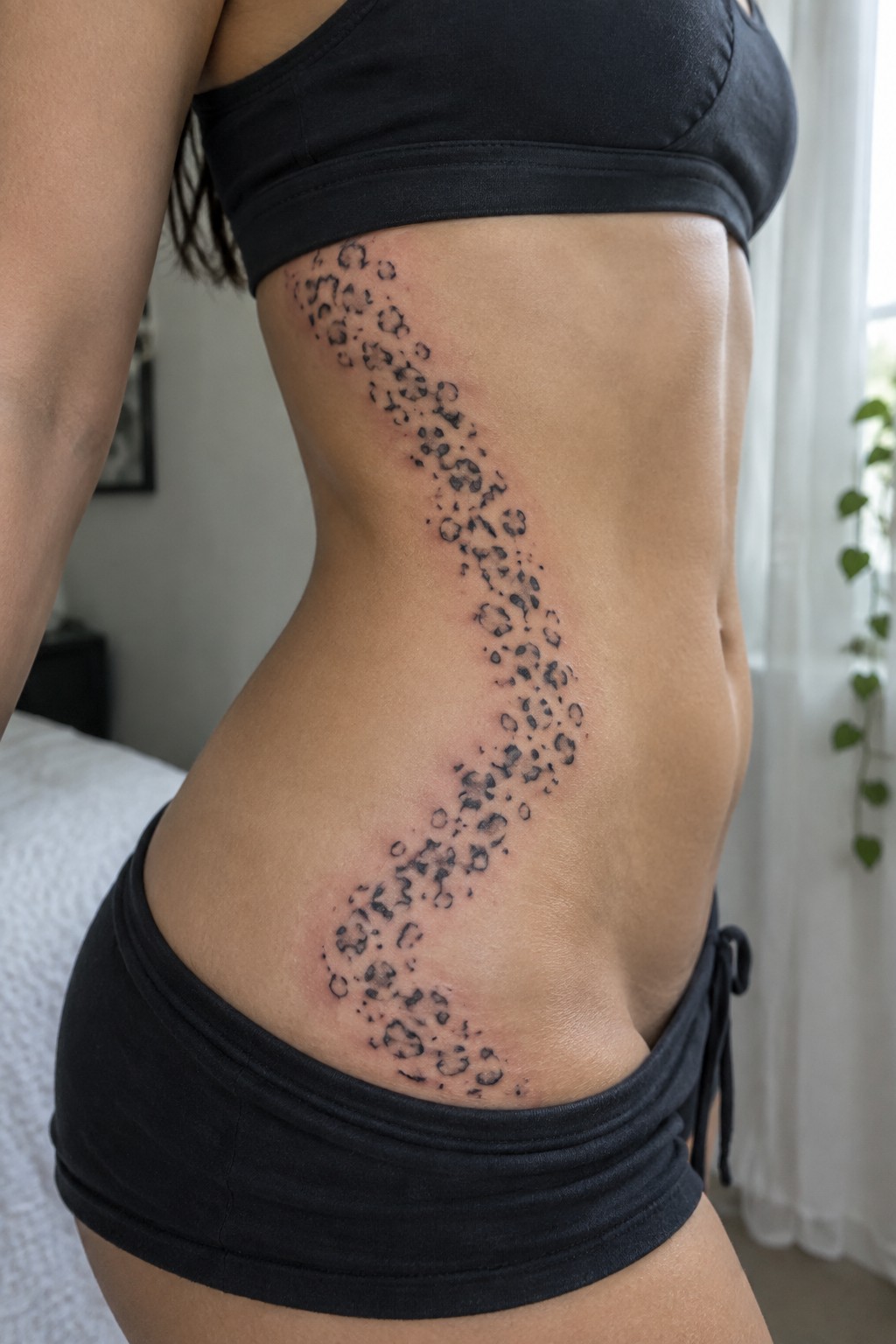
The side placement lets the leopard spots run in a long curve from the ribs down to the hip. Fine line work keeps the spots light and spaced out so the design stays readable as it moves. The trail thins slightly at the bottom which helps it settle into the shape of the body.
I think this layout works because the natural bend of the torso gives the spots a built in direction. It feels less like a flat pattern and more like something that belongs on that exact area.
Leopard spots follow the collarbone
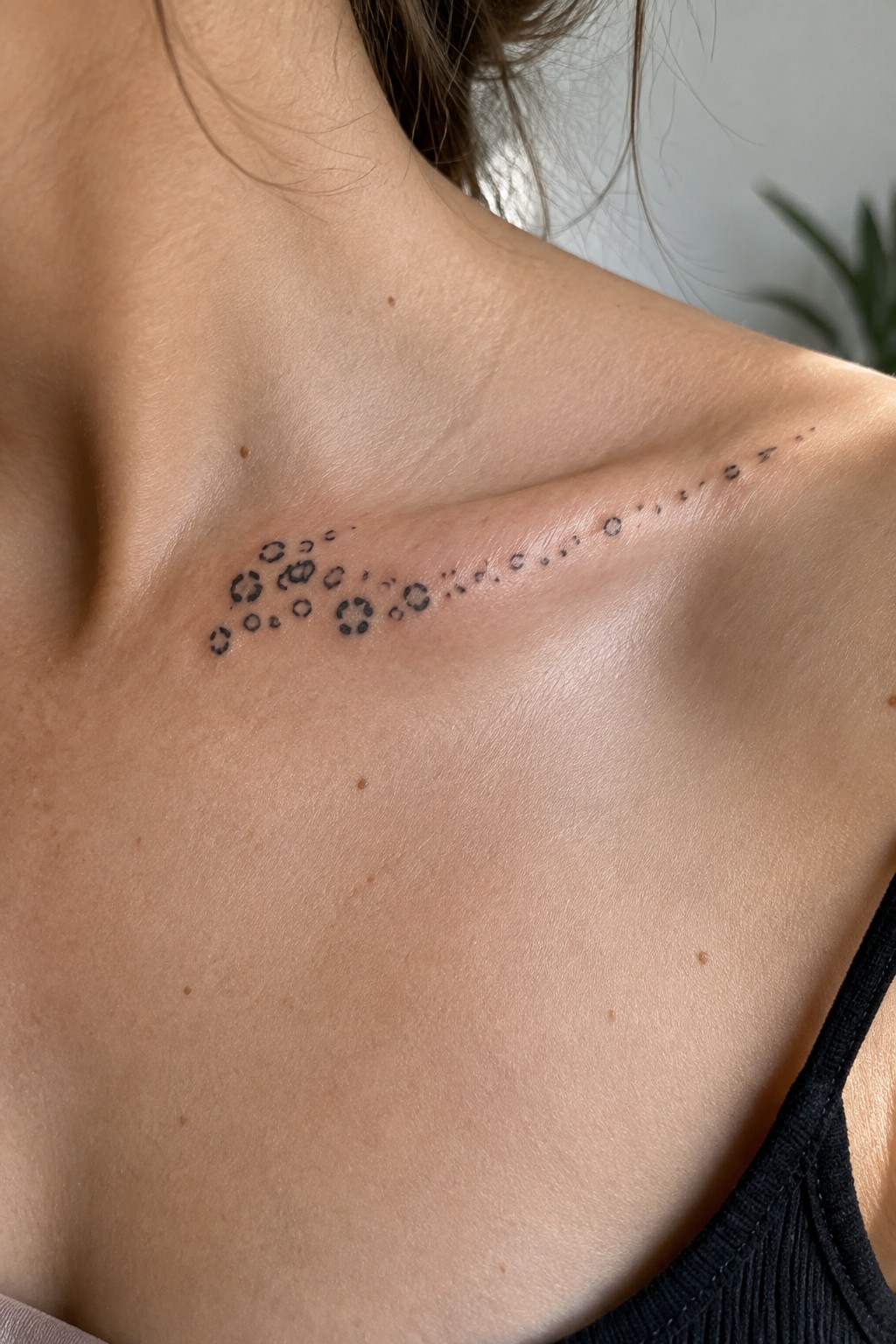
The collarbone area lets these leopard spots travel in a soft arc across the skin. The design starts denser on the left side and gradually thins out toward the shoulder. Fine dots and small open circles create the spotted look without heavy outlines.
I think the gradual spacing keeps the tattoo from feeling crowded in this spot. It also lets the natural shape of the bone guide the flow instead of fighting it.
Leopard spots wrap around the ankle
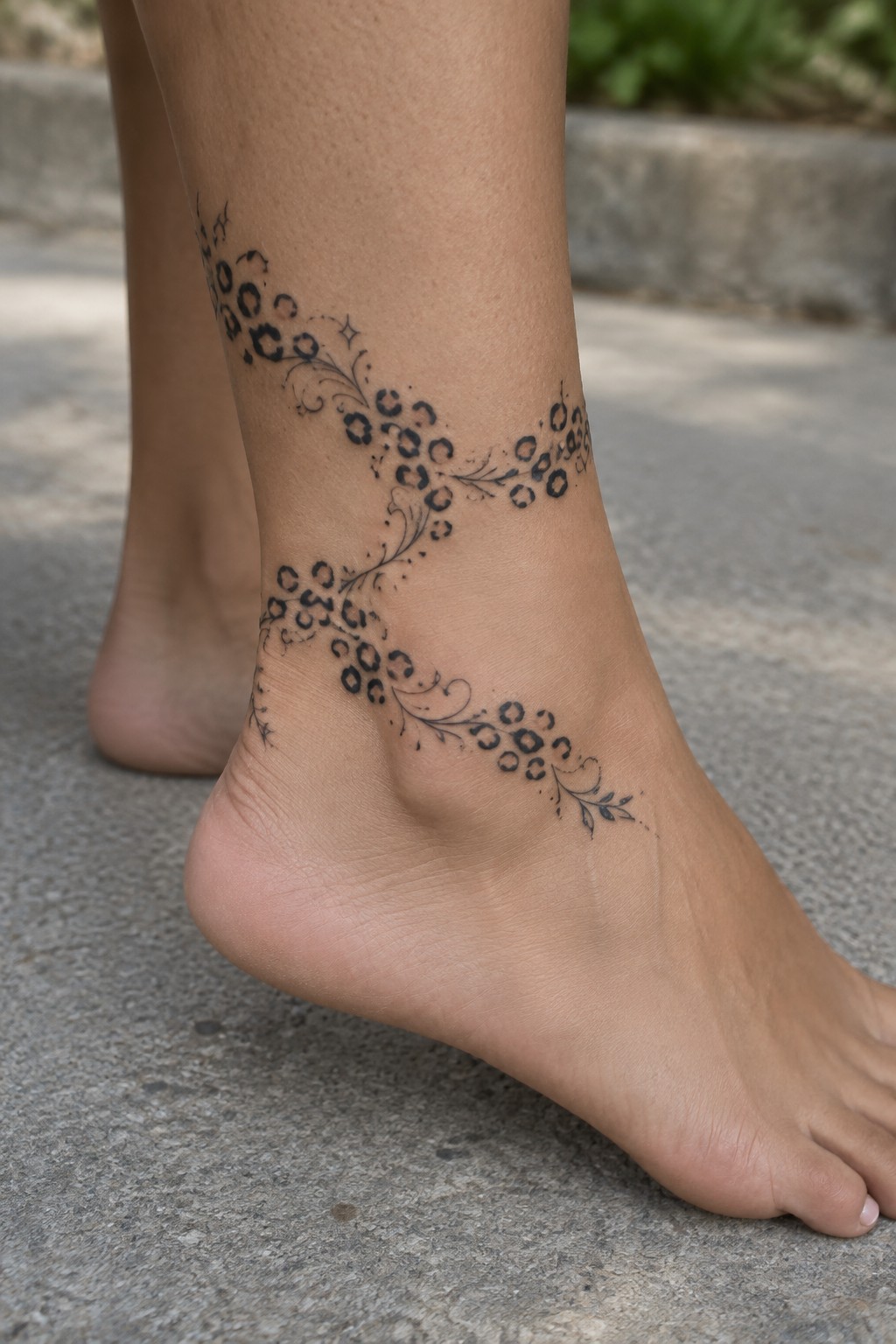
The tattoo wraps around the ankle and continues onto the top of the foot. Fine lines form clusters of leopard spots that follow the natural curve of the area. The pattern stays narrow enough to avoid crowding the bone.
This placement works because it lets the spots move with the ankle’s shape. I think the light approach keeps the design readable even on a smaller surface.
Leopard spots down the calf
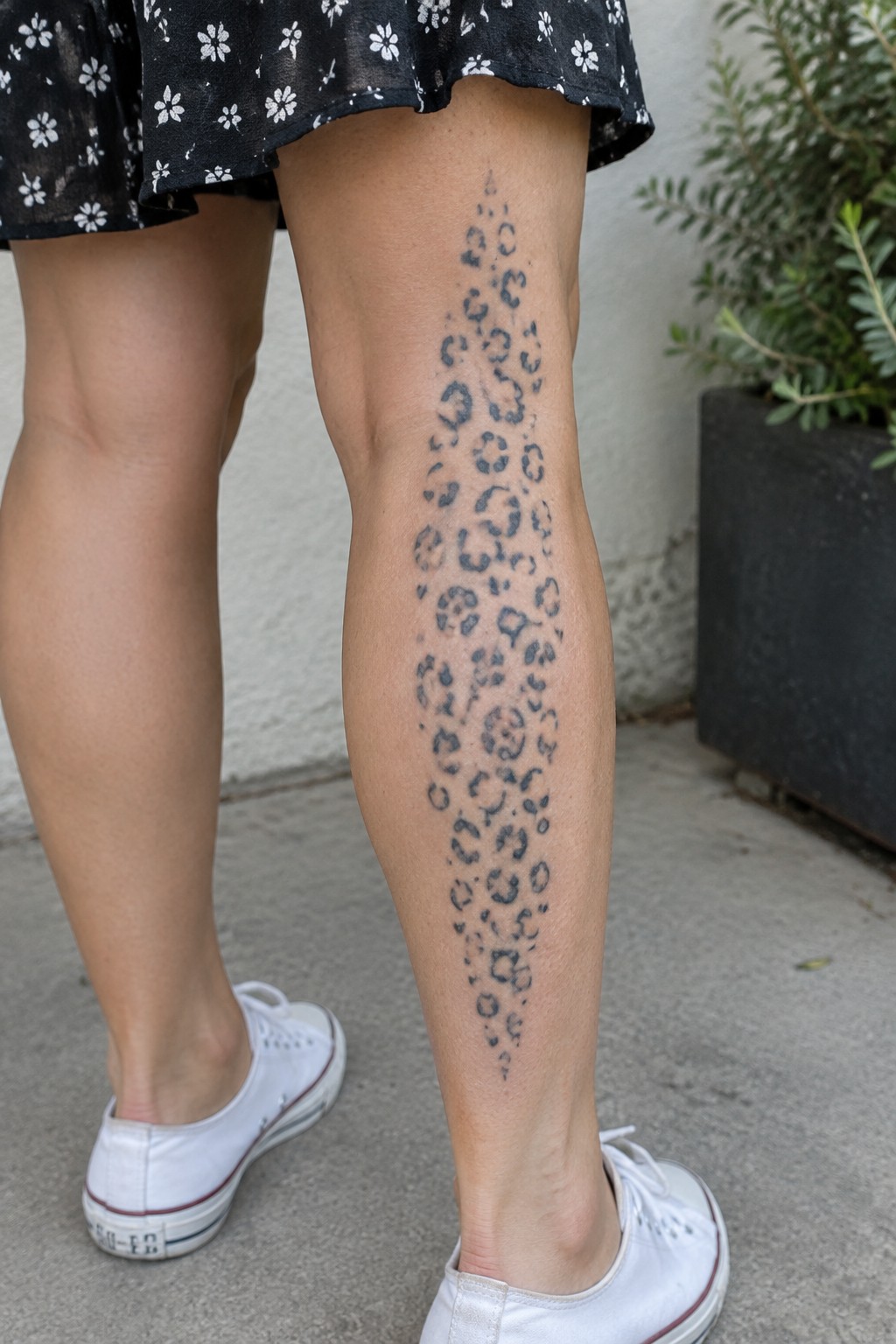
The tattoo shows a row of fine line leopard spots arranged in a long vertical shape along the side of the calf. The spots start larger near the top and gradually get smaller toward the ankle. This creates a clean taper that follows the shape of the leg without spreading too wide.
I like how the vertical layout keeps the pattern easy to read at this size. It also lets the design feel balanced on the lower leg rather than overwhelming the area.
Leopard spots sit on the shoulder
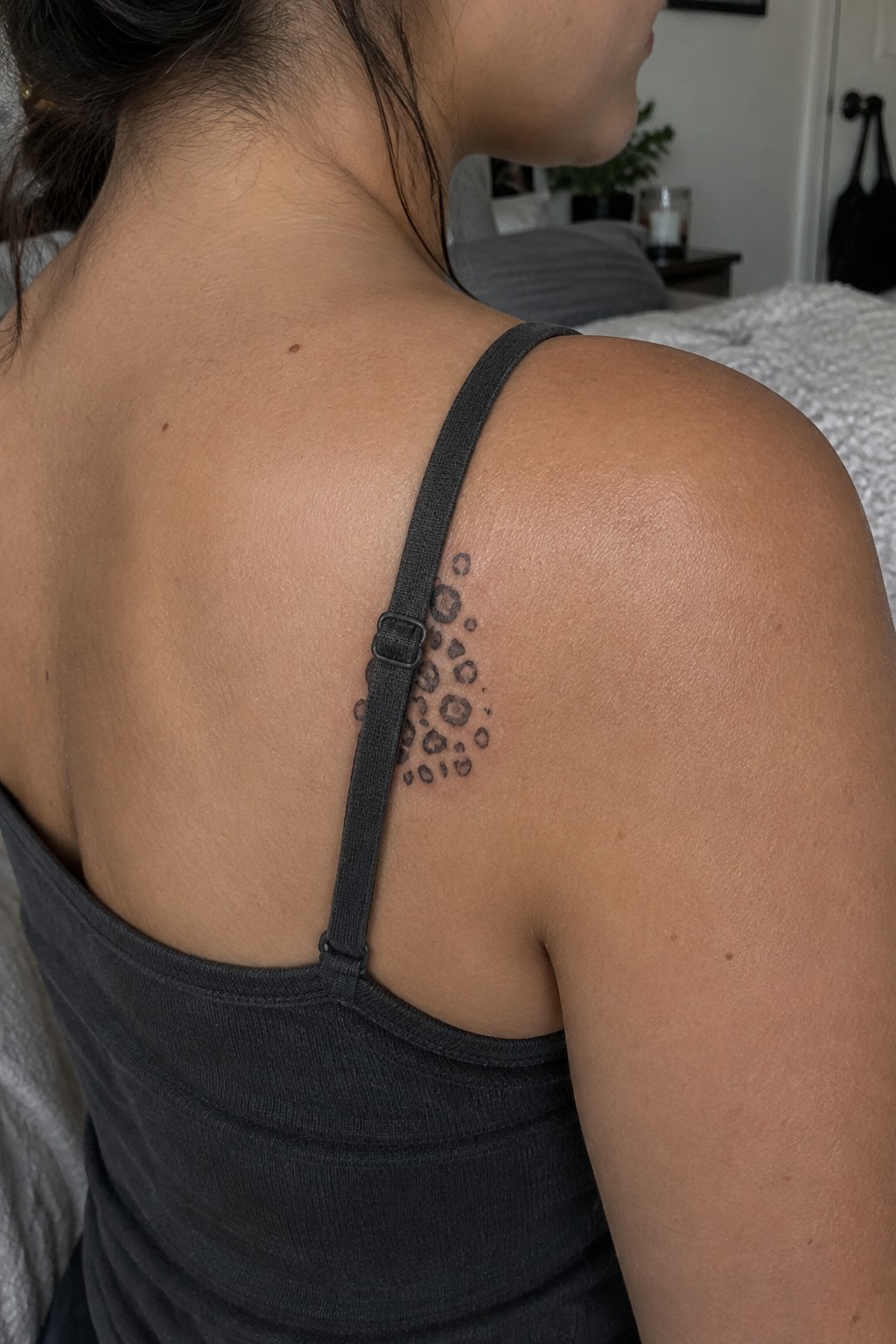
The tattoo uses a loose group of leopard spots placed on the upper back. The spots vary in size and sit right where the tank strap runs across the shoulder. Fine lines keep the whole thing small and contained.
This placement lets the design show when the strap shifts but still stay partly hidden. It feels like a good spot for someone who wants the pattern visible without it taking over the whole area.
Leopard spots run down the upper arm
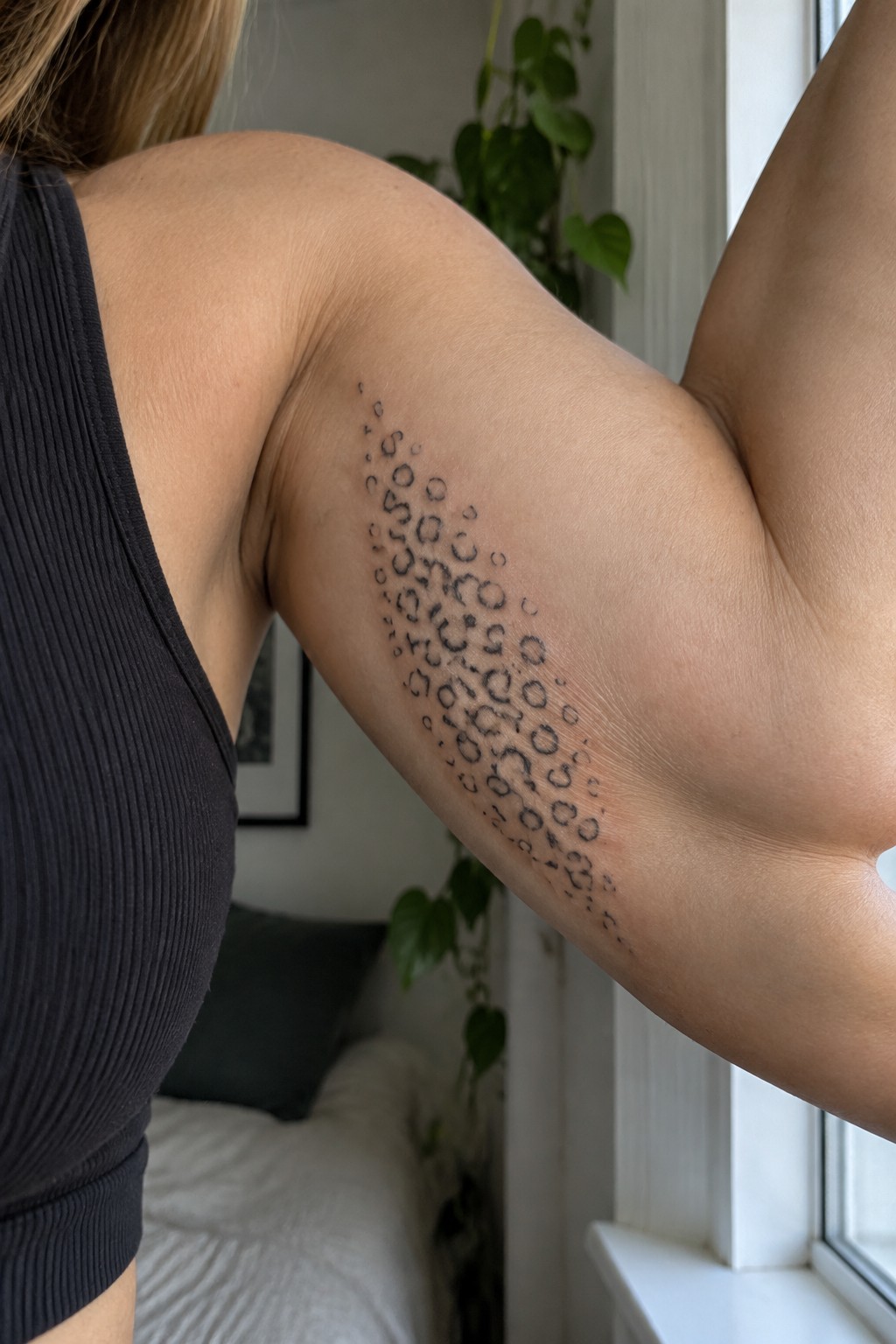
The tattoo sits along the upper arm in a vertical strip. Fine black lines form open circles and spots that build a leopard pattern without any solid fills. The shapes vary slightly in size and stay loose as they trail downward.
This placement lets the design follow the arm’s length in a natural way. The open style keeps it from looking too dense on the skin. I think the spacing works because the pattern stays clear even when the arm is in motion.
Small spots sit on the lower back
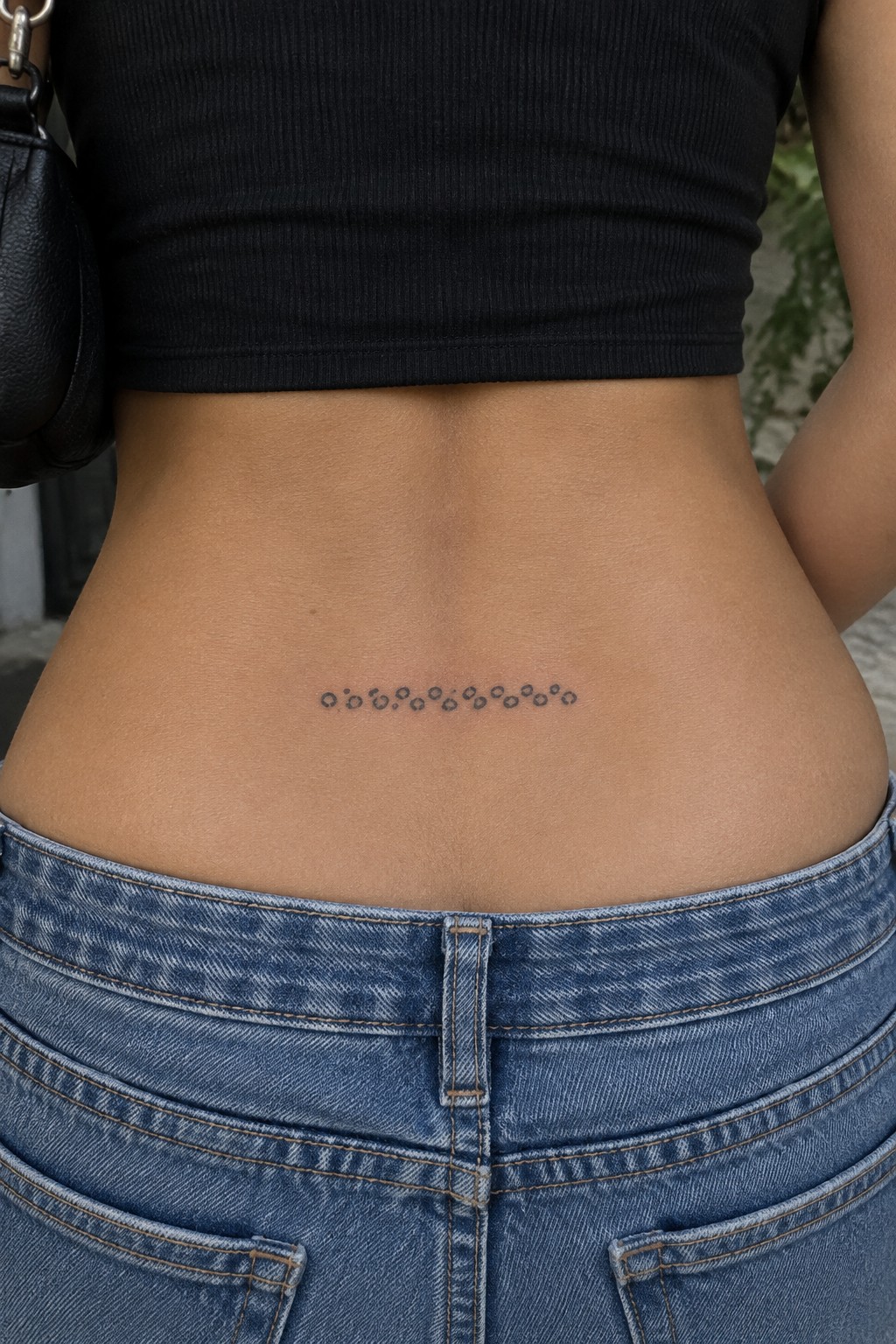
A short row of fine line spots curves across the lower back. The dots stay small and spaced out so the whole thing reads as a simple leopard pattern. This spot works for anyone who wants the idea without a large or busy design.
I like how the placement keeps it low key most of the time. It still shows enough when the jeans sit a bit lower.
Leopard spots run down the thigh
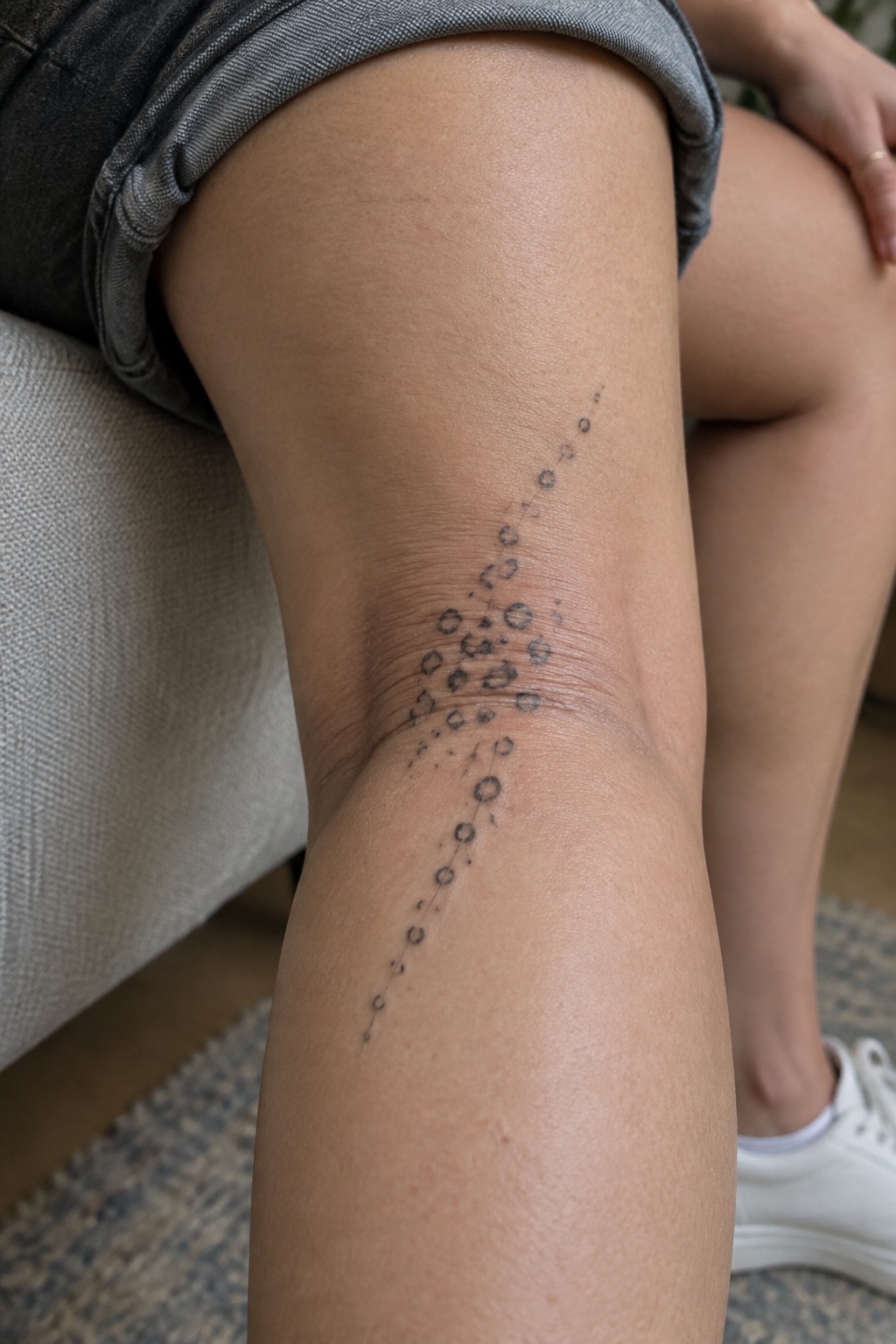
A vertical line of open circles starts high on the thigh and moves toward the knee. The circles connect with thin lines and bunch up more in the middle section to suggest leopard spots. The pattern stays narrow overall and follows the leg’s length.
This placement keeps the spots visible as the leg bends or straightens. I think the spacing works because it avoids crowding while still reading as a clear leopard pattern.
Leopard spots form a curve on the thigh
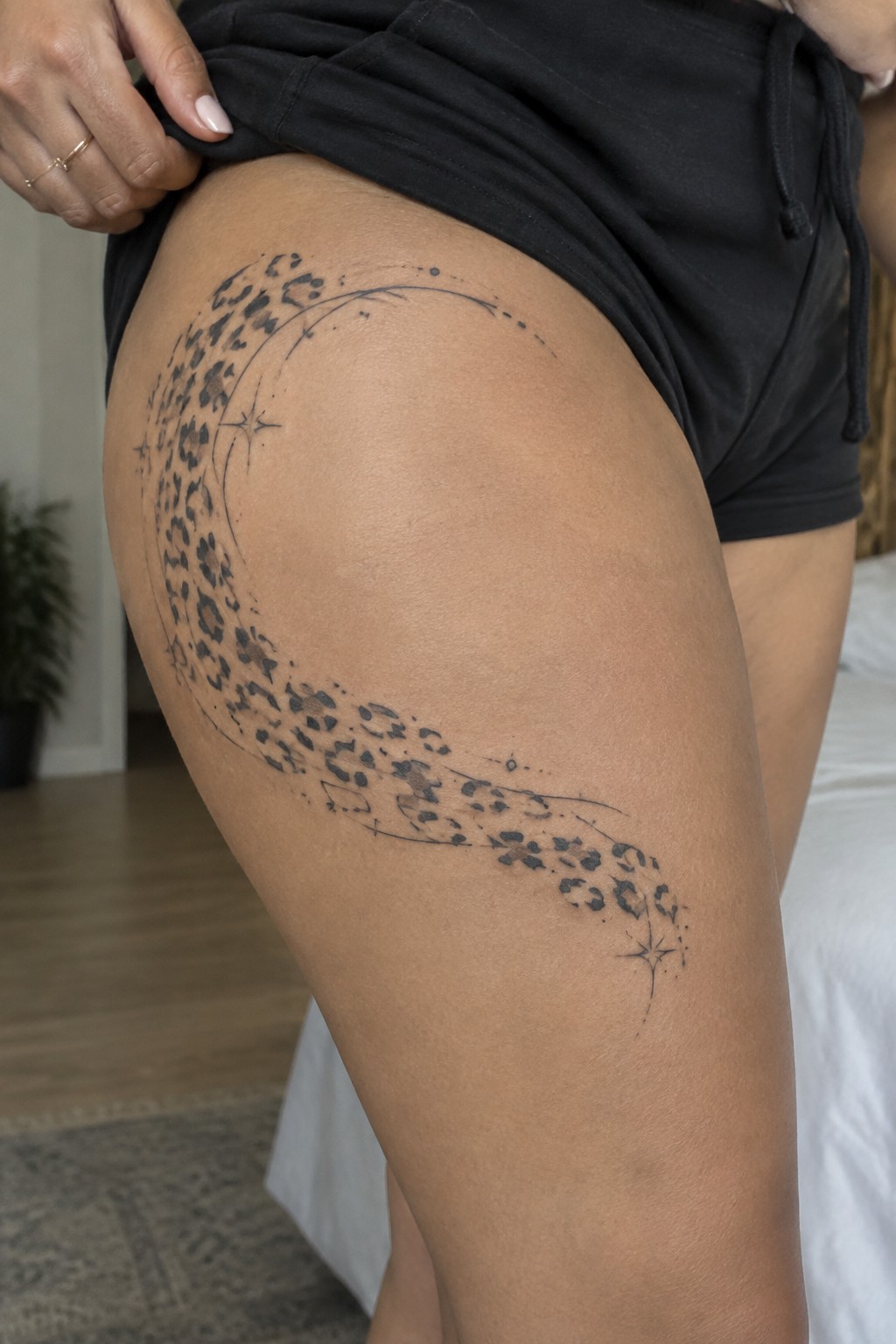
The tattoo sits high on the thigh. Its curve follows the natural line of the leg without forcing the shape. Leopard spots run along most of the arc and fade toward one end.
The stars at each tip add just enough contrast to stop the spots from blending together. I like how the placement lets the design stay visible but still feels contained to one area of the body.
Leopard spots cover the shoulder and upper arm
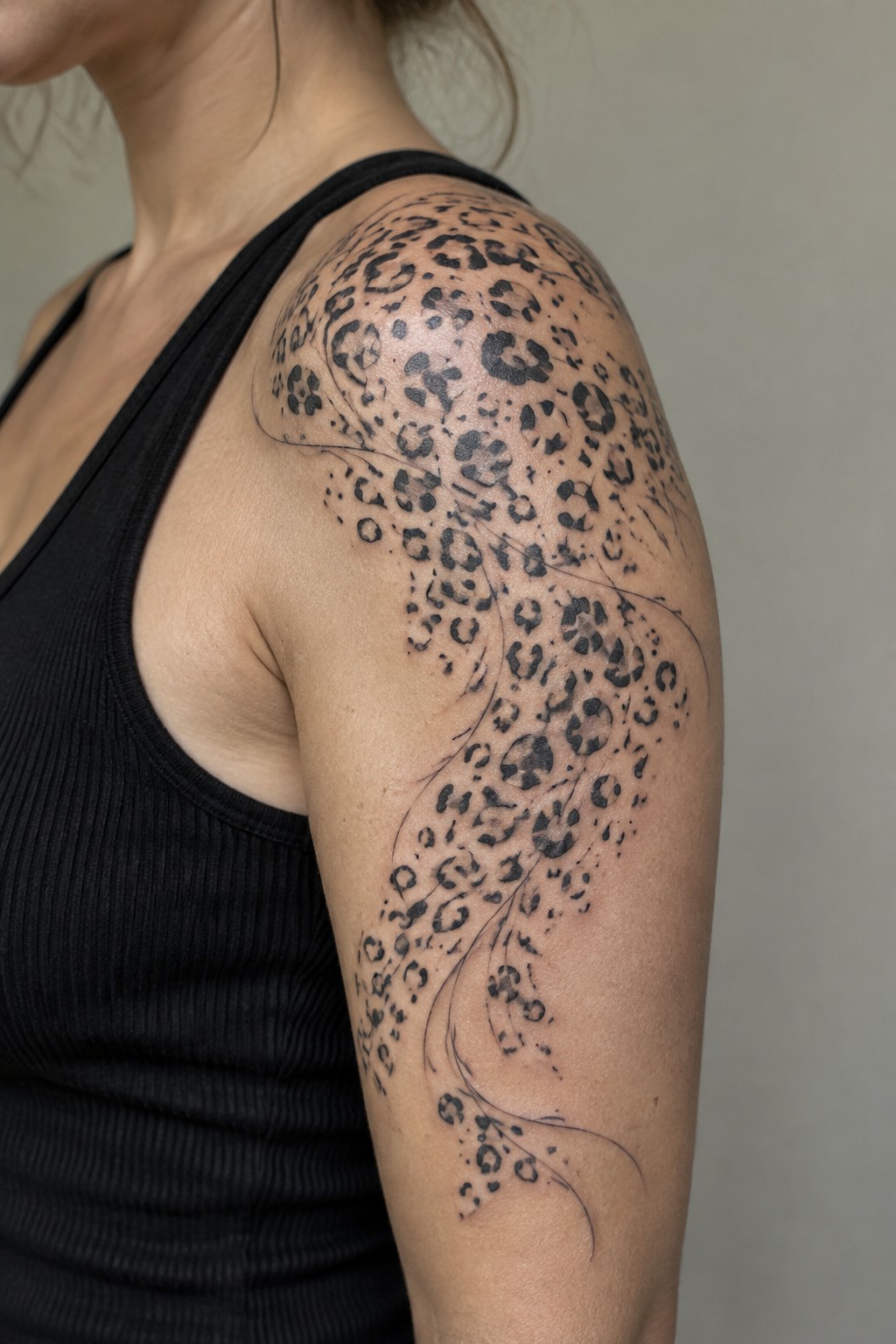
The tattoo uses scattered leopard spots that start on the shoulder and trail down the upper arm. Thin lines link some of the spots and add a light sense of flow. The pattern stays open instead of filling the whole space.
This placement spreads the spots naturally along the arm. I think the loose arrangement stops the design from looking too dense on the shoulder.
Frequently Asked Questions
What does a leopard tattoo typically symbolize for women?
Leopard tattoos often represent strength, independence, and resilience. Many women choose them to celebrate personal growth or overcoming challenges, with the fine-line spotted details adding a sense of elegance and subtlety to the fierce imagery.
How painful are fine-line leopard tattoos depending on placement?
Fine-line work tends to involve less intense pain than bold traditional tattoos because the needle moves quickly with light pressure. Areas like the wrist or ankle cause mild discomfort similar to a light scratch, while ribs or spine placements feel sharper due to thinner skin and closer bone contact. Sessions usually last one to two hours.
What aftercare steps help fine-line spotted details stay crisp over time?
Clean the tattoo gently with unscented soap twice daily, apply a thin layer of fragrance-free moisturizer, and avoid sun exposure or tight clothing for the first two weeks. Fine lines fade faster if over-moisturized or picked at during healing, so patience during the initial peeling phase keeps the spots defined.
How do I find an artist experienced with fine-line leopard designs?
Search portfolios on Instagram or tattoo studio sites using keywords like fine-line animal tattoos and review healed examples closely. Book a consultation to discuss your specific spotted detail preferences and confirm the artist uses single-needle techniques for precision.
Can I customize one of these leopard designs with added elements?
Yes, many women add subtle florals, geometric frames, or meaningful dates around the leopard while keeping the fine-line spots intact. Discuss size adjustments or color accents like soft gold shading during the design phase to ensure the core spotted pattern remains the focus.
