

I have a soft spot for tattoos that echo the wild west and its majestic animals.
My collection includes a small desert scene that always sparks conversations.
Horses and wildlife like snakes or birds bring an exciting ruggedness to feminine designs.
I love how these options capture freedom with a playful twist that feels just right for any woman.
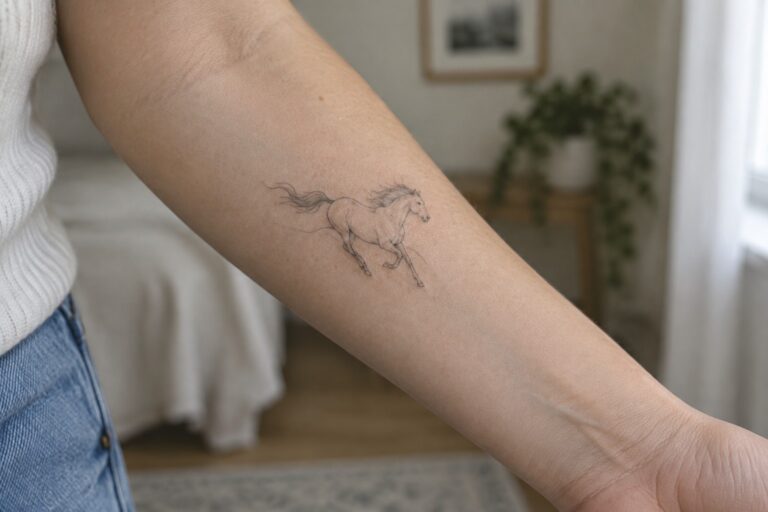
A horse tattoo on the forearm
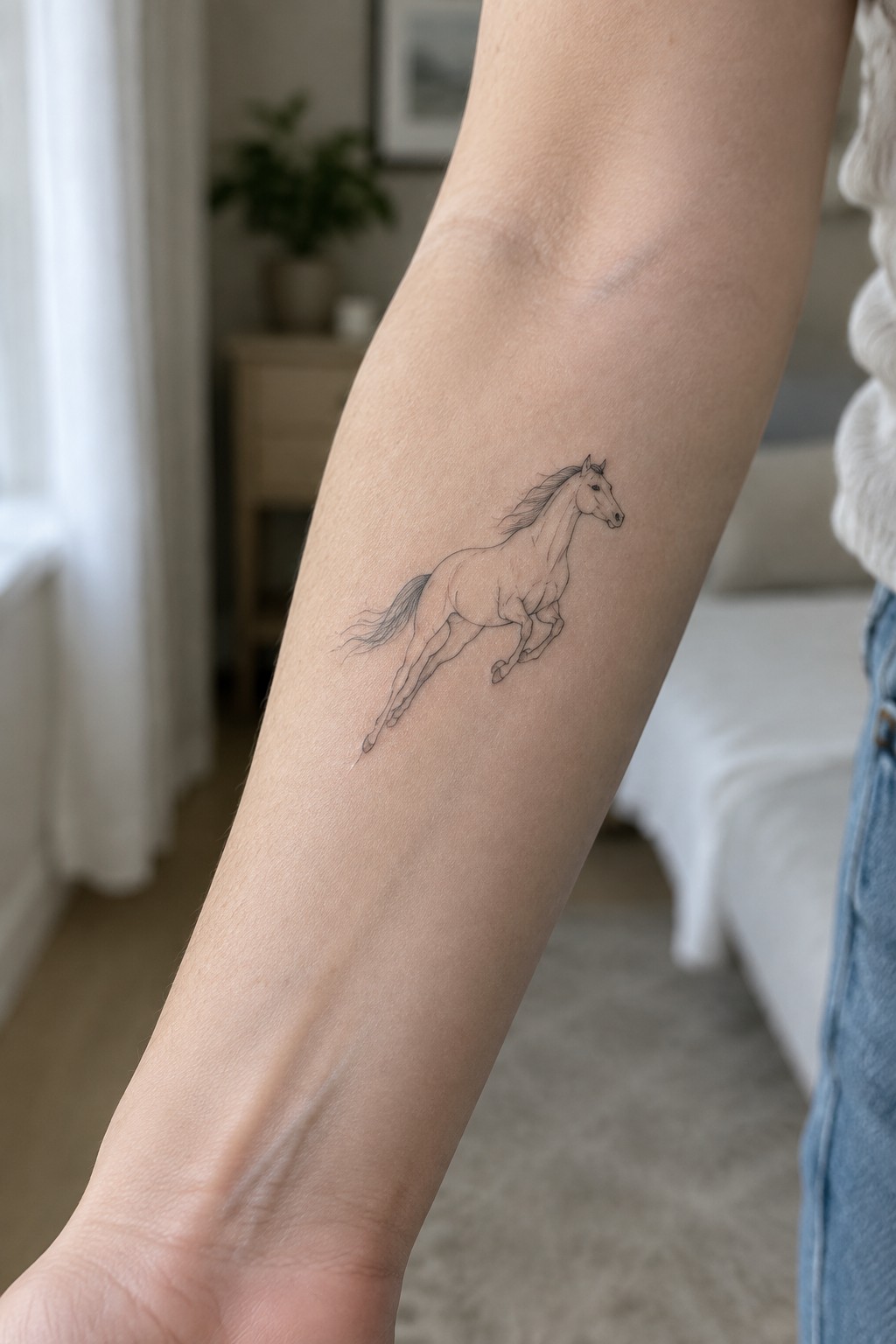
The forearm gives this running horse enough length to show its full stride without crowding. Fine lines keep the outline clean and let the legs and mane stay readable even at a smaller scale. The placement sits along the inner arm where the skin stays fairly flat.
I like how the motion reads naturally here because the arm shape follows the direction of the gallop. It stays simple enough for everyday wear while still feeling western. This works best for someone who wants a single animal piece without extra background.
Horse tattoo on the upper arm
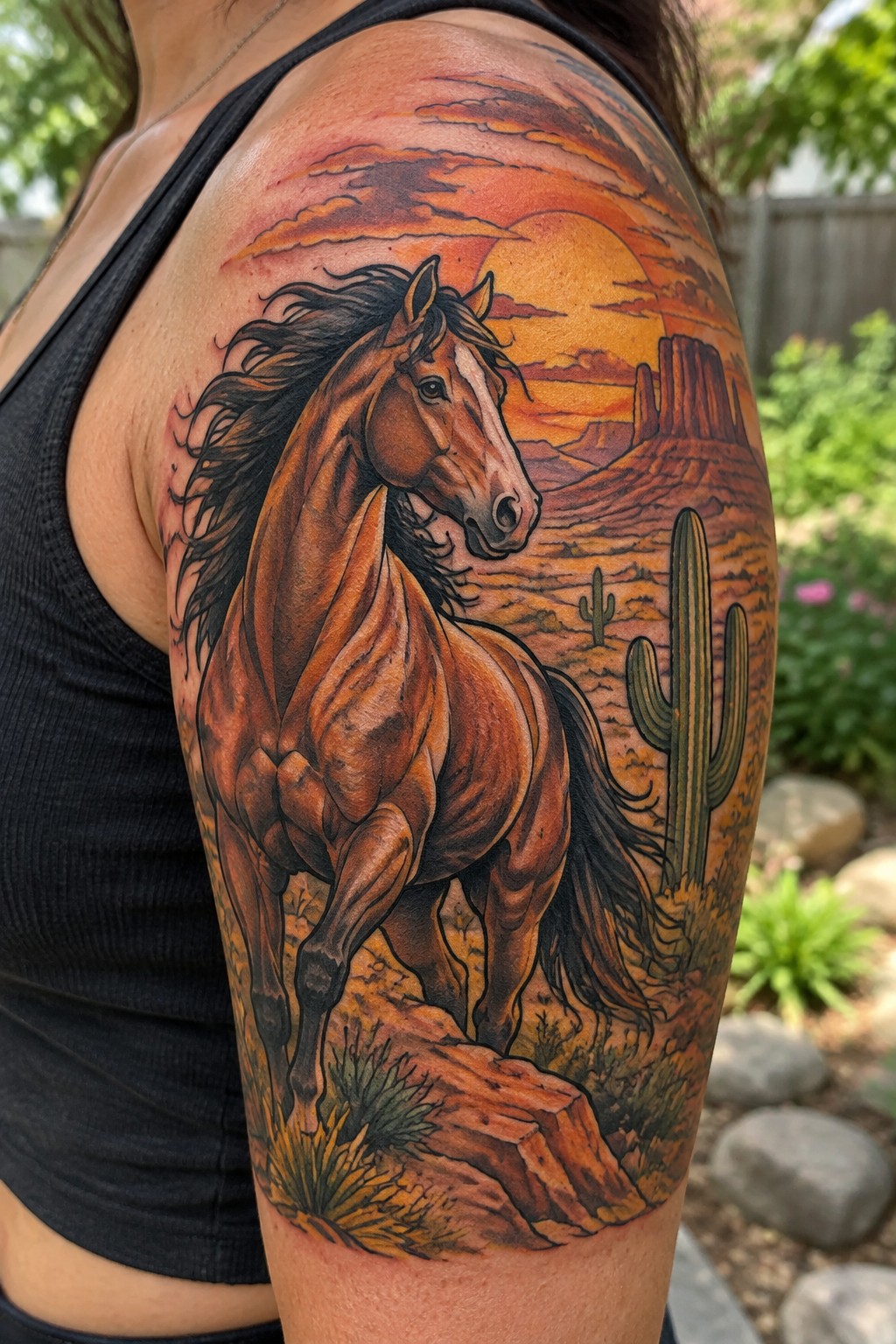
The upper arm gives this horse plenty of space to run forward with its head turned. The desert background fills in around the legs and tail without crowding the main figure. This spot keeps the full scene readable even when the arm is relaxed.
I think the placement works because the curve of the shoulder follows the horse’s neck and mane. It lets the sunset and mesas sit naturally behind the animal instead of getting cut off.
Wolf head on the ankle
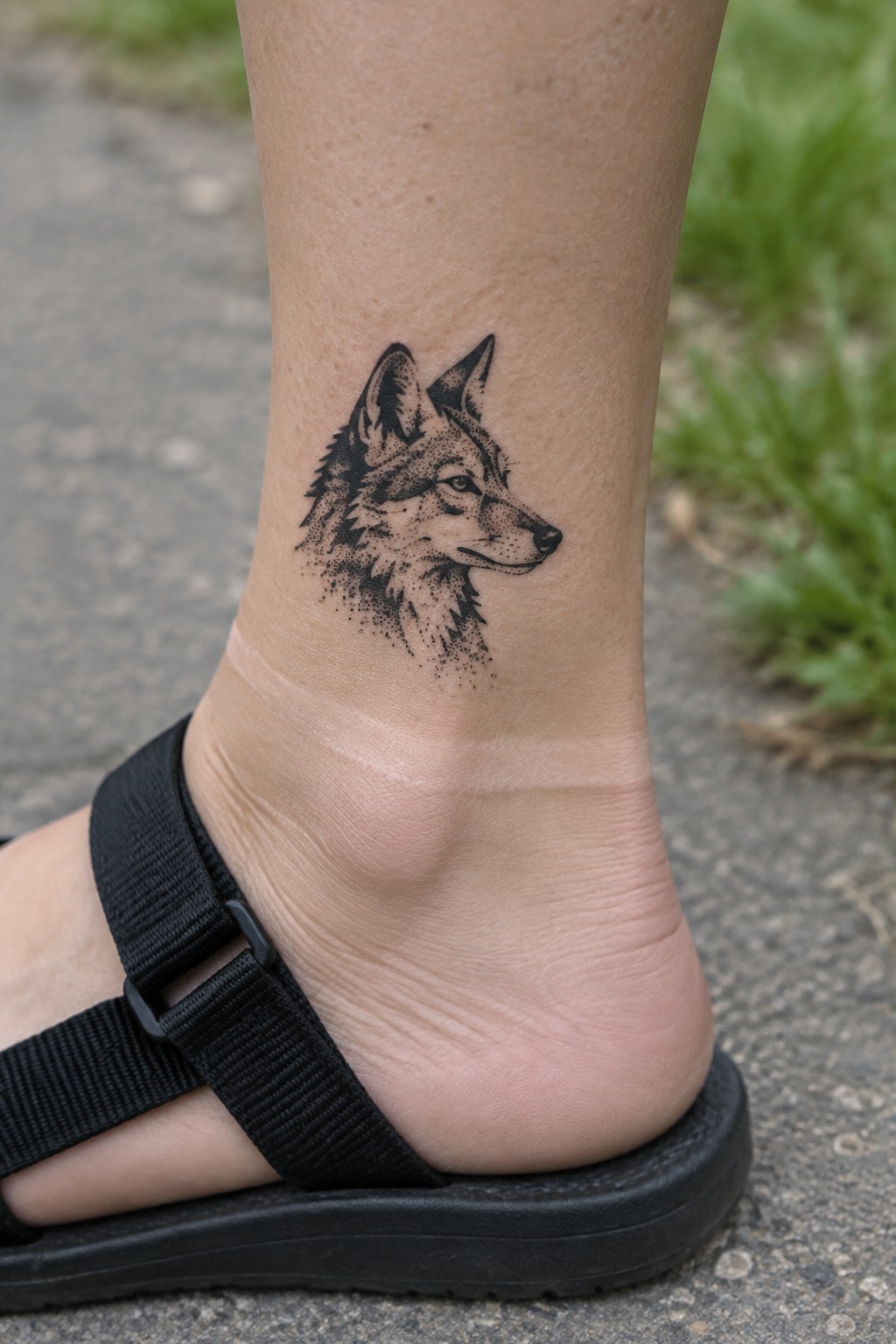
The ankle gives this wolf head tattoo enough room to show the full profile without needing extra space. The side view sits flat against the bone area and stays readable even when the foot moves. Black ink with simple dot shading keeps the lines from looking too heavy on this spot.
I think the size works because it avoids filling the whole ankle while still showing the ears and snout clearly. The placement also lets the design stay mostly covered by socks when needed.
Roadrunner tattoo on the thigh
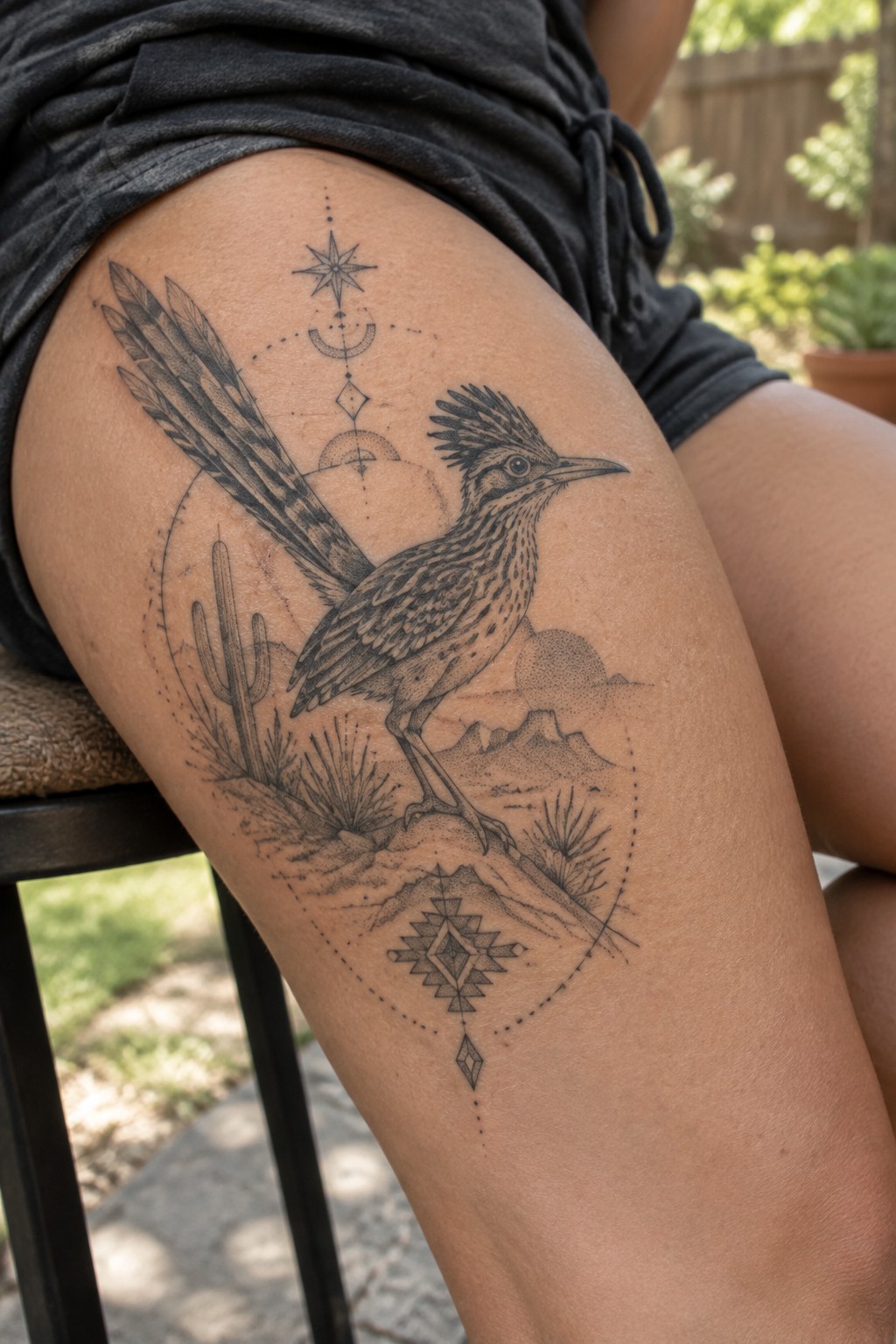
A roadrunner stands in the center of this thigh tattoo. Desert plants and mountains fill in the space around it, with some geometric shapes added near the top and bottom. The whole design uses black ink with steady shading to keep the lines clear.
The thigh gives the piece enough room to spread out without looking cramped. I think the size works well here because the main elements stay easy to read even when the leg moves.
Horse head tattoo on the upper back
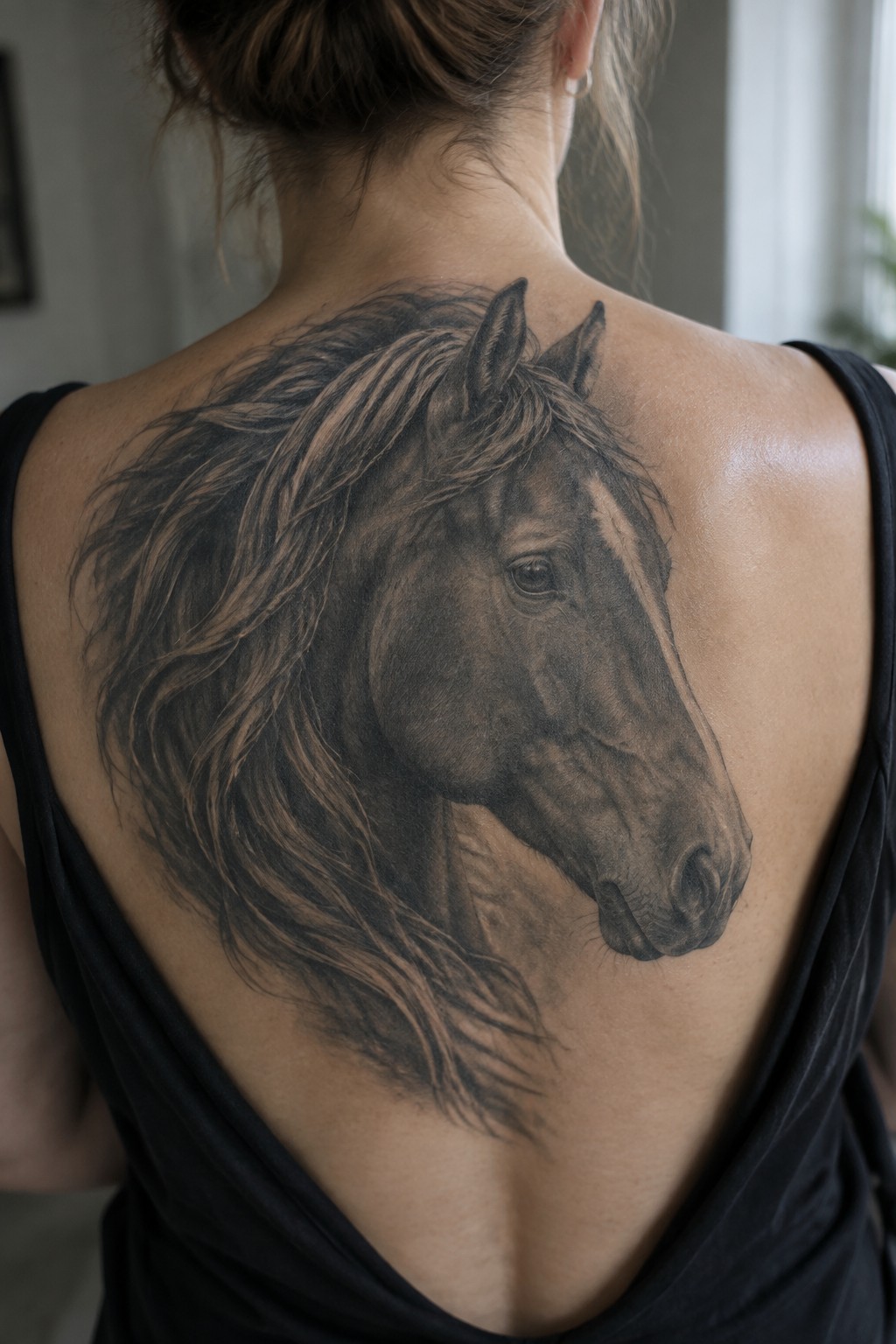
The upper back works well for this horse head because it gives room for the mane to spread out across the shoulders. The tattoo uses black and grey shading to show the horse in profile. The mane flows to one side and adds movement to the whole piece.
I think the scale helps here since the details stay clear without crowding the area. It keeps the focus on the face while the rest blends into the skin.
Snake around the ankle
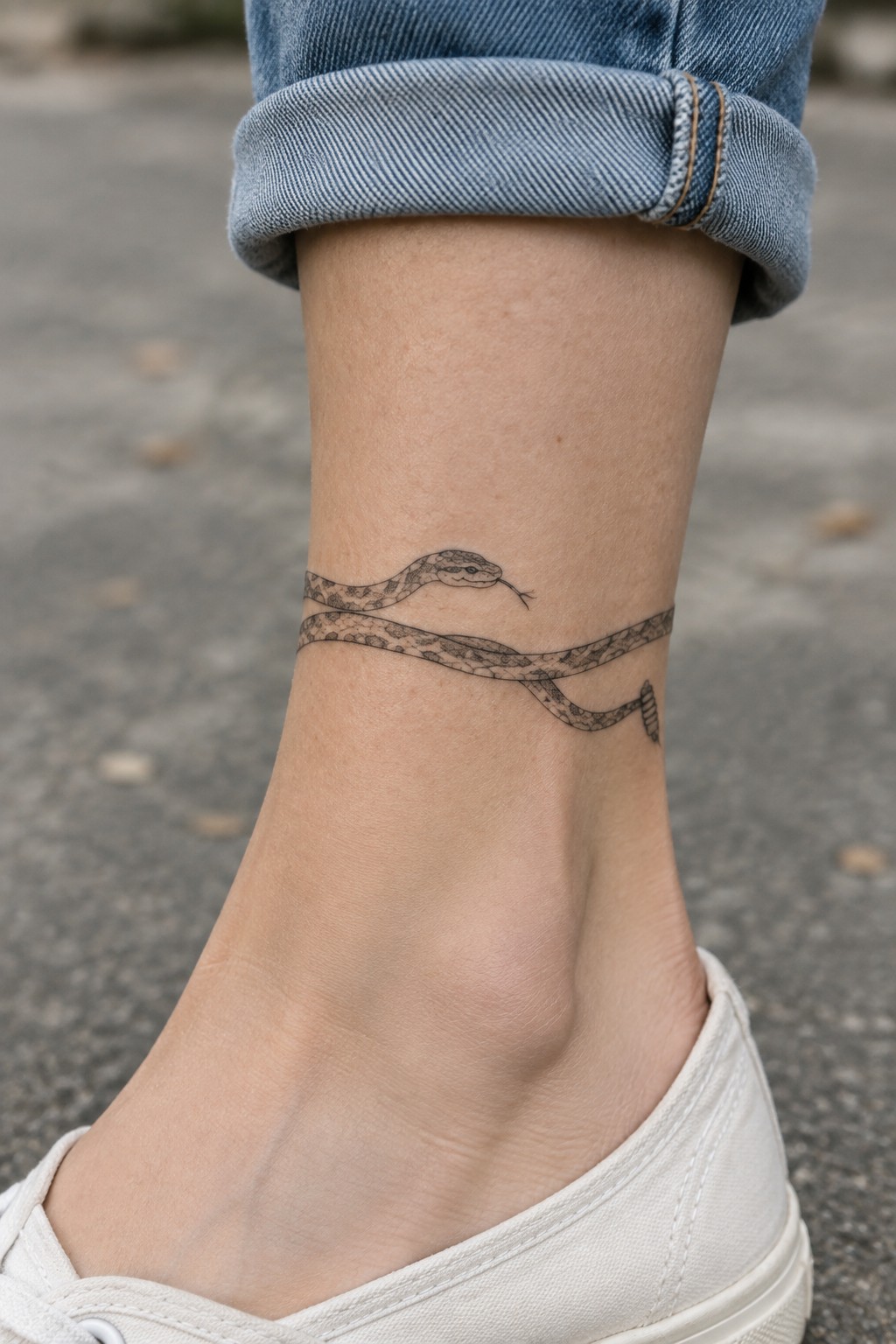
The ankle works well for a wrapping snake because the shape lets the body curve without forcing straight lines. Here the snake loops twice with the head on one side and the tail on the other.
The fine line style keeps the scales readable even at this size. I think it sits better on the lower leg than a thicker design would.
A rabbit tattoo on the thigh
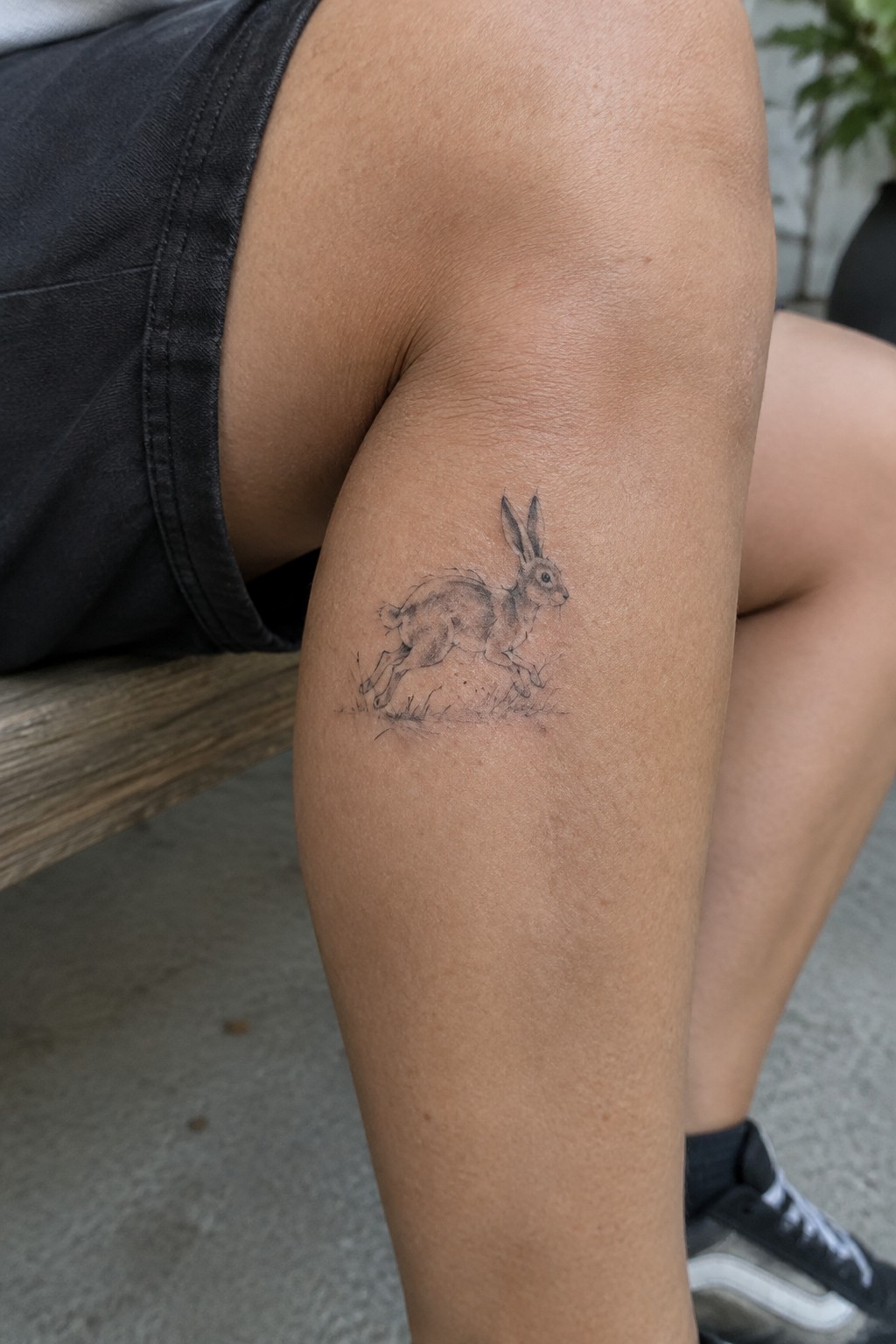
The outer thigh gives the rabbit room to show its full running pose without crowding. Grass lines sit at the bottom to ground the design. Fine line work keeps the details clean at this scale.
I chose the thigh here because the motion reads better when the tattoo has length to work with. It stays simple enough to wear without drawing constant attention.
Horse tattoo on the thigh
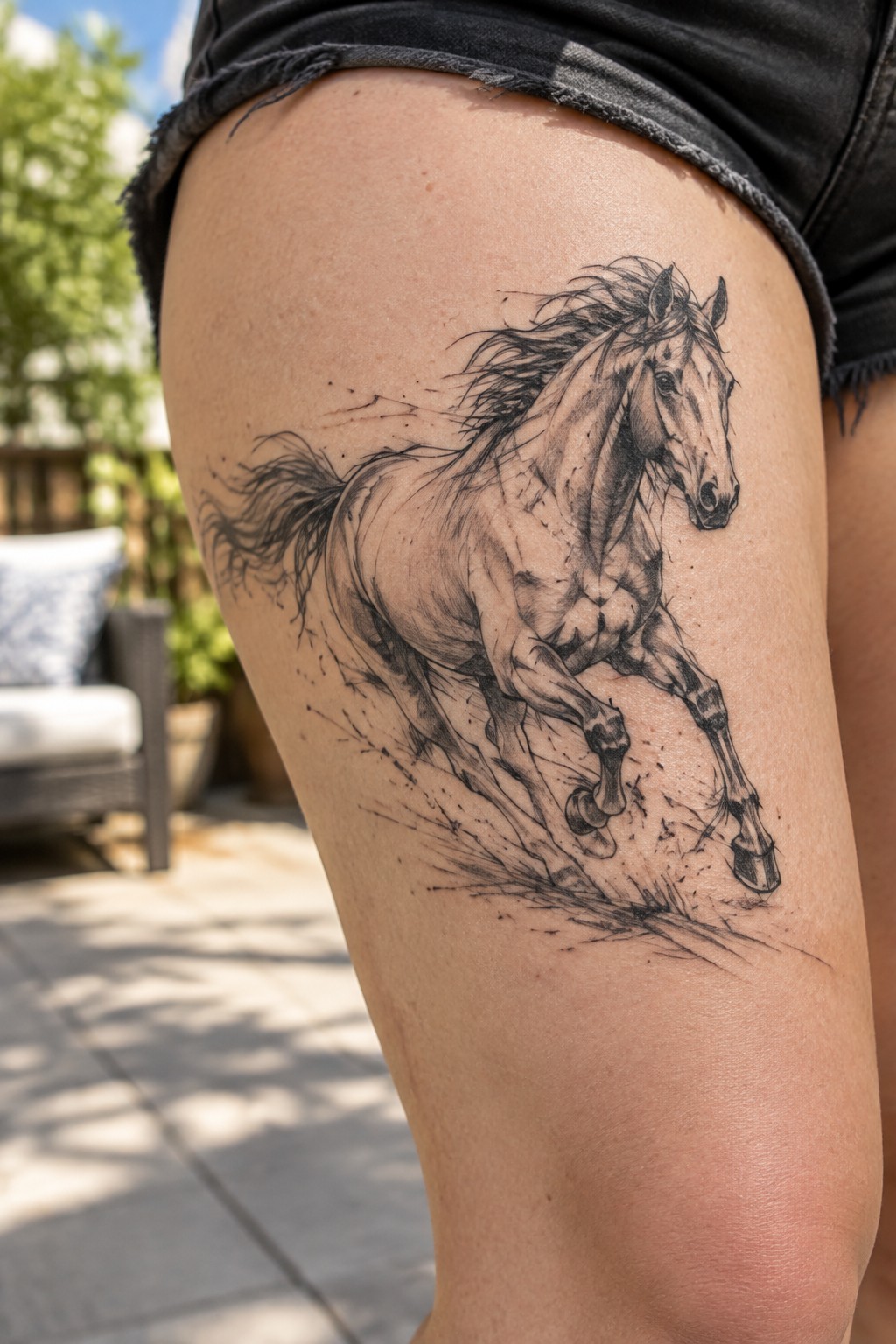
The thigh gives enough room for a full horse in motion. This one shows the animal running with its legs extended and dust kicking up. The flowing mane adds to the sense of speed.
I went with black and grey because it keeps the focus on the movement across the skin. The size matches the area without crowding the muscle.
A geometric lizard fits behind the ear
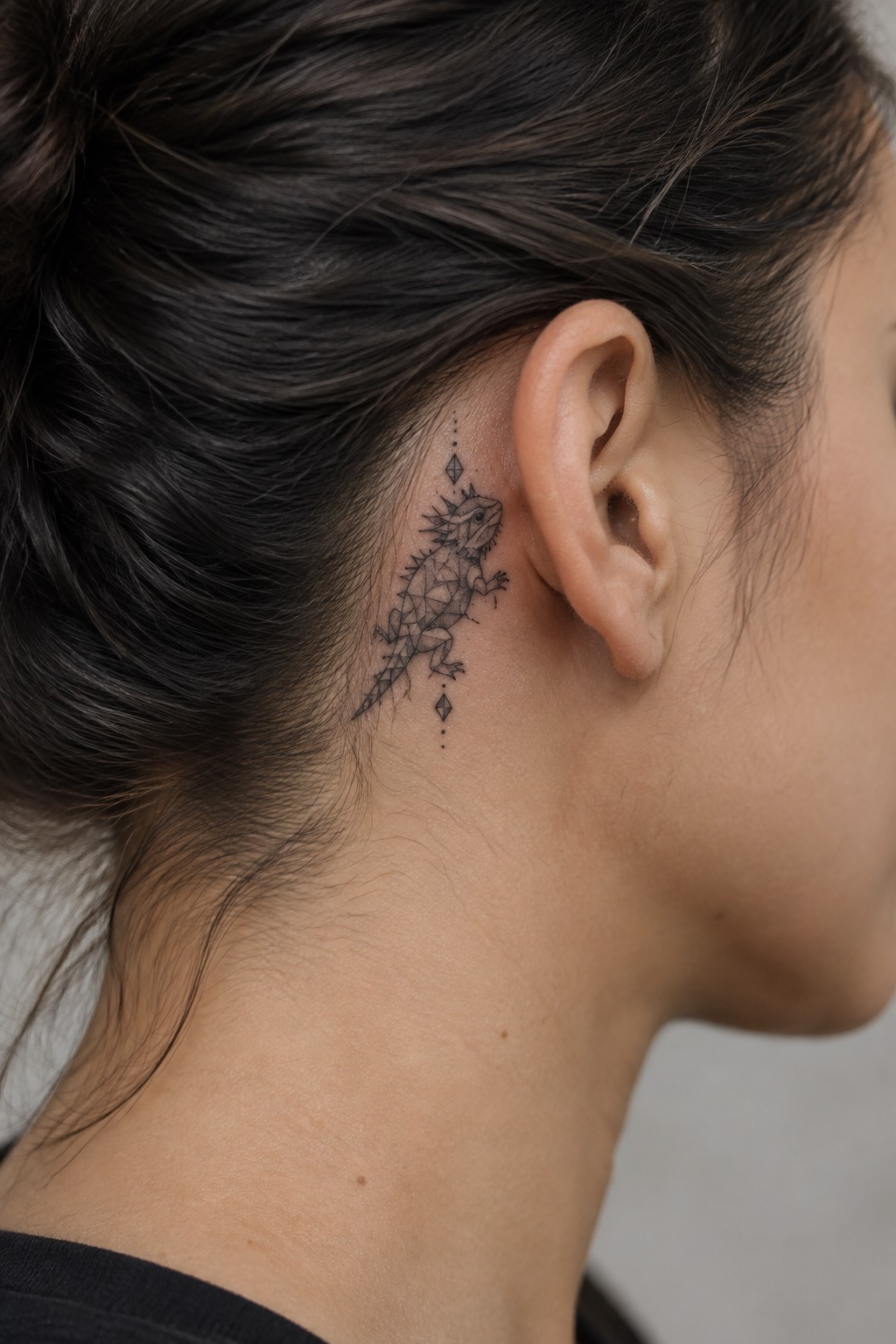
The lizard sits on the side of the neck just behind the ear. Its polygonal lines keep the whole piece compact and contained within that narrow space. Small diamond accents sit above and below without adding bulk.
I think this spot works because the design stays mostly out of sight until the head turns. The style also helps it read cleanly at this size instead of getting lost in the skin texture.
Eagle tattoo across the chest
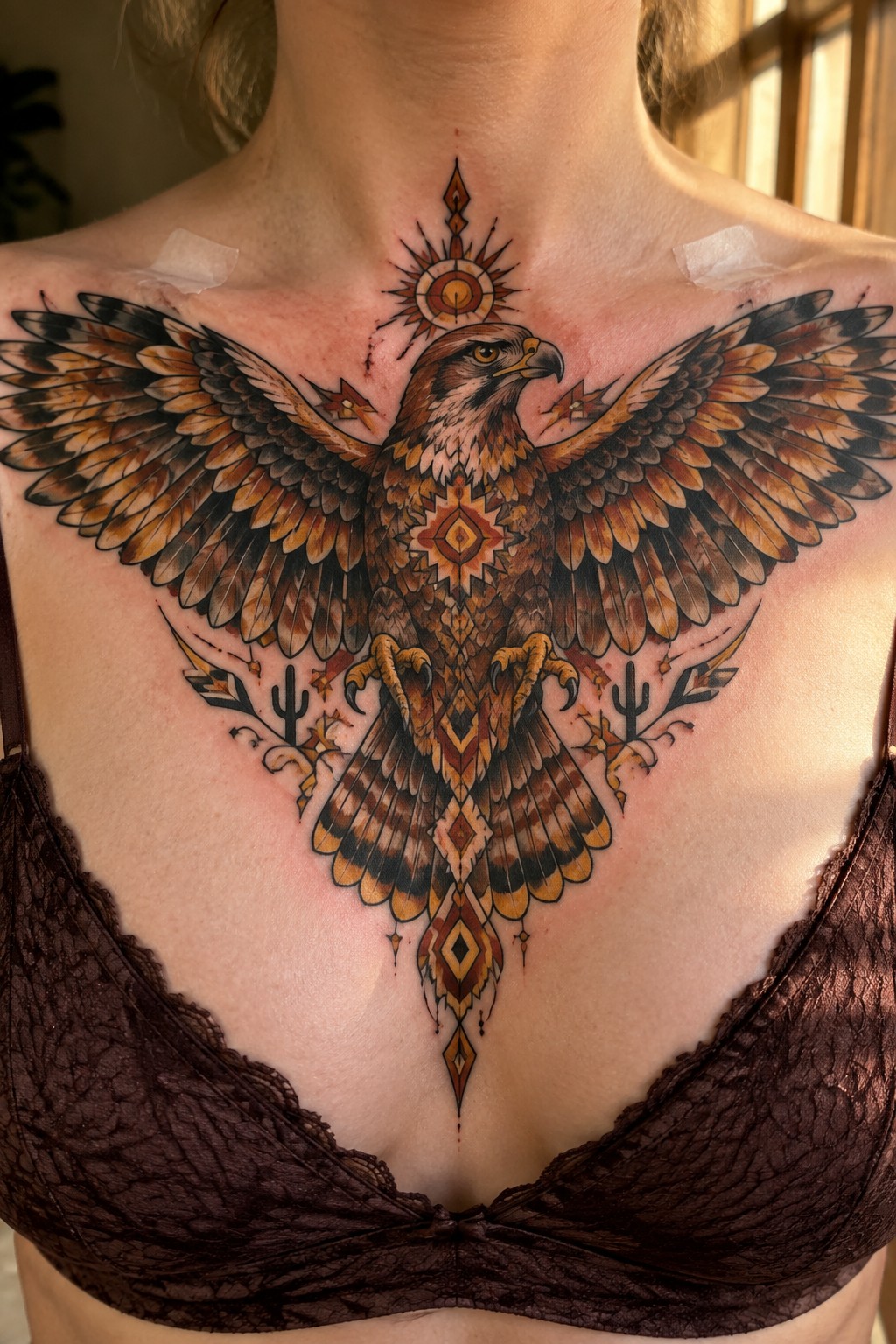
The tattoo covers the upper chest with an eagle in the center and its wings spread wide toward each shoulder. The design uses geometric patterns inside the body and adds a sun element above the head along with small cacti on the sides. This layout keeps the whole piece symmetrical and balanced on the torso.
I think the chest works well here because it gives enough flat space for the wingspan to stay even. The size also lets the main lines read clearly without needing extra shading tricks.
A running rabbit on the inner wrist
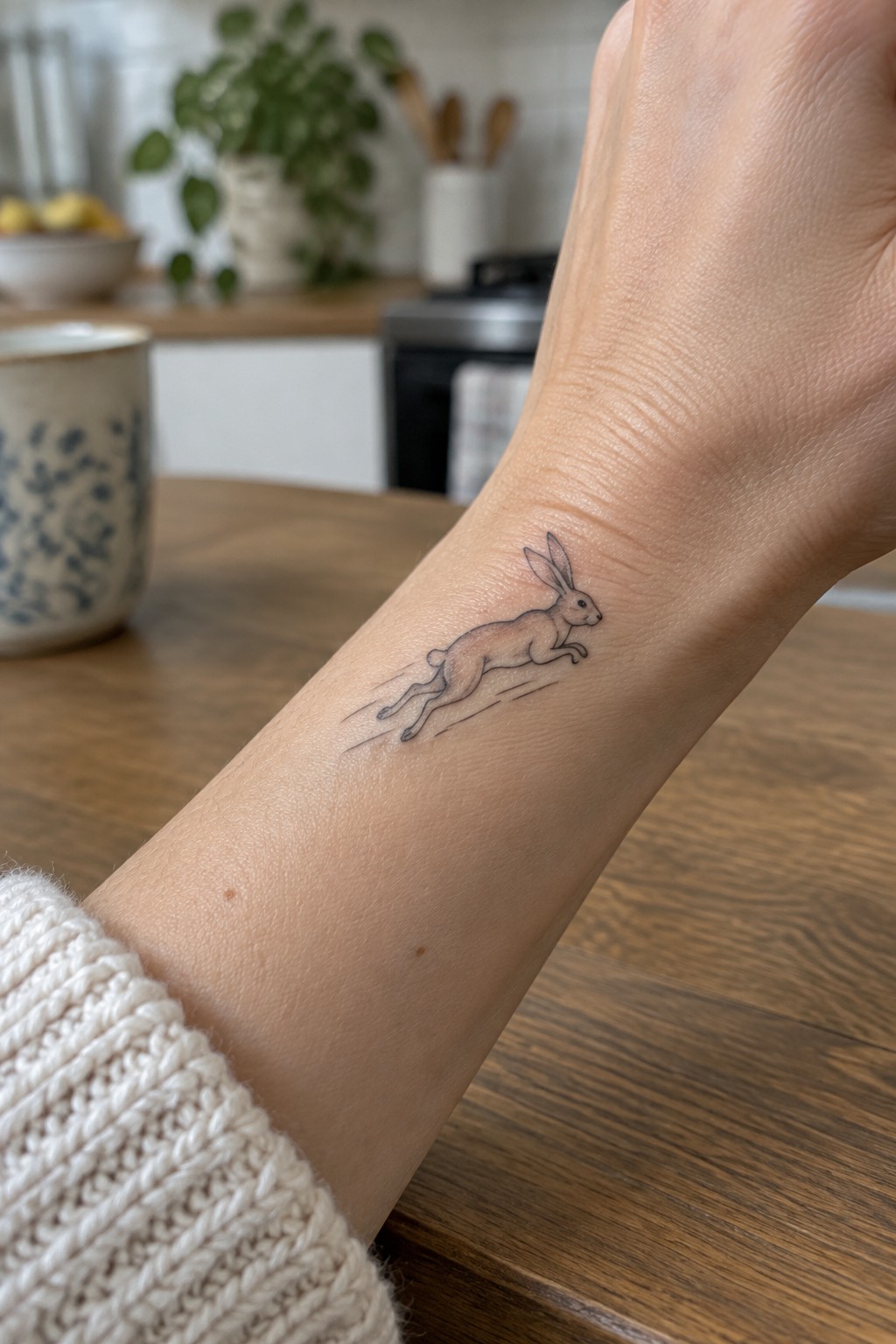
The inner wrist works well for this kind of tattoo because the area stays visible during daily movement. The rabbit faces forward in a running pose with a few motion lines trailing behind it. Fine line work keeps the whole piece small and contained.
I think the placement lets the motion read naturally as the arm shifts. The scale stays modest so the design does not crowd the skin.
Bison tattoo on the side
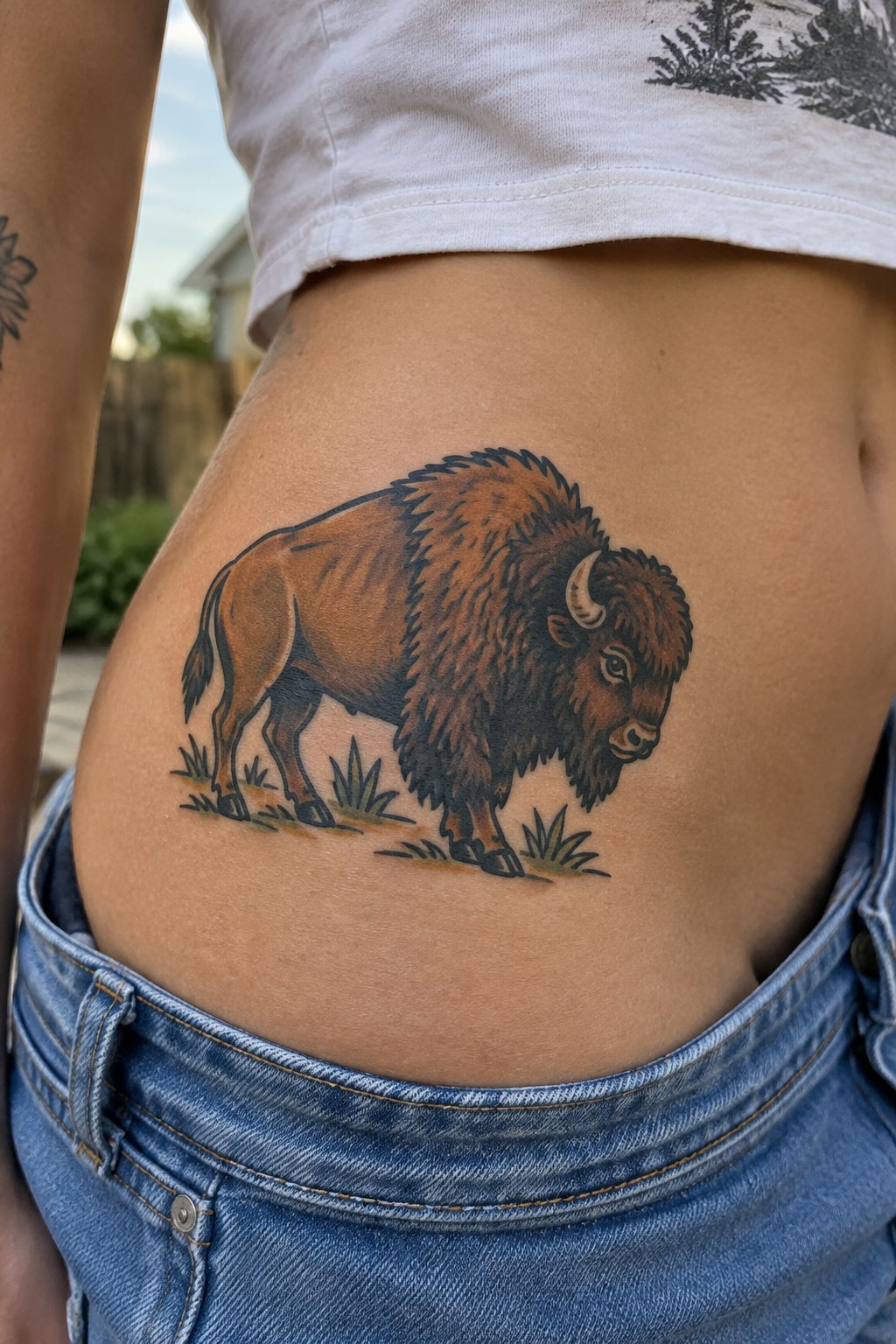
The side placement lets the bison lie flat across the skin in a natural horizontal line. The animal faces right with its head slightly lowered and grass added at the feet. Brown shading fills the body and mane while keeping the outline clean.
This spot gives the design enough space to show the full shape without squeezing the edges. The scale stays readable even on a smaller torso area.
An antelope tattoo sits on the ankle
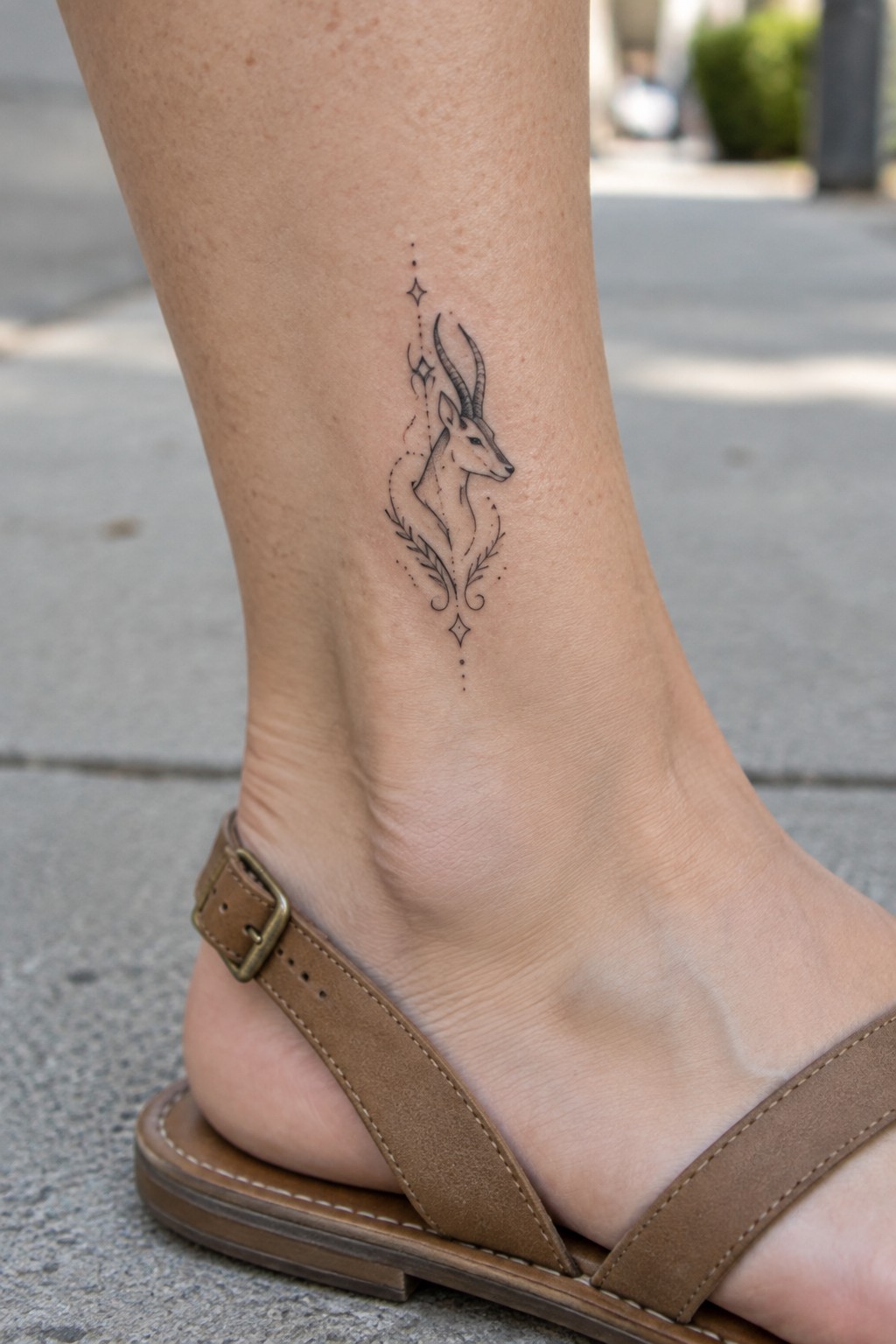
The tattoo sits on the ankle in a narrow vertical layout. It shows a small antelope head with horns done in fine lines plus a few stars and dotted accents.
I think this placement keeps the design readable because the lines stay clear on flatter skin. The light details stop it from feeling crowded in a spot that moves a lot.
Roadrunner tattoo across the shoulder
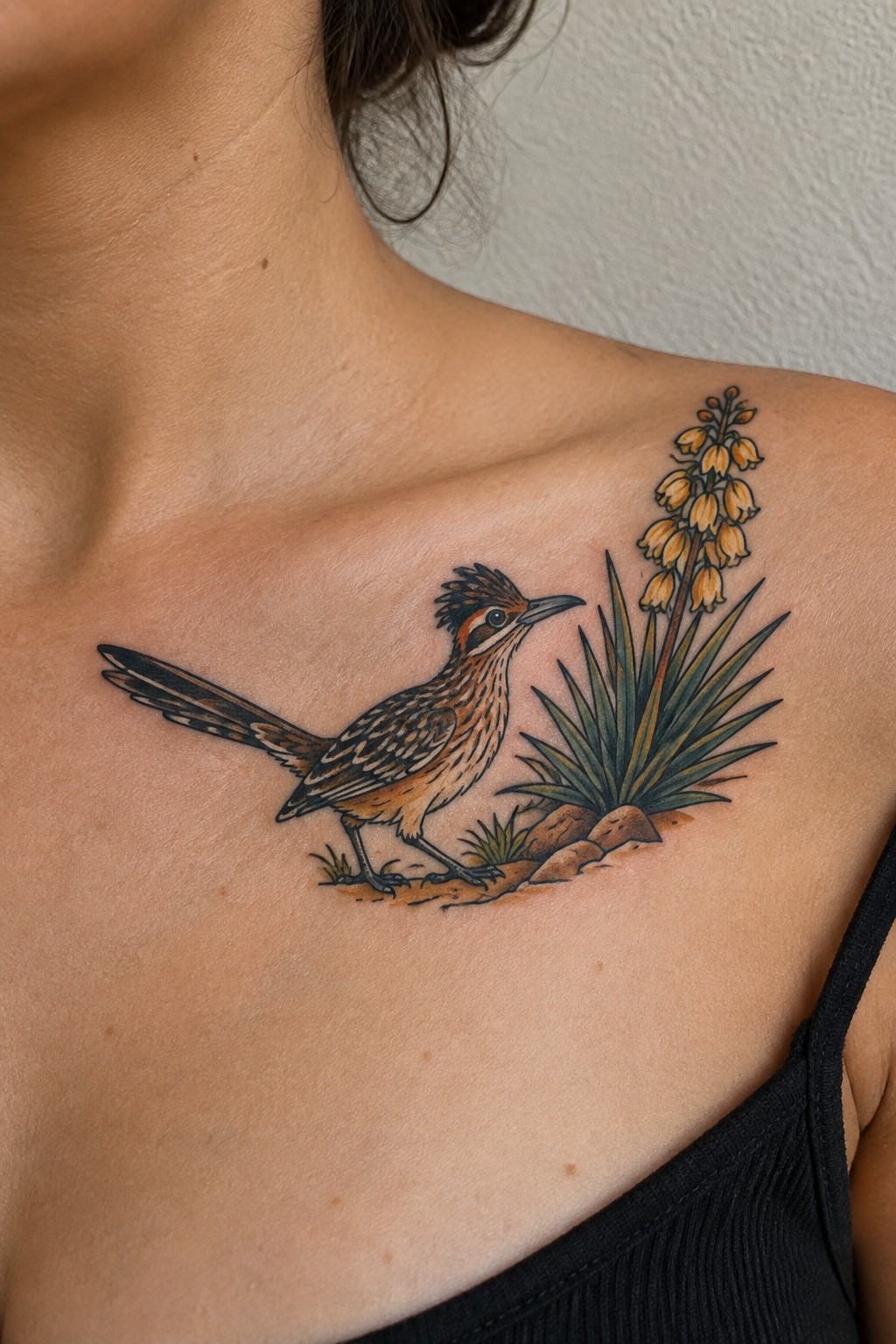
The roadrunner is placed on the upper chest with its body angled toward the shoulder. Its tail stretches left while the tall flowering plant rises on the right side. The design uses color on the feathers and blooms to show the desert setting clearly.
This spot lets the bird sit naturally without needing extra elements to fill space. The plant adds balance and keeps the focus on the wildlife. I think the horizontal layout fits the area better than a taller vertical one would.
Fox tattoo on the upper back
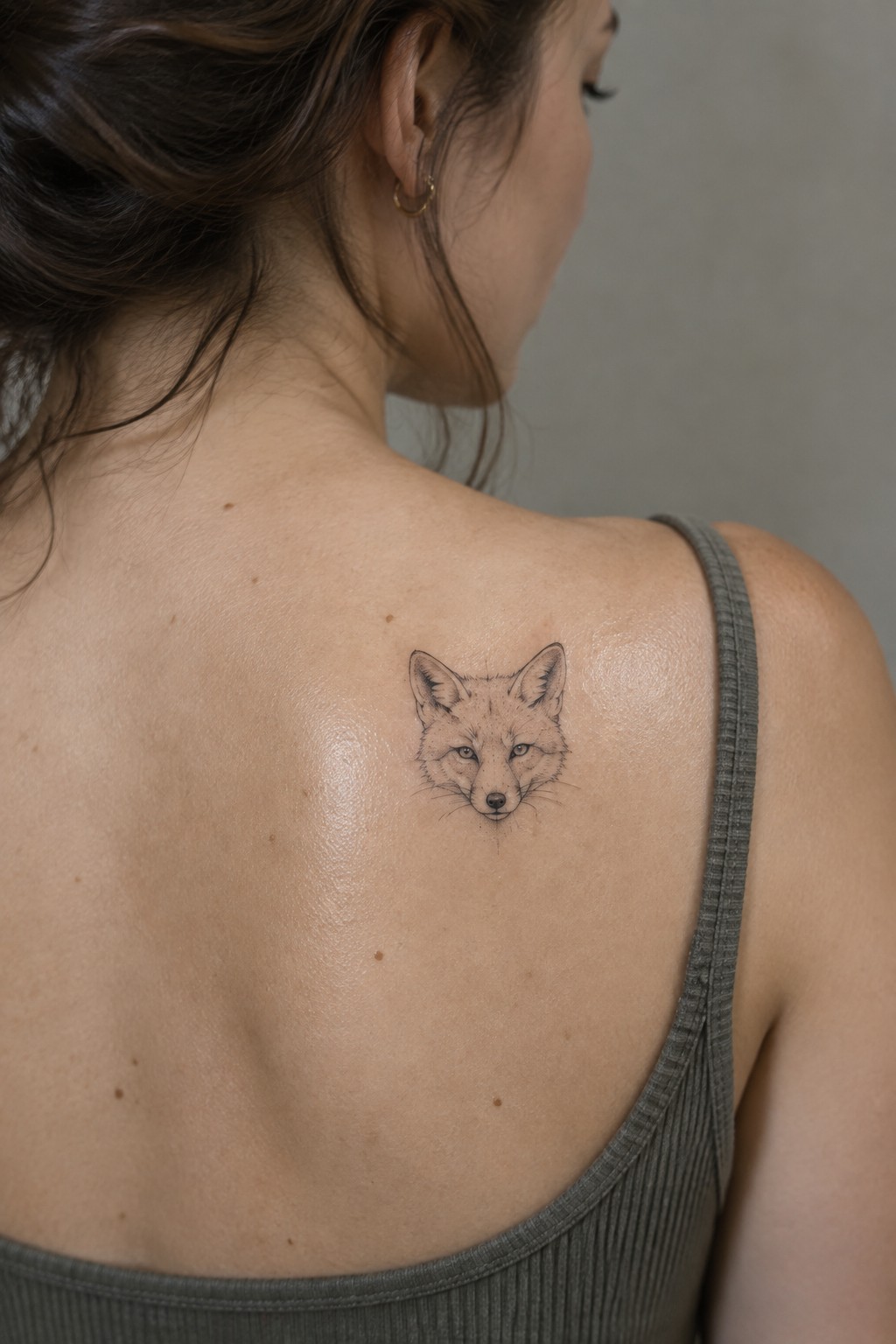
The fox head sits on the shoulder blade area. It faces forward with fine lines that outline the ears, eyes, and whiskers. The compact size keeps the whole piece contained in one small area.
This placement works because the flat surface of the back lets the lines stay straight. I like how the simple shading gives the face some shape without adding bulk.
Rattlesnake tattoo wraps the forearm
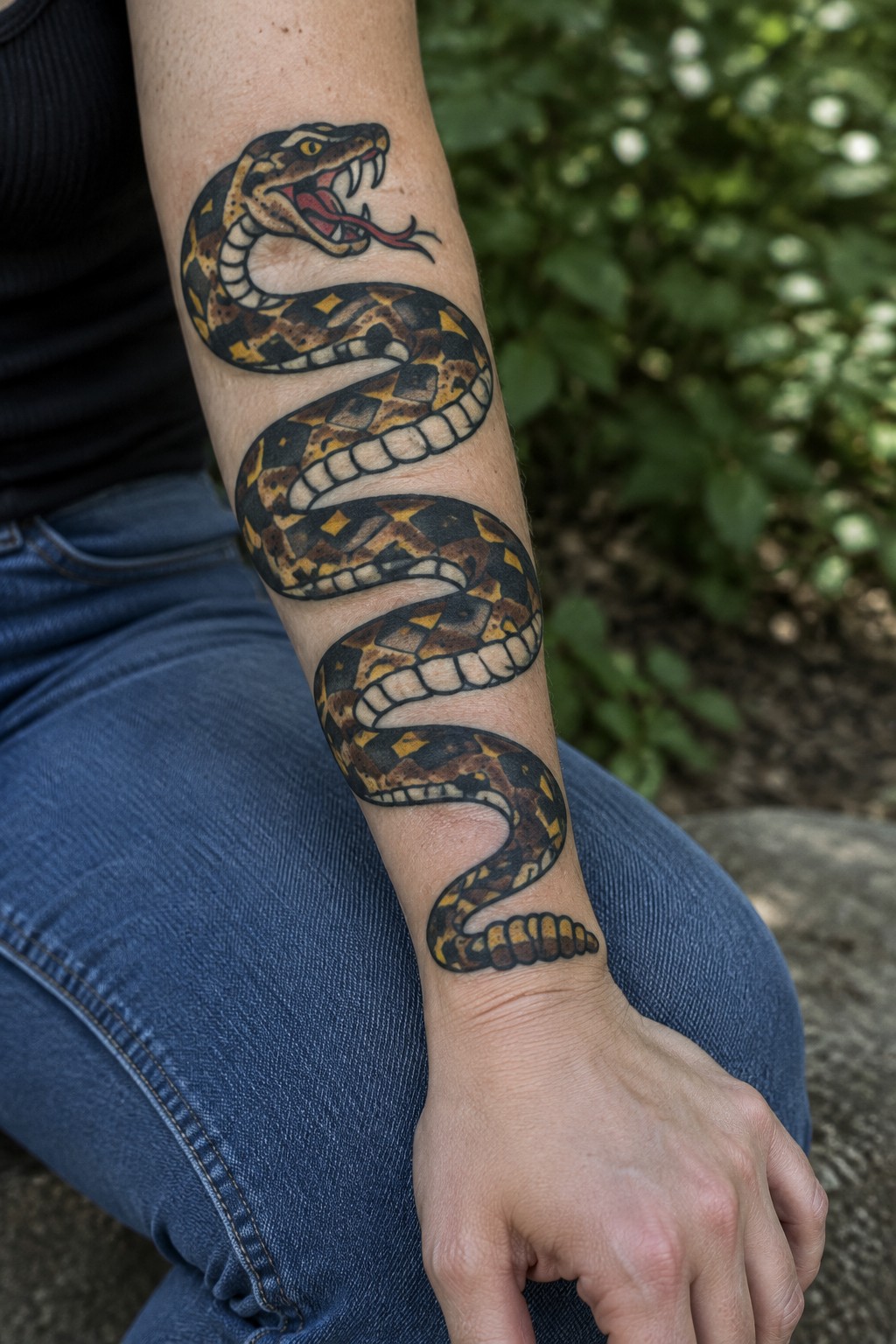
The snake starts high on the inner forearm and coils downward in a steady spiral. This placement lets the body follow the natural curve of the arm without needing extra filler around the edges. The pattern uses blocks of brown, yellow, and black to keep the scales clear even when the arm bends.
I like how the wrap gives the snake room to stretch out instead of bunching in one spot. It keeps the design simple while still showing the full length from head to rattle.
Tortoise on the upper arm
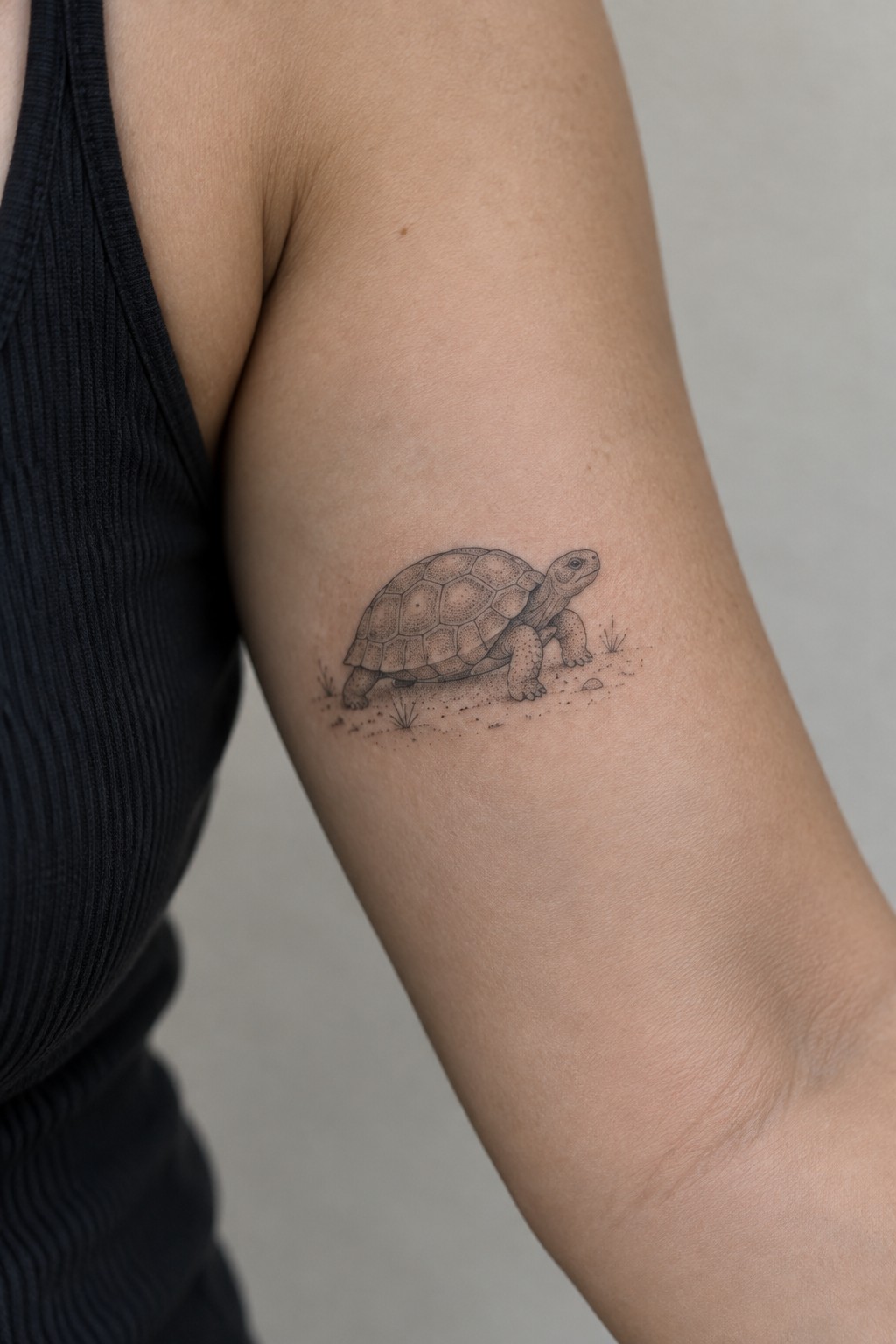
The upper arm gives this tortoise tattoo a flat space that fits its side view. The animal is shown walking with a clear shell pattern made from fine lines and dots. A simple ground line with a few small plants runs underneath.
The scale stays balanced so the design does not crowd the area. I think the light line work helps it sit naturally on the skin without looking heavy.
Lizard tattoo on the ankle
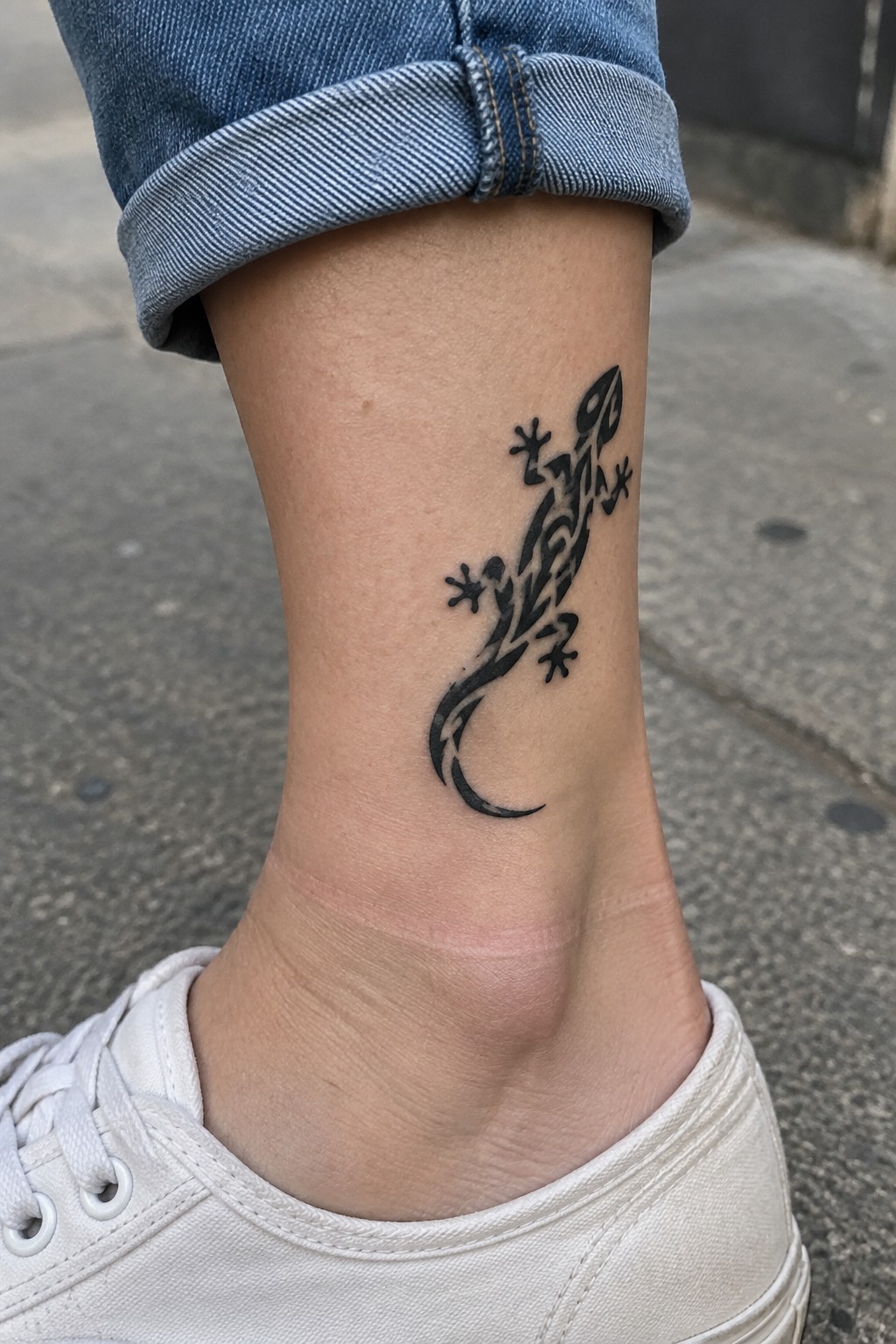
A lizard tattoo on the ankle follows the curve of the bone. The tail wraps just enough to match the shape there. This keeps the whole design compact and contained in one spot.
The tribal lines give the lizard some weight. It still stays readable because the open spaces break up the pattern without crowding the skin.
Hawk tattoo on the upper thigh
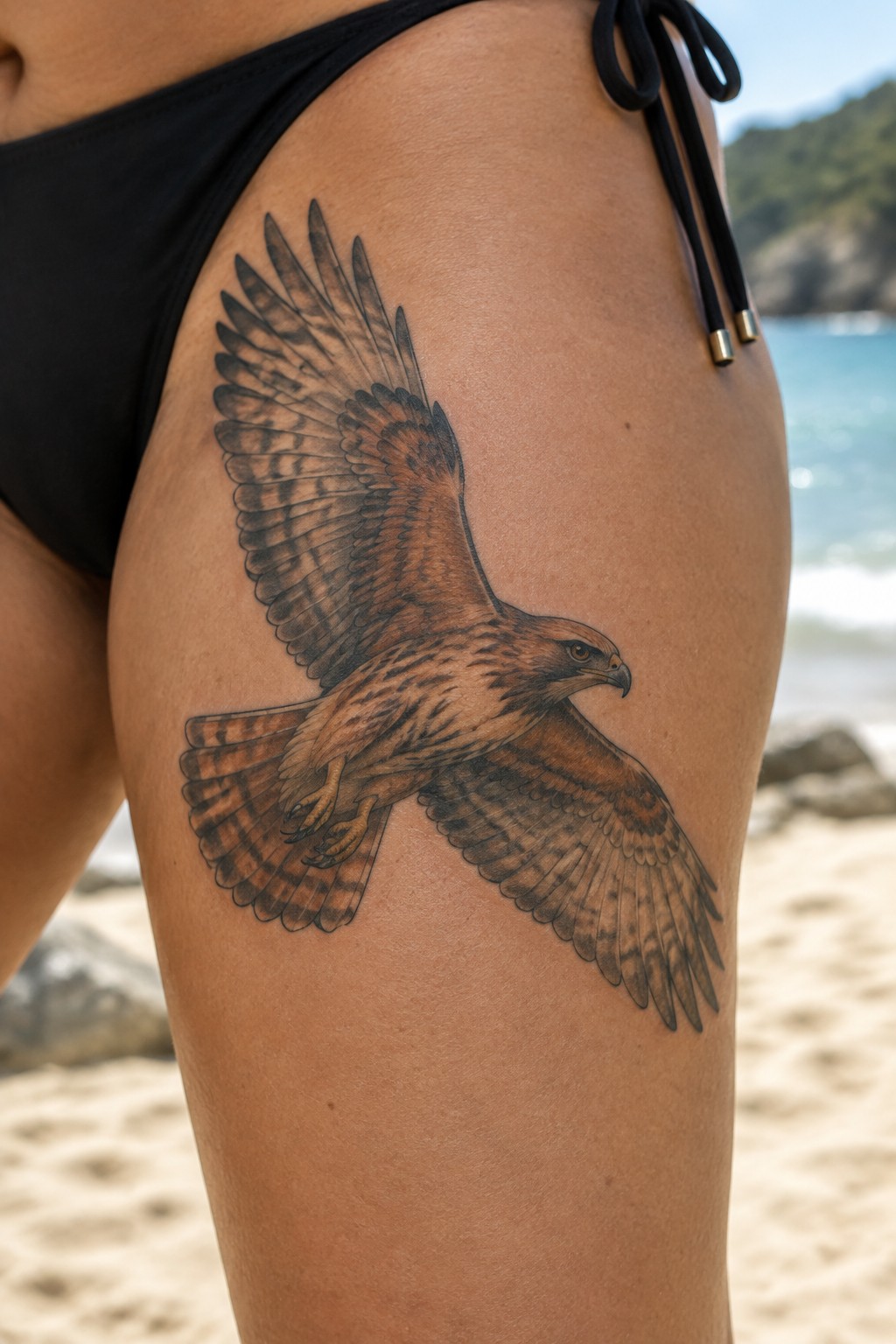
The upper thigh gives this hawk enough room to spread its wings without looking squeezed. The bird is shown in a steady flight pose with clear lines on the feathers and body. This setup keeps the design visible even when the leg moves.
I think the thigh placement works because the wings can stay open and balanced across the skin. It avoids the tighter spots that would force the bird into a smaller shape.
Scorpion tattoo on the lower back
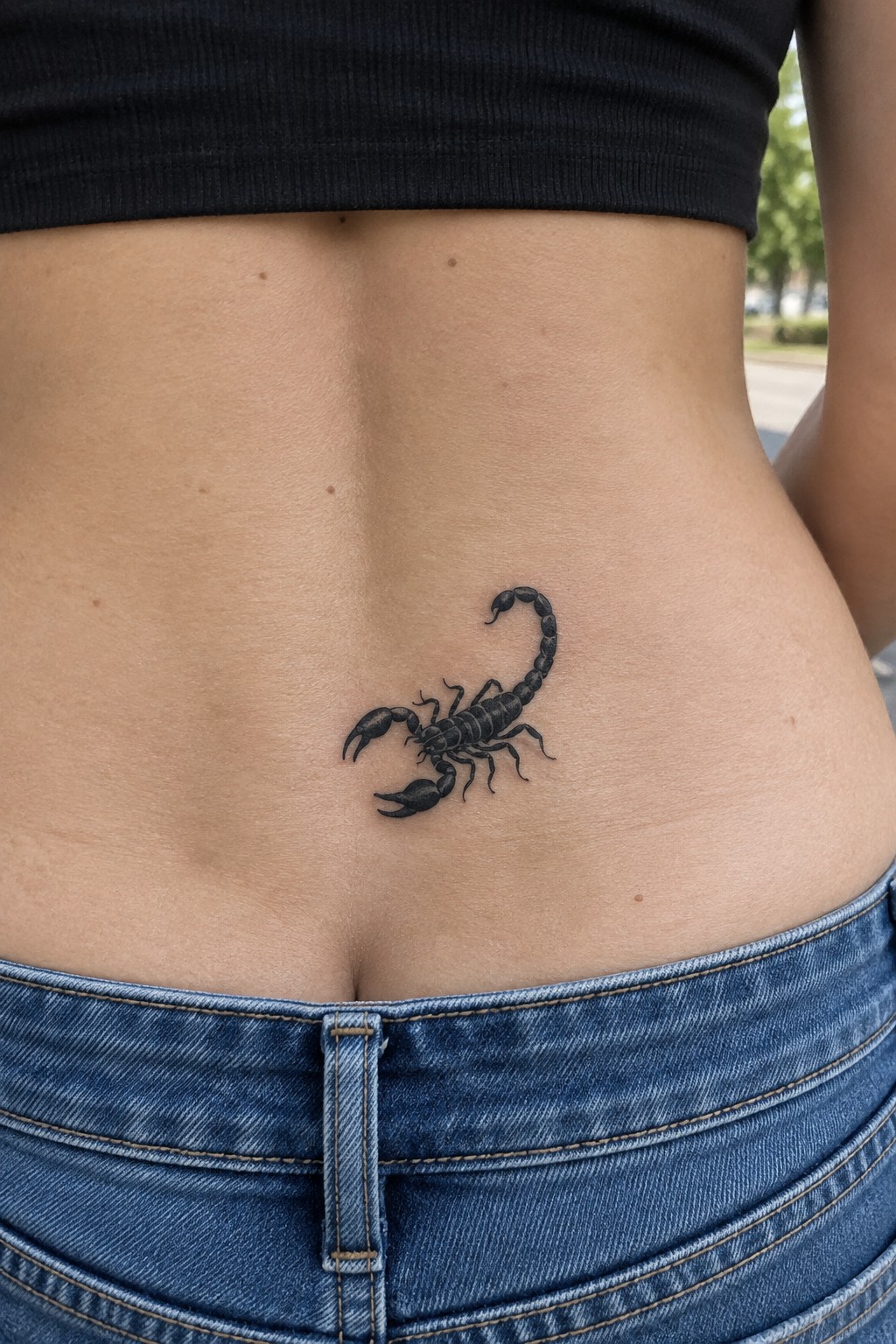
The lower back gives the scorpion enough space to sit in a natural curve. The tail arches upward while the body stays centered above the waistband. This spot keeps the design compact yet fully visible when jeans sit low.
The black shading stays even across the segments and legs. I think the size works here because it fills the area without crowding the spine or hips.
Horse and eagle span the full back
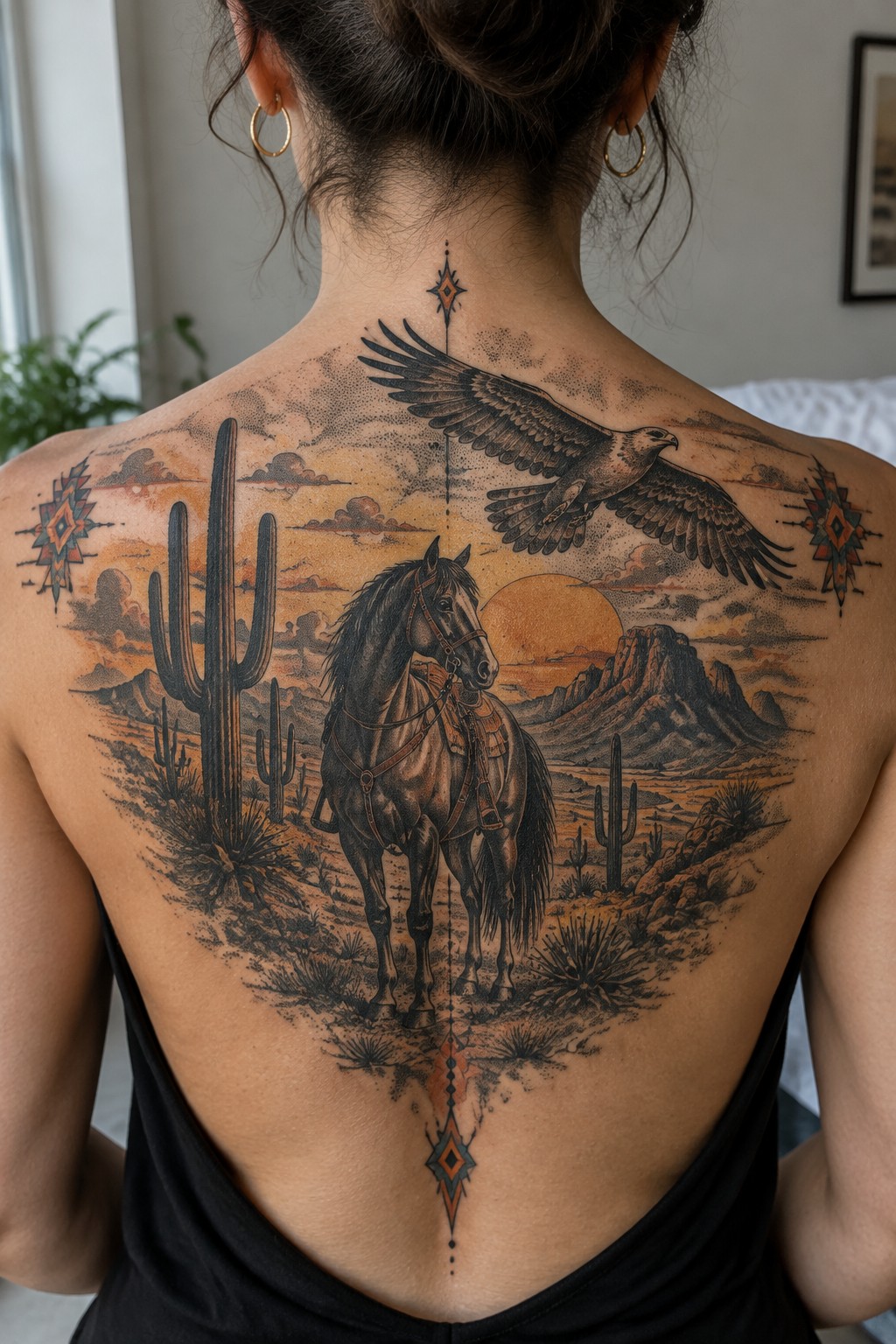
The full back works well here because the wide space lets the desert scene stretch out naturally. A saddled horse stands in the middle with cacti and mountains on either side. An eagle glides across the top while simple geometric shapes sit on the shoulders and lower back.
The vertical dotted line through the center keeps everything lined up. I think the orange tones in the sunset help the horse stand out without needing extra color everywhere.
Frequently Asked Questions
1. What body placements work best for rugged Western animal tattoos featuring horses and desert wildlife? Common choices include the upper arm, thigh, ribcage, and back because these areas allow for larger designs with room for details like horse manes or cactus textures. Consider your lifestyle and pain tolerance since areas with more muscle or fat tend to hurt less during the session.
2. How do I add personal meaning to a tattoo of horses and desert animals? Start by reflecting on what these creatures represent to you such as freedom for horses or resilience for animals like coyotes or eagles. Work with your artist to blend in elements like your birth year in subtle patterns or favorite desert landscapes to make the design unique.
3. What aftercare steps help these tattoos heal properly? Keep the area clean with gentle soap and apply a thin layer of recommended ointment several times a day. Avoid sun exposure, tight clothing, and submerging the tattoo in water until it fully heals which usually takes two to four weeks depending on size and placement.
4. How much do detailed Western animal tattoos typically cost? Prices often range from a few hundred dollars for smaller pieces to over a thousand for larger more intricate designs. Factors like the artist’s experience, session length, and location affect the total so schedule consultations to get accurate quotes based on your chosen ideas.
5. Which tattoo styles suit rugged Western themes with horses and desert wildlife? Realistic shading or bold traditional styles often capture the rugged feel well while allowing for textures like fur and rocky backgrounds. Discuss reference photos with your artist to ensure the style matches the tough Western vibe you want.
