

We may earn from ads and some links. How we work.
American traditional and neo-traditional tattoos get mixed up because they share a family resemblance: readable silhouettes, outlines you can see from a few feet away, and a love of classic images (roses, eagles, daggers, women, animals, banners). They are not the same style, and they do not age the same way. If you walk into a shop asking for “old school, but make it more detailed,” it helps to know which half of that sentence you actually want.
This is a comparison you can take to a consult, not a contest. For real traditional work on skin, with the artists named and linked, start with American traditional done right. The broader Tattoo Styles hub is where this sits next to watercolor, fine-line and the rest.
What people usually mean by American traditional
American traditional (you will also hear old school, or just traditional) grew out of flash: designs meant to be chosen, adjusted and tattooed with a limited, reliable set of moves. Bold black outlines. A small colour range that often includes red, yellow, green and a firm use of black. Simple shading. Icons that stay icons: a rose that is clearly a rose, a swallow that is clearly a swallow, a ship that would still be a ship if you saw it across a diner.
The point is durability and read. These tattoos were built to live on people who worked, sweated and spent time outside. That history is why a well-made traditional piece can still shout after years of ordinary life, and why the style fights you if you ask it to behave like a pencil sketch.
What people usually mean by neo-traditional
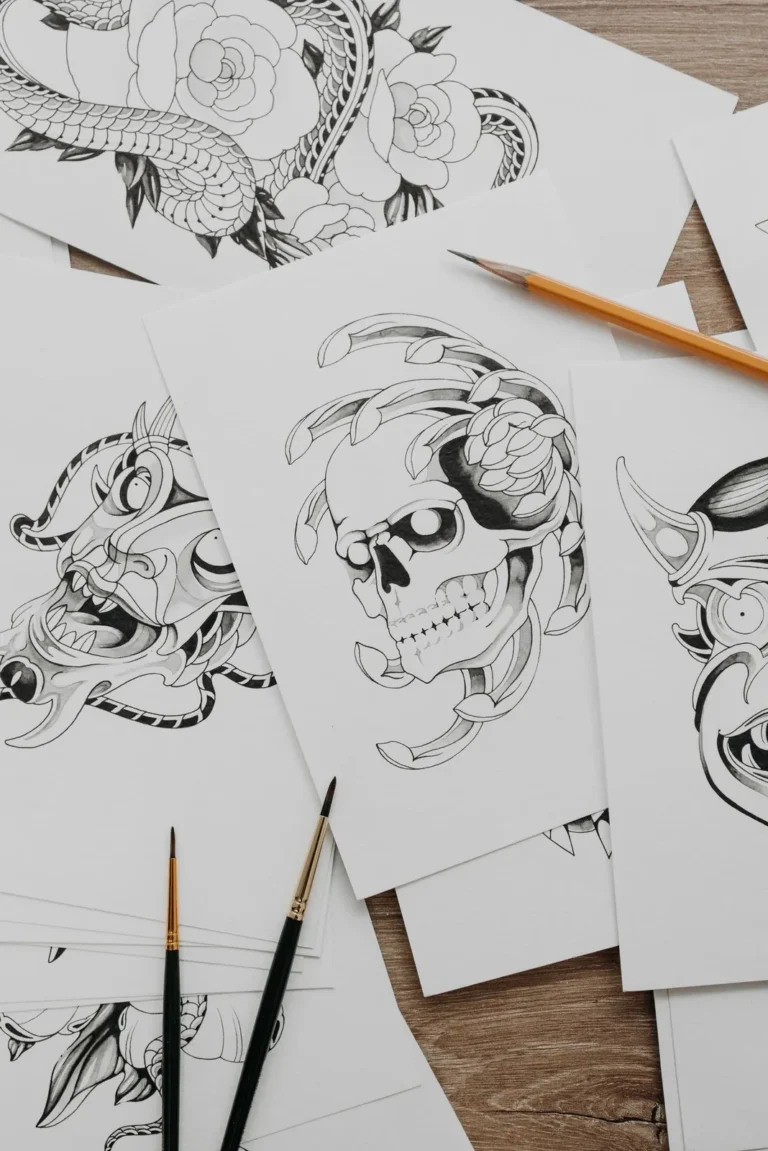
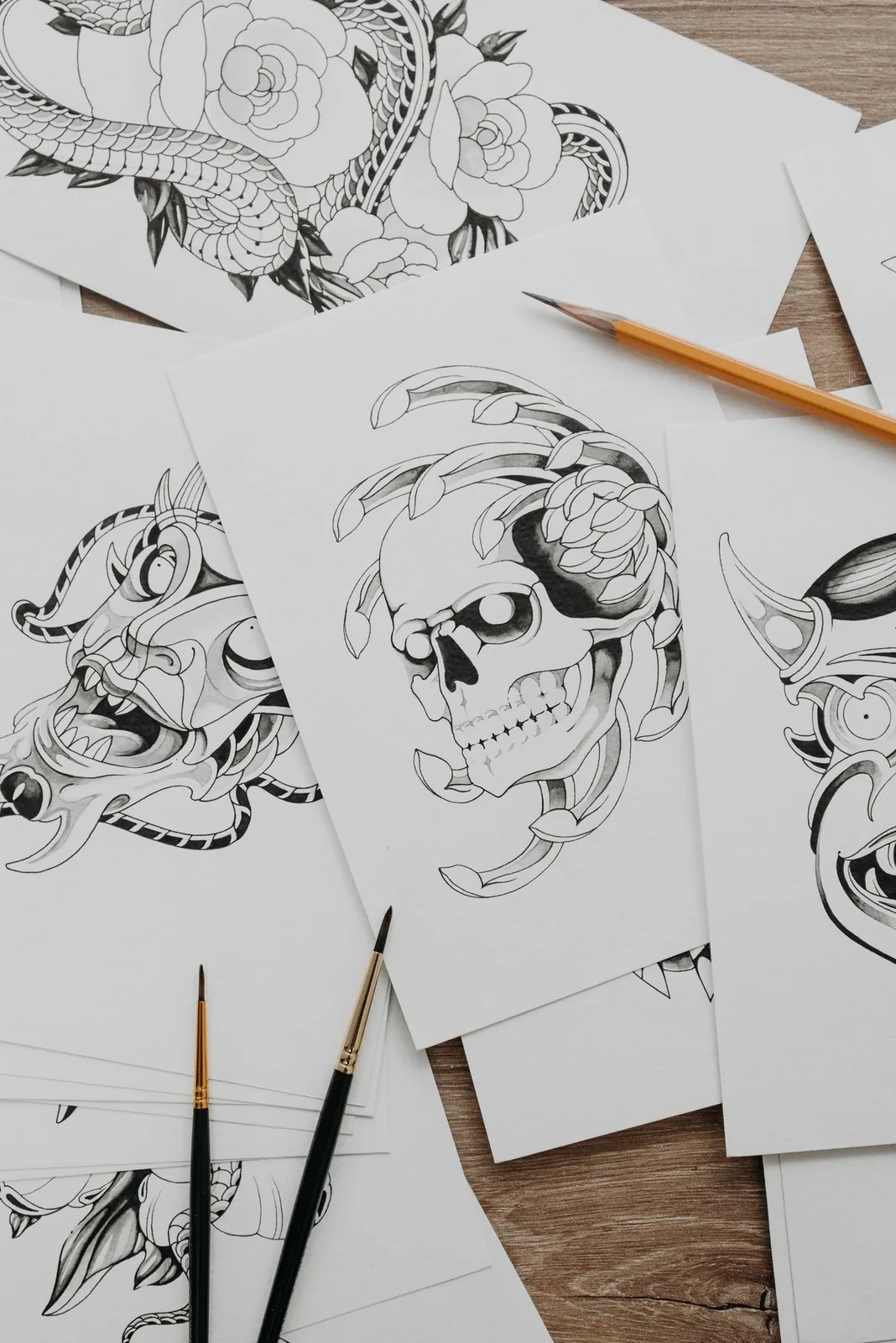
Neo-traditional keeps the readable outline and the love of emblematic images, then opens the door. You will see a wider palette, more painted-looking shading, more varied line weights, and subjects that classic flash sheets did not always stock: ornate animals, decorative frames, portraits that still have a poster-like punch, florals with more inner modeling.
It is still a designed picture, not a photograph pretending to be a photograph. If the piece only works as photorealism, it has probably left both traditional and neo-traditional behind and become something else.
Side by side
Outline. Traditional outlines tend to be consistently bold. Neo-traditional often mixes a strong outer line with finer interior lines. Those interior lines are the first place a neo-traditional piece can soften if they were drawn too timidly for the size.
Colour. Traditional colour is limited and solid on purpose. Neo-traditional colour can include mauves, teals, dusty pinks and smoother blends. More colours mean more decisions about how those blends will look when they are no longer fresh.
Detail. Traditional detail is suggested with a few confident marks. Neo-traditional can carry more ornament (jewels, filigree, layered petals) if the design is given enough room. “More detail” is not automatically more impressive once the tattoo has healed.
Subject. Traditional leans on a shared visual language: eagles, panthers, daggers, pinups, nautical icons, banners. Neo-traditional can use those too, or wander farther, as long as the picture still has a clear silhouette.
How it sits on the body. Both styles love shapes that follow a shoulder, a calf or a chest. Traditional flash is especially good at fitting a single emblem cleanly onto one muscle. Neo-traditional compositions can sprawl into frames and supporting flowers, which may ask for a larger canvas.
How each style tends to age
A well-sized traditional tattoo is one of the easier styles to live with long-term, because contrast was the plan from the first line. Black stays, colour settles, and the image remains itself. That is not magic. It is what the style was built to do. You can see that kind of contrast in the Real Ink traditional feature, where the pieces are photographed as finished work rather than as ideas.
Neo-traditional can age beautifully when the artist thinks in healed values, not only in fresh smoothness. The risk is a design that relies on delicate inner linework or pale blends to make the picture recognisable. Those are the parts that relax first. If you like neo-traditional ornament, ask to see healed pieces from the same artist, in ordinary light, a year or more later.
For a wider look at how several styles settle, including watercolor and fine line, I wrote how tattoo styles age as a companion to this comparison.
Which one fits the idea you actually have
Choose traditional if you want a classic emblem, a limited palette, and a piece that is meant to read instantly. It is a strong match for first tattoos that have a clear icon (a rose, a ship, a snake) and for anyone who likes the look of a shop wall.
Choose neo-traditional if you want that same graphic punch plus more colour storytelling or a more decorative animal or floral. It is a strong match when your reference is a poster or an illustrated book plate rather than a photograph or a single thin outline.
If your reference is a fine-line stem or a micro-portrait, you are probably not in this comparison at all. Look at fine-line versus micro-realism instead, rather than asking a traditional artist to “just make the lines thinner.”
What to ask in the consult
- Which style do they actually tattoo day to day? Portfolio honesty matters more than a shop’s general reputation.
- Can they show healed work in that style, not only healed work in a different one?
- How large would they take your design so the interior details survive?
- Which colours they would keep, and which they would drop, if the piece needs to age on a sunnier part of the body.
- Whether your idea wants one emblem (often traditional) or a framed composition (often neo-traditional).
Bring two or three references in the style you mean, not a folder that jumps from flash to watercolor to photorealism. If cost is part of the decision, remember that bigger, fuller colour pieces take longer. The cost estimator can set a planning range. The artist’s quote is the one that counts.
When you are ready to browse, the Styles hub will send you toward collections and toward real examples. I would look at the real examples first. It is much easier to choose a style once you have seen it on skin that has already left the shop.
