

We may earn from ads and some links. How we work.
Zodiac and celestial tattoos range from a tiny moon you could cover with a fingerprint to a full spine of stars. The eight pieces below are real tattoos published by the artists or studios who made them. I picked them for variety: a colourful ram portrait, a pine-and-moon fine line, a spine piece, a discreet forearm moon, a pair of constellation bears, a sun-and-moon, a geometric lunar stack and a tarot sun.
If you want help choosing symbols before you look at photographs, the Zodiac Symbol Finder lays out each sign’s glyph, constellation and usual pairings. More story-led ideas live in the Meaningful tattoos hub.
A colourful ram portrait with celestial extras
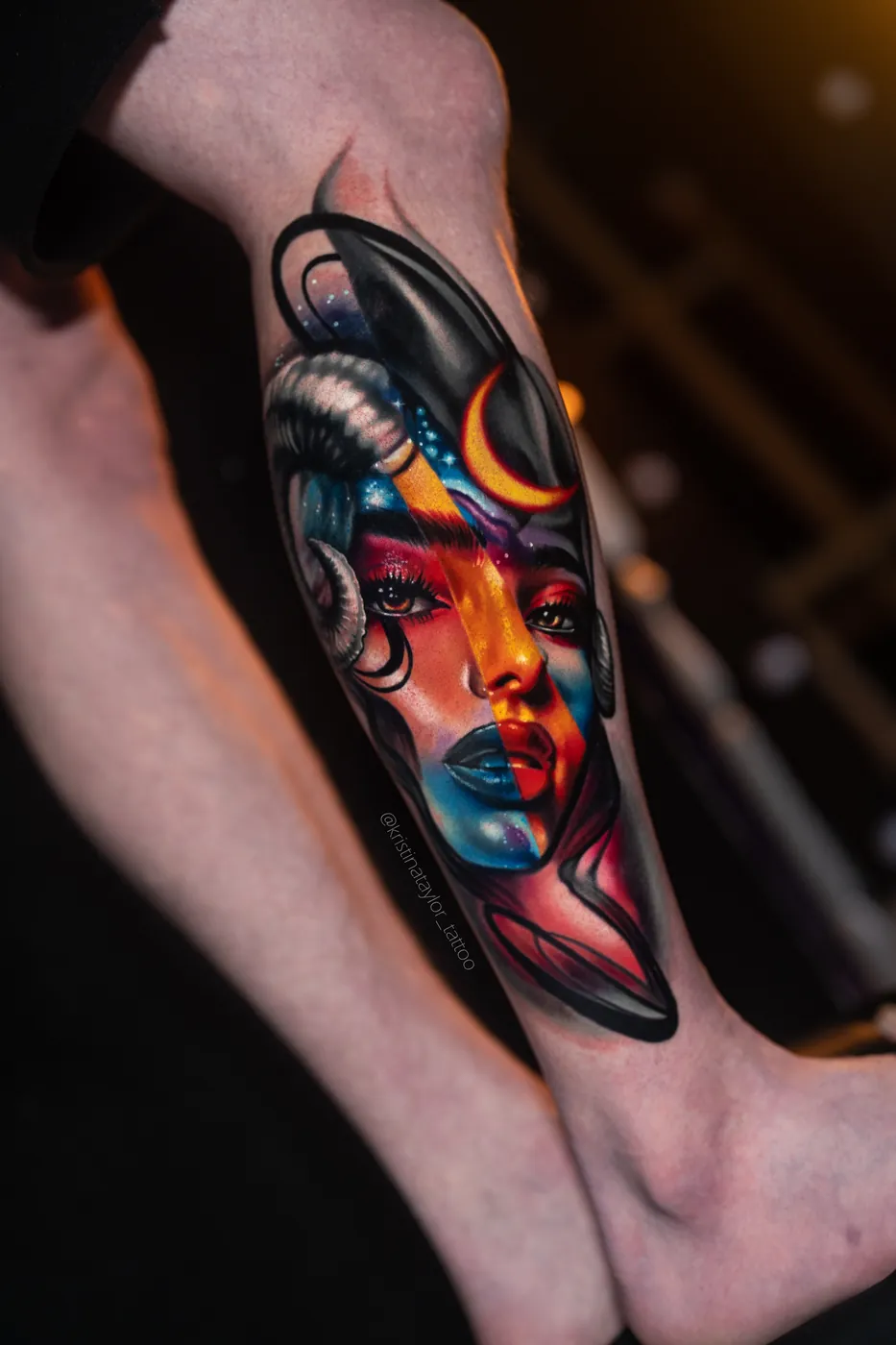
Kristina Taylor’s zodiac page includes this vivid ram portrait: curved horns, a painted face and moons around the head, closer to an illustrated character than to a line-drawing glyph. Colour work like this is a different promise from a tiny constellation. It needs saturation, a large enough face and an artist who already paints this way. If you are an Aries who wants something more than the ram symbol, this is the scale that kind of portrait usually asks for. Take the photo to a consult as a direction, not as a stencil to copy, and ask how many sessions the colour would take on your skin tone.
A pine, a moon and a star on one thin line
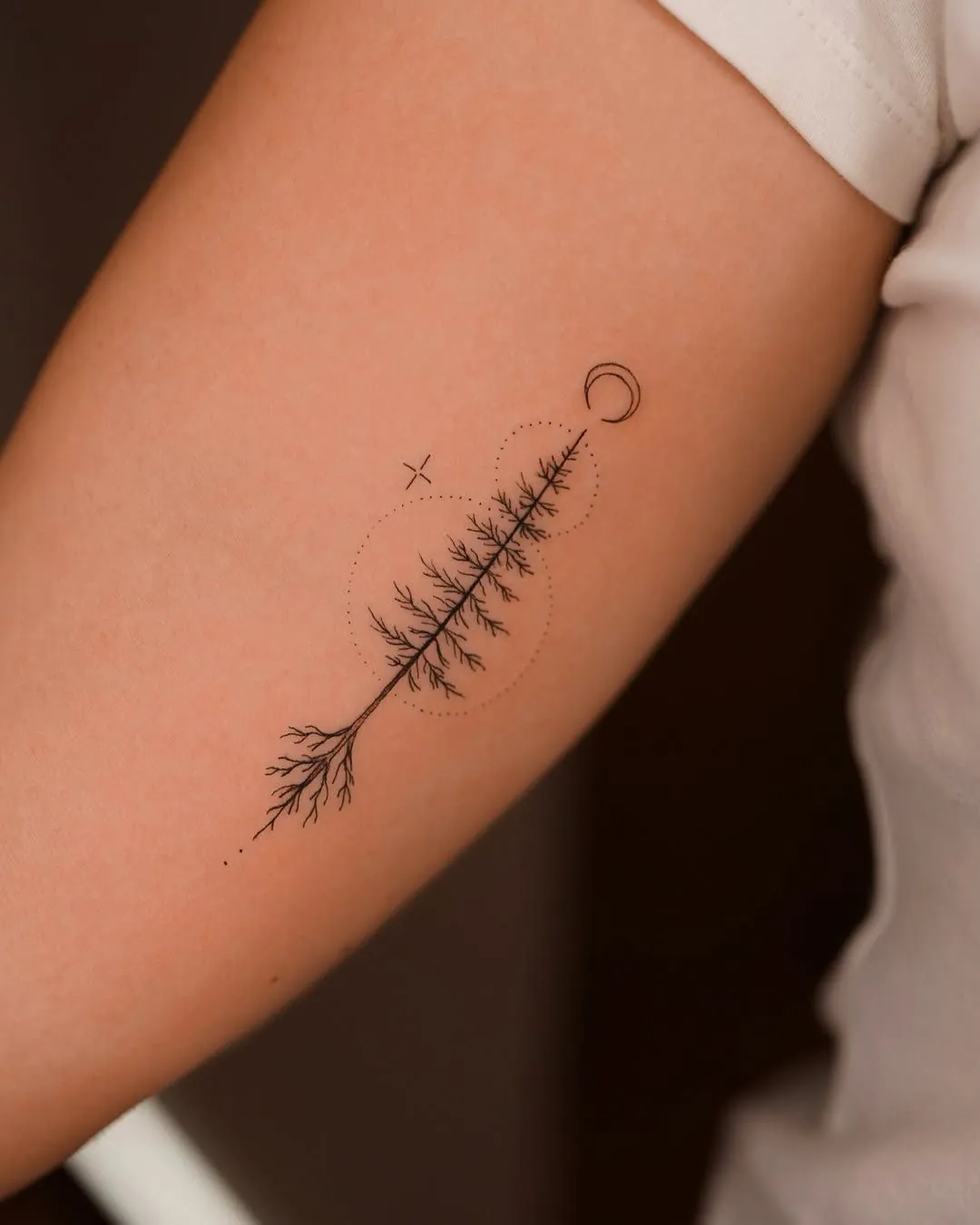
Sasha Tattooist’s celestial pine is almost a single gesture: a fine tree, a small moon above it and a star off to the side, set on the inner arm with a lot of empty skin. The restraint is the design. Fine-line trees lose their smallest branches first, so a simplified pine like this is kinder than a fully needled forest at the same size. If you want a nature mark with a celestial extra, ask your artist to pick one tree shape and one sky mark rather than adding a whole constellation around them. Inner-arm placements keep pieces like this easier to glance at and somewhat protected from sun.
A celestial phoenix running the spine
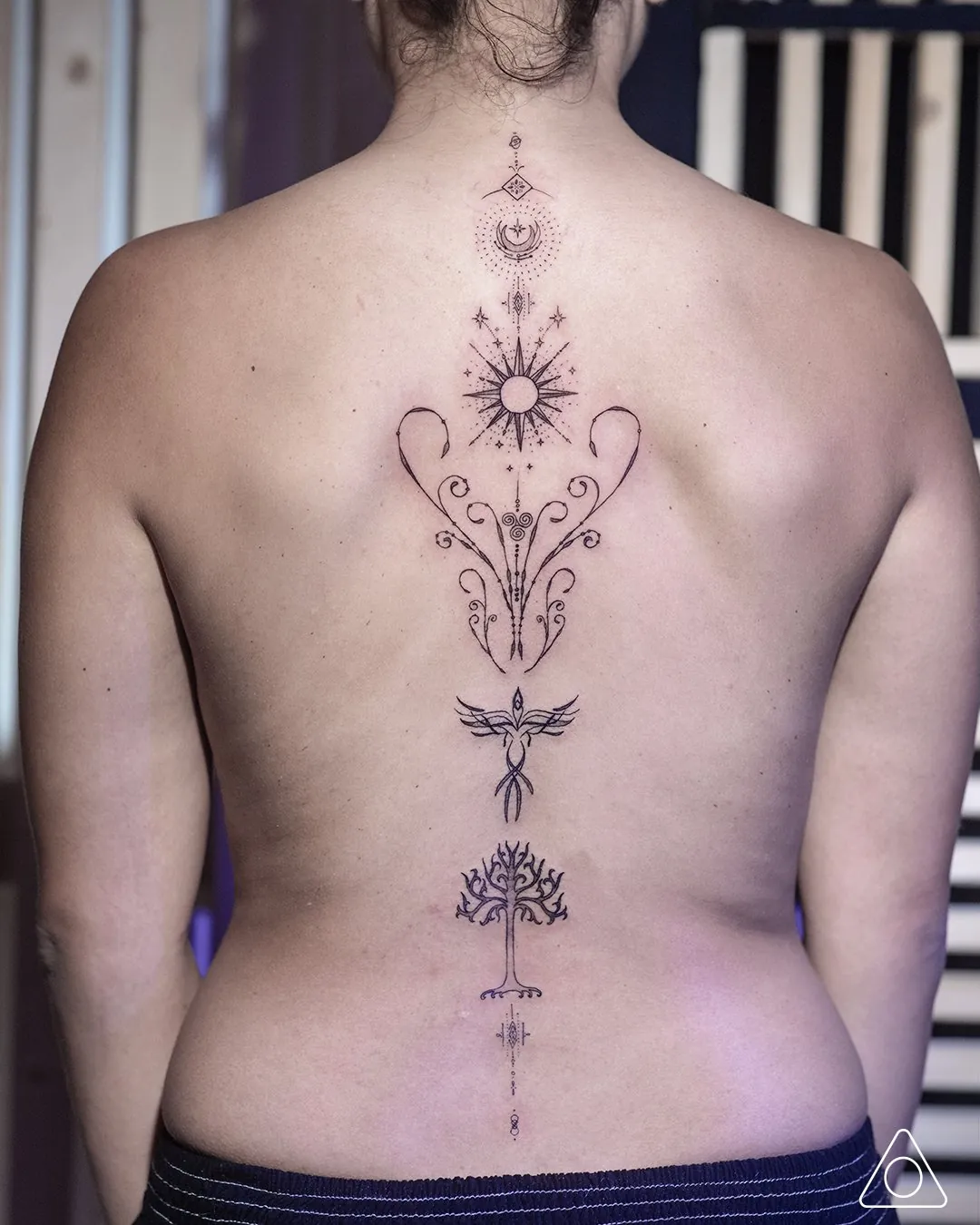
1MM Tattoo Studio’s celestial phoenix sits along the spine as a vertical stack of ornaments, a sun-like mark and a bird, photographed from behind so the full alignment is clear. Spine pieces ask more of placement than of any single symbol. The design has to follow the body’s centre without looking crooked when the person stands naturally. If you want a celestial back piece, ask how the artist will map the midline, how long the session will be and whether they would rather simplify some of the ornaments so the phoenix stays the focus. Fine-line spines also need honest aftercare because shirts and sleep both rub.
A forearm moon that stays a moon
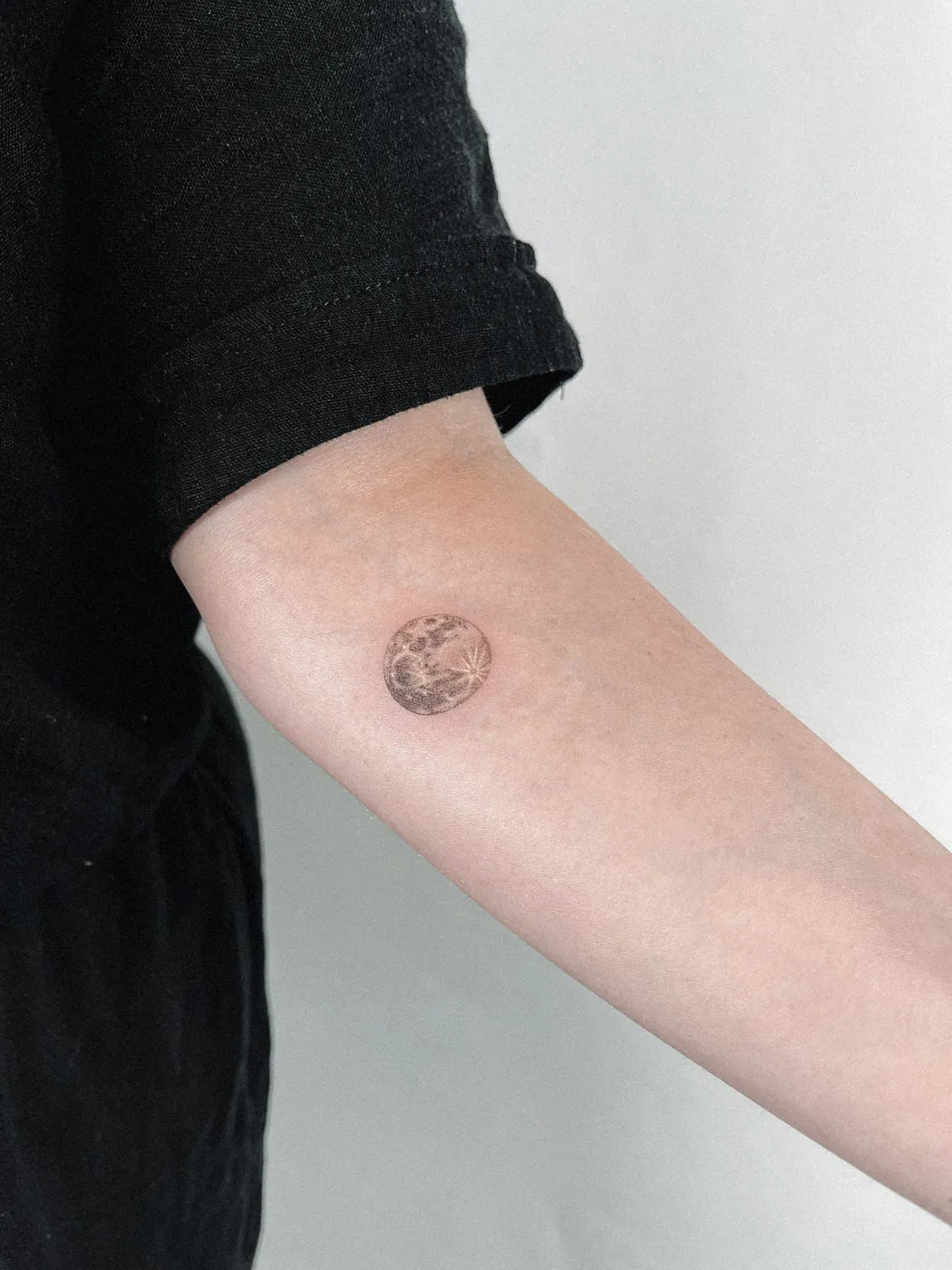
Sorcha Elspeth’s small forearm moon is the opposite of a spine piece: one circular mark, simple enough to remain itself, sitting quietly on the inner arm. Tiny celestial tattoos are easy to over-detail. Craters, faces and surrounding starfields are the first things to vanish at this size. A clean moon with a confident outline will still read as a moon after the heal. If you want something this discreet, ask your artist for their minimum size on a circle and whether they would add a single star or leave the moon alone. More than one extra mark at this scale is usually too many.
The dippers, drawn as a pair of bears
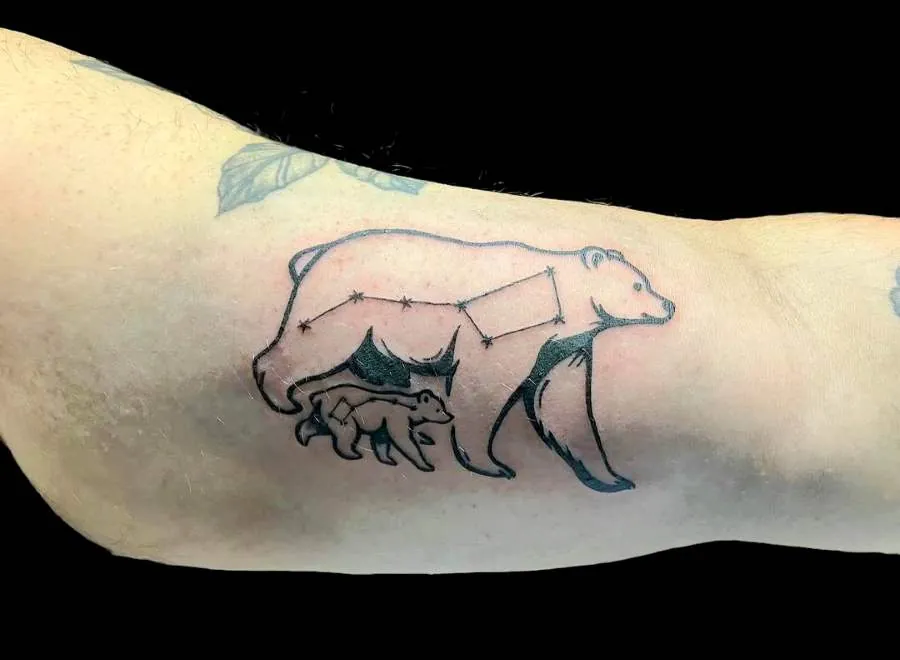
Jordi’s forearm tattoo turns the Big and Little Dipper into two bears walking together, with constellation lines connecting the stars of their bodies. It is a clever way to make a sky map feel warm without giving up the astronomy. Constellation tattoos often fail when they are only dots and hairlines. Giving the dots an animal silhouette gives the design a second way to read if some of the finer lines soften. If you want a constellation, decide whether you care more about exact star positions or about the story the shape tells, and tell the artist which one they should protect first.
A sun and moon sharing the upper arm
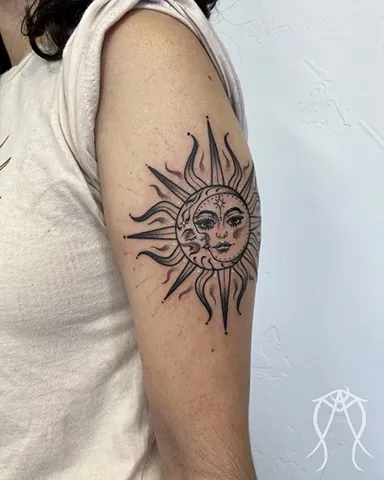
Amanda Marie’s sun-and-moon sits on the upper arm as a radiating sun with a face and a crescent, in bold black that will still read from a short distance. Sun-and-moon pairings are one of the most requested celestial designs, and they work best when the two shapes have a clear relationship: overlapping, stacked or facing. A sun with a face needs enough size for the features to remain features. If you want this motif, ask whether the artist leans decorative or traditional, and look at healed faces in their celestial work. A tiny sun face is usually the first thing to blur.
Stacked moons and geometry on the forearm
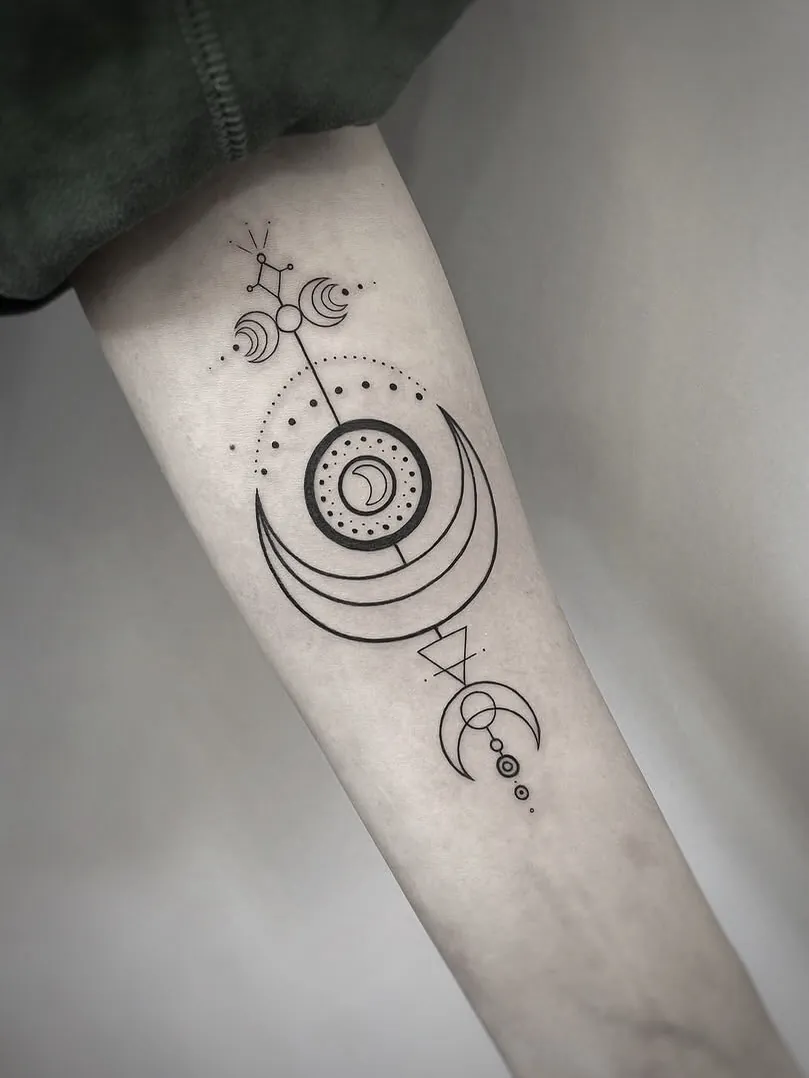
Sirimontra’s forearm piece stacks crescents, circles, dots and a vertical line of smaller moons into one geometric column. It is celestial without being a named sign, which is useful if you want sky imagery and do not want to wear a glyph. Geometric fine line depends on even spacing. If the gaps close up, the design becomes a textured stick. Ask your artist how they will keep the concentric circles round on a living, slightly curved arm, and whether some of the tiniest dots should be left out so the larger moons stay crisp. Healed geometric work is worth insisting on before you book.
The Sun card, drawn as a tattoo rather than a print
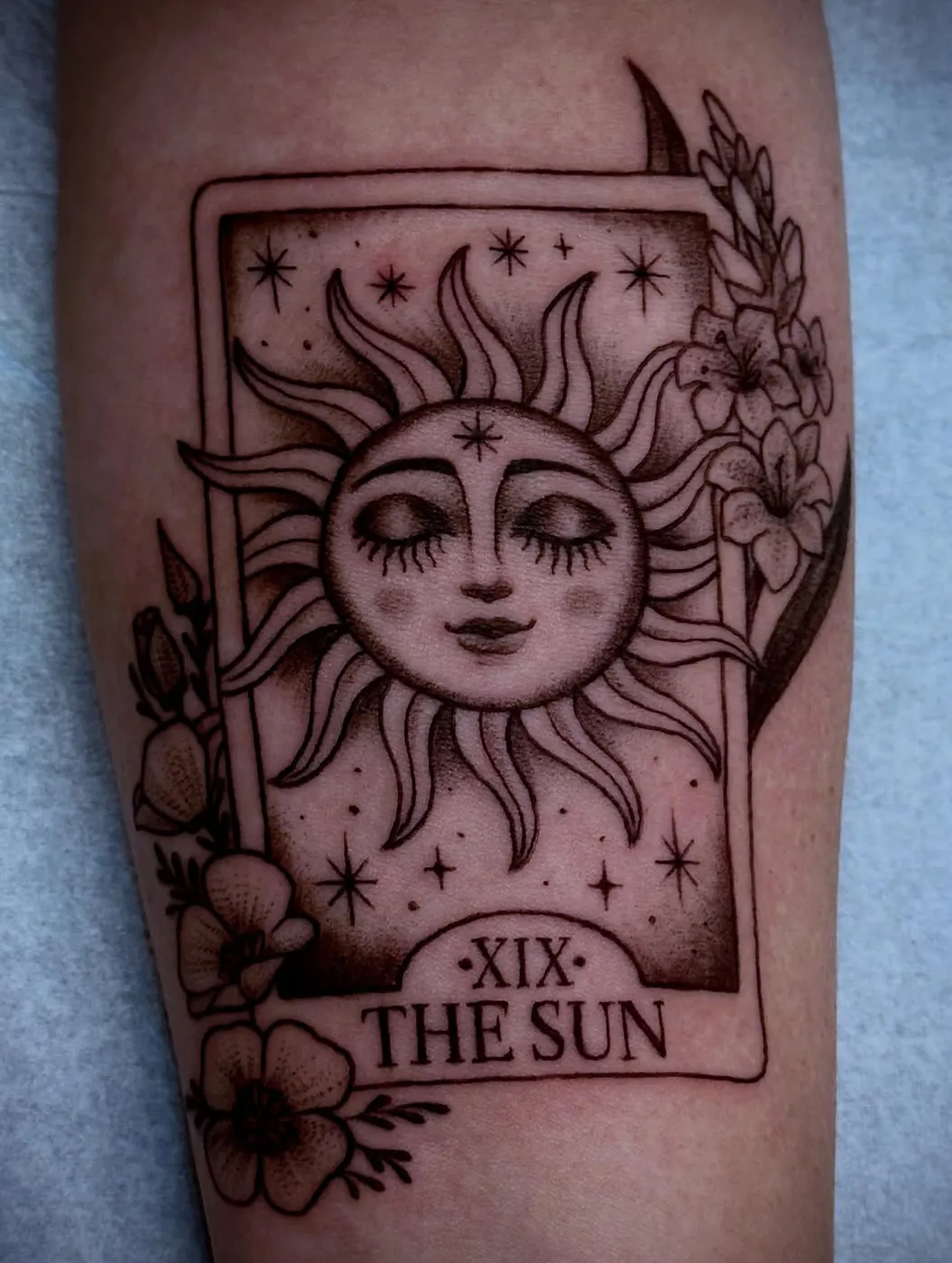
Melissa Taylor’s piece frames a sleeping sun face inside a card labelled “XIX THE SUN,” with stars in the background and flowers along the edge. Tarot tattoos have to decide whether they are a picture of a card or a looser illustration of the card’s idea. This one keeps the card format, which means the lettering at the bottom has to stay readable. If you want a major-arcana tattoo, bring the deck you actually use so the artist can see the version you mean, and ask them to keep the title large enough that “THE SUN” does not become a textured bar. Flowers around the frame should support the card, not compete with the face.
Wherever you land, treat glyphs and constellations like lettering: they only work if they still read after they heal. The Zodiac Symbol Finder is a practical place to compare signs before you take anything into a studio.
