

We may earn from ads and some links. How we work.
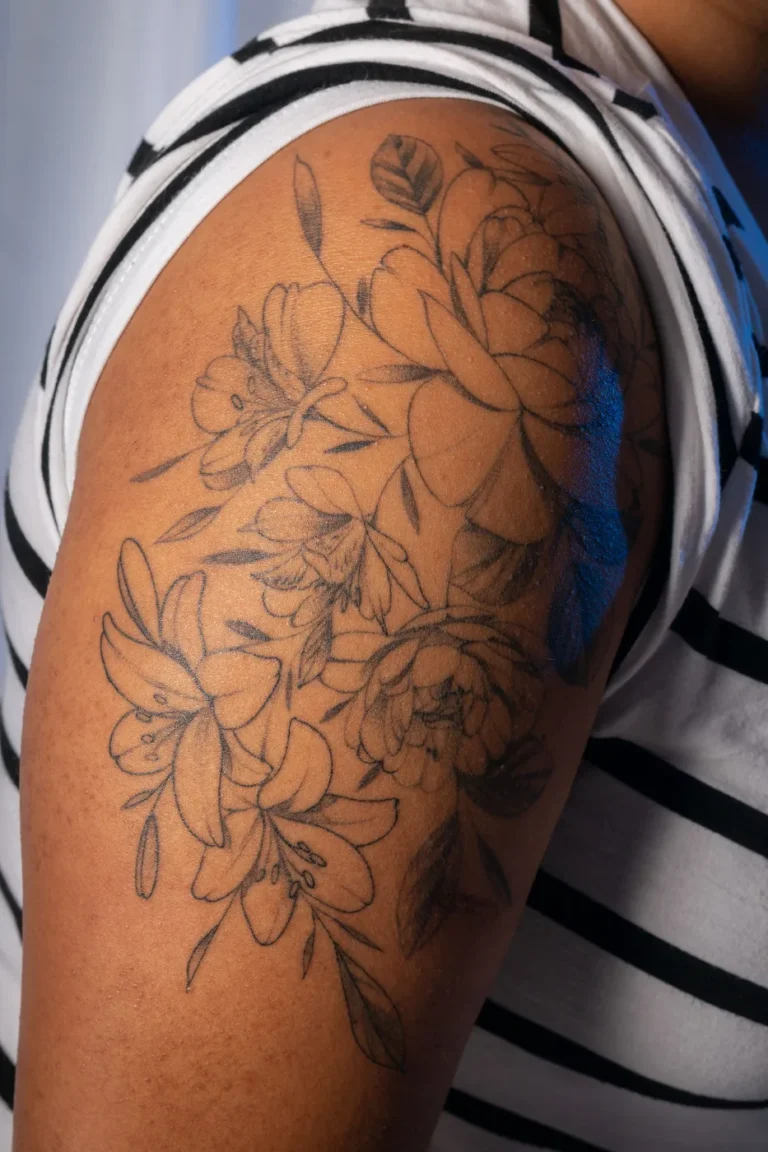
Botanical tattoos fail in predictable ways. Petals get packed too tightly, stems are drawn thinner than a healed line can hold, and a flower that looked airy on a phone screen heals into a grey cloud. The eight pieces below come from artists who publish floral and wildflower work as a specialty, not as an afterthought.
I am looking at how each plant sits on the body: the space between leaves, the weight of the outline and whether you can still name the flower from a few feet away. More nature designs live in the Animals & Nature hub. If you are choosing a first floral, the notes in How Fine-Line Tattoos Heal, Fade and Age apply to almost every stem in this feature.
A daffodil and a tulip, one on each calf
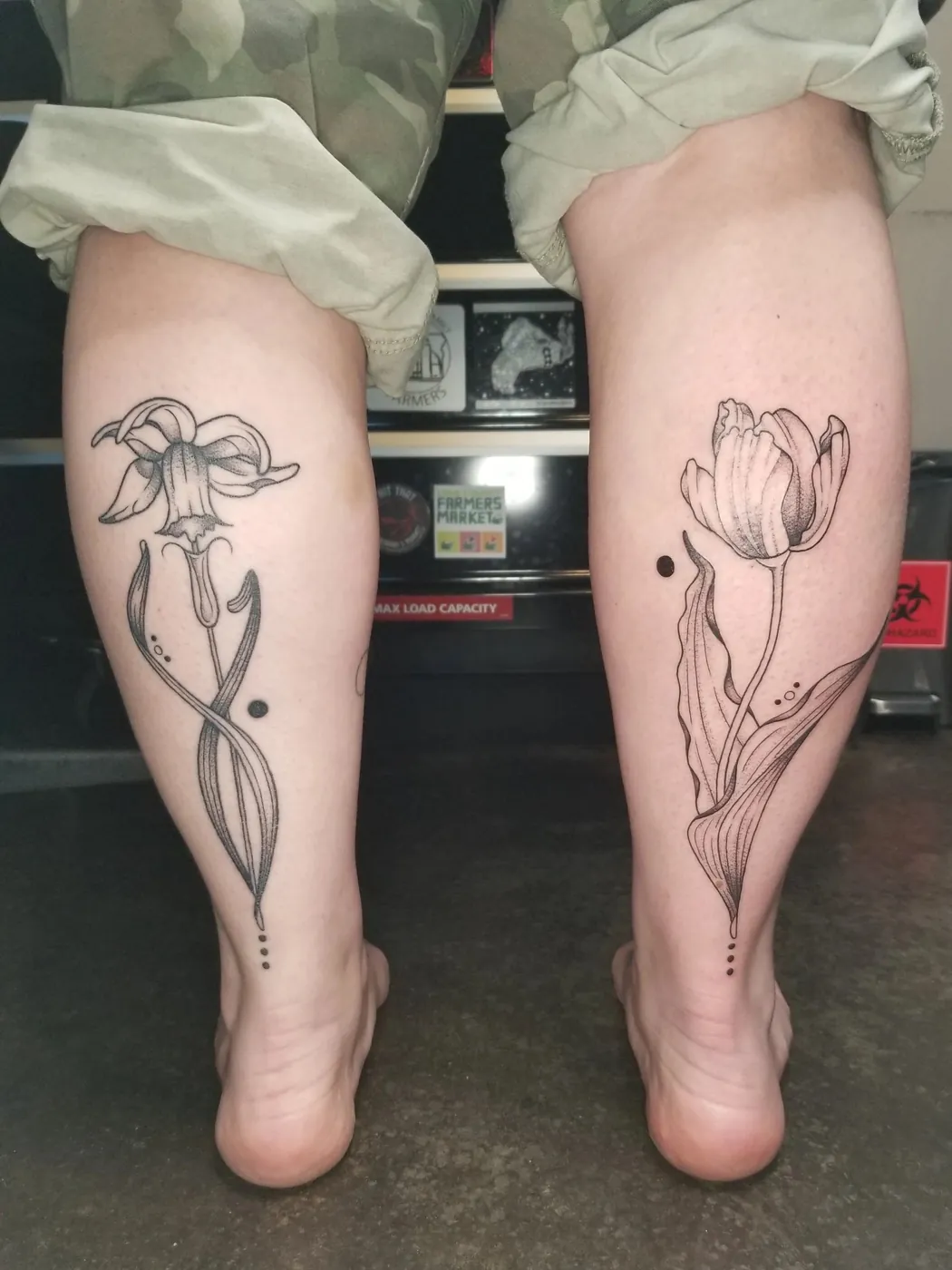
Sonya Renee photographed a pair of calf flowers: a taller, more intricate bloom on one leg and a single tulip on the other, both with long stems and plenty of skin around them. That breathing room is why they still read as two different plants. Matching botanicals across both calves can look considered if each flower keeps its own silhouette. If you want a pair, decide whether they should be twins or siblings, and ask your artist to scale the stems to your actual calf length so the blossoms land where you want to see them. Birth flowers and favorite flowers both work here, as long as you are not asking for six species on one shin.
A blossom branch that follows the shoulder
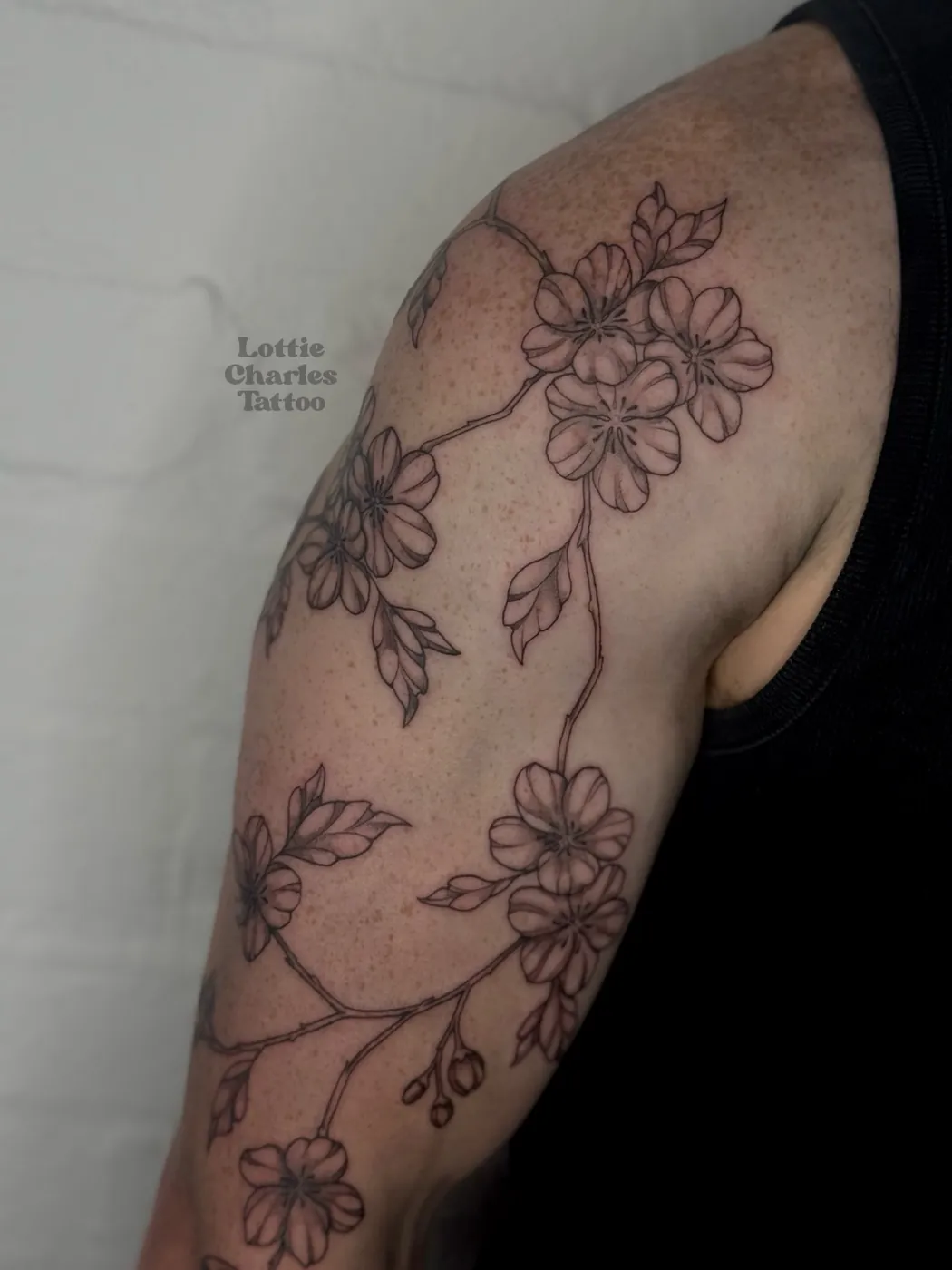
Lottie Charles’s blossom branch walks down the upper arm in loose clusters, with open space between flowers and a visible studio watermark that I have left in the photograph. The branch does not try to cover every inch of skin, which is what keeps it botanical instead of busy. Shoulder and outer-arm curves are kind to this kind of design because the branch can follow the limb instead of fighting it. If you want blossoms, bring a photo of the species you care about and ask how many flowers the artist would place at your size. Too many buds along one stem is how fine-line branches turn into a textured vine.
An olive branch, kept to one clear idea
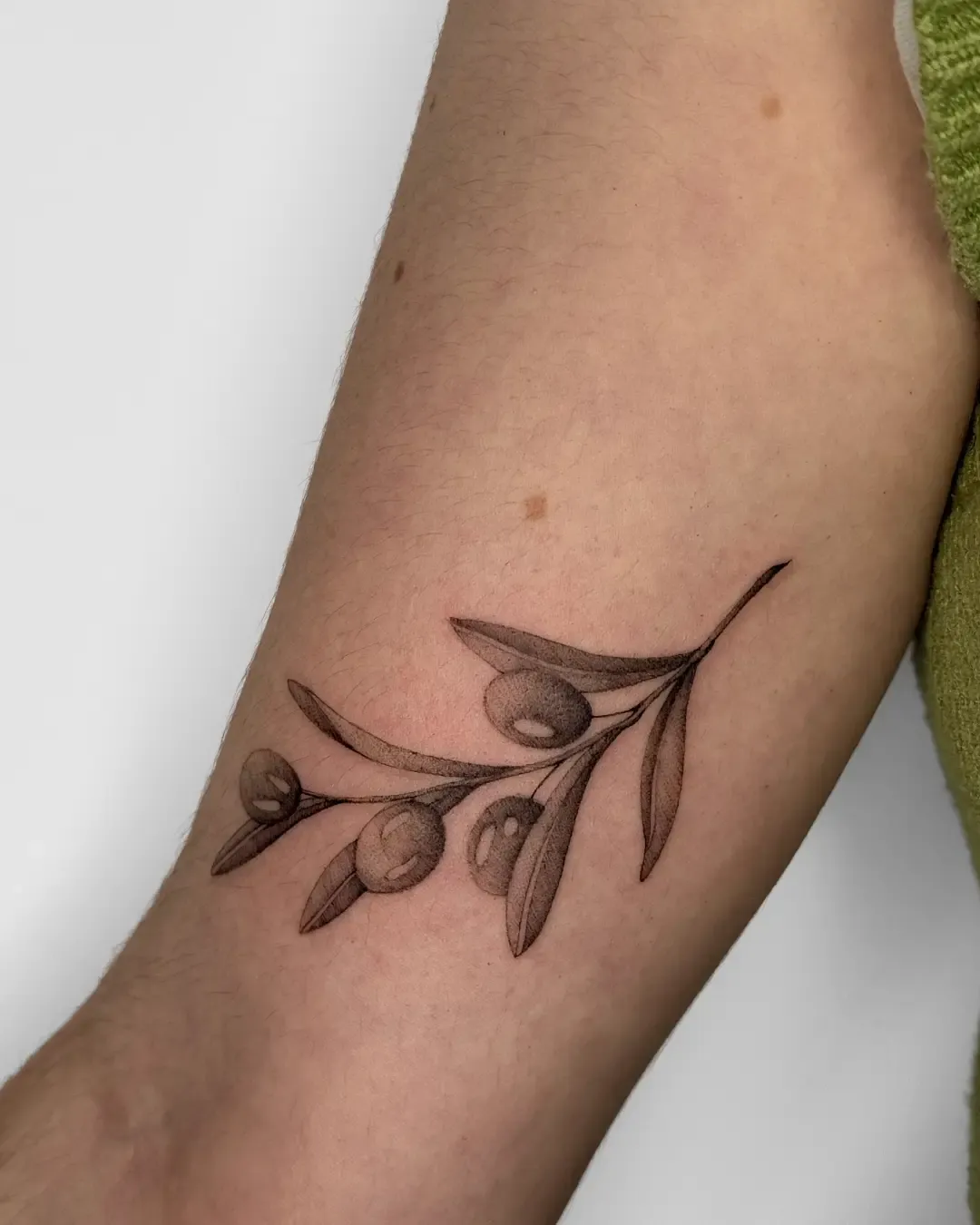
Jessica Alice’s olive branch is a small, complete sentence: a few leaves, a couple of olives, one stem, no extra scenery. On the inner arm it sits at a size where each leaf still has a midrib and a shape. Olive branches are popular as peace marks and as family symbols, and they only work when the leaves do not merge. If this is the tattoo you want, resist the urge to add lettering inside the same tiny footprint. Give the branch its own space, then place any words beside it at a readable height. A consult question I like here: “How small can the olives go before they become dots?”
Wild grass running the length of a shin
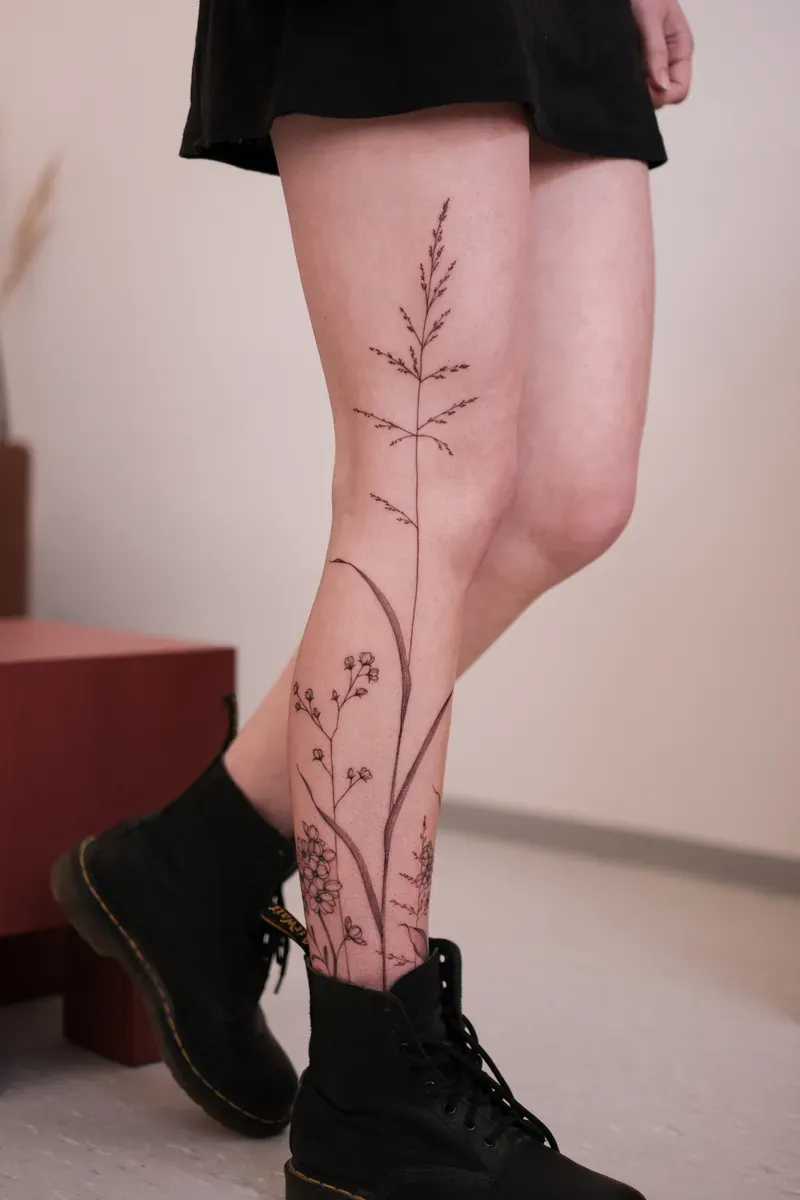
Bets tattooed a tall stem of grass and tiny wildflowers from below the knee to the ankle, following the shin the way an actual plant would grow. It is one of the clearest arguments for letting botanicals be vertical. The design uses a lot of negative space, which is why the seed heads still look like grass instead of a scribble. Shins are bony and the heal can be fussy where boots rub, so aftercare matters. If you want a meadow-like piece, ask your artist to pick one or two plant shapes and stretch them along the limb rather than scattering twenty species. The photograph is a good scale reference to take into a consult.
A bold peony that does not apologize for colour
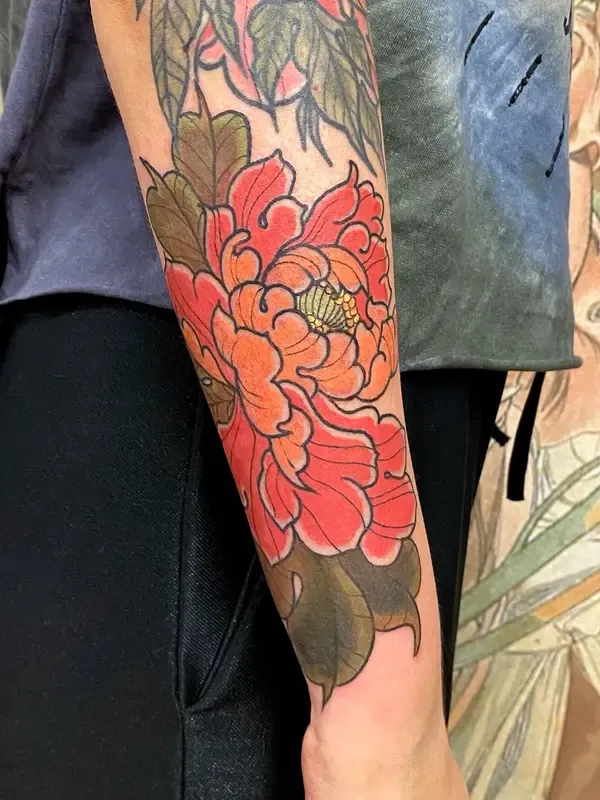
Not every botanical has to be fine-line black. Aline Torchia’s forearm peony (or a closely related full bloom) is packed with saturated red and structured petals, closer to a painted flower than a whisper. Colour botanicals age differently from hairline ones: they need solid saturation and a strong outline if you want the bloom to stay a bloom. If you are choosing between a delicate black stem and a colour flower, look at healed examples of both on similar skin. Ask how many sessions the colour will take and whether the artist would rather go slightly larger than cram petal detail into a too-small oval.
A handful of colour flowers on the hip and thigh
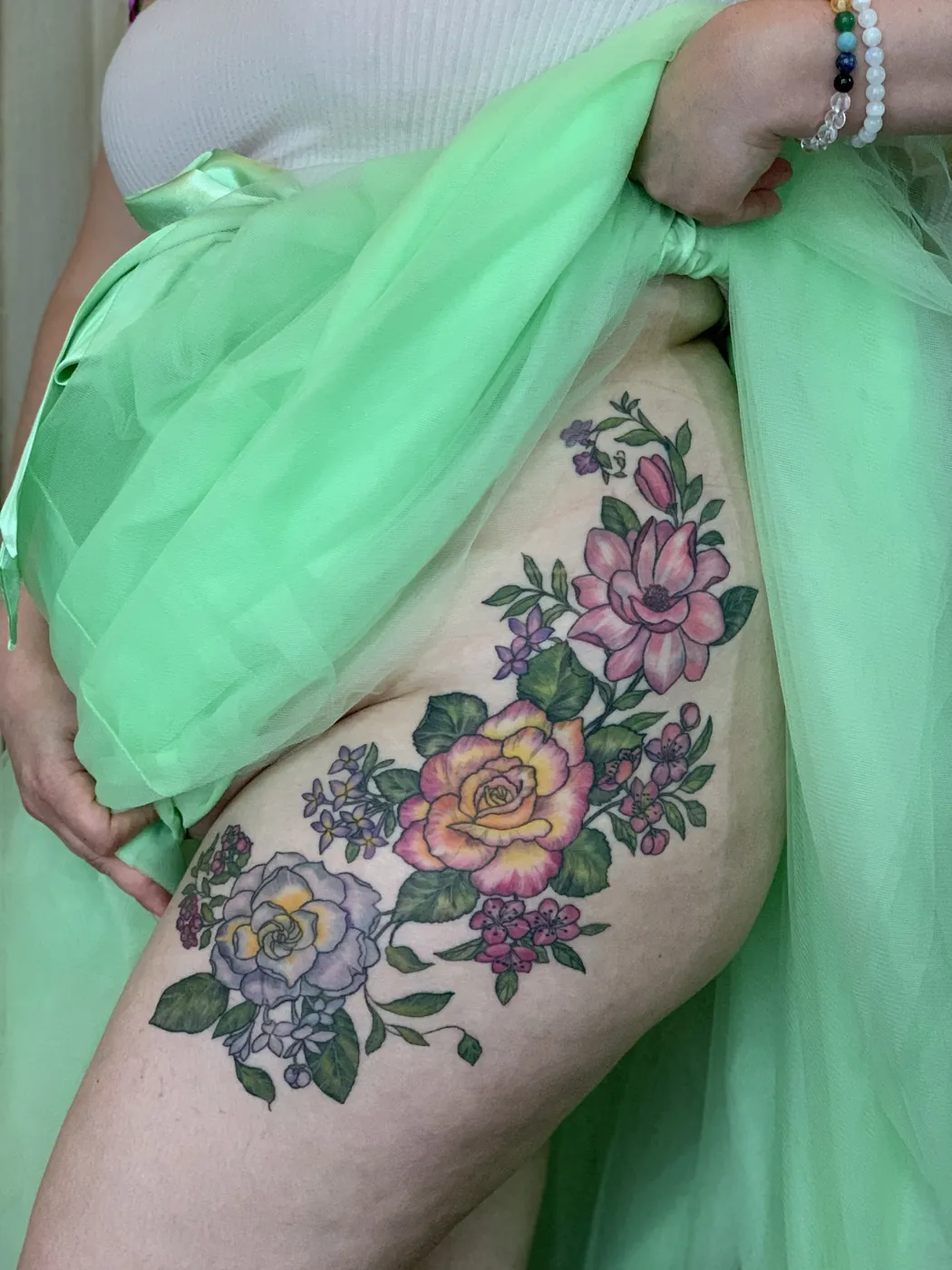
Dorothy Lyczek’s hip and thigh cluster mixes several colour flowers so they feel like a small bouquet rather than a single specimen. Placement like this is personal and usually easy to cover, which is why people often start floral work here. The useful lesson in the photograph is grouping: the blooms overlap enough to feel related, with distinct colours so they do not heal into one brownish mass. If you want a bouquet, pick a limited palette and let your artist arrange the flowers to the curve of your hip instead of copying a flat bouquet photograph petal for petal.
Fine-line peonies wrapping the upper arm
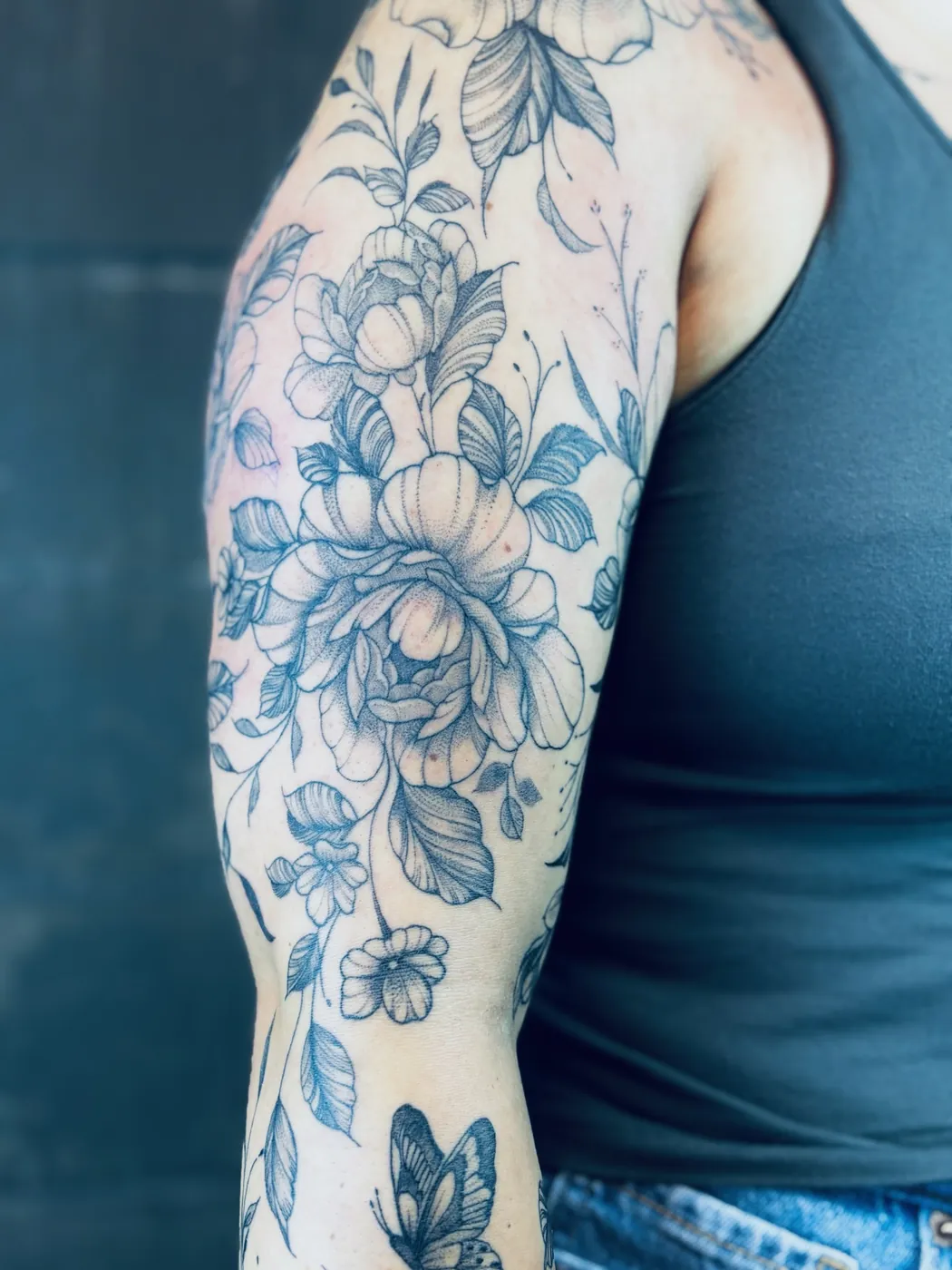
Sarah Mezzera’s upper-arm floral is the fine-line version of a peony cluster: layered petals, leaves and smaller blooms wrapping the shoulder and arm in black. Pieces this dense only stay readable when the artist leaves channels of skin inside the flower. If you want a peony sleeve or half-sleeve in fine line, ask how they plan to keep the inner petals from collapsing as the tattoo settles. This is also a good moment to look at healed work, because fresh peony linework always looks sharper than the same flower a year later. Sarah’s project page is the right place to see how she builds these compositions.
A vine of leaves, and nothing extra
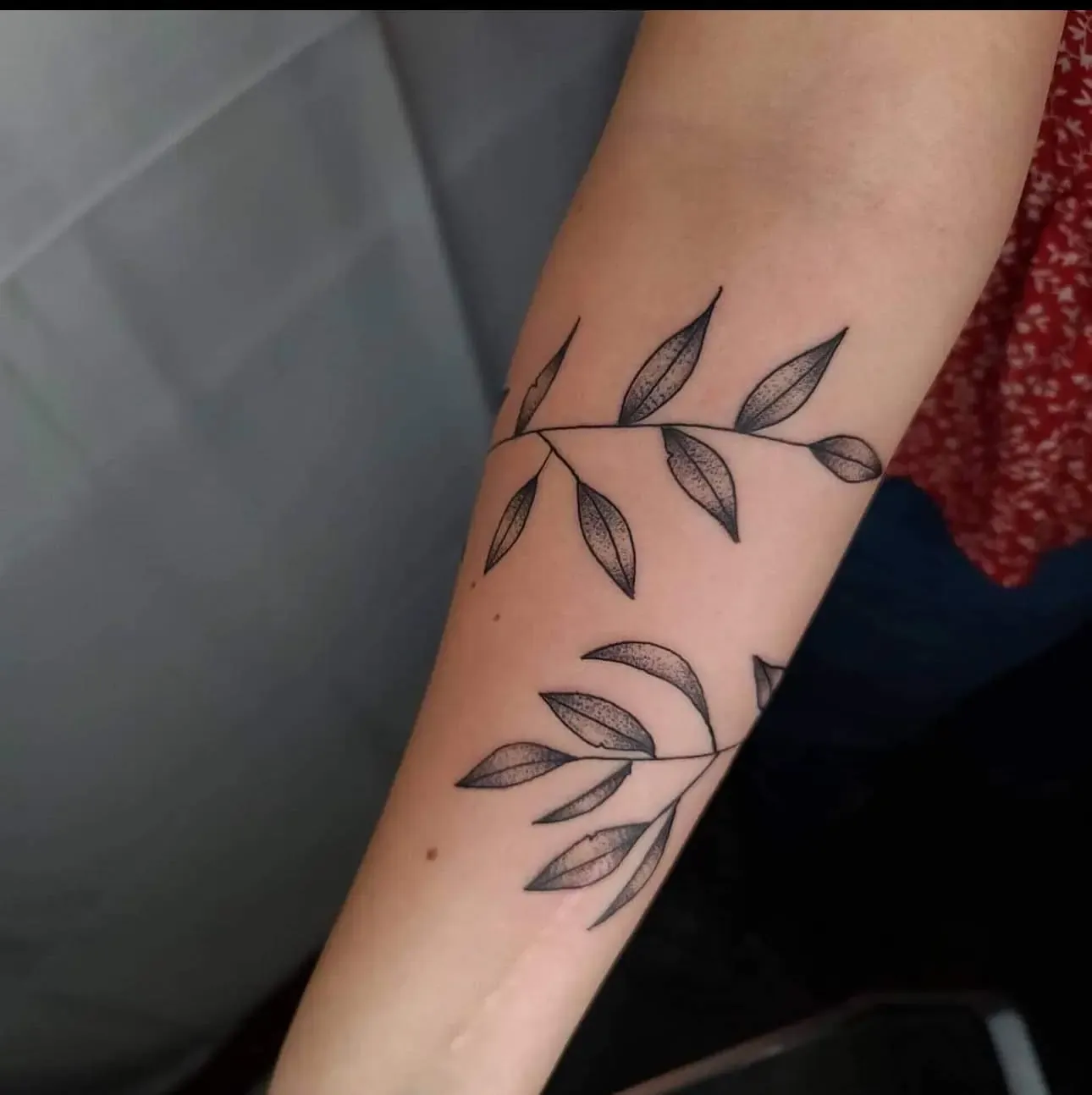
Carlos Barrera’s forearm vine is two leafy stems and a lot of restraint. Each leaf has a simple oval shape and a bit of inner marking, with space between them so the branch can still look like a branch after it heals. This is the design I would show someone who wants “something botanical and fine-line” but does not need a particular flower yet. It is also a useful scale check. If you try to add berries, script and three extra species to the same stretch of arm, you will lose the thing that makes the tattoo work. Carlos writes on his floral page about leaving room for petals and leaves to breathe as skin ages, and this photograph matches that advice.
If a flower is tied to someone you love rather than to a species you simply like, the planning notes in how to plan a tribute are worth reading before you book the first stem.
