

I adore fine line tattoos for their subtle beauty and how they highlight delicate details.
My favorite animal designs always bring a smile because they feel personal and artistic.
These elegant options create a clean modern look that works on any part of the body.
I selected 18 inspiring examples that show simple lines can feel truly special.
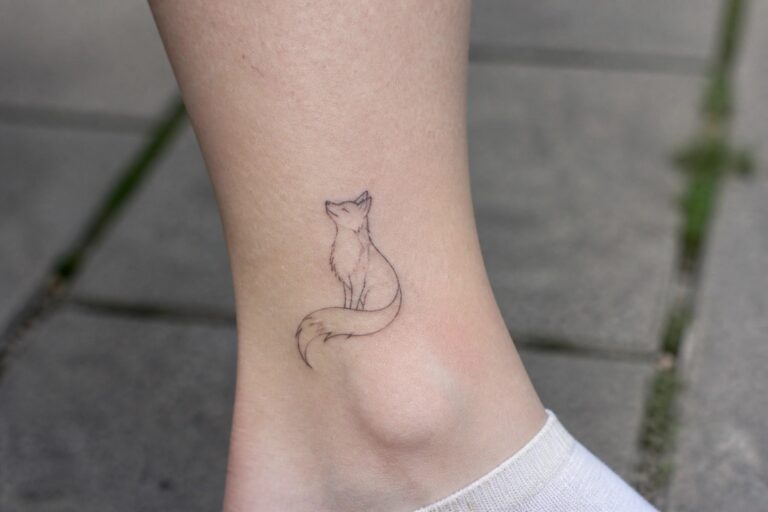
Small fox on the ankle
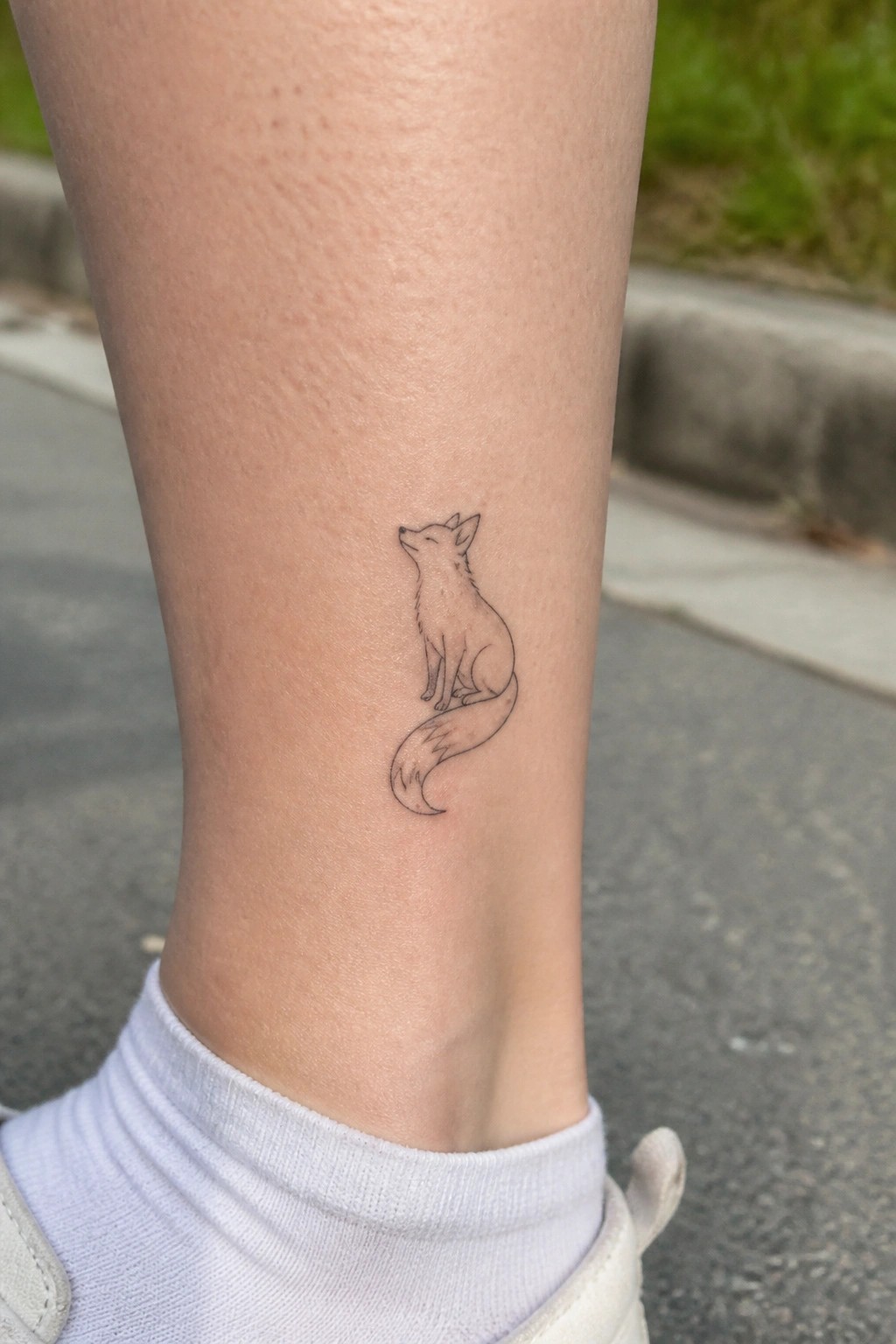
The ankle works well for a compact animal like this. The small sitting fox fits the space without crowding it and the fine lines keep the look light.
I think the scale helps the design stay clear instead of fading into the skin over time. It also leaves room for the fox to read as a simple shape from a short distance.
Small bird tattoo behind the ear
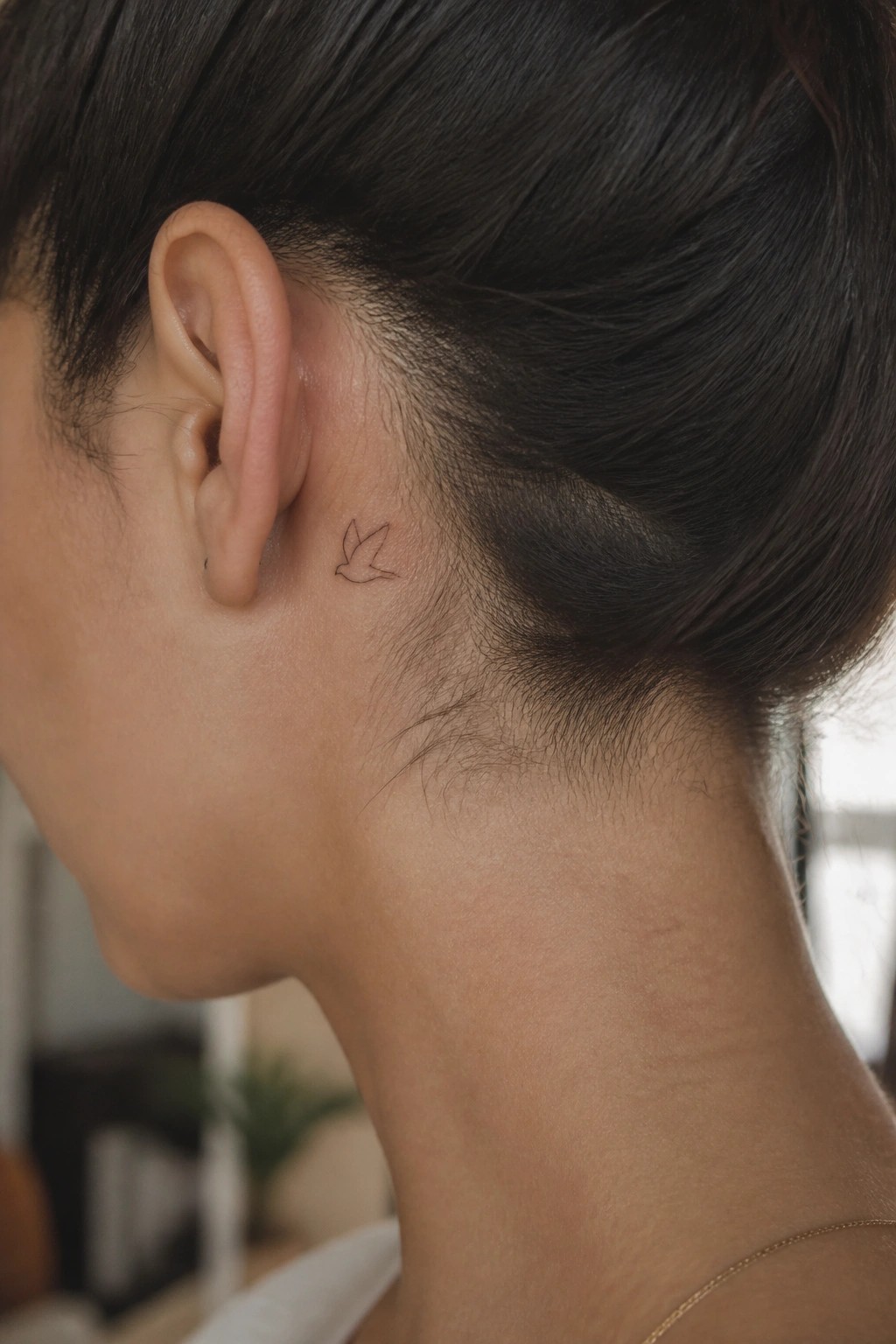
The bird sits right behind the ear where it stays mostly out of sight. Fine lines keep the shape light and the whole piece stays small enough to fit the space without any crowding. The outline follows the natural curve of the neck area.
I like how the placement lets the tattoo stay private most of the time yet still shows when hair is pulled back. The simple style works because nothing extra is needed at this size.
Deer head on the inner forearm
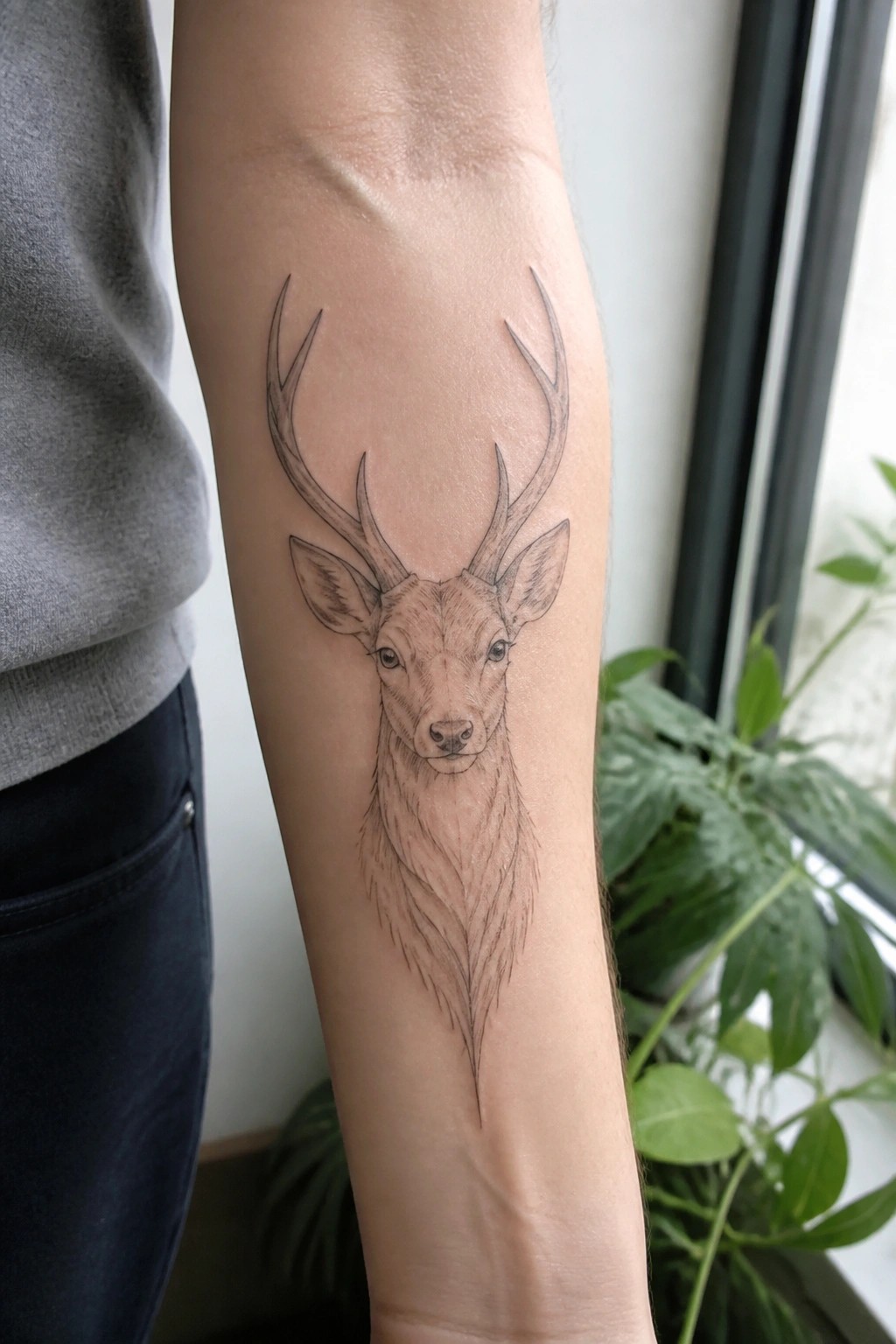
The tattoo runs vertically along the inner forearm. A deer head faces forward with antlers reaching toward the elbow. Fine lines define the ears, eyes, and neck fur without heavy shading.
I like how the placement lets the antlers sit naturally along the arm length. The clean style keeps the whole piece readable from a distance.
A fine line bee on the wrist
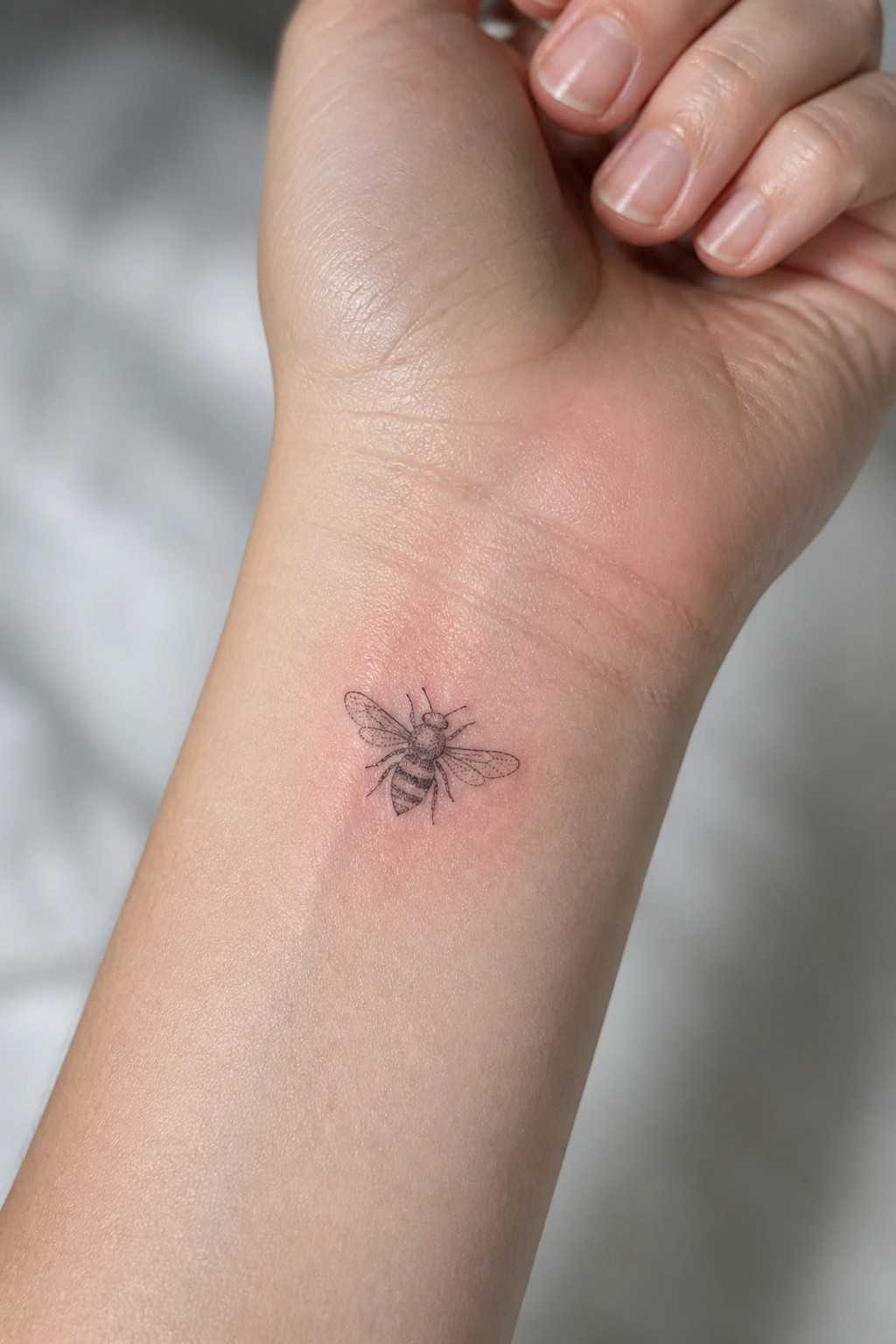
The inner wrist keeps this bee visible during normal hand movements while still allowing it to stay covered most of the time. The small size prevents the wings and stripes from competing with the natural lines of the skin. Fine line work holds up here because the area does not stretch much.
This placement also makes the tattoo easy to check during healing. I think it works best for people who want a single small animal rather than a larger cluster.
Koi fish on the ankle
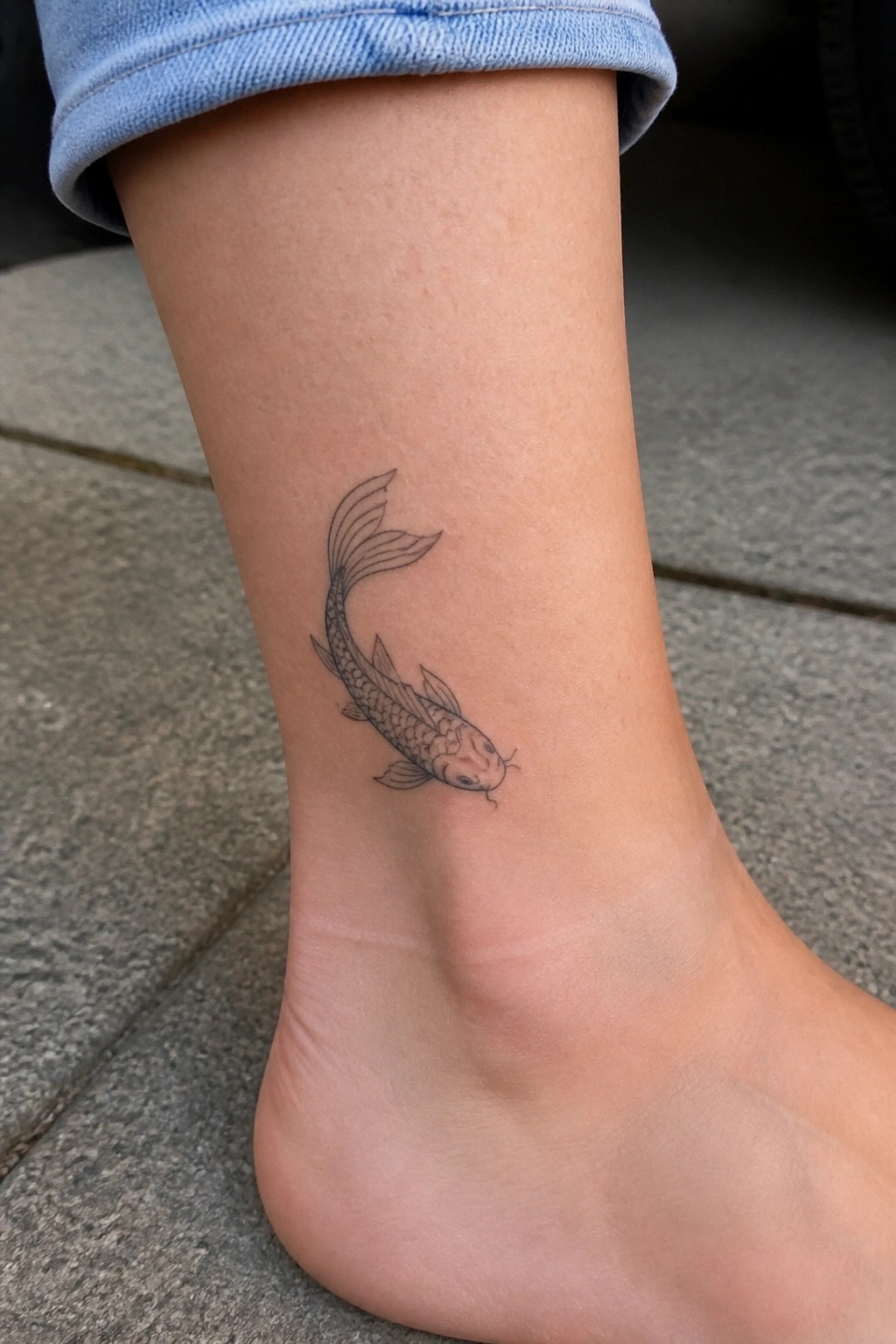
The koi sits on the outer ankle with its body curved to match the shape of the area. Fine lines keep the scales and fins clear while the overall size stays compact. The head faces forward and the tail rises slightly along the leg.
This placement lets the fish follow the ankle without extra filler. The scale works because the design stays readable even in a narrow spot.
Cat tattoo on the back of the hand
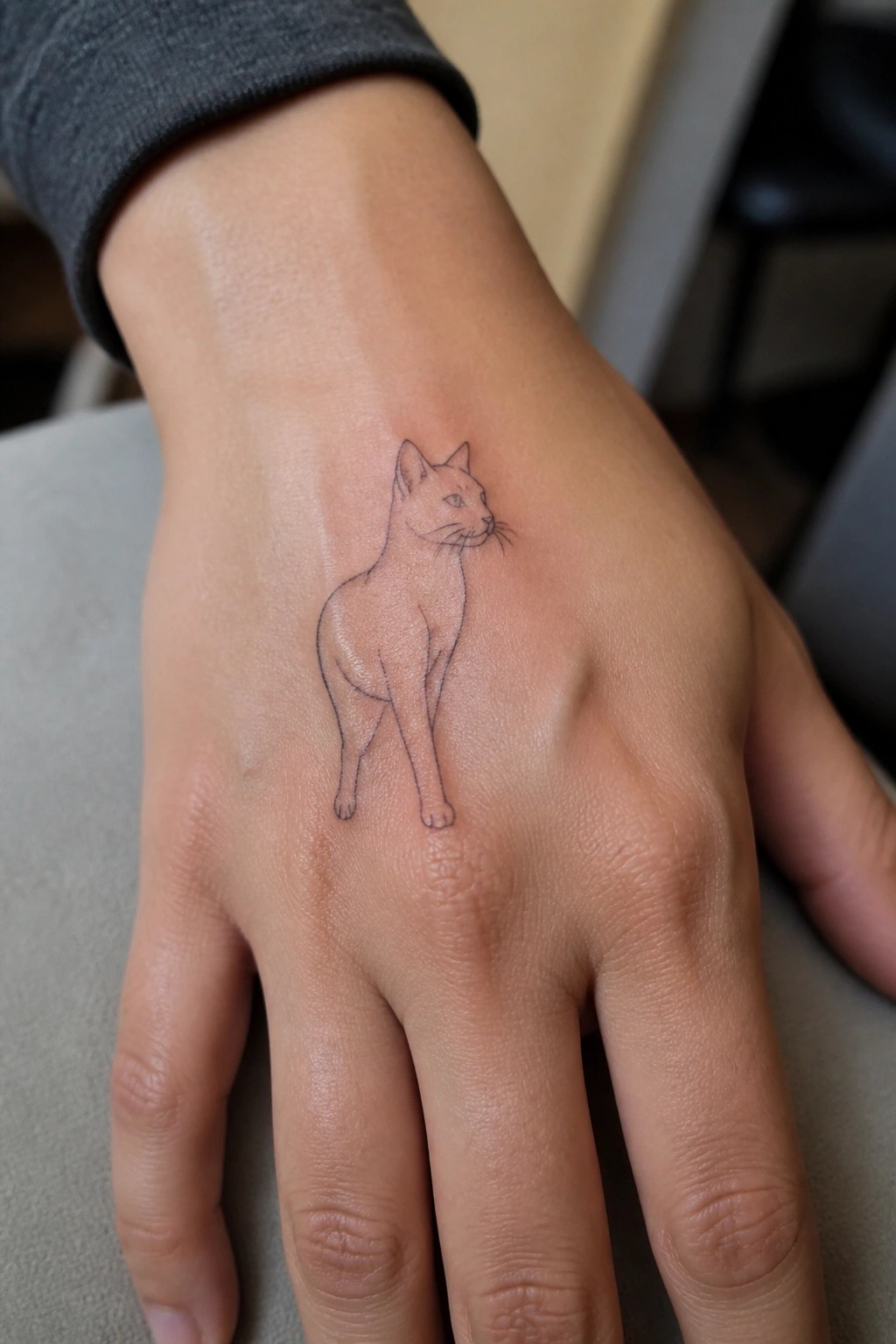
The cat sits on the back of the hand in a fine line outline. It faces right with a simple standing pose. The lines stay thin and minimal across the whole design.
This placement lets the tattoo show during everyday movements. I think it suits the small scale well because nothing gets crowded on the skin.
Whale tattoo on the ribs
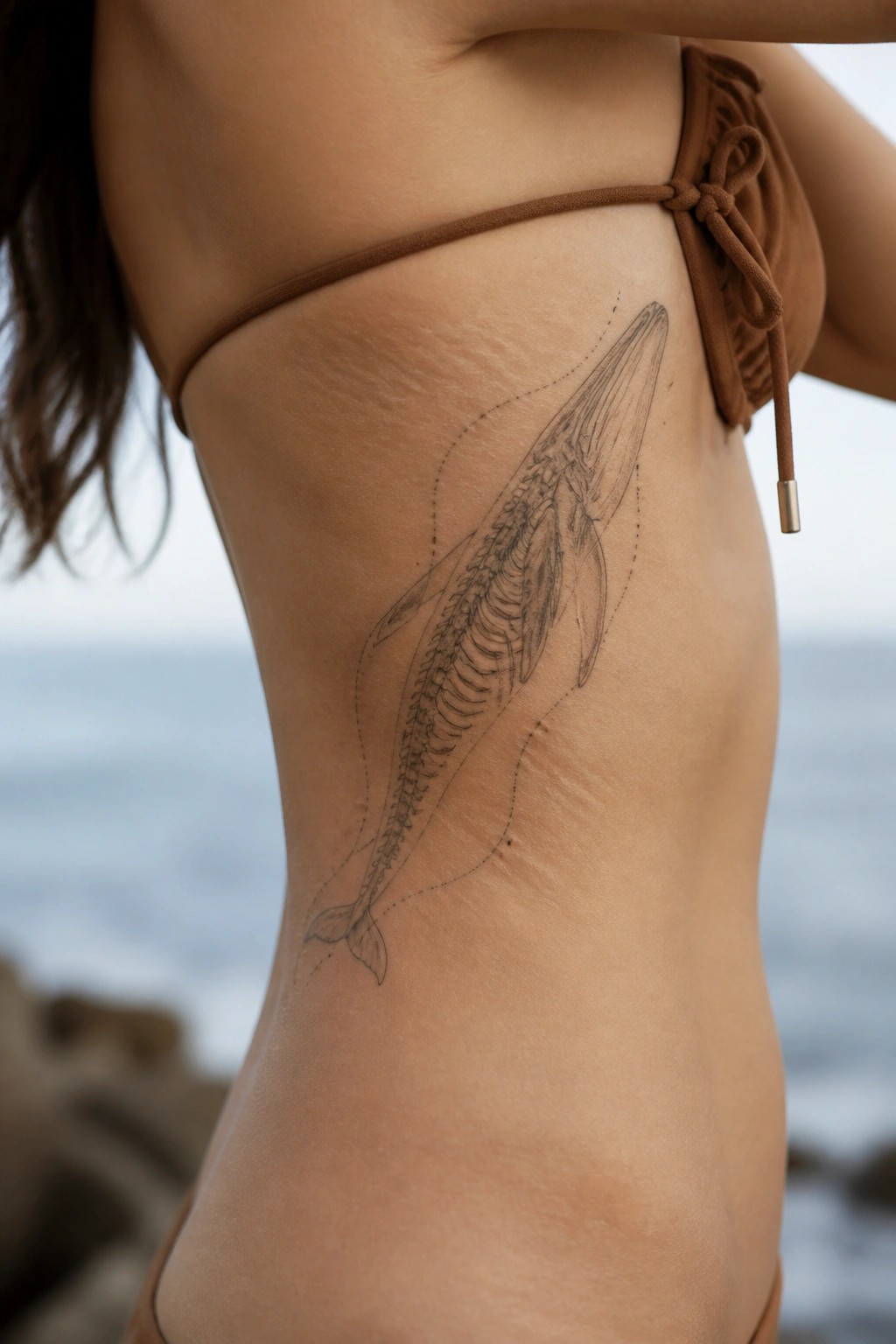
The tattoo sits on the side of the torso just below the arm. It shows a whale in fine line style stretched vertically along the natural curve of the body. The elongated shape fits the area without needing extra elements to fill space.
I think the placement keeps the design balanced even when the skin shifts. The lines stay clear at this size and the whole piece feels like it belongs there rather than fighting the spot.
Bee and flowers on the ankle
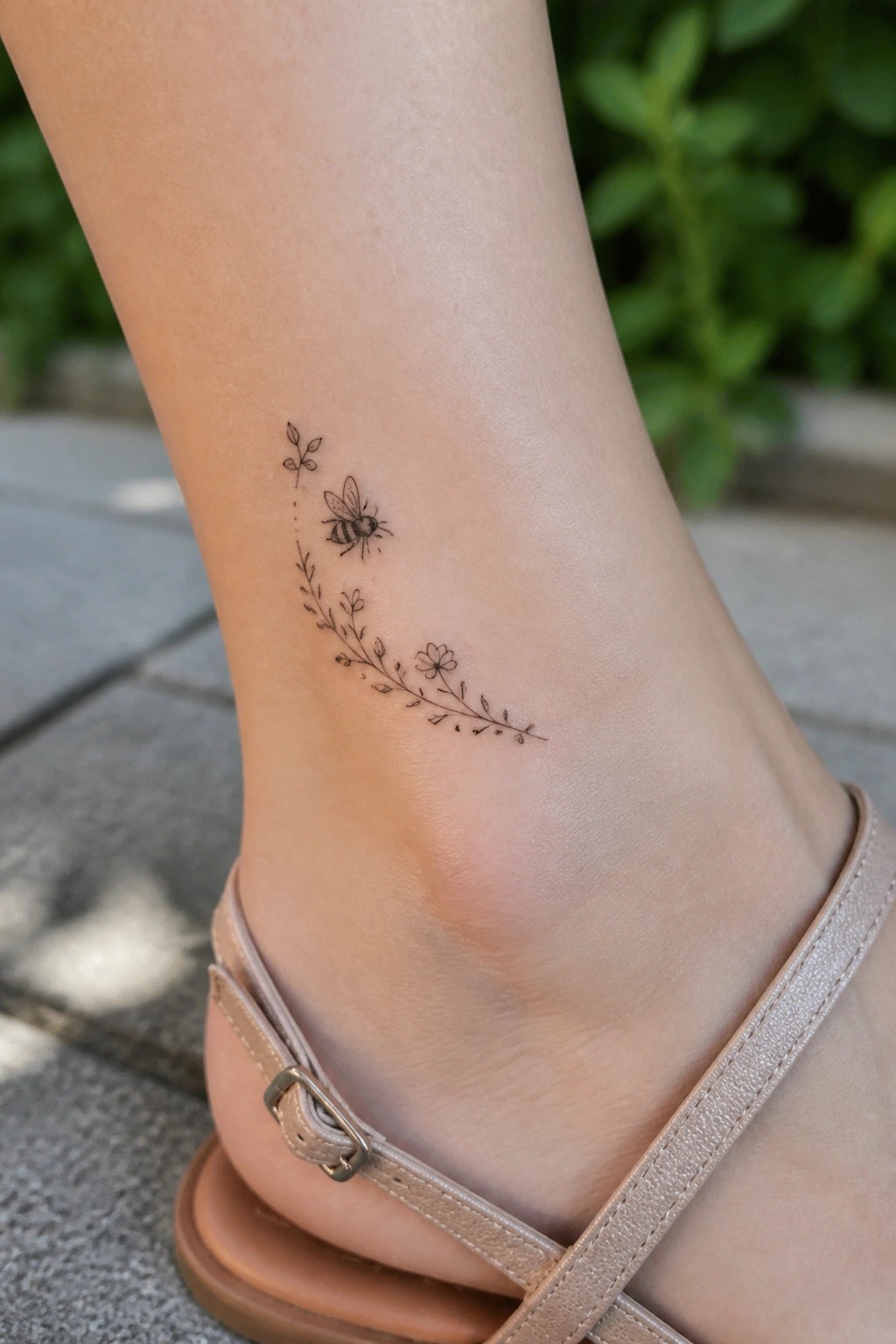
The design curves along the outer ankle. A small bee sits among a thin stem that holds a few leaves and one tiny flower. Fine lines keep the elements simple and spaced out.
This spot lets the vine follow the ankle’s natural shape without forcing a straight line. The size stays compact so the tattoo reads clearly even on a smaller area of skin.
Deer head tattoo at the nape of the neck
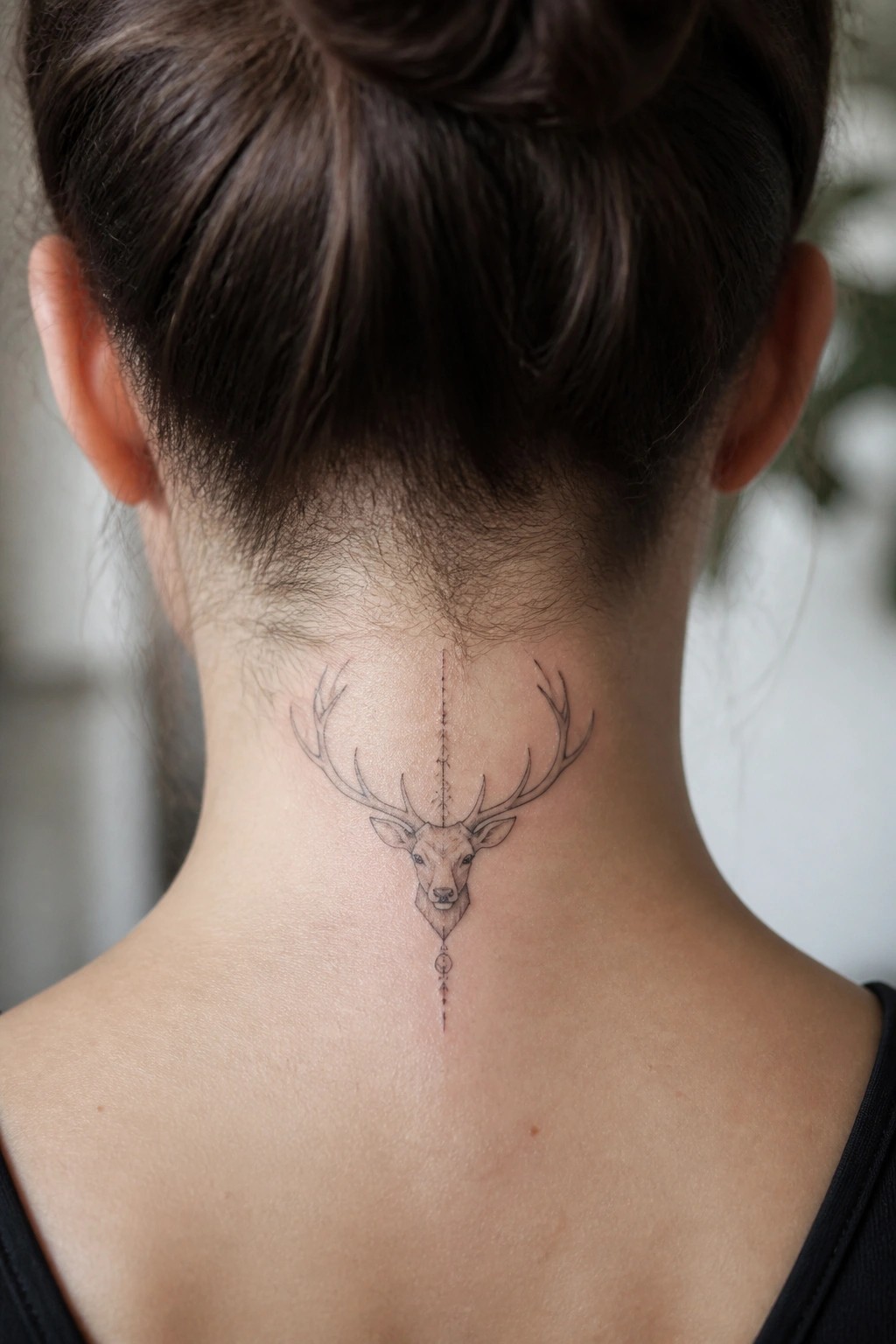
The design sits centered on the back of the neck. A vertical line runs down from the deer and lines up with the spine. Antlers extend outward while the lower part tapers into a small pendant shape.
This placement keeps the whole piece compact and easy to read. The line through the middle stops the antlers from looking off balance.
Butterfly tattoo on the foot
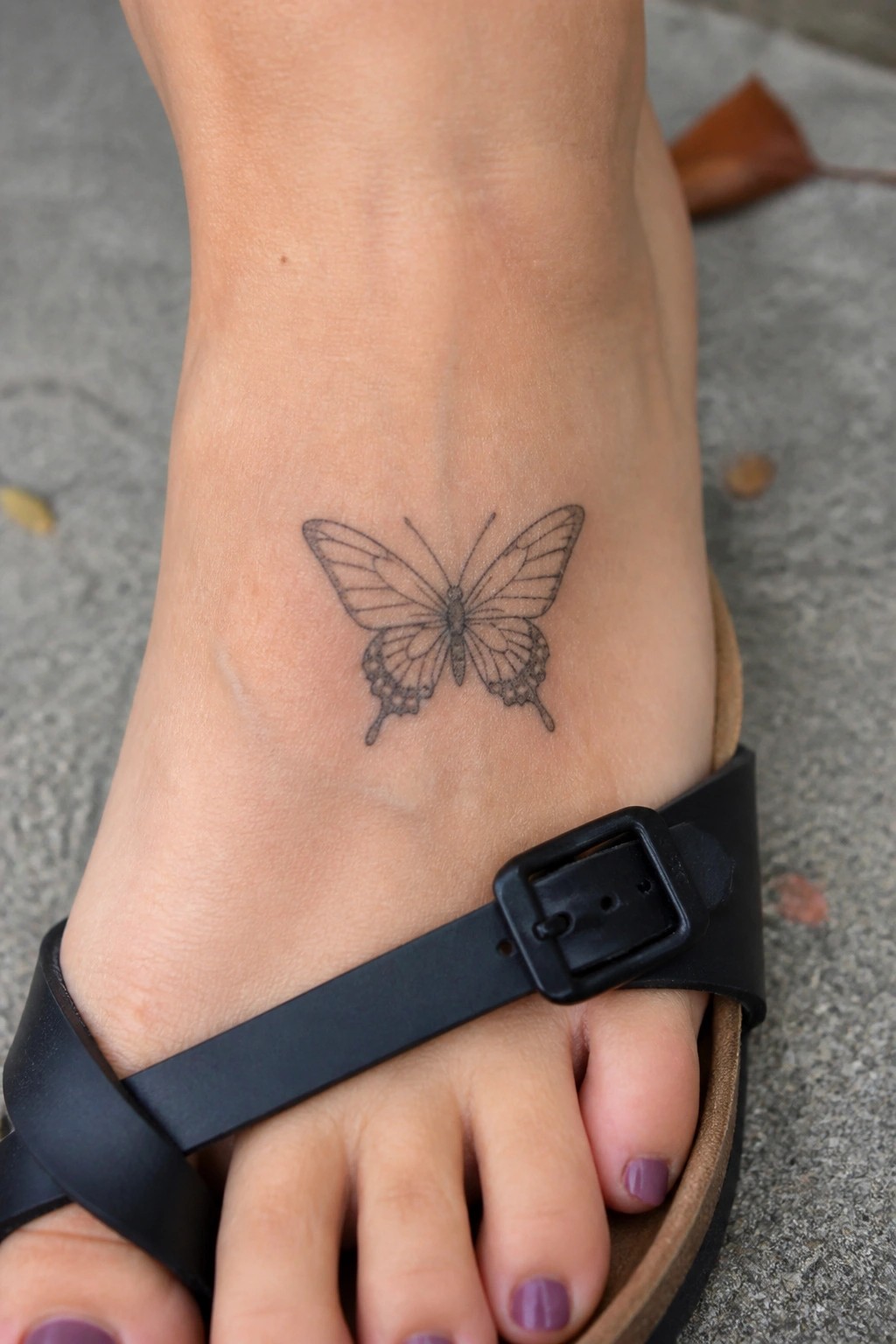
The top of the foot gives this butterfly enough flat space to sit evenly without the wings looking cramped. The fine line approach keeps the whole thing light so it does not feel heavy on a smaller area like this.
I think the scale works because the design stays clear but does not take over the whole foot. It leaves room for the natural shape of the area to show through.
Horse head on the shoulder
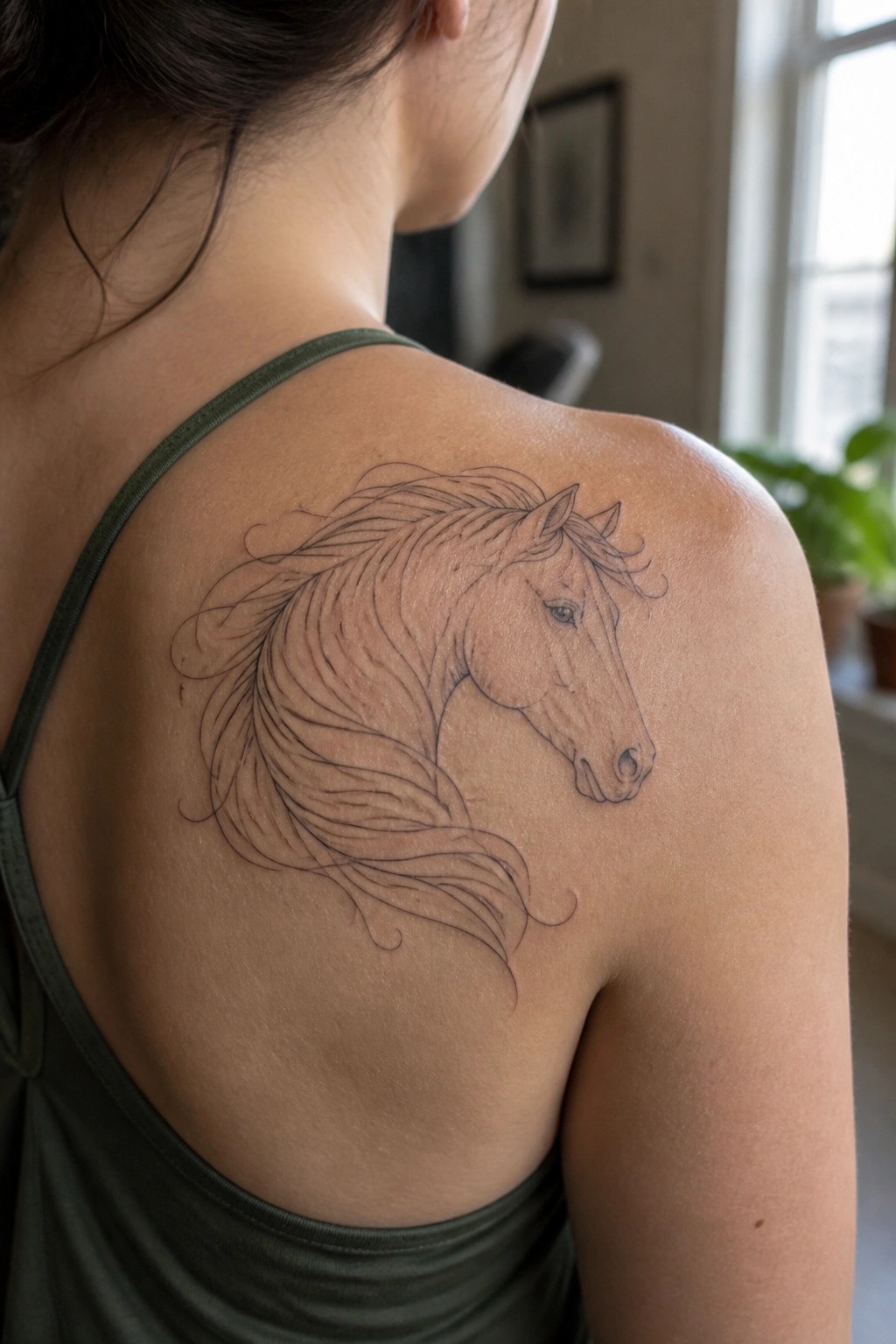
The tattoo sits on the upper back and shoulder. The horse head faces right while the mane stretches left along the blade. This lets the lines follow the shoulder shape without extra adjustment.
The mane spreads out across the area in a way that feels natural. It keeps the design balanced at this size.
Owl tattoo on the forearm
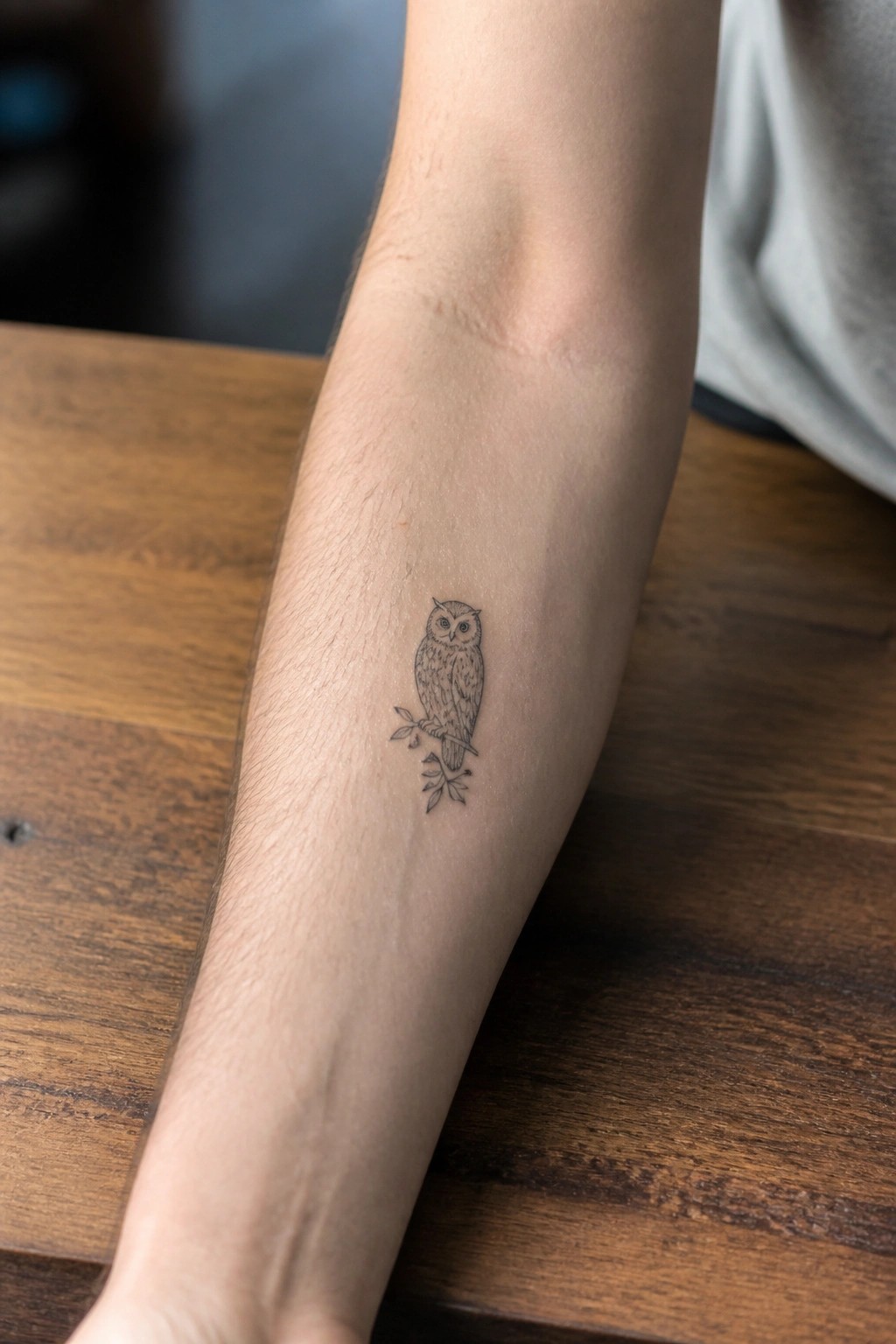
An owl sits on a thin branch in this forearm tattoo. The fine line approach keeps the feathers and face light instead of packed with heavy detail. That choice lets the bird feel balanced on the skin without crowding the area.
The lines stay thin enough to hold shape even after some fading. I think that makes the whole design sit more naturally on the arm than a bolder style would.
Koi fish on the lower leg
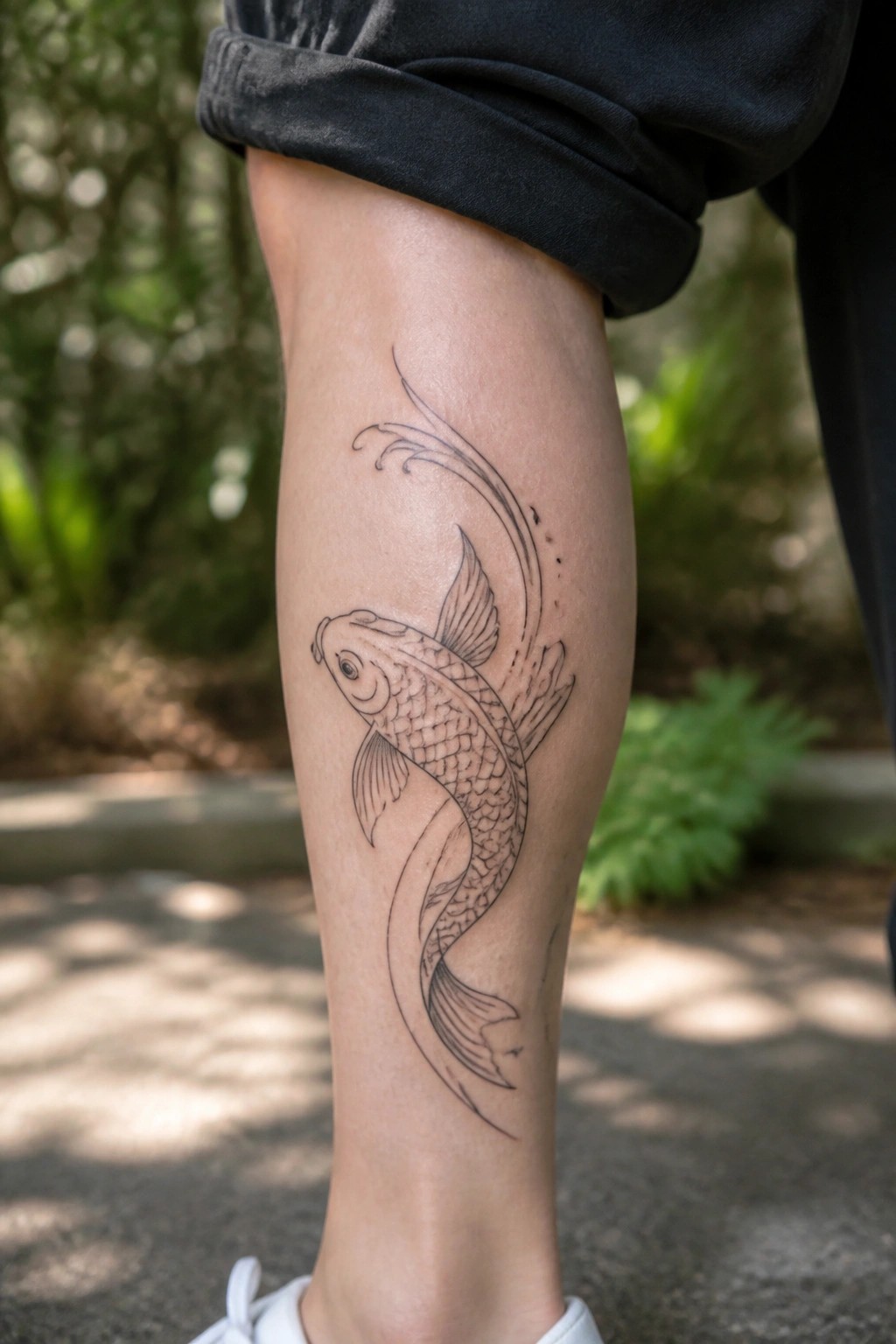
The tattoo sits on the front of the lower leg right above the ankle. The fish is drawn vertically so its body follows the line of the shin with the head facing up. Fine lines define the scales and fins without adding heavy shading.
This placement gives the design room to stretch out while still staying compact enough for everyday wear. I think the vertical flow matches the leg shape better than a horizontal layout would.
Stingray on the side
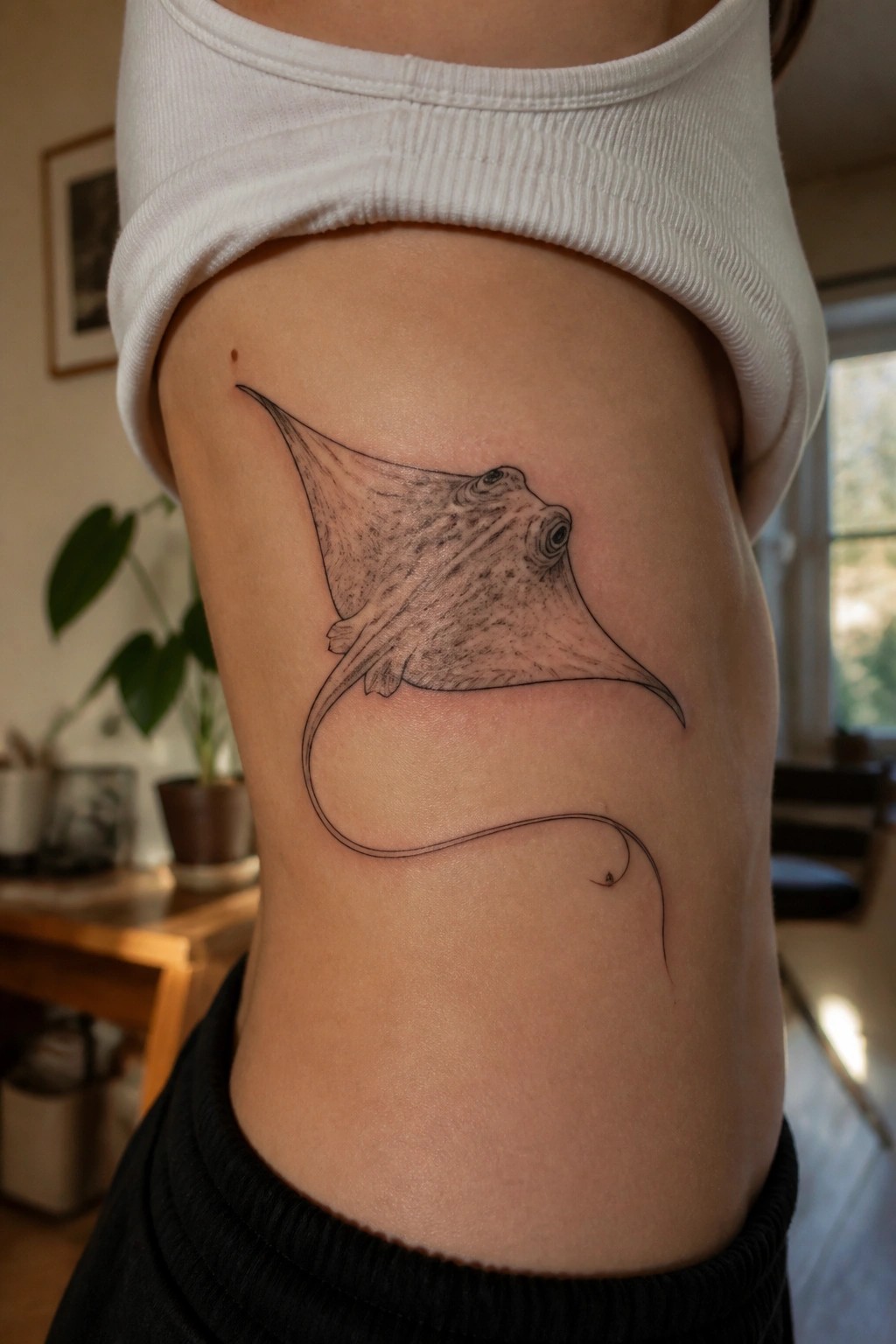
The stingray sits on the side of the torso. Its body rests near the ribs while the tail curves down along the skin. Fine lines keep the outline light and the shading adds just enough texture on the head and back.
The tail placement follows the body’s shape without crowding the area. This keeps the whole design balanced at a medium size.
Small fox tattoo on the knee
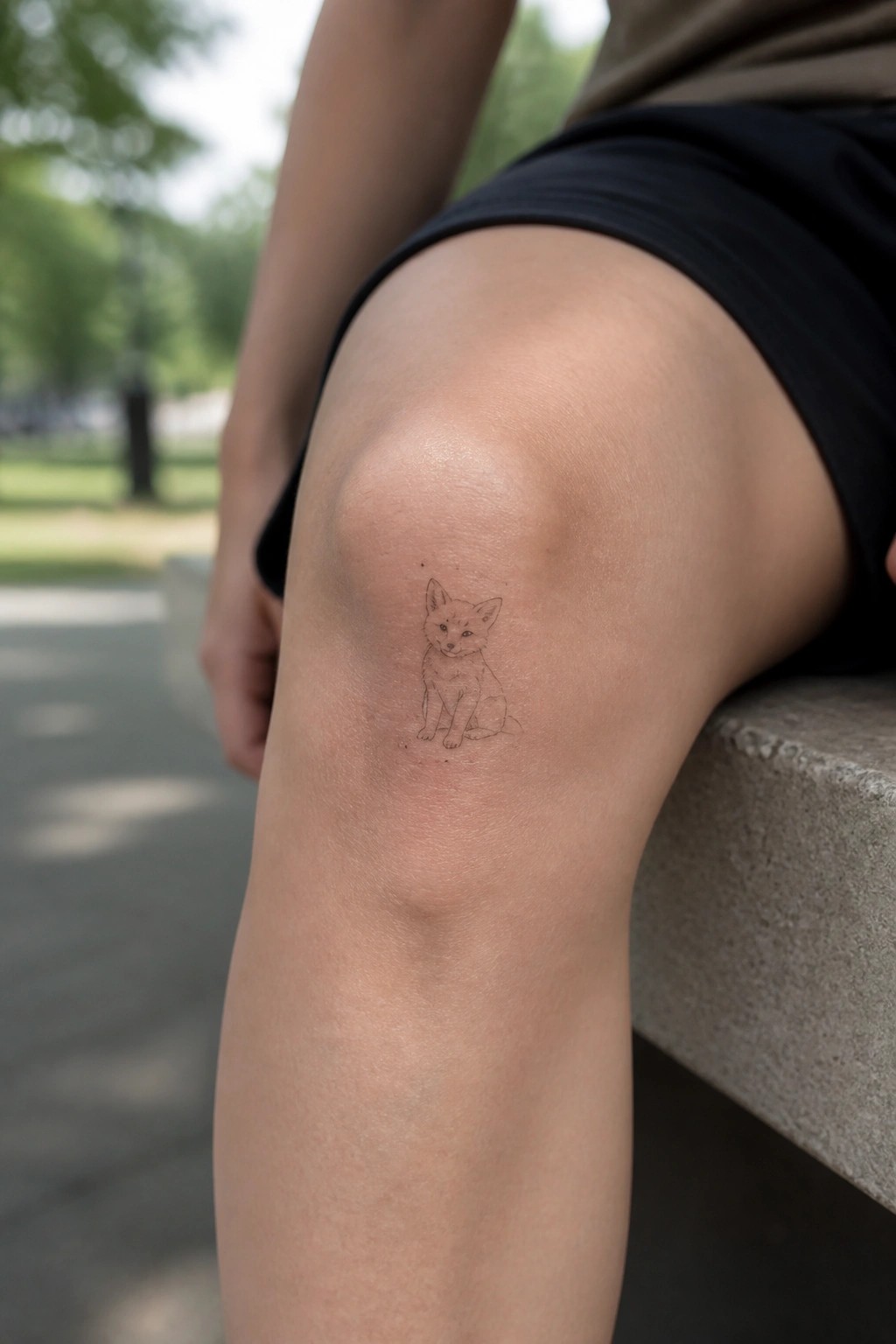
The fox sits right above the knee in a compact pose. Its outline stays thin and simple so the design fits the curved surface without crowding. The small scale leaves the surrounding skin mostly bare.
This placement keeps the tattoo visible when seated but easy to cover with clothing. I think the size works well here because it avoids stretching across the joint.
Owl on the upper back
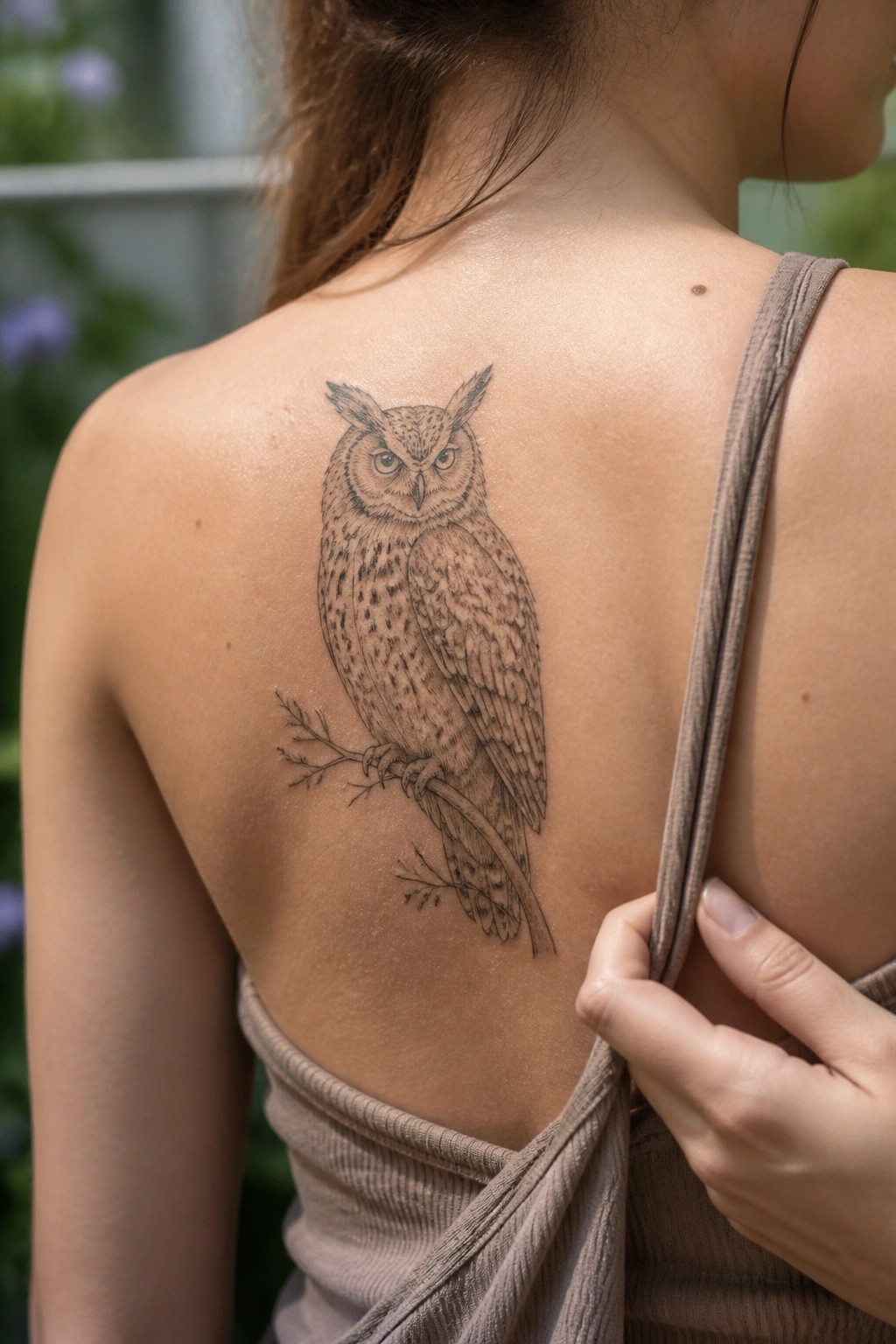
The upper back gives this owl enough space to sit upright without crowding. Fine line work handles the feather texture and the small branch details at a medium scale. The placement keeps the design visible but still easy to cover.
I think the shoulder blade area helps the owl face forward in a balanced way. It avoids the busier spots on the body where the lines could blur over time.
Seahorse tattoo on the wrist
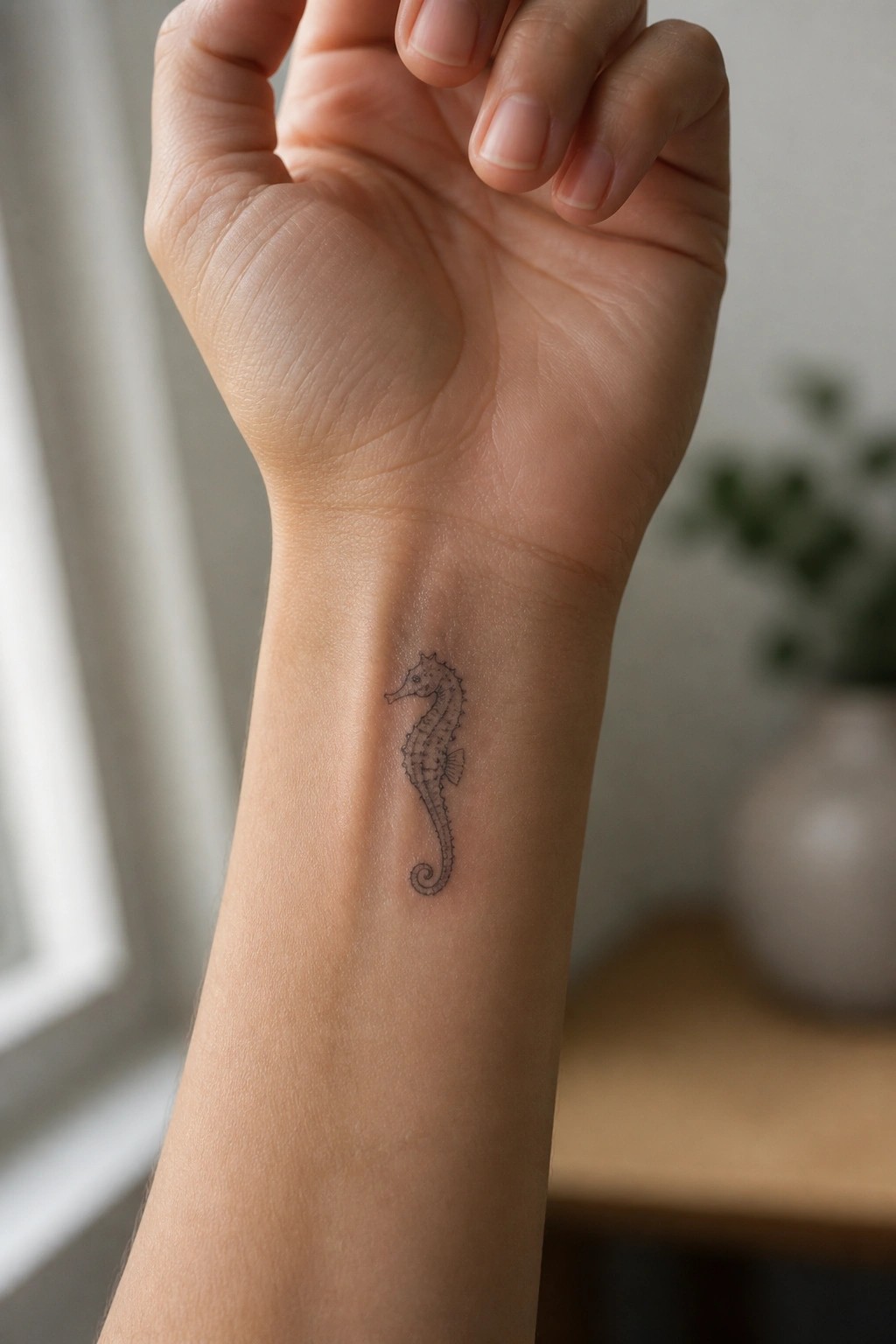
A seahorse tattoo on the inner wrist uses the natural length of the arm to hold its curved shape. The fine lines stay thin and the overall size stays small so it does not crowd the area. The tail points down while the head faces up along the wrist.
This spot keeps the tattoo easy to cover or show depending on the day. I think the simple outline works because it lets the form stay clear without extra shading.
Fine line foxes stretch across the upper back
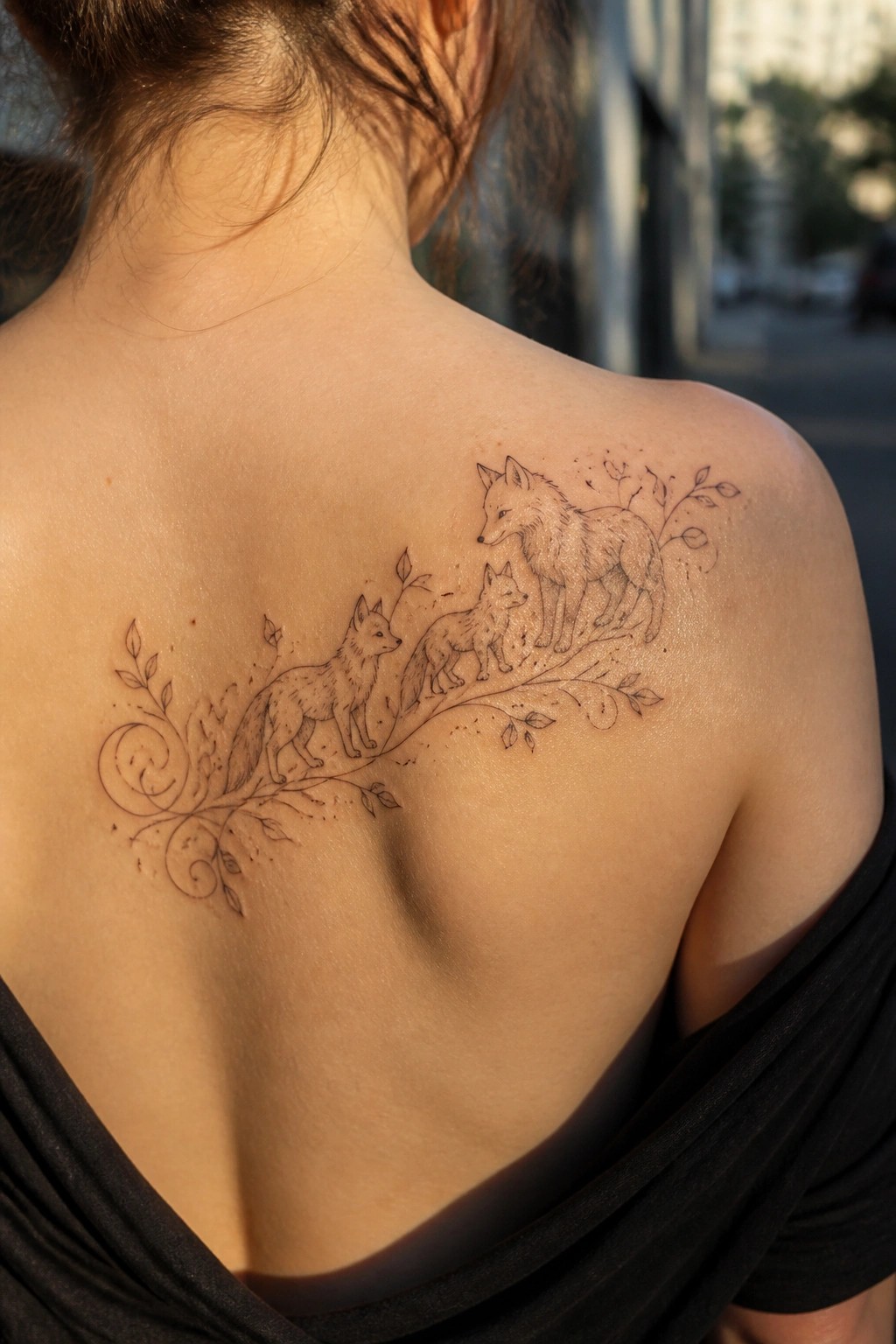
Three foxes move along a thin branch that curves over the shoulder. Small leaves and light swirls fill in the spaces without adding weight. The fine line work keeps every figure clear while the placement lets the design follow the natural slope of the back.
I think the style fits the subject because it keeps the animals looking light and realistic at the same time. The upper back gives enough space for the branch to stretch without forcing the details to shrink.
Frequently Asked Questions
1. What is the best way to decide on placement for an elegant fine line animal tattoo? Consider areas with less movement like the inner forearm, collarbone, or ankle for clean lines that hold their shape over time. These spots allow the delicate details of animals such as deer or birds to stand out without distortion from skin folds or daily activity.
2. How long does it typically take for a fine line animal tattoo to heal fully? Healing usually takes two to four weeks for the surface layer, though complete settling of the ink can extend to two months. Keep the area moisturized with fragrance free lotion, avoid sun exposure, and refrain from picking at scabs to preserve the crisp modern appearance.
3. Do fine line tattoos require special aftercare compared to bolder styles? Yes, they benefit from extra gentle care in the first weeks since thinner lines can blur if irritated. Use a thin layer of recommended ointment, wear loose clothing over the tattoo, and schedule a touch up session if any lines fade during healing to maintain that elegant look.
4. How can someone find a reliable artist for fine line animal designs? Look for portfolios focused on delicate linework with animal subjects and check reviews mentioning clean results and good healing. Schedule a consultation to discuss your ideas from the 18 examples and confirm the artist uses high quality needles suited for precision work.
5. Will a fine line animal tattoo stay sharp long term or fade quickly? With proper sun protection and touch ups every few years these tattoos can retain their clean definition for a decade or more. Factors like skin type and placement influence longevity so discuss expectations with your artist before committing to a design.
