

We may earn from ads and some links. How we work.
People send me flower tattoos the way they send me handwriting samples: here is a bloom I like, now tell me if it still means what I hope it means once it is on my skin. Sometimes the answer is yes. Sometimes the flower they saved is beautiful and the meaning they attached to it lives only in a caption under someone else’s photo.
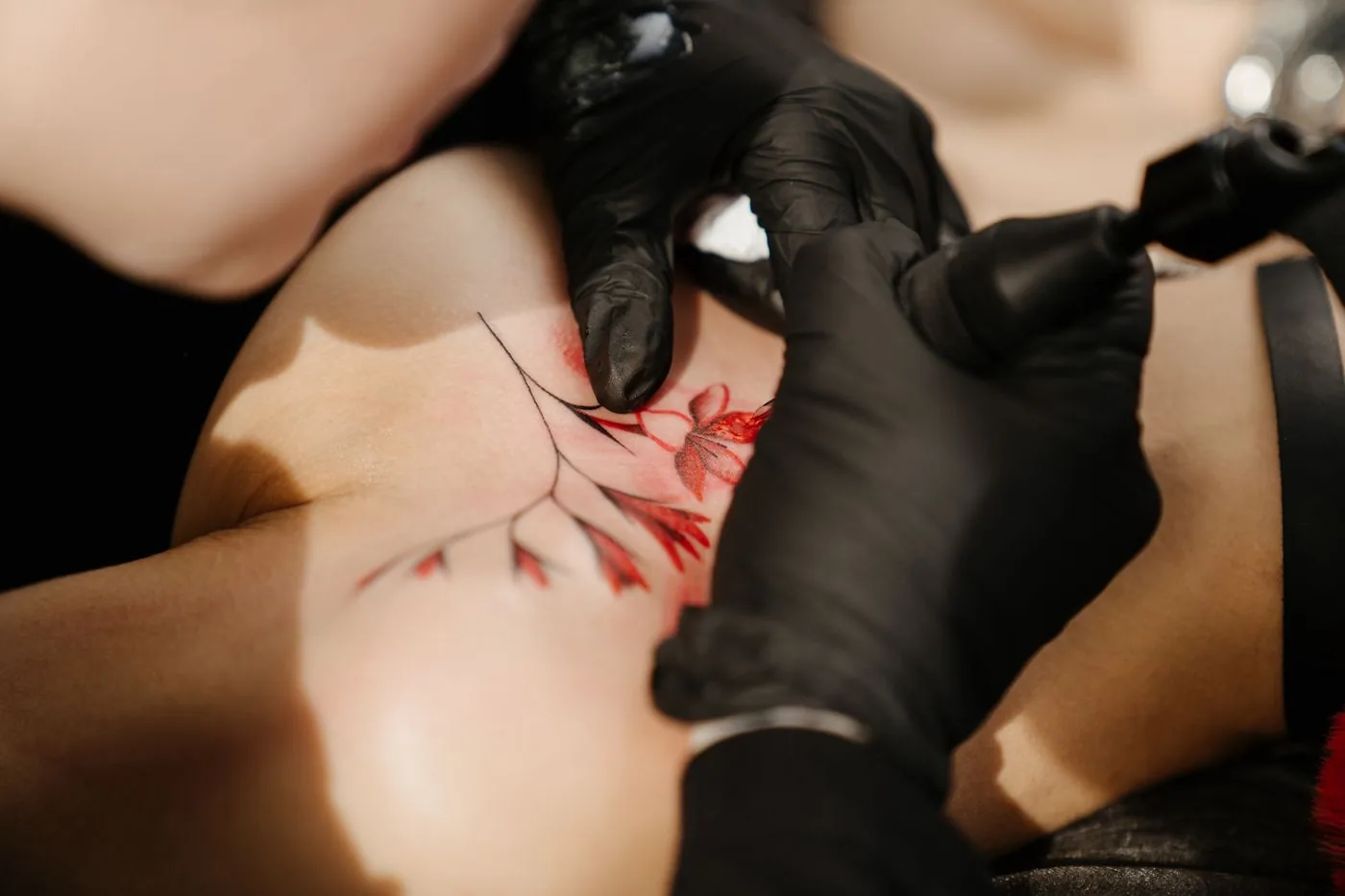
This is a meaning guide, not a catalogue of every petal on the internet. I will walk through the blooms readers ask about most, what they have traditionally been taken to mean, and the practical questions that matter more than a one-line symbol list: size, colour, line weight and whether the flower still reads as itself after it heals. If you want to see how specialists actually draw stems and petals on skin, look at real botanical tattoos next. If you are closer to booking, what to know before you book a botanical or animal tattoo covers spacing, colour and placement in more detail.
Meaning is a starting point, not a contract
Flower meanings shift with culture, family and the person wearing them. A rose can be romantic in one conversation and a memorial in the next. Birth flowers matter to some families and mean nothing to others. I would rather you pick a bloom you have a reason to look at than one a chart ranked as “more meaningful.”
Ask yourself three plain questions. Why this flower, in a sentence you could say out loud? Do you want it to stay recognisable as that flower, or is the feeling enough? And are you choosing it because you love it, or because a saved pin told you it was the correct symbol?
Roses
Roses are the flower people think they already understand: love, devotion, sometimes grief. Colour changes the emphasis more than most charts admit. Red still reads as romance or deep regard to a lot of viewers. White can suggest remembrance or a quiet kind of reverence. Yellow often lands as friendship or admiration rather than a love story. A single stem with a few leaves can feel complete. A dense bouquet asks for more room and, usually, a bolder style than a whisper-thin outline.
If you want a rose that still looks like a rose in ten years, talk to your artist about how much black, how much open skin and how much colour the design needs. Fine-line roses can be lovely. They also lose their outer petals first if those petals were drawn as hairlines.
Wildflowers and mixed meadows
Wildflower tattoos are less about one official meaning and more about a place or a season: a roadside in July, a grandmother’s back fence, a hike you still talk about. That is a strength, because the story is yours. It is also a risk, because a cluster of tiny blooms can heal into a soft smudge if every stem is trying to be as thin as thread.
I like wildflower pieces that pick a few distinct shapes (a daisy, a stem of lavender, one poppy) instead of twenty identical dashes. You can see that kind of editing in wildflower tattoo ideas, and even more clearly on healed skin in the botanical Real Ink feature.
Sunflowers
Sunflowers read as warmth, loyalty and a kind of stubborn brightness. They are also one of the easier flowers to recognise from a distance, which is why they work at many sizes. The centre needs enough texture to stay a centre, and the petals need a bit of width. A sunflower the size of a thumbnail can look charming on day one and like a vague starburst later.
If a sunflower is a memorial (someone who grew them, someone who was always facing the window), say that in the consult. The artist can decide whether a single bloom, a small bunch or just the face of the flower tells that story more clearly.
Daisies, lavender and smaller field flowers
Daisies often stand in for innocence, cheer or a simple “this is the flower I actually like.” Lavender comes with calm, memory and a specific scent some people can describe better than they can describe a symbol. Forget-me-nots are used as remembrance more directly than most blooms, which is worth knowing if you do not want strangers to read the tattoo as a tribute.
Small field flowers suit wrists, ankles and the back of the arm when the design is allowed to be a little larger than your first instinct. A daisy with a properly drawn centre will age more kindly than five micro-daisies in a row.
Peonies, lilies and olive
Peonies show up when someone wants abundance, romance or a flower that feels generous rather than shy. They need volume. A peony outlined like a doodle in the corner of a notebook rarely has enough shape to heal as a peony. Lilies can suggest renewal or devotion, and their long petals give an artist something clear to draw. Olive branches are quieter: peace, continuity, a Mediterranean family story, sometimes faith without a cross.
These three are good examples of why “tiny and detailed” is not automatically better. A medium peony with solid structure will look more like your idea in five years than a tiny one packed with inner lines.
Birth flowers
Birth flowers are one of the most useful meaning systems because the reason is easy to explain: this is the month someone was born, arrived or left. January’s carnation, May’s lily of the valley, October’s marigold and the rest are widely published, but lists do not always agree on every month. Confirm the bloom your family actually uses before the stencil, the same way you would confirm a verse translation.
A birth-flower bouquet for several people can work if each flower is allowed to be itself. If you try to fit six species on a collarbone in fine line, you will lose the thing that made the idea personal: the ability to point to each one.
Colour, blackwork and how meaning shows up
Colour is part of the meaning for some wearers and decoration for others. A red poppy does not tell the same story as a black-and-grey one in every family. There is no rule that a memorial flower must be colourless, and no rule that a romantic one must be red. What I would ask is whether the colour is doing work (recognition, memory, contrast) or whether it is there because the reference photo had it.
Black and grey botanical work can be just as specific as colour, and it often ages more predictably in strong sun. Colour needs a plan for how it will soften, which is one reason to look at healed colour florals rather than only fresh ones.
How to take a meaning into a consult
Write the sentence, not just the flower name. “A sunflower for my sister, who grew them every summer” gives an artist more than “sunflower tattoo.” Bring one clear photo of the actual plant if the species matters, plus two or three tattoo references in the style you want (fine line, traditional, bold colour). Then ask how large the flower needs to be to remain that flower.
If you are still deciding where it should live, the placement guide and the Placement & Pain Finder will help you match a stem to a part of the body that can hold it. For how thin botanical lines tend to settle, read how fine-line tattoos heal, fade and age before you fall in love with a day-one close-up.
A short checklist
- Can you say why this flower, without borrowing a caption?
- Will it still be recognisable as that species at the size you want?
- If it is a birth flower or a memorial bloom, have you confirmed the exact plant?
- Have you looked at healed examples in the same style, not just fresh ones?
- Does the design have a little room between petals, or is every gap already full on the screen?
The Animals & Nature hub collects floral and animal ideas in one place. Use this page for the meaning, the Real Ink feature for how those meanings look on skin, and your artist for the version that will actually heal on you.
