

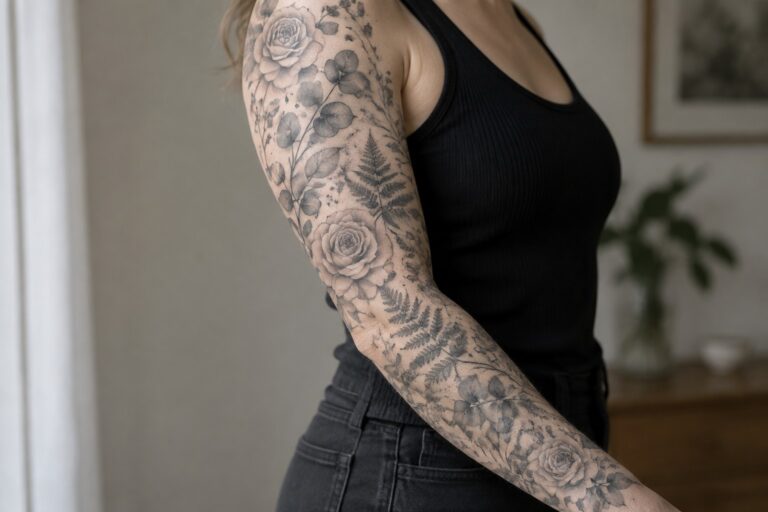
I have been swooning over fine line sleeve tattoos ever since I spotted my first layered botanical piece on a friend.
My own arm has a tiny vine that started my love for these delicate builds.
I gathered nineteen modern designs for women that layer flowers and leaves with such charm and ease.
Each one feels like a personal garden you can wear every day.
Botanical sleeve stretches from shoulder to wrist
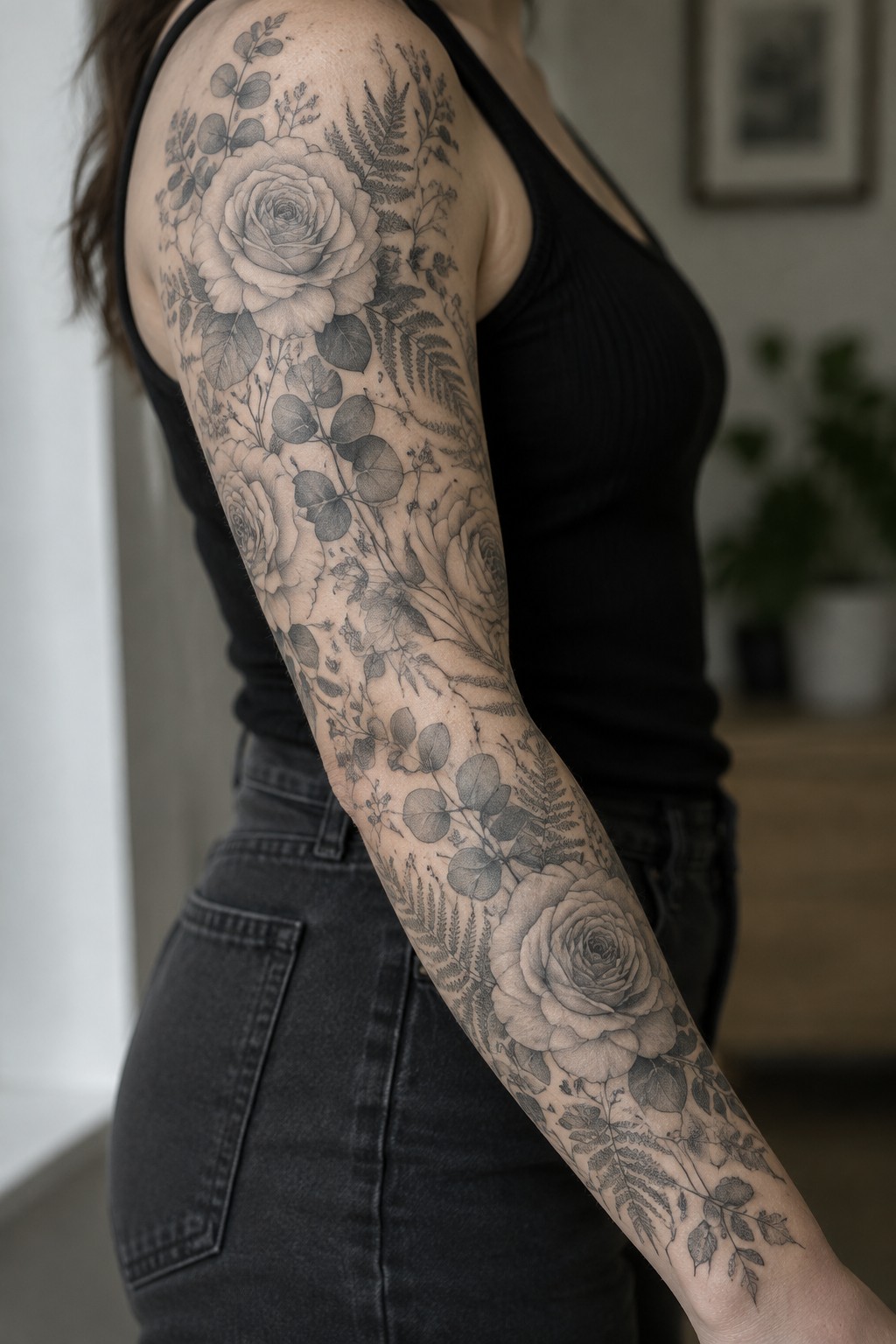
The sleeve starts at the shoulder with a large rose surrounded by eucalyptus. Smaller ferns and leaves layer in as the design moves down the arm. Another rose sits lower with more foliage filling the remaining space.
This placement lets the pieces stack without feeling crowded. I think the length works because it keeps the layers balanced from top to bottom.
Peonies run along the upper arm in fine line
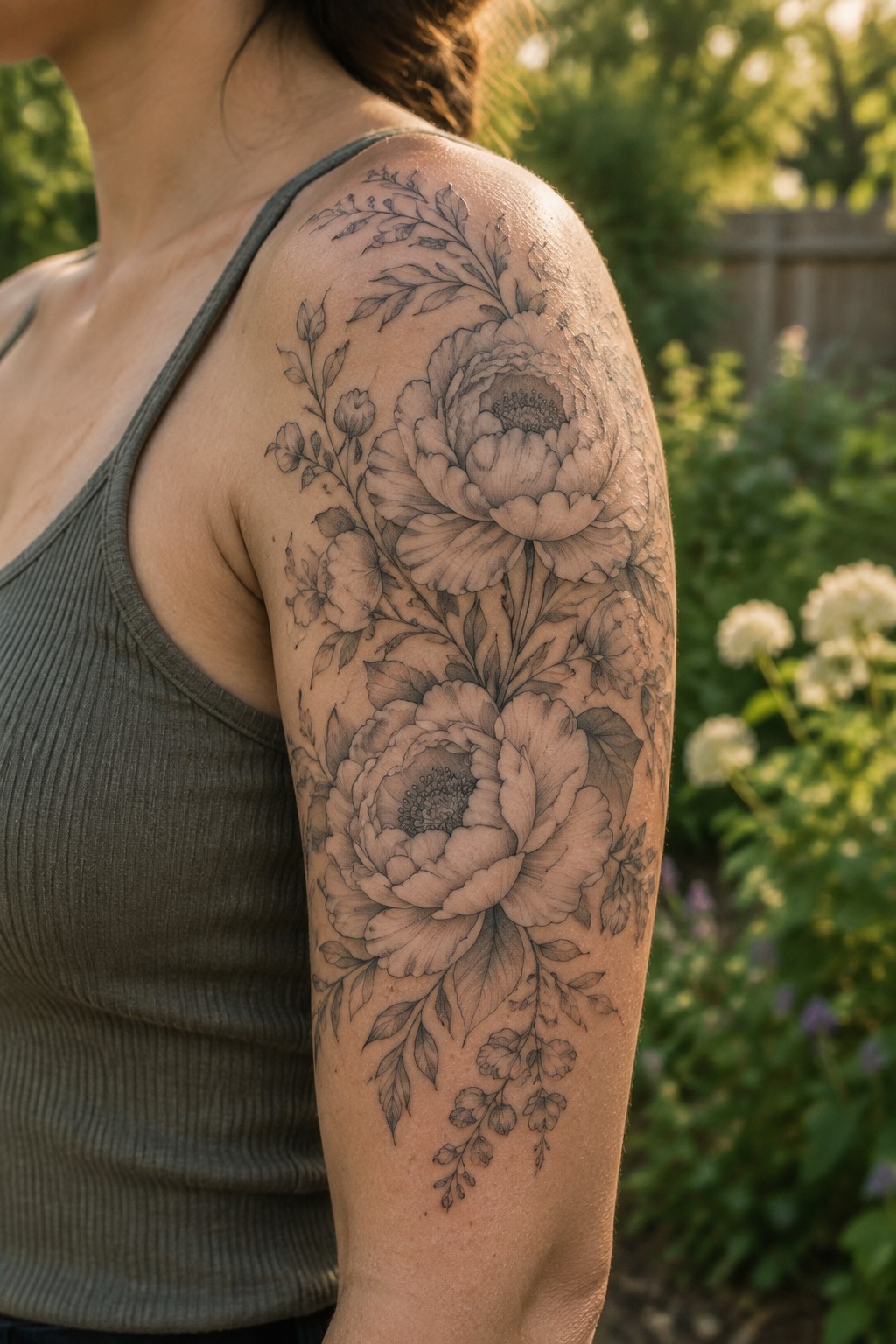
The tattoo starts at the shoulder and flows down the outer arm. Large peonies form the main clusters while smaller blooms and leaves fill in around them. Fine line work keeps the layers readable even as the design builds.
I like how the placement lets the stems connect the pieces without forcing a rigid shape. The light shading helps the flowers stand out from each other at this size.
Fine line flowers run down the forearm
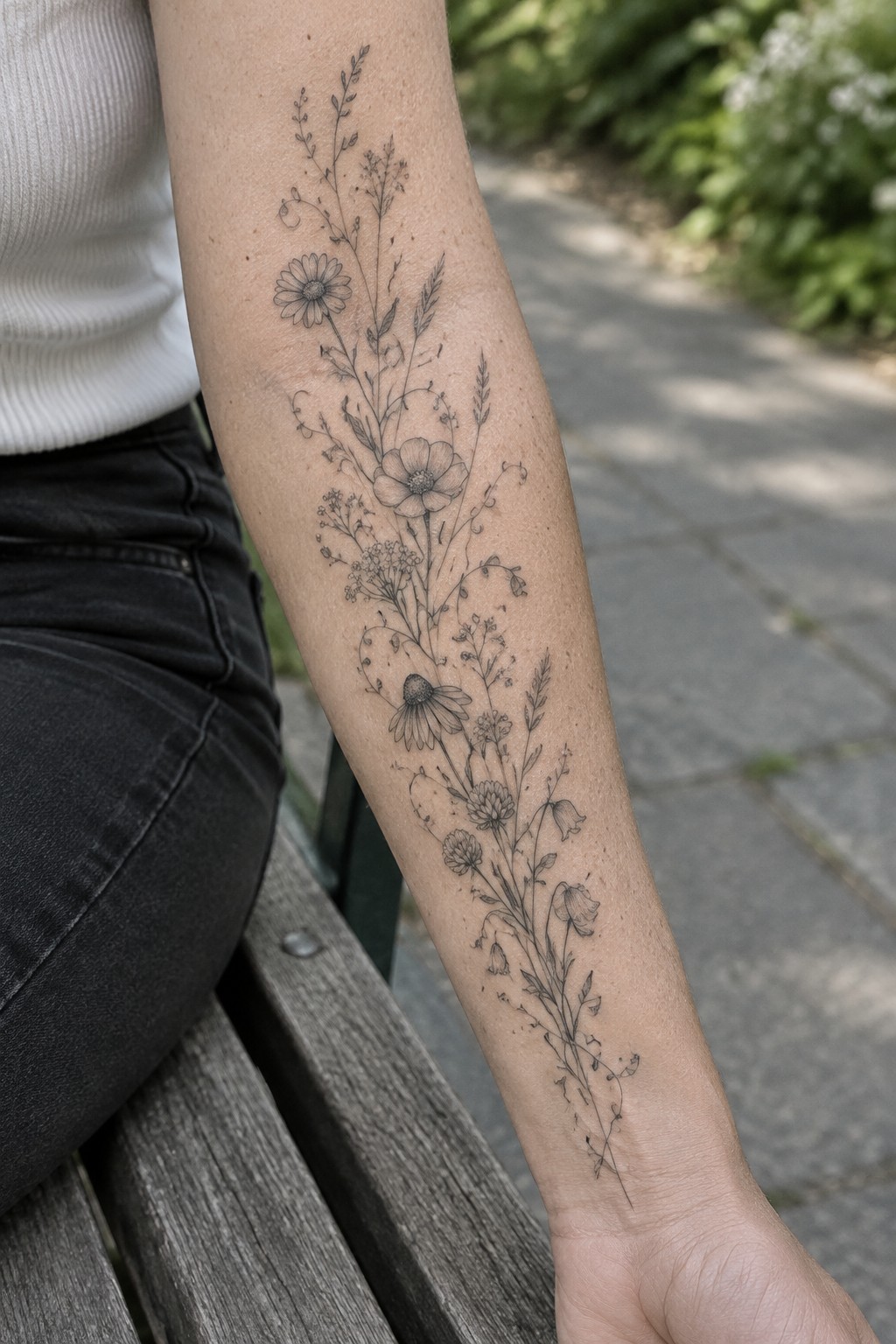
The tattoo sits along the inner forearm in a single flowing column. Different wildflowers are stacked with their stems overlapping slightly so the piece reads as one connected arrangement rather than separate motifs. Fine lines keep the whole design light enough to follow the natural taper of the arm.
This vertical layout works because the arm gives the flowers room to breathe without crowding. I think mixing bloom sizes stops the piece from looking too rigid while still staying clear from a distance.
Vines and flowers run the length of the arm
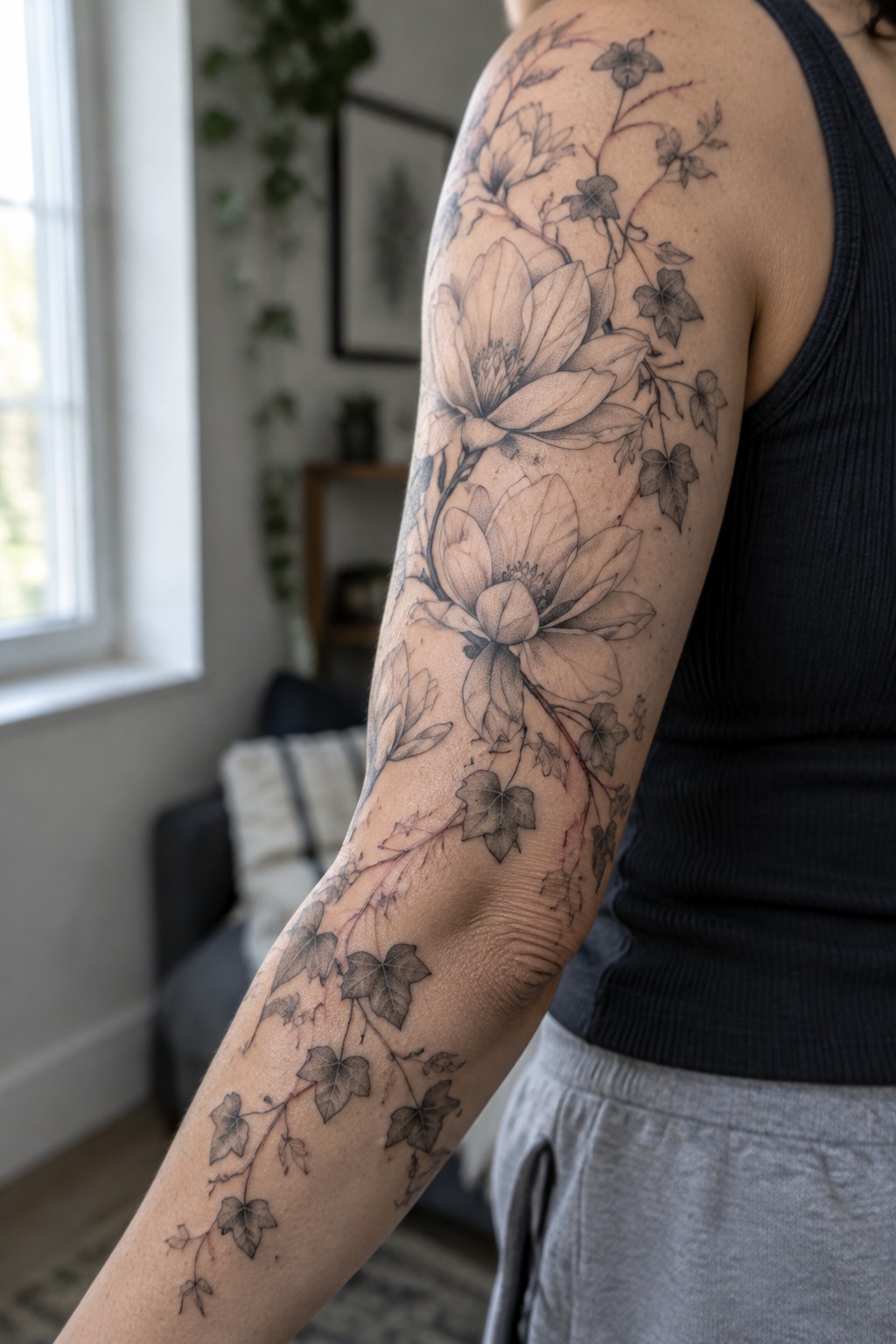
The tattoo covers the full arm from shoulder down to forearm. Large flowers sit near the top while ivy vines twist and trail lower. Fine lines connect everything in a loose pattern that follows the arm’s shape.
This placement gives the vines space to link the blooms without crowding any area. I think the spread keeps the sleeve balanced and clear even at a distance.
Fine line botanicals along the inner forearm
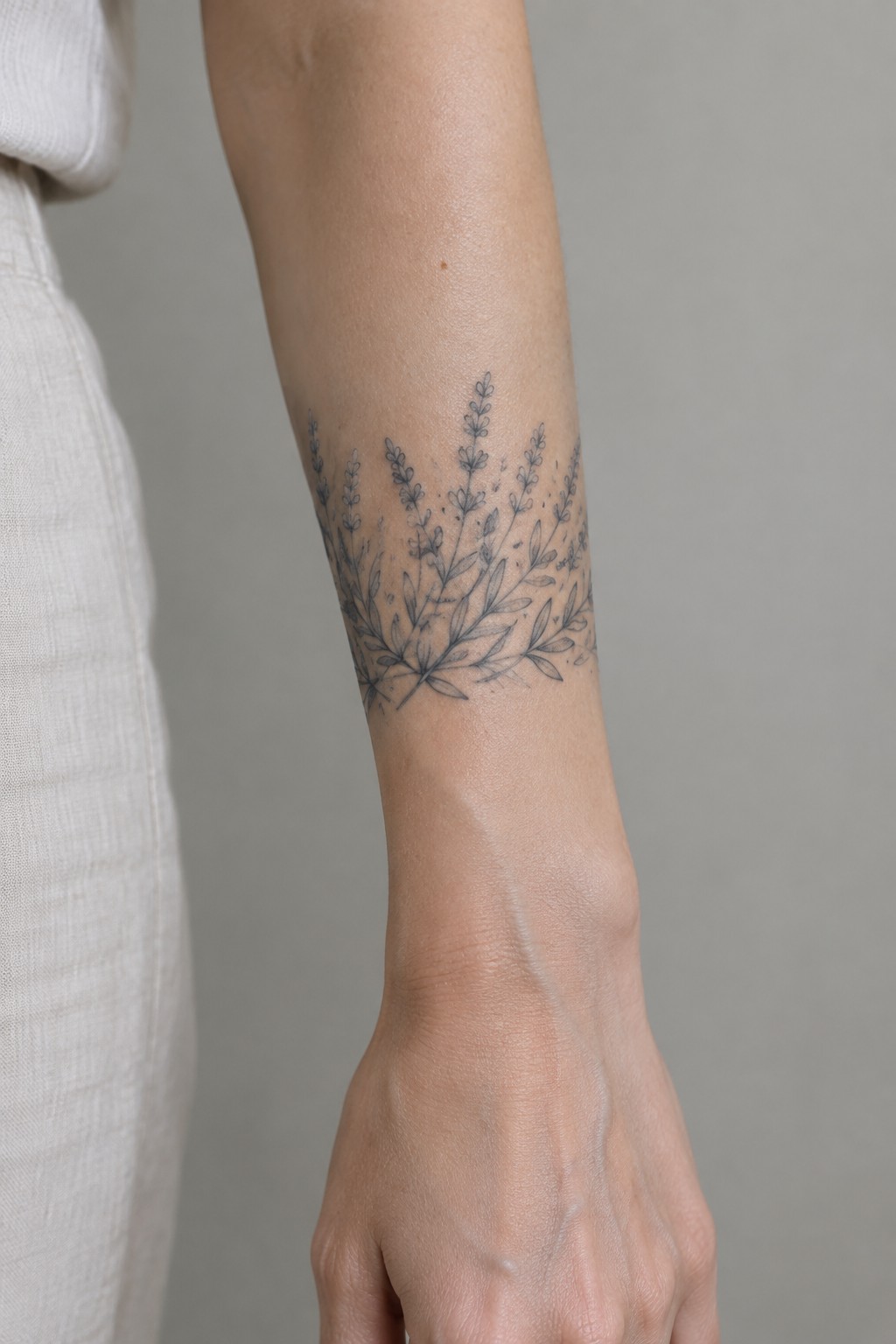
The placement puts the tattoo right on the inner forearm where the skin stays fairly flat. Several thin stems rise at different heights and overlap just enough to create layers without crowding the space. Small leaves and buds fill in the gaps while the fine lines keep the whole thing from looking heavy.
I think the inner forearm works here because it gives the stems room to tilt naturally as the arm moves. The scale stays readable even when the lines sit close together.
A botanical sleeve stretches down the full arm
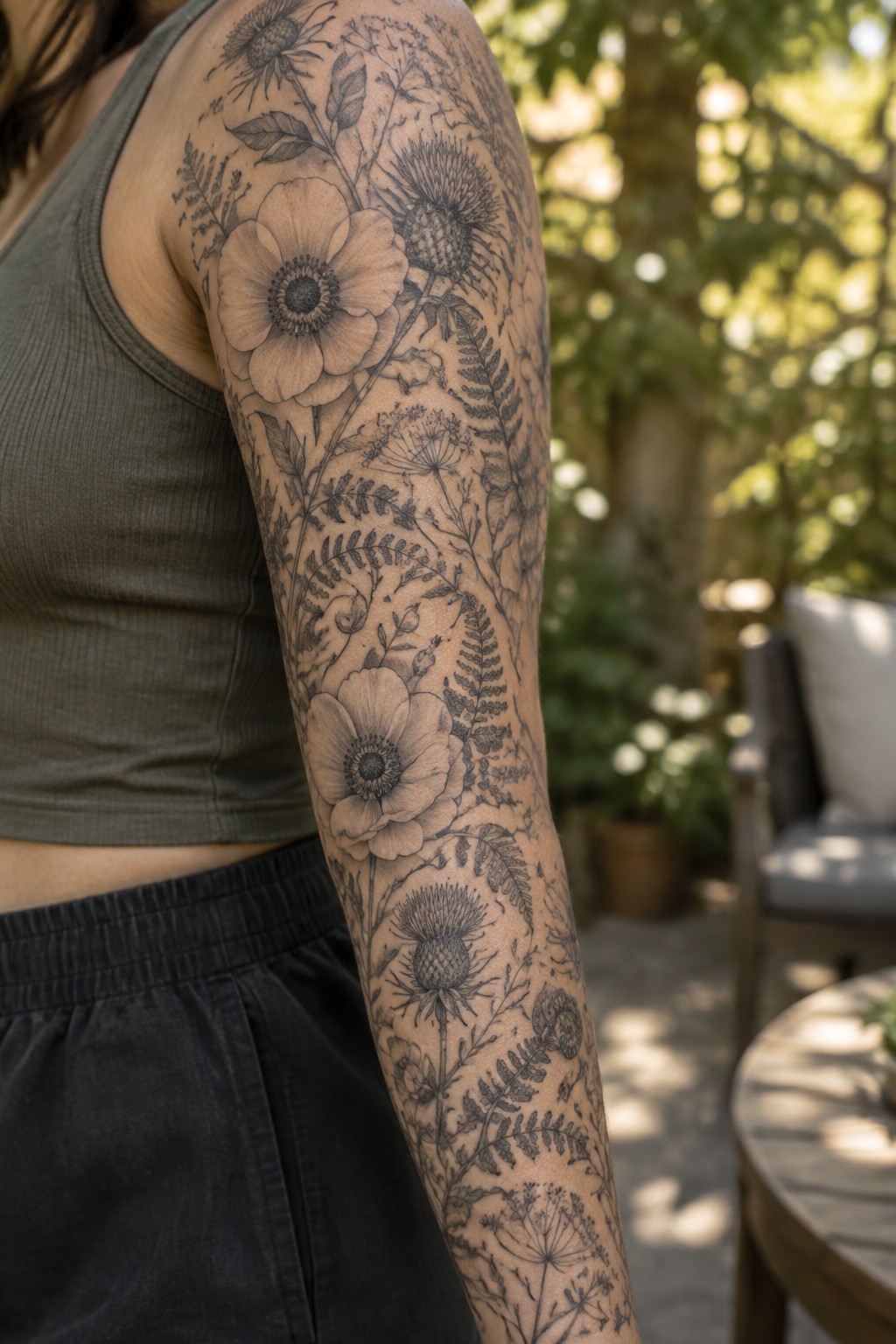
The tattoo starts at the shoulder and continues to the forearm. It layers poppies, thistles, and ferns in fine black lines that vary in size and density. The vertical layout lets taller stems sit higher while smaller clusters fill the lower sections.
I think the arm placement works here because it gives the design a natural top to bottom order without feeling crammed. The spacing keeps each plant distinct even when the arm is relaxed.
Roses trail down the upper arm
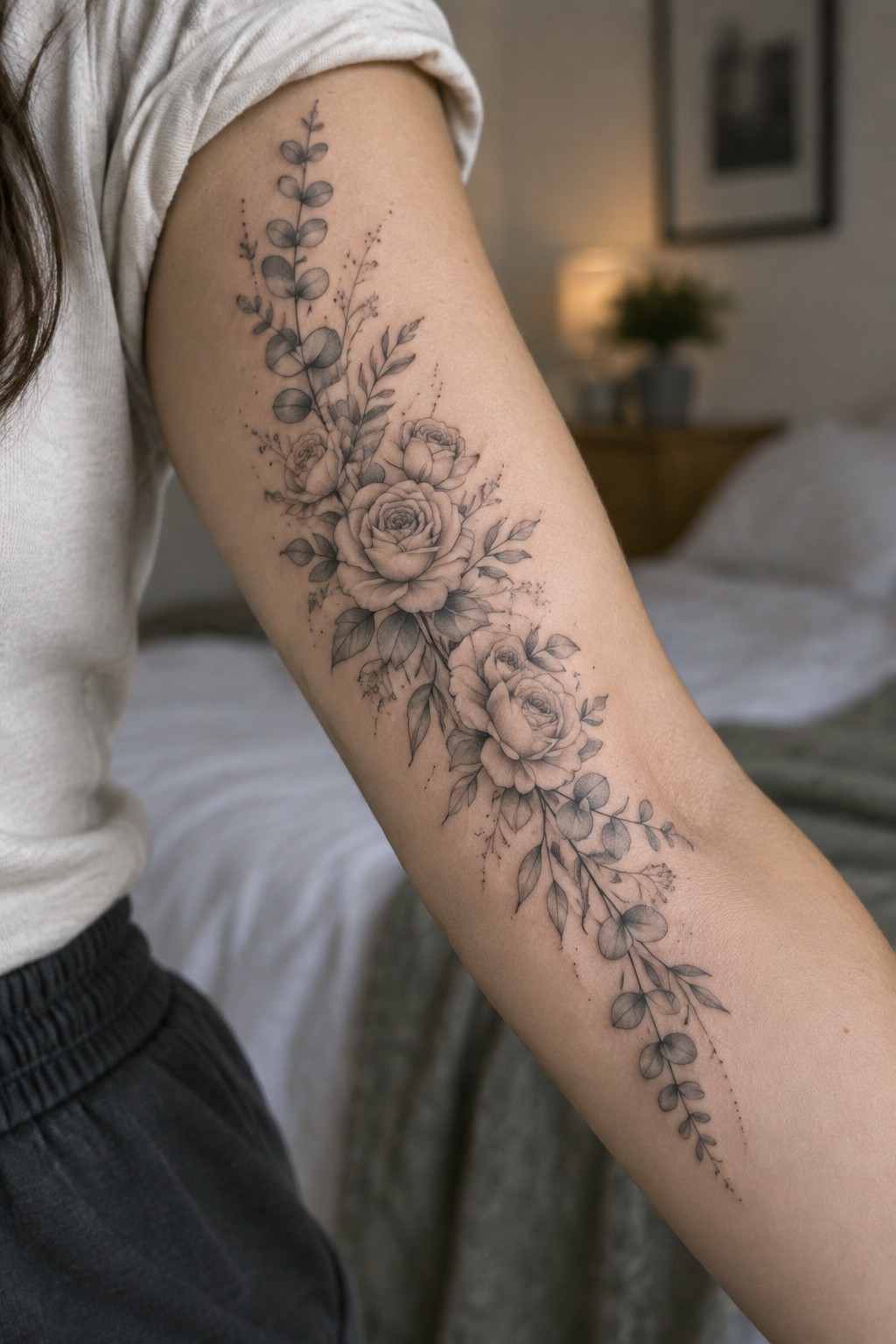
The design starts near the shoulder and flows downward in a long vertical line. Central roses sit in the middle section while eucalyptus stems stretch above and below them. Fine lines keep the whole piece light and the shading stays soft on the petals.
This layout works because the arm gives the stems room to spread without crowding. The smaller leaves at the bottom keep the eye moving instead of stopping short.
Vines wrap from upper arm to forearm
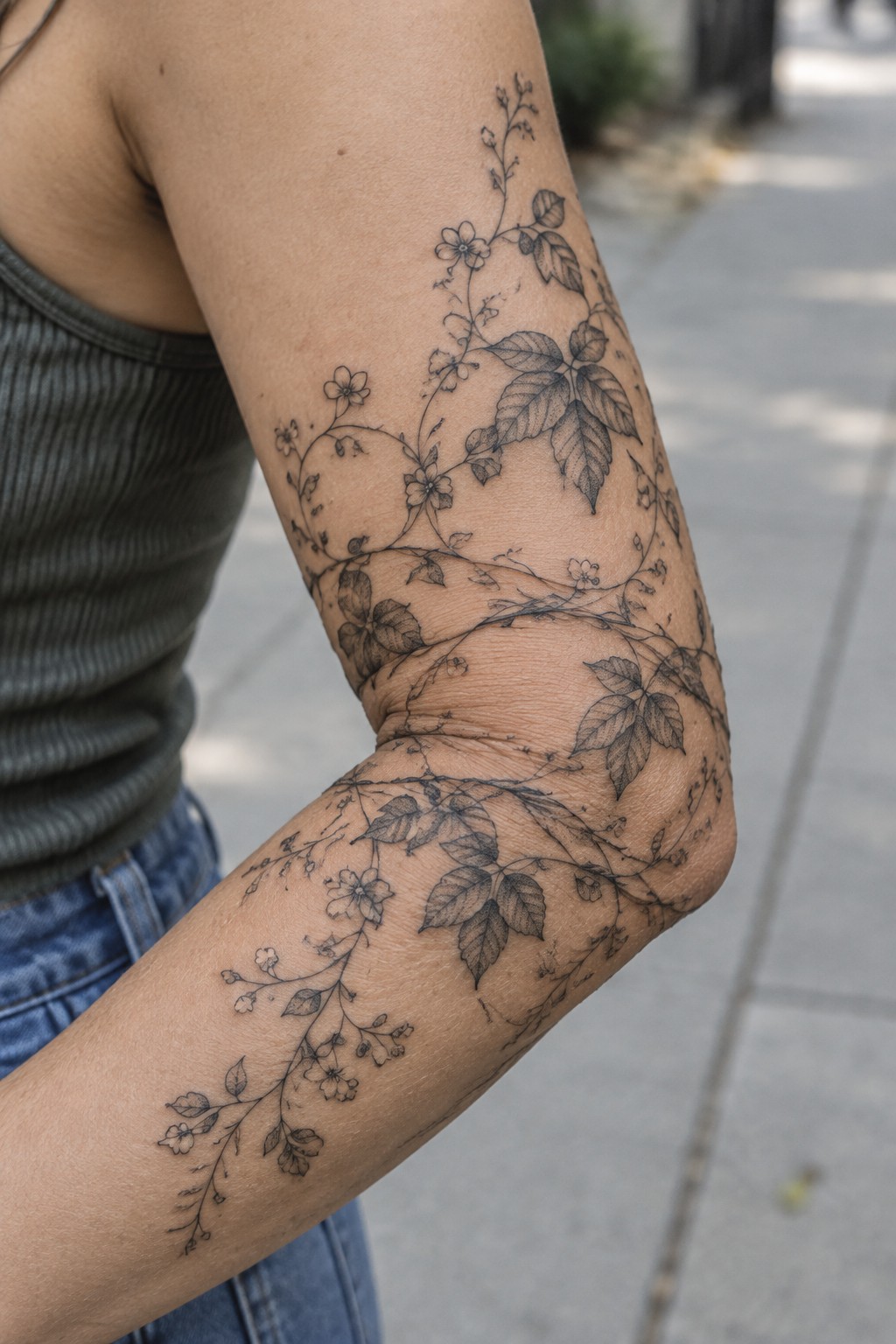
The tattoo runs along the full length of the arm with thin vines that cross the elbow. Small flowers and clusters of leaves sit at different points so the pattern stays varied but connected. This setup lets the design move naturally with the arm instead of sitting flat.
The fine line style keeps the whole piece light even though it covers a big area. I think the way the vines twist around the elbow helps the design feel like one continuous piece rather than separate sections. It works well for anyone who wants a botanical sleeve that still looks simple up close.
Shoulder placement with layered hibiscus and palm leaves
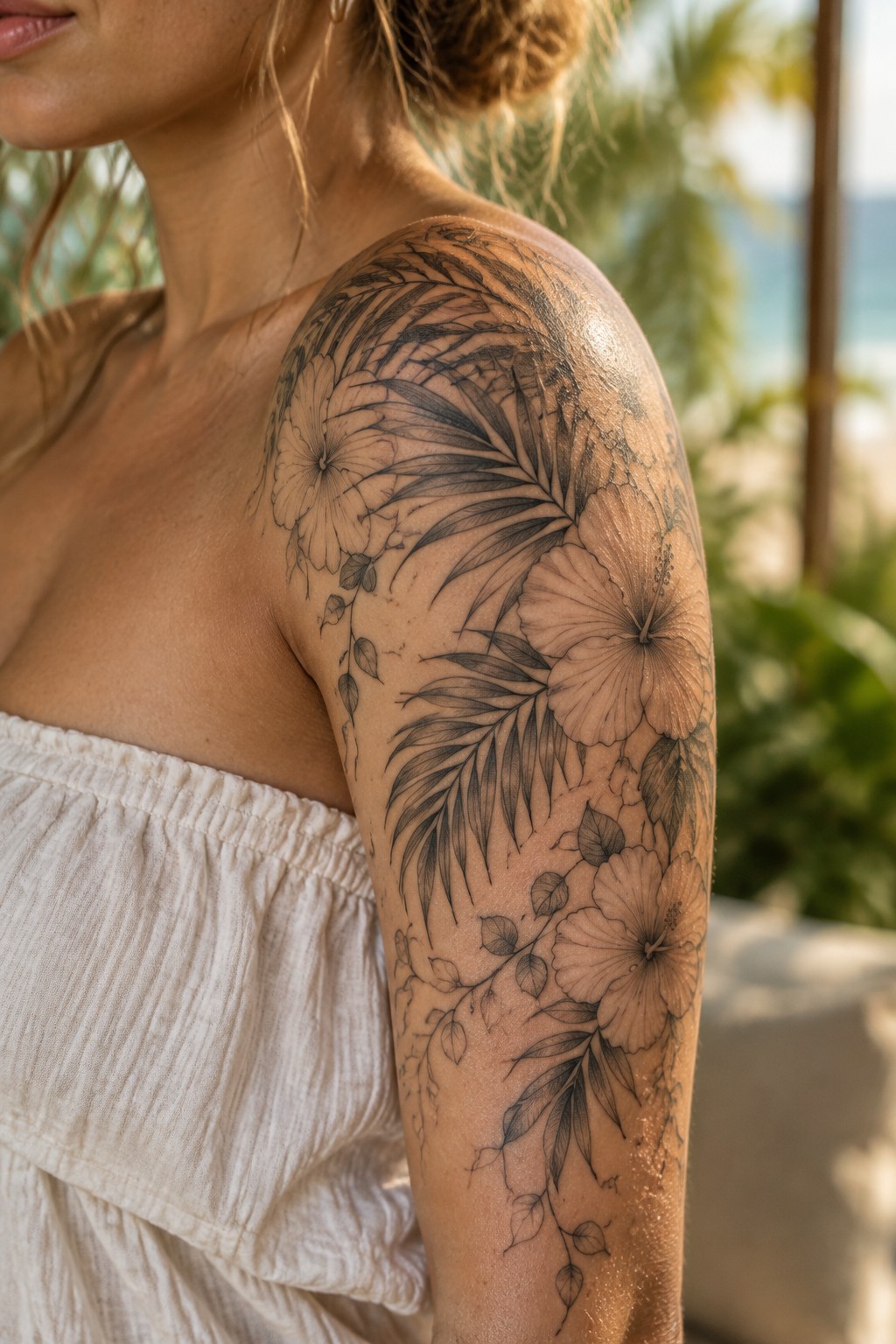
The design sits across the top of the shoulder and flows down the upper arm. Hibiscus flowers mix with palm fronds and thin trailing vines to create a full but open botanical pattern. Fine line work keeps the details sharp without filling the skin too heavily.
I think the placement works because the shoulder gives the larger flowers room to sit naturally while the vines continue down the arm. This keeps the tattoo readable even when the arm moves. It also leaves space to add more pieces later if needed.
Fine line botanicals stretch along the forearm
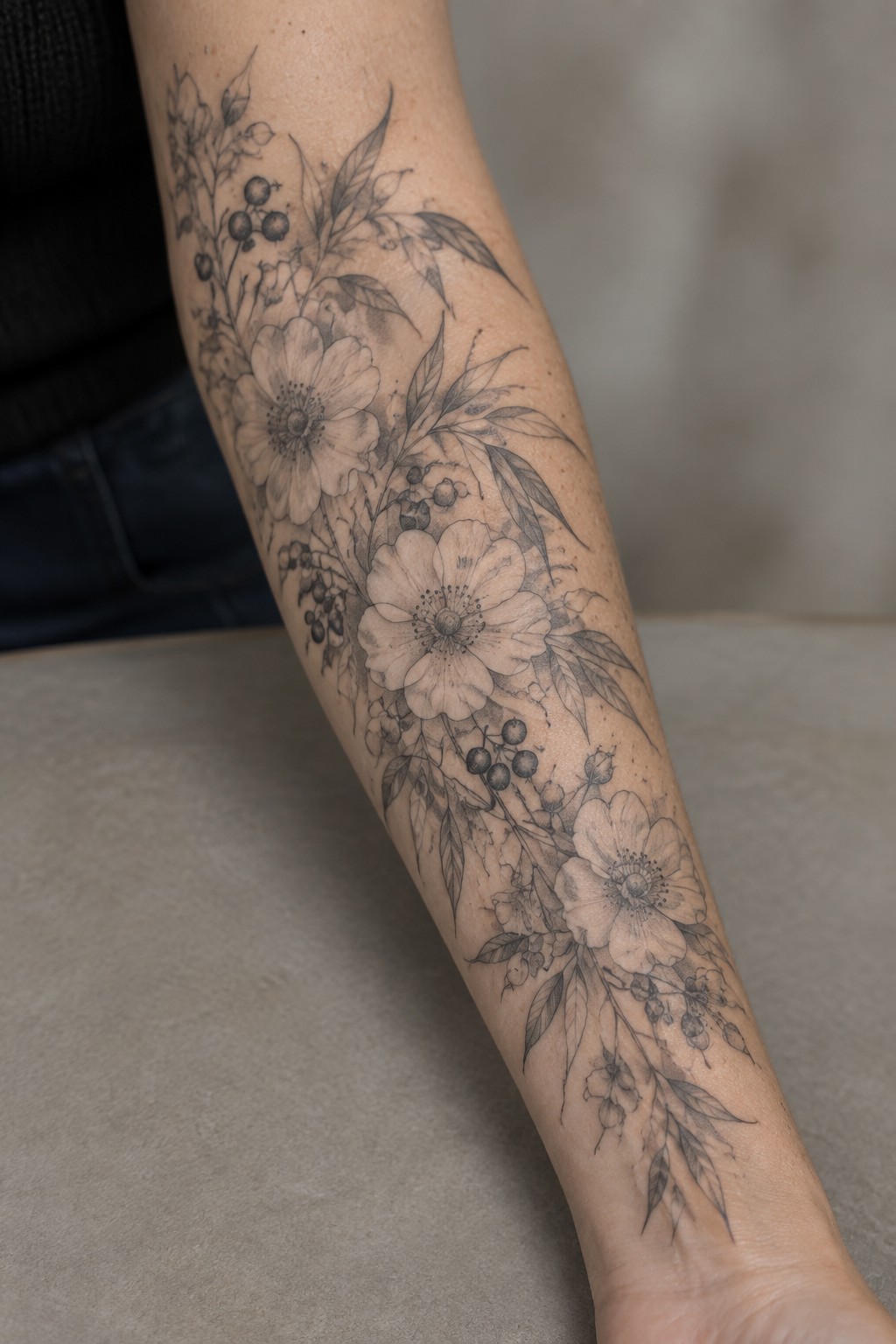
The tattoo runs down the inside of the forearm in a long vertical layout. Several flowers sit at staggered heights with leaves and berry clusters woven between them. Fine lines hold the layers together without adding weight.
I think the placement works because it gives the design room to build upward while staying readable from wrist to elbow. The spacing between elements keeps the piece from feeling packed even though it covers a lot of skin.
Botanicals stack vertically along this sleeve
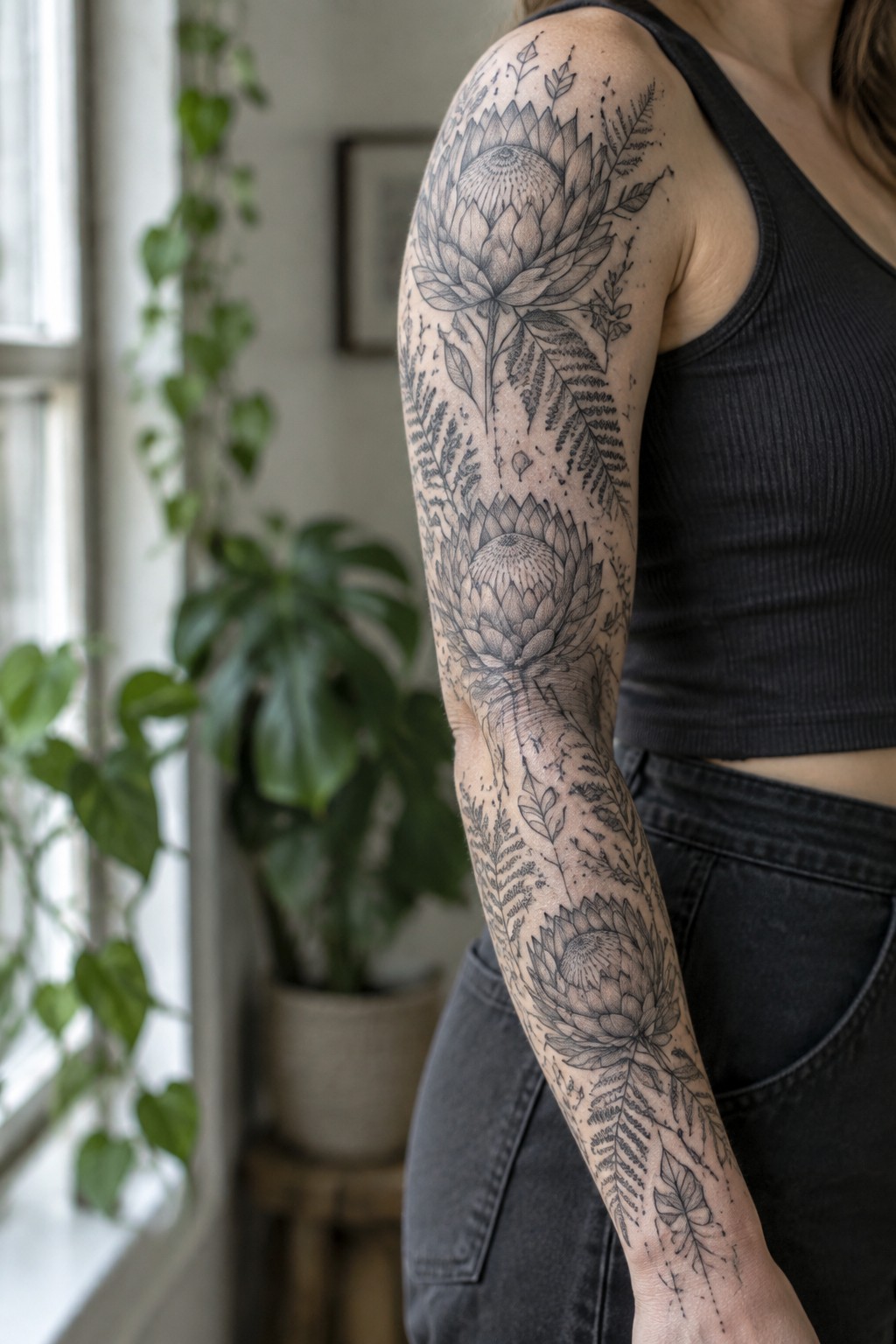
The design places several large flowers down the length of the arm. Ferns and smaller leaves connect them in a steady line from shoulder to wrist. Fine line work keeps the spacing open so nothing feels packed in.
This layout lets the flowers stay clear even when repeated. The vertical flow matches the arm shape without forcing extra twists or bends.
Poppies cover the shoulder and upper arm
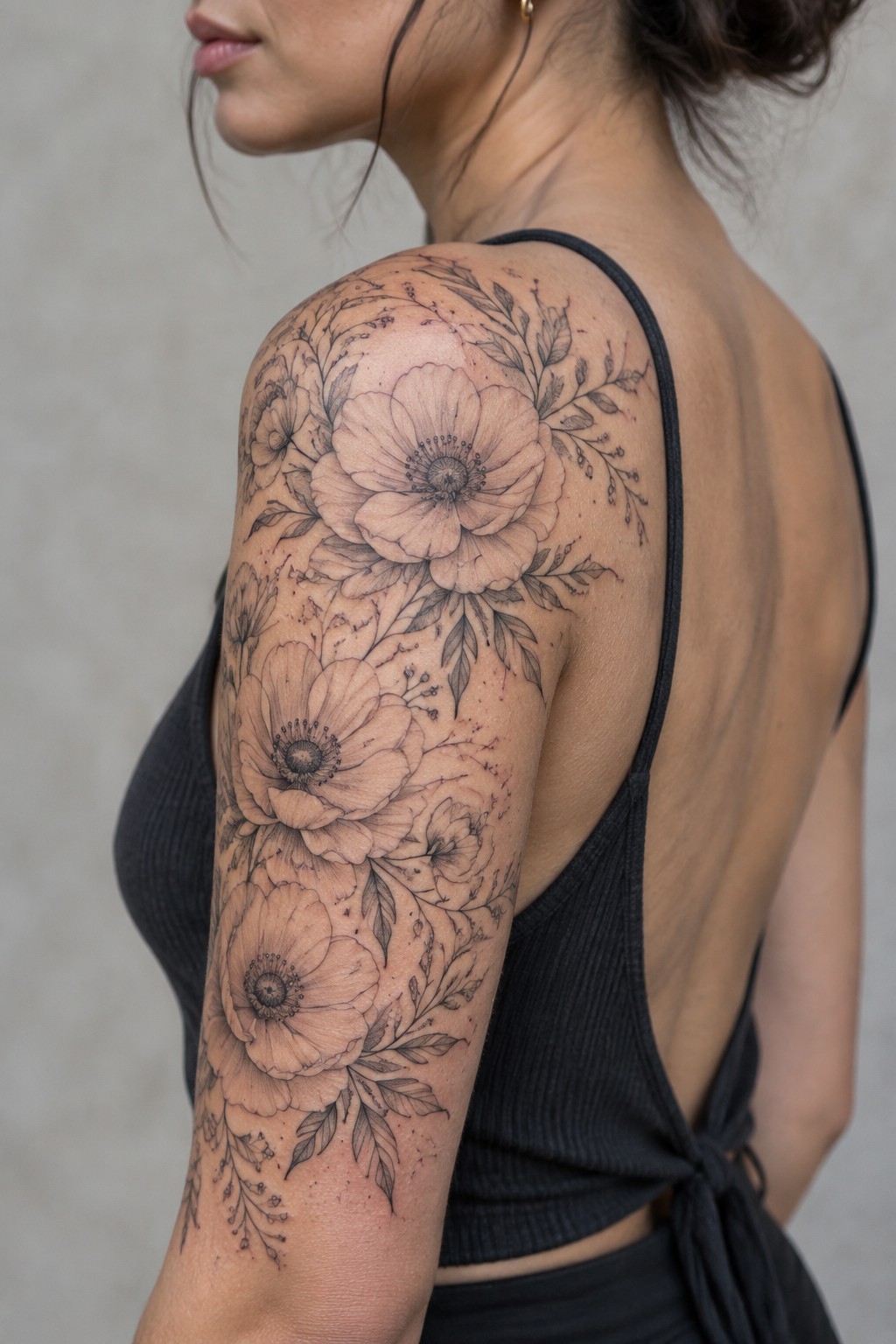
The design sits high on the shoulder and runs down the upper arm in a continuous flow. Several poppy flowers of different sizes are stacked with leaves and thin stems connecting them. Fine line work keeps the shading soft while still defining each bloom clearly.
This placement lets the flowers follow the shape of the shoulder and arm without crowding. I think the way the larger blooms sit near the top helps the whole piece feel grounded rather than scattered.
Layered wildflowers extend along the forearm
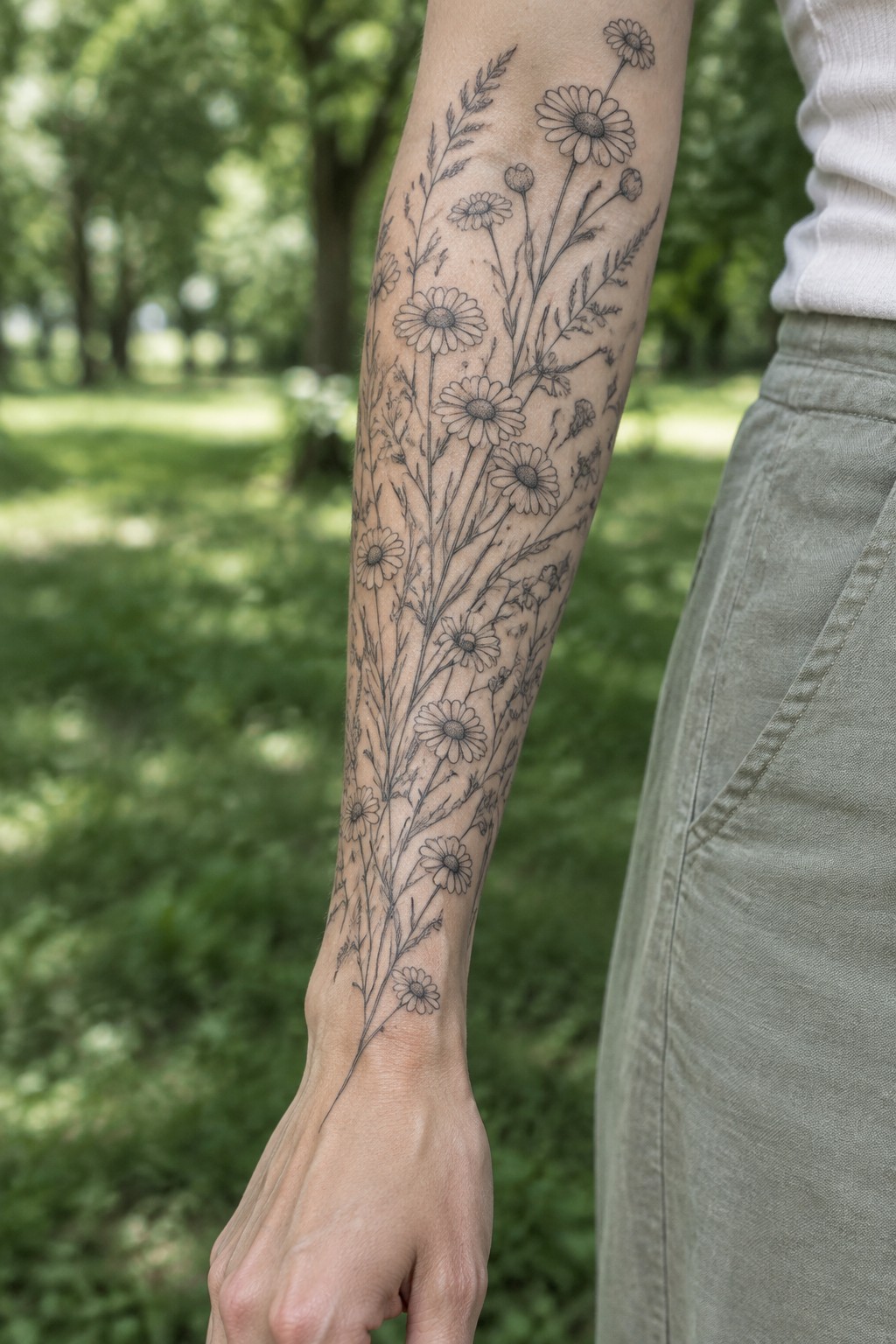
The design runs vertically down the inner forearm. Thin stems connect clusters of daisies and smaller wildflowers at different heights. This arrangement uses the natural length of the arm to keep the flowers spaced out.
The fine line work stays light enough that nothing feels crowded. I think the vertical flow works here because it matches how the arm moves and shows the different bloom sizes clearly.
A full sleeve of layered peonies and ivy
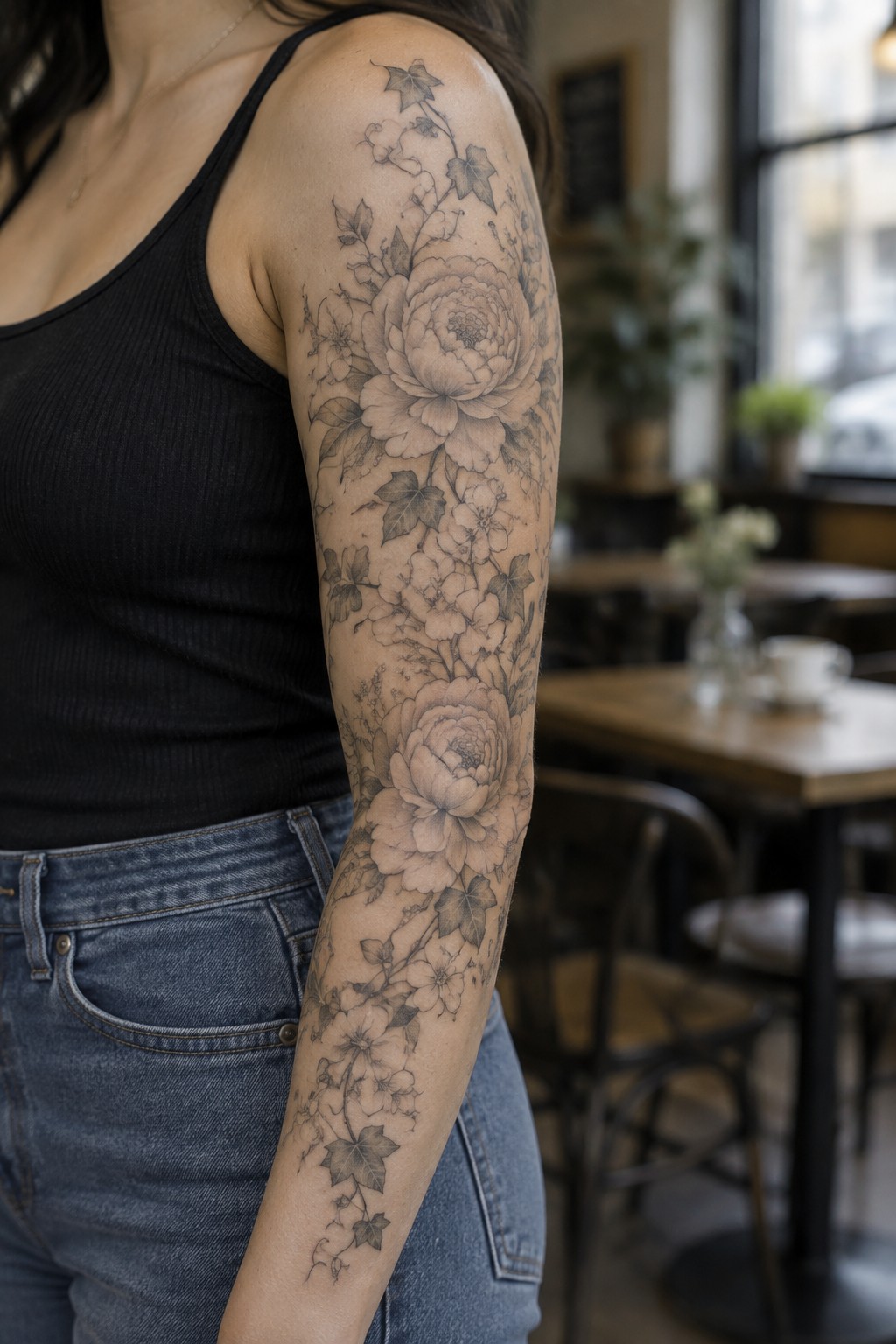
The design starts at the shoulder and moves down the arm in one steady flow. Large peonies sit at key spots while smaller blooms and ivy leaves trail along the sides. Fine line work keeps the shapes clear even where the elements stack.
The arm length gives the flowers space to build without crowding. I think the vertical layout works because it lets the vines guide the eye from top to bottom in a natural line.
Layered flowers flow down the upper arm
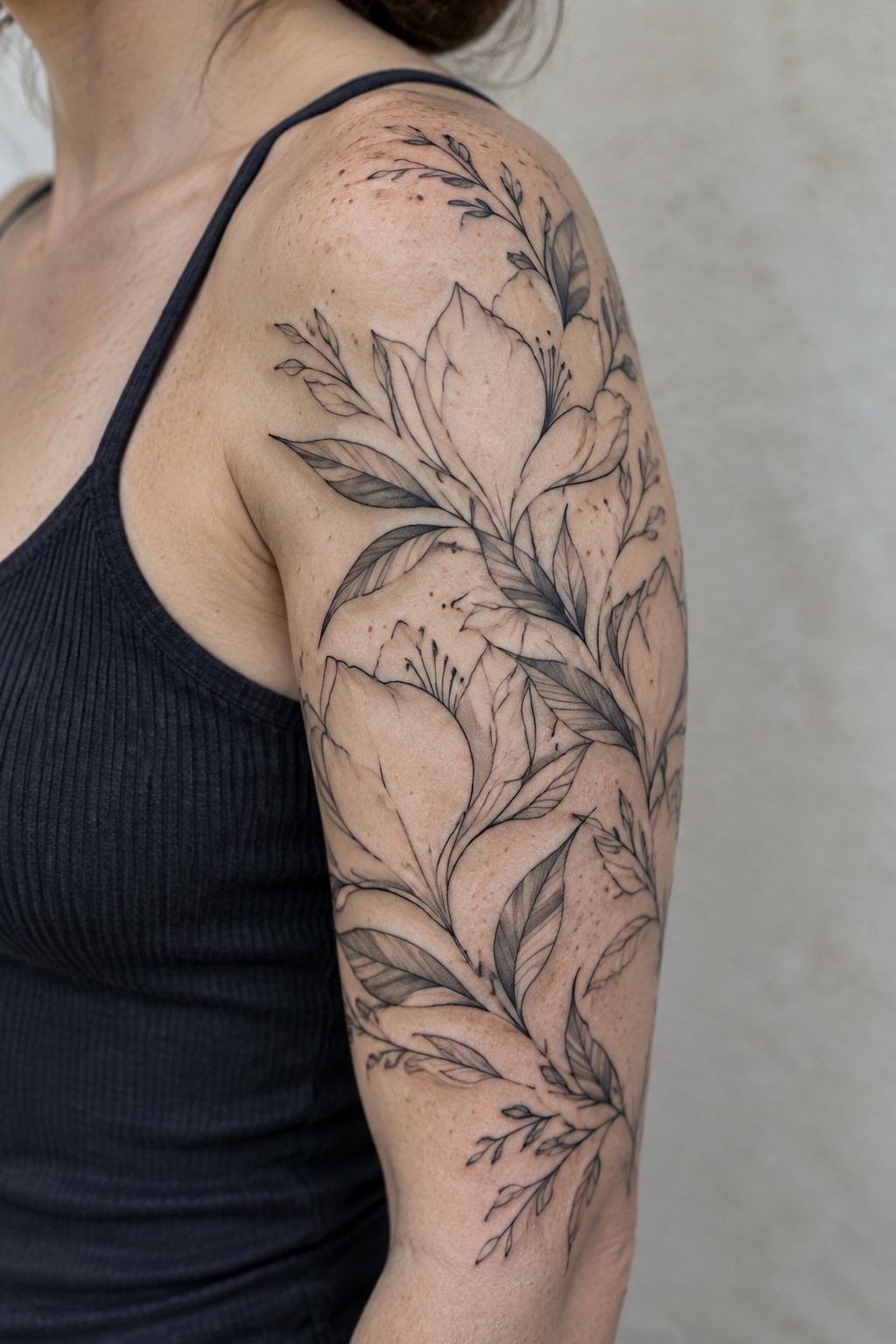
The tattoo covers the shoulder and runs along the upper arm in a loose vertical layout. Fine lines form several open flowers with leaves and small branches filling the gaps. The design uses light shading on some petals and leaves to add depth without crowding the skin.
This placement lets the stems and branches follow the natural line of the arm. I think the spread of the larger flowers near the top keeps the whole piece from looking too tight as it moves downward.
Fine line botanicals layered along the forearm
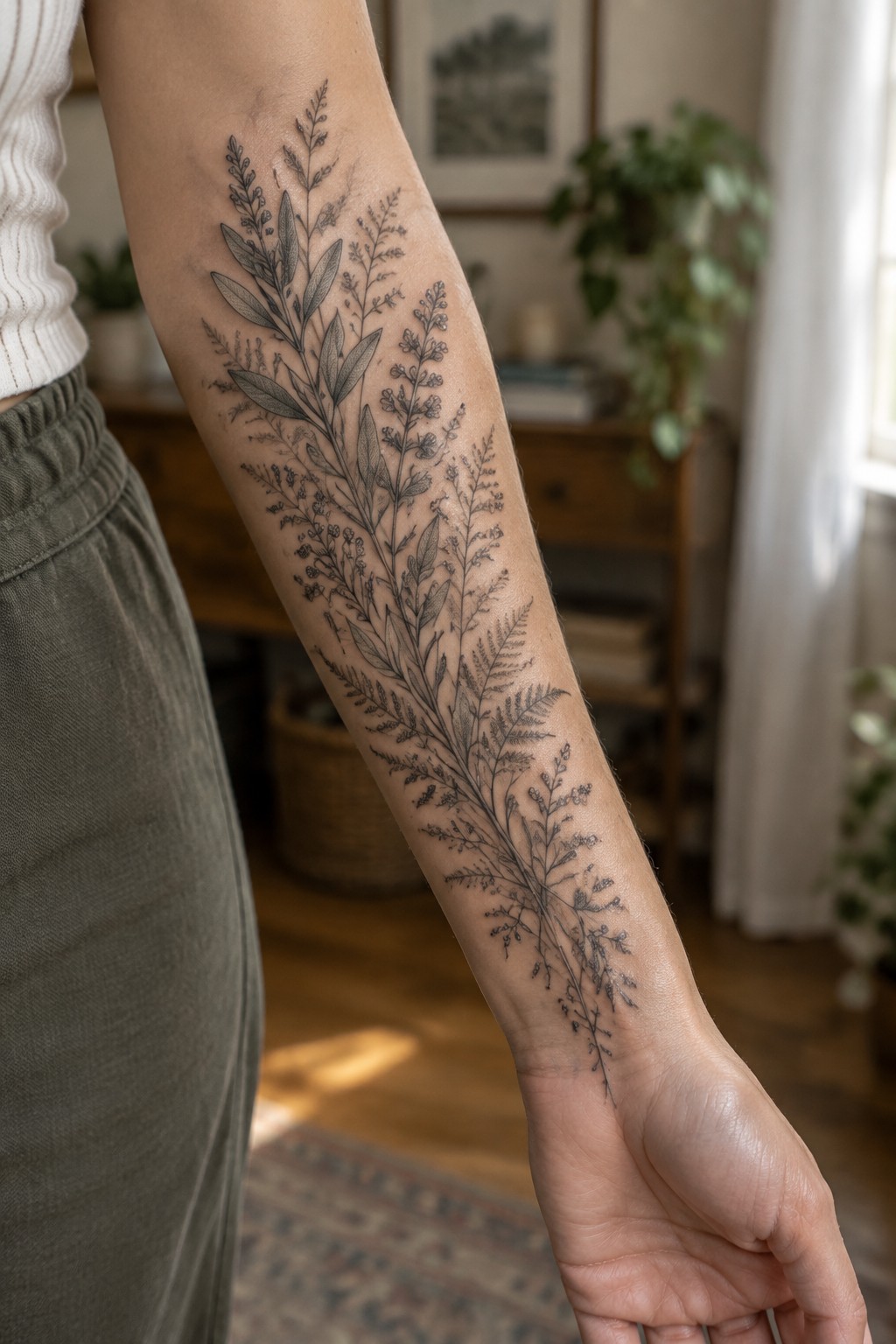
The forearm gives enough length for a tall botanical arrangement without forcing the design into a tight space. Multiple plants overlap in fine lines, with larger leaves near the elbow and smaller clusters moving toward the wrist. This keeps the overall shape slim while still filling the area.
I think the vertical layout works here because it lets each layer stay distinct instead of bunching up. The thin lines also hold up well on skin that sees daily movement.
Botanical sleeve from shoulder to wrist
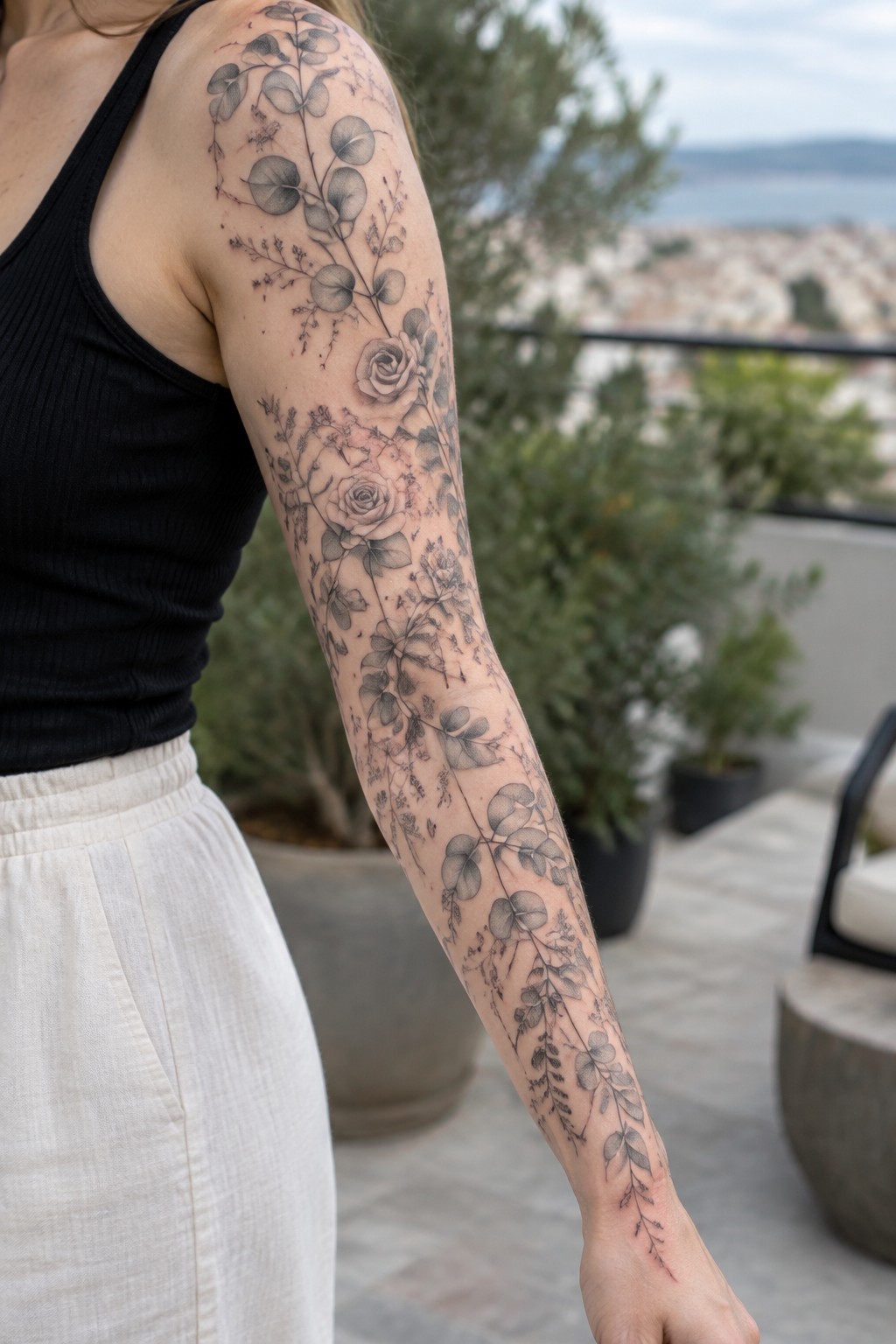
The tattoo runs the full length of the arm in one connected botanical piece. It mixes roses with round leaf clusters and thin filler branches that trail downward. The fine line style keeps the whole thing light even though it covers a large area.
This layout works because the design flows along the arm without bunching up. The bigger flowers sit where they can be seen clearly while the smaller leaves help everything link together.
Fine line botanicals wrap the upper arm
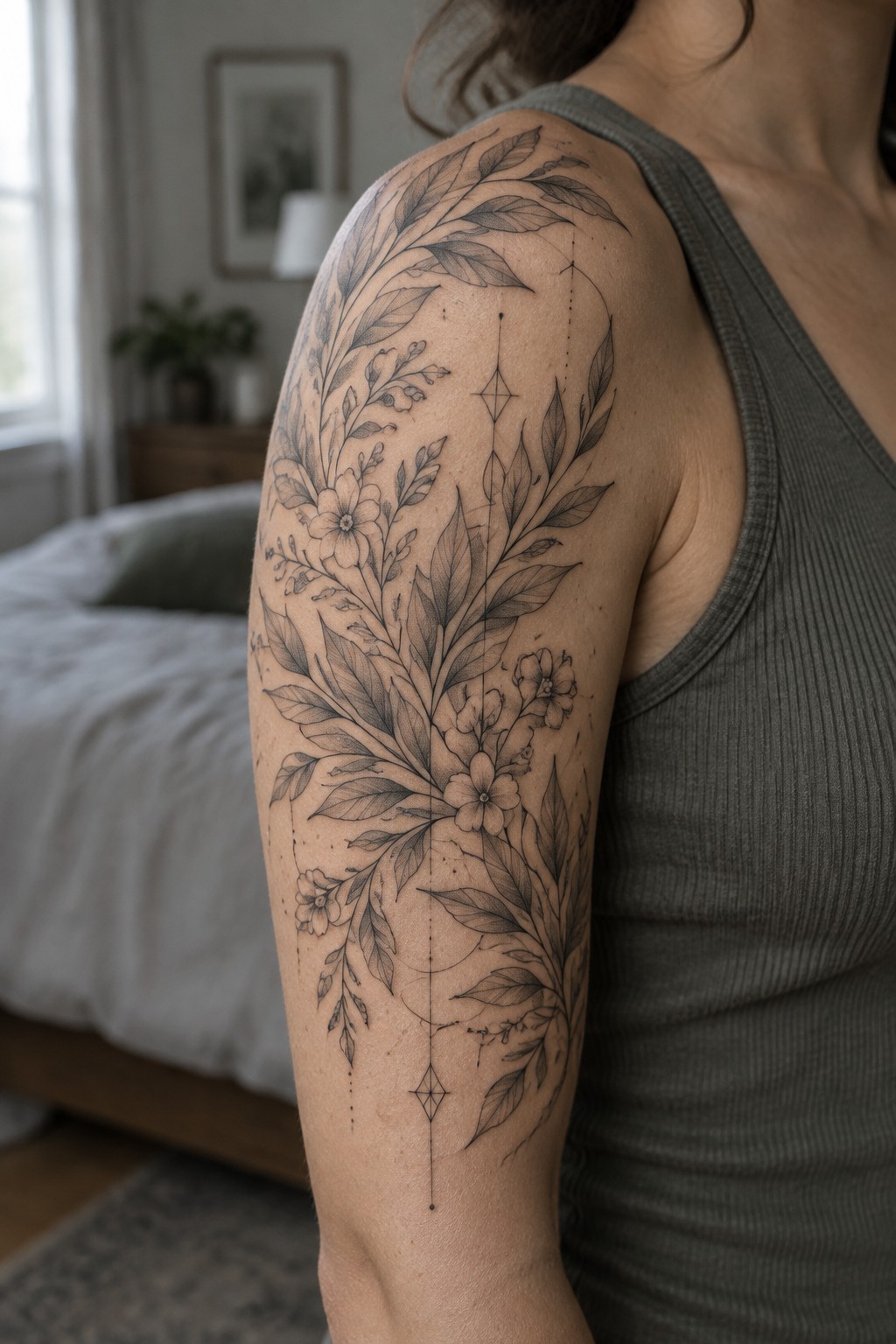
The design starts near the shoulder and extends down the arm in a long vertical layout. Layered leaves and small flowers fill the space with fine line work that stays light and detailed. A few dotted lines and diamond shapes run through the middle to hold the composition together.
I like how the length of the piece matches the arm’s shape without crowding the area. It lets the botanicals spread out while still feeling connected.
Botanicals build down the full arm
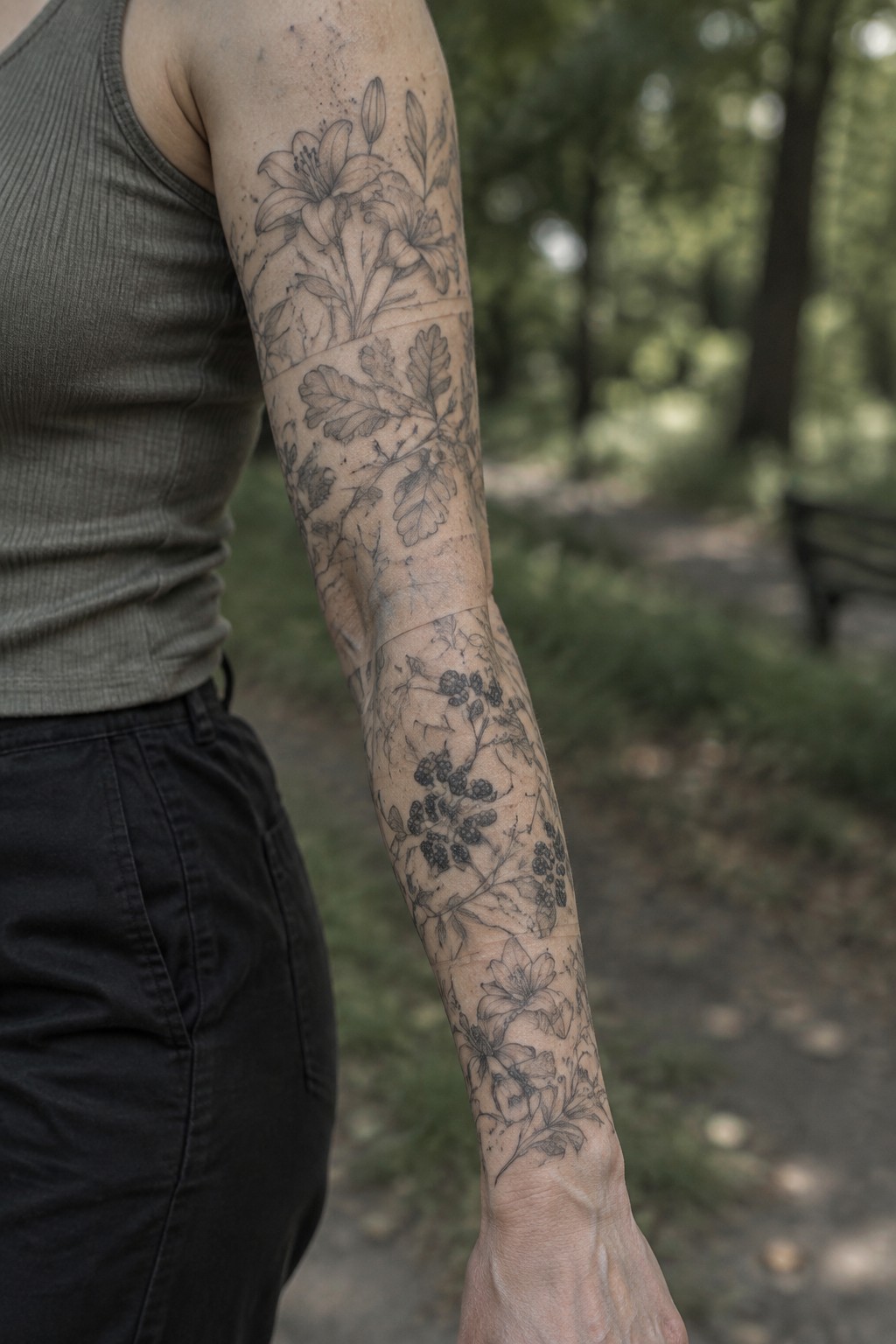
The arm gives enough space to stack separate plant drawings into one connected sleeve. Lilies sit near the shoulder while oak leaves and berry clusters continue down the forearm. Fine lines keep the details light as the design moves from one section to the next.
This layout works because each element has room without crowding the others. I think the vertical arrangement turns the separate pieces into a single readable sleeve.
Frequently Asked Questions
1. What makes fine line sleeve tattoos built from layered botanical pieces suitable for women seeking a modern look? These designs use delicate lines and overlapping elements like leaves, stems, and flowers to create depth without heavy shading. Women often choose them because the style flows naturally along the arm’s curves, allowing for subtle customization that can represent personal growth or memories while remaining elegant and versatile for different lifestyles.
2. How should someone prepare for the healing process of a layered botanical fine line sleeve tattoo? Start by keeping the area clean with mild soap and applying a thin layer of fragrance-free moisturizer several times daily. Avoid sun exposure, tight clothing, and submerging the tattoo in water during the first few weeks. Layered pieces may take slightly longer to settle due to overlapping lines, so patience with scabbing helps preserve the fine details over time.
3. Can botanical elements in a fine line sleeve be adjusted to include meaningful symbols or colors? Yes, artists frequently incorporate personal touches such as birth flowers, herbs tied to family traditions, or small geometric accents within the layers. Discussing these ideas beforehand allows the design to maintain its modern fine line aesthetic while adding individuality, often resulting in a cohesive sleeve that tells a unique story.
4. What factors influence the longevity of fine line tattoos composed of layered botanicals? The thin lines can fade faster with frequent sun exposure or poor aftercare, but using high-quality ink and following a consistent skincare routine helps them last. Scheduling touch-up sessions every few years maintains the layered depth, especially on areas like the forearm that experience more movement and friction.
5. How does one select an artist experienced in creating these specific sleeve designs? Look for portfolios showing precise line work and examples of botanical layering on skin rather than just paper sketches. Schedule consultations to review their approach to scaling designs for full sleeves and ask about their techniques for ensuring elements connect smoothly without overcrowding the space.
