

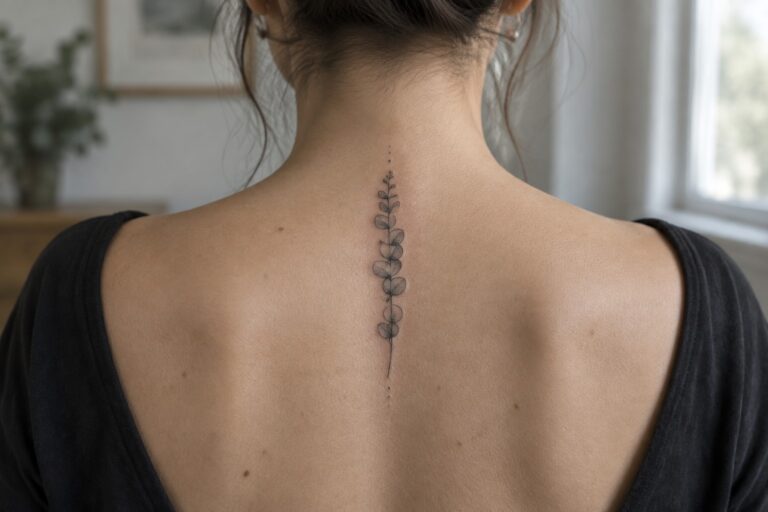
I adore how spine tattoos can turn into a secret little garden that follows your natural curves so gracefully. My own sketches often feature these vertical botanical ideas because they feel fresh and feminine without any fuss. Fine line details make the flowers and vines look like they are growing right along your back in the prettiest way. I always smile when clients share how these designs remind them of their favorite quiet moments in nature.
Leaves trace a straight line down the spine
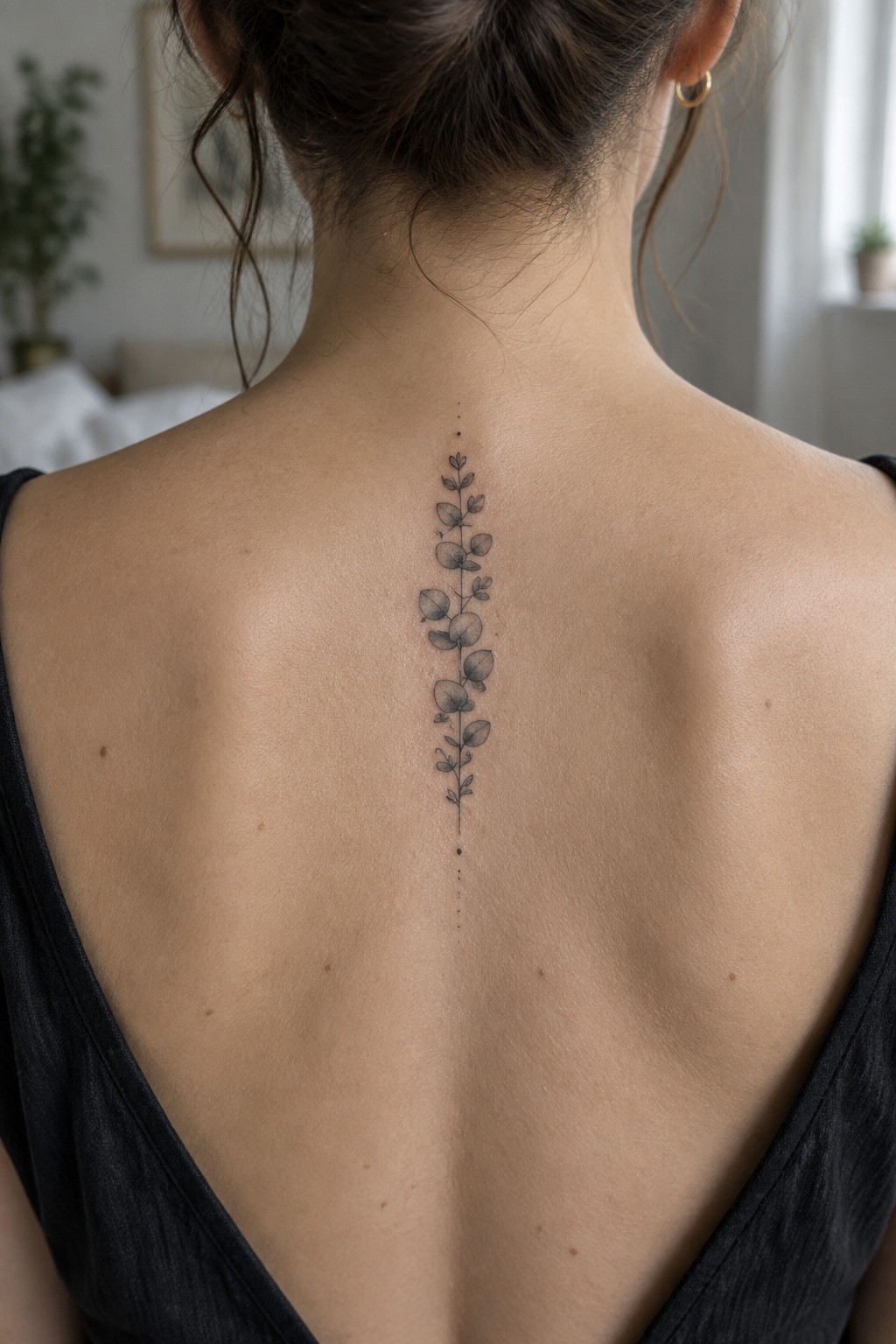
The tattoo sits centered along the spine. A single thin stem holds small leaves that alternate sides as it runs vertically. Two small dots sit above and below the main design to mark the ends.
This layout fits the area because it stays narrow and follows the body’s center without needing extra width. I think the straight vertical format makes the whole piece feel balanced at this length.
Vertical flowers along the spine
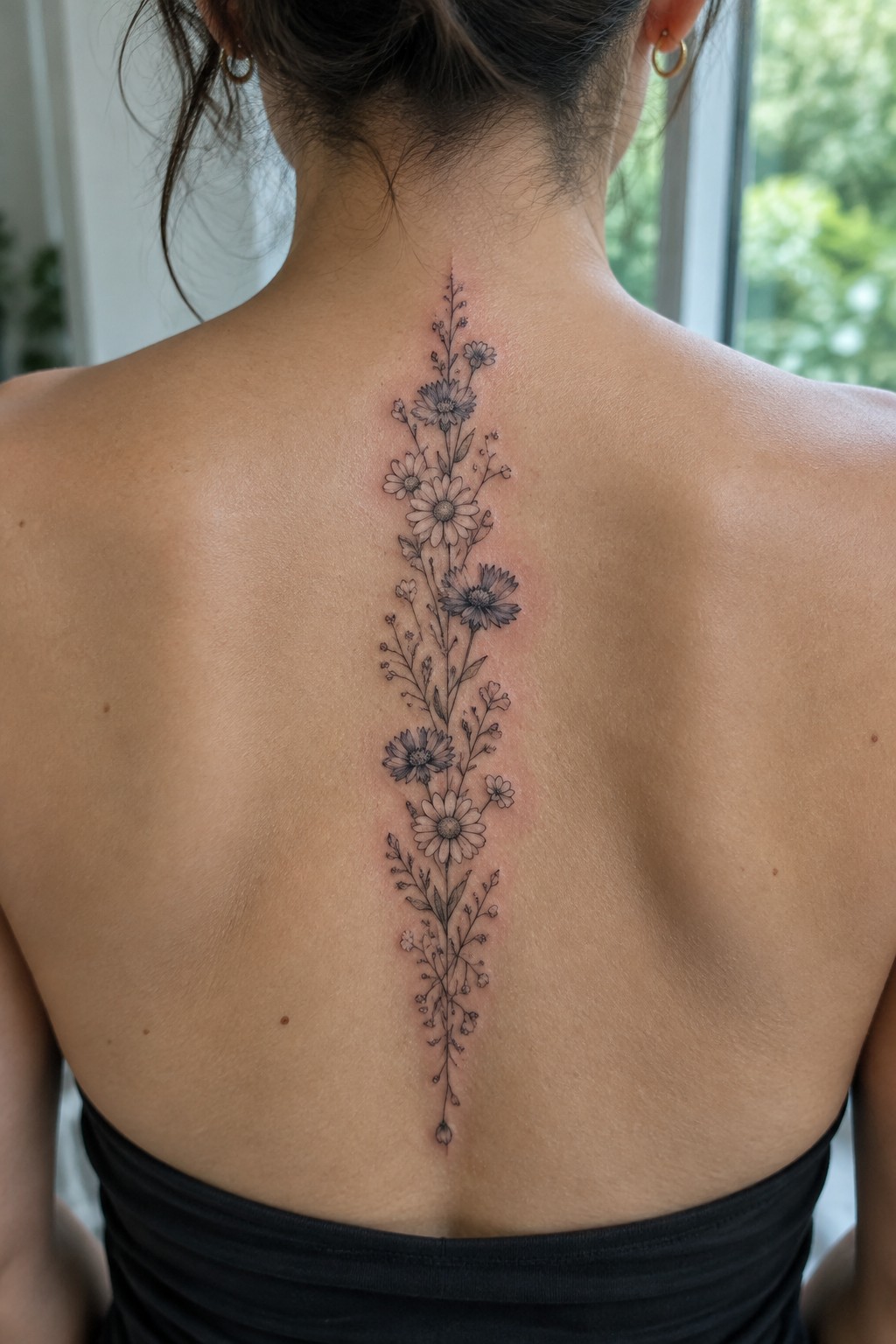
The spine creates a clean path for this long botanical arrangement. Flowers of different sizes sit along a central stem with smaller sprigs branching out to fill the space. Fine lines keep the details visible even as the tattoo stretches from upper back to lower back.
The tapering at the bottom stops the design from feeling too heavy lower down. I think the vertical layout lets the flowers guide the eye naturally without extra elements.
Fern runs down the spine in fine lines
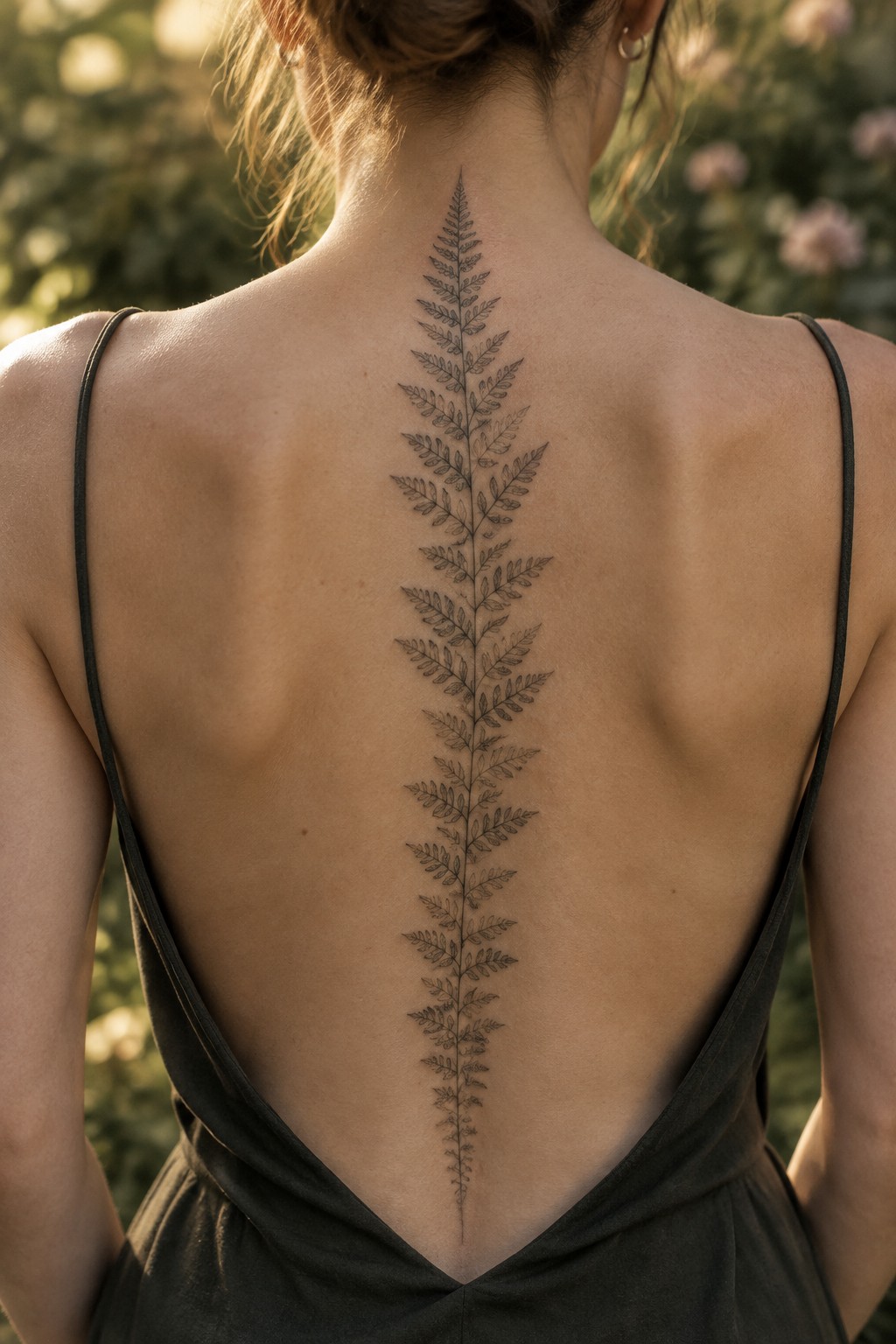
The spine gives this fern a straight path from the neck down the back. Fine lines let the leaves stack without filling too much space. The vertical shape matches the body’s center line and keeps the design readable from a distance.
I like how the length stops just above the lower back so it does not feel cramped. The thin lines also help the whole piece stay light on the skin.
Lavender stem along the spine
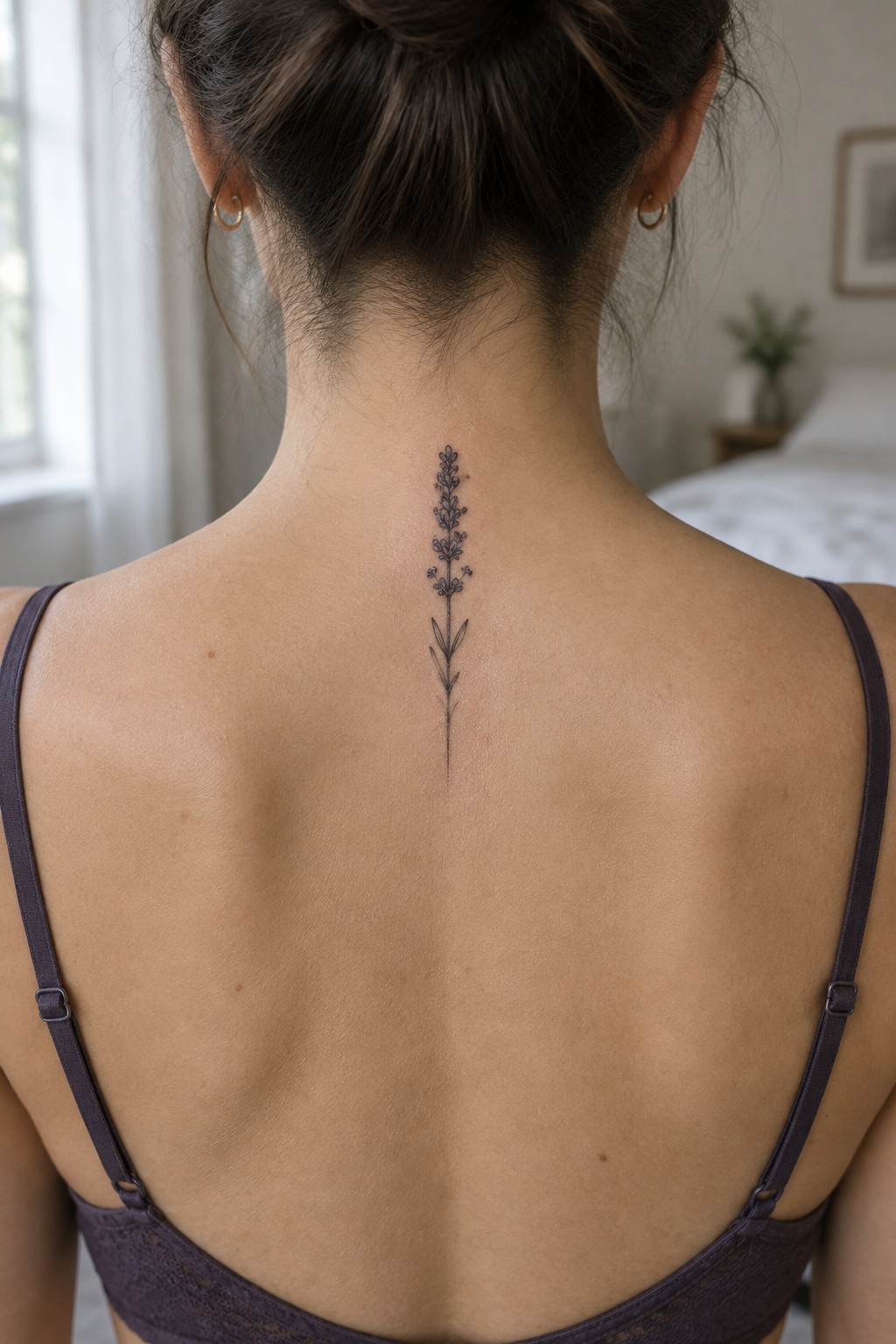
The spine works as a clean base for this vertical stem. Fine lines form a narrow plant with small flowers clustered near the top and a few leaves spaced lower down. The design stays thin enough to sit centered without spreading wide.
I think the length helps the piece feel balanced on the back. The simple layout keeps the flowers clear even at this scale.
Olive branch along the spine
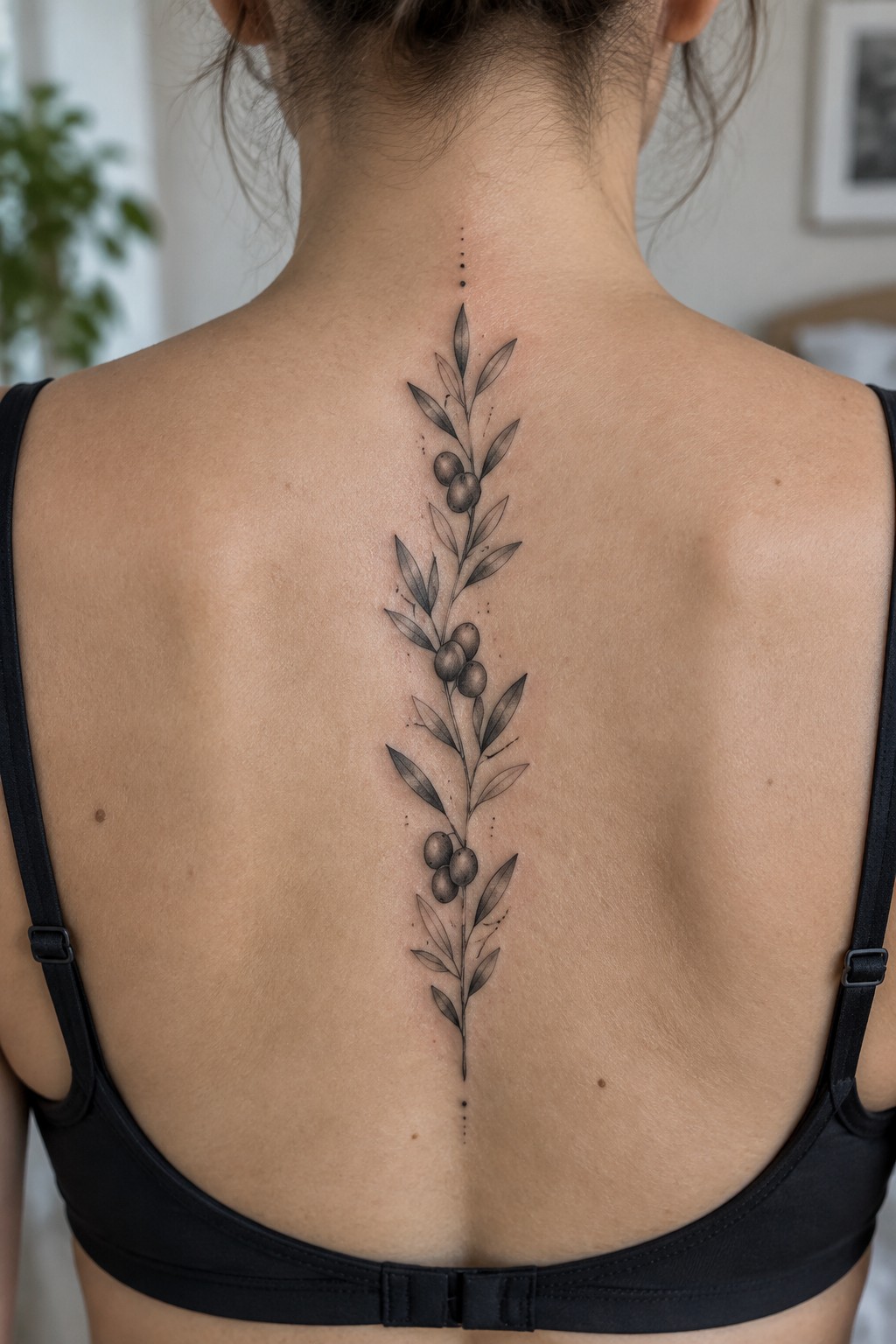
The tattoo sits directly along the spine in one long vertical line. An olive branch runs from the upper back down to the lower spine area. Small olives and leaves are spaced along the stem to keep the flow even.
This placement lets the branch stay centered without extra framing. The length shows the full shape while the fine lines stay clear from a distance.
A vertical botanical design along the spine
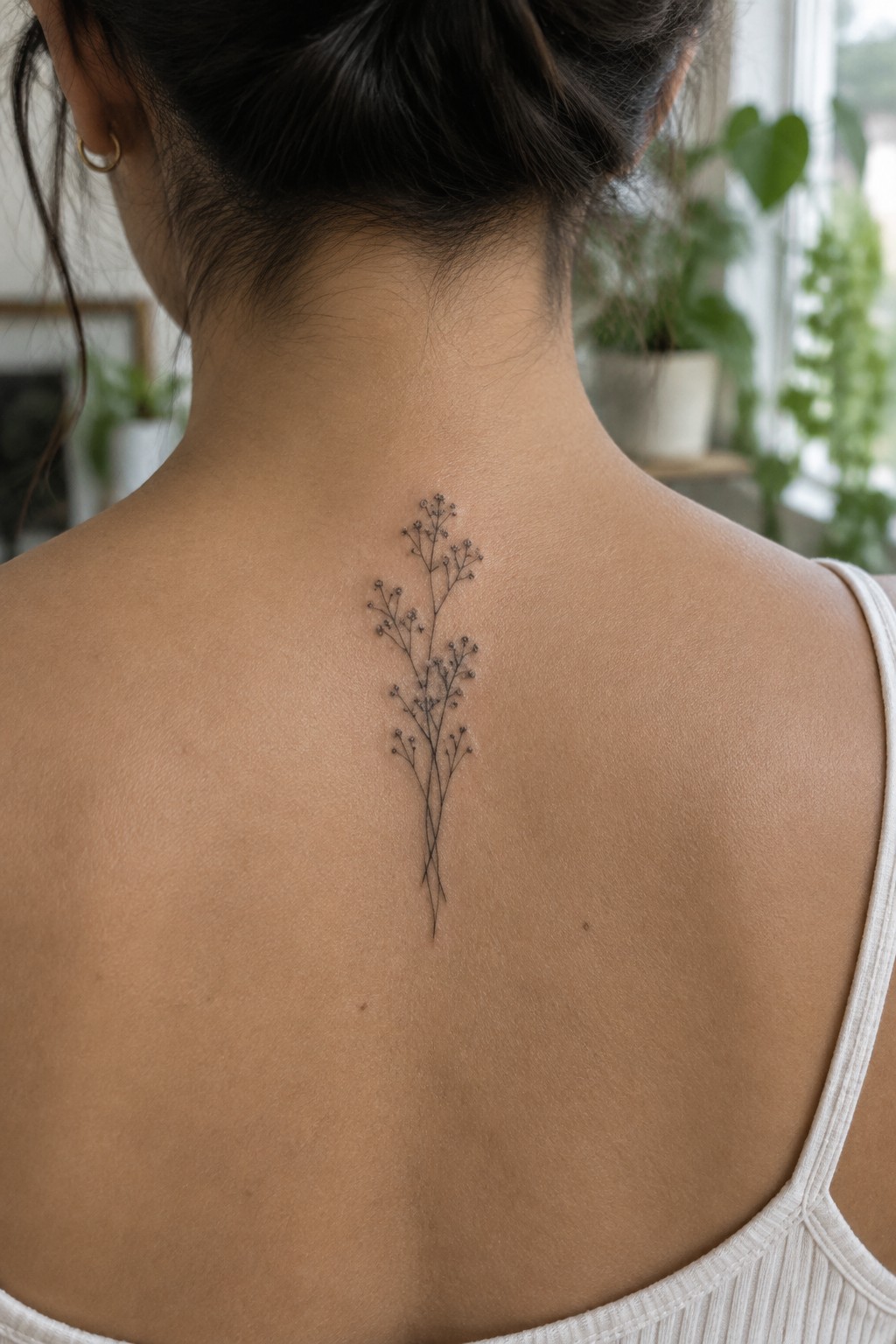
The tattoo runs down the center of the upper back in a straight vertical line. Thin stems branch out at different heights with small clusters of buds on the ends. Fine black lines keep the whole piece narrow and contained.
This placement lets the stems follow the spine without needing extra width. I think the loose spacing between the clusters stops it from looking too packed when viewed from a distance.
Fine line lavender runs down the spine
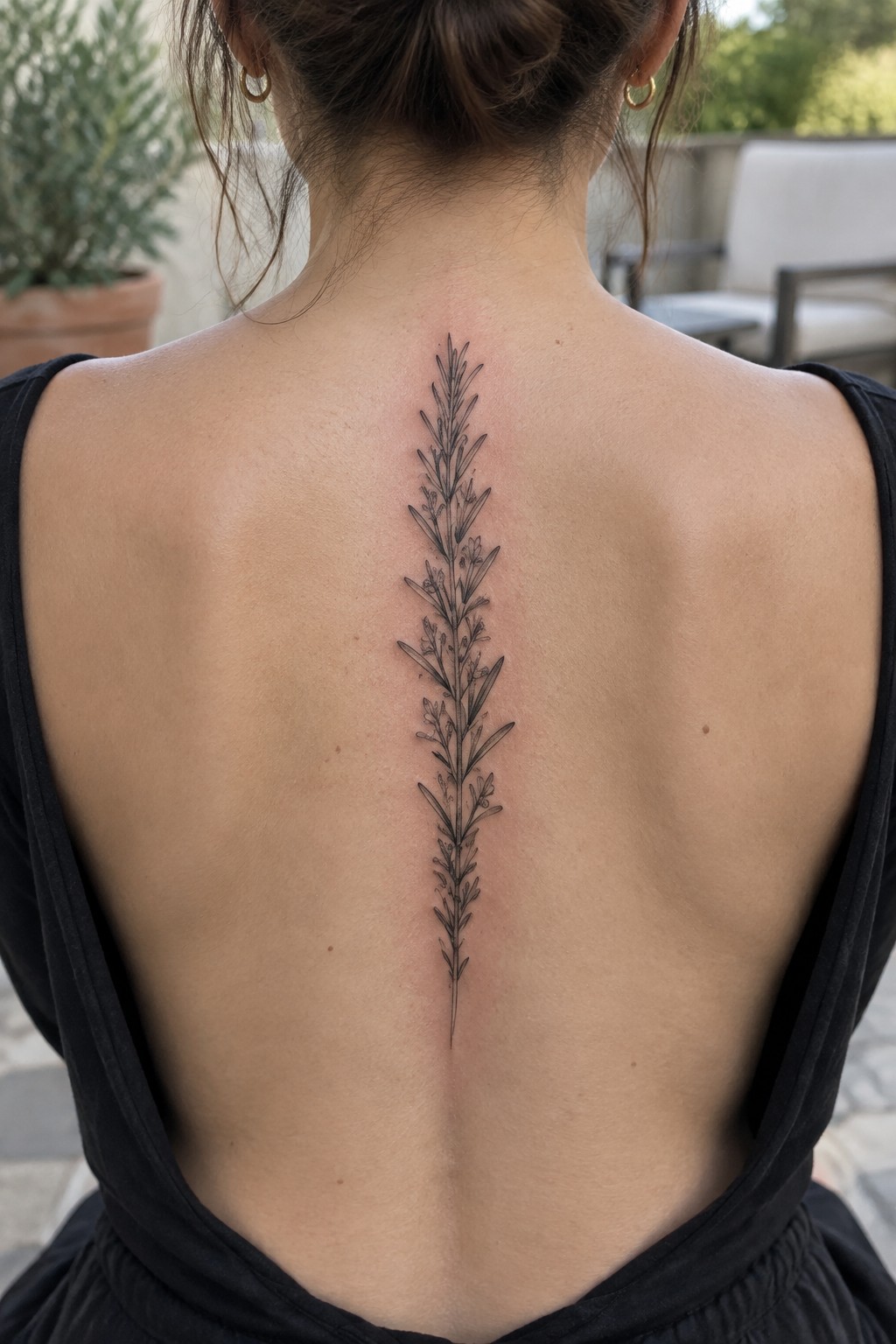
The spine gives this plant design a clean path to stretch out. The vertical shape stays narrow and follows the center of the back from the upper shoulders down toward the waist.
I think the fine line style keeps the whole piece from feeling crowded even though it covers a long area. The small leaves and flowers stay readable without extra shading or weight.
Wildflowers down the spine
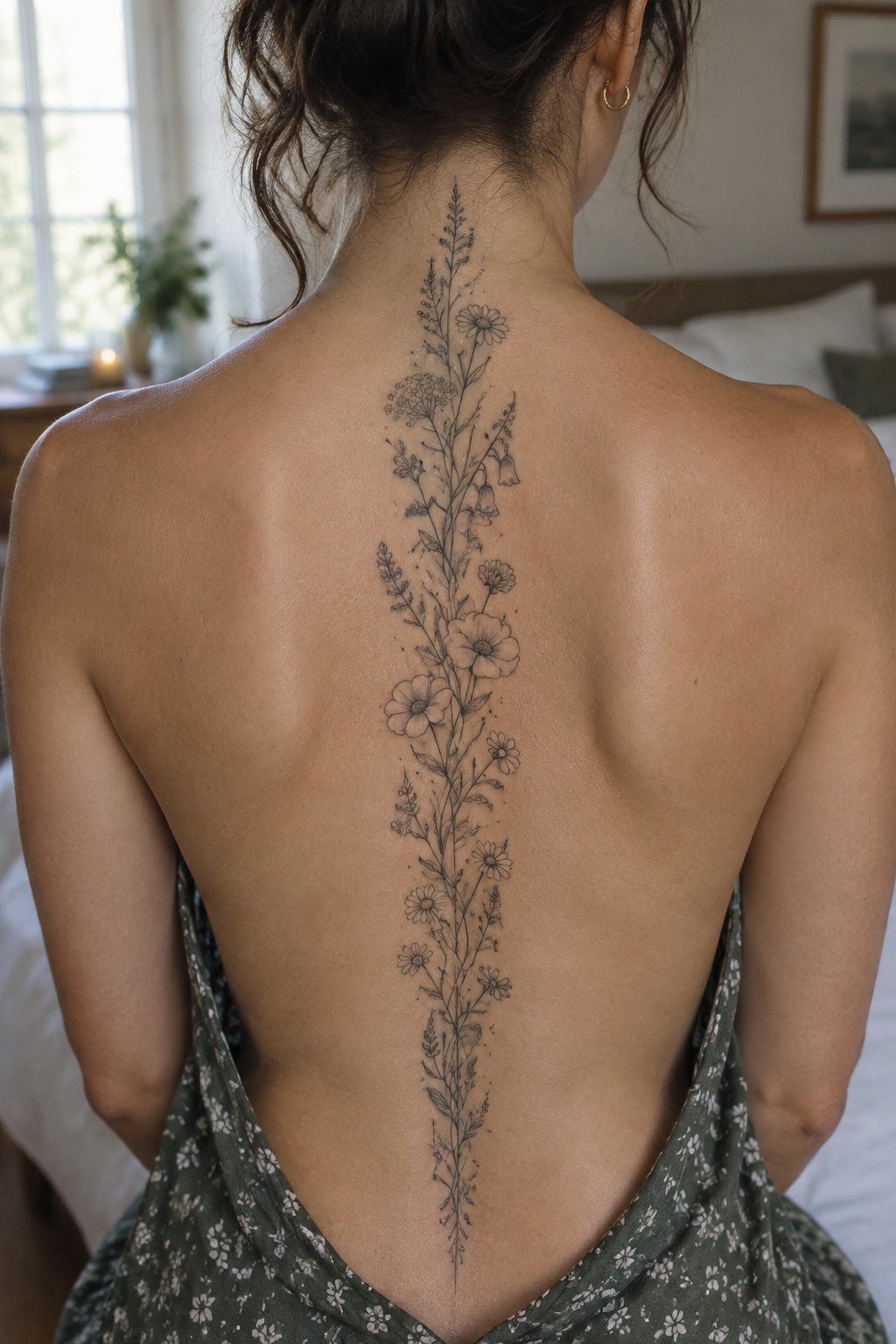
The design runs straight down the spine in one long vertical line. Several different flowers sit along the stems with leaves and small details spaced between them. Fine lines keep the whole piece narrow and open.
This layout matches the spine well because the height gives room for the flowers to spread out without crowding. I think the mix of bloom sizes stops the line from feeling too even.
Fine line flowers running down the spine
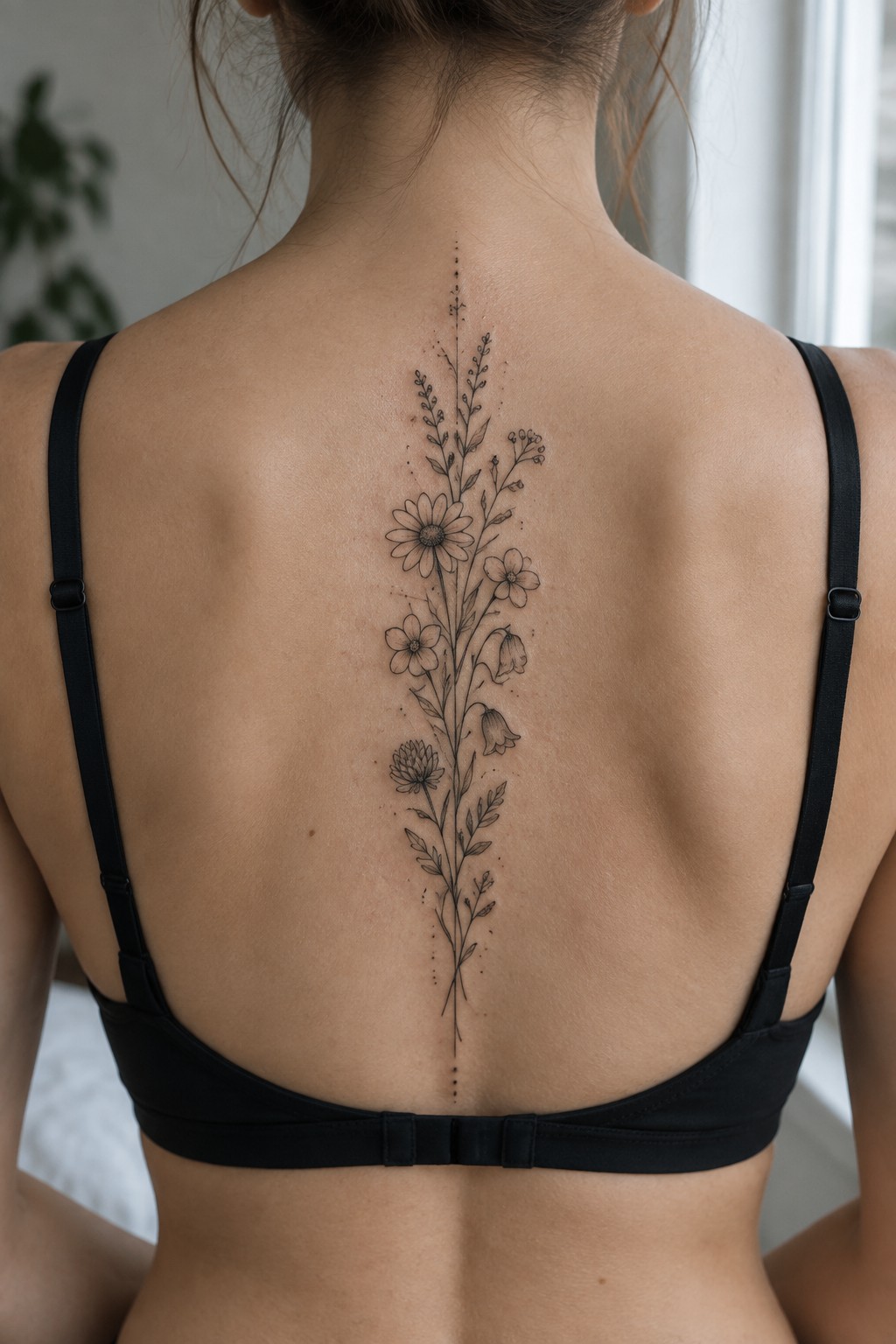
The design sits directly along the spine in a straight vertical line. Several different flowers appear at different heights with thin stems and leaves filling the gaps between them. Small dots scattered around the edges keep the look light without adding bulk.
This narrow shape works because the flowers stay spaced out evenly from top to bottom. I think the fine line style helps each bloom stay clear even when viewed from a distance.
Ivy vine down the spine
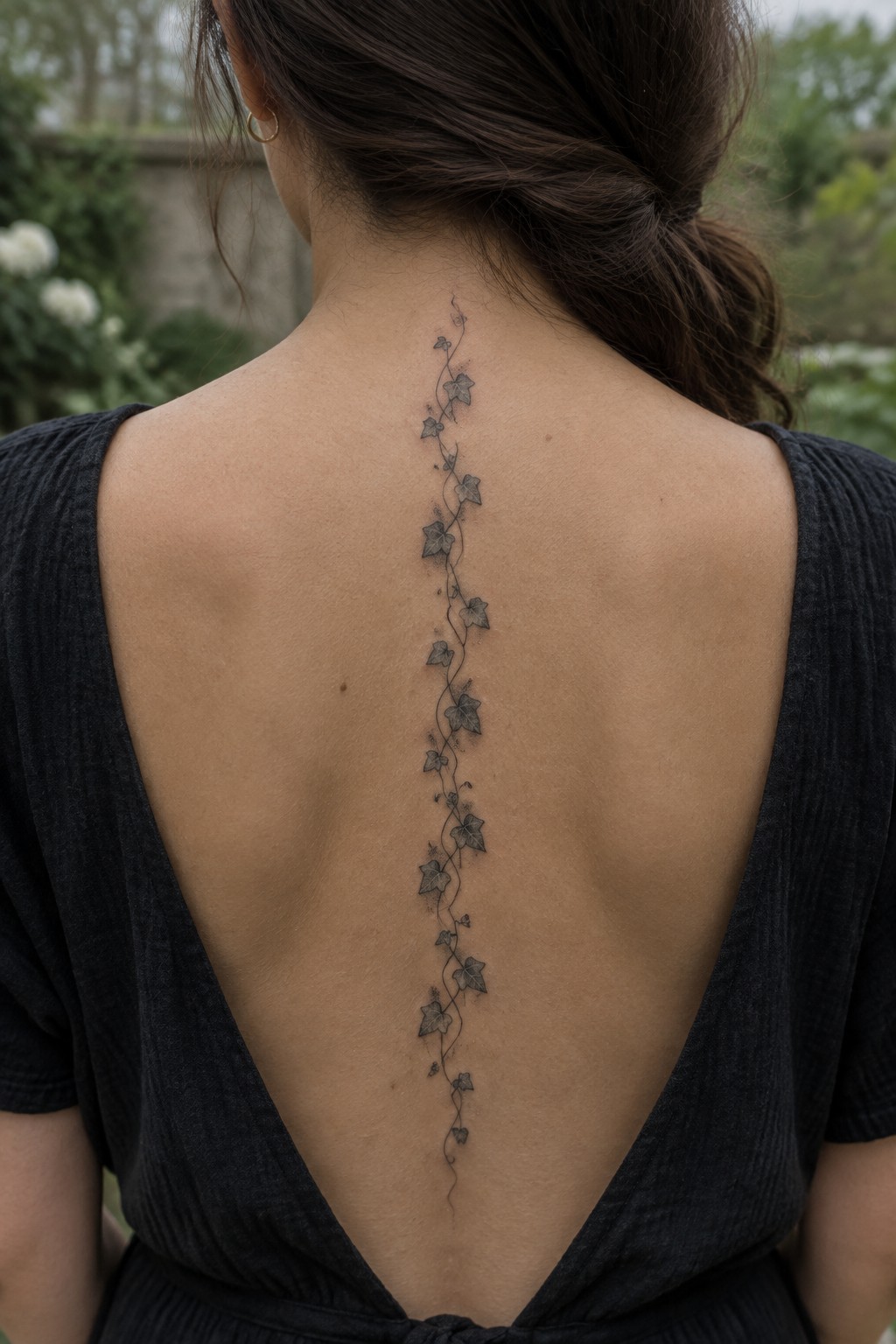
The tattoo follows the spine with a single thin vine that starts at the upper back and trails downward. Small ivy leaves sit at intervals along the stem and the lines stay light and narrow from top to bottom.
This layout works because the straight vertical path matches the natural shape of the back. I think the simple stems keep the design readable even when it stretches over a longer area.
Vertical feather tattoo on the spine
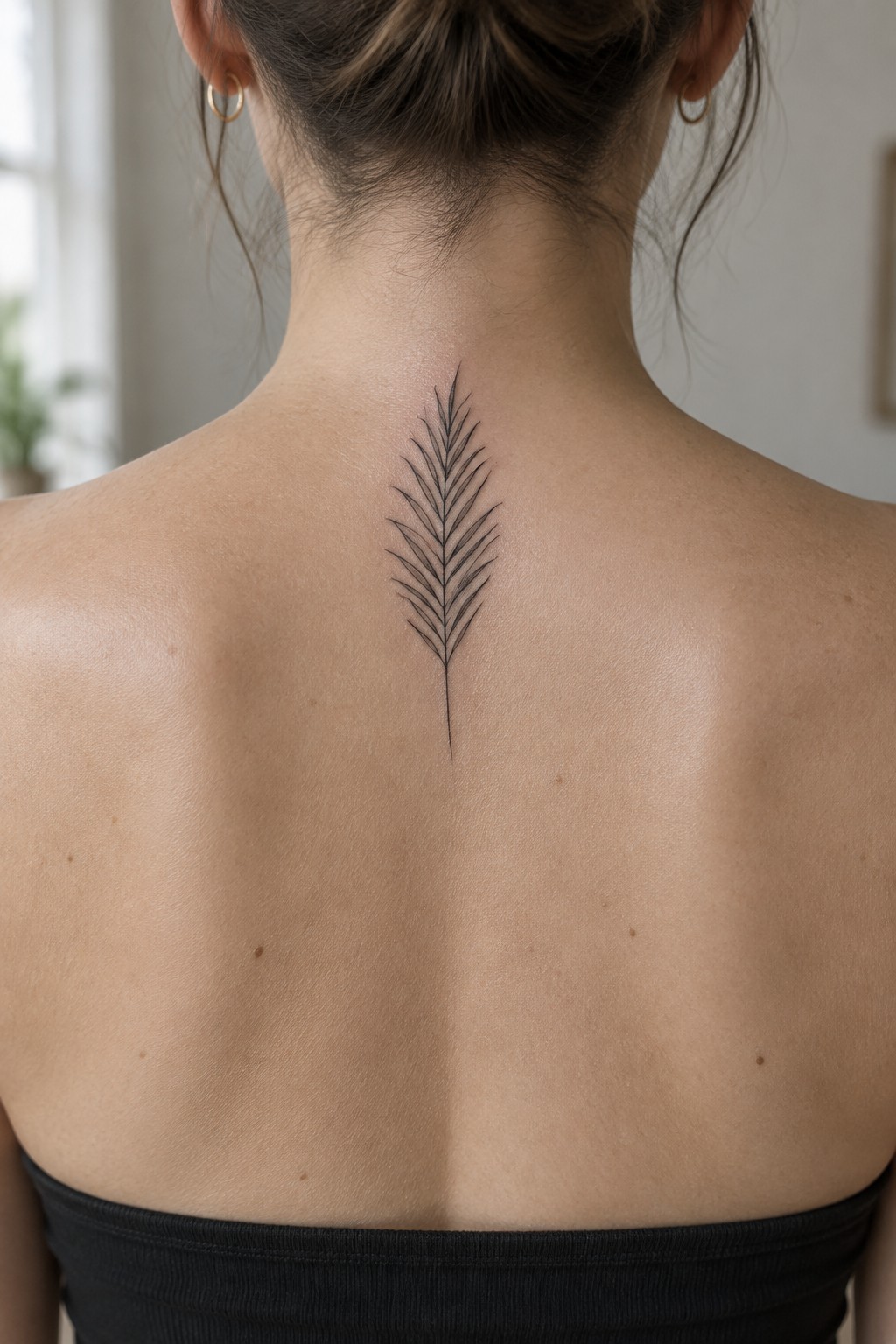
The tattoo sits centered on the upper spine and runs straight down in a single vertical line. This placement lets the feather shape follow the body’s natural center without spreading out to the sides.
The narrow scale keeps the lines clean and prevents the design from looking crowded. I think the vertical format makes sense here because it uses the spine as a built in guide for symmetry.
A stem of magnolias runs down the spine
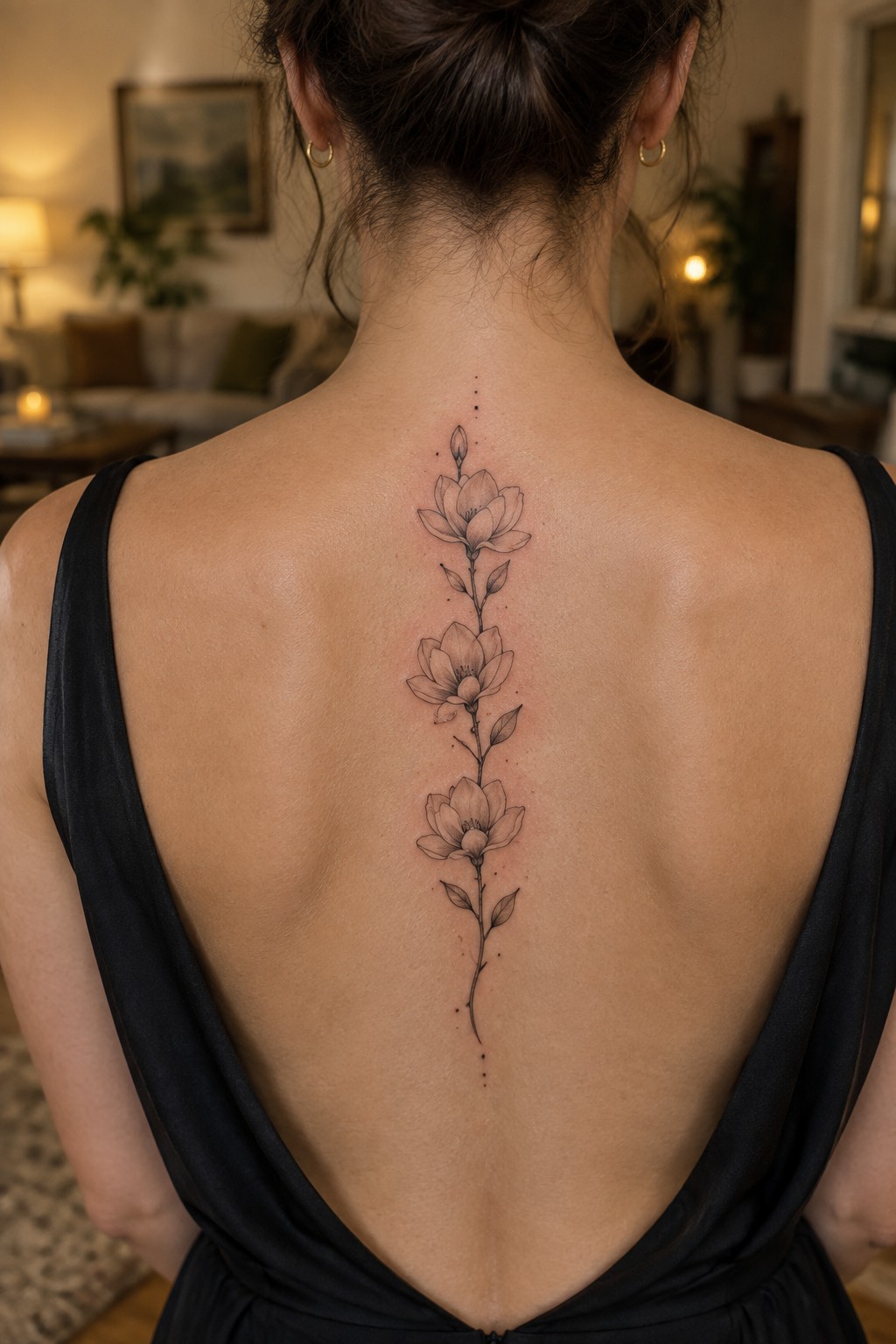
The spine gives a straight path that fits a tall botanical design without extra framing. Three flowers sit along one thin stem with a few small leaves and light dots at the top and bottom. The fine line style keeps every element narrow so the whole piece stays balanced from neck to lower back.
I think the vertical layout works because it uses the body’s natural center without spreading sideways. The spacing between the flowers also prevents the design from looking crowded at this length.
Cherry blossoms along the spine
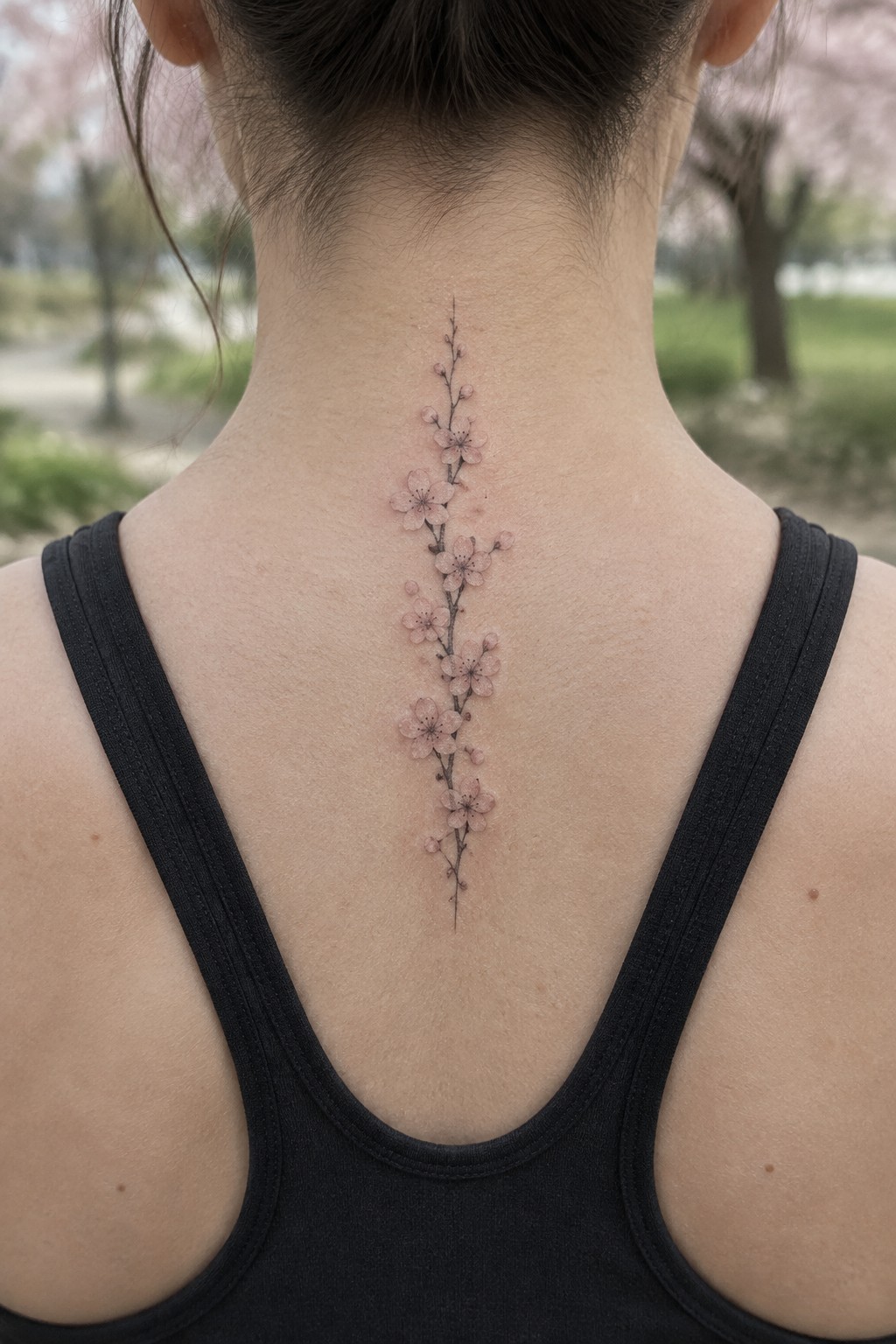
The spine gives this branch a clean path to follow from top to bottom. The stem stays straight while the flowers sit at different points along it. This setup keeps the design narrow and easy to read.
I think the vertical shape works because it matches the natural line of the back. It also stops the flowers from spreading too wide and losing their delicate feel.
Poppies placed along the spine
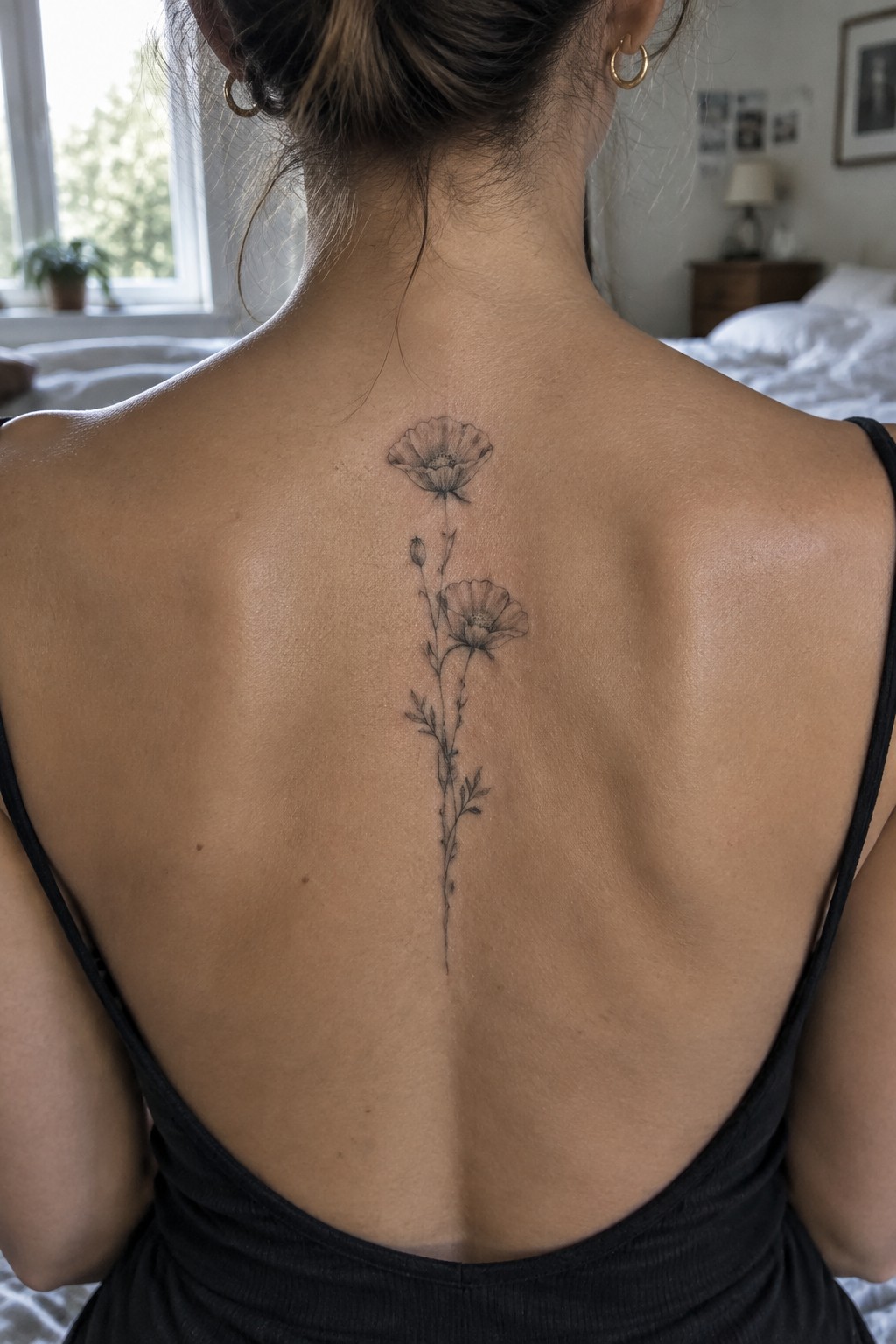
The design runs straight down the center of the upper back with two poppy blooms and a small bud on thin stems. Fine line work keeps the flowers light while the leaves add a bit of movement along the way. The vertical layout matches the natural line of the spine without spreading out to the sides.
This setup gives the stems room to extend downward in a clean flow. I think the length stays readable because it stops before the lower back and leaves space around the edges. The poppies feel balanced here without needing extra shading.
Vertical botanicals running down the spine
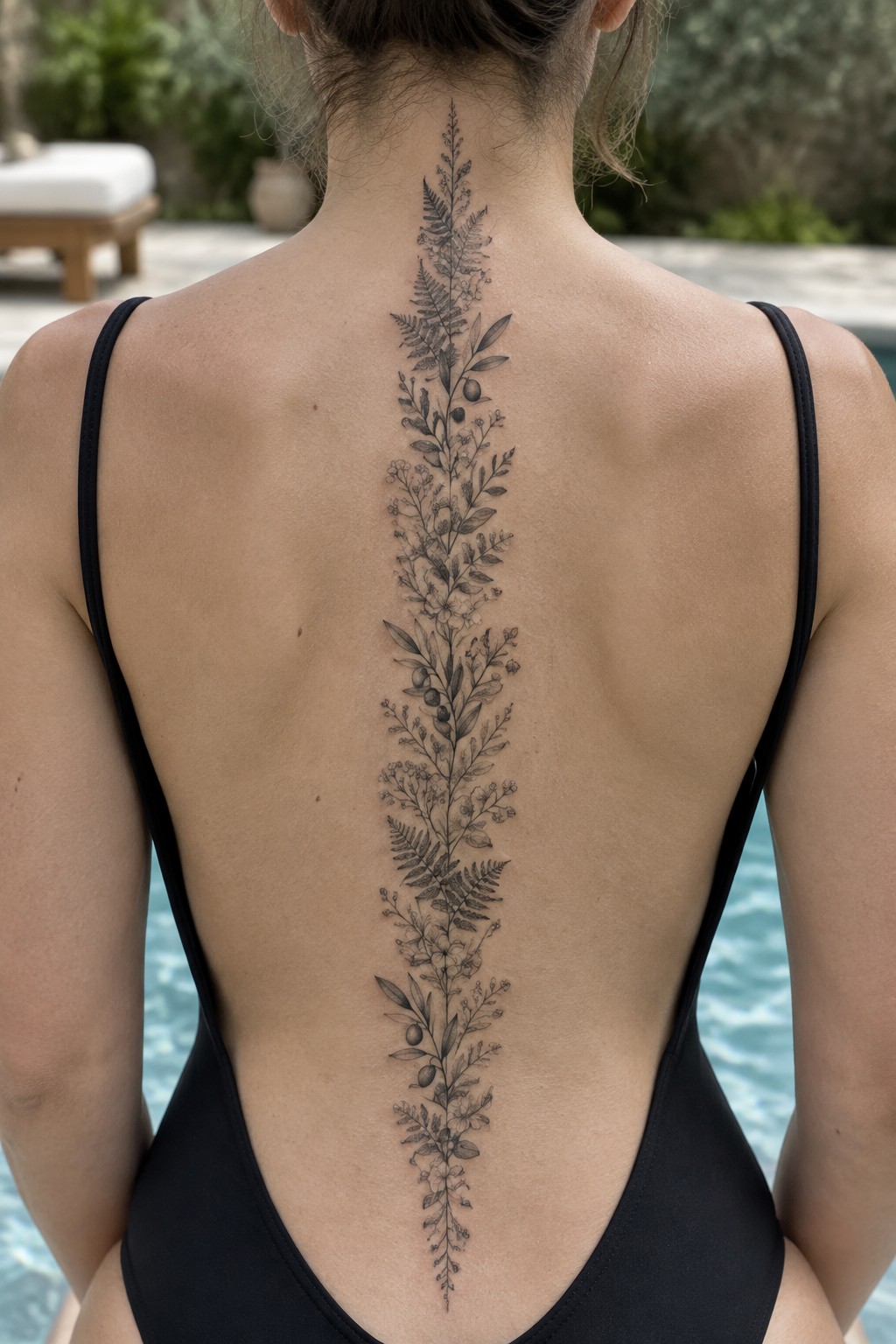
The spine gives this design a clear path to stretch from the neck to the lower back. Different plants stack in a narrow column, with ferns near the top and smaller leaves and blooms filling in below. Fine lines keep the whole piece light instead of heavy.
The mix of plant types stops the tattoo from feeling repetitive across its length. It reads as one flowing idea rather than separate sections.
A vertical branch lines the spine
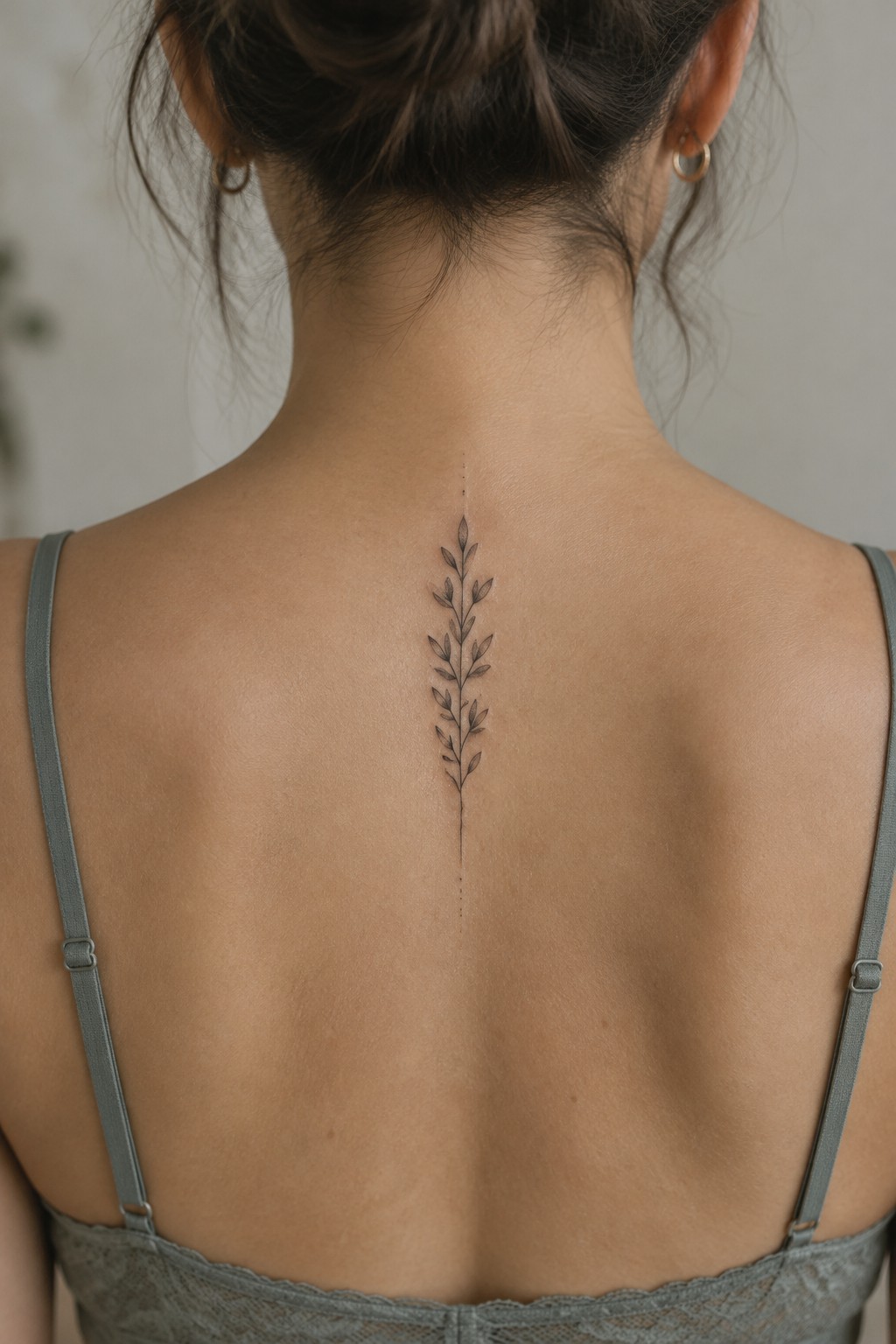
The tattoo starts at the base of the neck and runs straight down the center of the back. Fine lines create a single stem with small leaves spaced evenly along it. The whole piece stays narrow so it follows the spine without spreading out.
This placement keeps the design balanced from top to bottom. I think the simple vertical shape makes the tattoo feel natural on the back rather than forced into the space.
Rose design down the spine
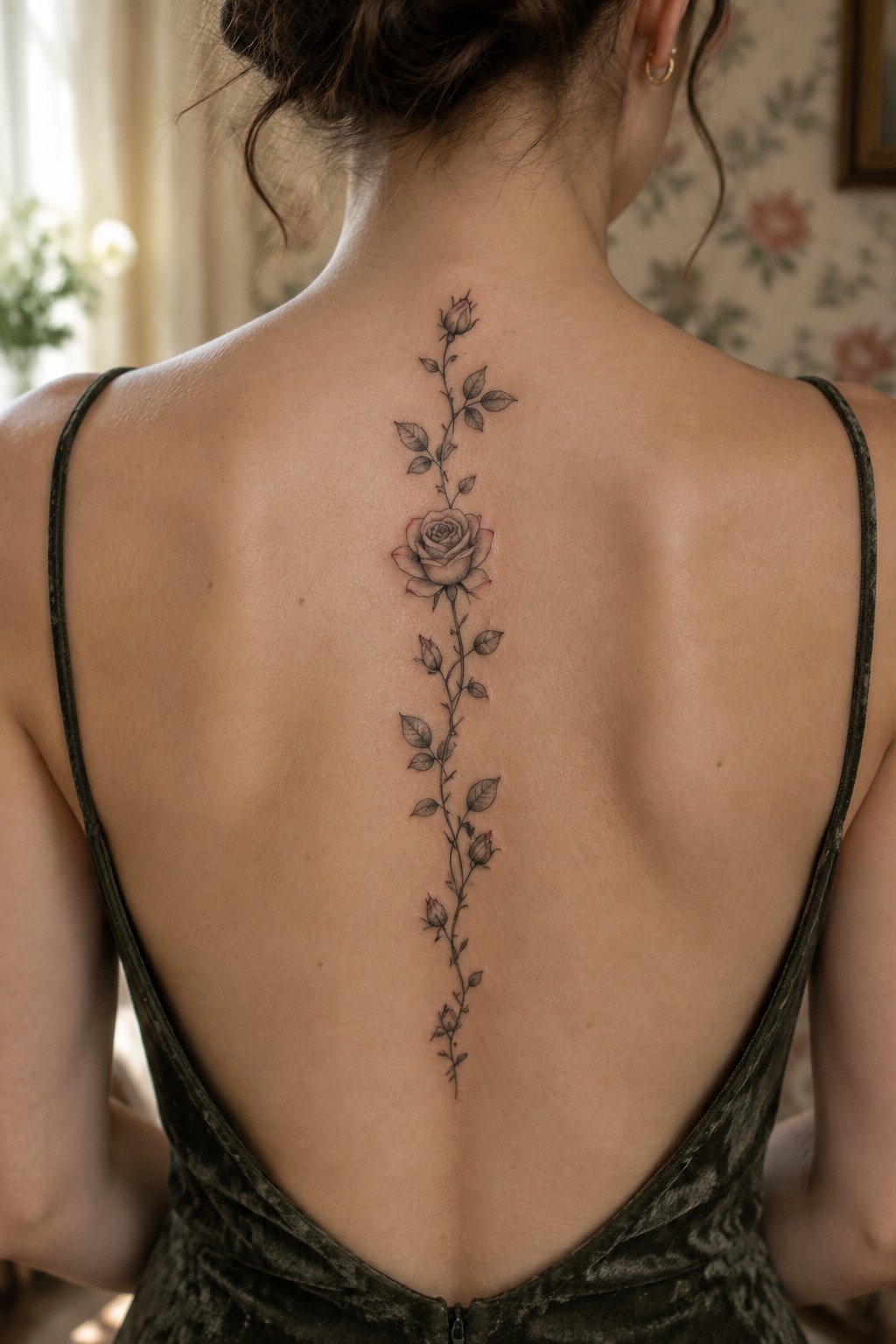
The spine works as a built in guide for this kind of long stem layout. The rose sits in the middle of the back with the stem and leaves extending both above and below it. Fine lines keep the branches thin so the tattoo stays narrow and follows the body shape without spreading out.
I like how the main flower stays centered while the rest of the design stretches vertically. That balance stops the piece from looking too top heavy or stretched at the bottom.
A slender stem runs down the spine
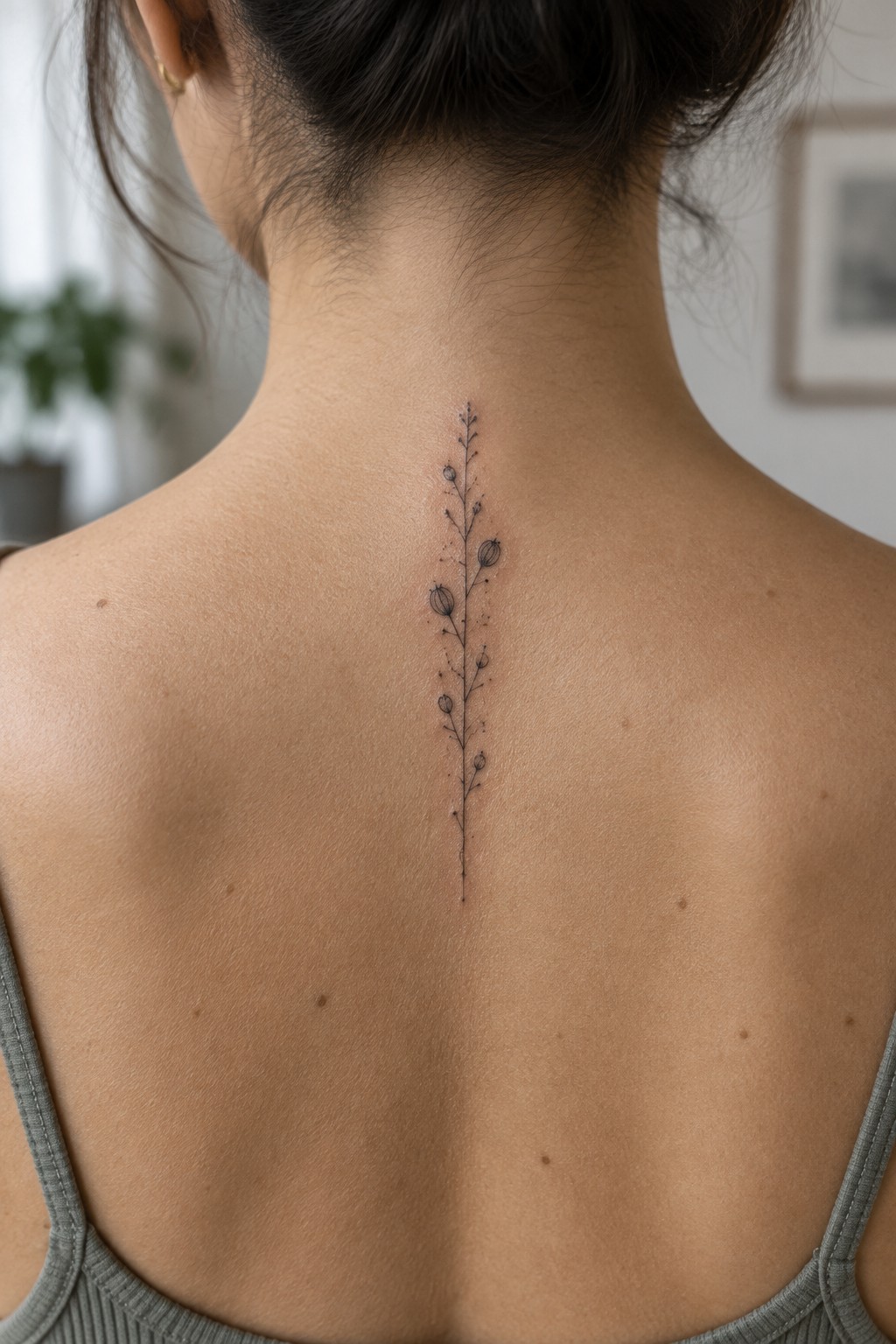
The tattoo sits centered on the spine in a single vertical line. Fine black ink forms a thin stem with scattered leaves and small seed pods that grow slightly outward as it moves down the back.
This placement works because the spine gives the design a natural path without needing extra framing. I think keeping the line narrow helps it stay readable even when the skin moves.
A vine down the spine
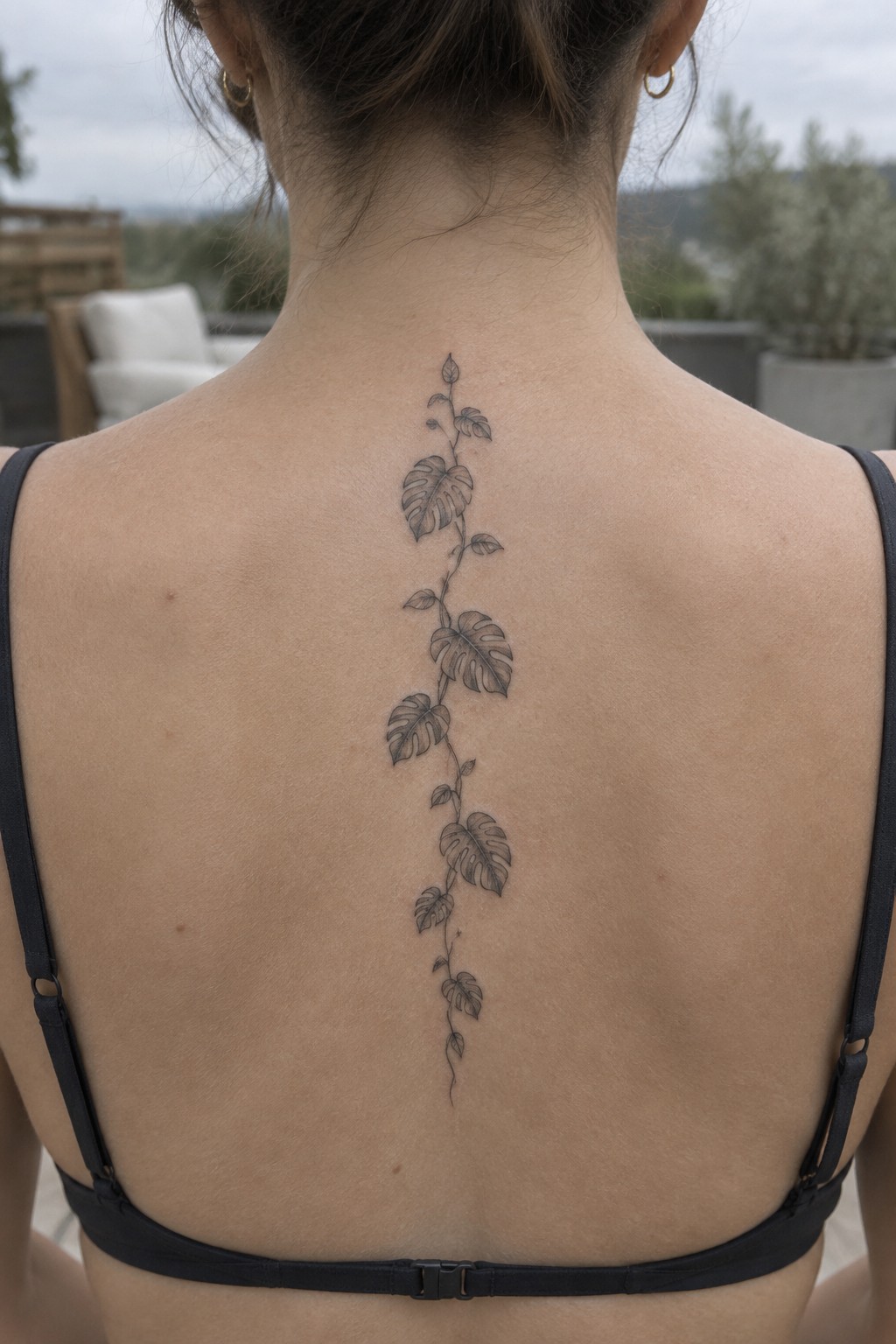
The spine gives this design a straight path to follow from the upper back downward. A single vine with several leaves runs the length of it in fine black lines. The leaves sit at slight angles and get smaller toward the bottom to match the narrowing space.
The size feels right for the area because it stays narrow without crowding the sides. I like how the fine line work keeps the whole thing from looking bulky even though it covers a long stretch.
A stem tattoo runs down the spine
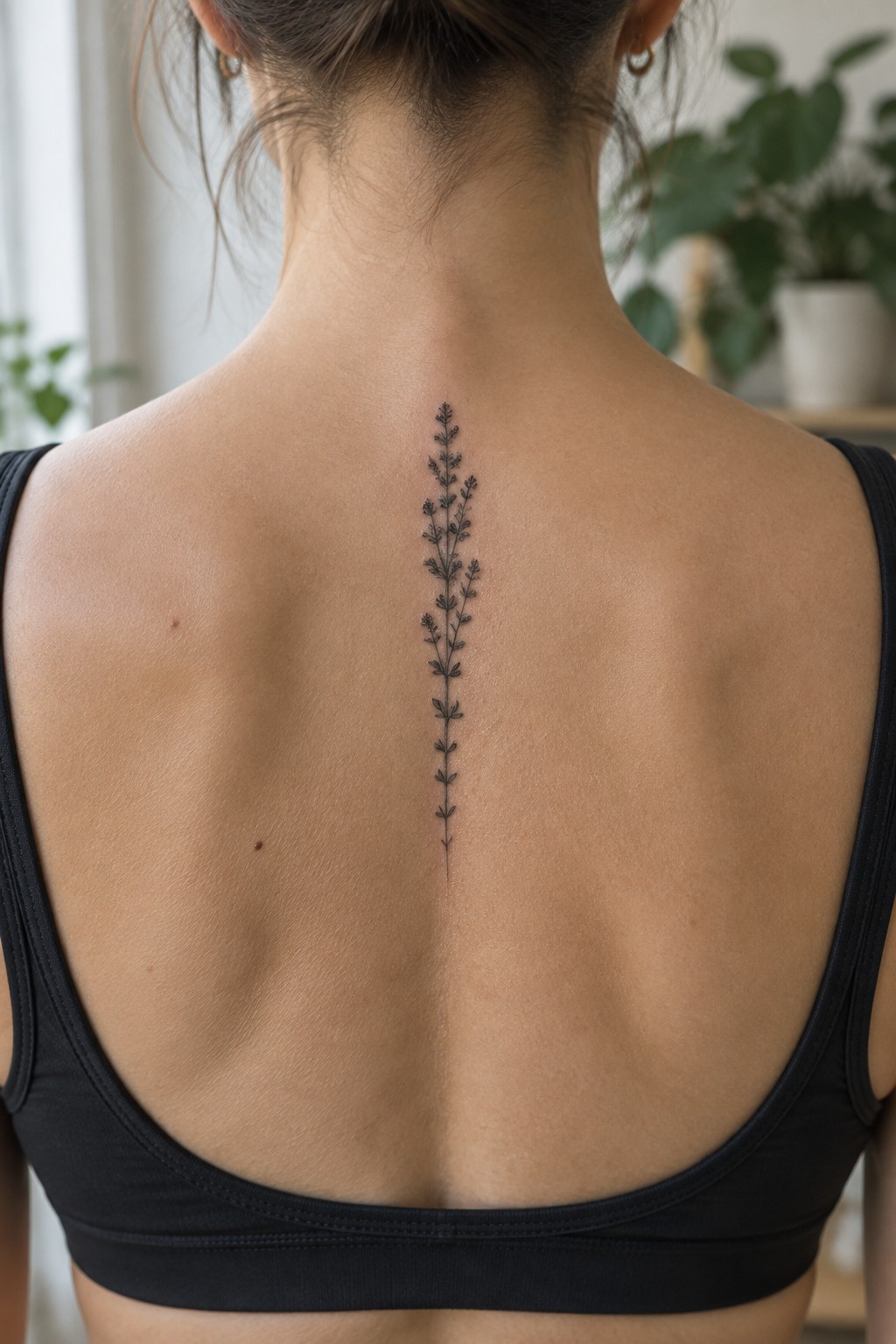
The tattoo sits centered on the spine and stretches from the upper back down toward the waist. It uses one main stem with small leaves and buds spaced evenly along the sides. The fine line work keeps the whole piece narrow and light against the skin.
I think the length works because it fills the space without adding extra branches or weight. The simple structure also makes the design easy to follow from any angle.
A vertical botanical spine tattoo
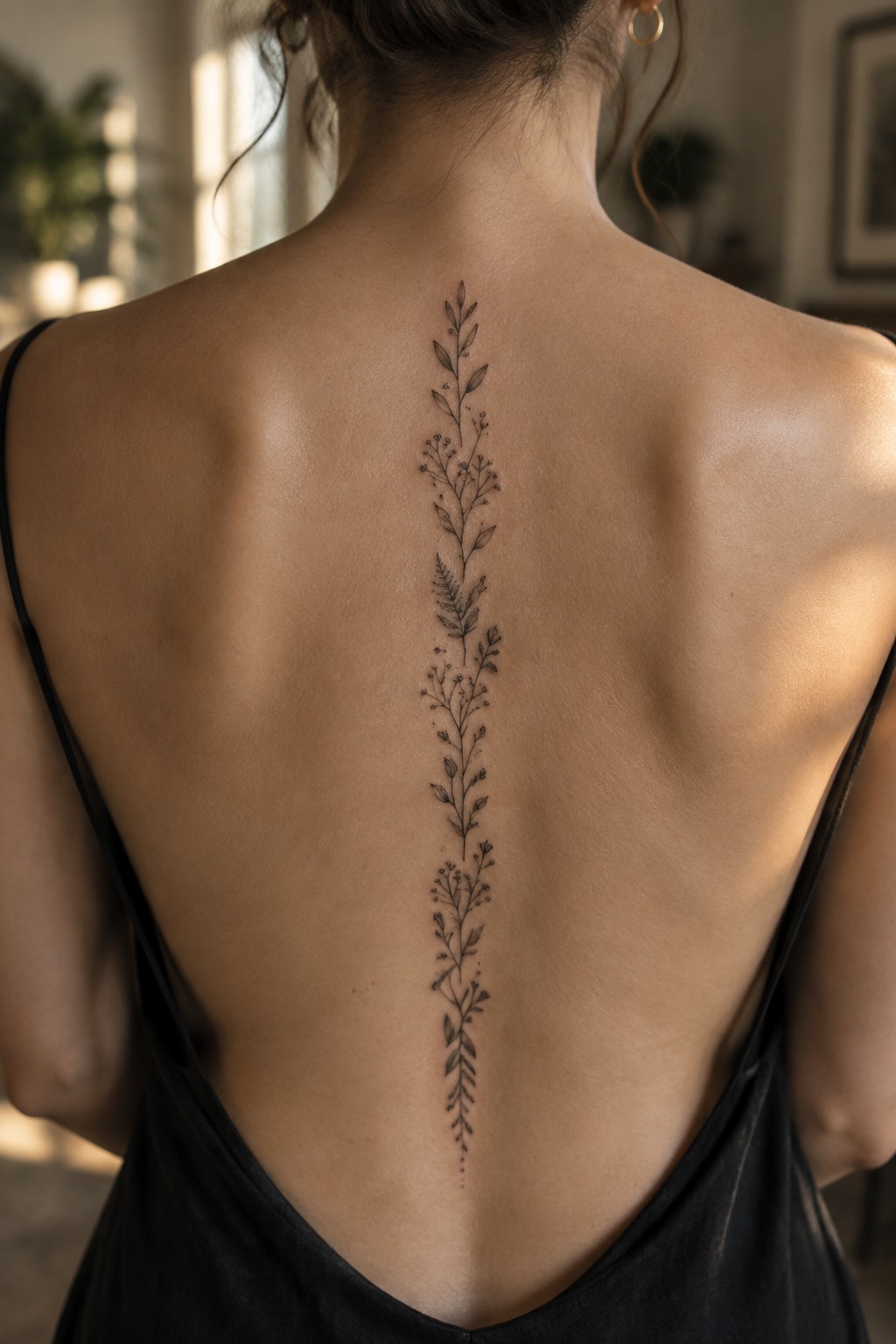
The spine gives this design a clear path to run straight down the back. The plants stack in a tall column with varying leaf shapes and small clusters of flowers or berries at different heights.
I like how the narrow width keeps the whole thing from spreading too wide across the shoulders or lower back. It feels like the kind of piece that stays readable even as it gets longer.
Frequently Asked Questions
1. How painful is it to get a fine line spine tattoo with a vertical botanical design?
Spine tattoos can feel intense because the area has less padding over the bones. Many women describe the sensation as a steady scratching or burning that builds over time. To manage it, choose an artist who works efficiently, take breaks if needed, and consider numbing creams approved by your tattooist. Sessions for delicate designs often stay under two hours to keep discomfort manageable.
2. What aftercare steps help these tattoos heal cleanly on the spine?
Clean the area gently with unscented soap and water twice a day, pat it dry, and apply a thin layer of fragrance-free moisturizer. Avoid tight clothing that rubs the spine, sleep on your side or stomach when possible, and stay out of direct sun or pools until fully healed, which usually takes two to four weeks. Follow your artist’s specific instructions since fine lines can blur if irritated during healing.
3. How long do vertical botanical fine line tattoos typically last on the spine?
With proper care and touch-ups every few years, these designs can remain sharp for five to ten years or more. The spine sees less stretching than other body areas, which helps preserve detail, but sun exposure and skin changes over time can cause fading. Using high-quality ink and an experienced artist who specializes in fine lines improves longevity.
4. Can I customize one of the 21 botanical designs to fit my exact spine length?
Yes, most artists scale vertical elements like stems, leaves, or flowers to match your measurements from the base of the neck to the lower back. Bring reference photos and discuss proportions during consultation so the design flows naturally with your natural curves without crowding or looking stretched. This ensures the piece complements your body rather than fighting it.
5. What should I look for when choosing an artist for delicate spine work?
Seek artists with a strong portfolio of healed fine line botanical tattoos, especially on the spine or similar bony areas. Check reviews for consistency in thin lines and shading, confirm they use sterile equipment, and ask about their experience with women clients. A good artist will also discuss placement options and provide realistic expectations about pain and healing before booking.
