

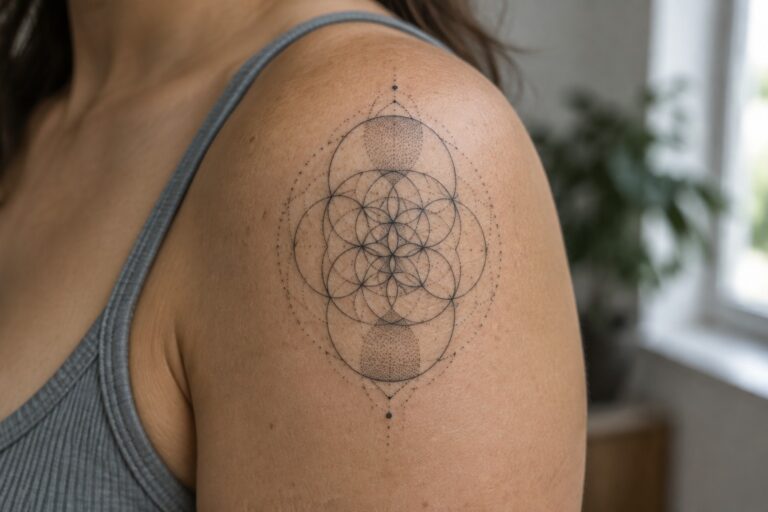
I have a soft spot for tattoos that carry spiritual meaning through clean lines and shapes.
My latest obsession is with interlocking sacred forms that create balance and harmony.
They look bold yet graceful which suits so many women out there.
These designs make me want to add another piece to my own ink collection right away.
Shoulder tattoos suit this kind of circular geometry
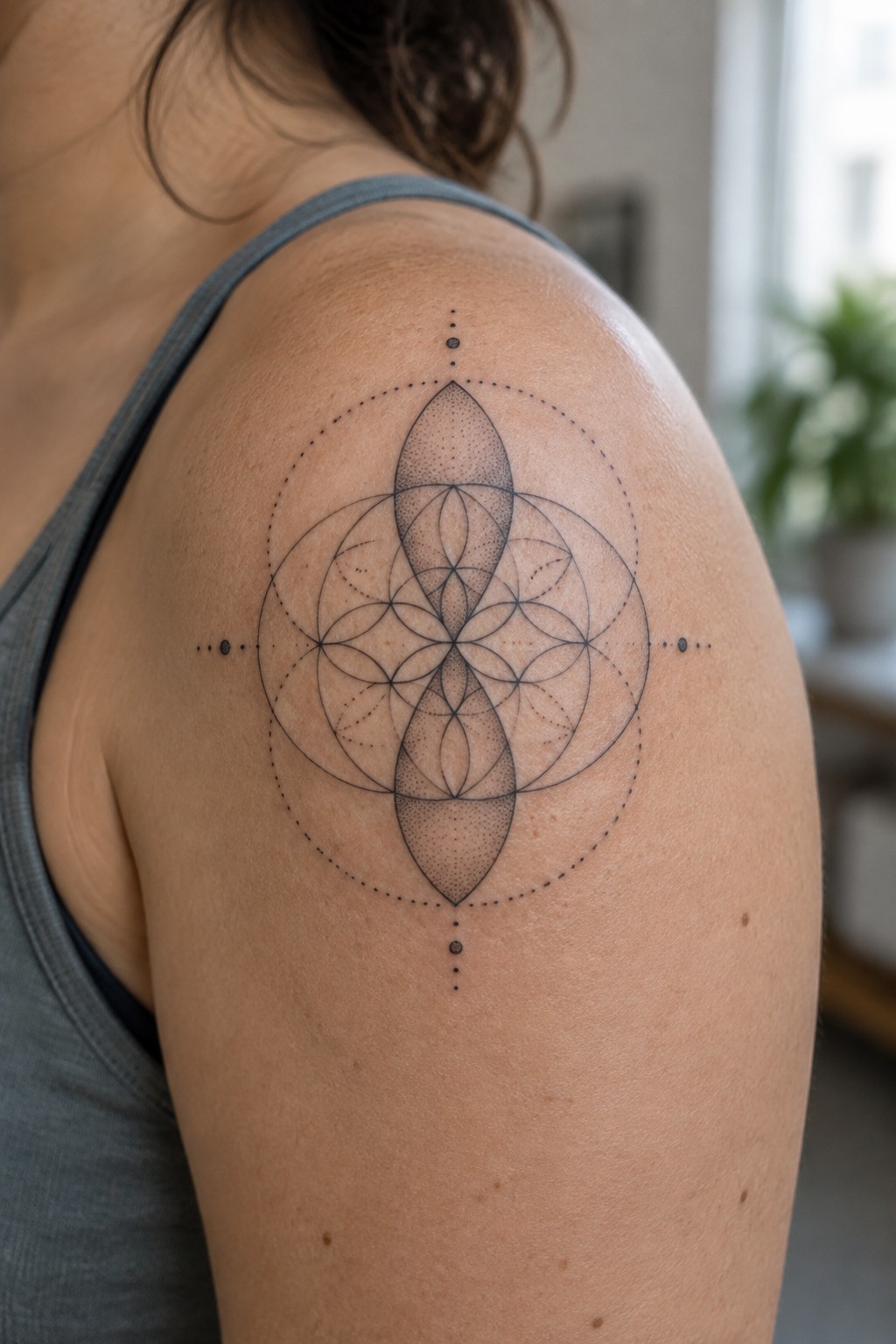
The shoulder gives the full circle enough flat space to stay round and even. Fine lines connect the overlapping rings while dotted shading fills the center petals without crowding the skin. Small dots along the horizontal line help frame the whole shape.
I think the vertical stretch in the middle keeps the design from feeling too static on the arm. It also makes the tattoo sit comfortably when the shoulder moves.
A mandala of overlapping circles on the upper back
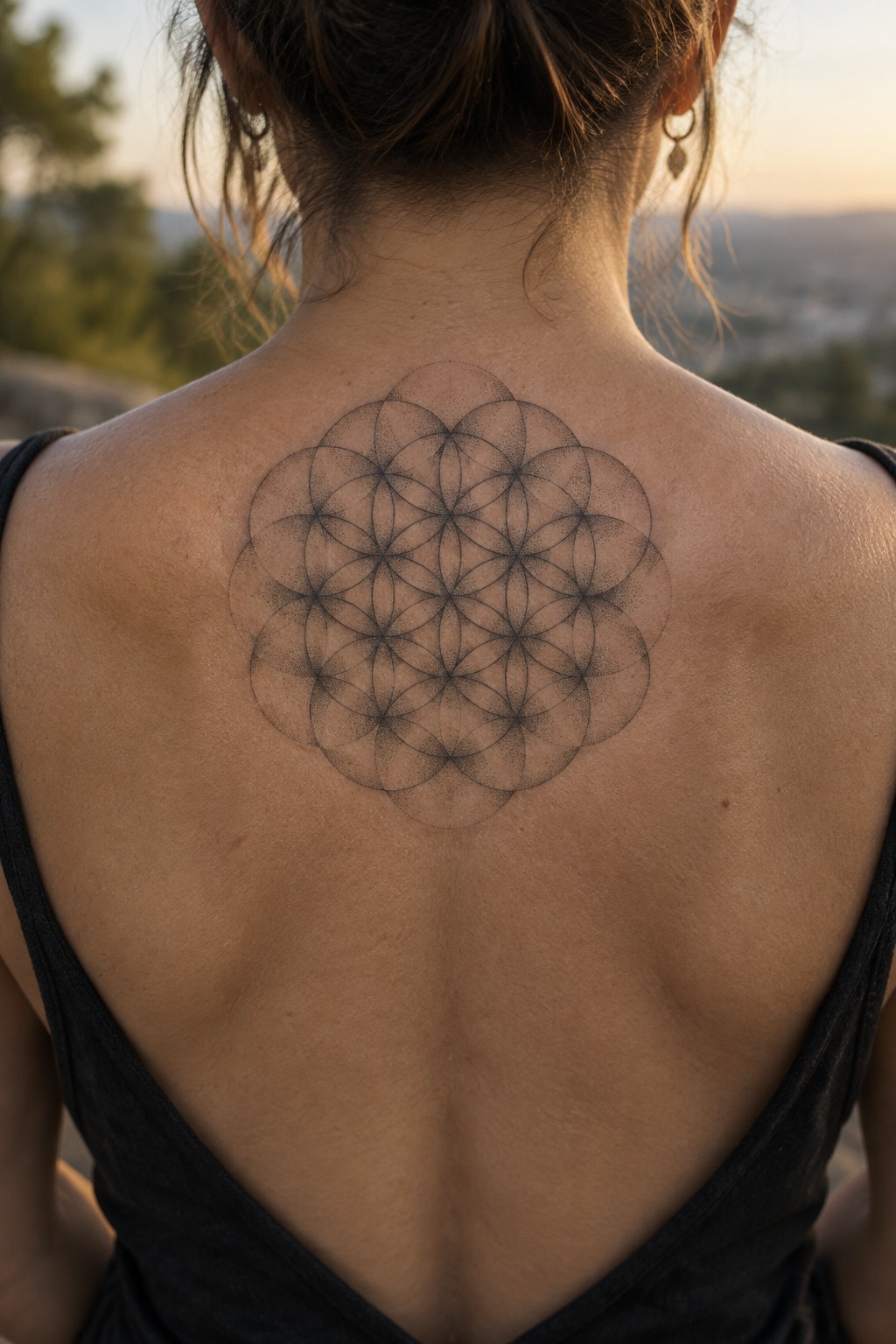
The upper back gives this design room to stay centered and symmetrical. The circles repeat in a steady pattern that fills the space between the shoulders without crowding the edges. Fine black lines and light dot shading keep the shapes distinct even at this scale.
I think the placement works because it lets the whole form sit flat and readable. The size feels right for someone who wants the geometry to stand out on its own.
Sacred geometry on the forearm
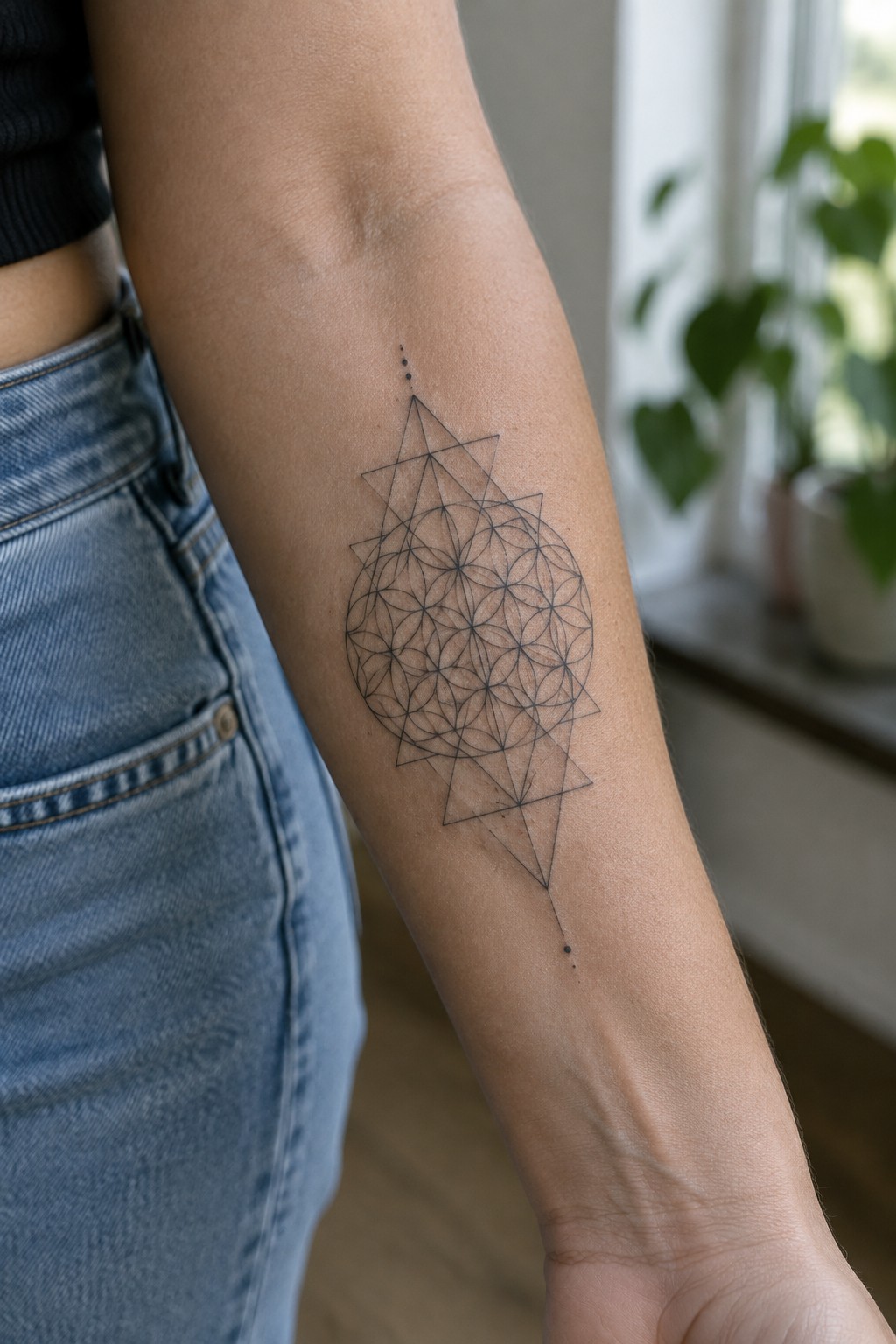
The tattoo runs vertically along the inner forearm. It centers on a round pattern of interlocking lines with triangles extending from the top and bottom.
This layout lets the full shape stretch out without feeling cramped. I think the spacing between the lines helps it stay clear at this size.
The mandala runs vertically down the spine
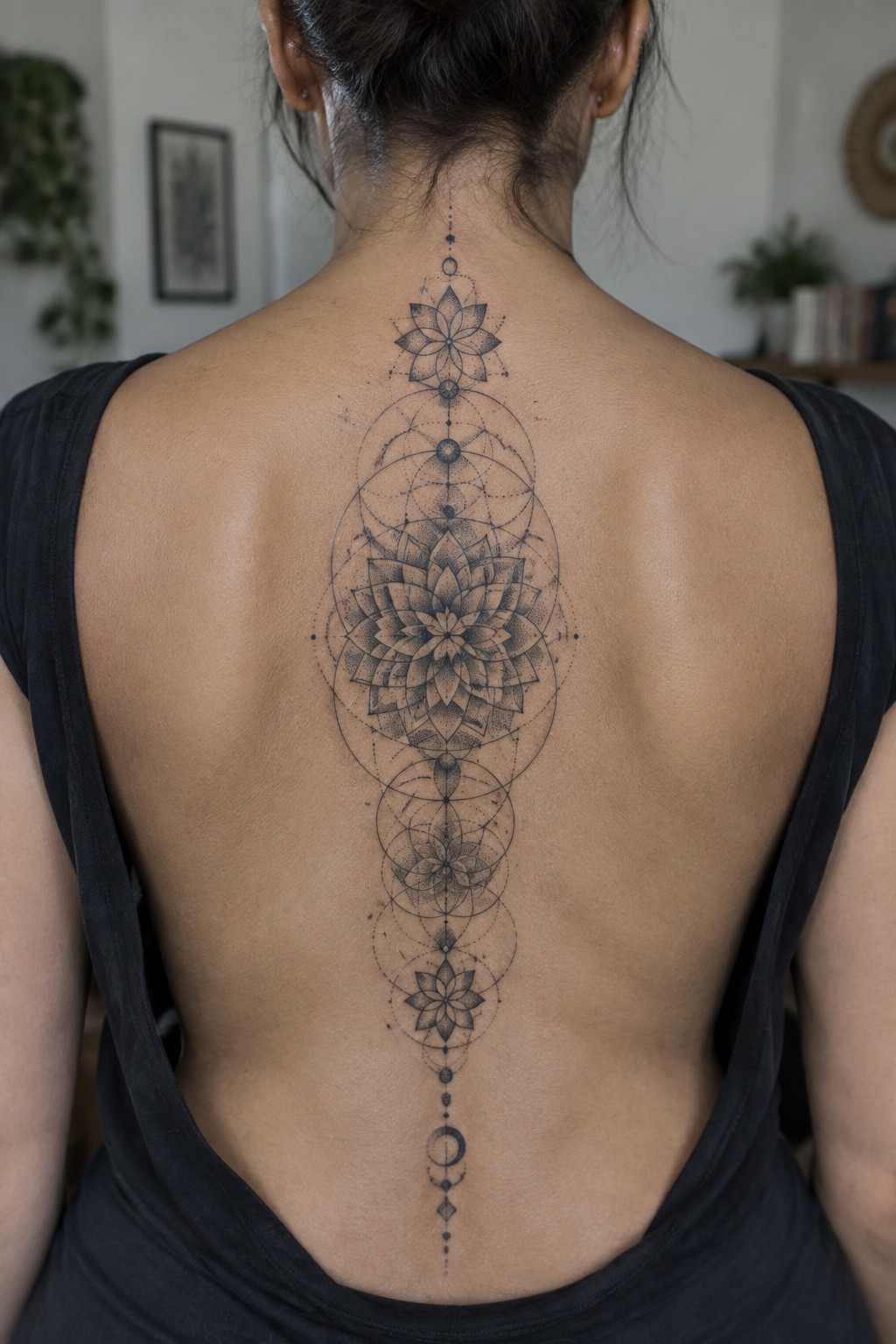
The spine placement lets the tattoo stretch in one clean column from the base of the neck to the lower back. Circles and lotus forms stack in order, with the largest shape centered between the shoulder blades and smaller ones tapering lower. The straight layout keeps every layer balanced on both sides.
I picked this spot because the natural length of the back matches the stacked pattern without forcing any curves. The dotwork stays readable from top to bottom even when the design gets narrower near the waist.
Sacred geometry on the ribs
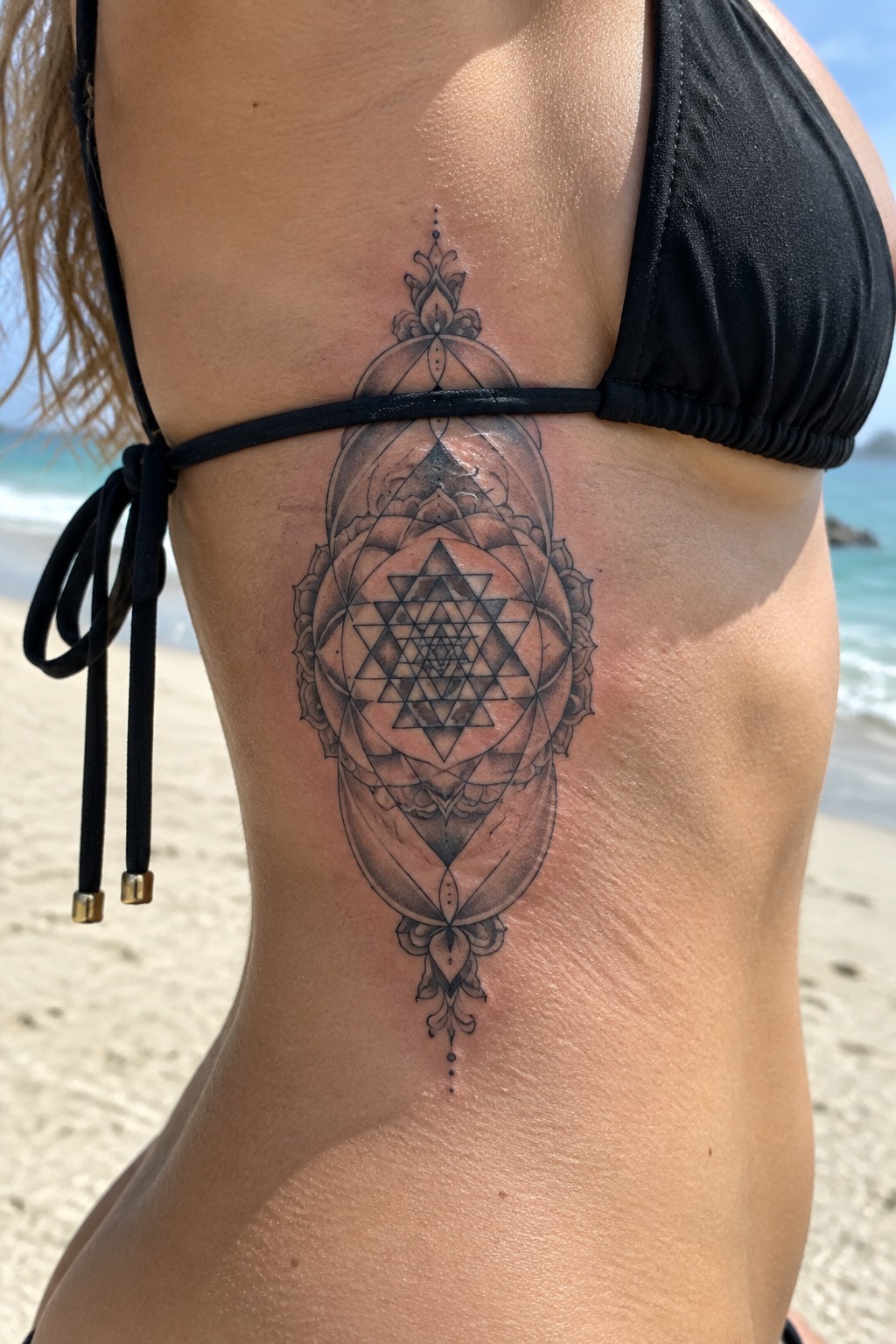
The tattoo sits vertically along the side of the torso. It uses a stack of circles and triangles with a few lotus shapes at the top and bottom. Black and grey shading adds some depth to the lines.
I think the tall layout works here because it matches the shape of the area. The pattern stays clear even with all the layers inside the main form.
Geometric mandala on the thigh
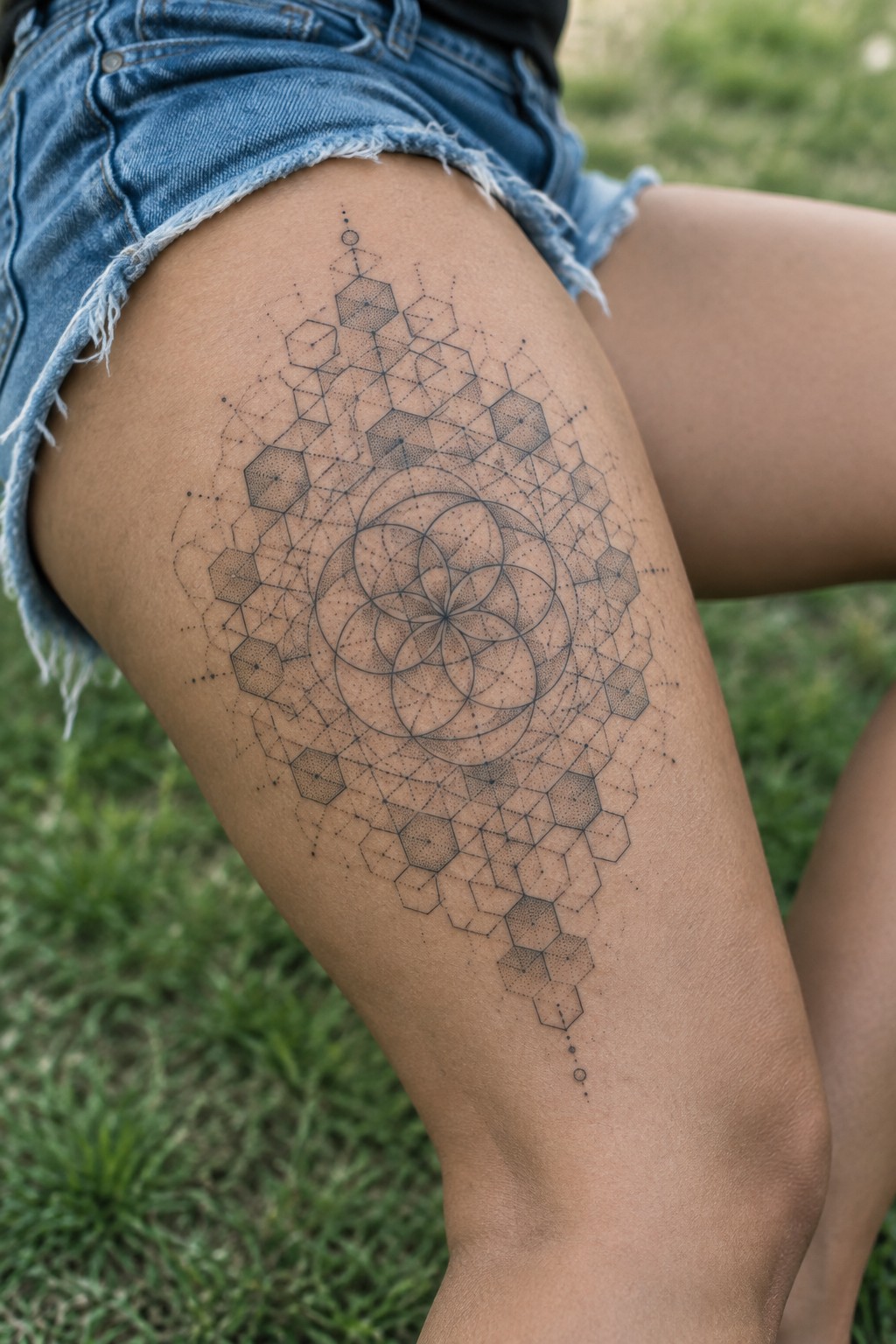
The tattoo sits high on the thigh in an area that gives the pattern room to expand downward. A central flower of overlapping circles anchors the design while hexagons and connecting lines spread outward in a loose grid. Dot shading adds some depth inside the shapes without filling everything in.
The tapering at the bottom stops the piece from feeling too heavy on the leg. I like how the open spacing keeps all the small lines clear even when the design covers a larger area.
Two geometric leaves down the inner wrist
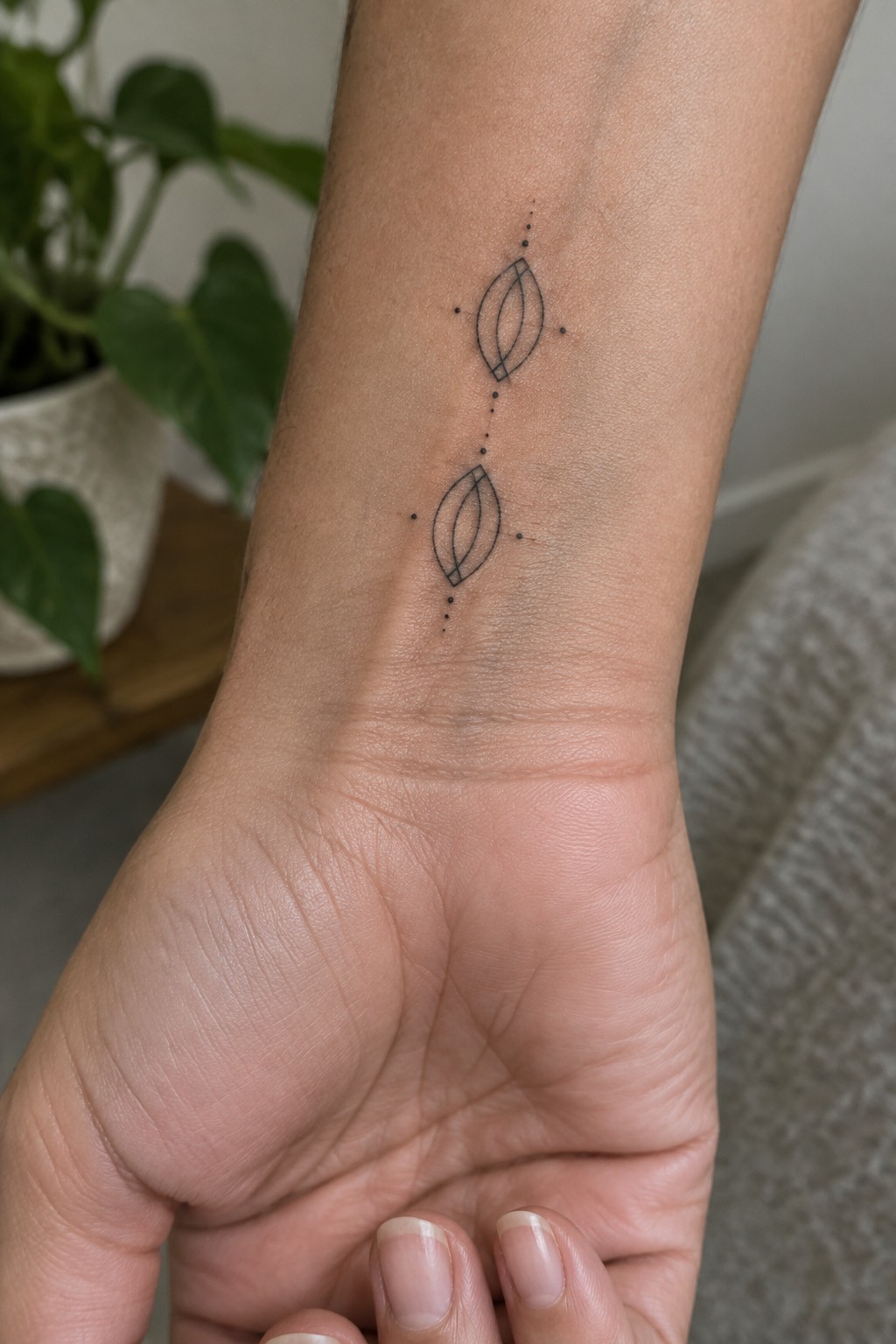
The tattoo sits on the inner wrist and runs in a straight vertical line. Two leaf shapes stack with a row of dots between them. Small dots on the sides keep the balance even without adding extra weight.
This placement lets the design follow the natural length of the wrist. The simple lines stay clear even when the tattoo stays small.
Collarbone tattoo with moons and stars
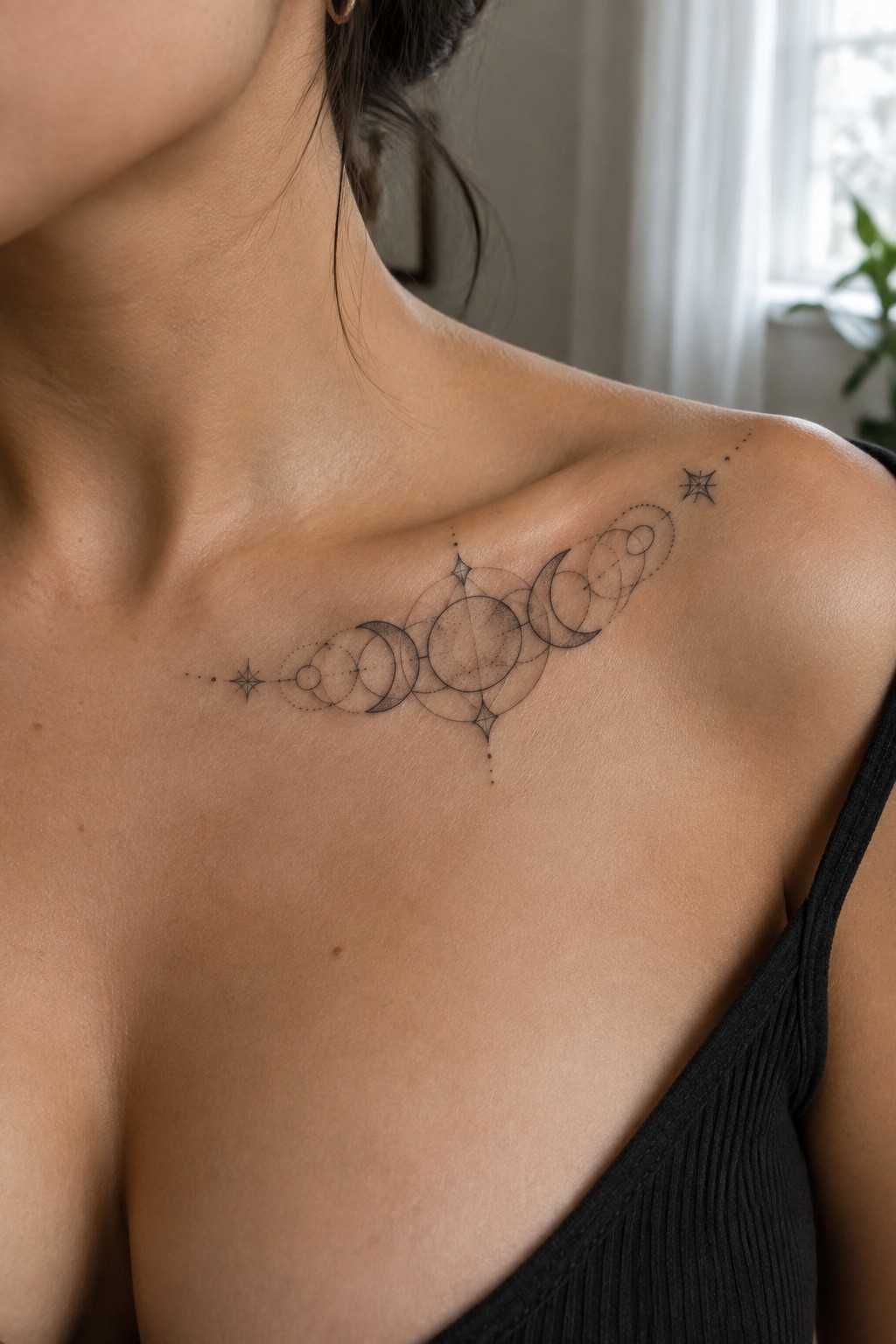
This tattoo sits across the collarbone and stretches toward the shoulder. The horizontal layout follows the bone structure and lets the circles and crescents connect in a single line. Small stars mark the ends and keep the whole piece balanced.
The fine line style works here because the shapes stay distinct even up close. I think the placement helps the design feel open rather than boxed in.
Mandala tattoo on the upper back
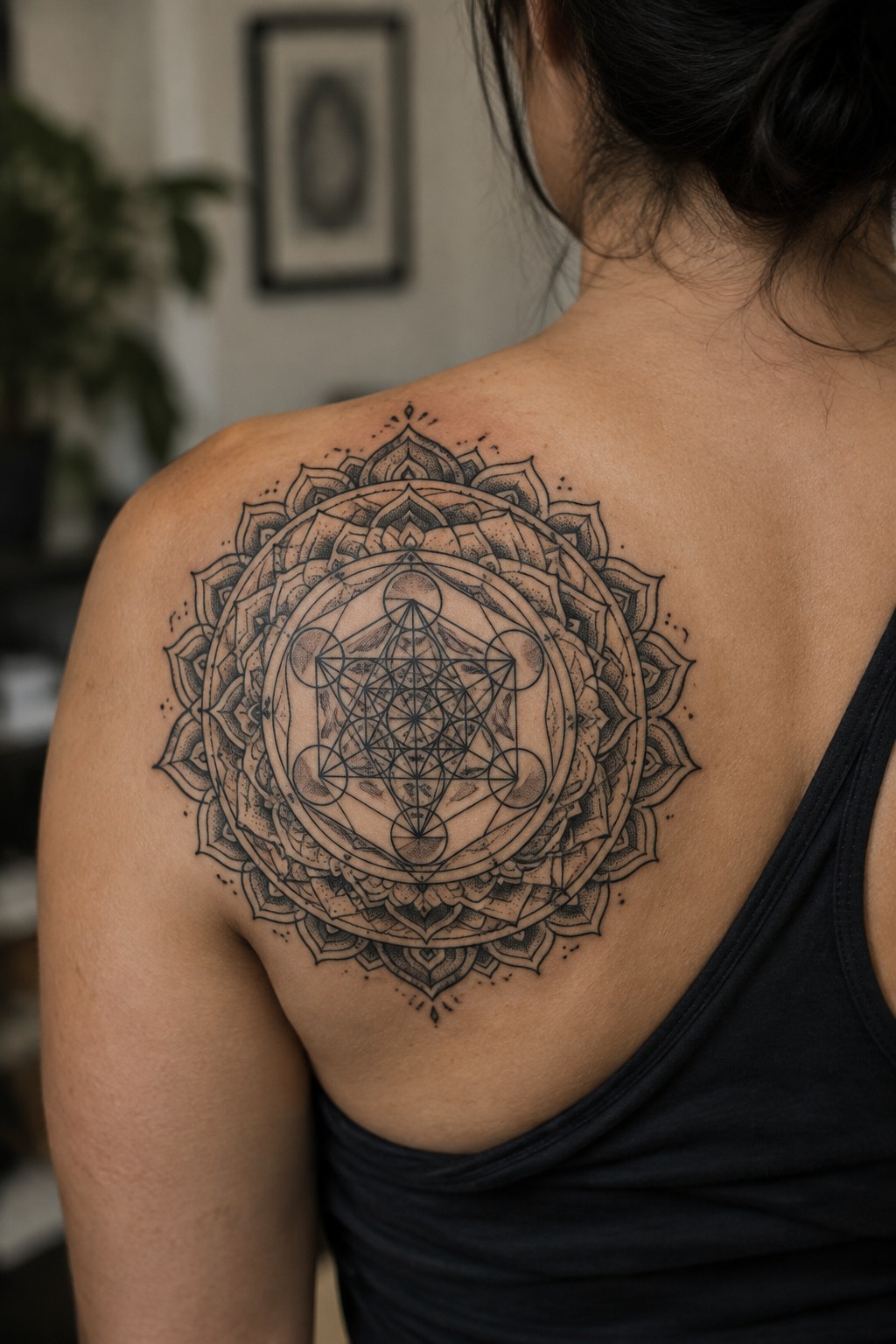
The shoulder placement lets the full circle of this mandala sit flat and centered. Fine black lines build outward from a tight geometric core that mixes triangles and circles. The outer rings stay even because the area gives the design enough space to expand without crowding.
The inner shapes stay sharp even at this scale. I think the choice of solid black ink helps the geometry read clearly instead of fading into shading.
Geometric hexagons on the collarbone
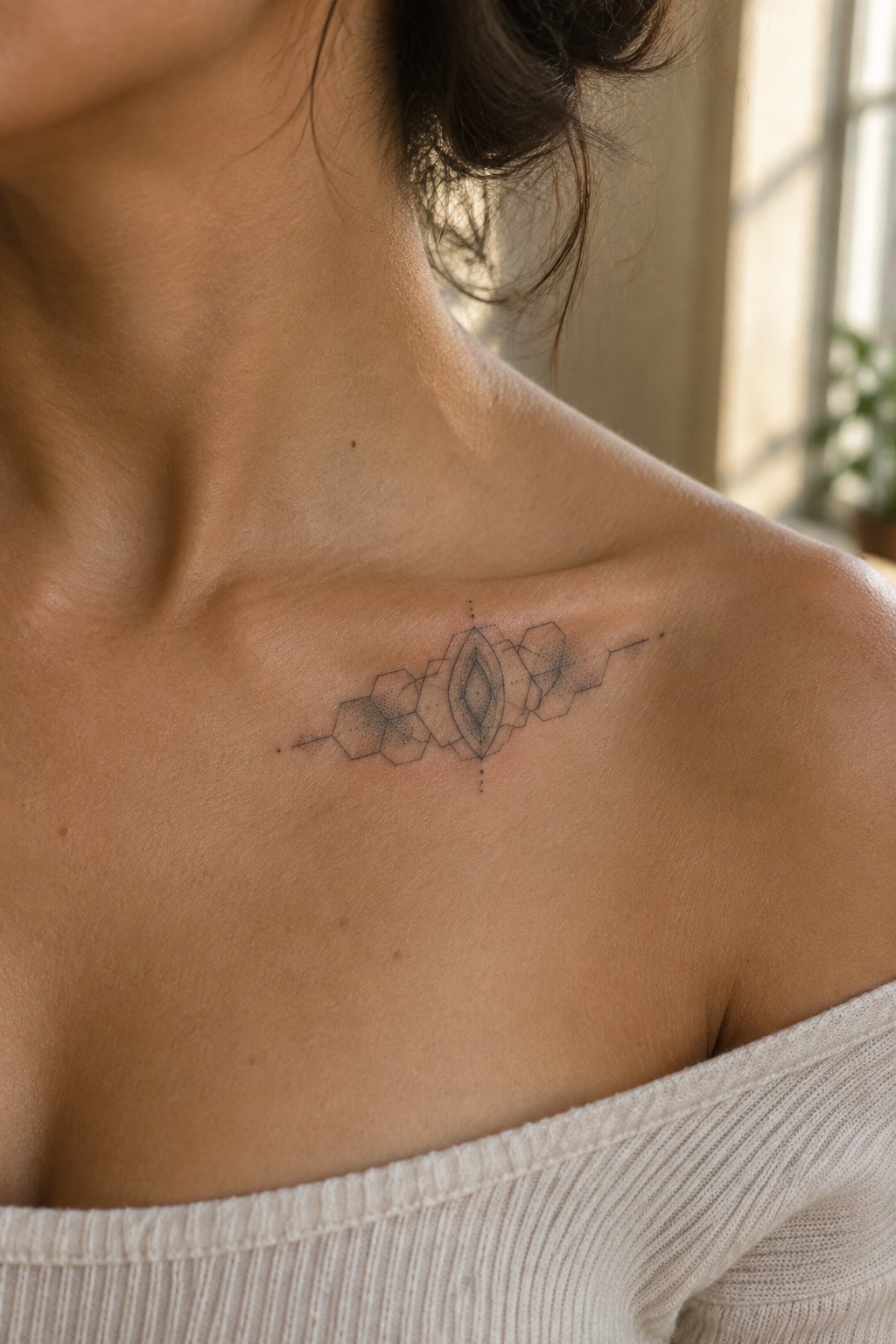
The design runs horizontally along the collarbone in a compact row of shapes. Hexagons link together around a central pointed form with light dot shading inside some sections. The thin lines keep the whole thing delicate against the skin.
This spot works because the natural bone line supports the straight layout without extra adjustment. I think the contained size helps the pattern stay readable even with the added detail in the center. It suits someone looking for structure that does not take over the area.
Mandala tattoo on the thigh
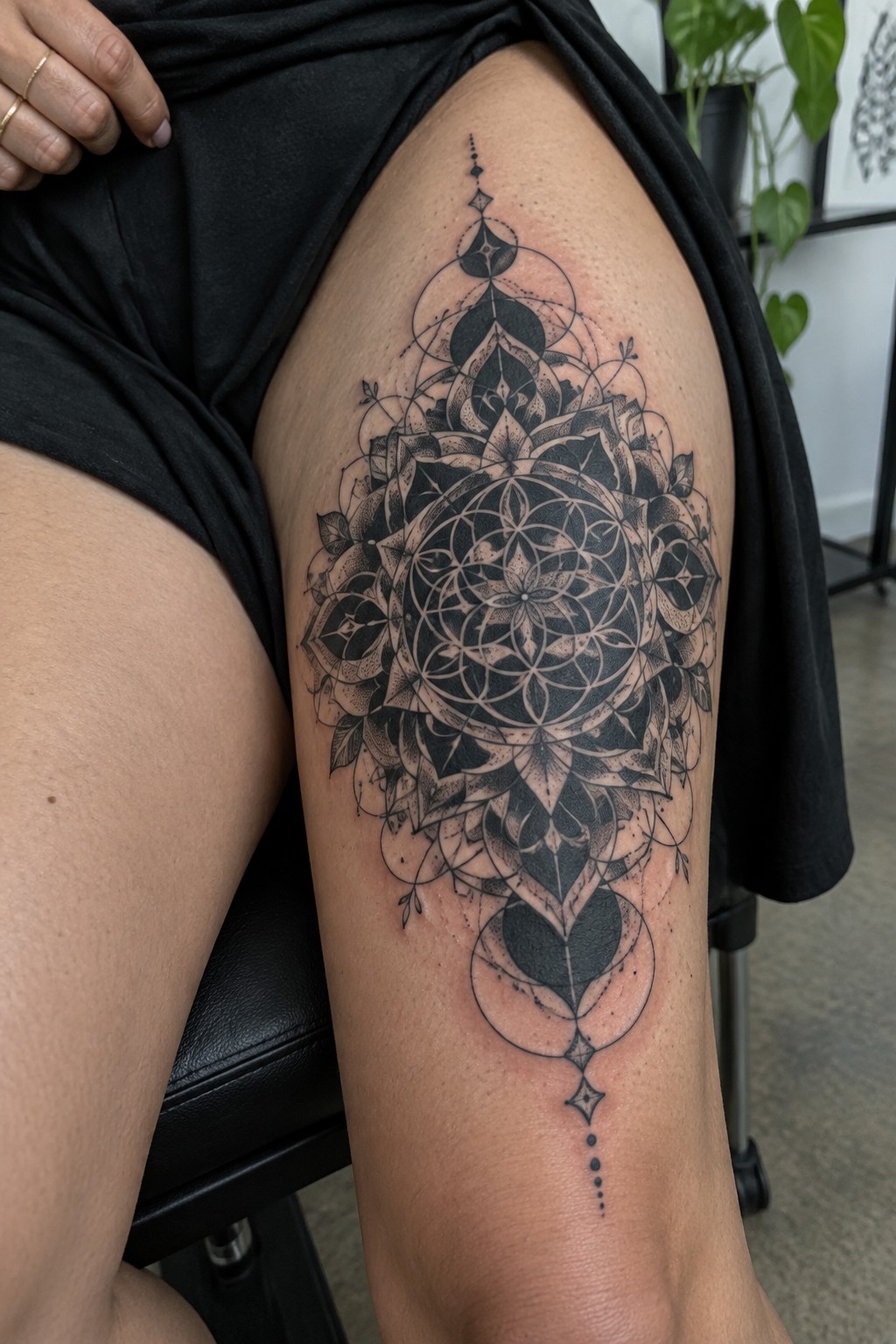
The design sits on the thigh. This spot gives the mandala room to spread with all its rings and points without feeling tight.
The flat surface helps the symmetry stay even from edge to edge. I picked the thigh because it supports the full size while keeping the center sharp and easy to read.
Interlocking circles form a band around the ankle
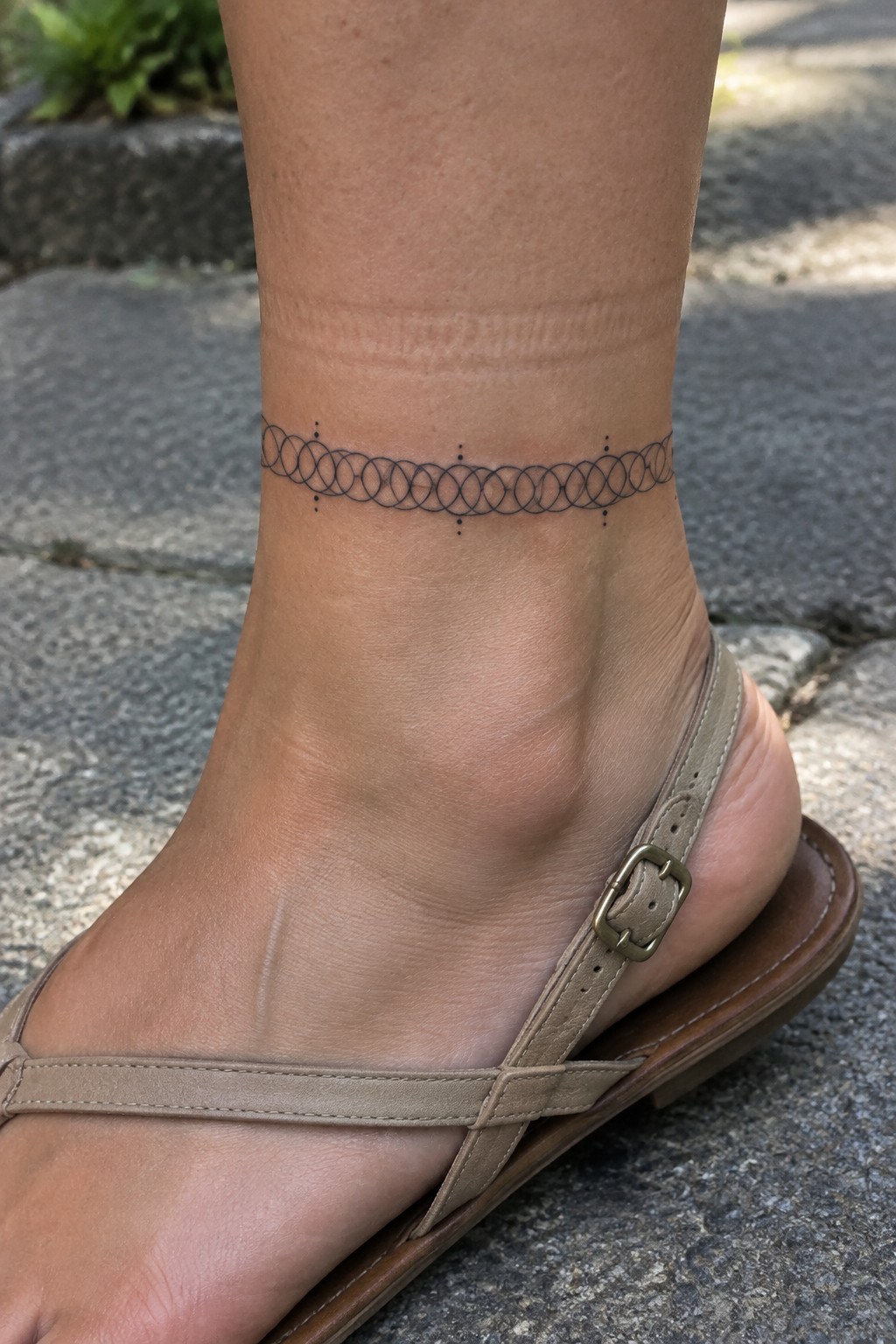
The tattoo sits right above the ankle bone as a narrow strip of linked circles. Each loop overlaps the next in a repeating pattern with small dots placed between some of the shapes. The thin line work keeps the whole piece compact and contained.
I chose this placement because the curve of the ankle lets the band follow the skin without needing extra adjustments. The simple scale also means the design stays clear even when the foot moves or when wearing low socks.
The pattern sits centered on the upper chest
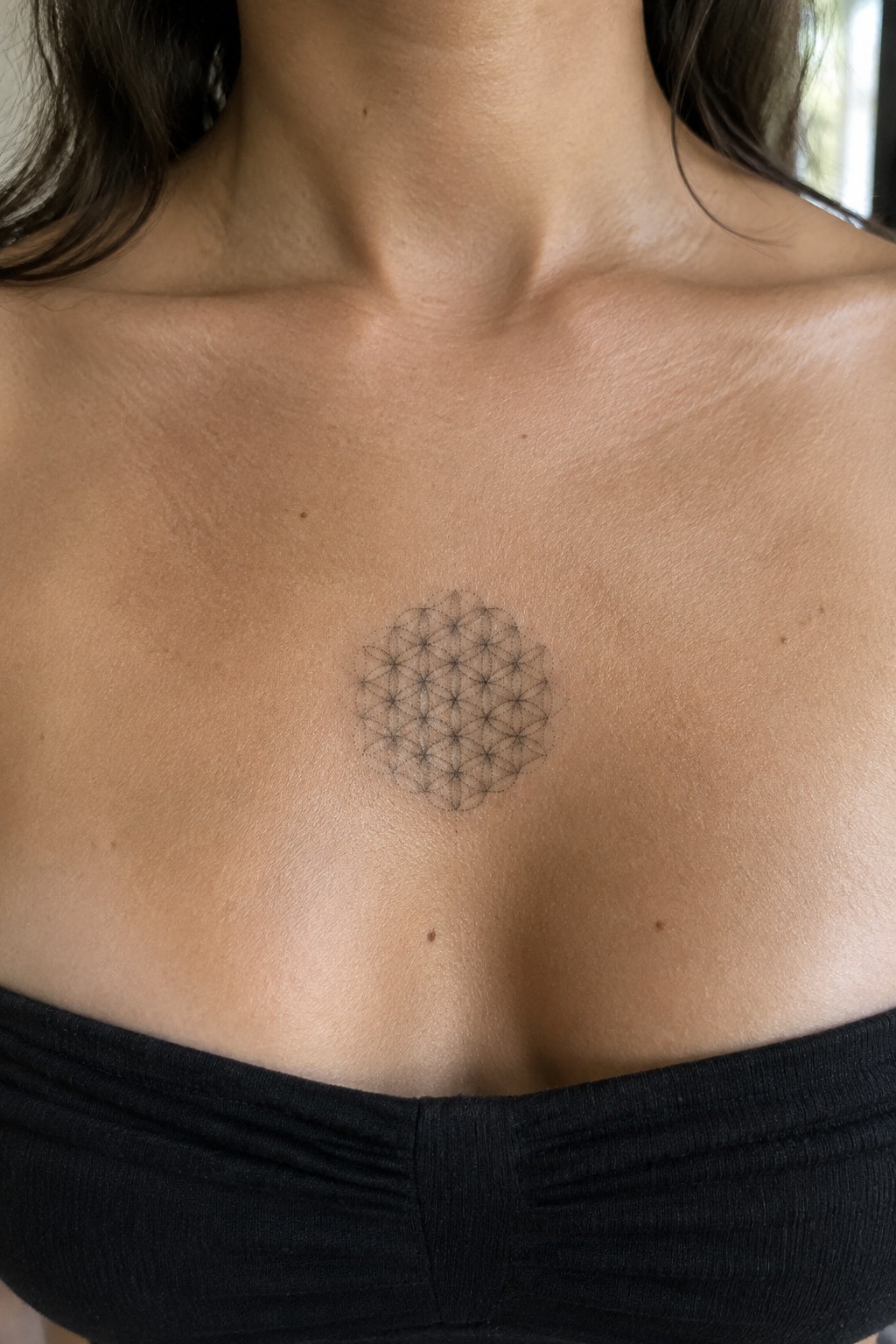
The tattoo uses fine black lines to create a round geometric shape built from many small triangles. It rests directly in the middle of the upper chest. This spot keeps the full design level and easy to see straight on.
The compact size fits the area without spreading out too wide. I think the central placement works because the symmetry shows evenly from both sides.
Sacred geometry covers the full arm
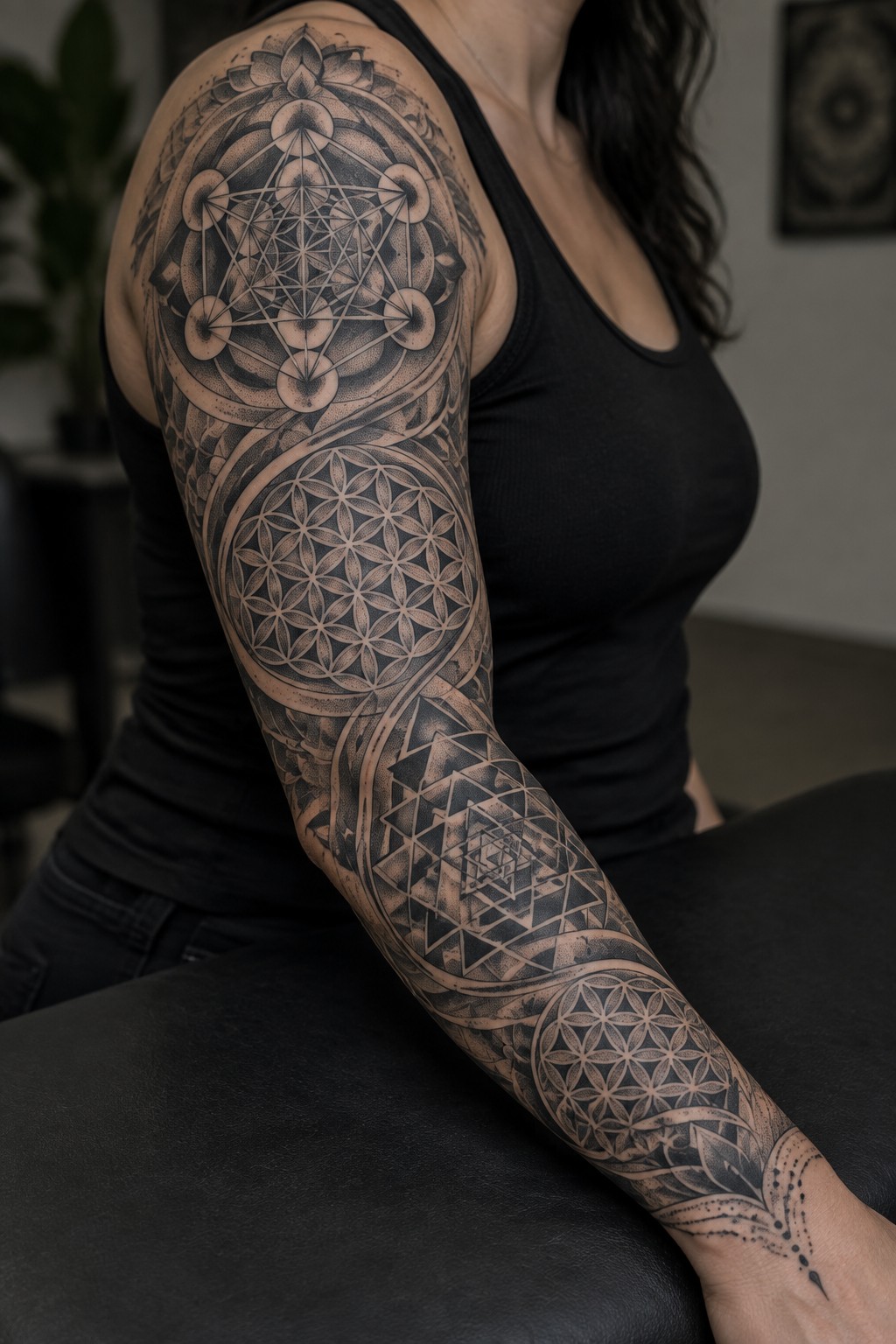
The design starts wide at the shoulder with large circular forms. It moves down the arm through linked triangles and repeating motifs that wrap around the skin. The flow keeps the shapes connected as the arm narrows.
The size lets each section stay clear without overlap. I think the way the patterns twist along the length makes the whole piece feel balanced from top to bottom.
A large mandala across the upper back
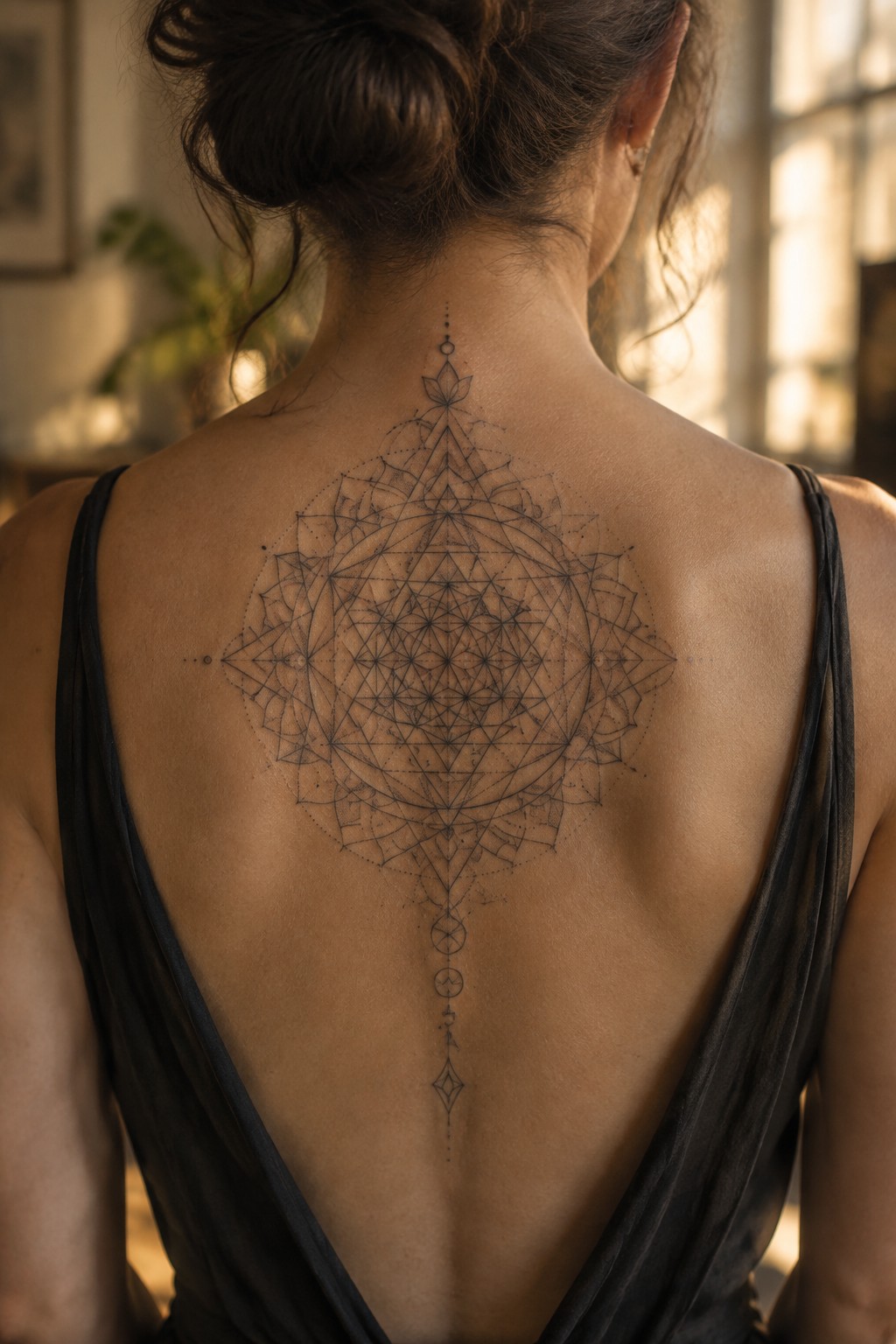
The design sits centered on the spine. It starts near the neck and spreads across the upper back before narrowing downward. The main mandala uses repeating geometric layers. A line of smaller shapes runs down the middle of the back.
This placement keeps the symmetry easy to follow. I think the vertical drop works because it uses the spine as a natural guide instead of forcing the pattern wider.
Vertical sacred geometry on the calf
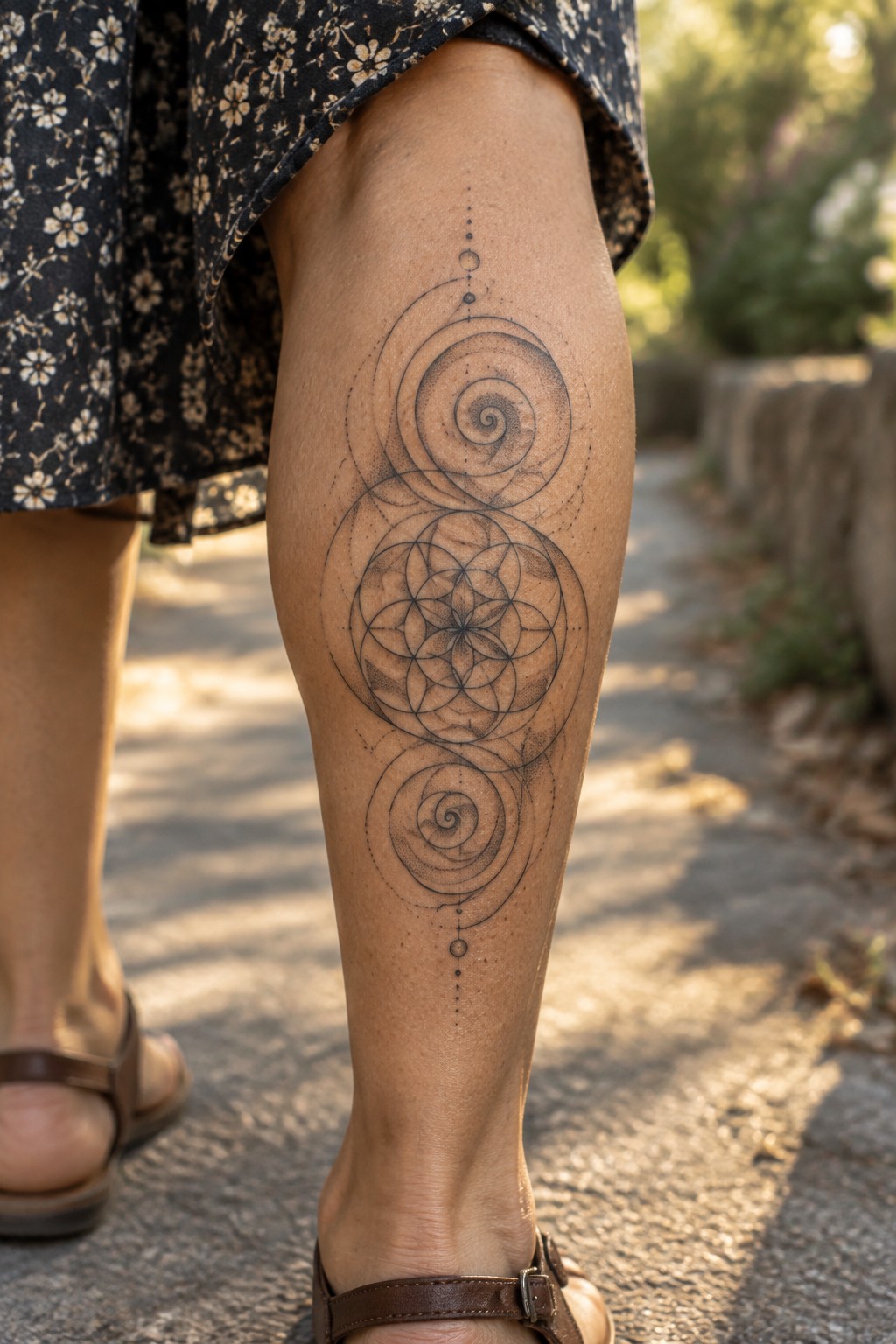
The tattoo runs along the calf with two spirals at either end and a central flower of life pattern in between. Dotted lines link the shapes and help the whole piece follow the length of the leg. The black ink stays thin so the forms stay readable even where they overlap.
I think the calf works for this layout because it gives the design room to stack without looking cramped. The size also keeps the detail clear from a normal viewing distance.
Crescent moon tattoo on the hip
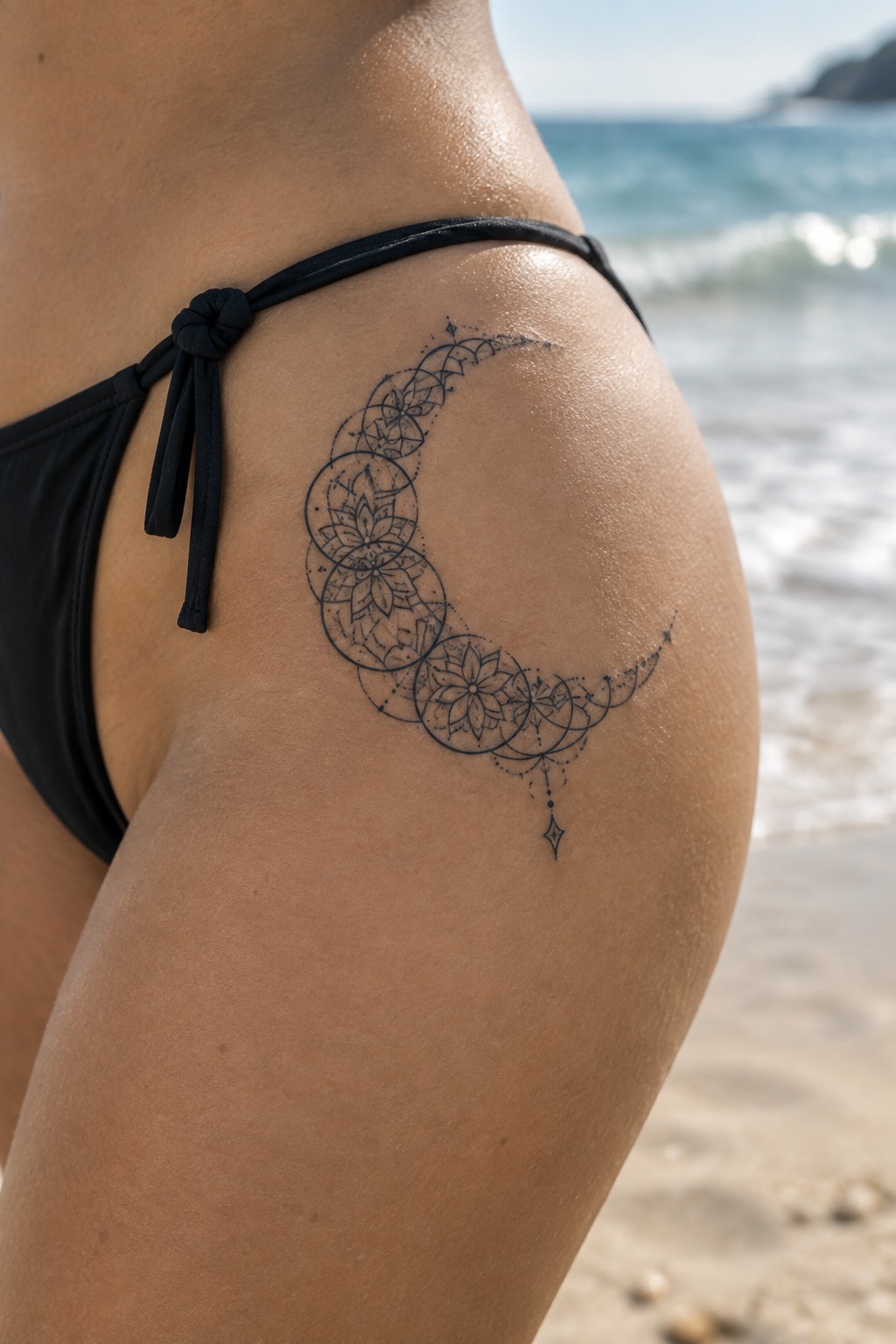
The tattoo sits along the upper hip. Its curved shape follows the body’s natural line without forcing the design. Interlocking circles hold lotus details inside the moon form and keep the lines fine and even.
I think the size works well here because it fills the area without spreading too far. The small drop element at the bottom gives the whole piece a bit more length while staying simple.
Interlocking triangles sit on the back of the hand
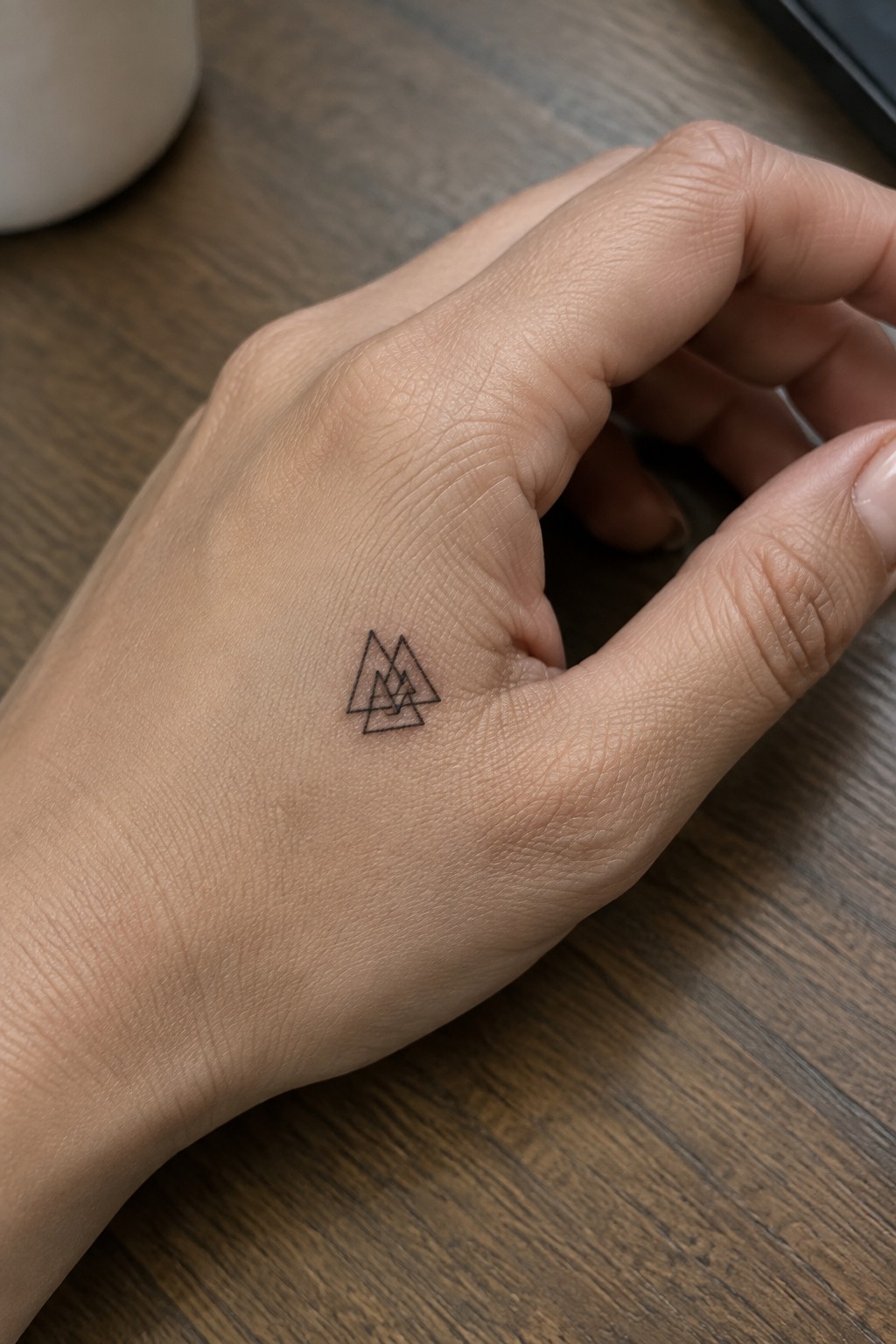
The placement keeps the pattern compact and visible without taking over the hand. Thin lines build a few overlapping triangles that stay contained in one small spot. This makes the design easy to wear every day.
I like how the size stops it from feeling heavy on the skin. The lines hold their shape well even in a tight space. It turns a simple geometric idea into something that feels personal rather than loud.
A small sacred geometry tattoo on the neck
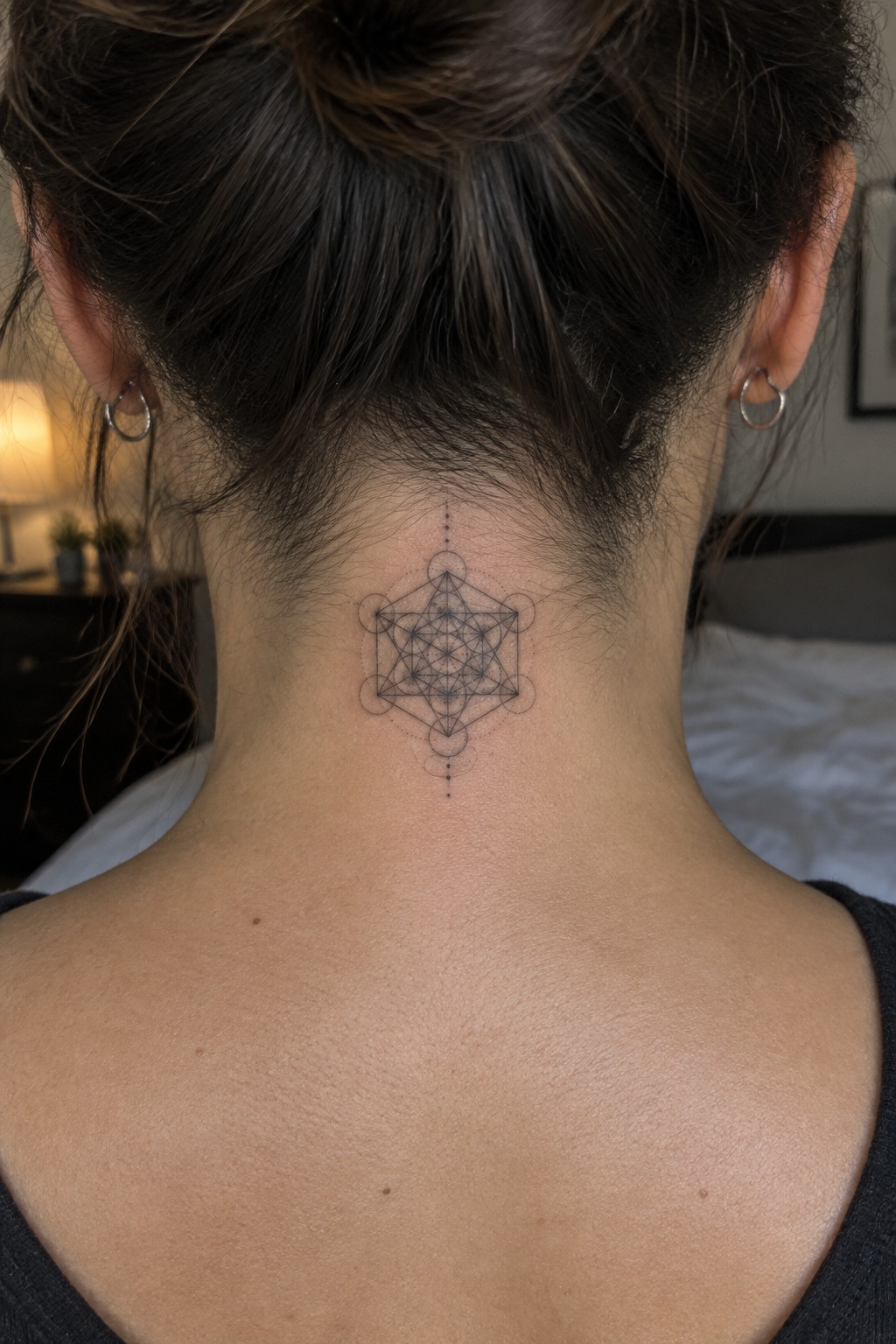
The design sits centered on the nape. Fine lines form a compact pattern of overlapping circles and shapes that stay contained within a modest area.
I think the neck placement works here because it lets the symmetry show without needing extra space. The scale also keeps every line readable up close.
A geometric tattoo on the chest
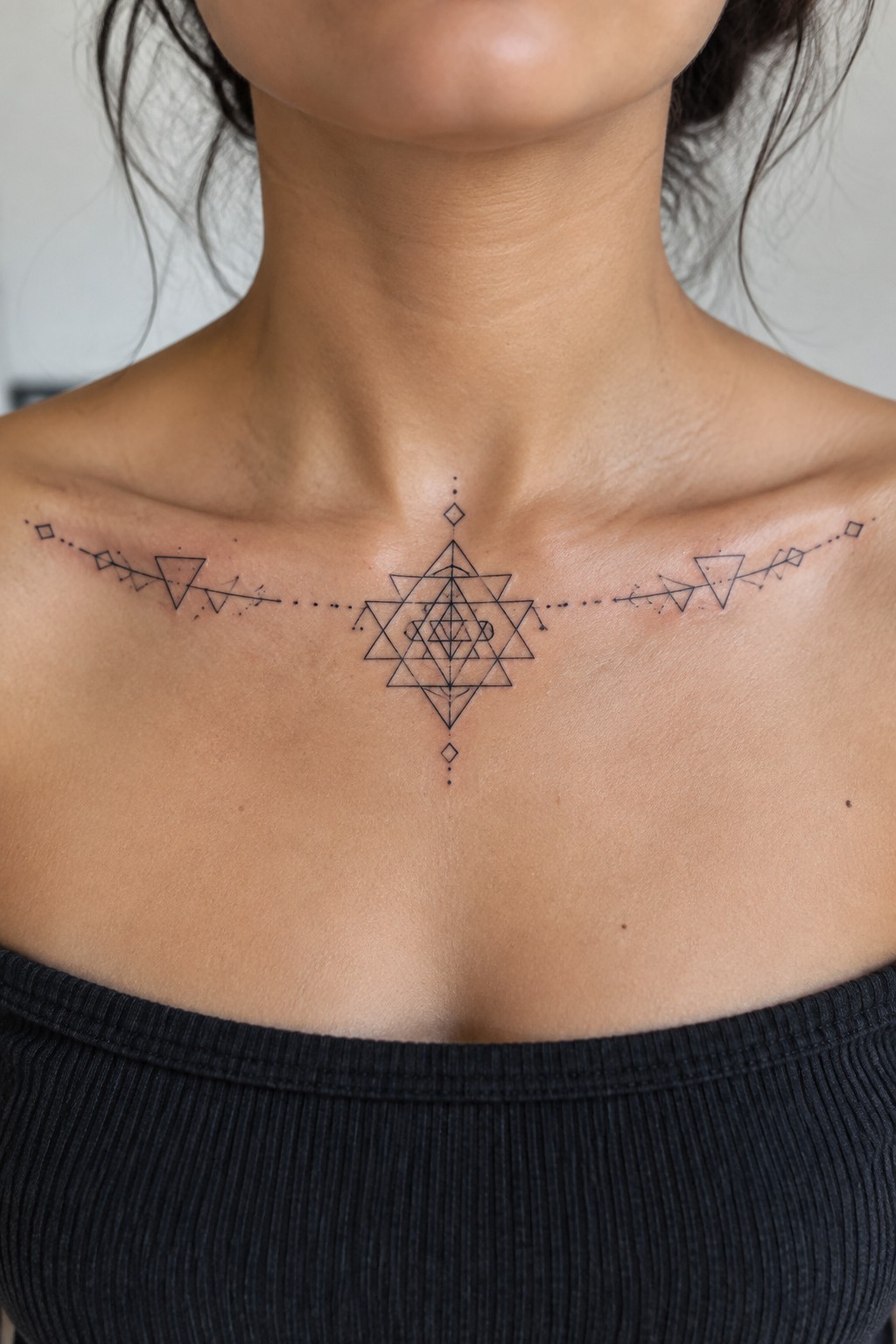
The design sits centered on the upper chest with its main form over the sternum. Lines with smaller shapes run outward along the collarbone area on each side. The symmetry stays even across the placement.
This spot lets the pattern rest flat without fighting the body lines. I think the choice keeps the whole piece readable even when the arms move.
Geometric lotus on the thigh
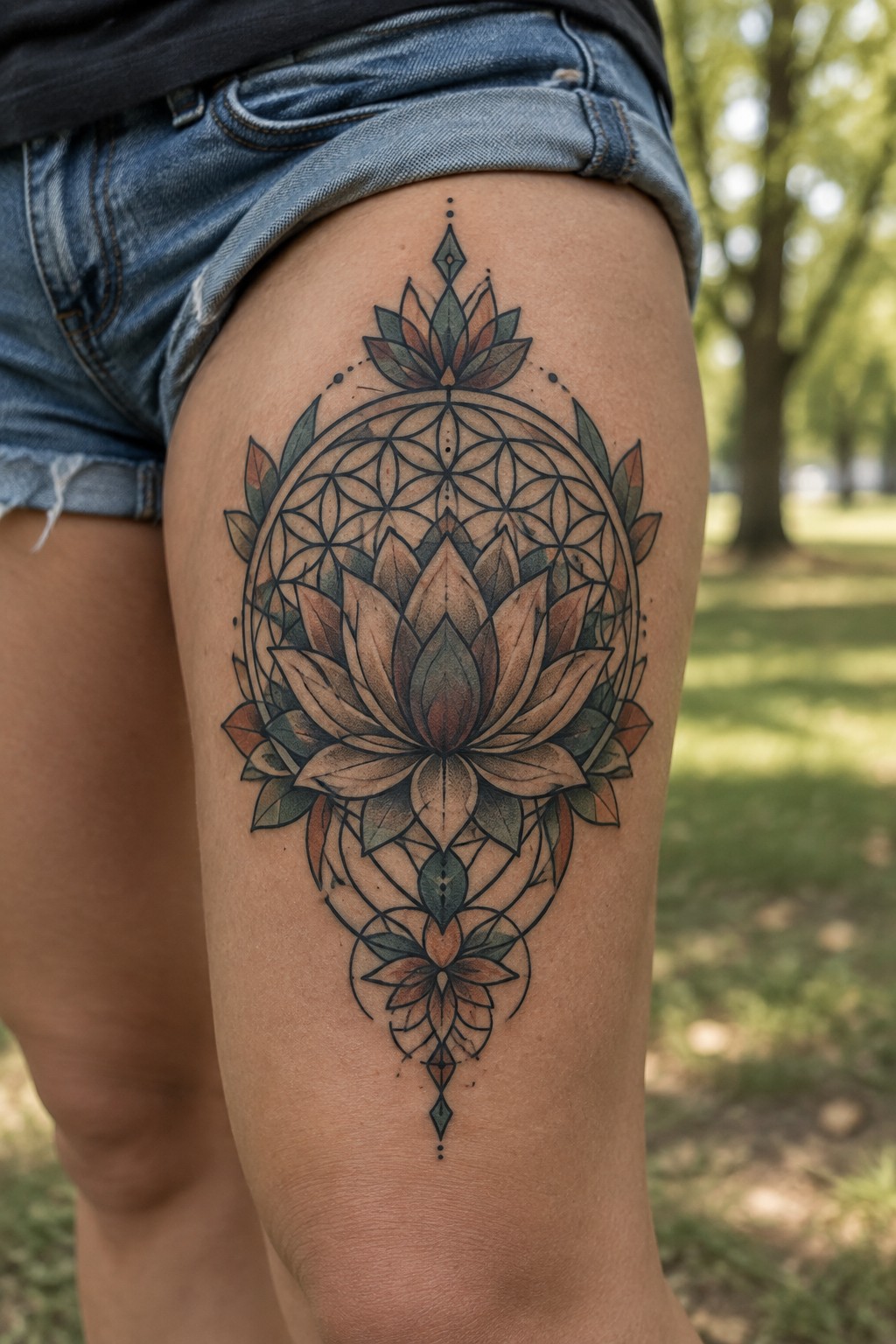
This tattoo sits on the upper thigh. The area gives enough flat space for the full lotus to spread out with its surrounding circles and leaf shapes. The design stays centered and balanced because the lines repeat evenly around the middle.
I like how the size keeps every layer of the pattern easy to follow from top to bottom. The thigh placement also lets the bottom point taper naturally without running into clothing lines.
Interlocking circles run across the lower back
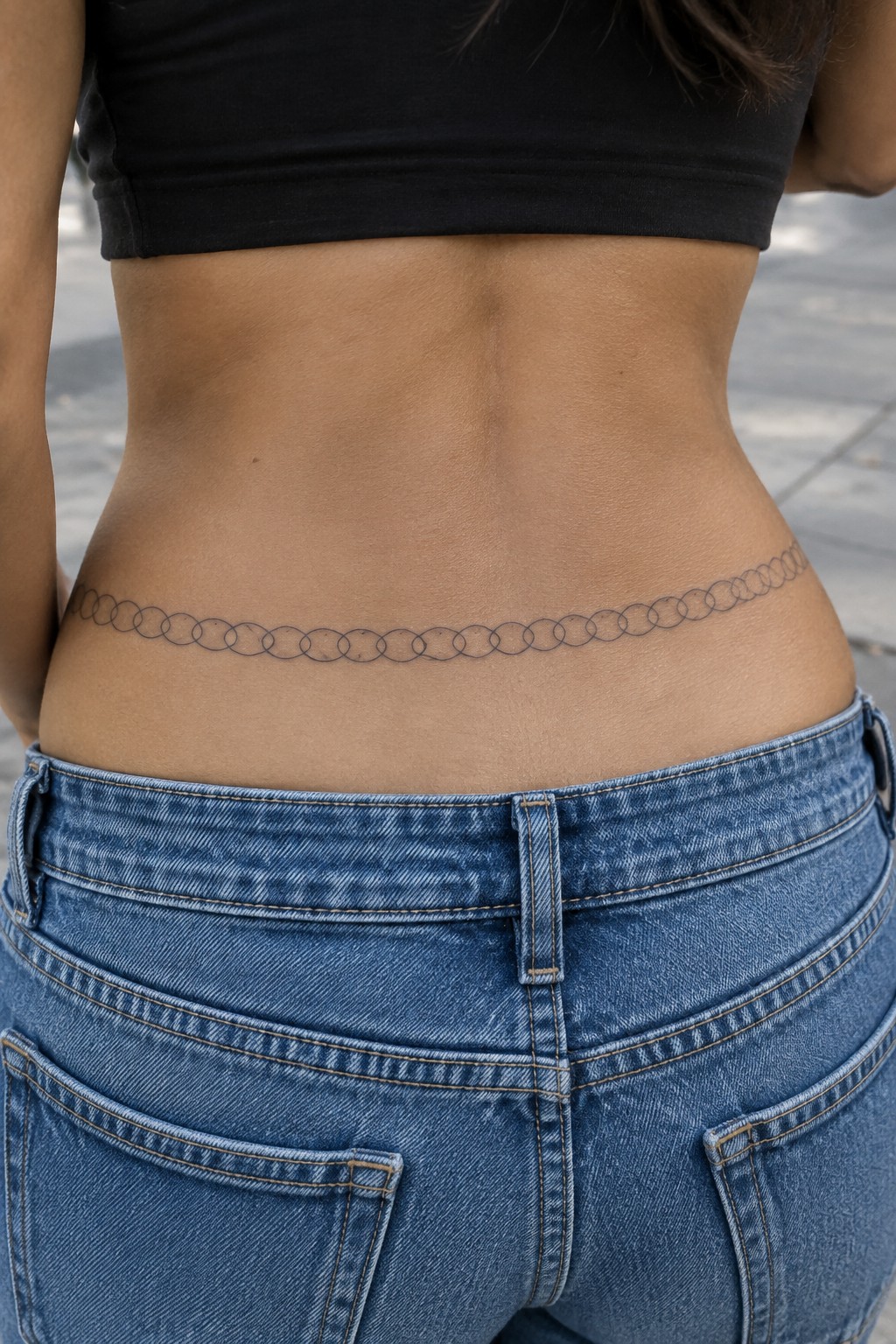
The tattoo uses a single row of linked circles that form a thin band right above the waistband. The pattern stays narrow and repeats the same shape all the way across without any added lines or shading. This keeps the focus on the connected loops themselves.
I think the lower back works for this because the flat area lets the circles stay even and readable. The scale also stops the design from feeling crowded once the jeans sit in place.
Frequently Asked Questions
What are the most common sacred forms featured in these geometric spiritual tattoos? These designs often incorporate interlocking circles, triangles, and hexagons drawn from traditions like the Flower of Life and Metatron’s Cube. Each form represents concepts such as unity, balance, and the connection between body and spirit, allowing women to select patterns that align with their personal beliefs or life stages.
How do I choose a design that fits my body and spiritual intentions? Start by considering body areas with smooth contours like the forearm, ribcage, or upper back, where the interlocking lines flow naturally without distortion. Reflect on your goals, such as seeking protection or inner peace, and match them to specific forms. Consulting a skilled artist ensures the scale and placement enhance both the visual impact and the intended meaning.
What level of pain should I anticipate with these detailed geometric tattoos? Intricate patterns require steady needle work over several hours, so areas with thinner skin like the wrist or ankle tend to feel sharper. Many women find the discomfort manageable with short breaks and proper breathing. Choosing an experienced artist who works efficiently helps reduce overall session time and intensity.
How should I care for these tattoos during the healing phase? Keep the area clean with mild soap and apply fragrance-free moisturizer several times daily to prevent cracking in the fine lines. Avoid sun exposure, tight clothing, and soaking in water for at least two weeks. Consistent aftercare preserves the sharp intersections of the sacred forms and reduces the risk of fading or infection.
Can I adapt these designs to include personal elements without losing their spiritual essence? Yes, many women add subtle color accents, birthstones, or small personal symbols that weave into the interlocking structure. Work with an artist familiar with sacred geometry to maintain the original balance and proportions. This approach keeps the core meaning intact while making the tattoo uniquely yours.
