

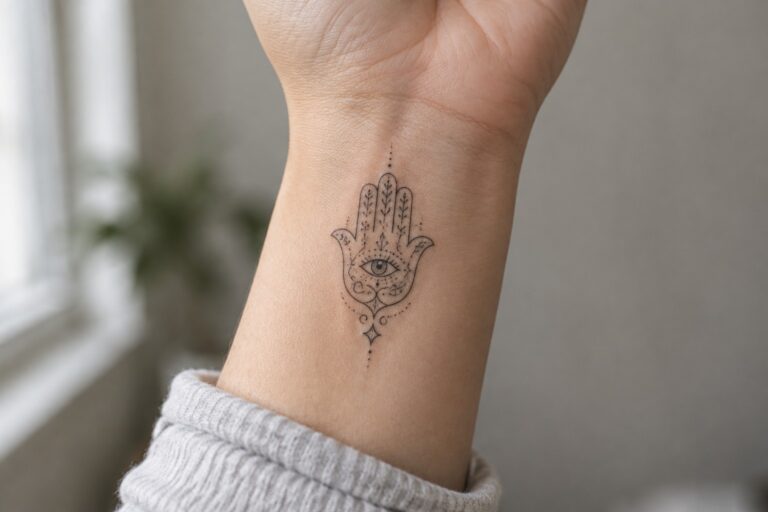
I have always found Hamsa tattoos with ornamental eye motifs to be the perfect mix of protection and pretty details.
They make me feel empowered every time I spot one in my own inspiration boards.
This collection of twenty five designs captures that vibe in ways I know women will enjoy.
Hamsa tattoo on the wrist
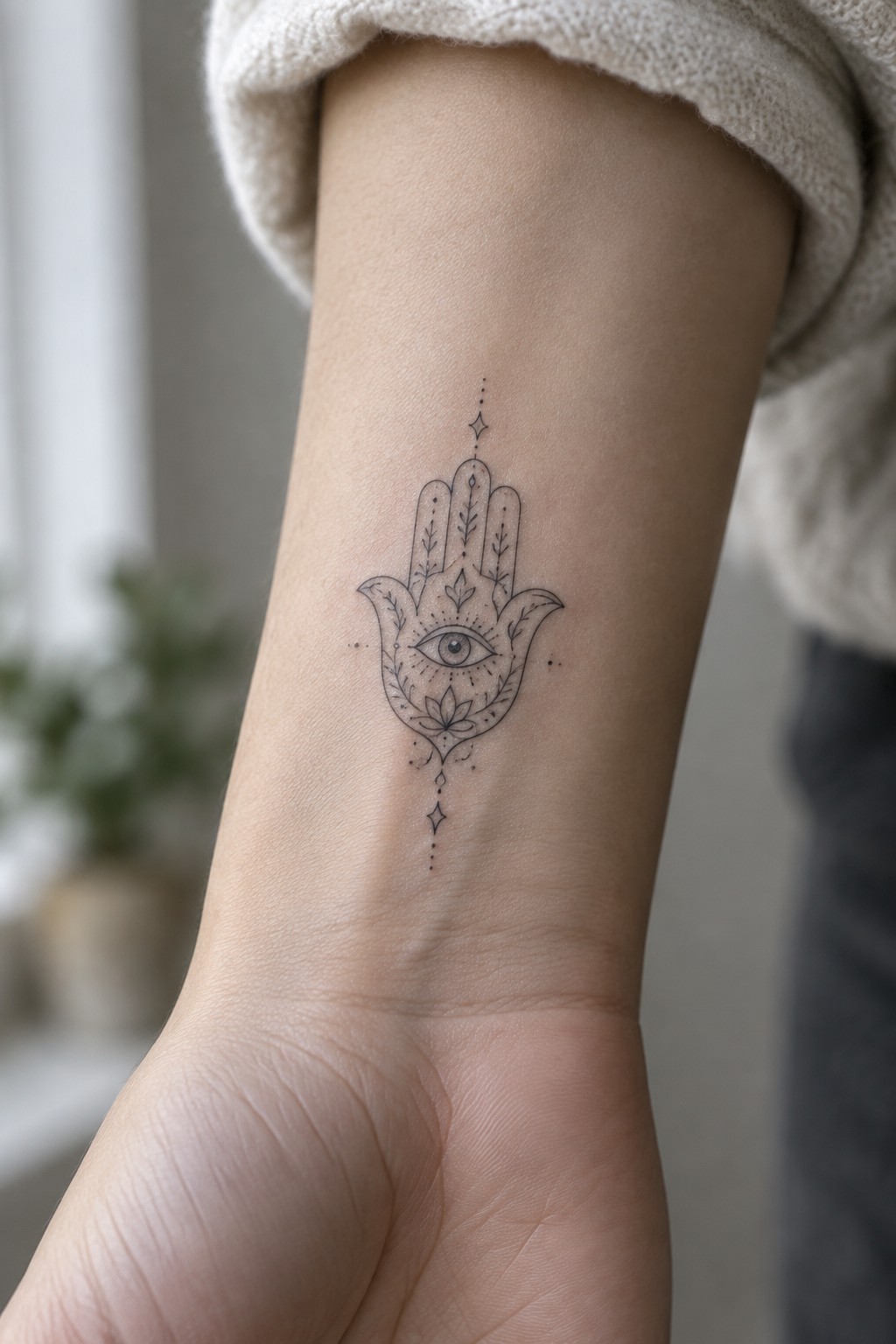
The inner wrist lets this hamsa stretch out in a straight line. That layout keeps the eye in the middle and the leaves on either side easy to follow. Fine lines help the whole thing stay light on the skin.
The dots and stars at each end add balance without filling extra space. I think the size fits the area because the design stays readable even when the arm moves.
Hamsa on the inner forearm
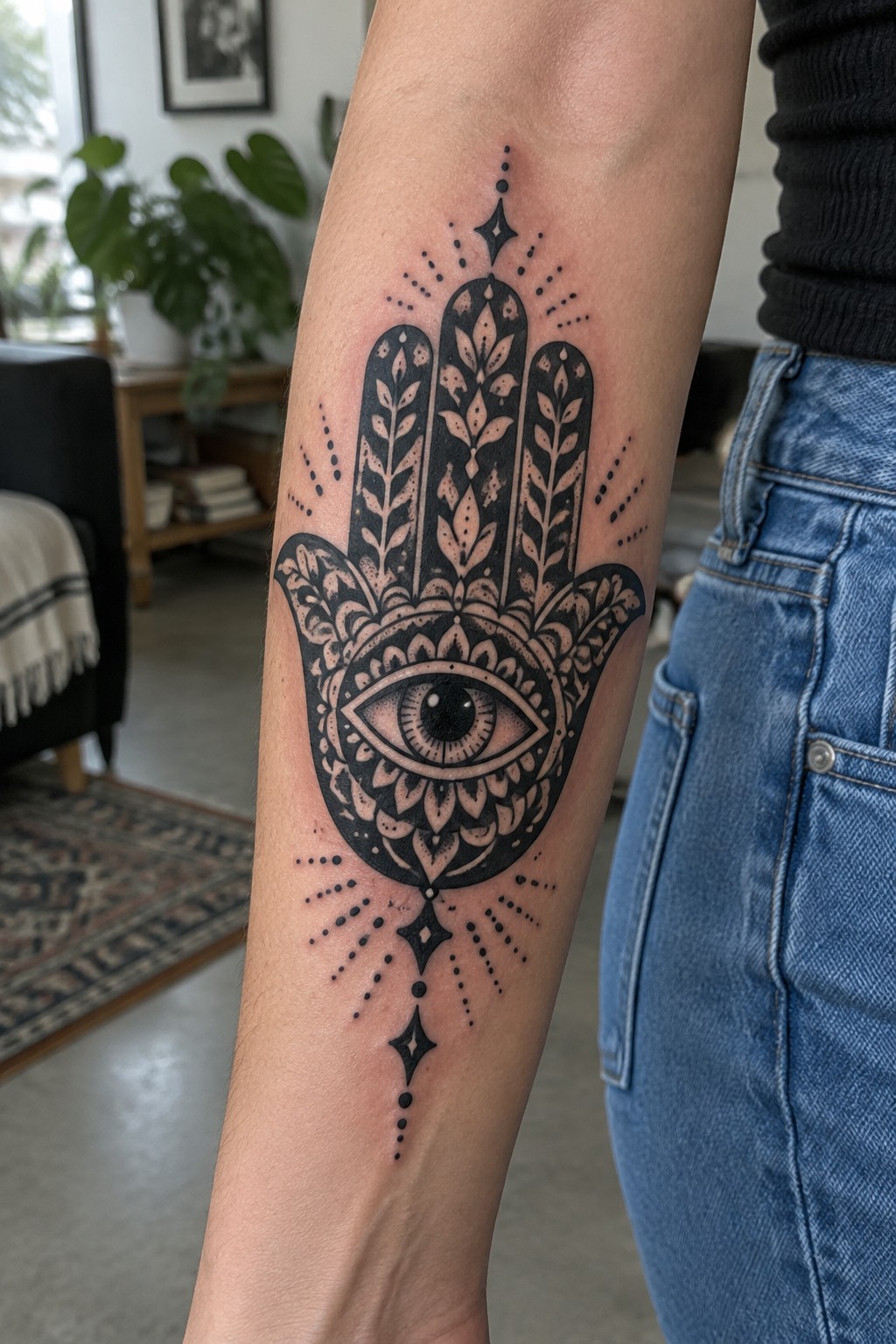
The design sits on the inner forearm in a straight vertical line. The hamsa fills the space with the eye placed at the center of the palm. Dotted accents run above and below to stretch the layout without adding bulk.
This spot gives the tall shape enough room to stay balanced. I think the forearm works well here because the eye stays visible from most angles without needing extra shading.
Hamsa tattoo on the side of the finger
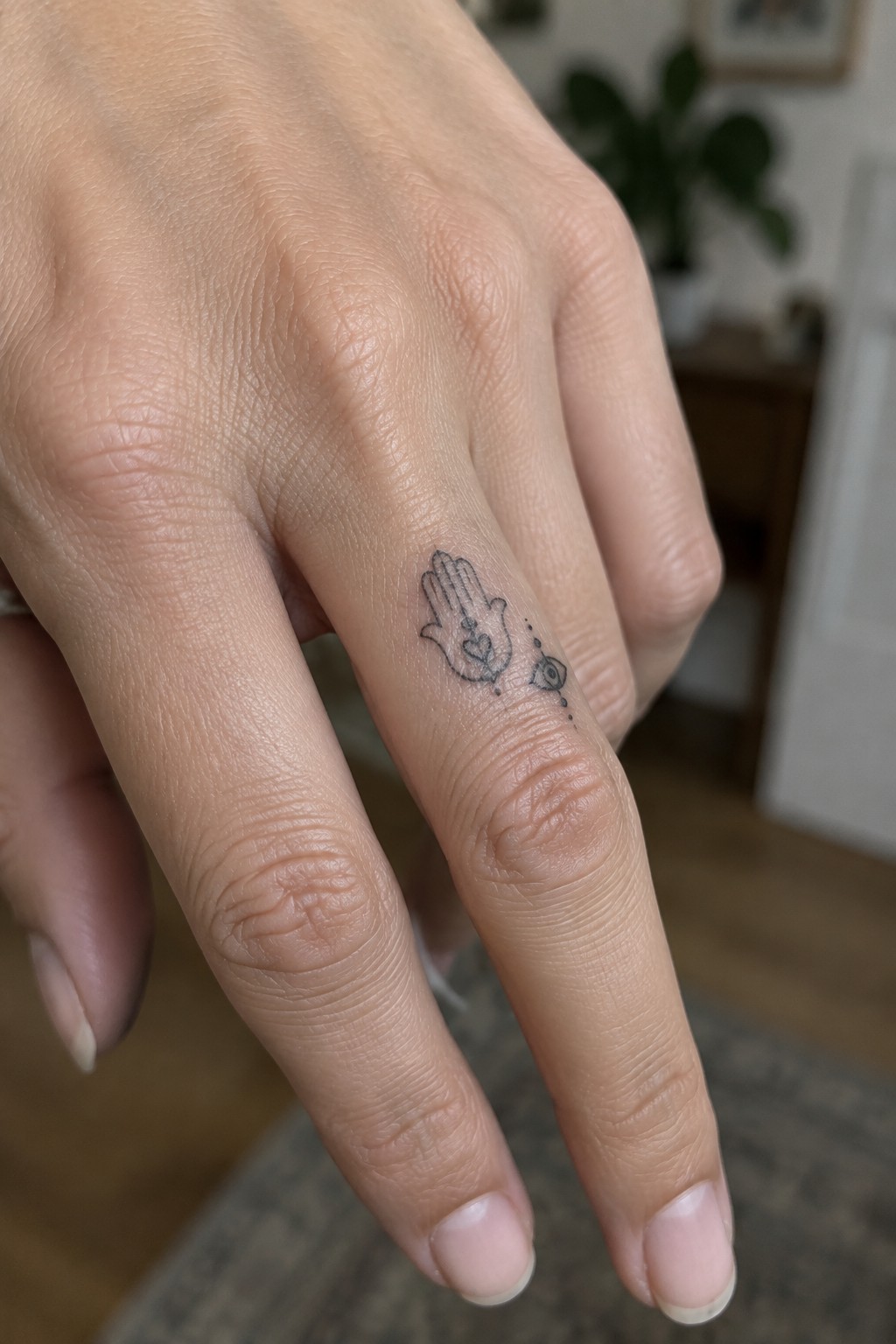
This hamsa sits along the side of the finger in a compact spot. The design uses thin lines to show the hand shape with a small heart inside. An eye sits next to it with a few dots for balance.
I like the finger placement here because it keeps everything contained and easy to hide or show. The scale prevents the details from feeling crowded while still reading clearly.
Hamsa hand tattoo on the upper back
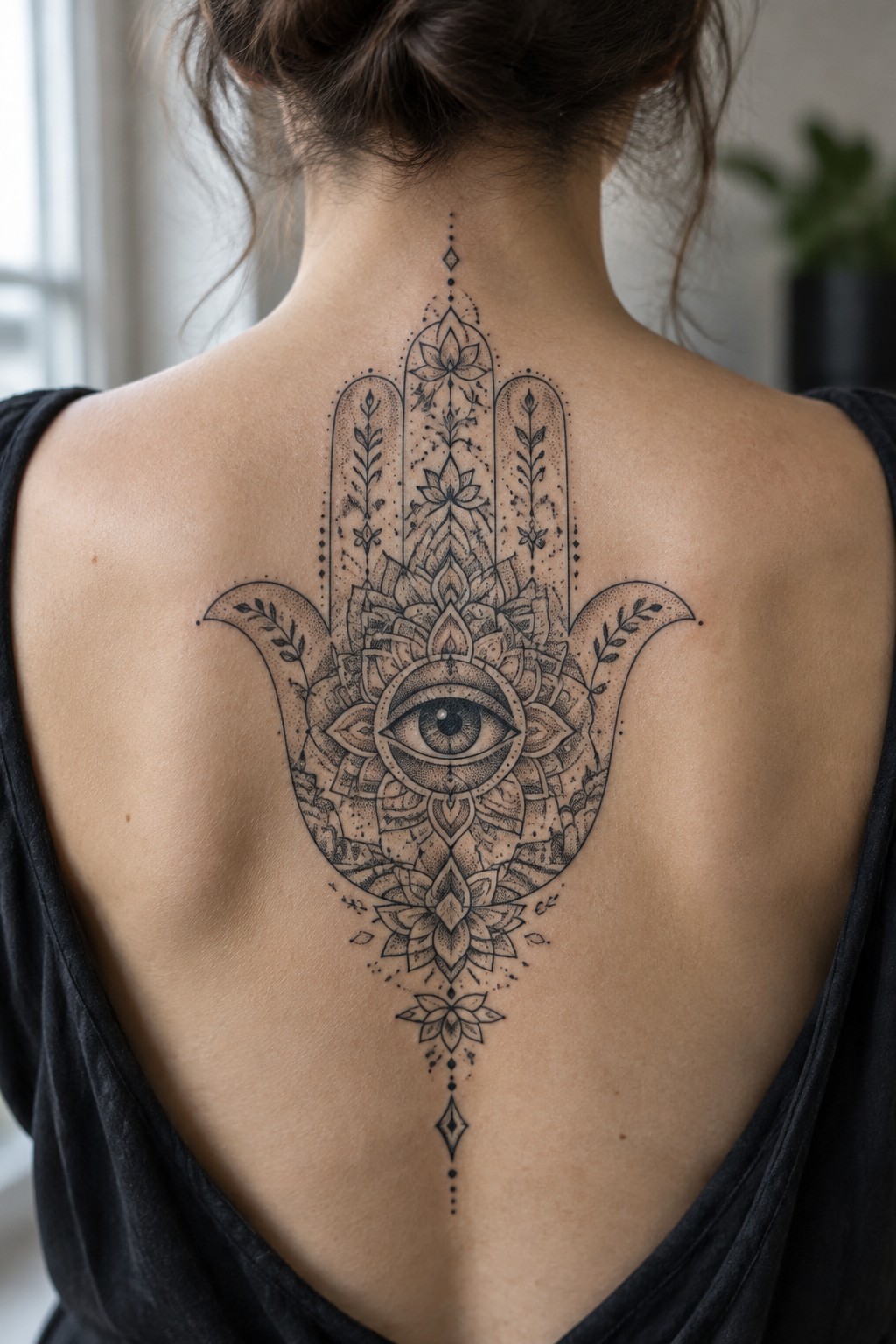
The placement sits right below the neck and spreads across the upper back in a centered position. This spot gives the full hamsa shape room to show without feeling cramped. The design uses black ink with an eye in the middle and layered mandala and lotus details filling the palm area.
The symmetry reads cleanly here because the back stays flat and open. I think the vertical line work at the top and bottom helps the whole piece stay balanced.
Hamsa tattoo on the upper back
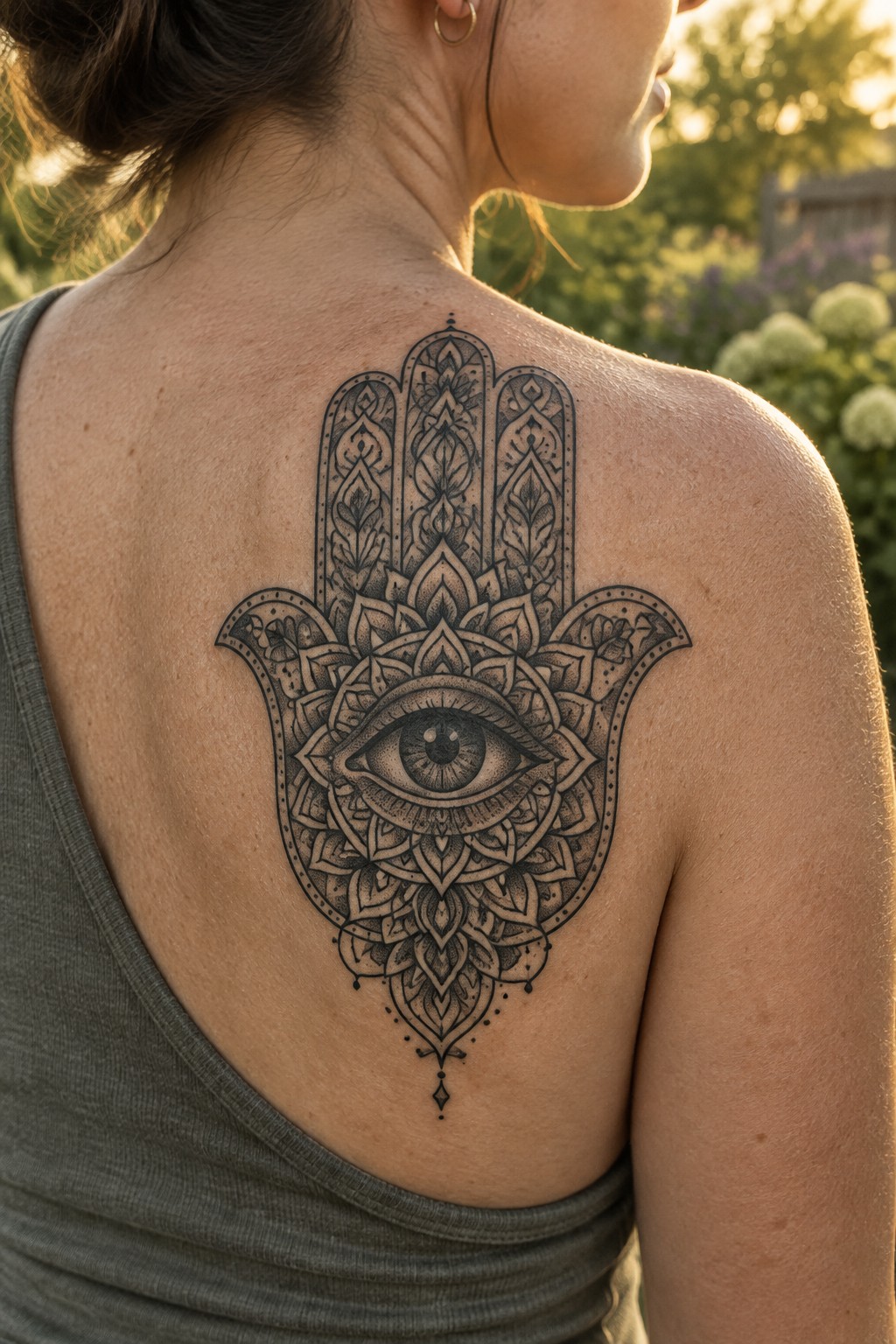
The hamsa sits centered between the shoulder blades. This spot gives the symmetrical shape room to stay even and clear. Fine patterns fill in around the eye without crowding the main lines.
I think the placement helps the whole design hold together at this scale. The back keeps the detail readable even from a short distance.
Hamsa tattoo on the ankle
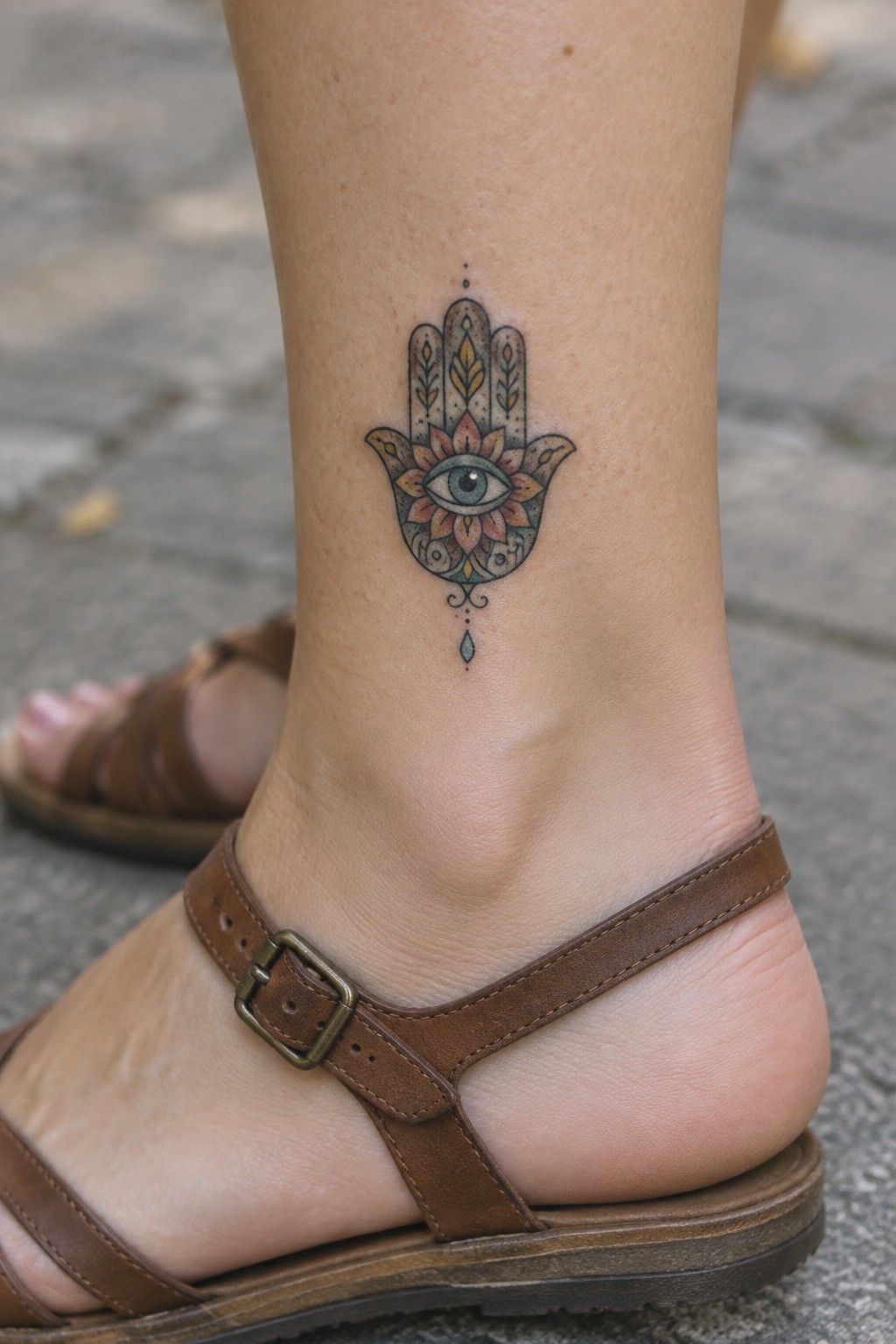
The design sits right above the ankle bone. A hamsa hand holds a detailed eye at its center with soft floral shapes around it. The colors stay muted and the whole piece stays compact.
This spot lets the tattoo show with most shoes but stays out of the way during daily wear. The size keeps every line readable without crowding the narrow area.
Hamsa on the upper thigh
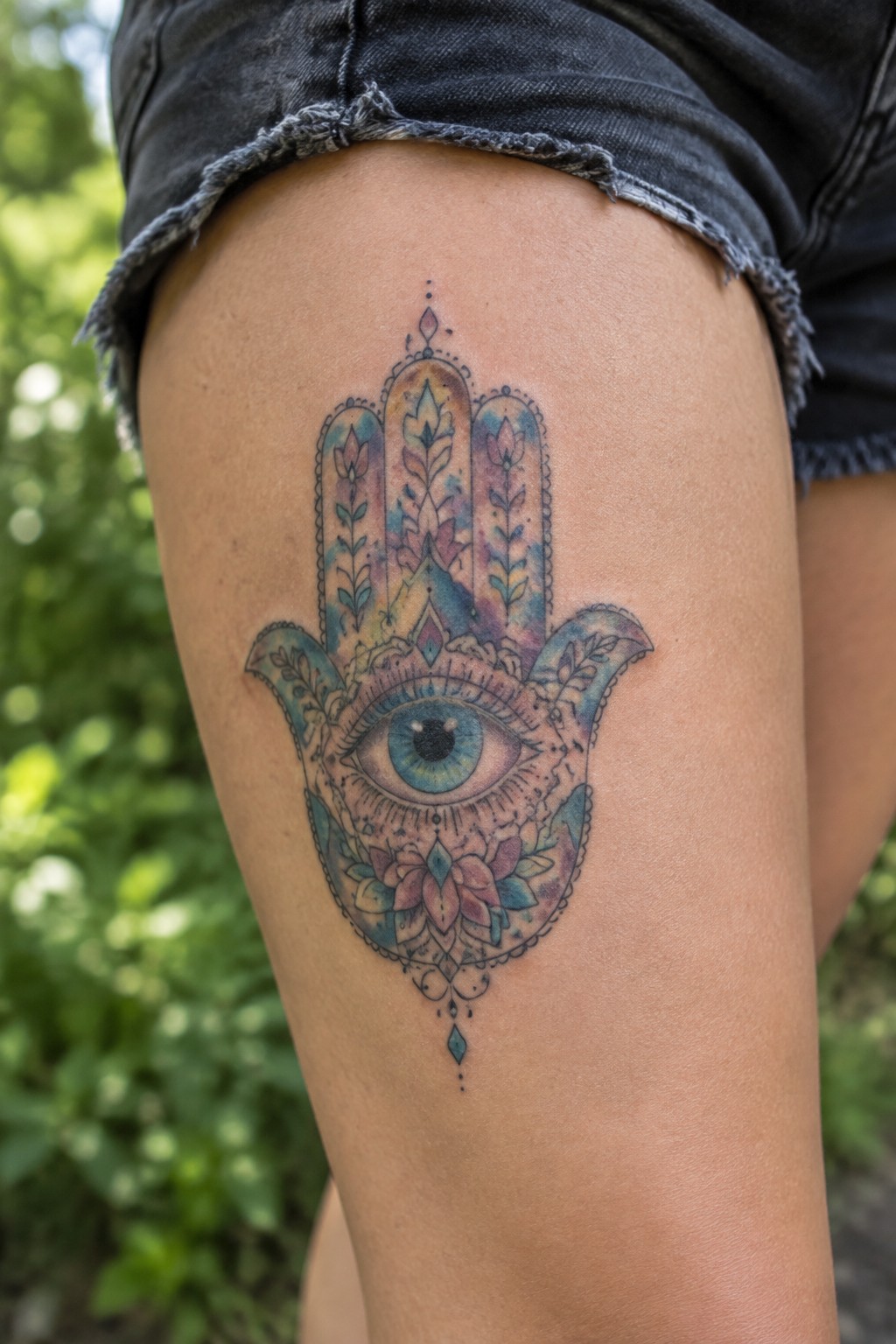
The thigh gives this hamsa room to sit without feeling squeezed. The full hand shape shows up clearly here with the eye placed right in the center. Soft watercolor tones fill the fingers and palm while small flowers add detail along the sides.
I think the scale works because the lines stay sharp even with the color wash behind them. It also lets the bottom drop end in a clean point that follows the leg.
Hamsa tattoo behind the ear
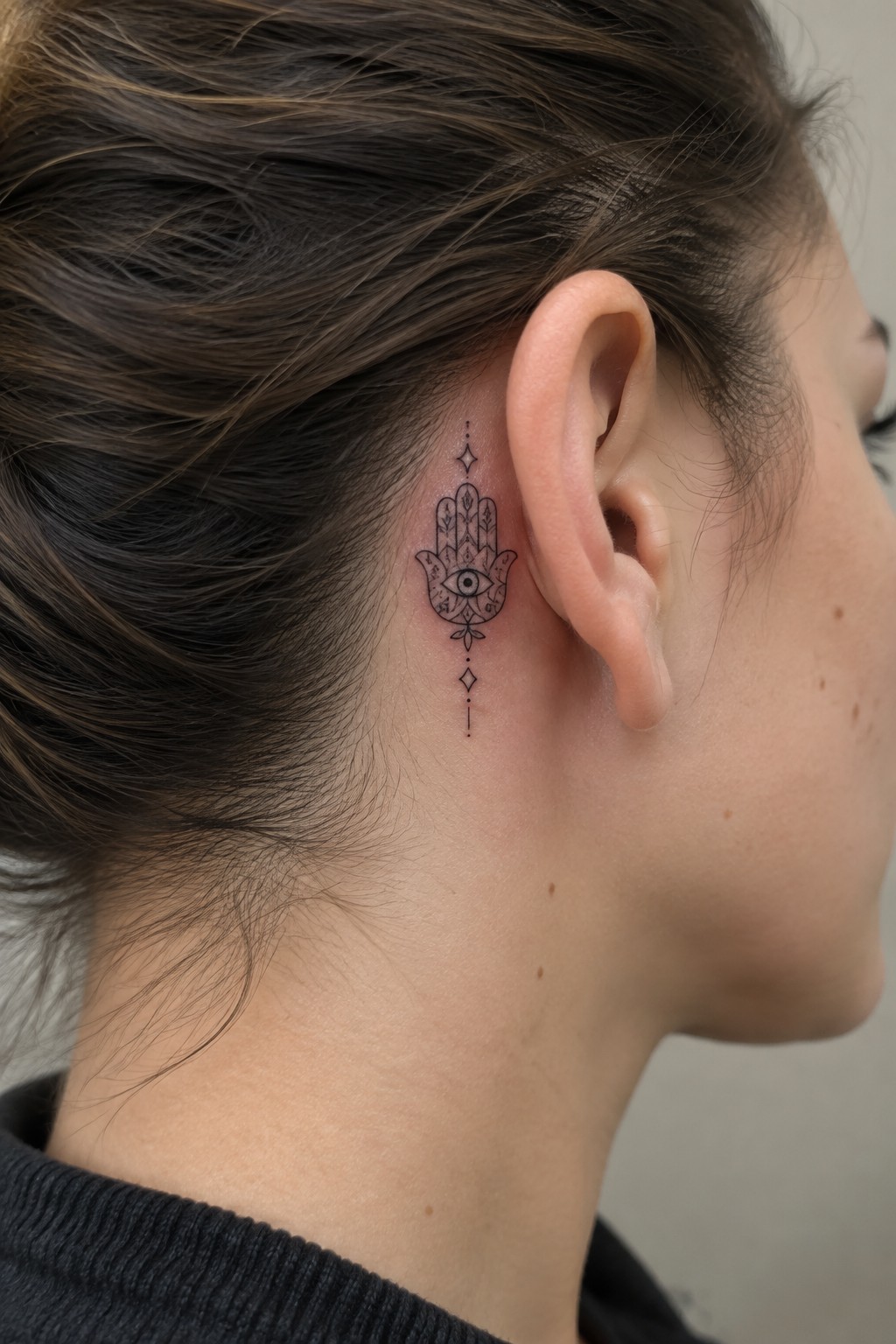
The hamsa sits directly behind the ear in a narrow space that follows the head’s curve. Fine line work keeps the whole piece compact and contained. The central eye stays clear even at this small scale.
I think the vertical stack of dots helps the design read as one unit rather than separate parts. It also leaves the area looking balanced from the side without extra bulk.
Hamsa tattoo placed along the spine
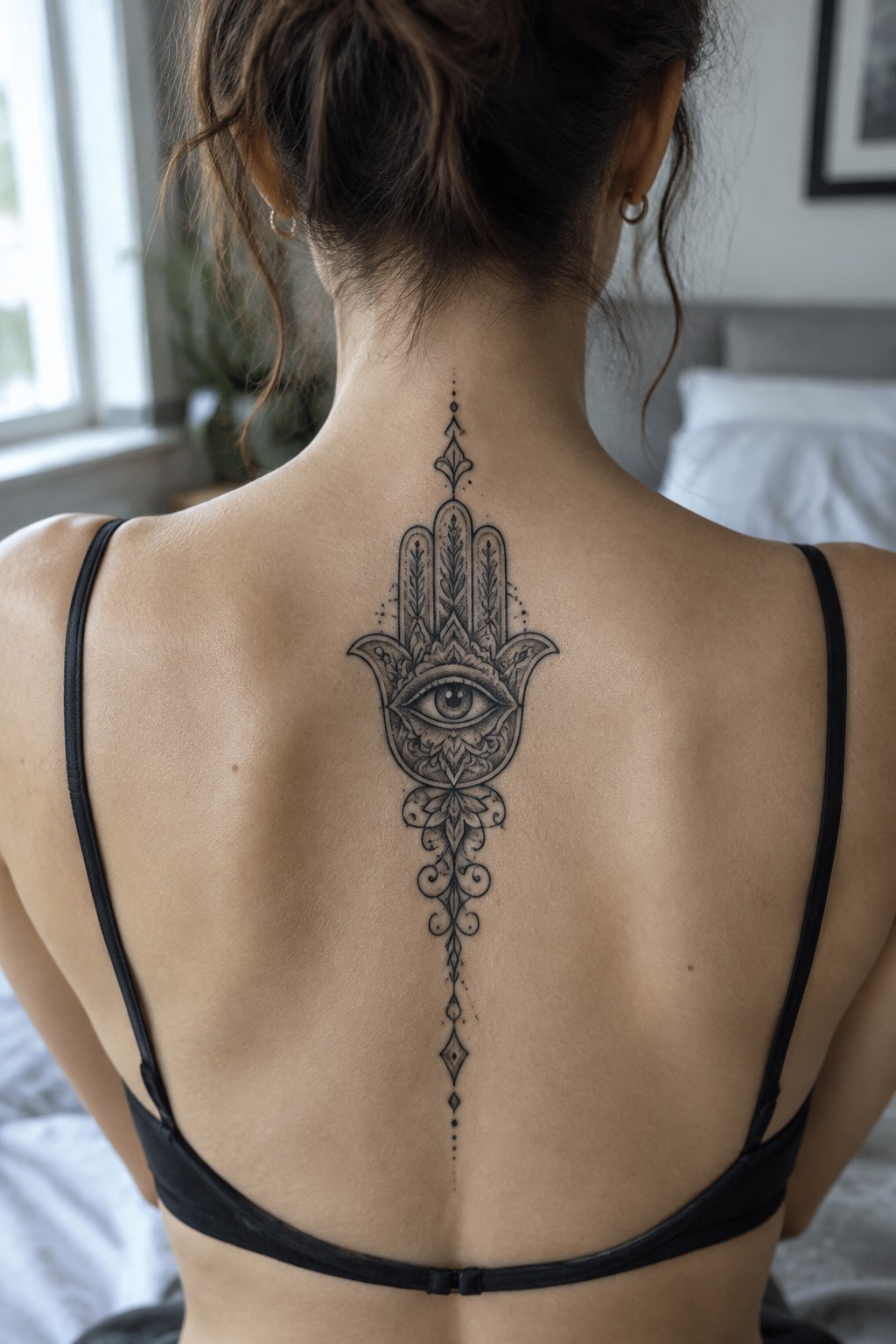
The tattoo runs straight down the center of the back starting near the neck. Its vertical shape lines up with the spine so the full length of the hamsa stays visible. The eye sits right in the middle of the hand as the main focus.
This placement gives the design room to stretch without looking cramped. The patterns below the hand help extend the length while keeping everything centered.
Hamsa on the ribs
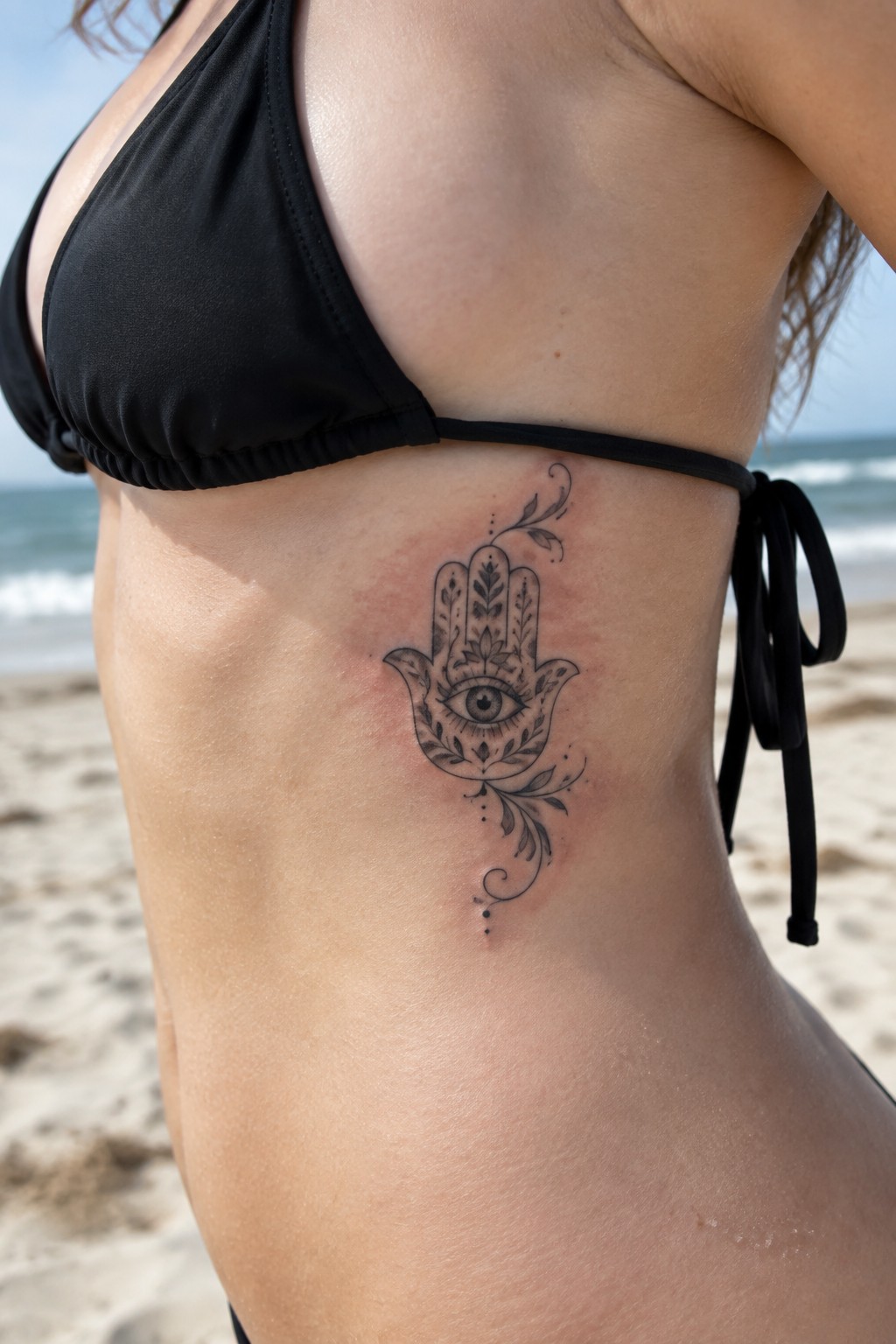
The tattoo sits on the side of the torso just below the bust line. A central hamsa holds an eye in the palm while small leaves and vines extend above and below the hand. The black ink stays fine throughout with light shading inside the shape.
This spot lets the vertical lines of the design follow the body without bunching. I think the overall size keeps every detail easy to read while fitting the space cleanly.
Hamsa tattoo on the back of the hand
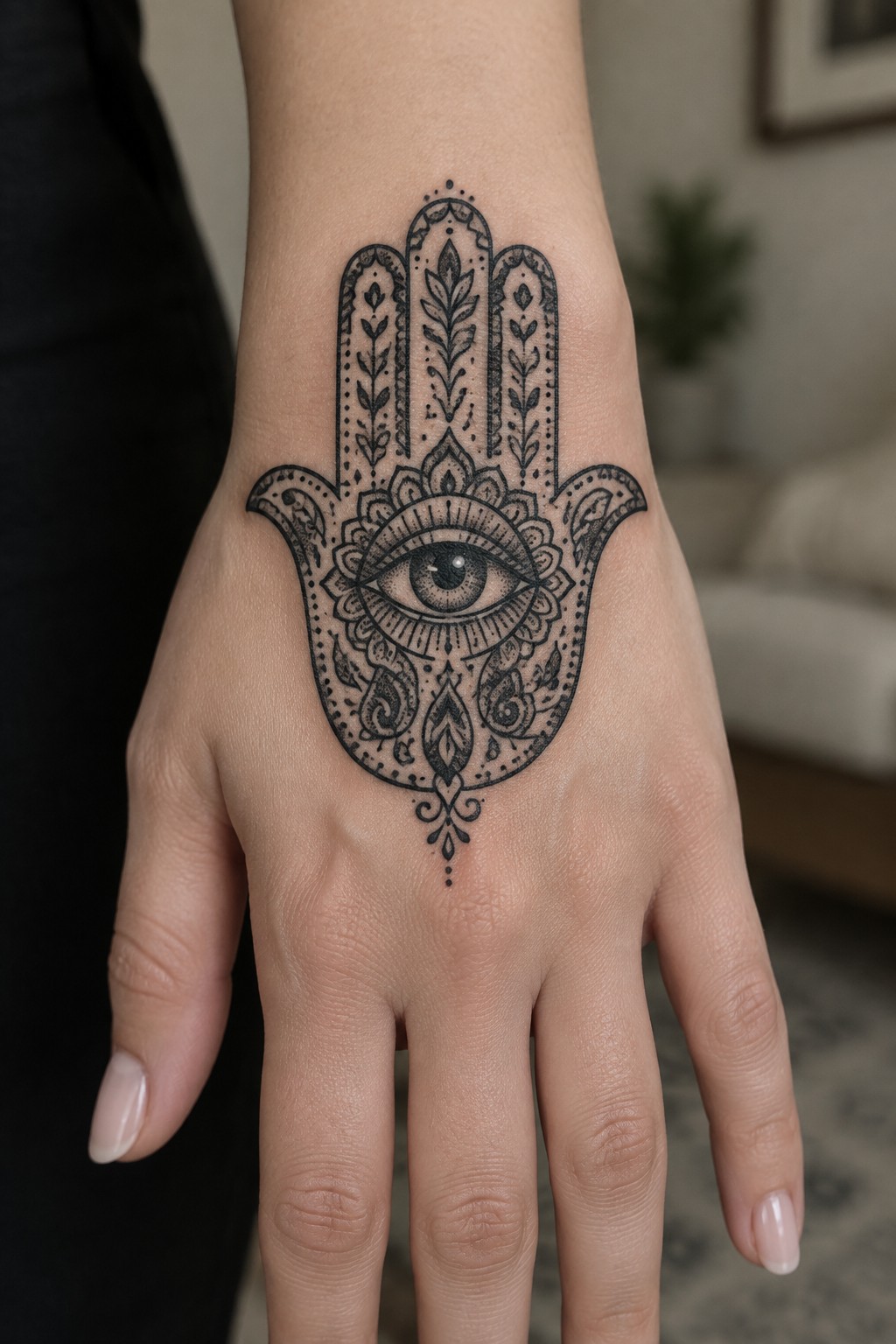
A hamsa sits across the back of the hand with the eye centered in the palm area. The design uses the natural width of the hand to hold the full shape without stretching onto the wrist or fingers. Leaf and dot details fill the space evenly so nothing feels cramped.
This placement keeps the symbol visible during daily movement. The scale stays practical for the area and avoids looking oversized on smaller hands. I like how the lines stay crisp even on a spot that sees regular use.
Small hamsa on the upper chest
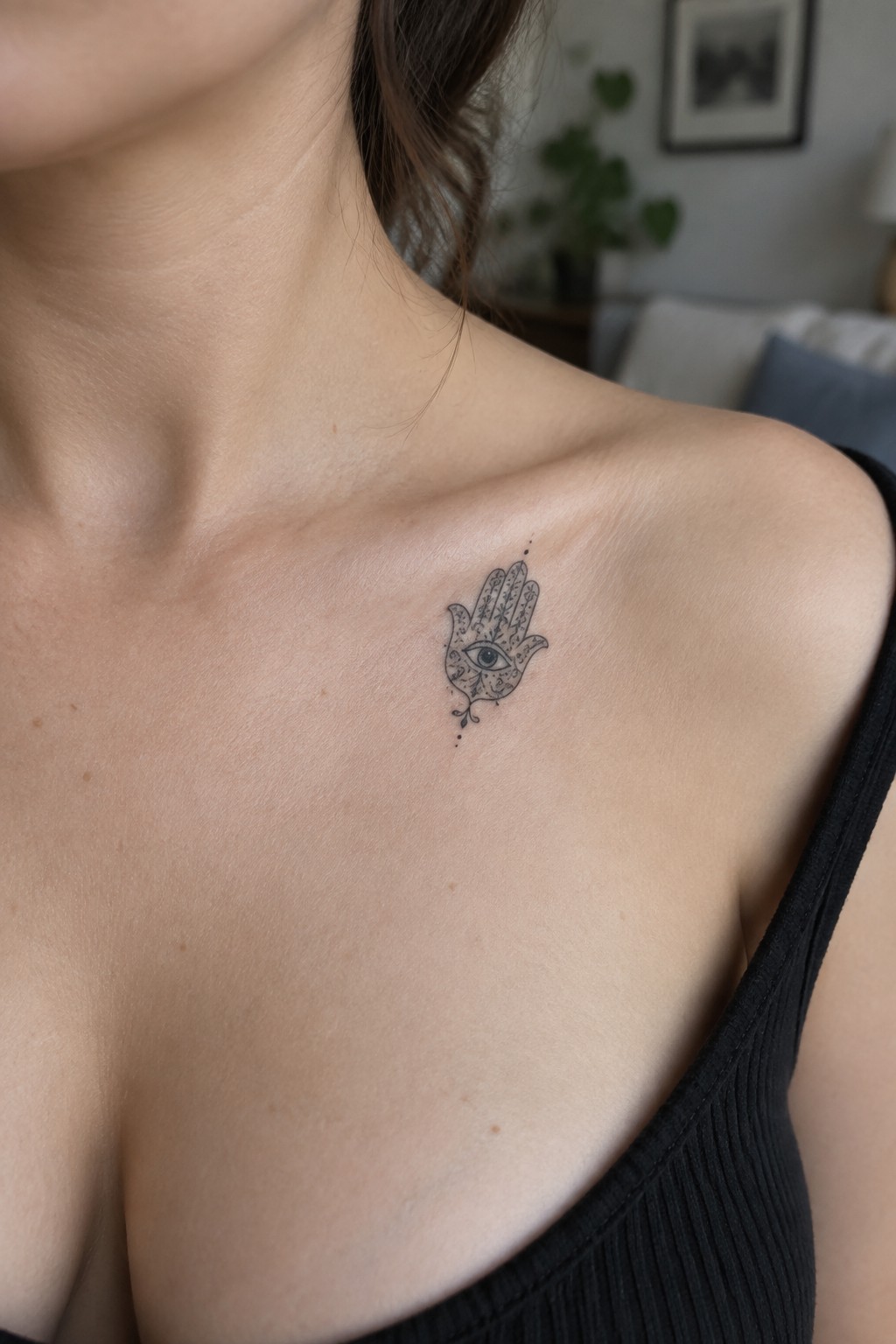
This hamsa sits right below the collarbone on the upper chest. The compact size keeps the whole design contained and easy to read. Fine lines and small dots fill the hand without crowding the central eye.
I think the placement works because it lets the symbol rest in a spot that stays visible in everyday clothes. The light shading helps the eye hold focus without overpowering the surrounding skin.
Hamsa on the upper arm
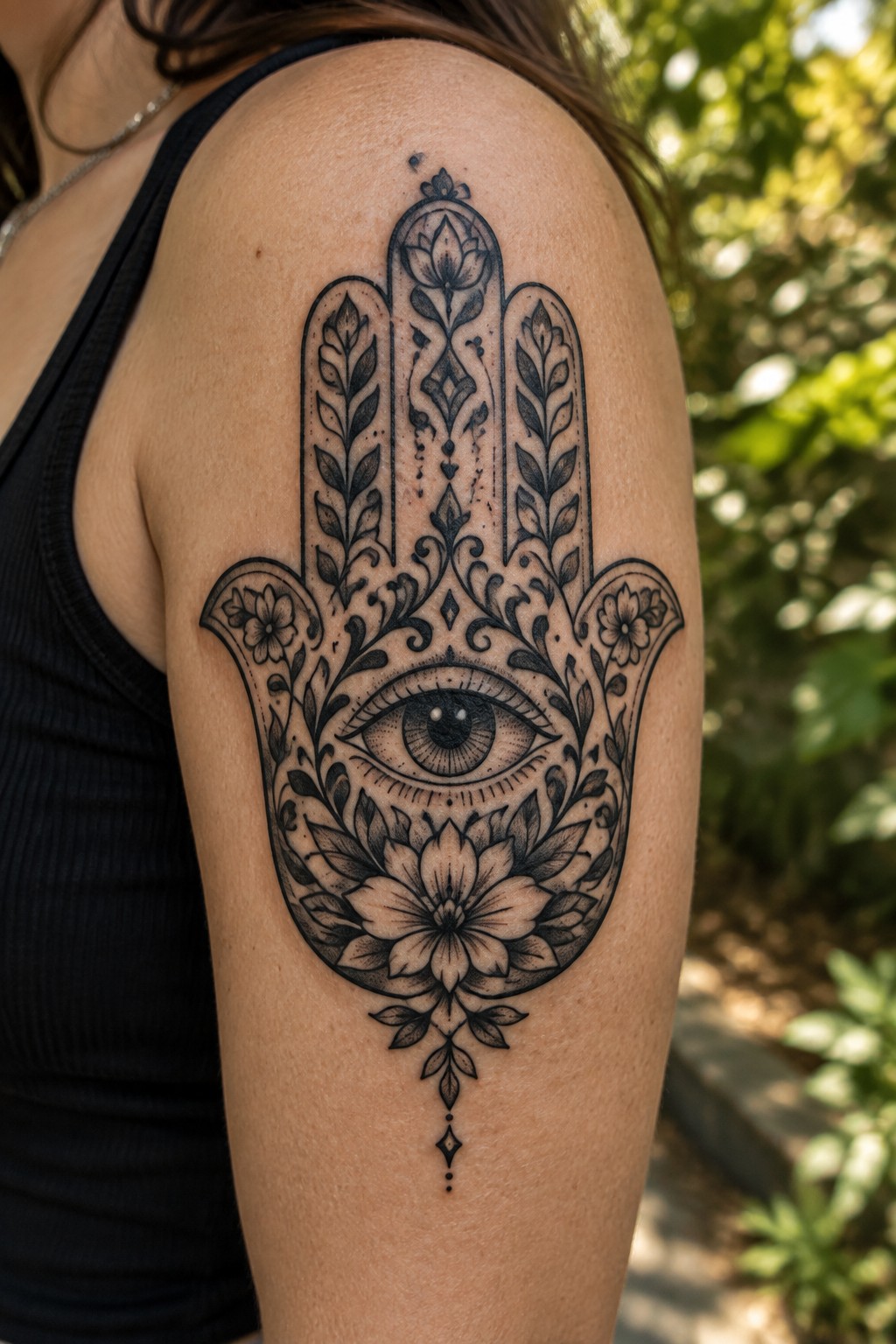
The tattoo sits on the upper arm and takes up most of the space between the shoulder and elbow. The hamsa shape stays clear with an eye placed right in the middle. Leaves and flowers fill the sides without crowding the center.
I think the placement works because it gives the design room to breathe while still showing the full shape. The eye stays easy to read at this size.
Hamsa tattoo on the ankle
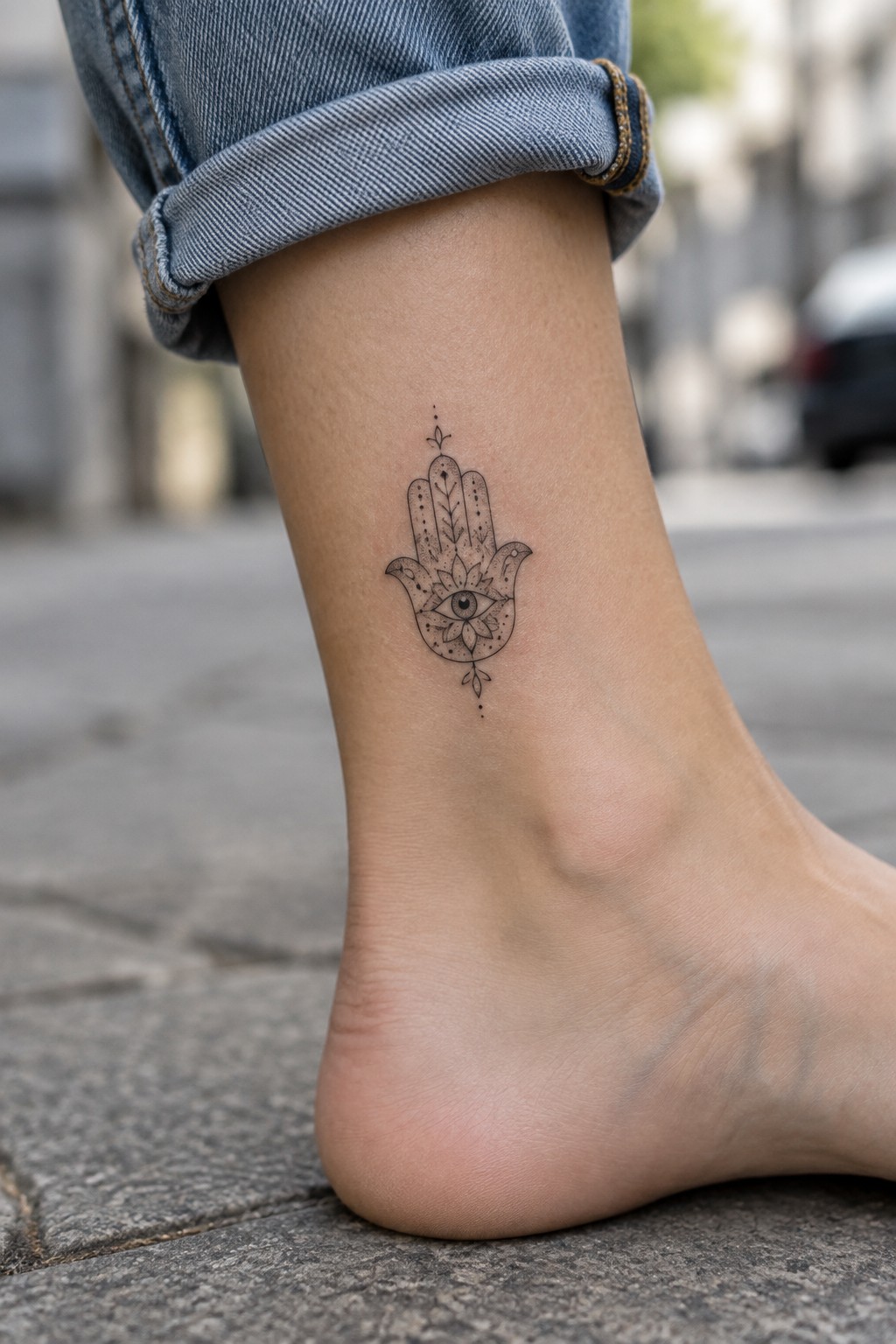
The ankle gives this hamsa a compact spot that suits its size. Fine lines shape the hand and hold the eye in the center without crowding the skin. Small floral accents add just enough detail while keeping the whole piece light.
This placement works because the symbol stays easy to cover with socks or show when wanted. The scale feels practical for daily wear.
Hamsa tattoo placed on the lower back
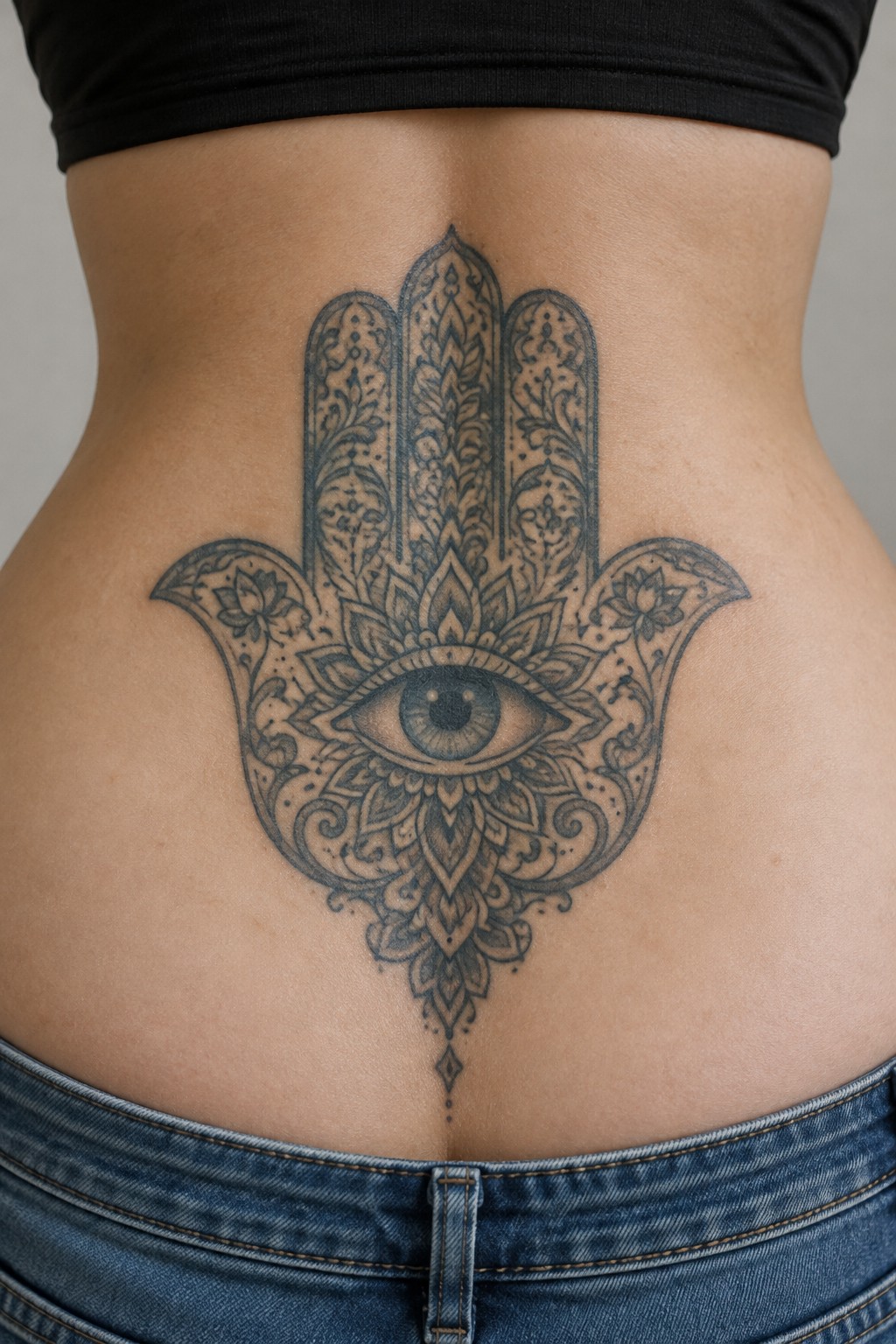
The design sits across the lower back just above the waistband. This spot gives the wide Hamsa shape room to spread evenly on both sides. The eye stays centered without any crowding.
I like how the pointed bottom lines up with the spine. It keeps the whole piece looking steady and balanced at this scale.
Hamsa tattoo on the thigh
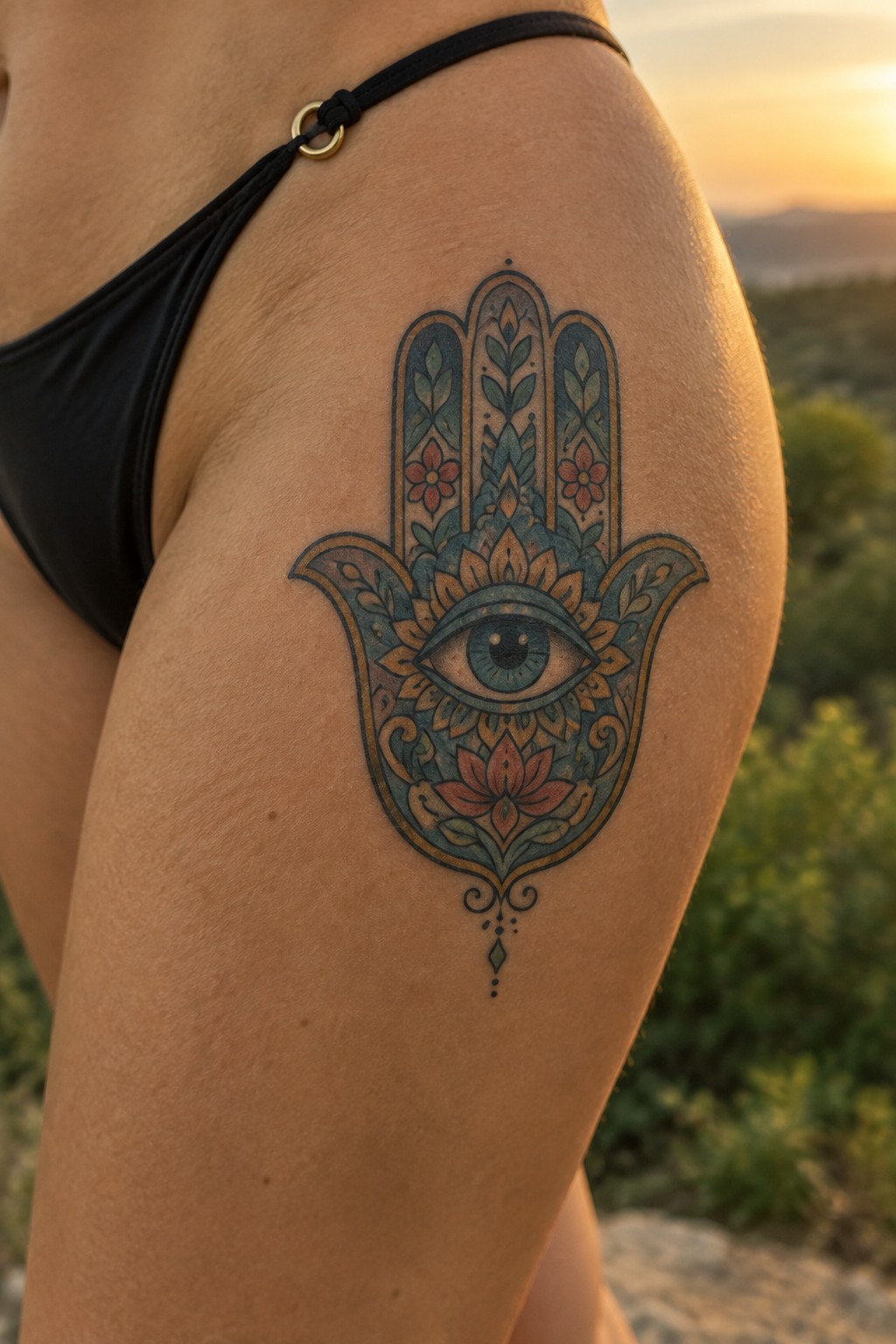
The upper thigh gives the full hamsa shape room to sit flat. The wide hand spreads across the area while the bottom point and small drops hang down without running into the edge of the clothing line.
The eye stays centered and easy to read at this scale. I think the size keeps the whole piece balanced so the flowers and leaves fill the space without crowding the main symbol.
Hamsa tattoo on the inner forearm
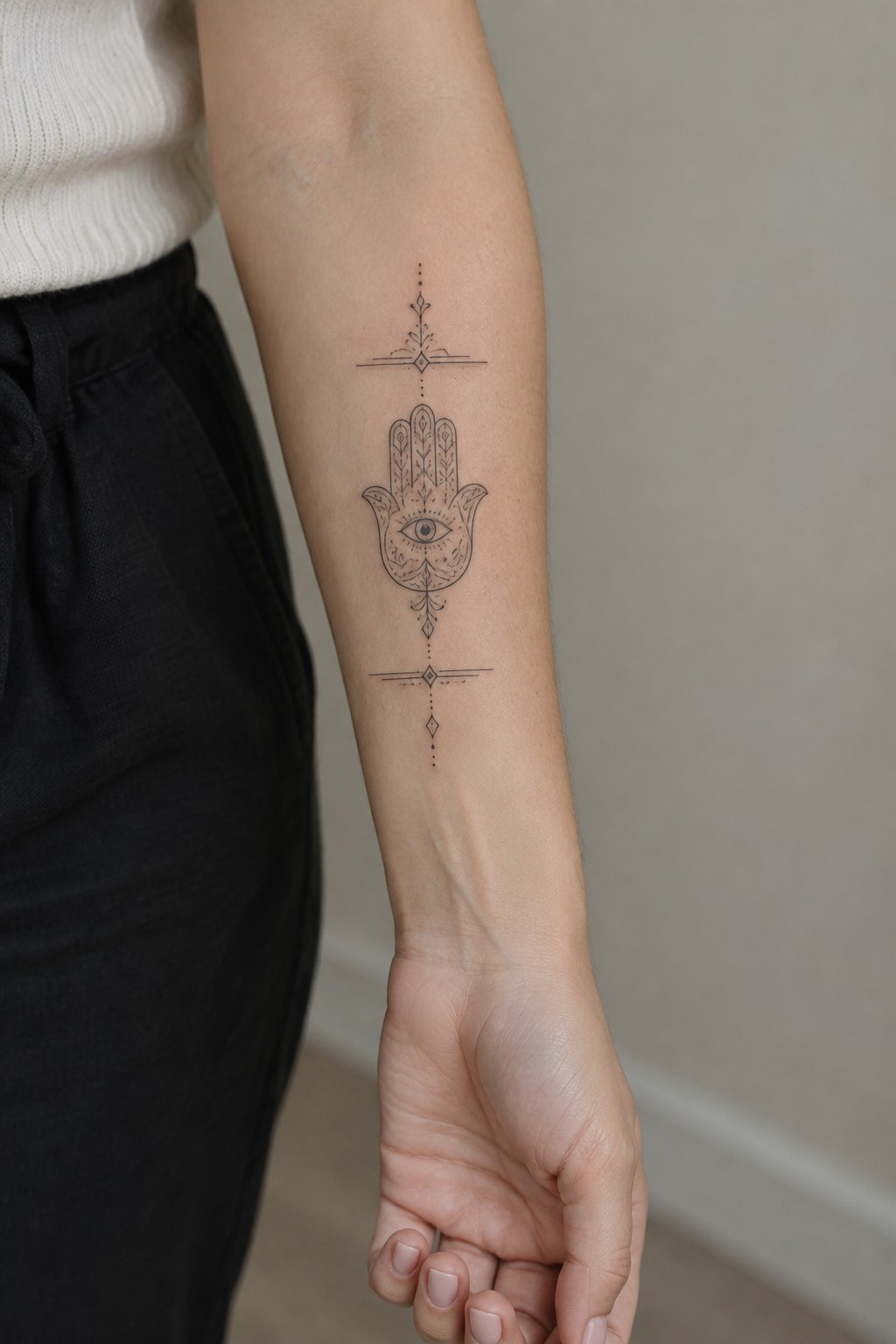
The design sits vertically along the inner forearm. This placement gives the hamsa and its central eye a clear path from top to bottom. The fine lines stay balanced with small marks above and below.
I think the arm length helps the whole thing read evenly. It keeps the focus on the eye without extra weight around it.
Hamsa tattoo on the upper chest
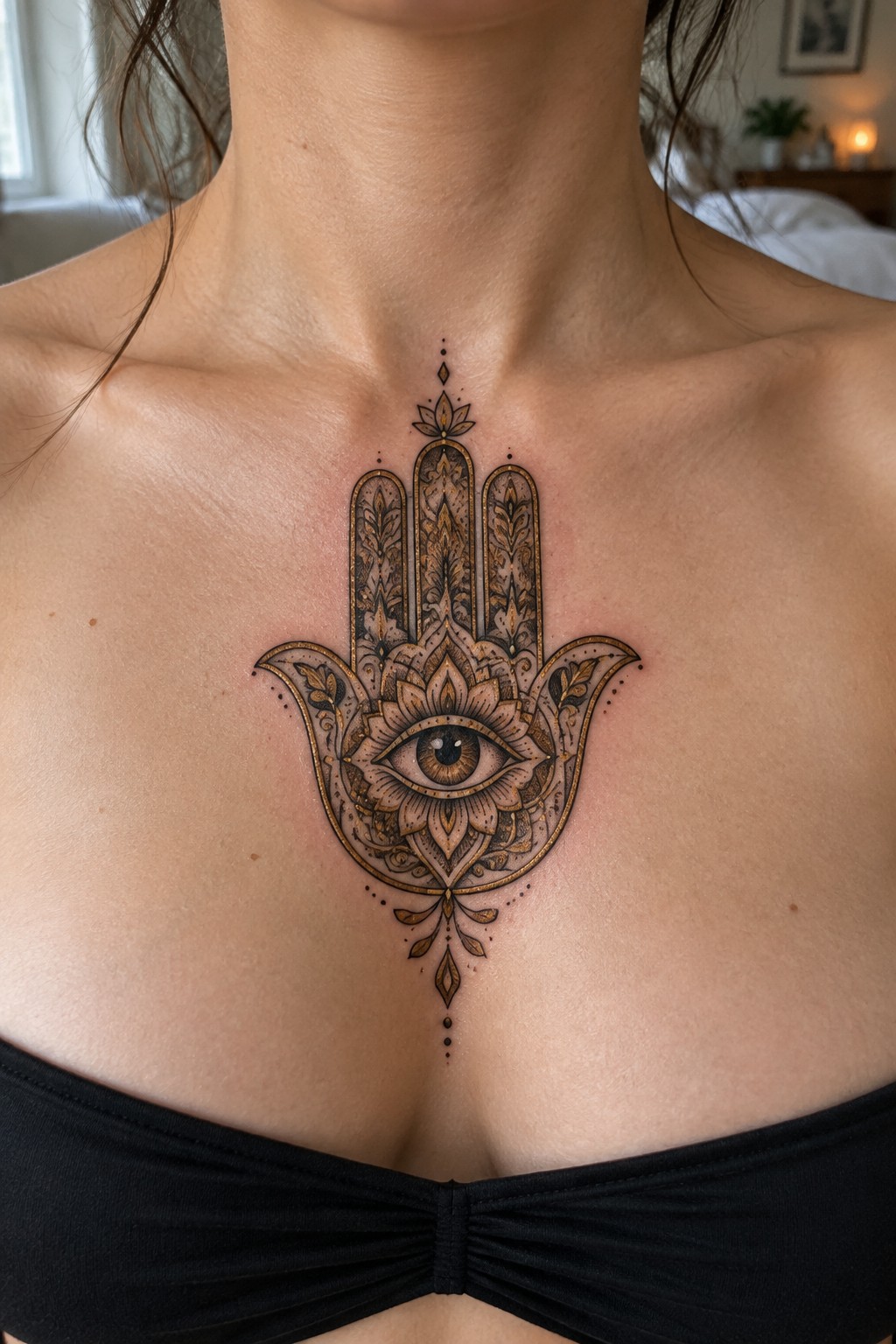
The upper chest gives this hamsa room to open up without feeling cramped. The symmetrical hand shape sits right in the middle and the eye lands at the center point. Fine ornamental lines fill each section and keep the pattern from looking flat.
I like how the placement lets the whole design stay readable even with all the small details. It also follows the natural lines of the body so nothing gets lost.
Hamsa tattoo on the side
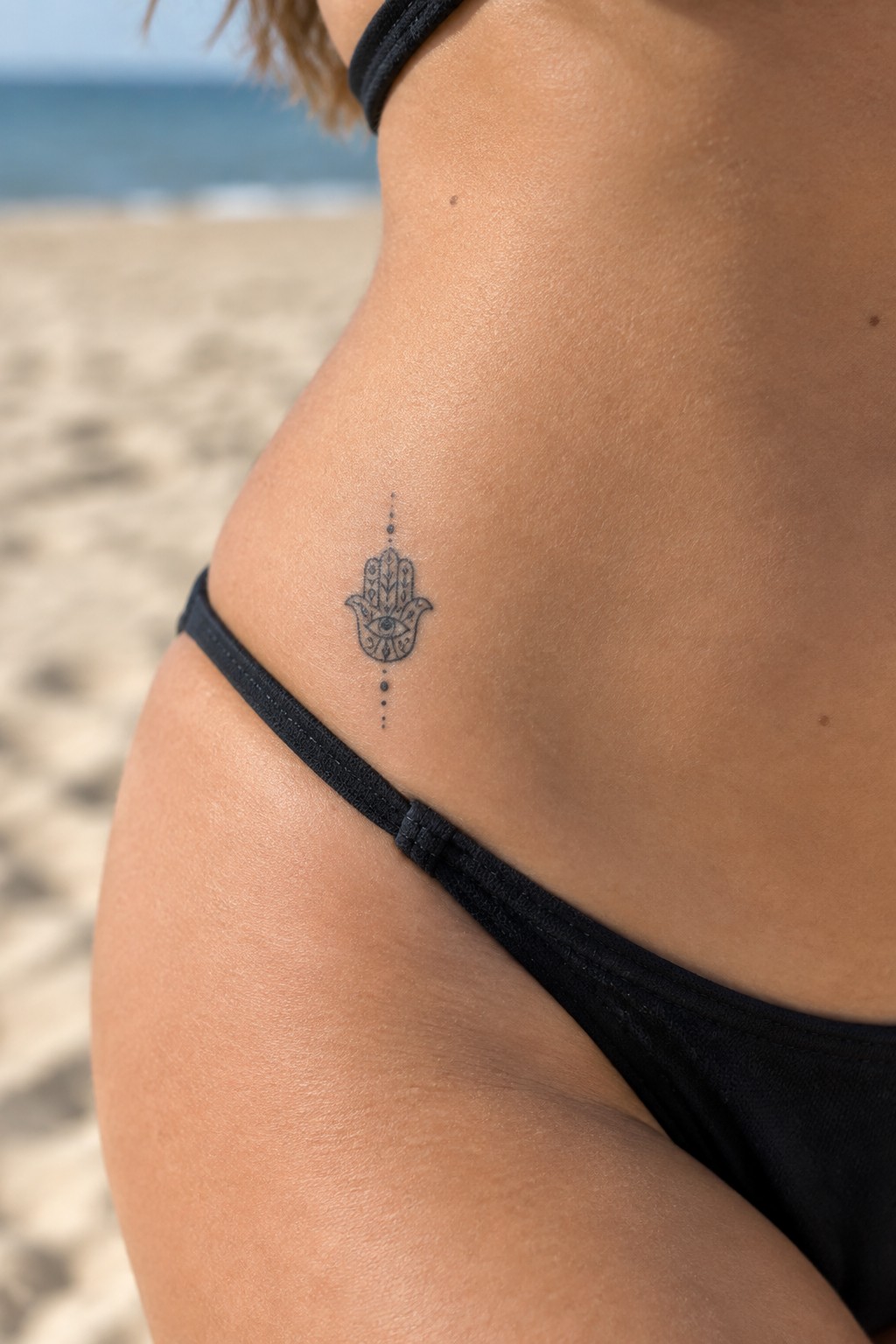
The hamsa sits on the side of the torso just above the hip. Thin lines shape the hand with an eye in the middle and a short line of dots running up and down. The whole piece stays small and uses clean black ink only.
This spot lets the design follow the natural curve without stretching out of shape. I think the size works well here because it stays readable even on a moving area like the side.
Hamsa tattoo on the ankle
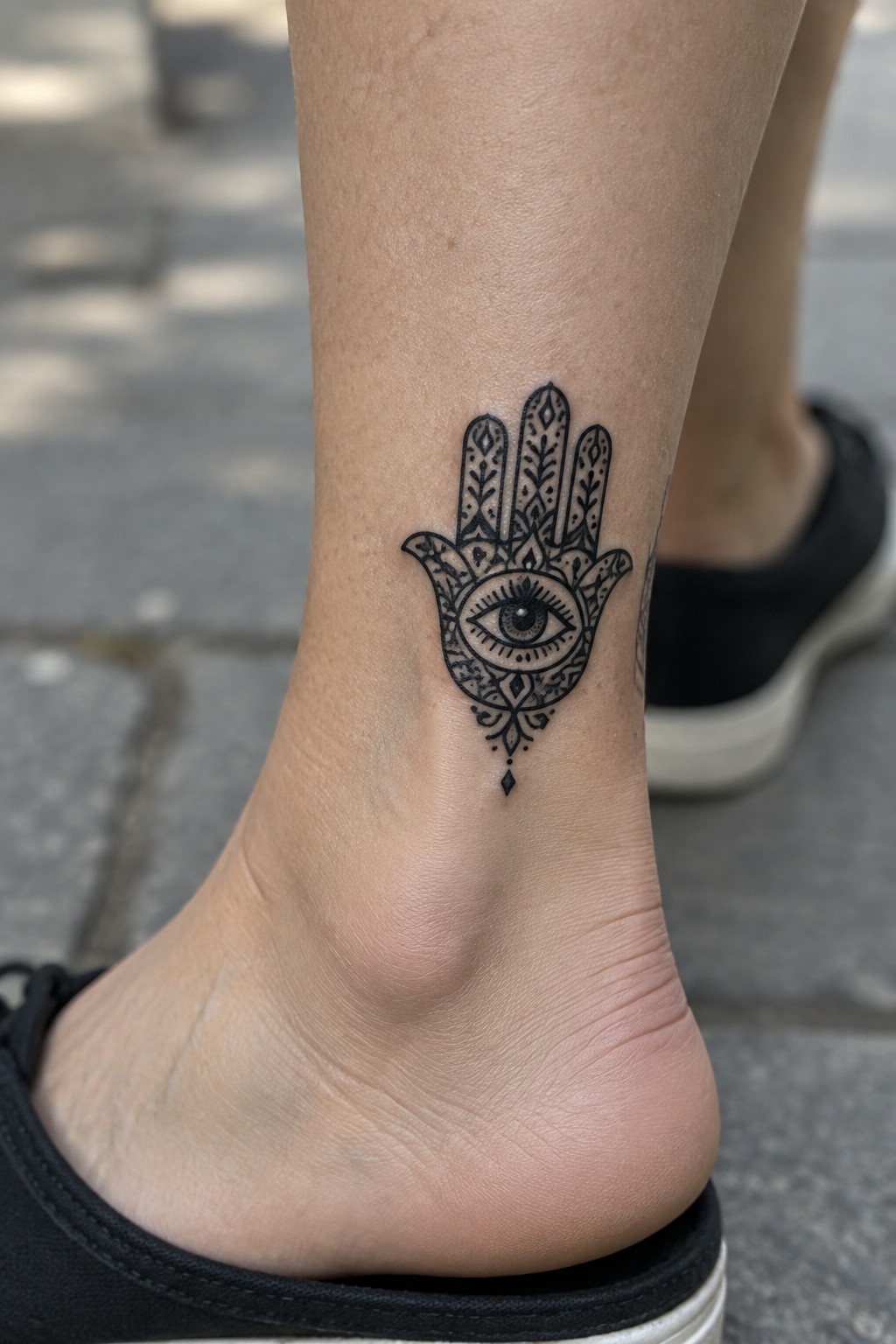
The tattoo sits on the outer ankle. It uses a hamsa shape with an eye in the middle and light ornamental lines around the fingers and base. The whole piece stays compact enough to follow the ankle’s natural curve.
I think the placement makes sense here because the hamsa form lines up neatly with the bone without wrapping too far. The black linework stays readable even on this smaller area.
Hamsa and eye on the shoulder
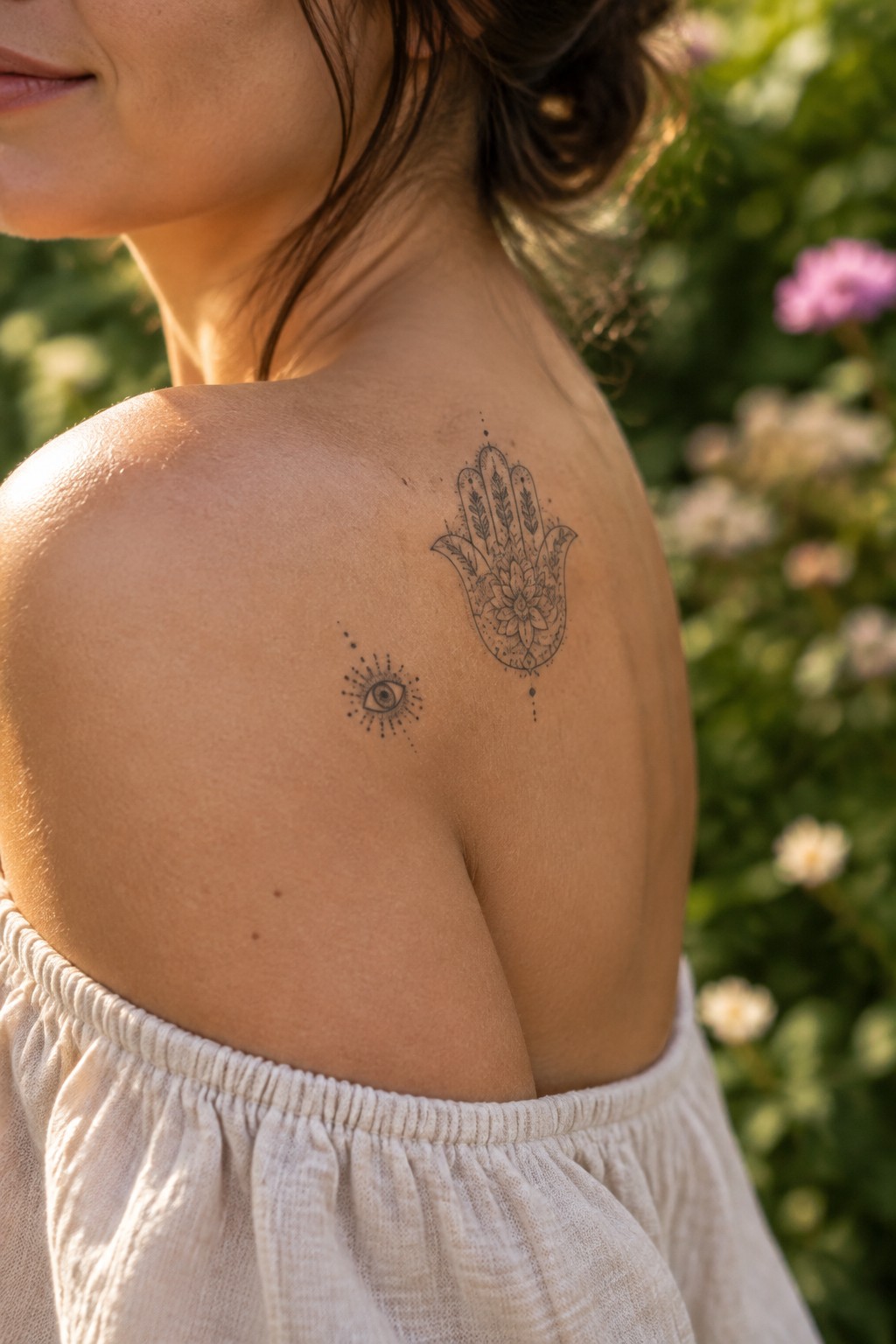
The tattoo sits on the upper back right by the shoulder. The hamsa takes center stage with its flower and leaf fill. A small eye sits off to the side with simple radiating lines.
This spot gives the design room to breathe without feeling crowded. The size stays easy to read while the fine lines keep the whole thing light.
Hamsa tattoo on the thigh
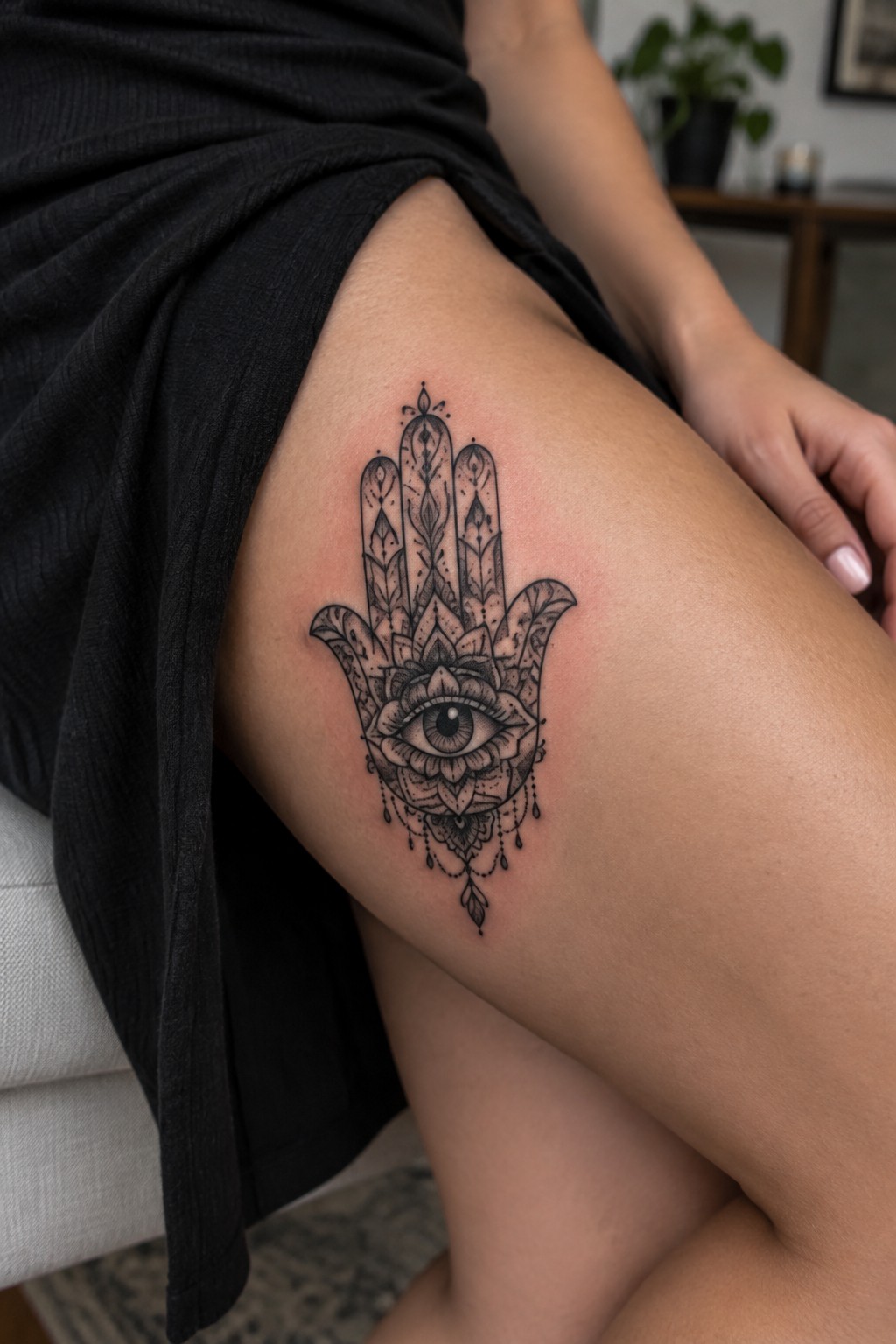
The thigh gives this hamsa enough flat space to sit evenly. The hand shape stays clear with the eye centered in the palm and the surrounding patterns filling out the sides. Small hanging details at the bottom have room to hang without crowding the rest of the design.
I picked the thigh for this one because it handles the amount of linework without the tattoo feeling busy. The black ink keeps the whole thing readable even with all the ornamentation around the eye.
Hamsa on the inner wrist
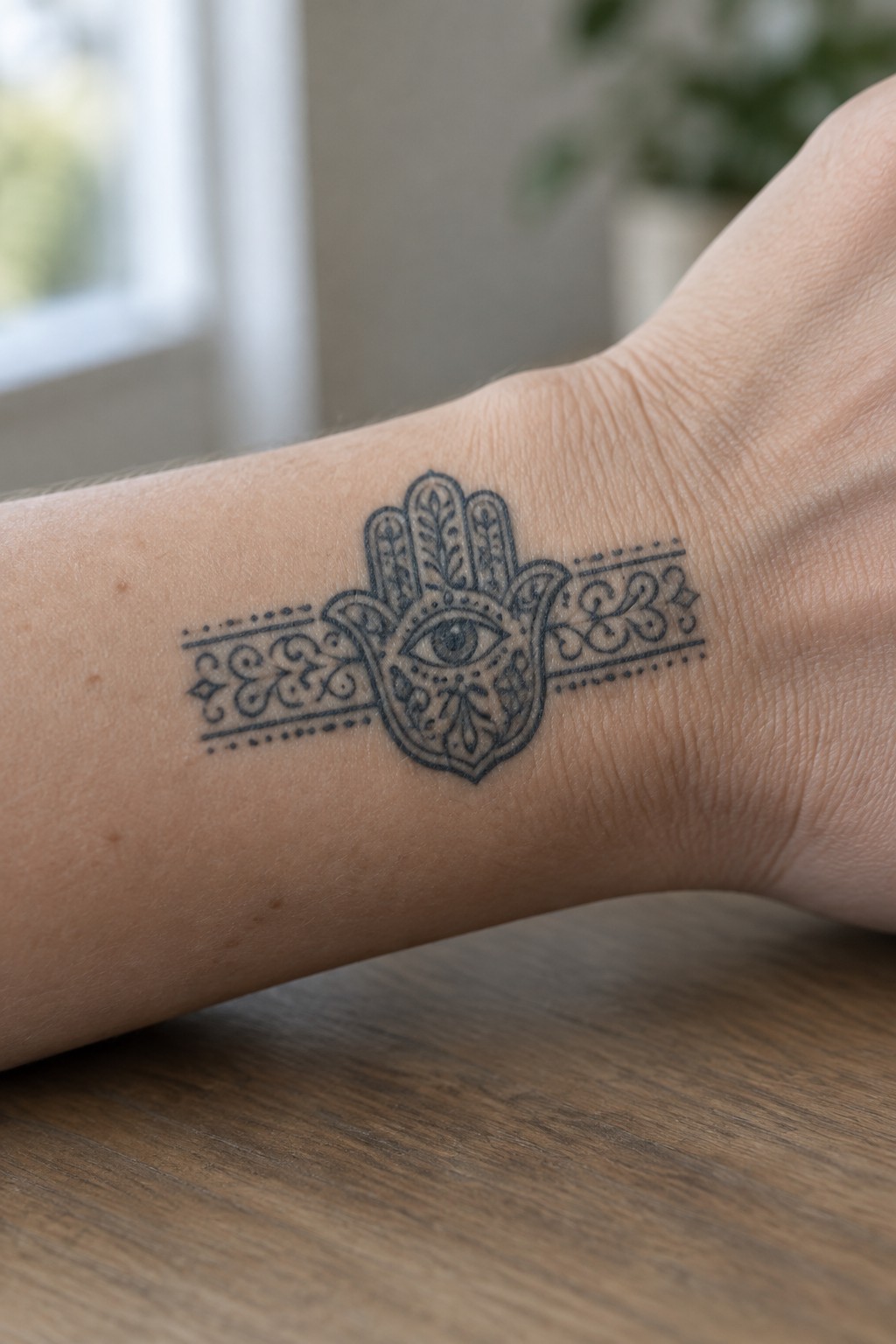
The tattoo sits across the inner wrist with the hamsa centered and bands extending outward on both sides. The eye sits in the middle of the hand while the side patterns fill the space evenly.
This spot works because the wrist gives the horizontal bands room to stretch without crowding. The size stays practical and the lines stay clear even on a smaller area.
Hamsa tattoo on the upper chest
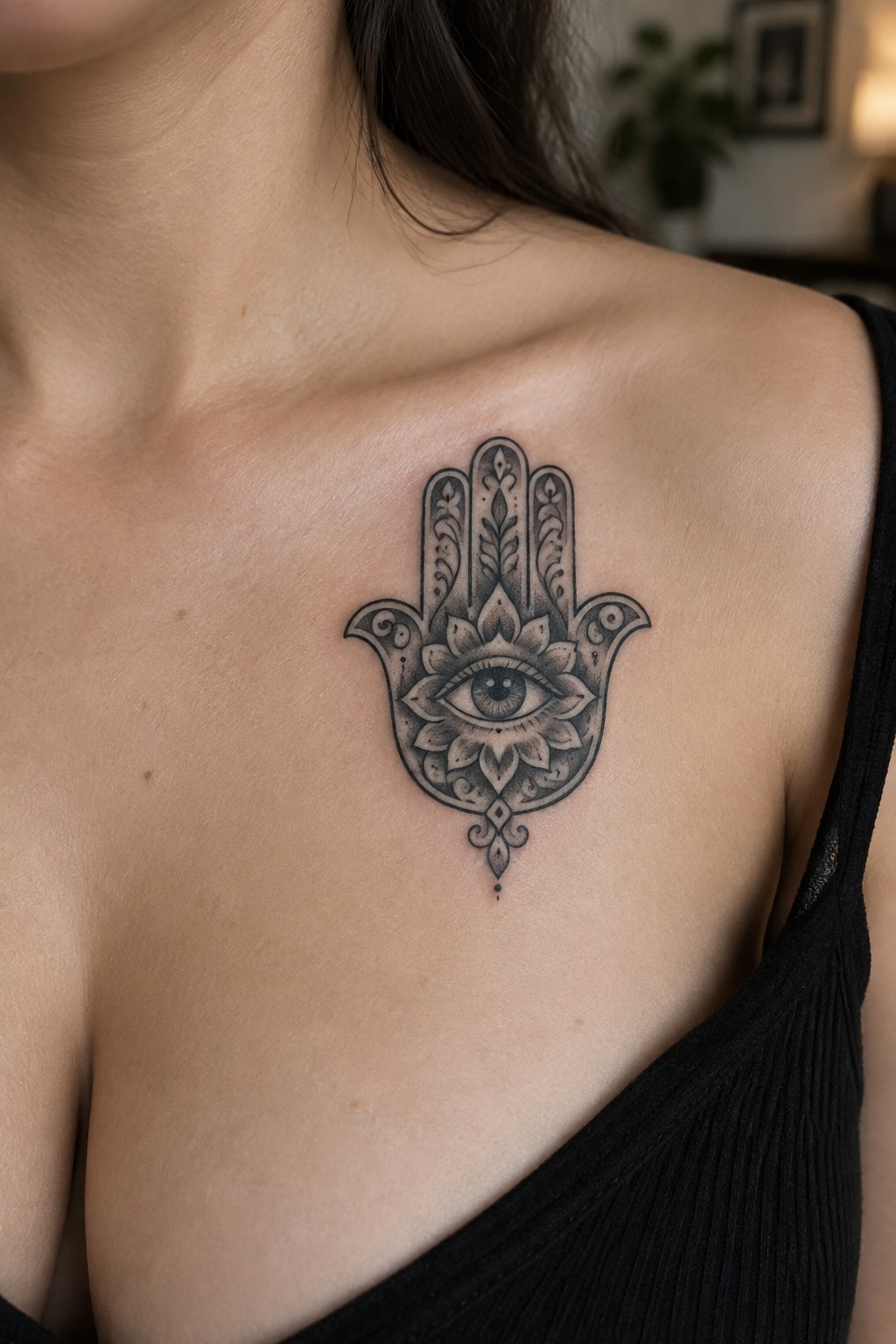
The tattoo sits on the upper chest near the shoulder. It shows a hamsa hand with an eye at the center and floral patterns filling the space around it. Black and grey shading gives the lines some depth.
The flat area of the chest lets the full shape stay clear and balanced. I think this spot works because the design does not need to wrap around curves or get cut off by clothing.
Hamsa tattoo on the lower abdomen
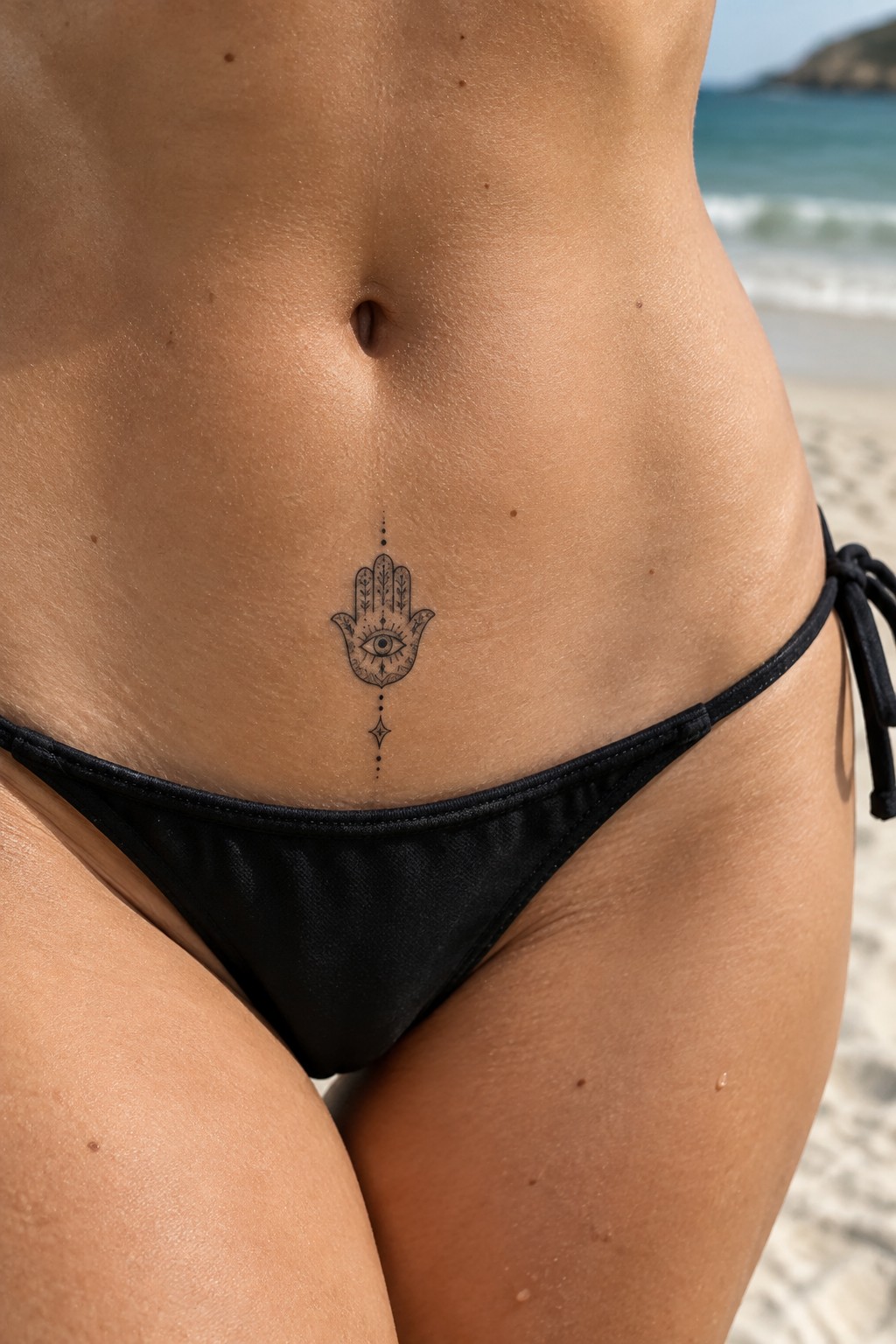
The design sits centered on the lower stomach just above the bikini line. A hamsa hand with an eye motif takes up the middle space and faces downward. Fine lines keep the whole piece compact and balanced against the skin.
I think the low placement works because it stays mostly covered yet shows up clearly when the person wants it to. The small scale prevents the details from feeling crowded in this spot.
Frequently Asked Questions
What is the meaning behind the ornamental eye in Hamsa tattoos for women? The eye motif in a Hamsa design is widely viewed as a shield against negative energy or the evil eye. For women the symbol often blends protection with personal empowerment and can represent intuition or spiritual awareness. Many of the 25 designs pair the eye with delicate floral or geometric patterns to create a balanced feminine look while keeping the core protective purpose intact.
How do I choose the right placement for a Hamsa tattoo with eye details? Popular spots for women include the inner wrist, ankle, ribcage, or upper back because these areas allow the eye motif to remain visible yet easy to cover. Smaller designs fit well on fingers or behind the ear, while larger ornamental versions suit the forearm or shoulder blade. Consider how clothing and daily movement will affect the tattoo visibility and healing.
What aftercare steps help intricate eye motifs heal cleanly? Keep the area clean with fragrance-free soap and apply a thin layer of recommended ointment twice daily. Avoid sun exposure and tight clothing that could rub the fine lines of the eye design. Moisturize regularly once the initial peeling stops, and touch up any fading details after six weeks if needed. Following these steps preserves the sharpness of ornamental elements.
Are Hamsa eye tattoos suitable for first-time clients? Yes, especially when the design stays simple with bold outlines. First-time clients often start with a small Hamsa on the wrist or ankle to test pain tolerance and healing. Discuss line thickness and shading with the artist beforehand so the eye motif stays clear without overwhelming detail that could blur during the first healing stage.
How can I personalize one of the 25 Hamsa designs without losing its protective quality? Add subtle elements such as birthstone colors, small stars, or meaningful script around the eye while keeping the central hand and eye shape intact. Work with an artist experienced in ornamental styles to maintain symmetry and balance. This approach keeps the core protective symbolism strong while making the tattoo feel unique to the wearer.
