

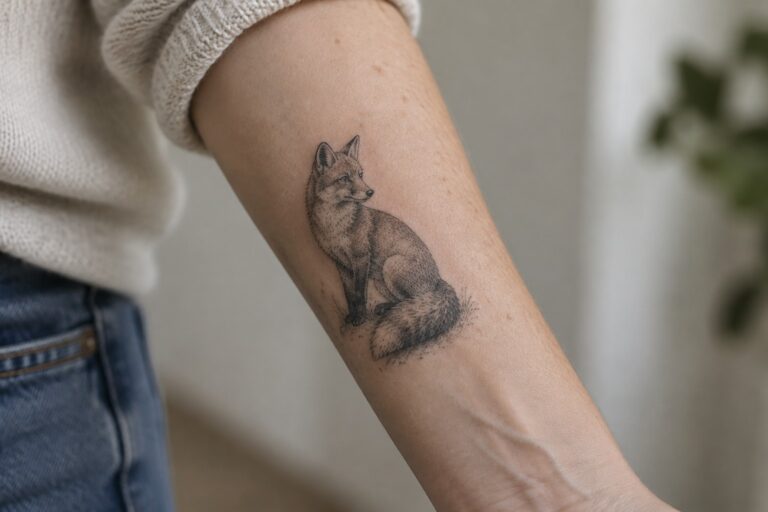
I have this soft spot for vintage etchings because they remind me of stories from the past.
Animal tattoos in that engraving style bring a unique touch of elegance and whimsy.
I think they look stunning on women who appreciate detailed artwork.
If you love classic vibes with a twist these designs might inspire your next ink.
Sitting fox tattoo in engraving style
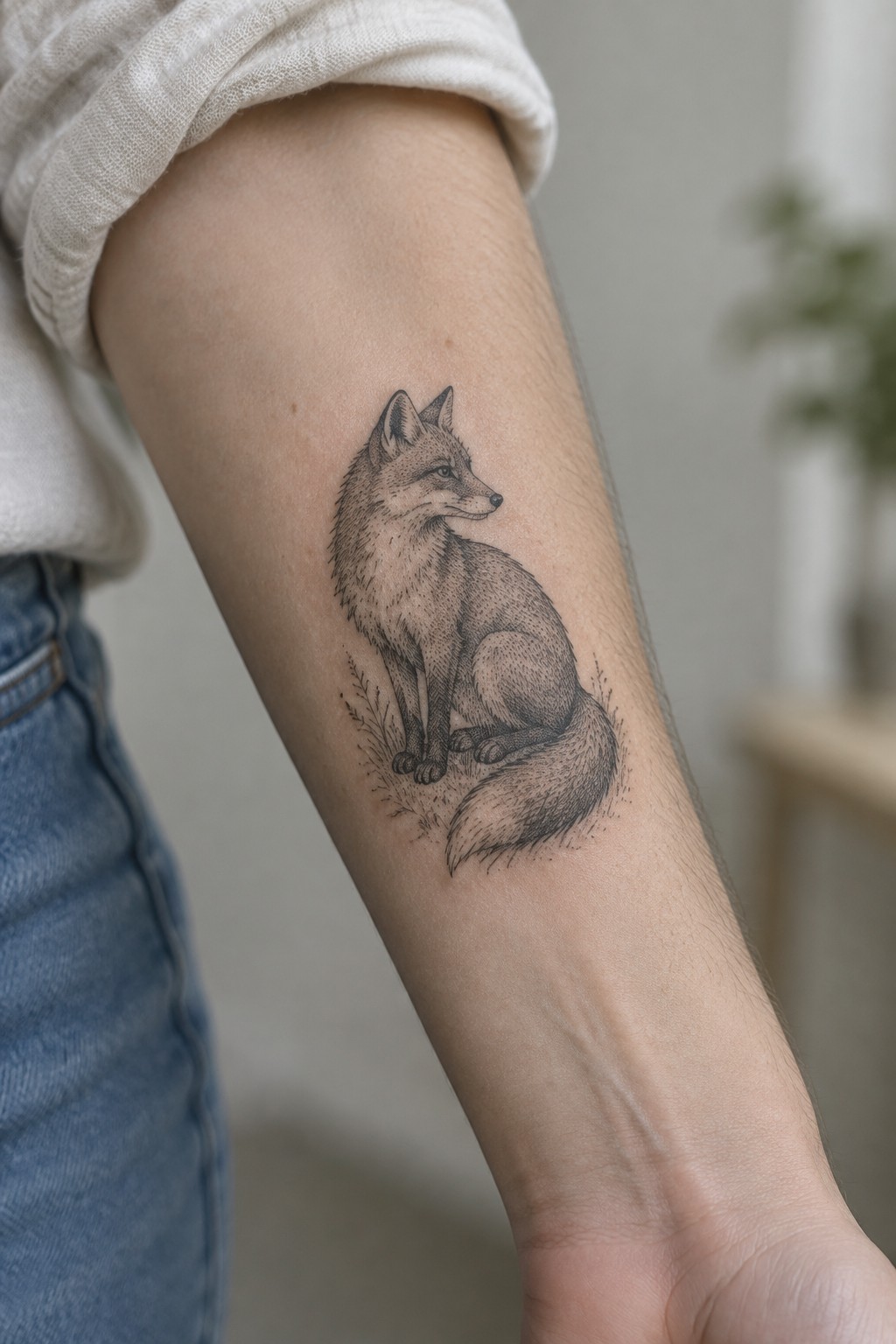
A sitting fox works well as an engraving style tattoo. The fine lines and dotwork shading capture the animal’s fur and posture clearly. It sits on the inner forearm with a bit of grass added at the base.
The engraving approach suits this subject because it gives the fox a classic illustrated feel. I think the medium size keeps the details readable without crowding the arm.
A deer tattoo on the shoulder
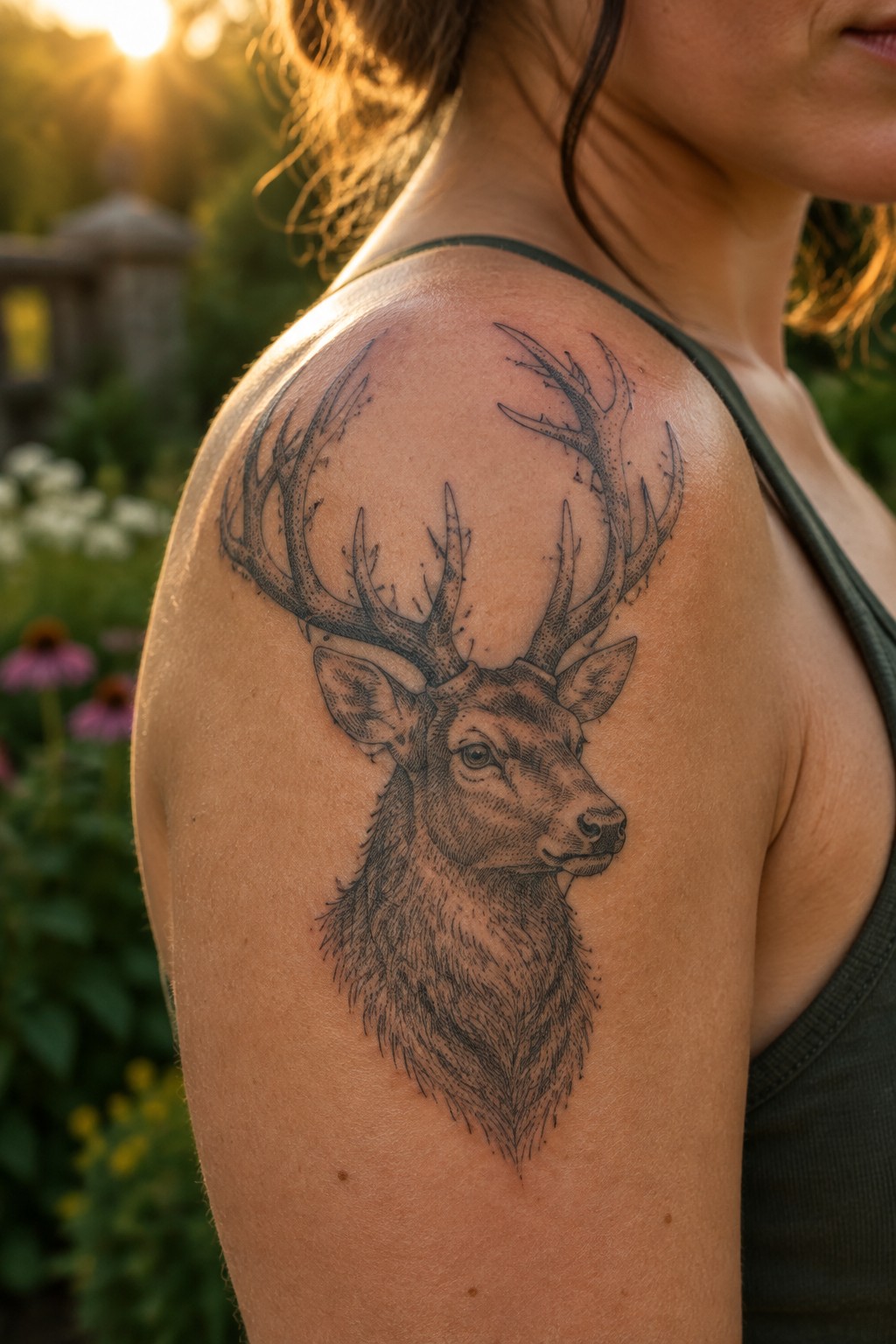
The shoulder placement lets the antlers extend across a wider area without feeling cramped. The deer head sits in profile with the antlers reaching upward and outward in fine engraved lines. Shading on the fur and the neck gives the design depth while staying true to a vintage etching look.
This approach keeps the whole piece readable even with all the small branches in the antlers. I think the shoulder works well here because it gives the design room to breathe while still staying compact enough for everyday wear.
Rabbit tattoo on the ankle
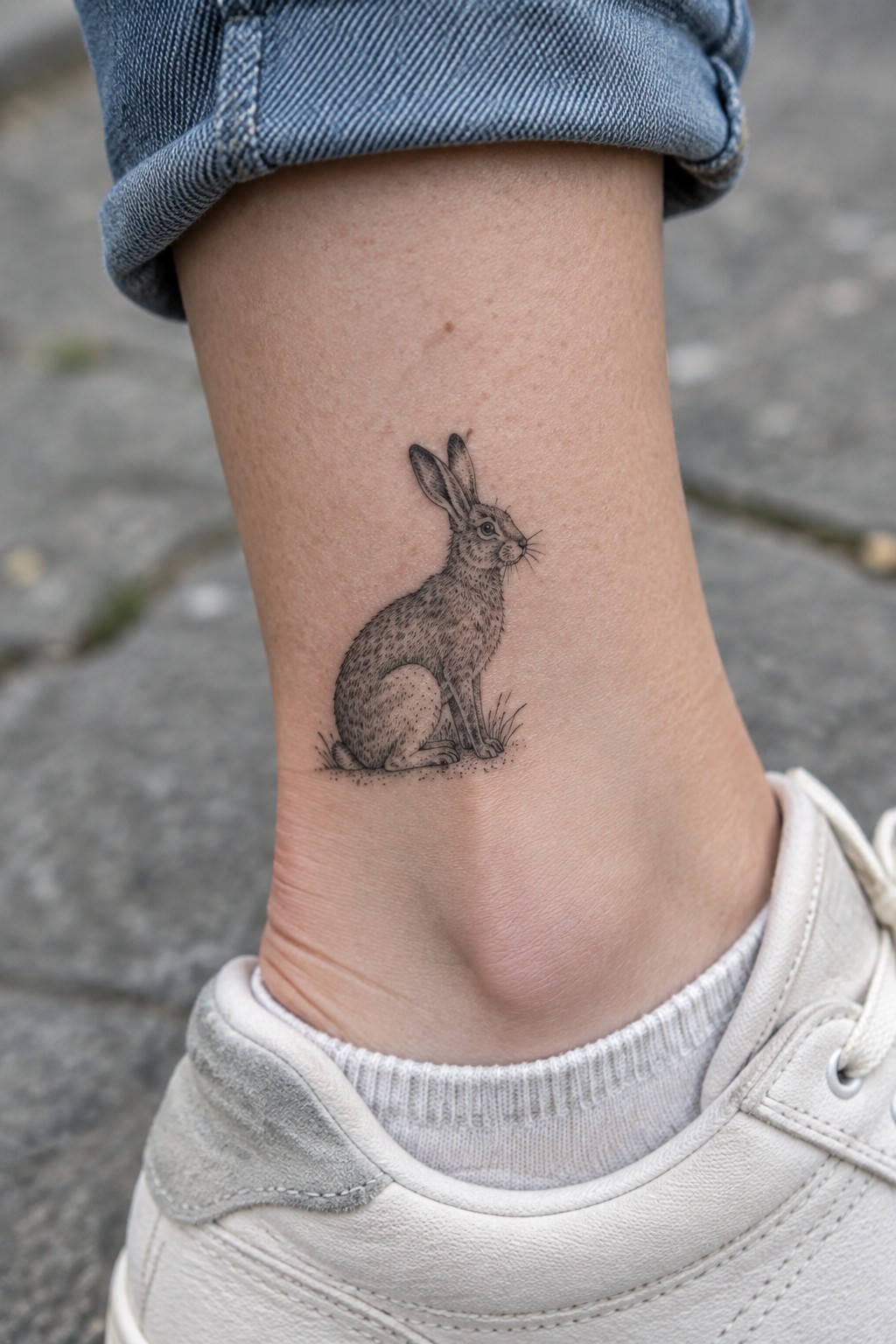
The ankle works well for a compact engraving style rabbit. It gives the design enough room to show the sitting pose and fine fur texture without spreading out. The small scale keeps the whole piece contained yet readable from a normal view.
I like how the placement lets the rabbit face forward naturally along the leg. It stays simple and avoids competing with other clothing or accessories in daily wear.
An owl tattoo centers on the upper back
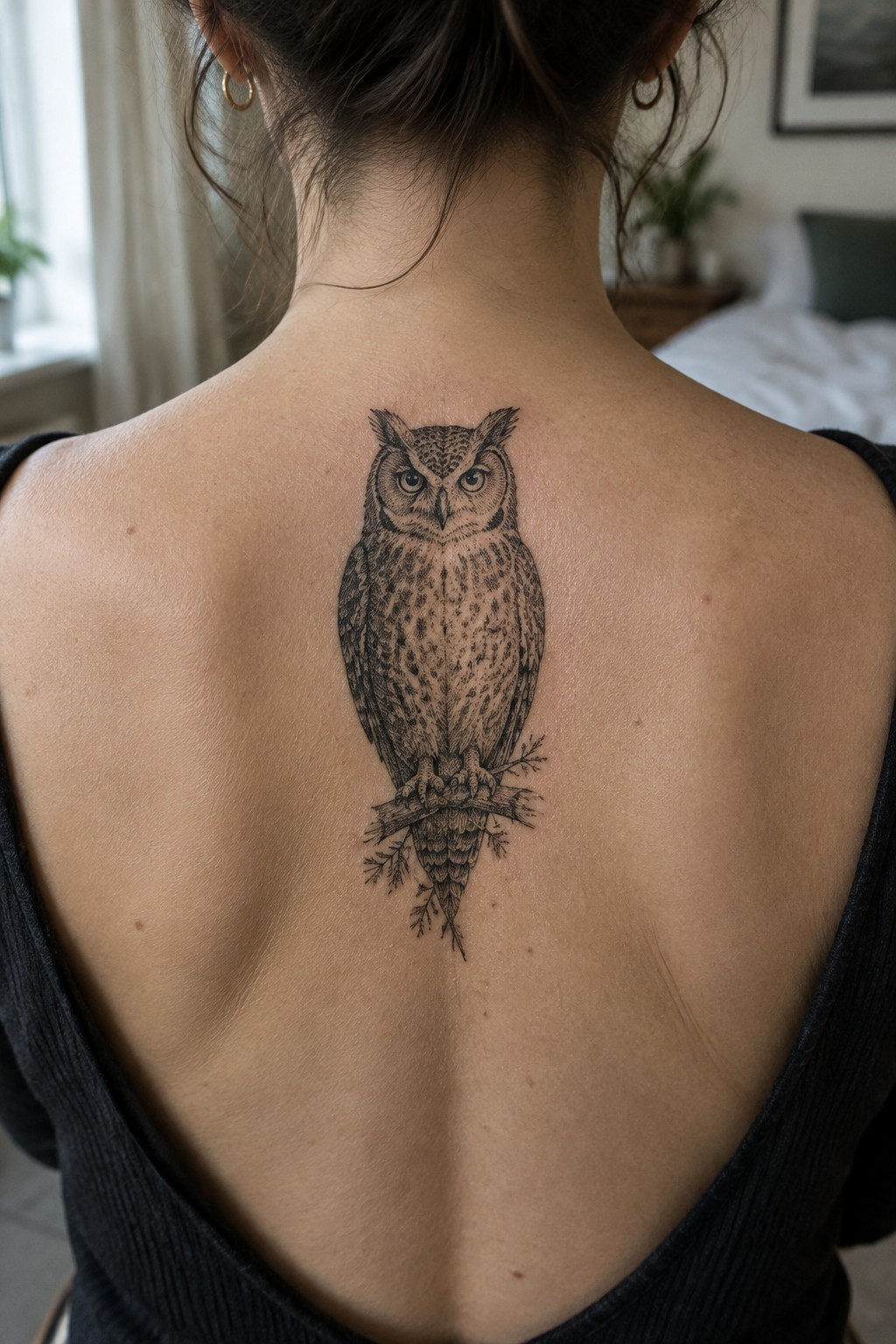
The upper back gives a flat surface that lets the owl stand straight with its branch at the bottom. This spot keeps the vertical shape compact while leaving room for the wings and body lines.
I like how the centered placement makes the whole piece feel stable instead of drifting to one side. The engraving style stays clear without extra shading because the skin stays smooth there.
A wolf head on the inner forearm
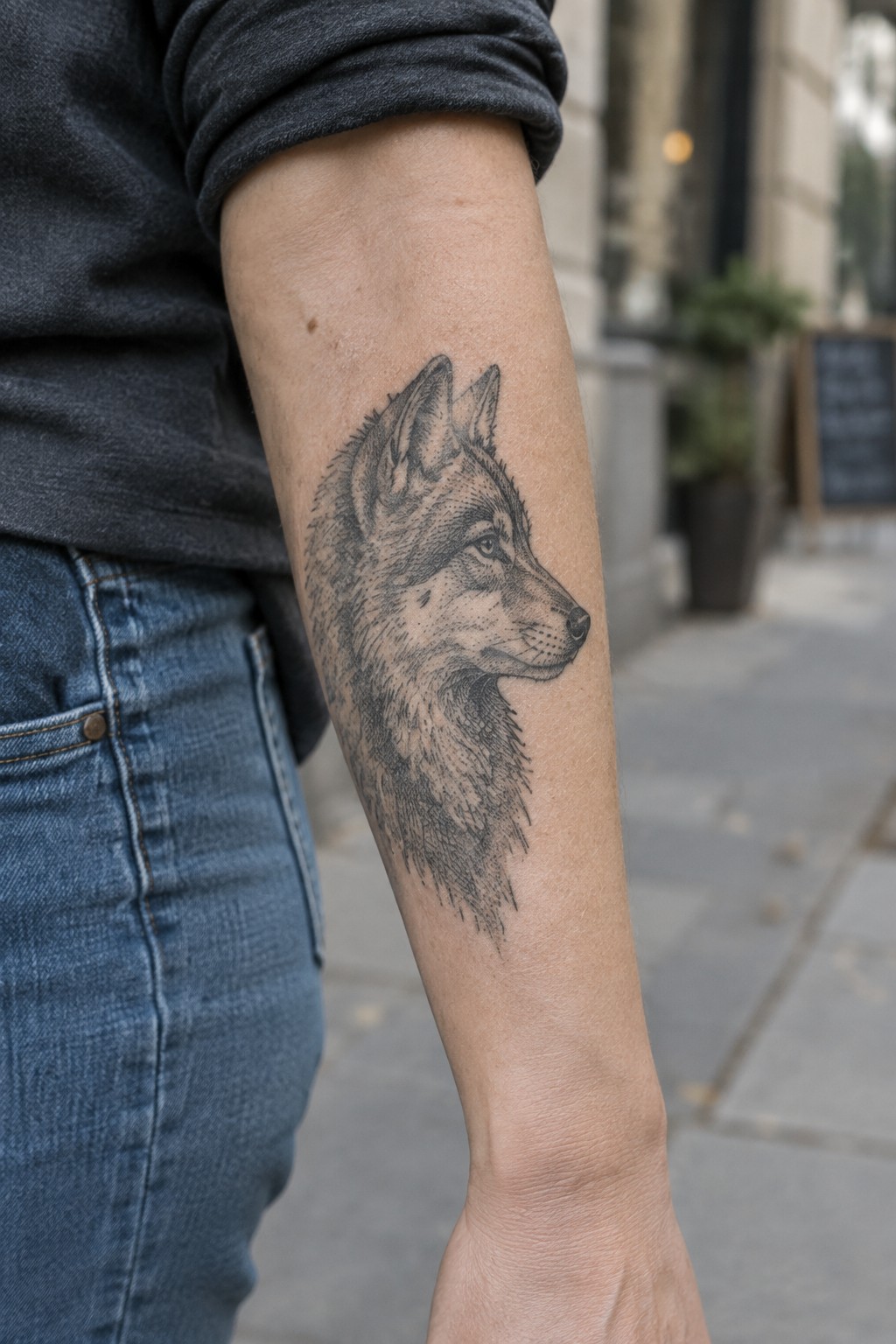
The inner forearm works well for this kind of portrait because the length matches the wolf’s profile. The head sits higher up while the neck and fur details extend down toward the wrist. Engraving lines handle the fur texture and shading without crowding the space.
I think the vertical layout keeps the whole piece easy to read even when the arm moves. It also gives the fine details room to stand out in natural light.
Koi fish tattoo placed on the thigh
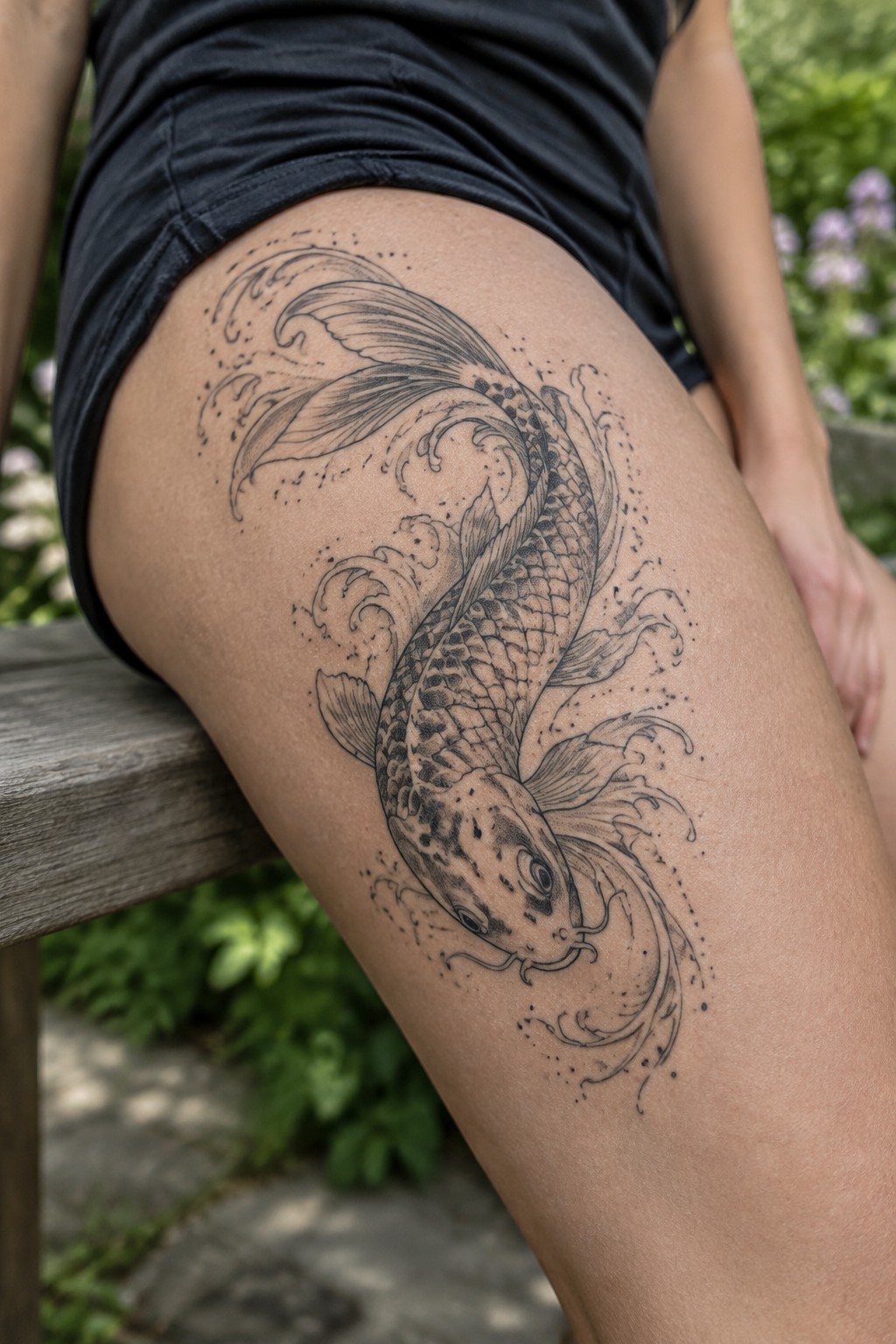
The thigh offers a good surface for a koi that curves with the leg. Waves run along the body and help guide the eye through the design. Black and grey shading defines the scales and fins without extra color.
I think the engraving approach fits because it keeps the lines clean on skin. The downward angle also helps the fish look settled when the leg is at rest.
Moth tattoo on the shoulder
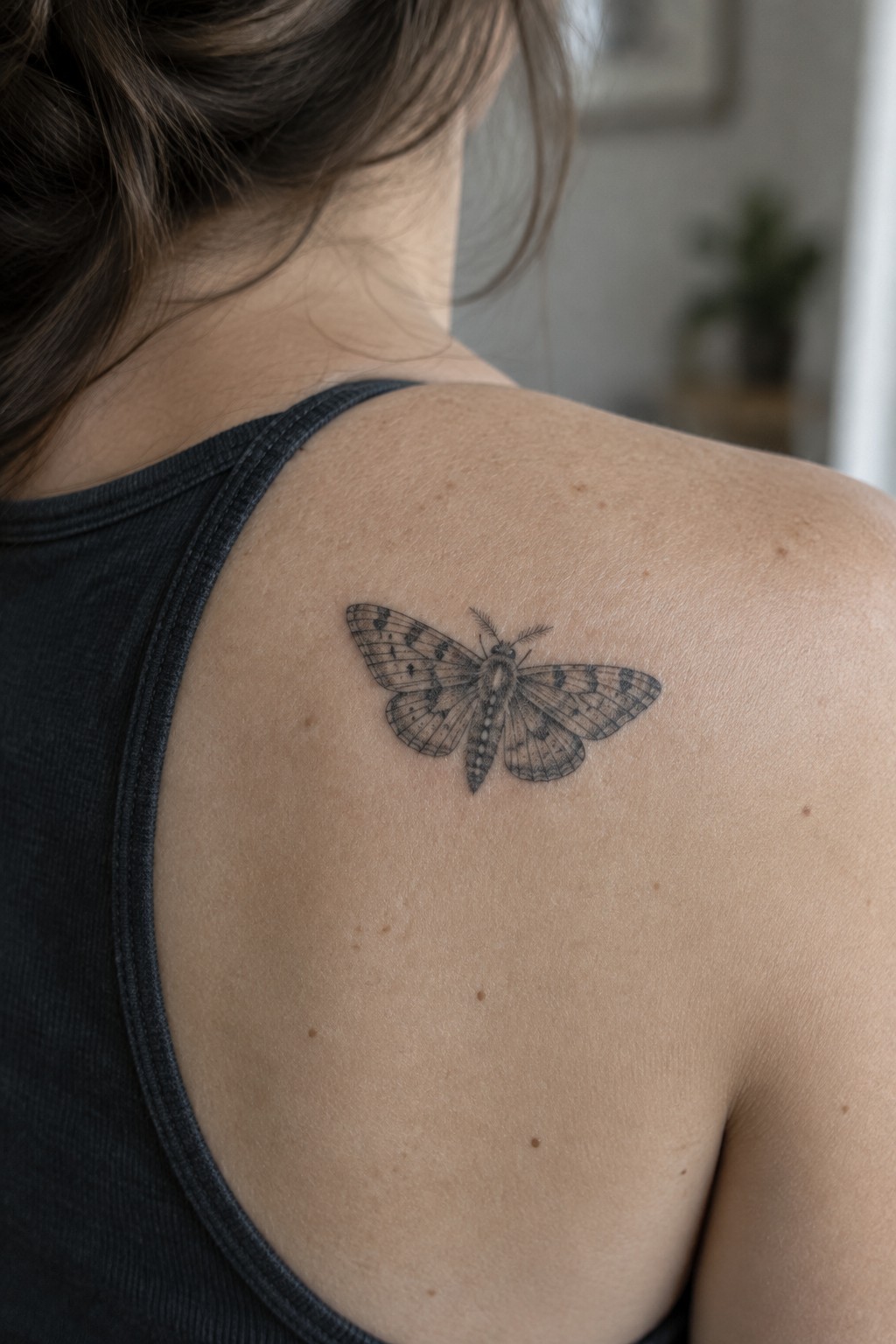
The moth sits on the upper back right where the shoulder begins. Its wings spread flat across the skin in a natural open pose. Fine lines shape the body and the dotted patterns on each wing.
I think the shoulder works well here because the area stays fairly flat and gives the full wingspan room to read clearly. The medium size keeps the detail sharp without crowding the spot.
Horse head tattoo on the shoulder
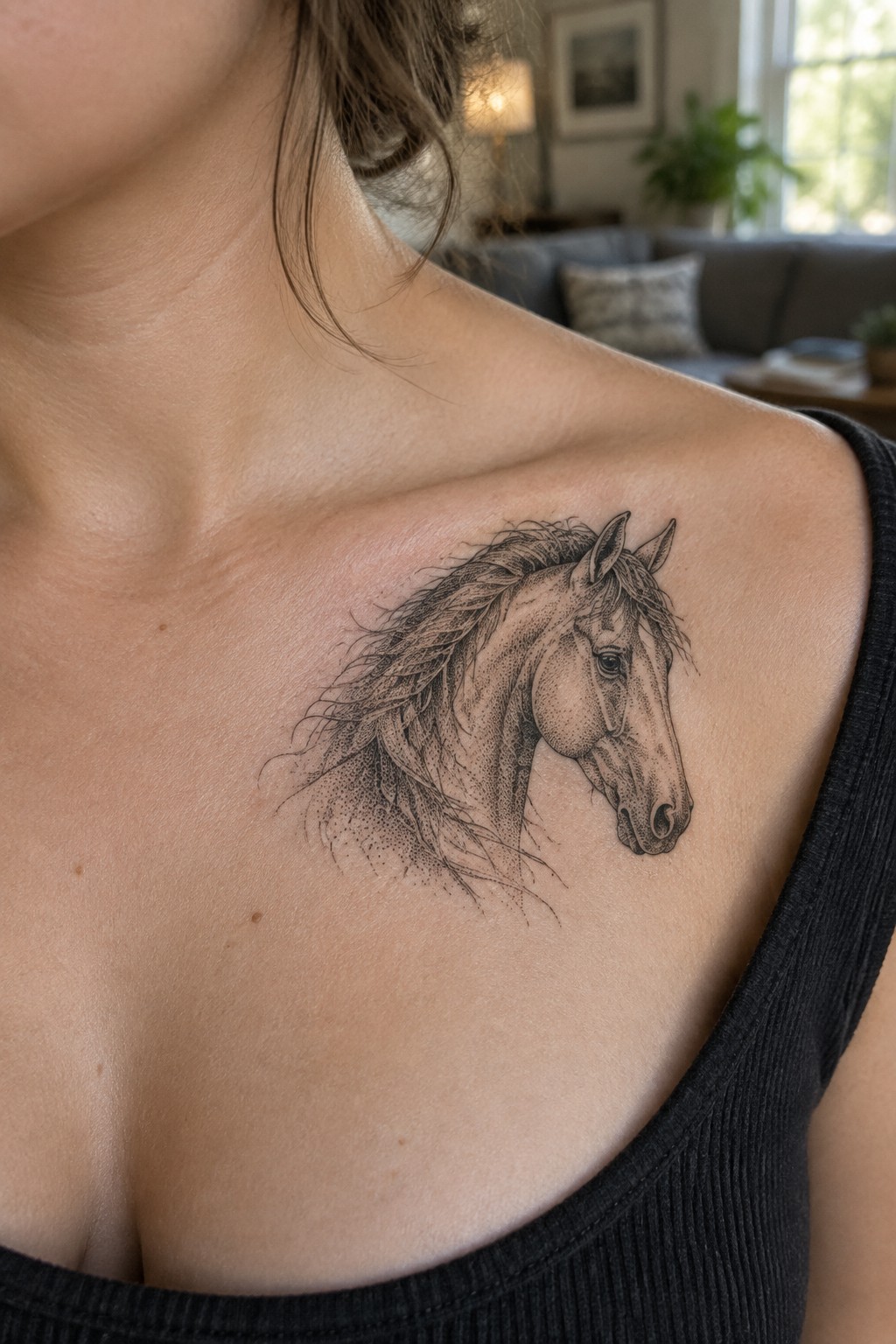
The shoulder gives this horse head enough room to sit at an angle. The mane spreads out across the skin with fine lines that suggest movement. Engraving style shading fills in the face using dots and tight strokes.
I think the placement works because it lets the design sit flat while the lines still follow the curve of the body. The overall size keeps the details readable without spreading too far.
Rabbit with foliage on the inner wrist
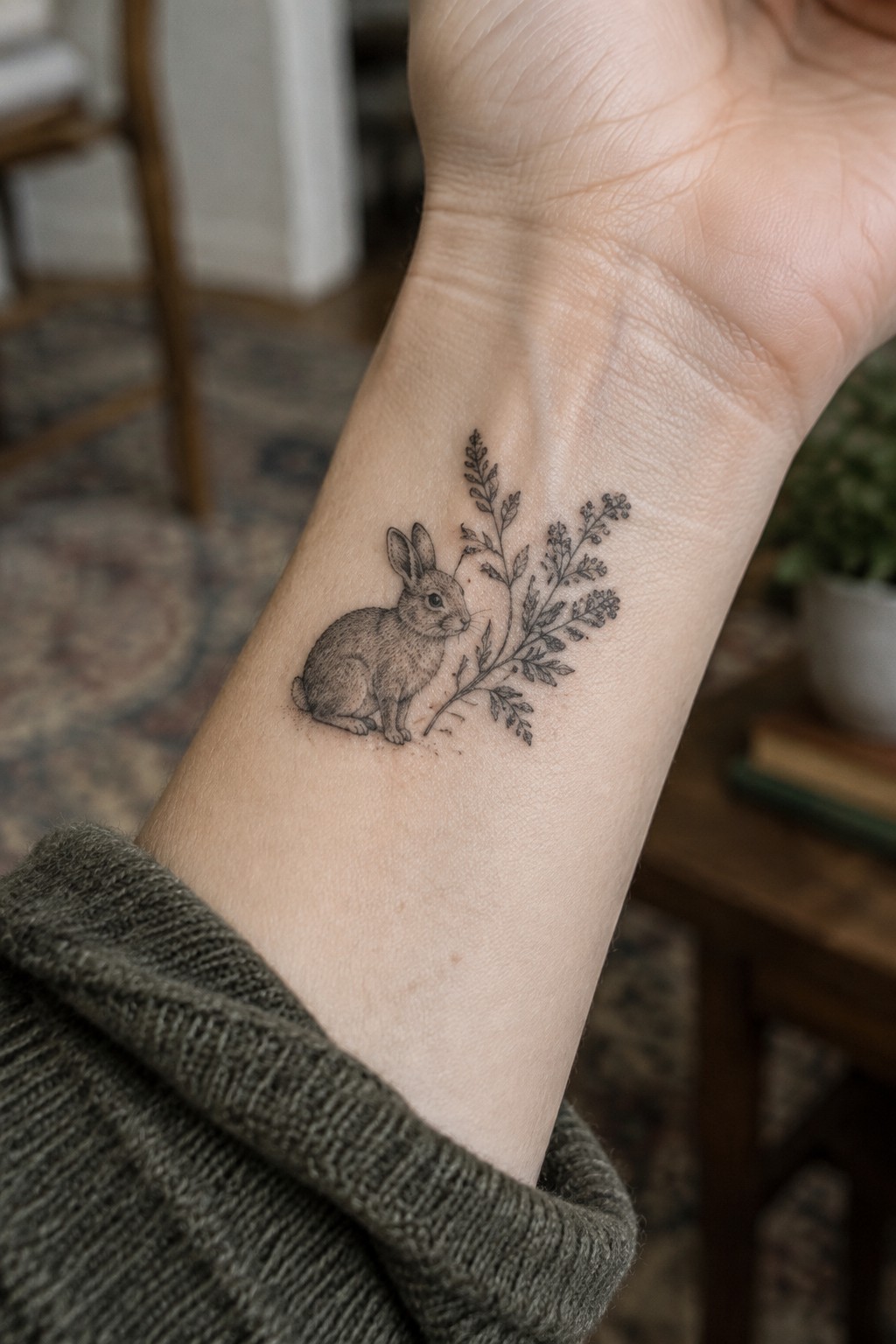
The inner wrist works well for this small rabbit design because it keeps the tattoo visible but easy to cover when needed. A leafy branch sits beside the animal to fill the space without crowding it. Fine lines handle the fur and stems so the details stay sharp at this scale.
I think the placement helps the engraving style come through clearly since the skin stays relatively flat there. The size also lets the tattoo feel complete without stretching across the whole arm.
A raven tattoo runs down the spine
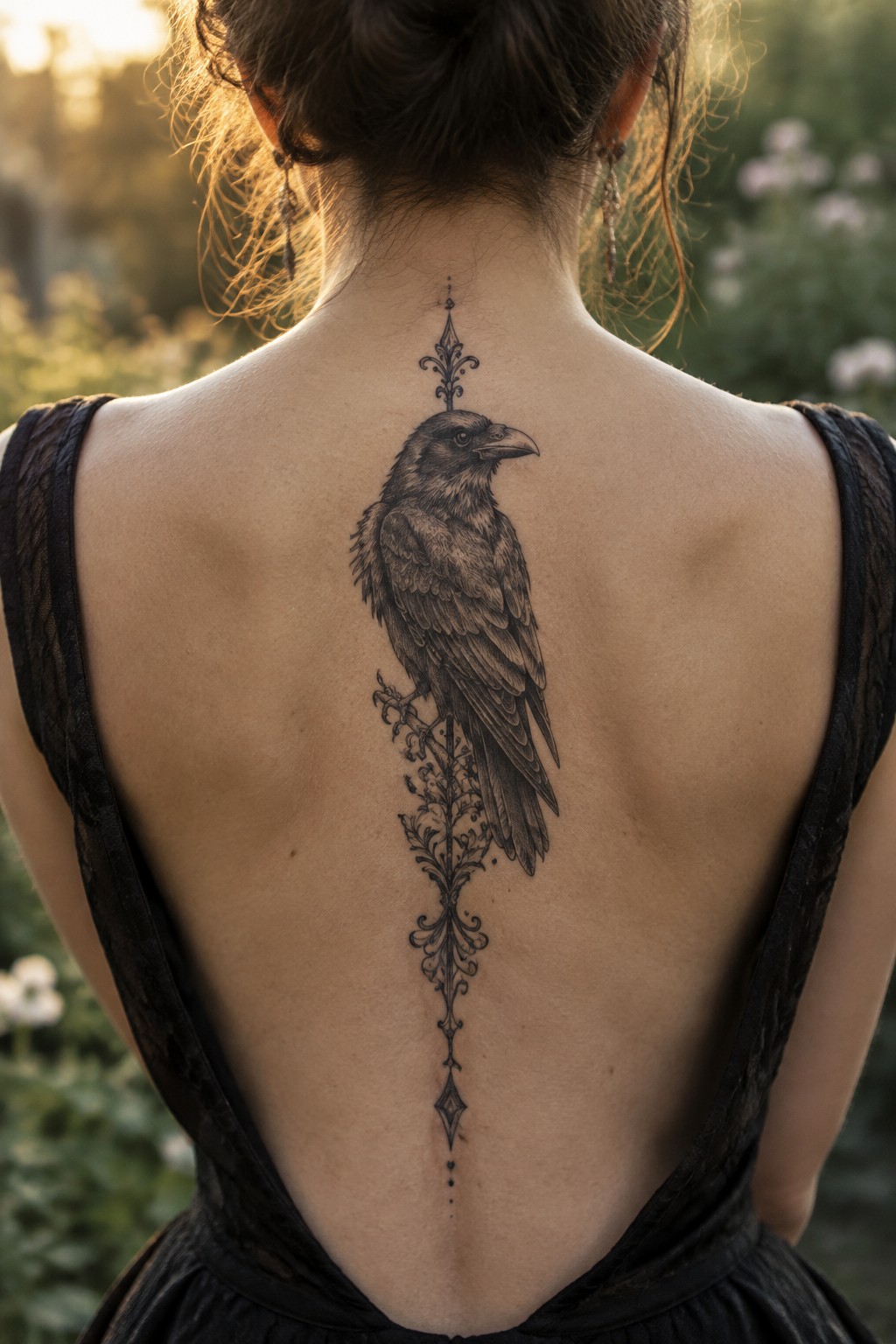
The design sits centered on the upper back. The raven rests near the base of the neck while the decorative lines extend straight down the spine. This layout keeps the bird visible from most angles and lets the pattern follow the natural line of the back.
I think the vertical placement works well here because it prevents the details from bunching up on one side. The engraving style also stays clear without needing extra shading to separate elements.
Tiger tattoo on the upper back
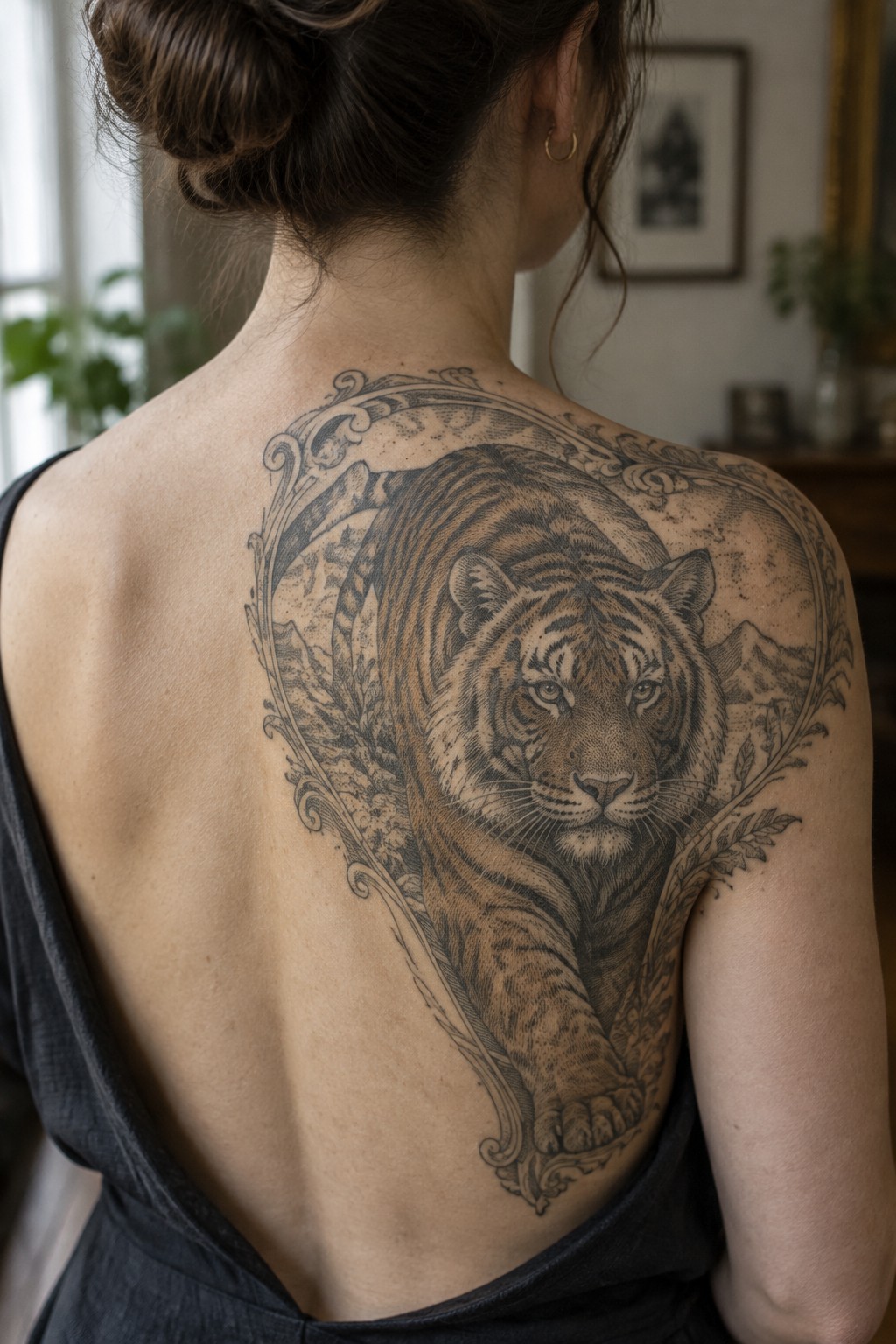
The upper back gives enough space for this large tiger design. The engraving style shows the animal with fine lines and shading that spread across the shoulder. An ornate frame holds the whole scene together with mountains and leaves.
This placement lets the tiger look forward while the border follows the natural lines of the back. I like how the size makes the details stand out clearly without feeling crowded.
A beetle tattoo sits on the hip
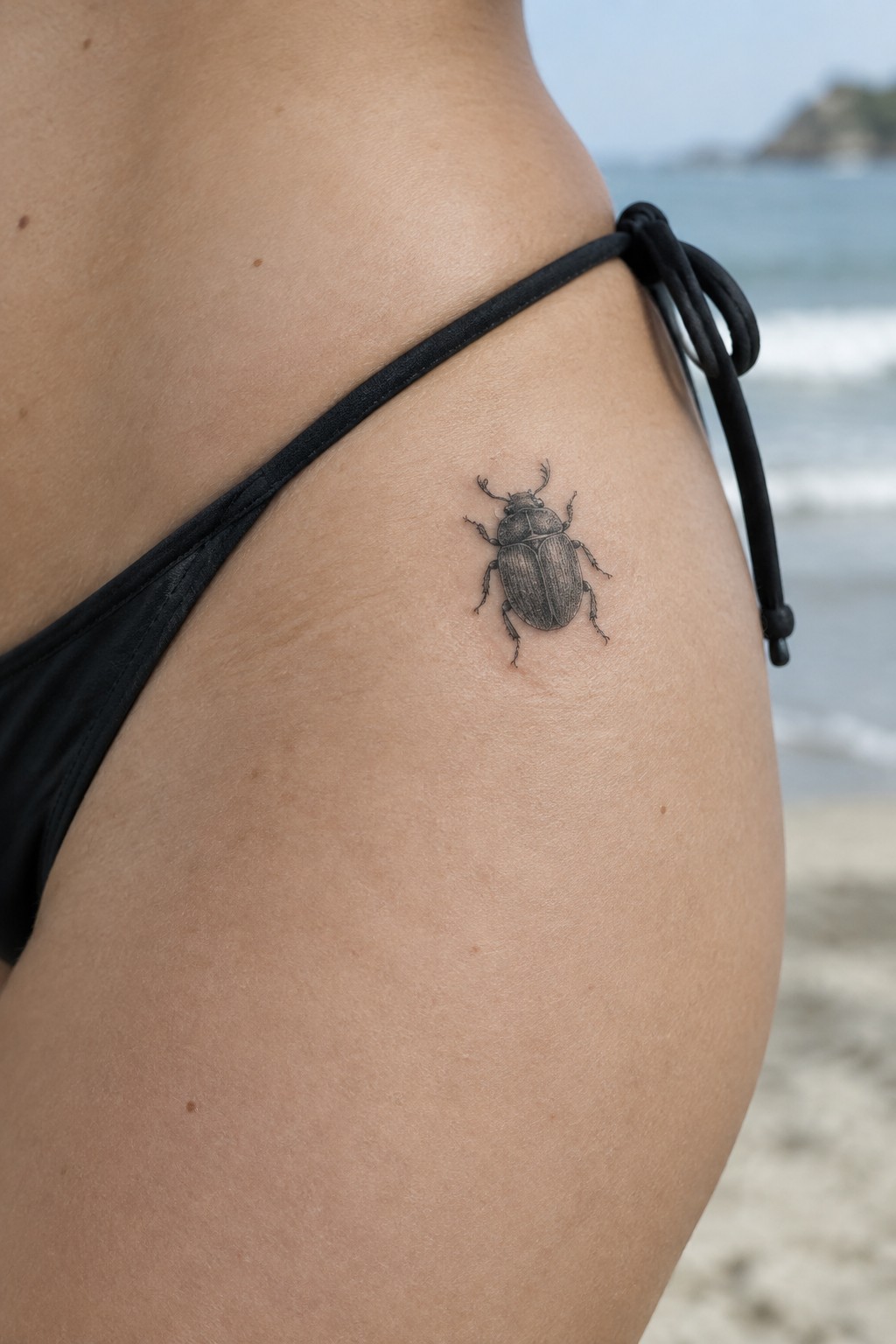
The hip works well for a small engraving style piece. The beetle sits in a spot that stays mostly covered but shows when wanted. Its compact shape follows the natural curve without looking stretched.
I think the scale keeps every line readable. The black shading gives it depth while staying simple. This kind of placement suits someone who wants a single insect without a big commitment.
Fox on the forearm
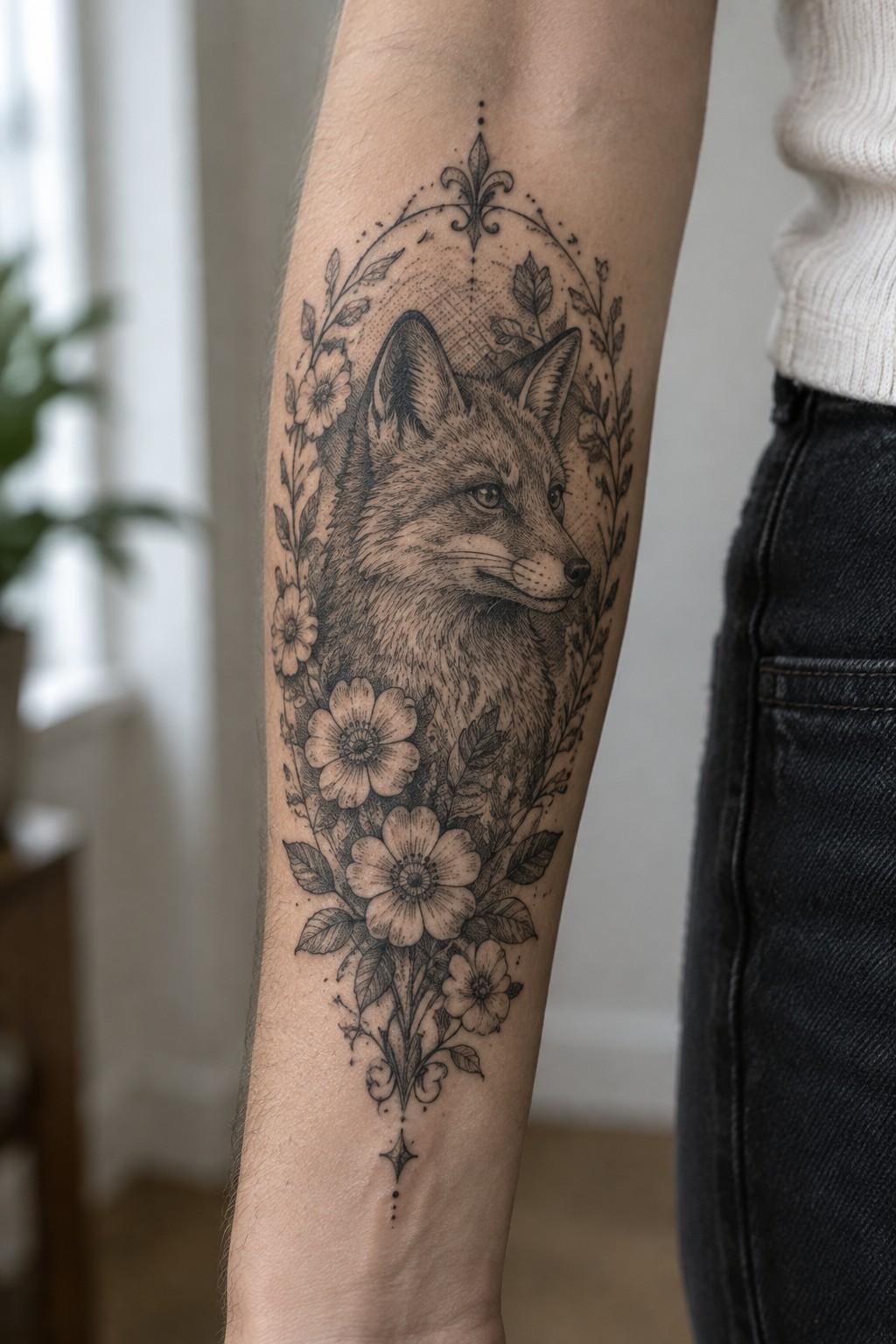
The tattoo runs down the inner forearm in a tall vertical layout. A fox head takes the center spot while flowers and leaves stretch above and below it. The engraving style shows clear line work that mimics old print illustrations.
This placement lets the design stretch without feeling cramped. The flowers add structure around the animal and keep the eye moving along the arm. I think the length works well here because it gives the fox room to stand out while the details stay sharp.
Snake tattoo on the side torso
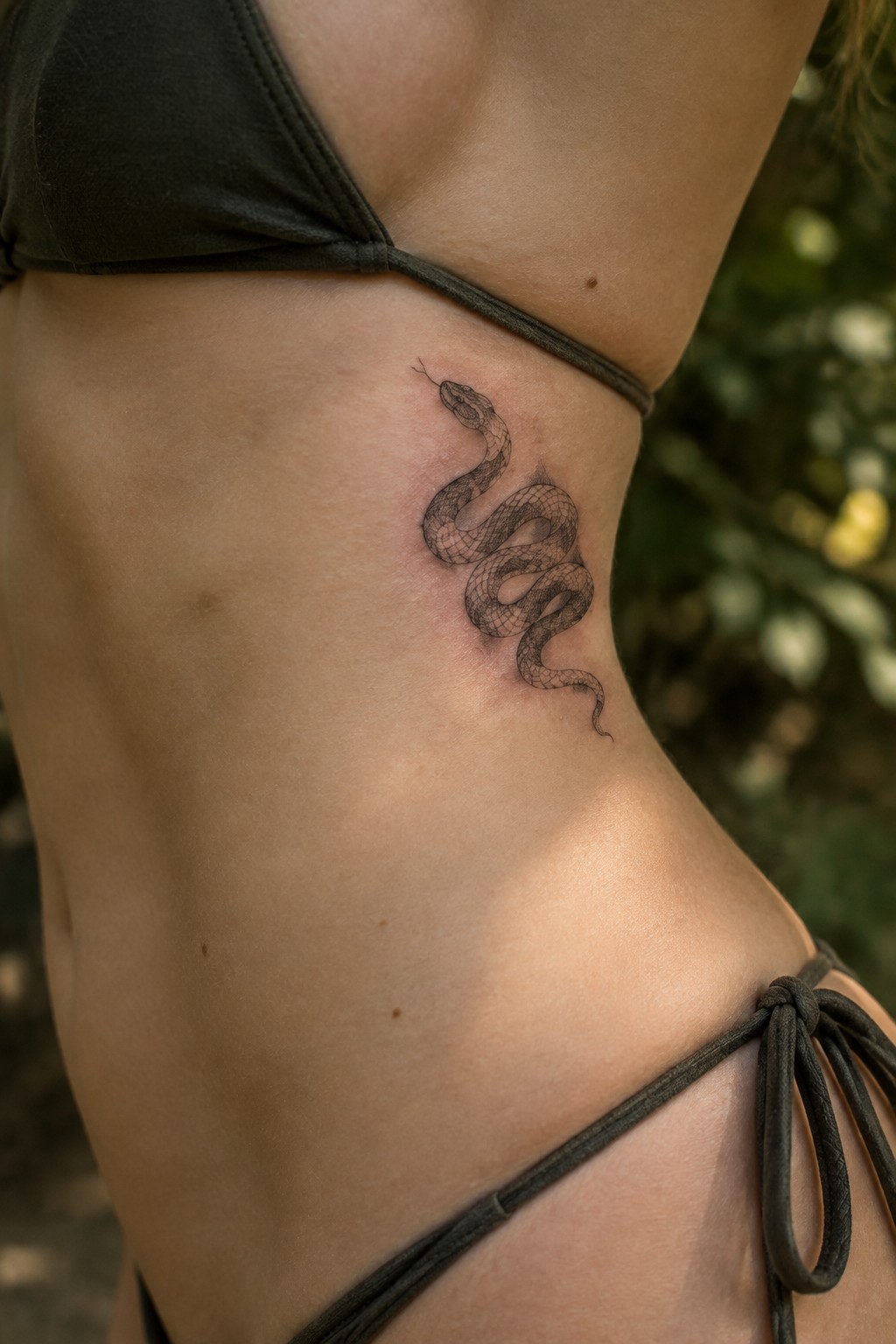
The snake sits along the side of the torso just above the waist. Its body curves with the shape of the area and the coils stay contained in a compact layout. Fine line work and cross hatching give it the look of an old engraving.
This spot lets the design follow the body without needing extra elements to fill space. I think the scale keeps the details clear while still leaving room around the edges.
Badger tattoo on the thigh
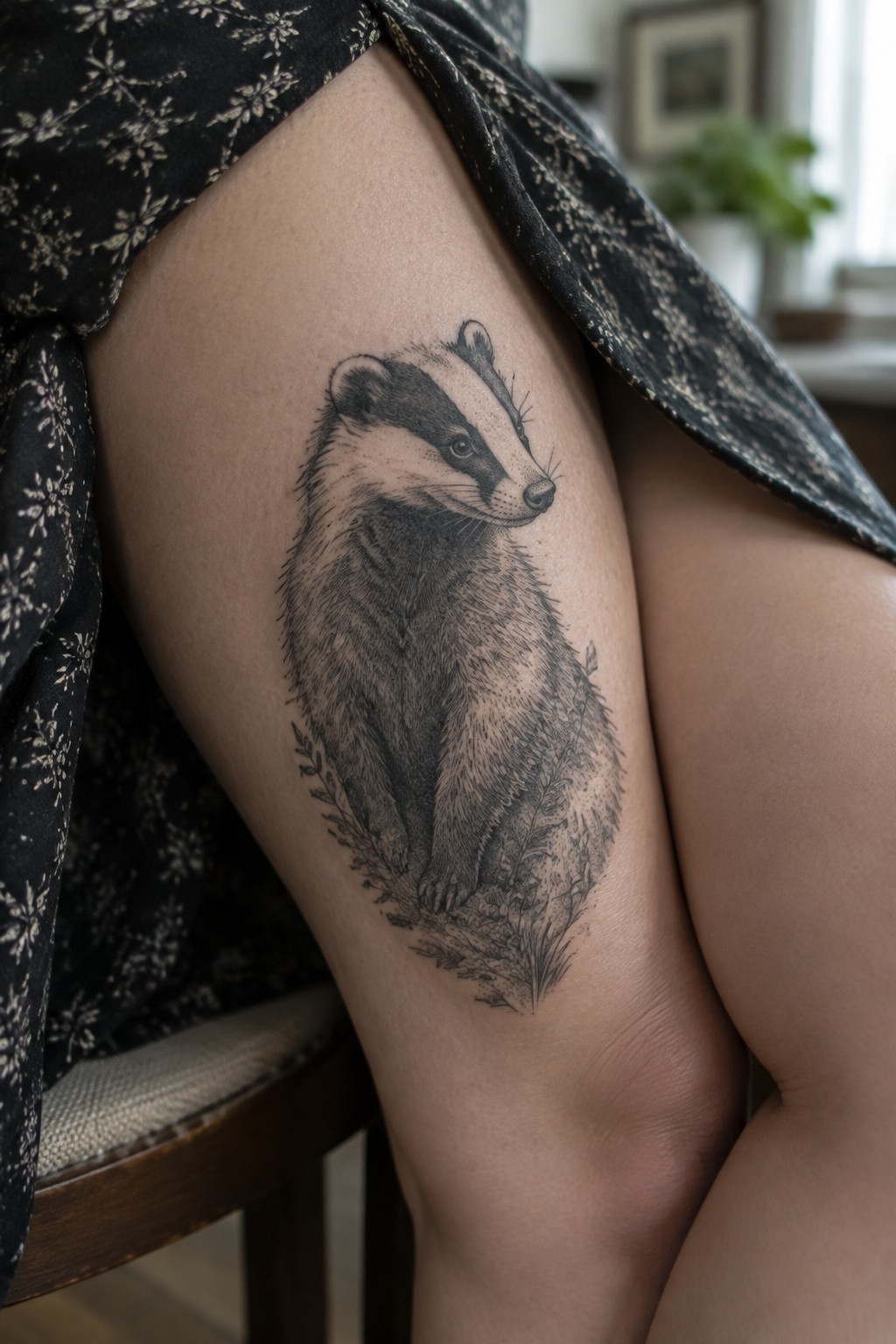
The thigh gives enough space for a full badger figure in this engraving style. Fine lines build the fur and face while a few plants sit at the base. The animal sits upright with its head turned slightly.
This spot keeps the design clear even with all the detail in the shading. I think the vertical shape matches the leg better than a tighter area would.
An elephant tattoo on the ankle
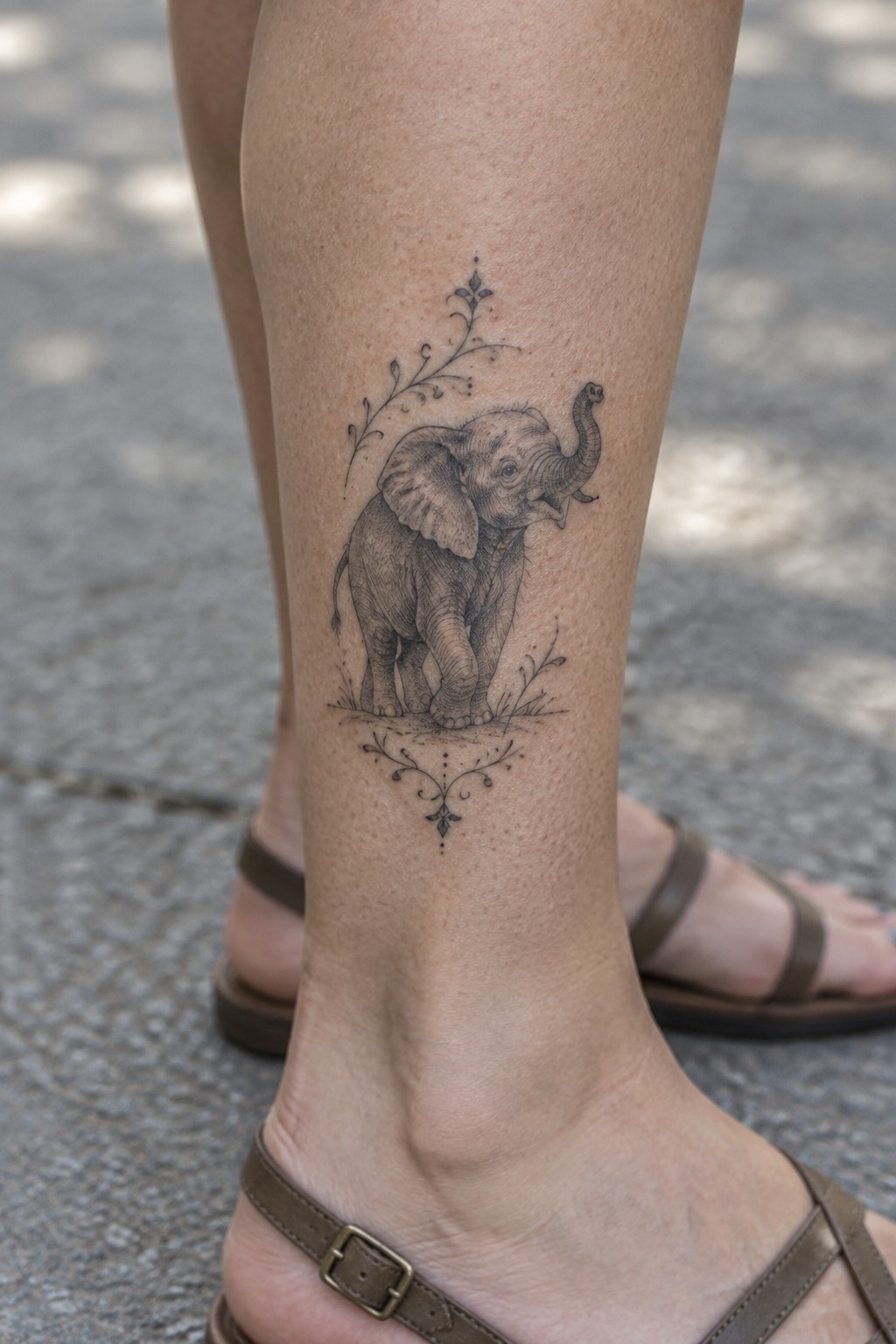
The ankle gives this design a solid base. The elephant stands on a small ground line that matches the natural curve where the foot meets the leg. Ornamental details stretch upward from there to fill the space without crowding it.
I like how the engraving lines stay clear at this size. The whole piece feels balanced because the decorations frame the animal without taking over.
Swallow tattoo on the back of the hand
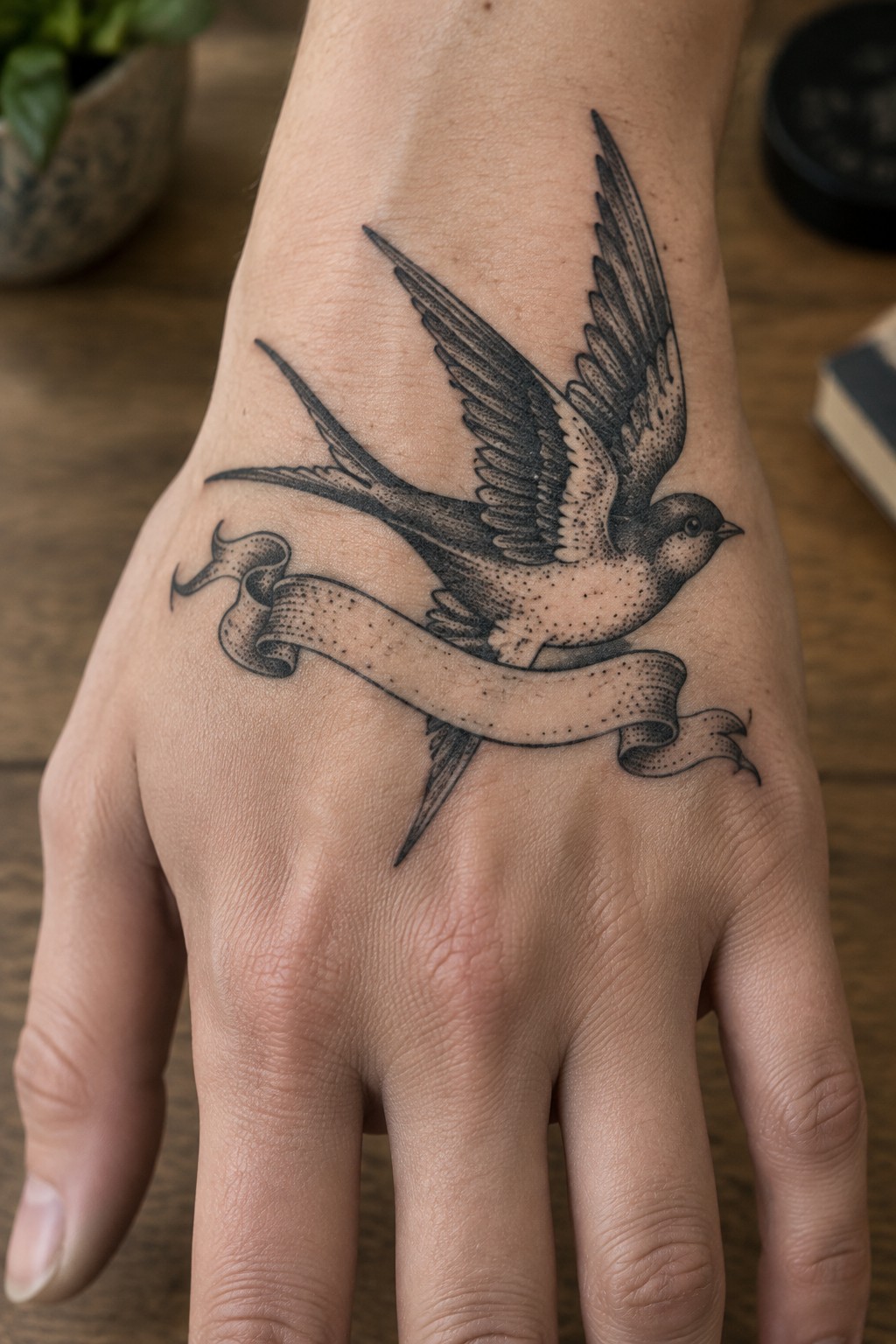
The back of the hand gives a flying swallow enough flat space to spread its wings fully. Fine dotwork and line shading keep the engraving look intact even at this size. The banner adds flow without crowding the bird itself.
I think the placement works because the design stays readable when the hand moves. It also lets the vintage style show through without needing extra space on the arm.
Frequently Asked Questions
1. What body placements work best for engraving-style animal tattoos inspired by vintage etchings? These tattoos often suit areas with enough space for fine details such as the upper arm, thigh, or back. Smaller designs can fit well on the wrist, ankle, or behind the ear. Consider your pain tolerance and lifestyle when selecting a spot, and discuss with your artist how the placement will showcase the etching lines without distortion from movement.
2. How do I find a tattoo artist skilled in vintage engraving styles? Search for artists who specialize in fine line and illustrative work by reviewing their portfolios on social media or tattoo studio websites. Look for examples that show precise hatching and shading similar to old etchings. Schedule consultations to review reference images and confirm they have experience with animal subjects and the level of detail you want.
3. What aftercare steps help preserve the intricate details in these tattoos? Keep the area clean with mild soap and apply a thin layer of fragrance-free moisturizer several times a day. Avoid sun exposure, tight clothing, and submerging the tattoo in water during the first few weeks. Follow your artist’s specific instructions and attend any follow-up appointments to address any touch-ups needed for fine lines.
4. How long do engraving-style animal tattoos usually take to complete? Session length depends on the size and complexity, but most detailed designs require two to four hours per sitting. Larger pieces on the back or thigh may need multiple sessions spread over weeks. Your artist can provide a better estimate after seeing your chosen design and placement.
5. Can engraving-style tattoos be customized with personal elements? Yes, many women add subtle personal touches such as birth flowers, initials, or meaningful symbols alongside the animal. Work with your artist to blend these additions seamlessly into the vintage etching aesthetic while keeping the overall composition balanced and true to the original inspiration.
