

I adore the way spine tattoos highlight a woman’s natural grace with spiritual flair.
My collection here features 23 ornamental designs that I find absolutely enchanting.
They mix intricate patterns with meaningful symbols in the most delightful ways.
I am confident these will resonate with many personal vibes out there.
Lotus mandalas placed along the spine
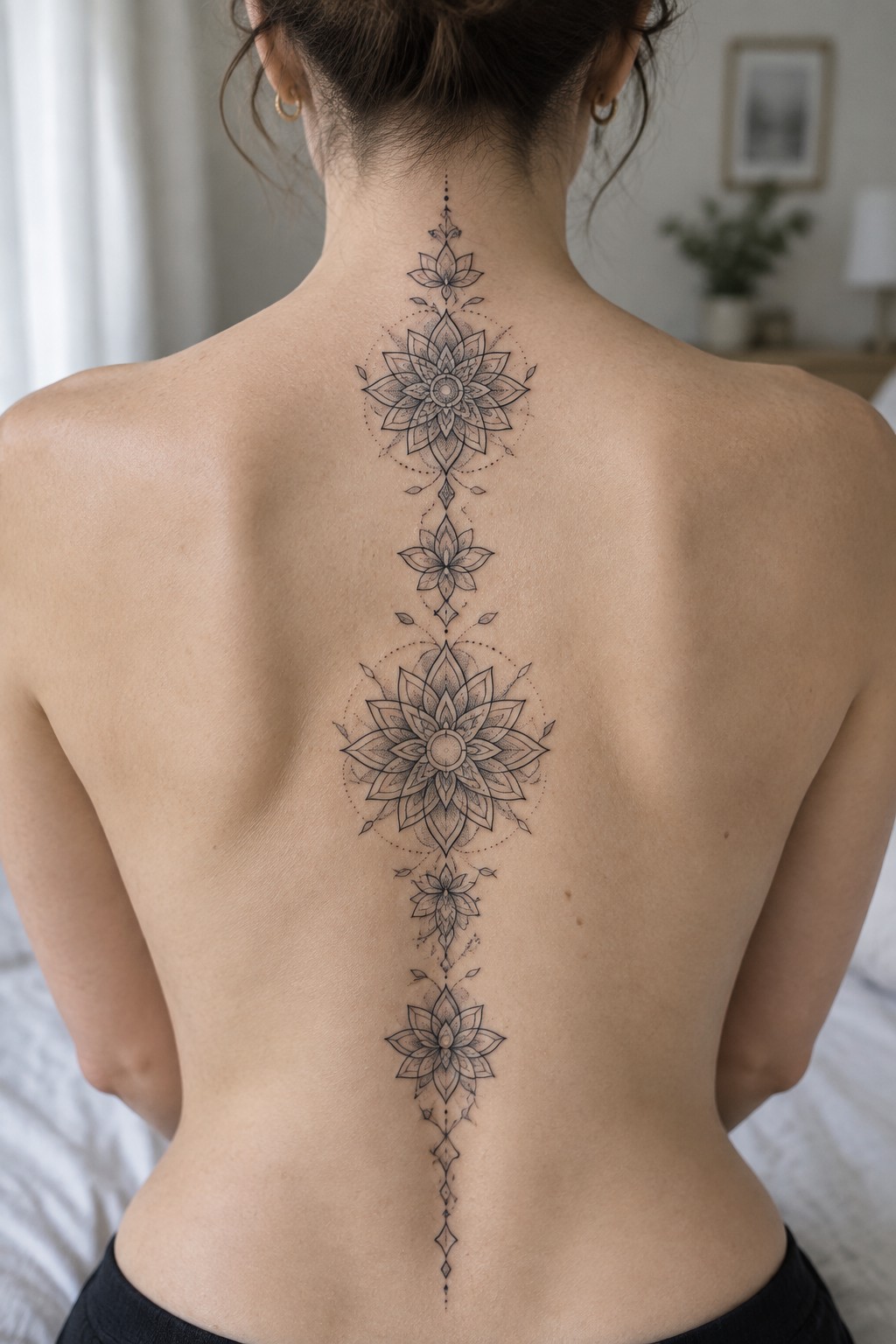
The tattoo runs straight down the center of the back in a series of lotus mandalas. It starts near the neck and tapers toward the lower back with smaller elements at the bottom. Fine lines and dotted accents connect each section.
This placement lets the design stay narrow and centered. The size feels right for the spine because it does not need extra width on the sides.
Chakras align down the spine
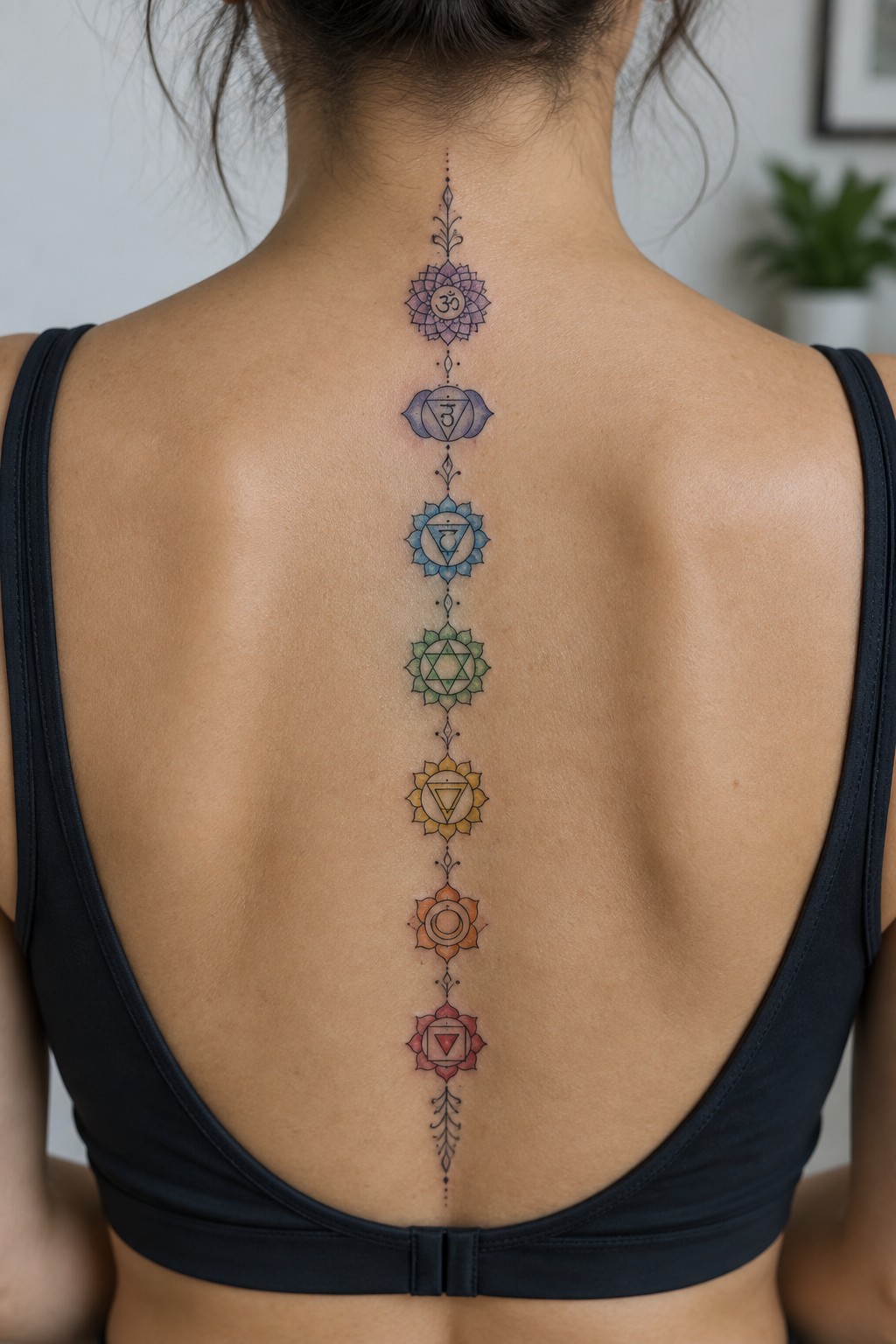
The spine gives this design a clear path to follow from top to bottom. Each chakra sits in order with simple lines linking one to the next so the sequence stays easy to read.
The colors move from deep red at the base up to purple near the neck without crowding the skin. I think the straight layout keeps the focus on the energy centers themselves instead of added flourishes.
Mandala stack down the spine
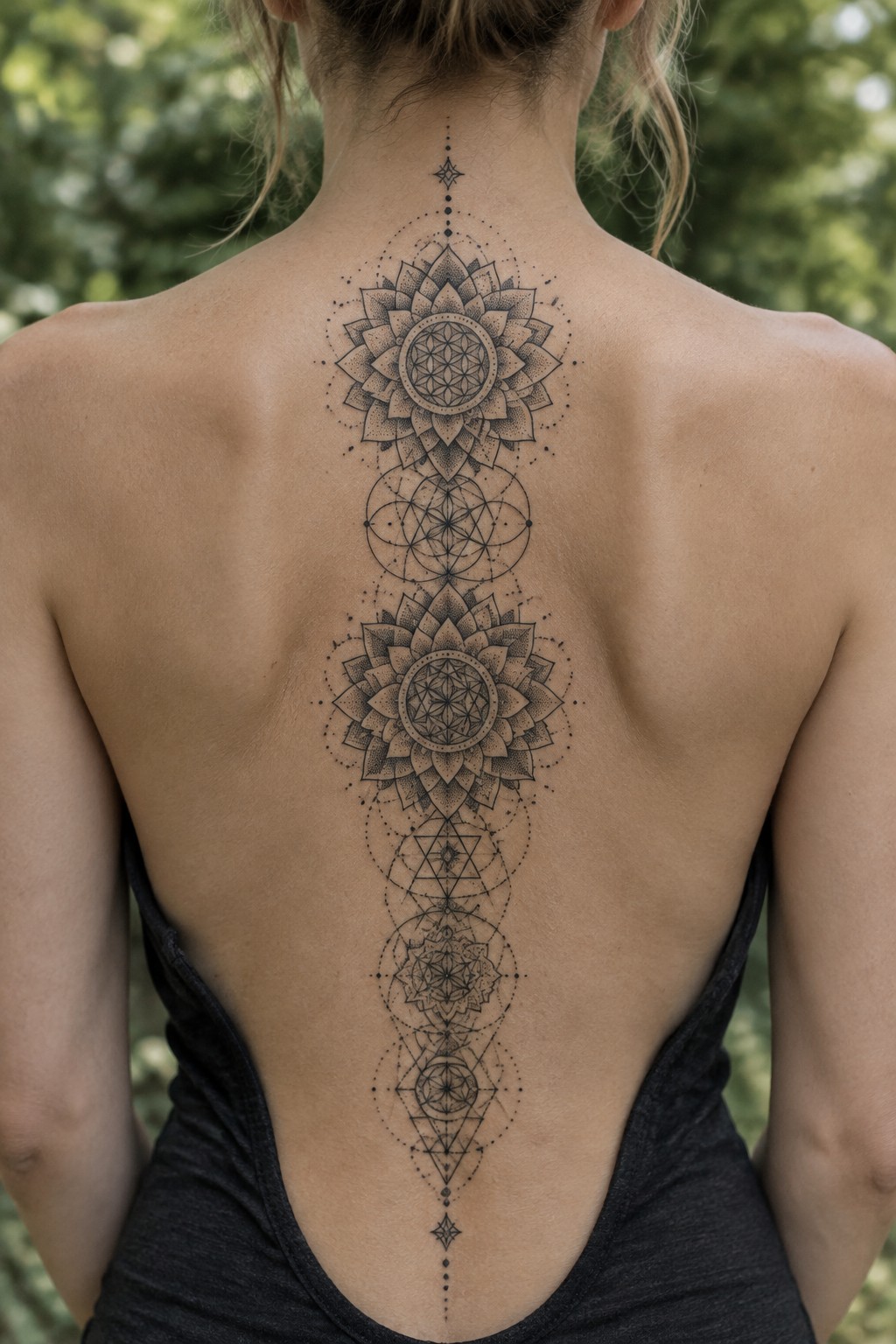
The tattoo runs straight along the spine with three main mandala forms. Each one sits inside a circle and links to the next through lines and dots. The top piece starts near the neck and the bottom one ends lower on the back.
The vertical layout matches the shape of the spine well. I think the spacing between the mandalas helps the whole piece stay balanced without looking crowded.
A lotus runs down the spine with ornaments
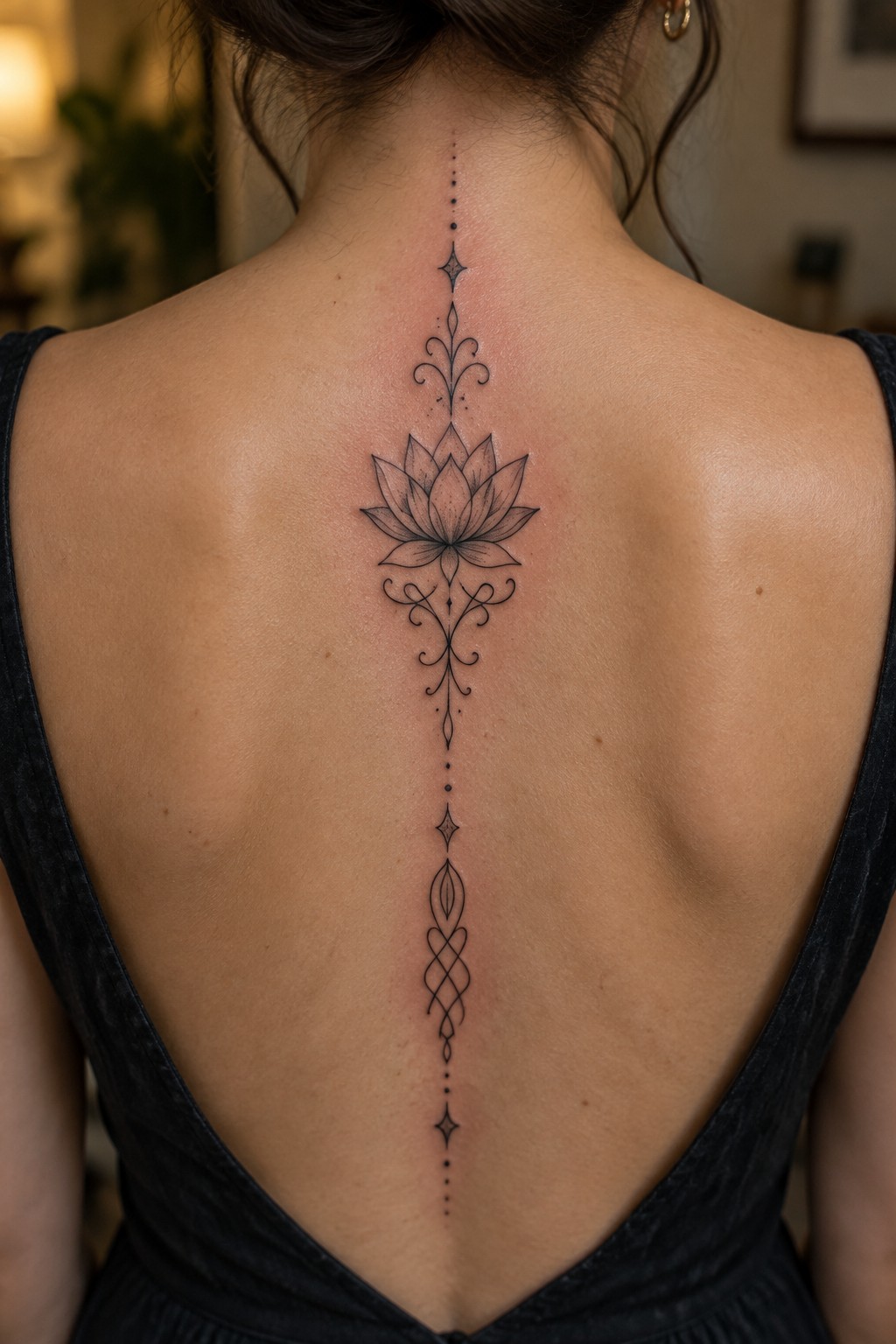
The lotus flower sits centered on the upper back. Ornamental curls extend above it while a chain of shapes and dots continues down the spine to the mid back. Small diamond accents mark the top and bottom points.
This layout uses the spine length to keep the design narrow and balanced. I think the repeating line elements make the whole piece feel steady without extra bulk.
A vertical ornamental pattern along the spine
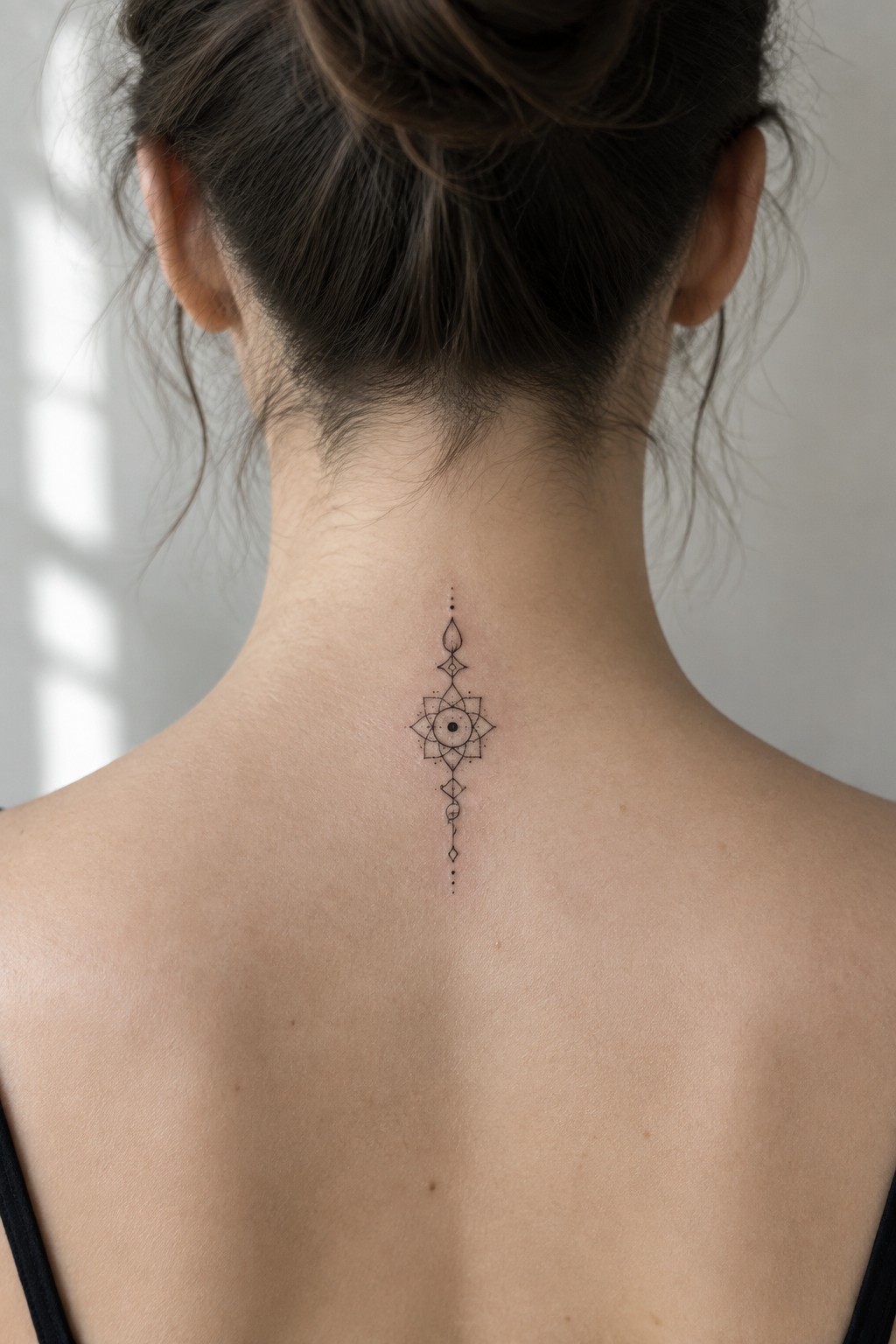
The tattoo runs straight down the center of the spine. It starts near the base of the neck and extends a short distance down the upper back. Fine lines form a balanced shape with a central circle and pointed accents that mirror each other.
I think this layout works because the spine gives the design a clear axis to follow. The size stays small enough that the details remain sharp without spreading too wide.
Ornamental design running down the spine
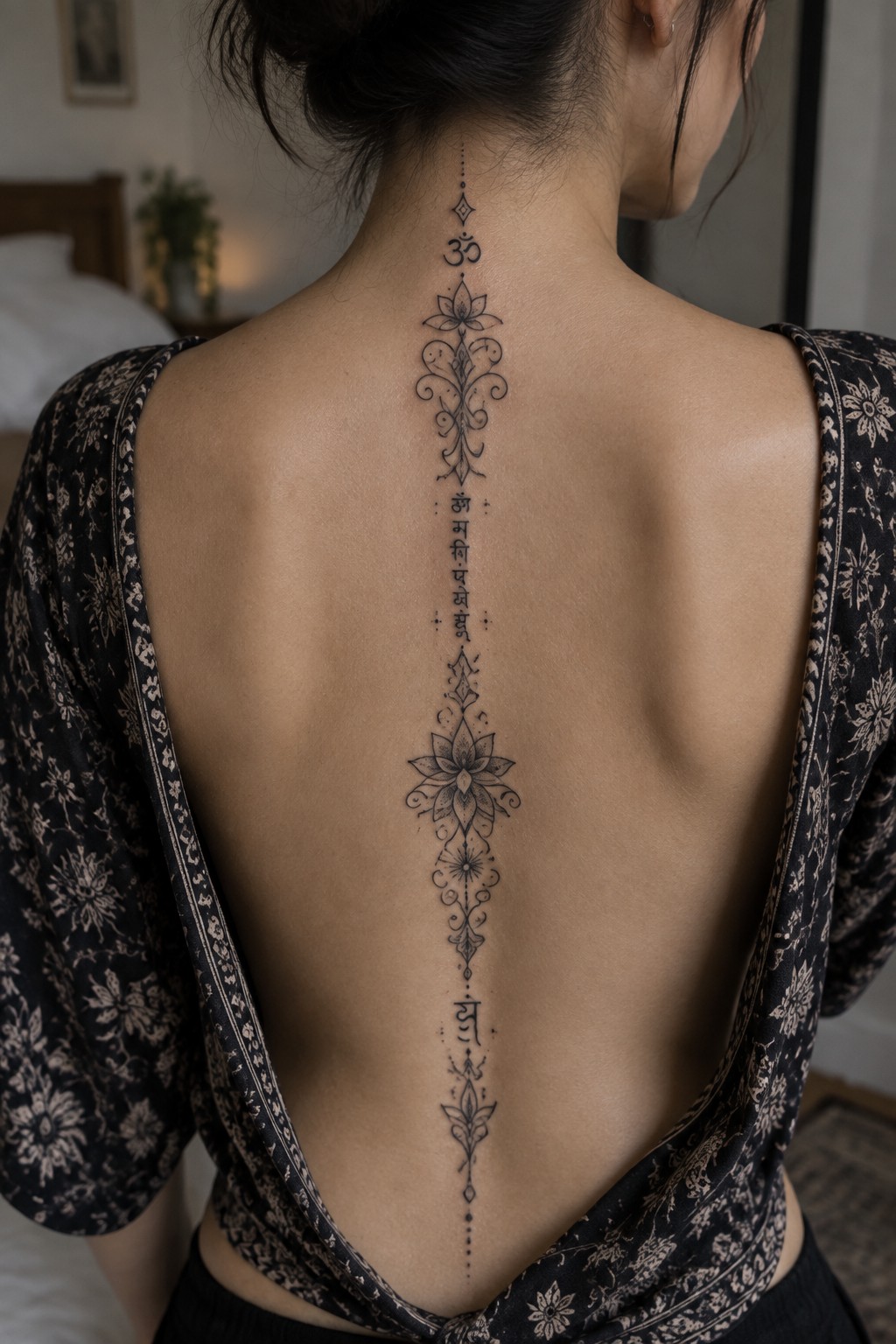
The tattoo follows the full length of the spine from the base of the neck to the lower back. Lotus flowers sit at key points along the line with an om symbol near the top and sanskrit text in the center. Black ornamental swirls and dots fill the spaces between them.
This layout works because the spine gives the design a straight path to build on without extra framing. I think the even spacing keeps the whole piece balanced from top to bottom.
Ornamental design along the spine
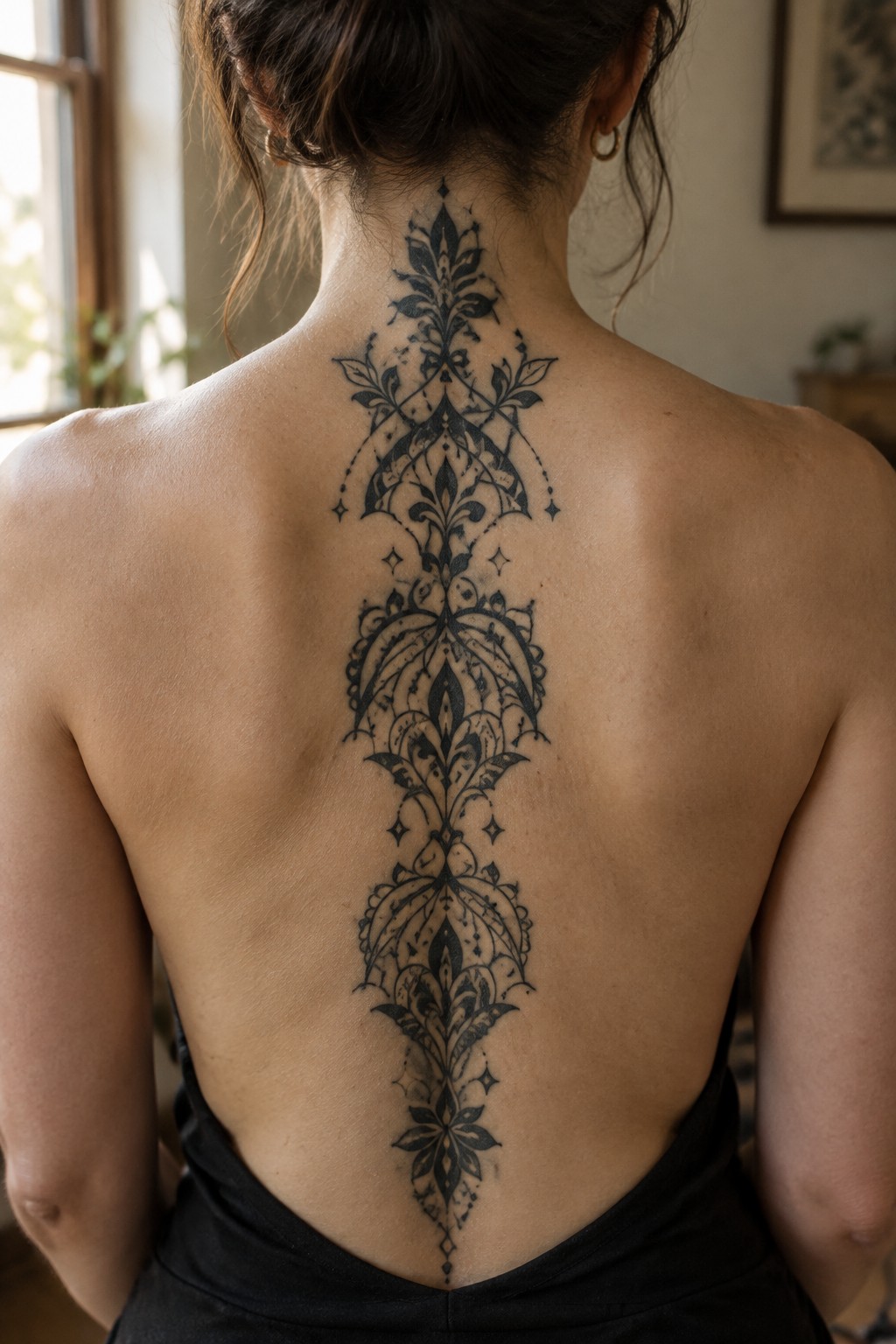
The tattoo runs straight down the spine from the neck to the lower back. It uses a repeating symmetrical pattern with leaves and curved shapes on both sides of the center line. The black ink stays consistent from top to bottom.
I think the vertical placement helps the symmetry read clearly without extra space on the sides. The scale lets the details stay visible while still covering a long section of the back. This works as a single connected piece for someone who prefers one main design over scattered smaller ones.
Ornamental lines follow the spine from top to bottom
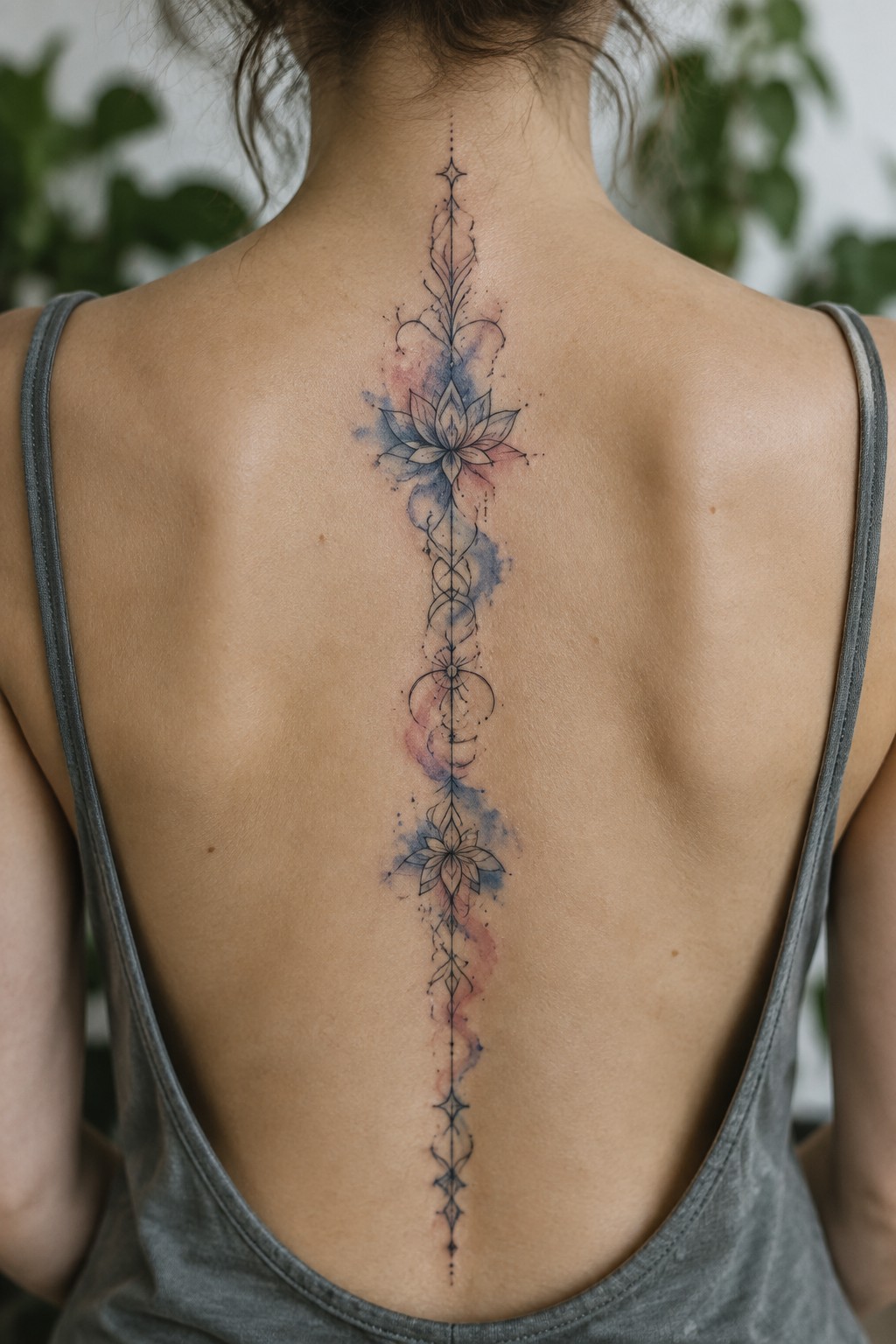
The spine placement lets this design stretch in one continuous line. Two lotus flowers sit at key points along the back with geometric patterns and dots linking them together. Soft blue and pink washes sit behind the black lines without overpowering them.
I think the vertical format keeps the whole piece readable even at this length. The spacing between the elements prevents it from feeling too busy on the skin.
Hamsa hand centered on the upper spine
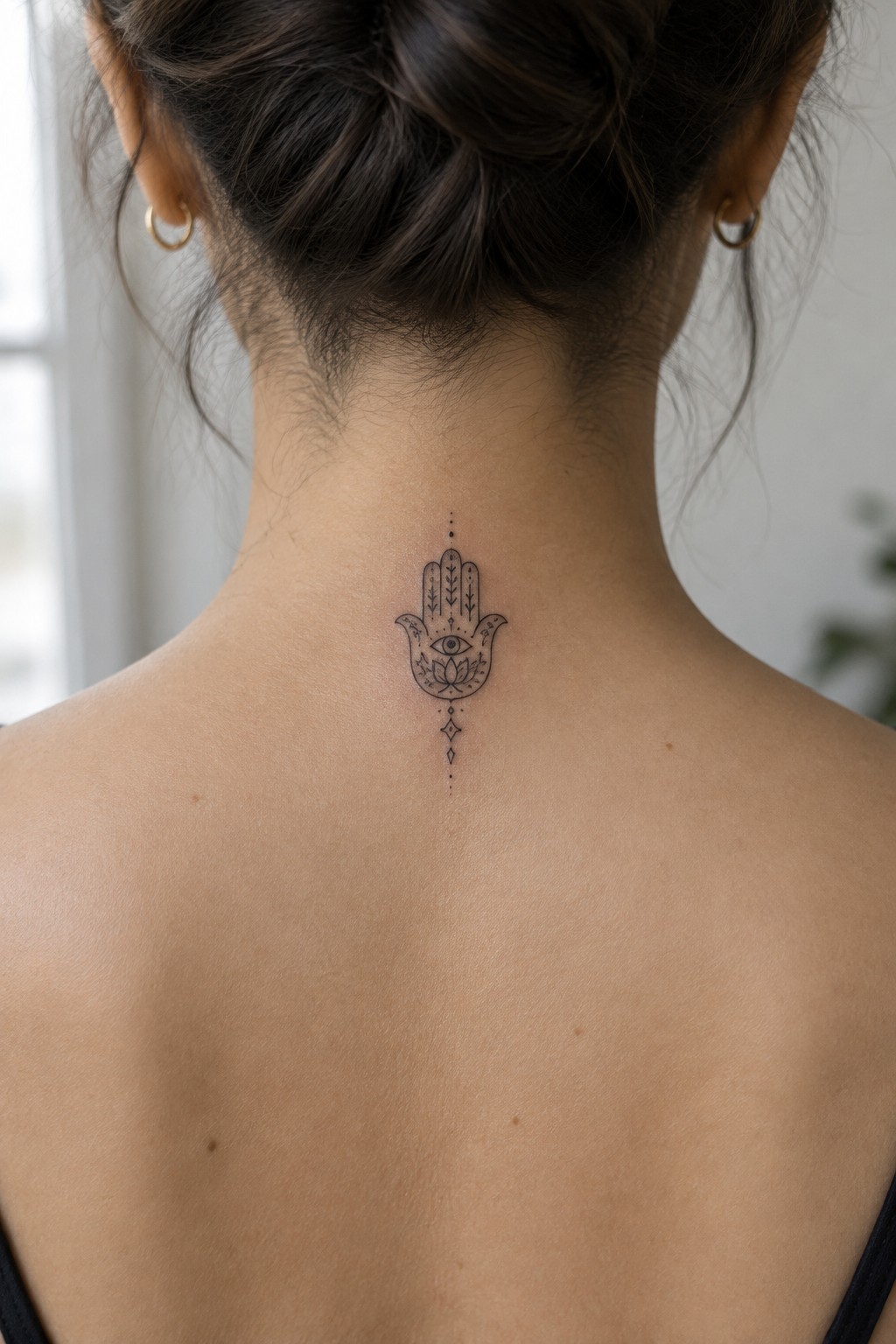
The hamsa sits directly along the spine at the base of the neck. This spot lets the narrow shape of the hand follow the body line without spreading wide. Small symbols like the eye stay easy to see at this scale.
I think the vertical flow of the design matches the placement well. It keeps the tattoo grounded and simple rather than busy.
Mandala sequence runs down the spine
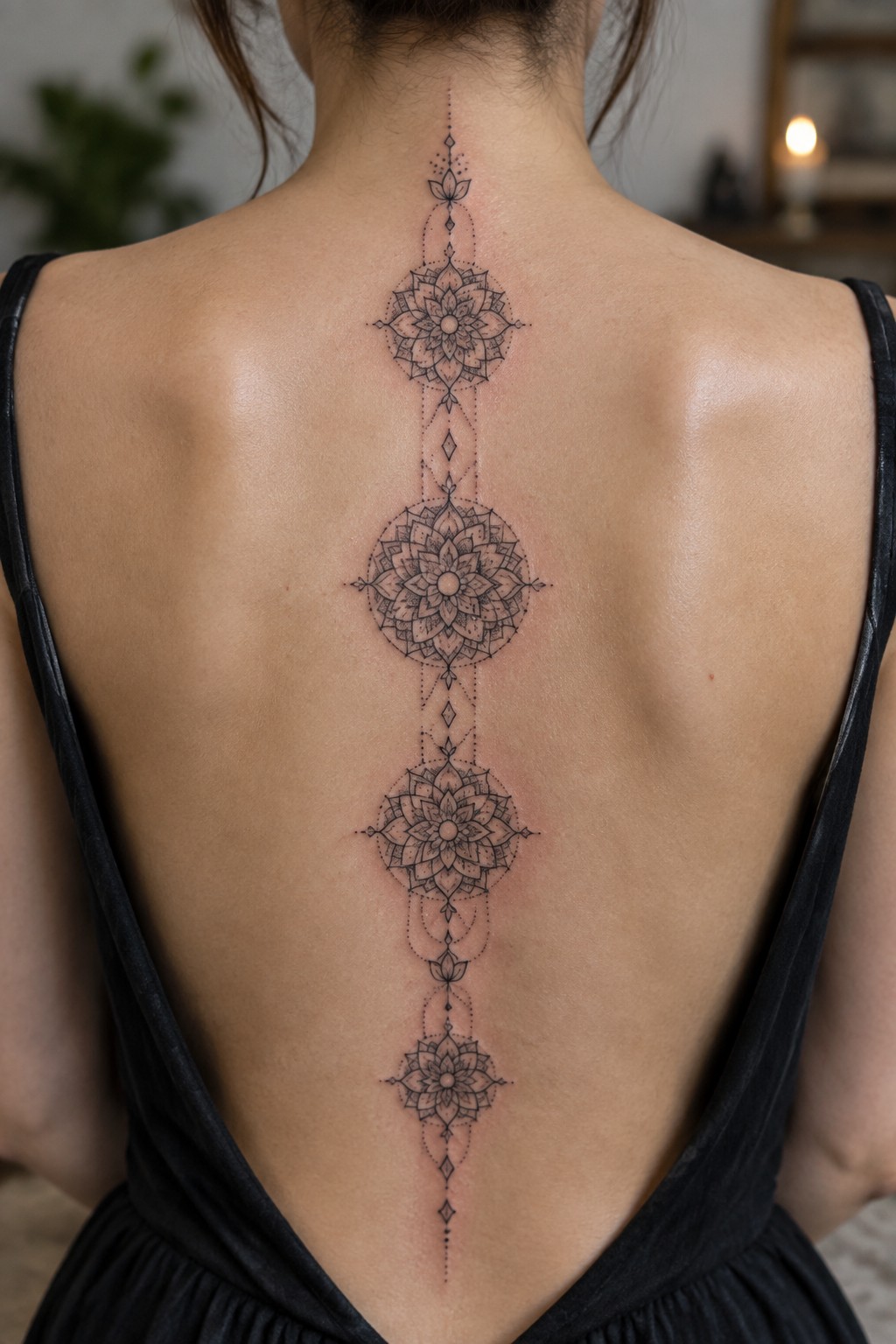
The spine gives this design a straight path to stretch across several sections. Multiple mandala circles sit one above the other with small dotted connectors and leaf shapes in between. The top circle starts near the base of the neck and the pattern tapers toward the lower back.
I like how the spacing prevents the piece from looking crowded over such a long area. The simple line style keeps each section clear even from a distance.
Ornamental design running down the spine
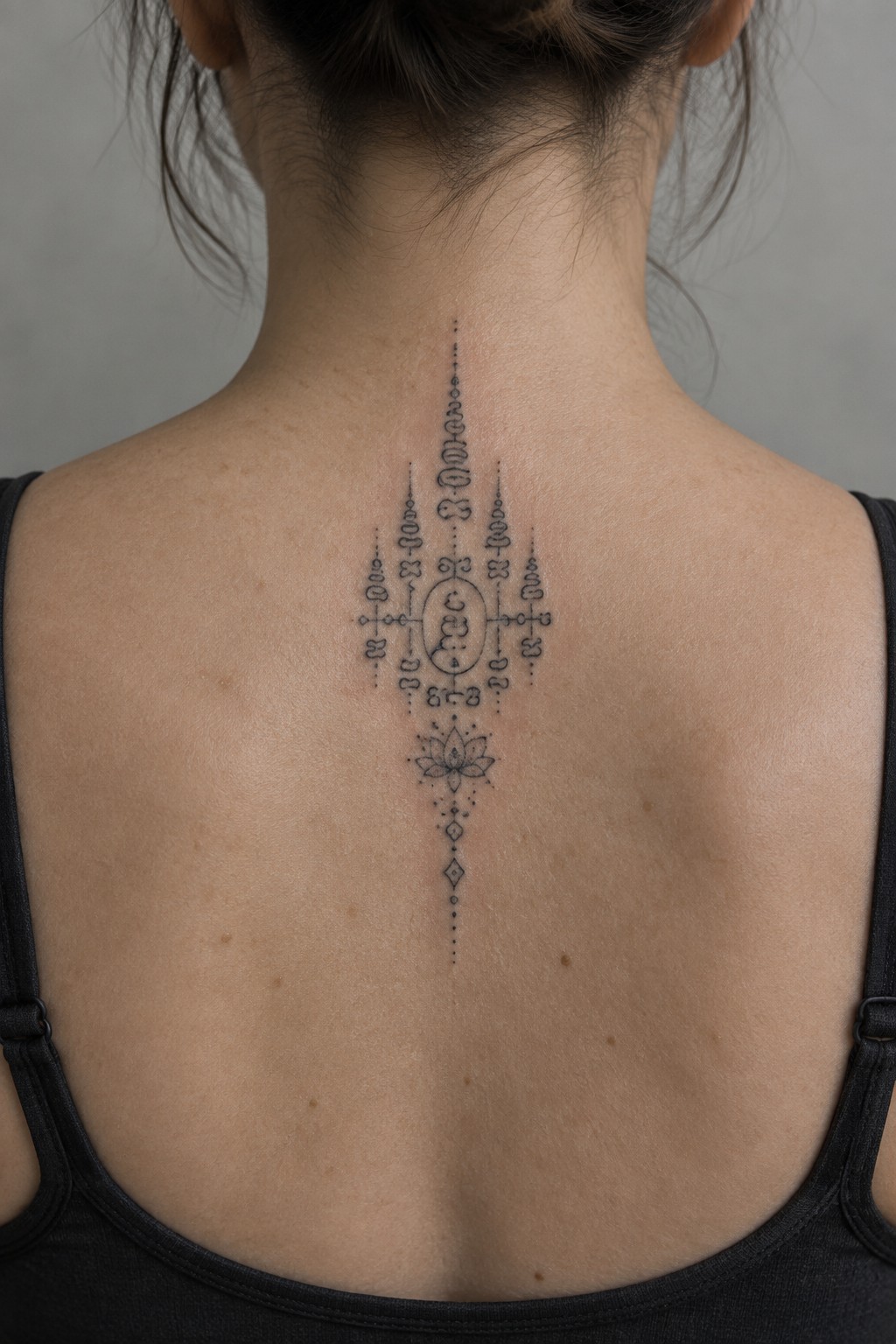
The tattoo sits centered on the spine and stretches vertically from the base of the neck downward. It features a central oval motif with symmetrical side elements and a lotus flower placed lower on the back. A line of small dots continues the flow toward the lower spine.
The vertical layout matches the shape of the spine well and keeps the symmetry balanced. I think the fine line work prevents the design from crowding the narrow area.
Ornamental tattoo along the spine
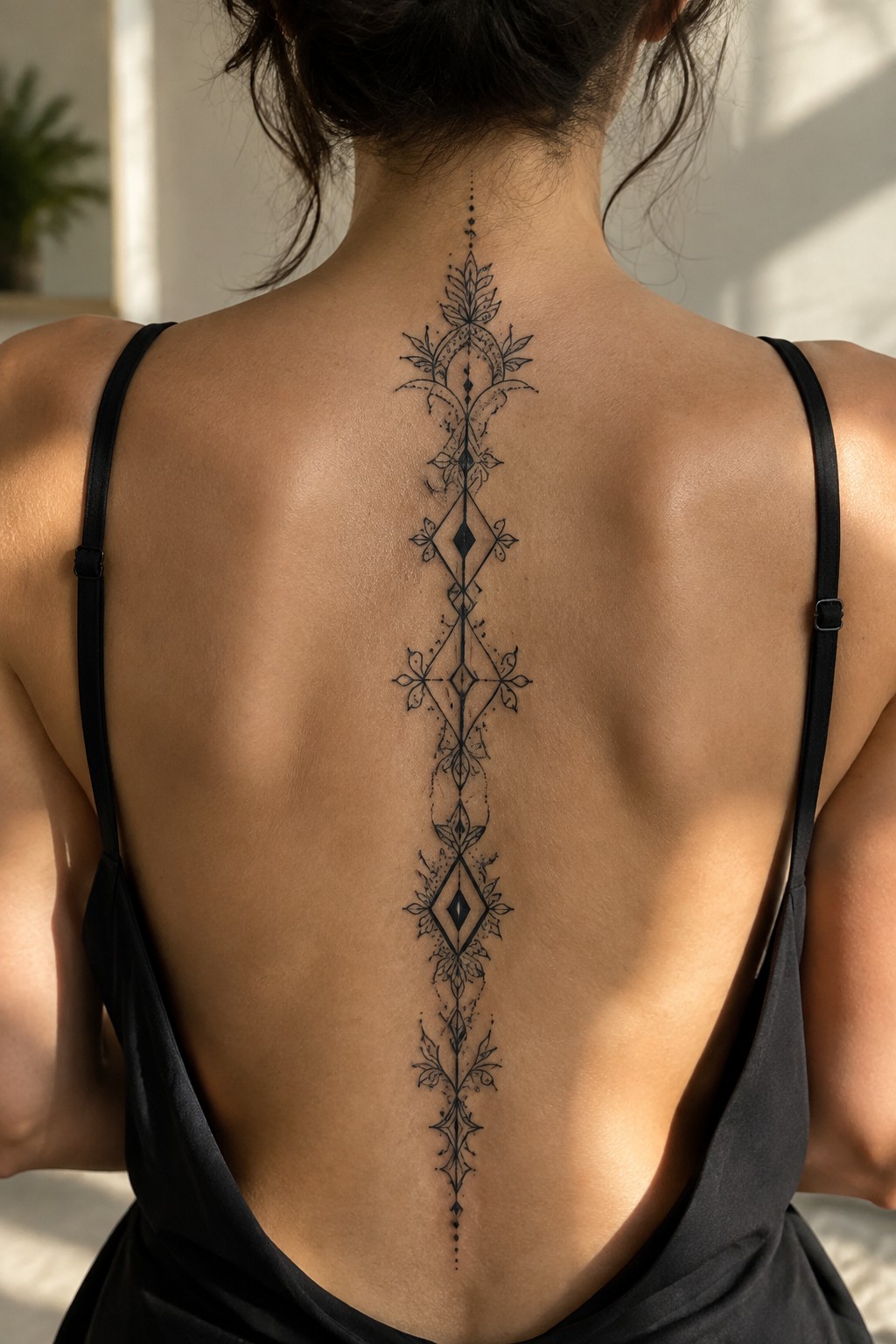
The design runs straight down the spine in one long vertical strip. It mixes diamond shapes with small leaf clusters and dotted lines that stay balanced on both sides. The top starts narrow near the neck and widens slightly before narrowing again lower down.
I think the spine works well here because it gives the symmetry a clear center line to follow. This keeps the whole piece readable even with all the small details packed in.
Peacock feathers run down the spine
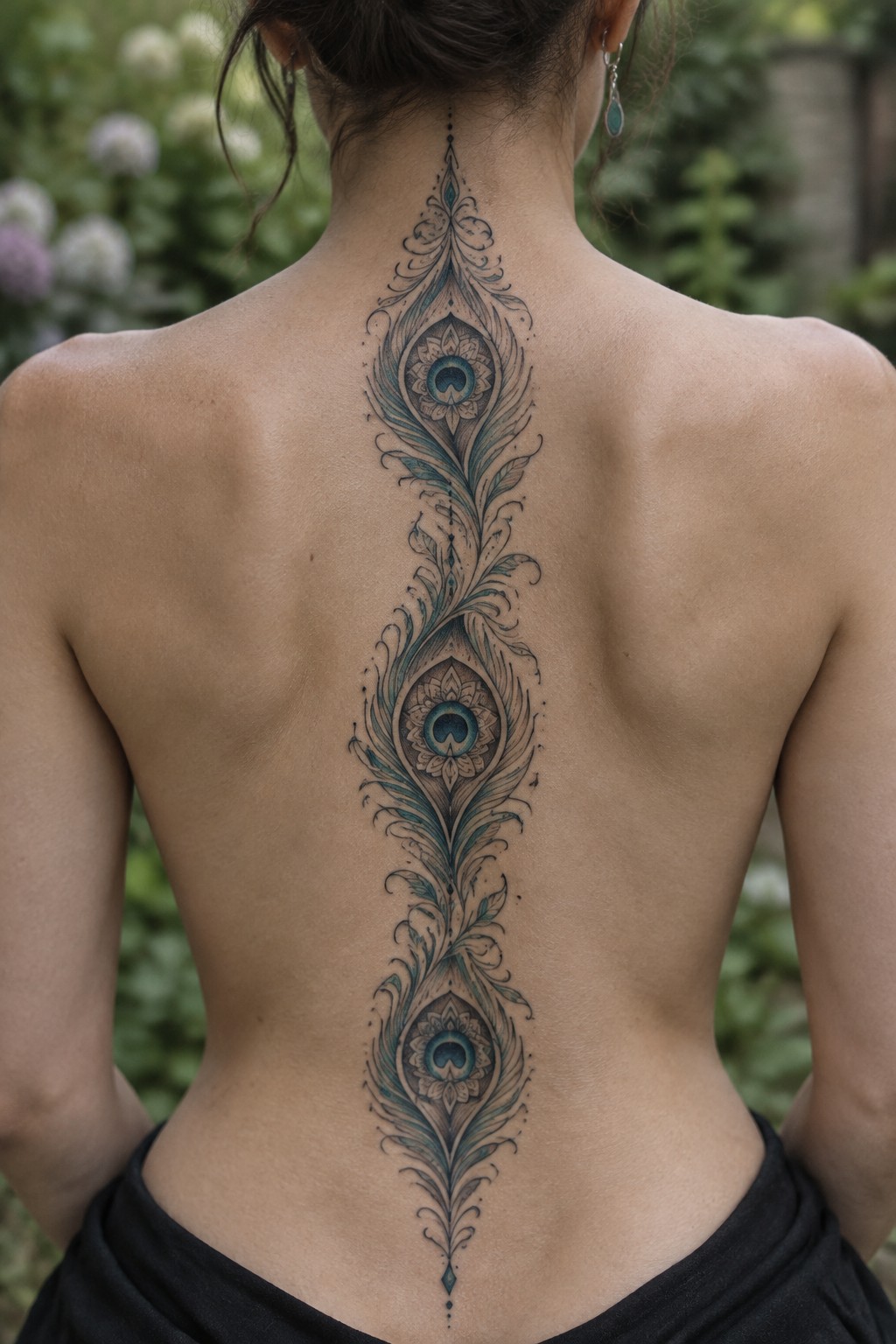
The spine gives this tattoo a clean vertical path. Three stacked peacock feathers extend from the base of the neck to the lower back with mandala centers and fine ornamental lines.
This layout keeps the whole piece balanced across a long area. I think the gradual taper at the bottom prevents it from feeling too heavy at the waist.
symbols stack down the spine
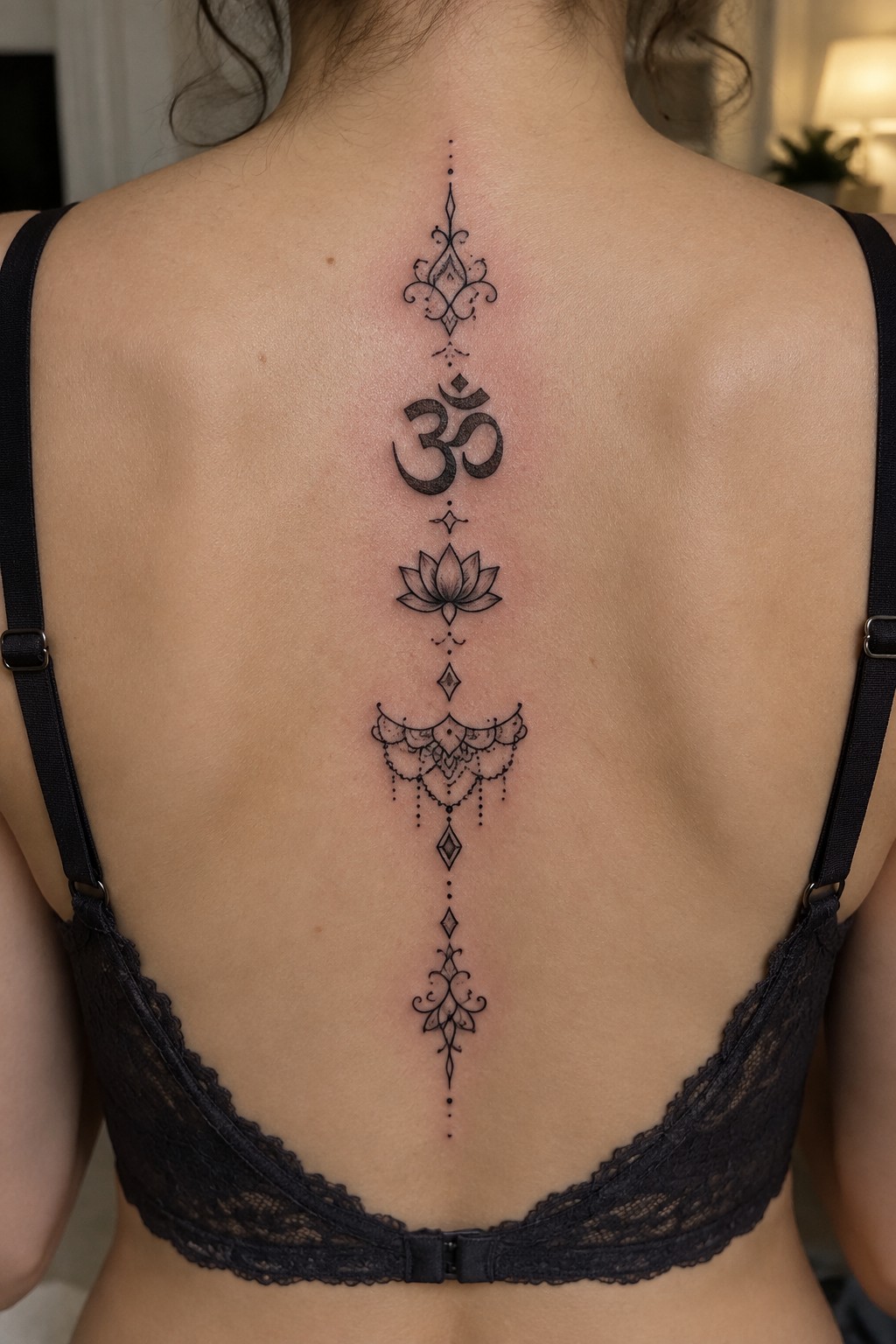
The tattoo runs straight down the center of the spine. It places an om symbol above a lotus and connects them with simple ornamental sections. The vertical layout lets each part sit evenly without crowding.
I think the spacing works well here because it keeps the lines readable on the back. The whole piece stays balanced from top to bottom.
Key design runs down the spine
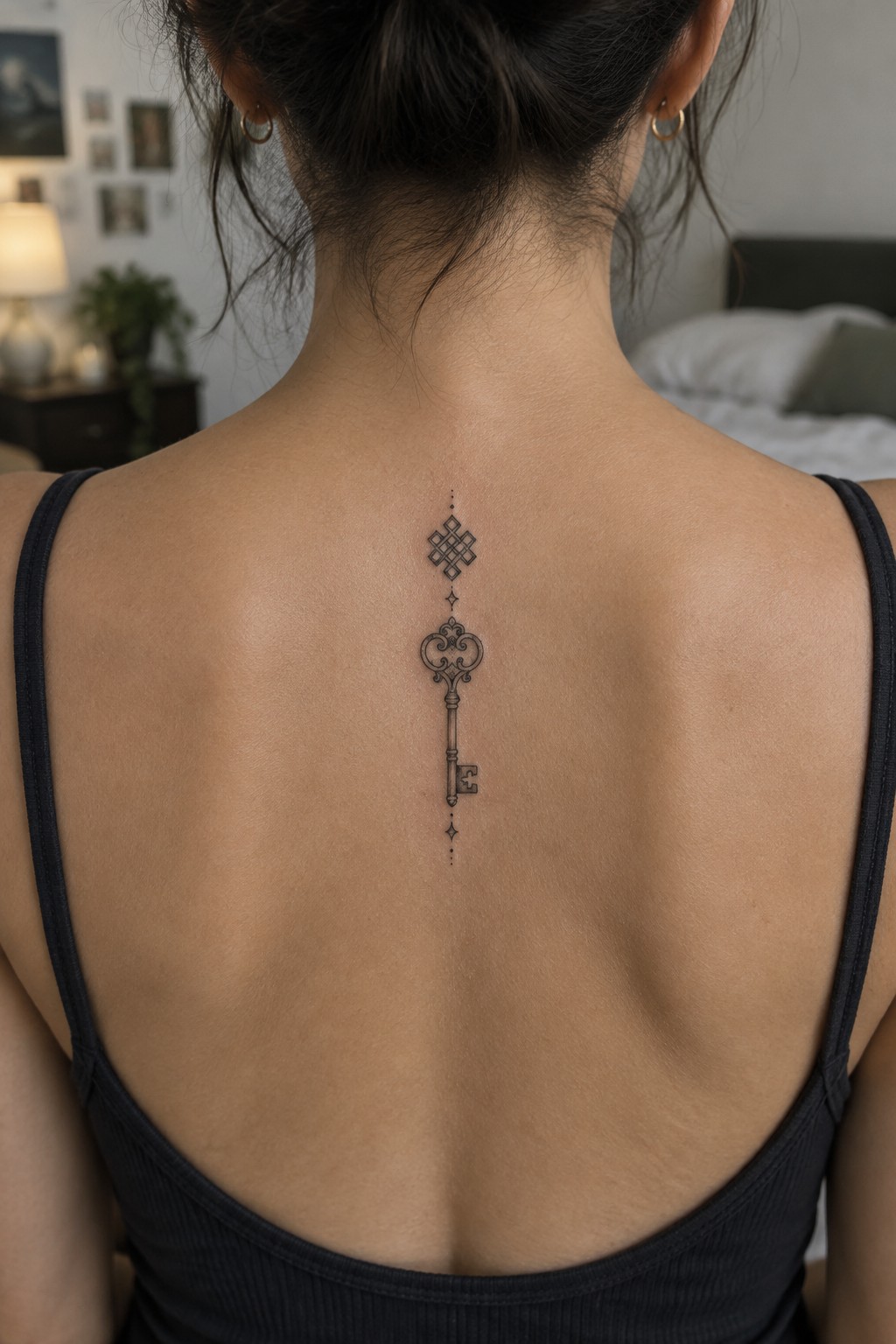
The tattoo sits centered along the upper spine in a straight vertical line. An ornate key forms the main element with an endless knot placed above it. Fine dots extend the line at both ends to frame the piece.
This layout keeps the design compact while using the natural length of the spine. I think the spacing between the knot and key helps it stay readable at this size.
Spine tattoo with stacked celestial and floral elements
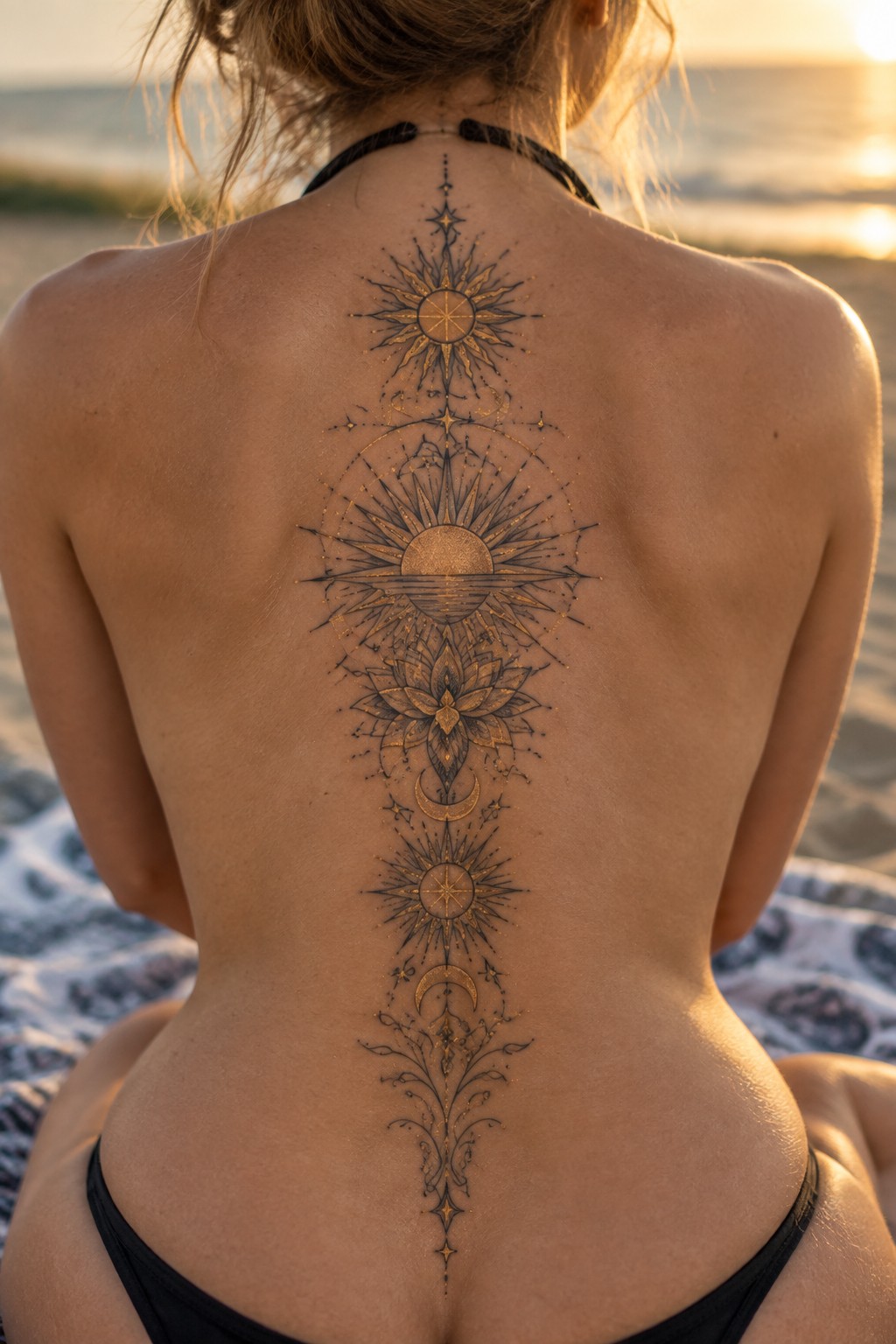
The spine gives this tattoo a straight path for a tall vertical layout. Several sun and moon symbols stack along the center with a lotus flower in the middle section. Fine lines and dots connect the pieces without spreading wide.
I think the vertical order keeps the design readable from top to bottom. The gold shading helps the main shapes stand out while the rest stays light.
Ornamental details run down the spine
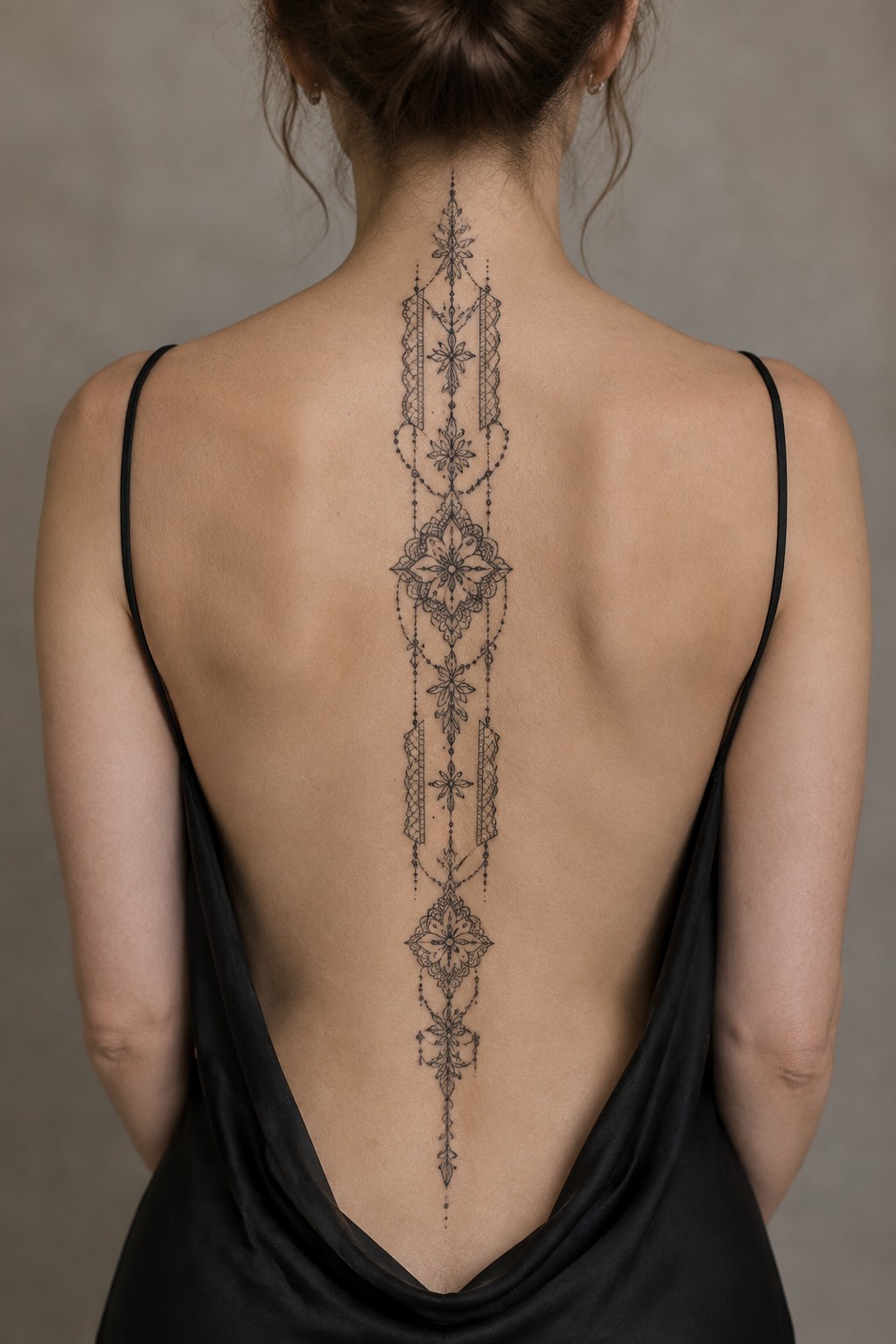
The spine gives this design a straight vertical path that starts at the neck and ends near the lower back. A series of mandalas and floral shapes connect through dotted lines and small hanging elements. The narrow width keeps everything centered without spilling onto the sides.
I think the repeating motifs help the tattoo stay readable even at full length. The symmetry also makes the placement feel intentional rather than just decorative.
A tree design runs down the spine
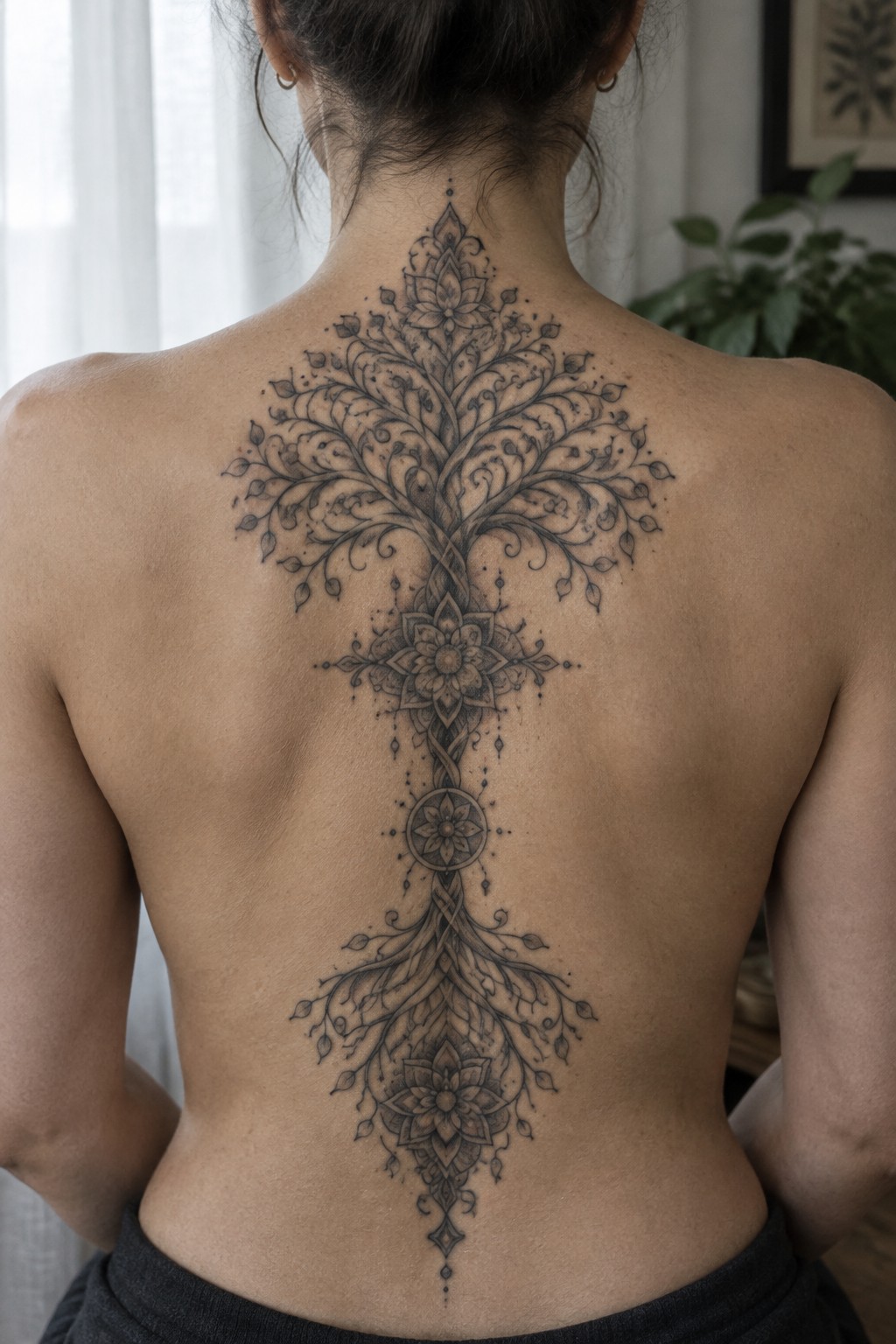
The tattoo follows the spine from the base of the neck to the lower back. It opens with a tree of life at the top and shifts into lotus shapes as it moves downward. The design stays narrow and centered so the lines stay even on both sides.
The vertical flow lets the branches and roots connect without crowding the sides. I think this layout works because it uses the natural length of the spine to keep the pattern readable from top to bottom.
Hourglass with mandalas follows the spine line
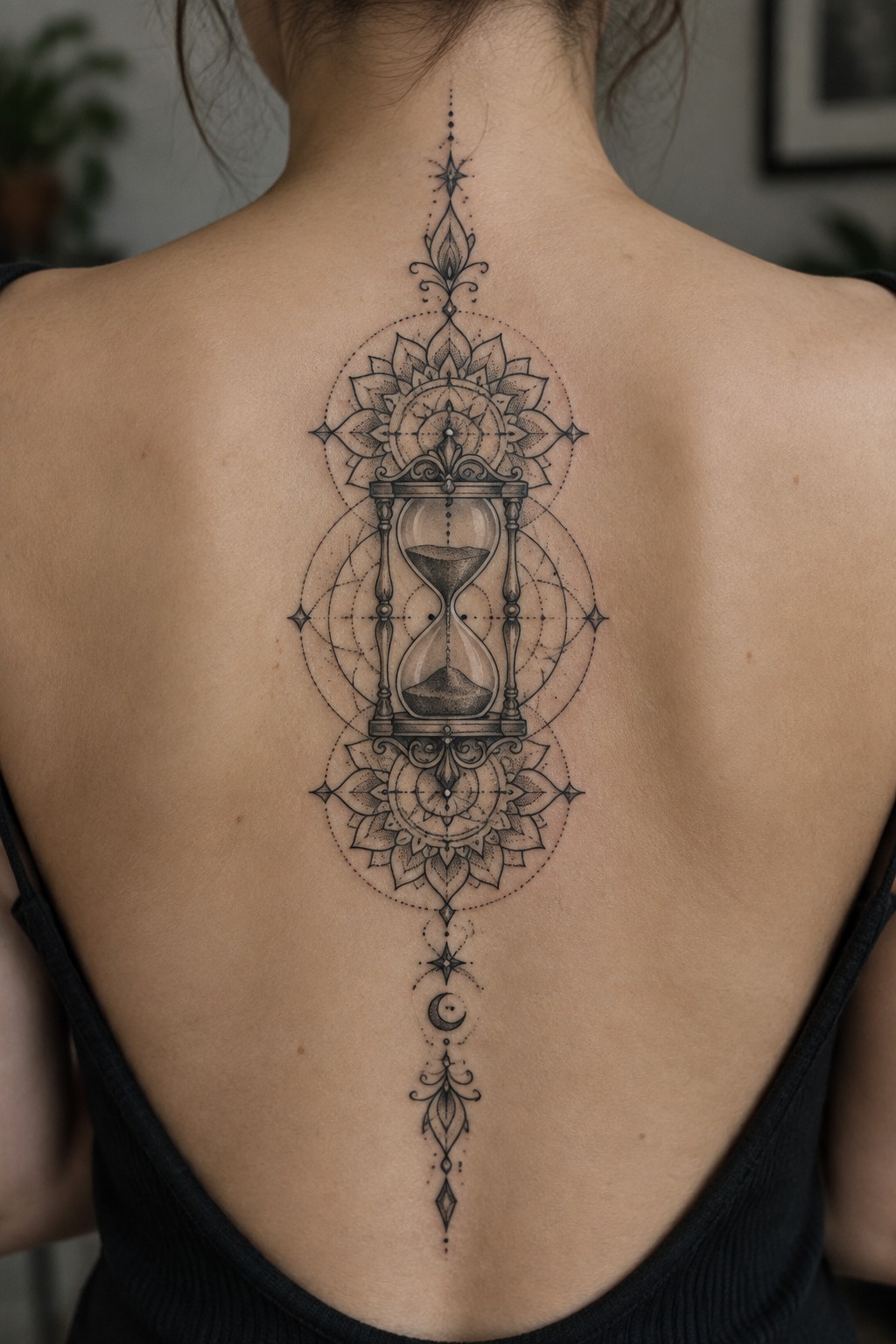
The spine sets up a straight path for this vertical design. An hourglass sits in the middle with one mandala above it and another below. Smaller stars and a crescent moon extend the pattern farther down the back.
The symmetry keeps the whole piece readable even at this size. I think the spacing works because it lets the central shape stand out without extra clutter around the edges.
A vertical motif on the neck
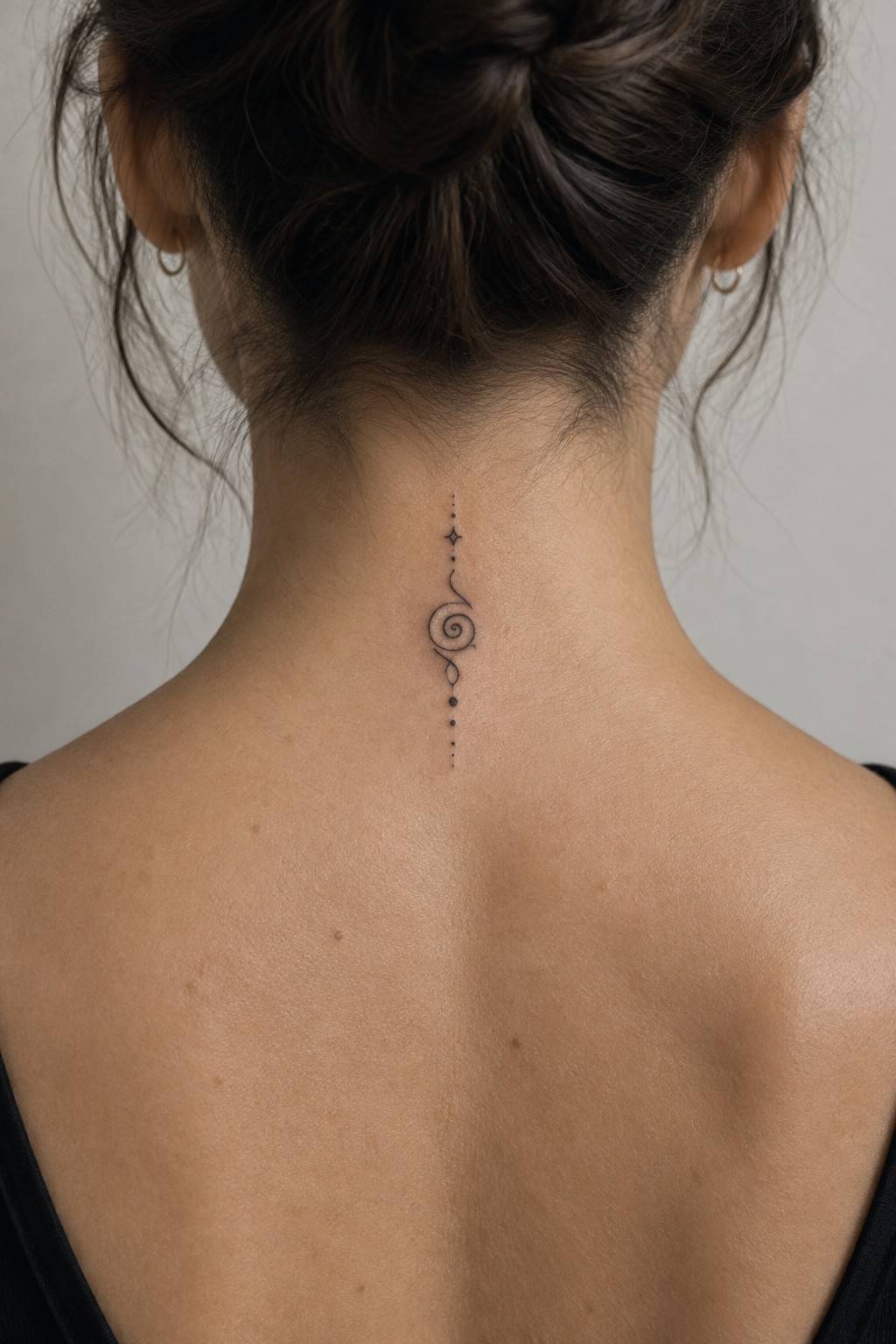
The back of the neck gives this design a clear path to run straight down. The spiral anchors the bottom while the dots and small accents stretch upward without crowding the space. This keeps the whole piece narrow enough to sit comfortably on the spine line.
I think the length works because it matches the natural shape of the area without spreading too wide. The single line stays easy to read even at this small scale.
Stacked lotuses run down the spine
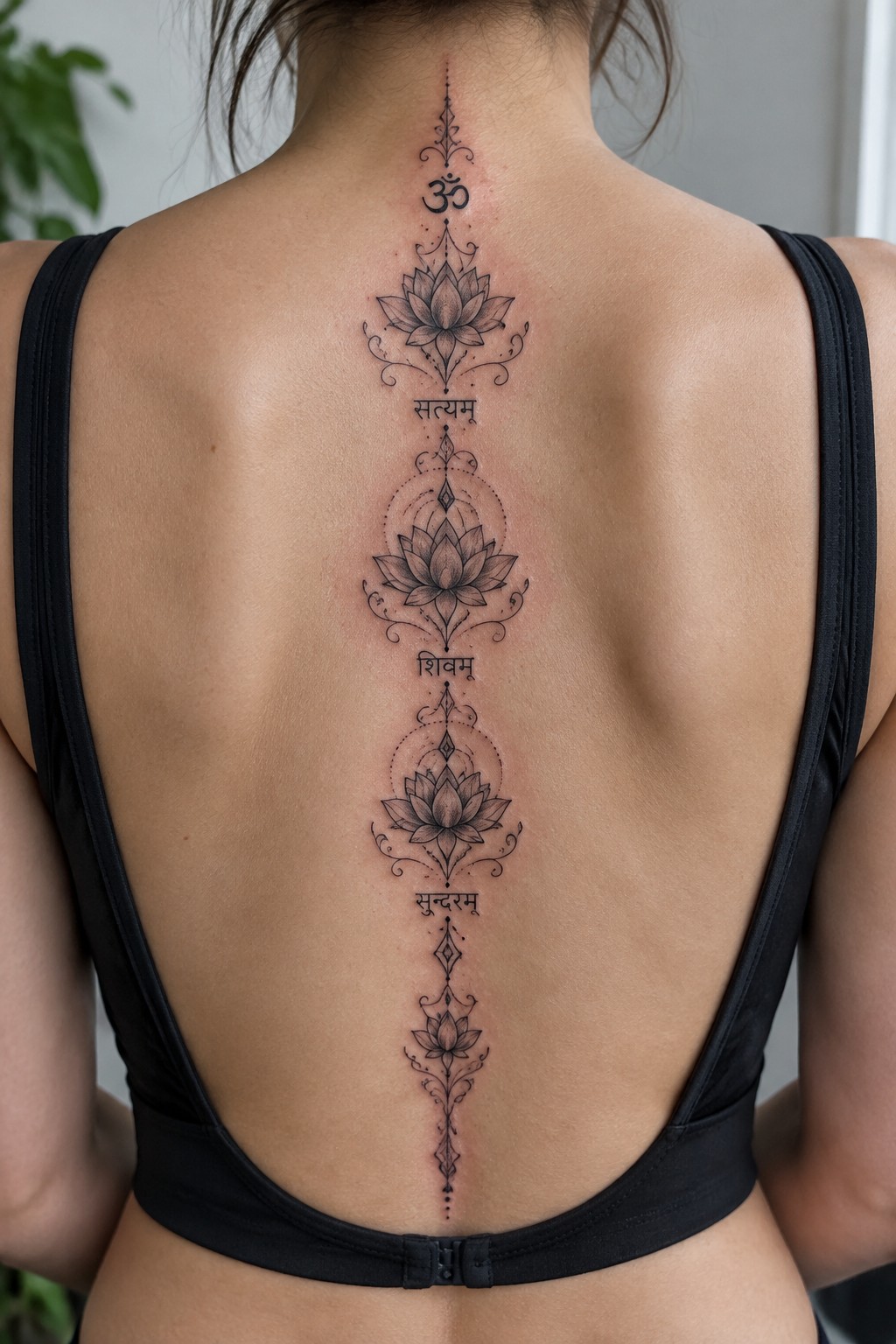
The tattoo places four lotus flowers in a straight line along the spine. An Om symbol sits at the top while three Sanskrit words appear between the flowers. Fine ornamental lines and dots connect the elements without crowding the narrow space.
This vertical arrangement matches the spine’s natural length and keeps the design readable from a distance. The flowers get slightly smaller toward the bottom so the lower back does not feel overloaded. I think the even spacing between each section prevents the tattoo from looking cramped.
Moon phases line up along the spine
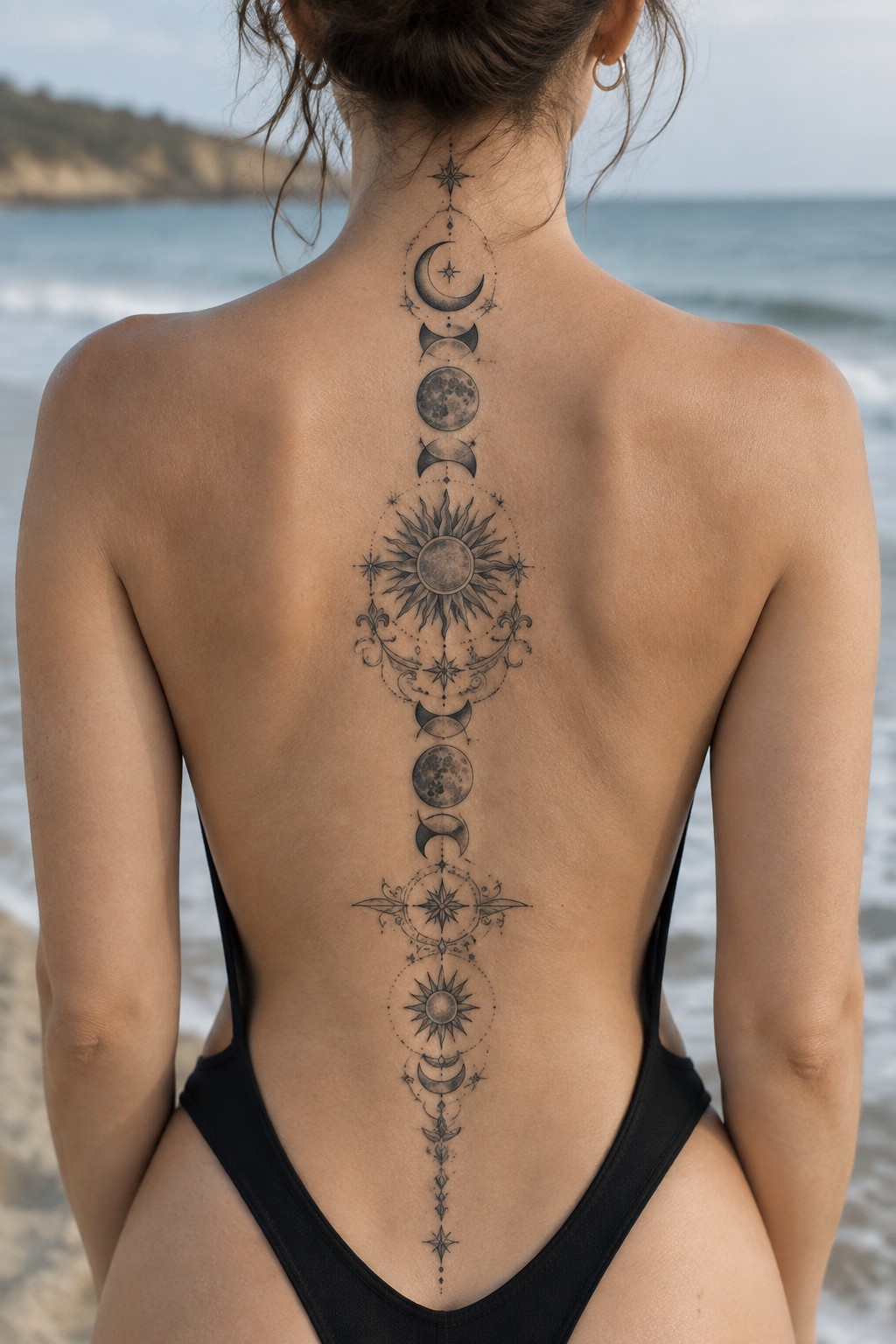
The tattoo runs a series of moon phases straight down the spine. A sun sits in the middle with stars and light curves around it. The narrow layout keeps everything centered on the back.
I think the vertical order helps the phases read as a single sequence. The added ornaments give the sun some width without breaking the spine focus.
Ornamental design running down the spine
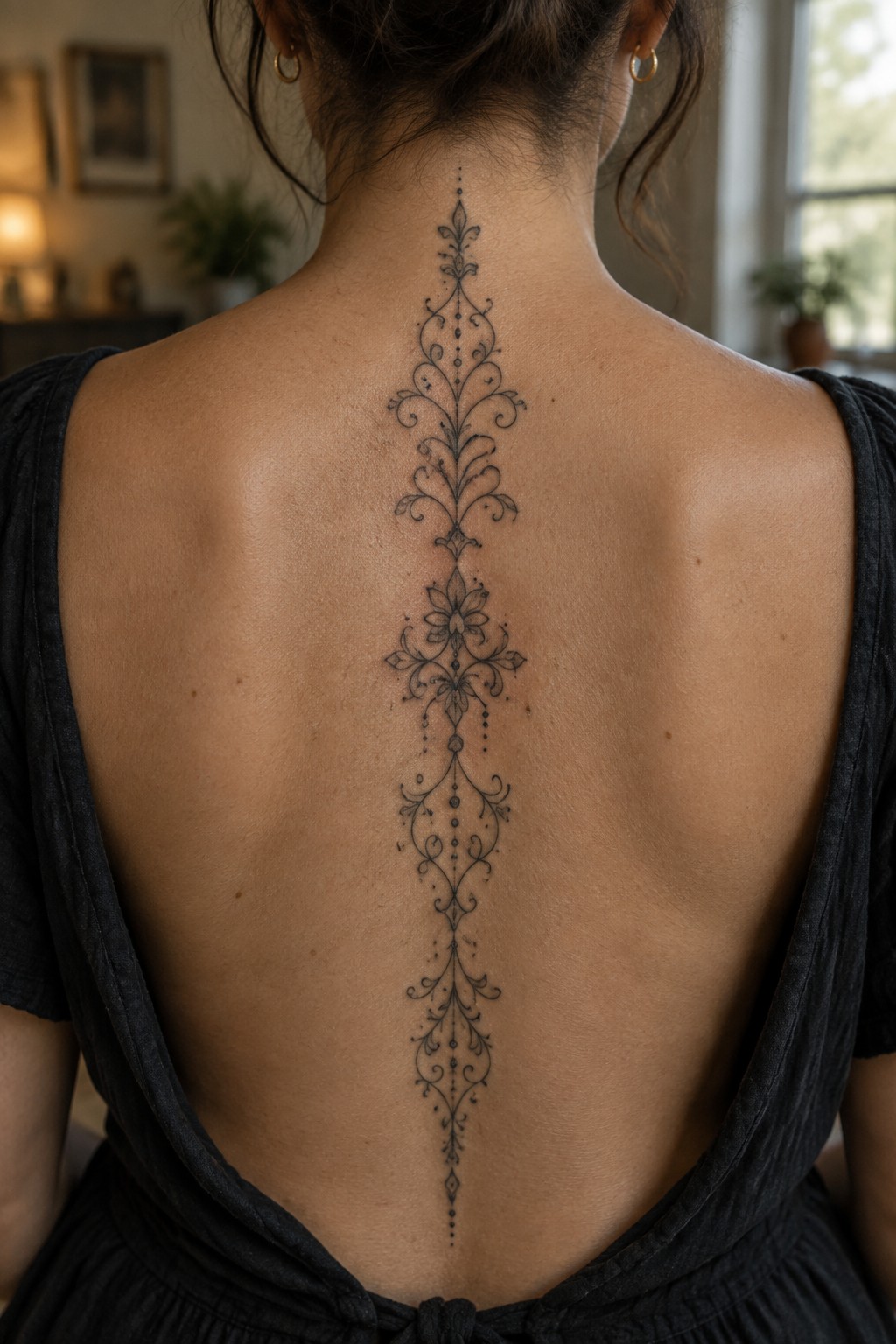
The tattoo follows the spine from the base of the neck down to the lower back. It uses a tall symmetrical layout filled with flowers and scrolling lines that stay centered at every point.
The vertical stretch lets each section of the pattern build on the next without overlap. I think this placement keeps the ornament readable even when the design gets more detailed toward the middle.
Frequently Asked Questions
What is the typical pain level for ornamental spine tattoos? Spine tattoos often rank high on the pain scale because the skin lies directly over bone with little cushioning. Women who have them report sharp discomfort during the session, especially along the vertebrae, but many manage it well with short breaks, topical numbing agents, and steady breathing. Choosing a smaller design or spacing sessions can reduce intensity.
How should I care for a new spine tattoo during the healing phase? Clean the area gently with fragrance free soap twice daily and apply a thin layer of recommended moisturizer. Avoid tight clothing, heavy backpacks, and prolonged sitting or lying on your back for the first two weeks. Full healing takes four to six weeks on the surface and several months deeper, so consistent sun protection and hydration keep the ornamental details crisp.
Which spiritual symbols work best for ornamental spine designs? Popular choices include lotus flowers for renewal, mandalas for harmony, and chakras for energy flow, as these motifs adapt well to the spine’s vertical line. Review the 25 examples in the article and select elements that match your personal beliefs while allowing the artist to adjust scale and symmetry for your body shape.
How do I find an artist experienced with detailed ornamental work on the spine? Search portfolios for fine line ornamental tattoos and read reviews mentioning spine placements. Schedule consultations with artists who show strong symmetry skills and ask to see healed examples of similar designs. Clear communication about size, placement, and spiritual meaning helps ensure the final result matches the vision.
How long do spine tattoos typically last before needing touch ups? Ornamental spine tattoos can stay vibrant for five to ten years with proper care, though ink may soften from daily movement and sun exposure. Annual sunscreen use and periodic moisturizing slow fading. Most women schedule a touch up session every three to five years to restore fine details and contrast.
