

I love spotting Japanese inspired animal tattoos because they pack so much meaning into every curve.
My tattoo journey started with a simple koi design that still makes me smile today.
Tigers in these styles show off strength without trying too hard.
Snakes twist and turn in ways that feel both elegant and bold.
This list of twenty four options has me thinking about adding another one soon.
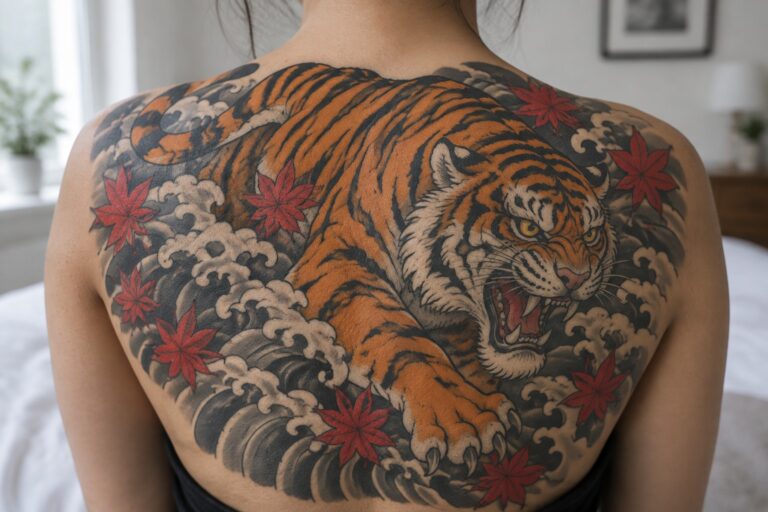
Tiger fills the back with waves and leaves
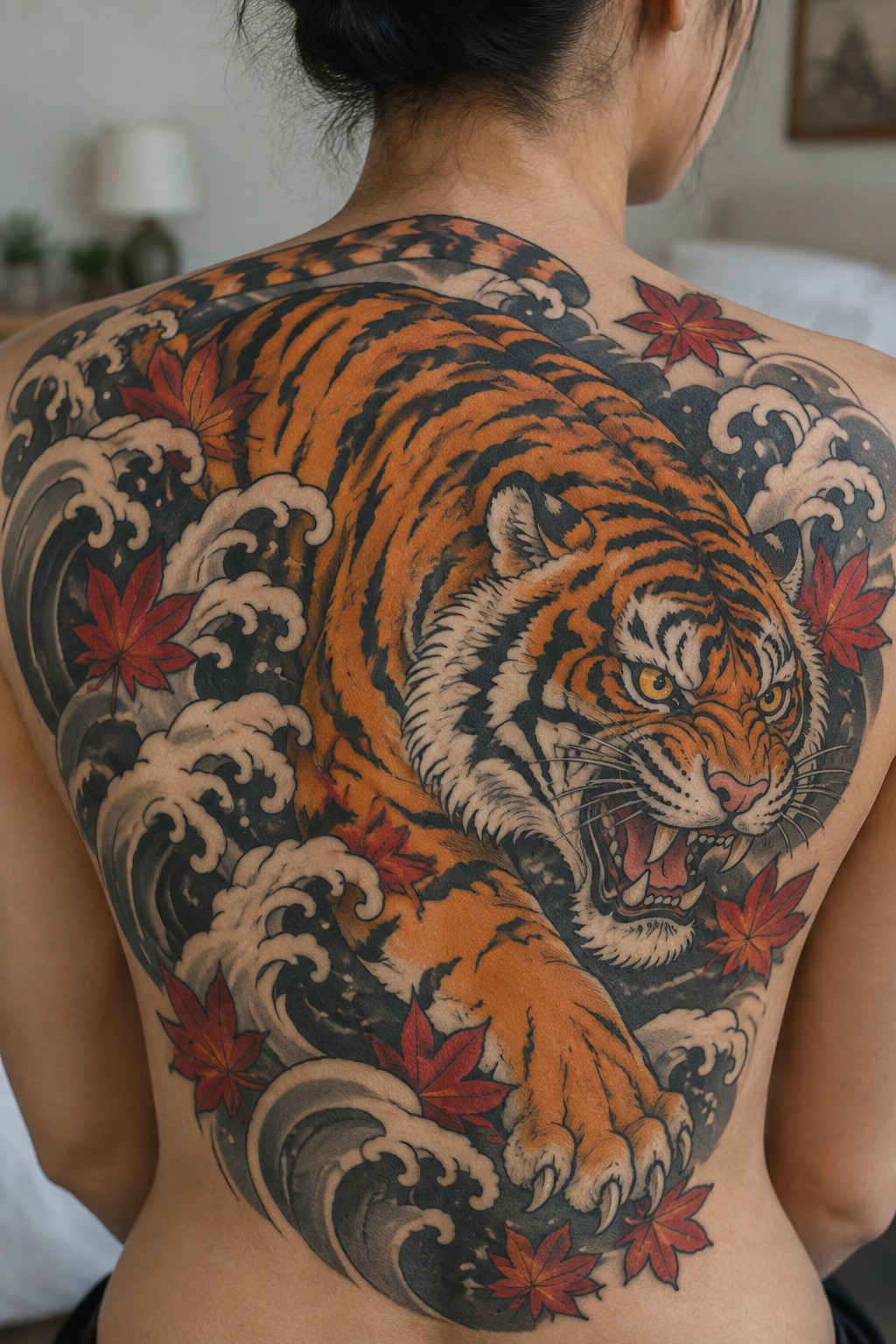
The back gives enough room for a tiger to stretch out fully while the waves curve around the sides and bottom. Red leaves sit in the open spaces to break up the black and orange. This layout keeps the tiger as the main focus without squeezing anything in.
I like how the size lets the face stay sharp even with all the surrounding detail. It avoids looking crowded at the edges.
Tiger head covers the shoulder
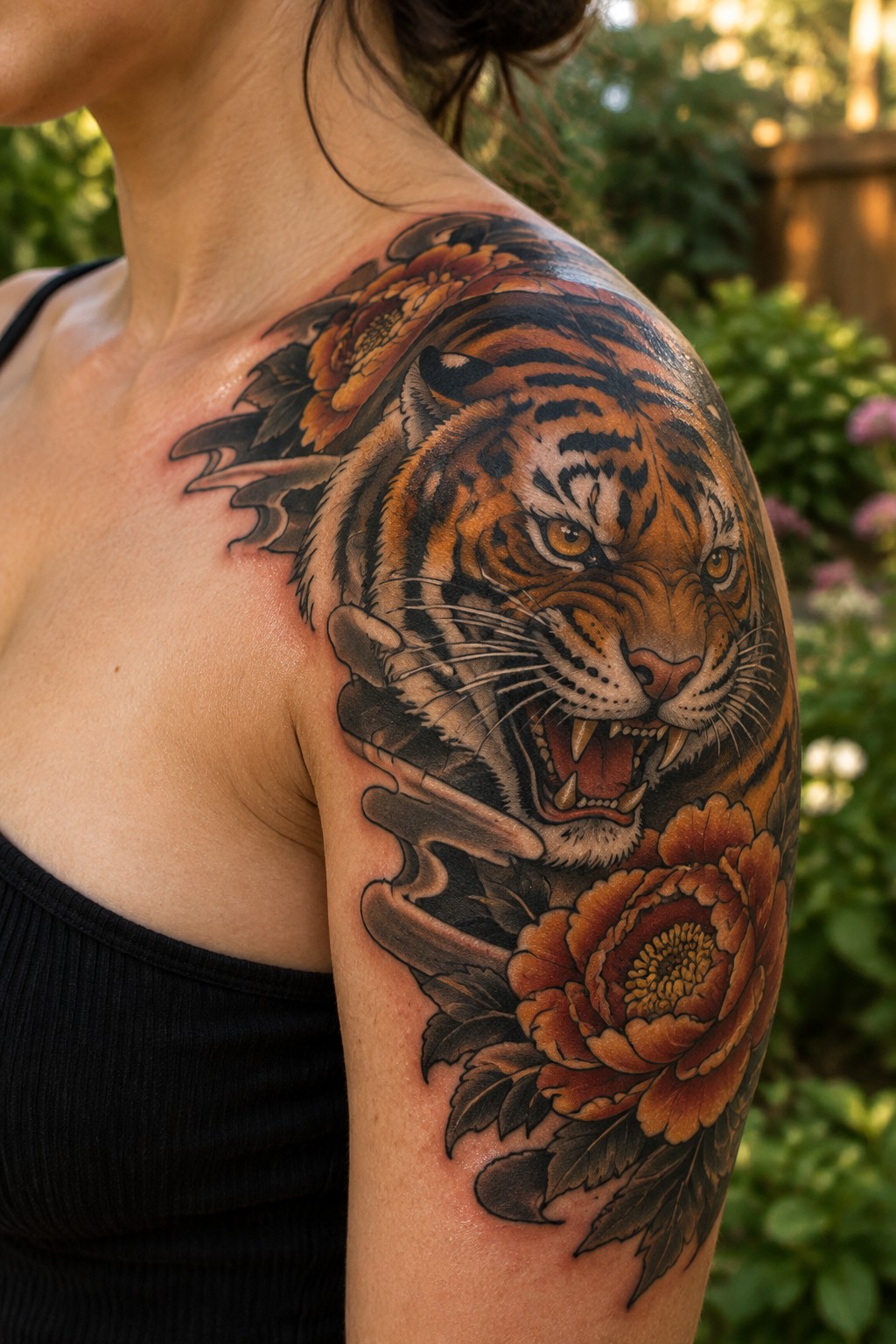
The shoulder gives the tiger head room to face straight out while the flowers sit lower on the arm. This keeps the main focus on the face without the design feeling cramped.
I like how the size stops the details from blurring together over time. It works for anyone who wants the tiger to move naturally with their shoulder.
Tiger tattoo on the ankle
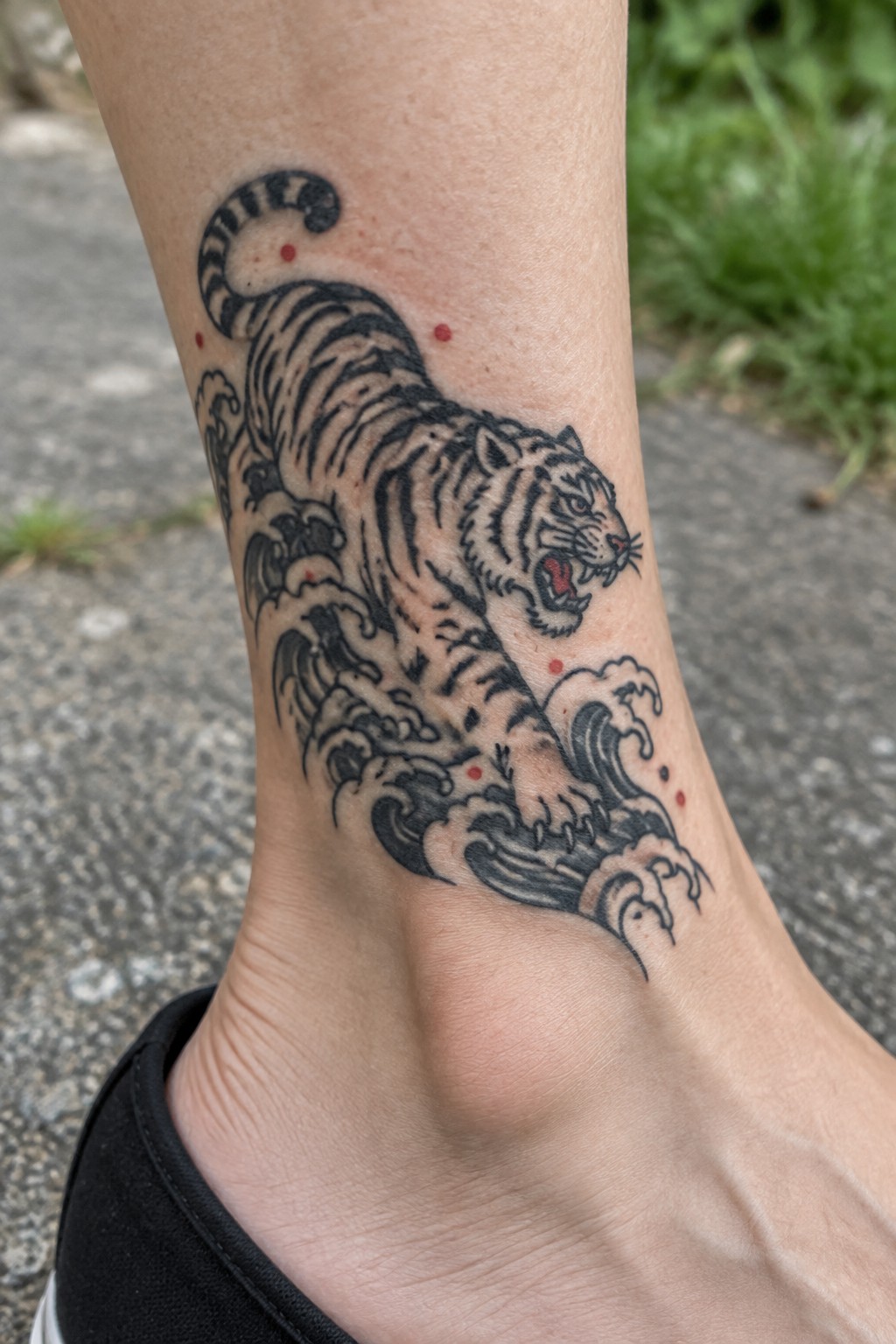
The tiger sits on the ankle and stretches upward along the lower leg. Its body follows the bone while waves fill the space below the paws. Red dots mark a few spots around the main lines.
The placement keeps the full design visible from most angles. I think the curve helps the tiger stay readable even on this smaller area.
Full sleeve tiger with flowers
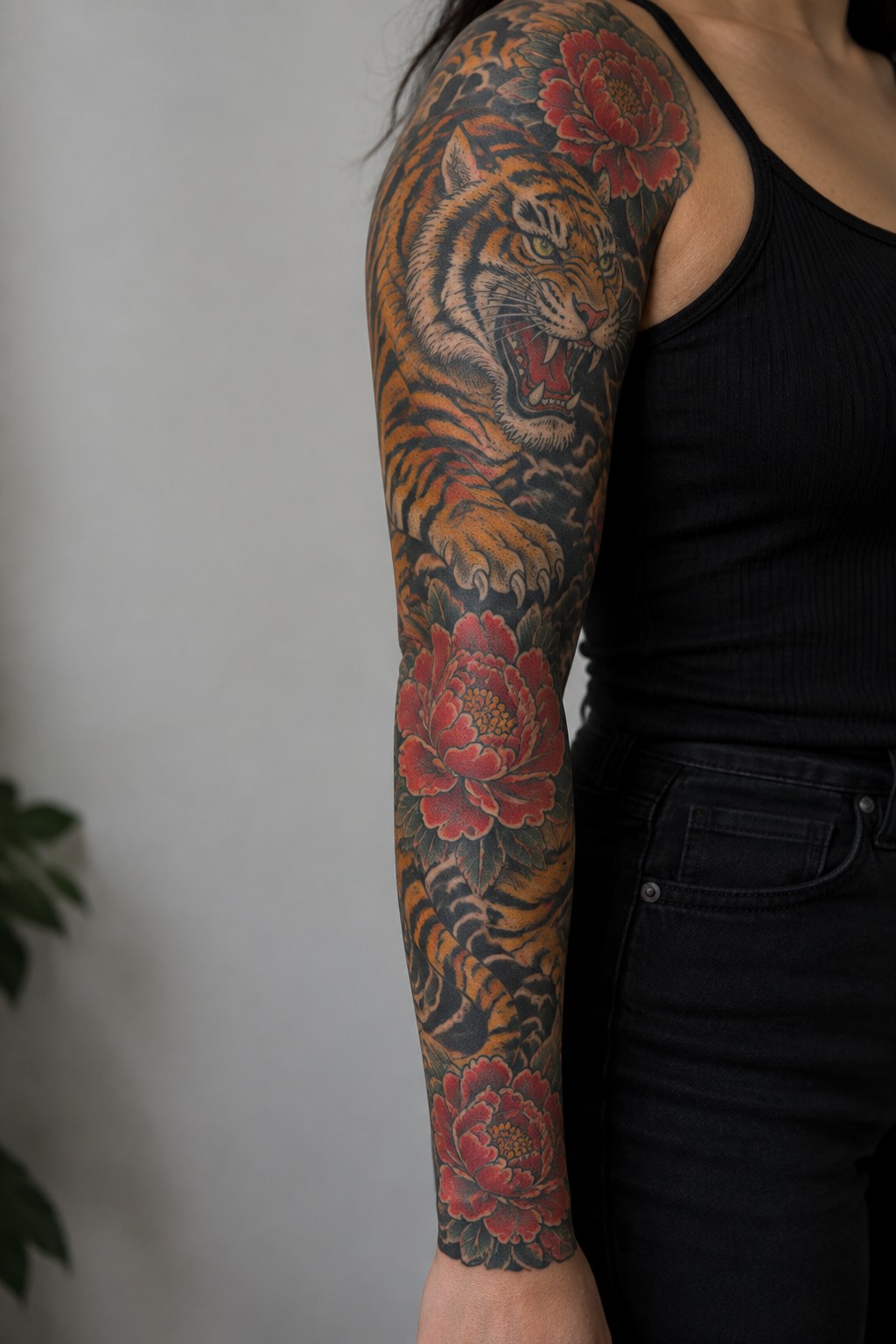
The tiger starts high on the shoulder and winds down the arm toward the wrist. Its body curves with the arm so the paws and stripes stay visible from the side. Red peonies sit at three spots along the way to break up the tiger and add color.
The sleeve length gives the tiger space to stretch without looking cramped. I think the wrap makes the design feel more alive than a single panel would.
Tiger tattoo stretches across the thigh
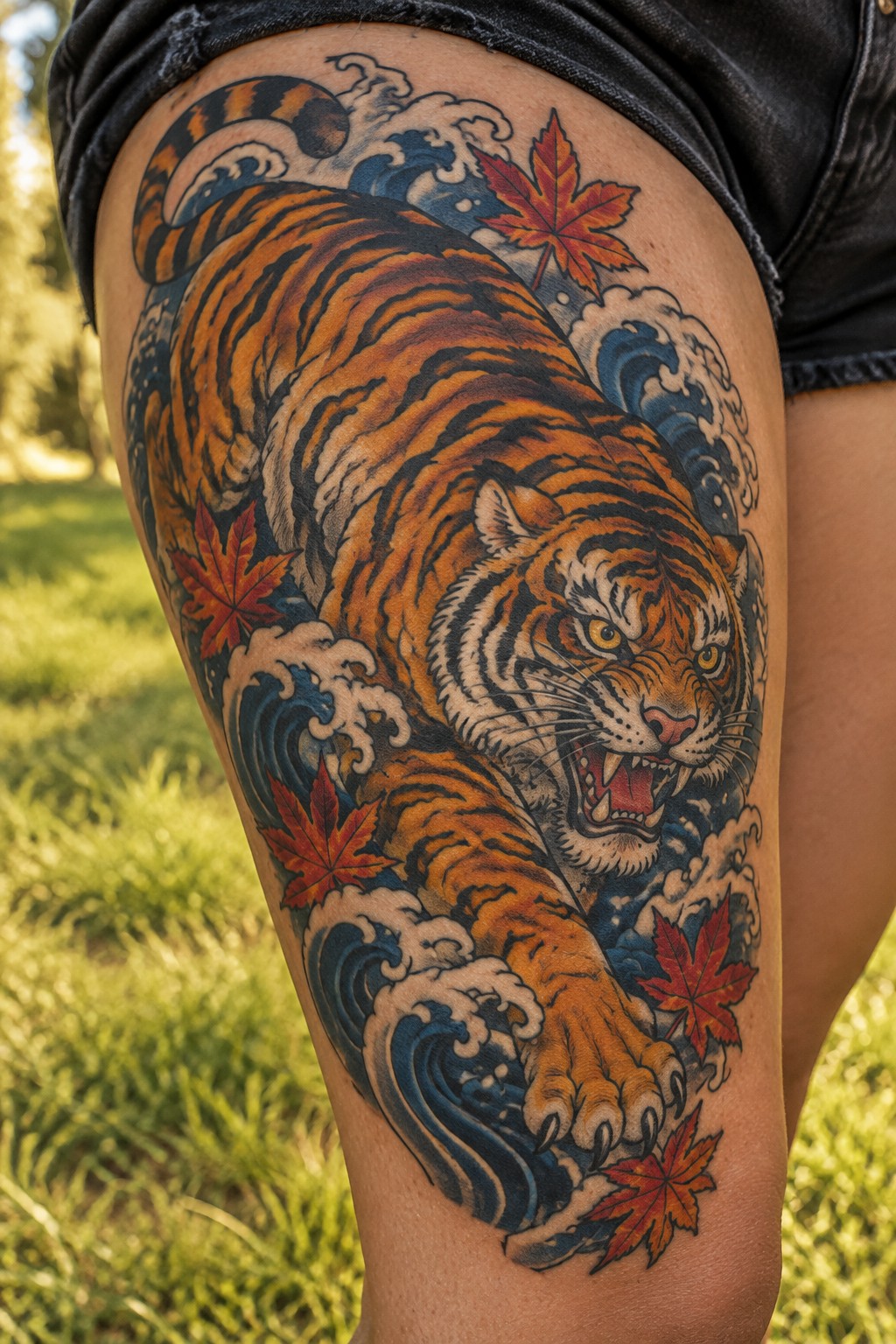
The thigh gives enough room for a tiger this large. The body extends from the hip area down toward the knee with the front leg reaching forward. Waves wrap around the paws and sides to keep the flow moving.
I think the scale helps the stripes and face stay clear without looking crammed. The maple leaves add just enough color to balance the blue water elements.
Tiger tattoo wraps around the upper arm
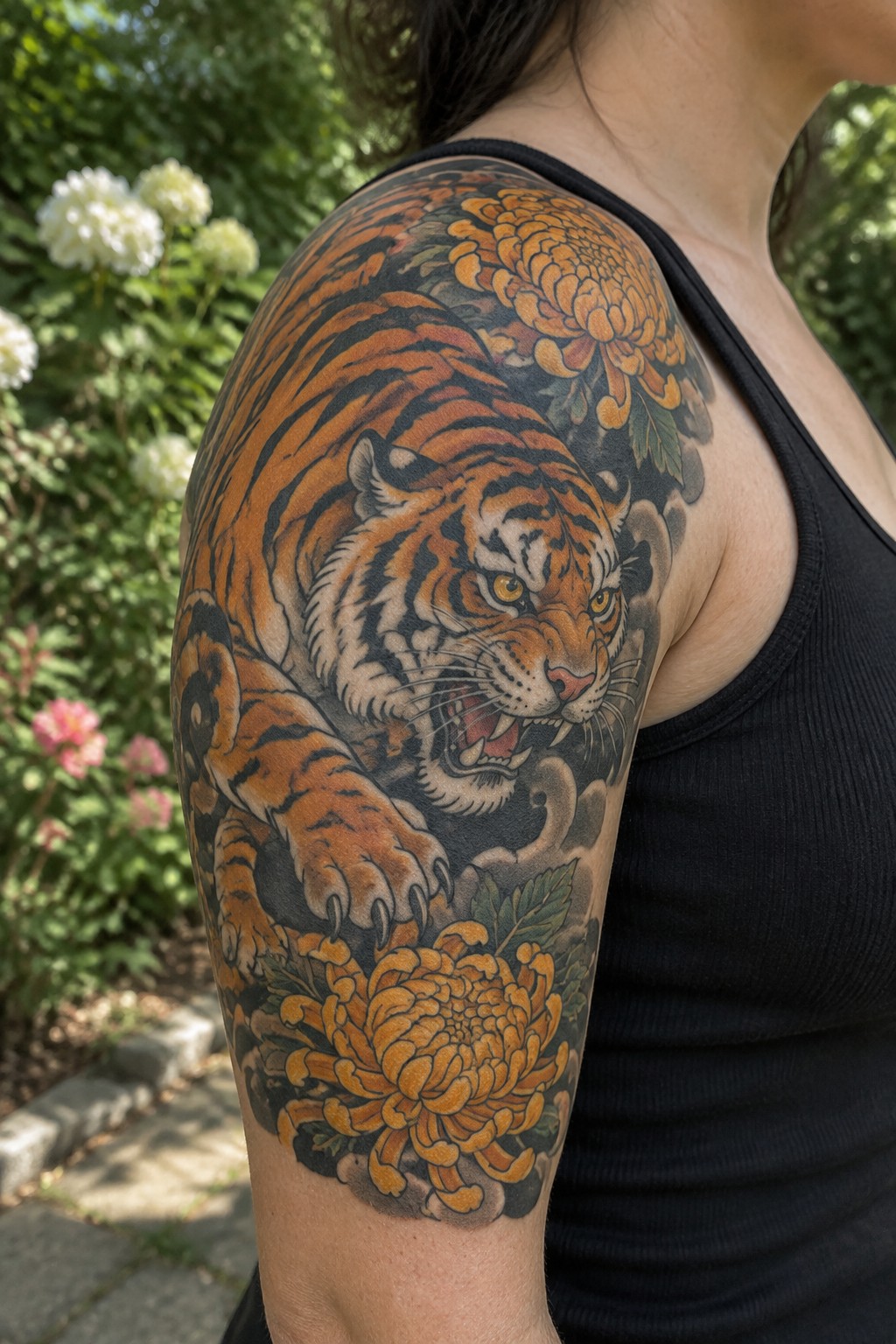
The tiger stretches from the shoulder down the arm with its front paws extended forward. Orange flowers sit above the head and below the claws to balance the stripes. Clouds fill gaps around the body in the usual Japanese way.
The placement lets the tiger look active as the arm moves. The size keeps the face and details sharp while the flowers stop the stripes from running together.
Tiger tattoo behind the ear
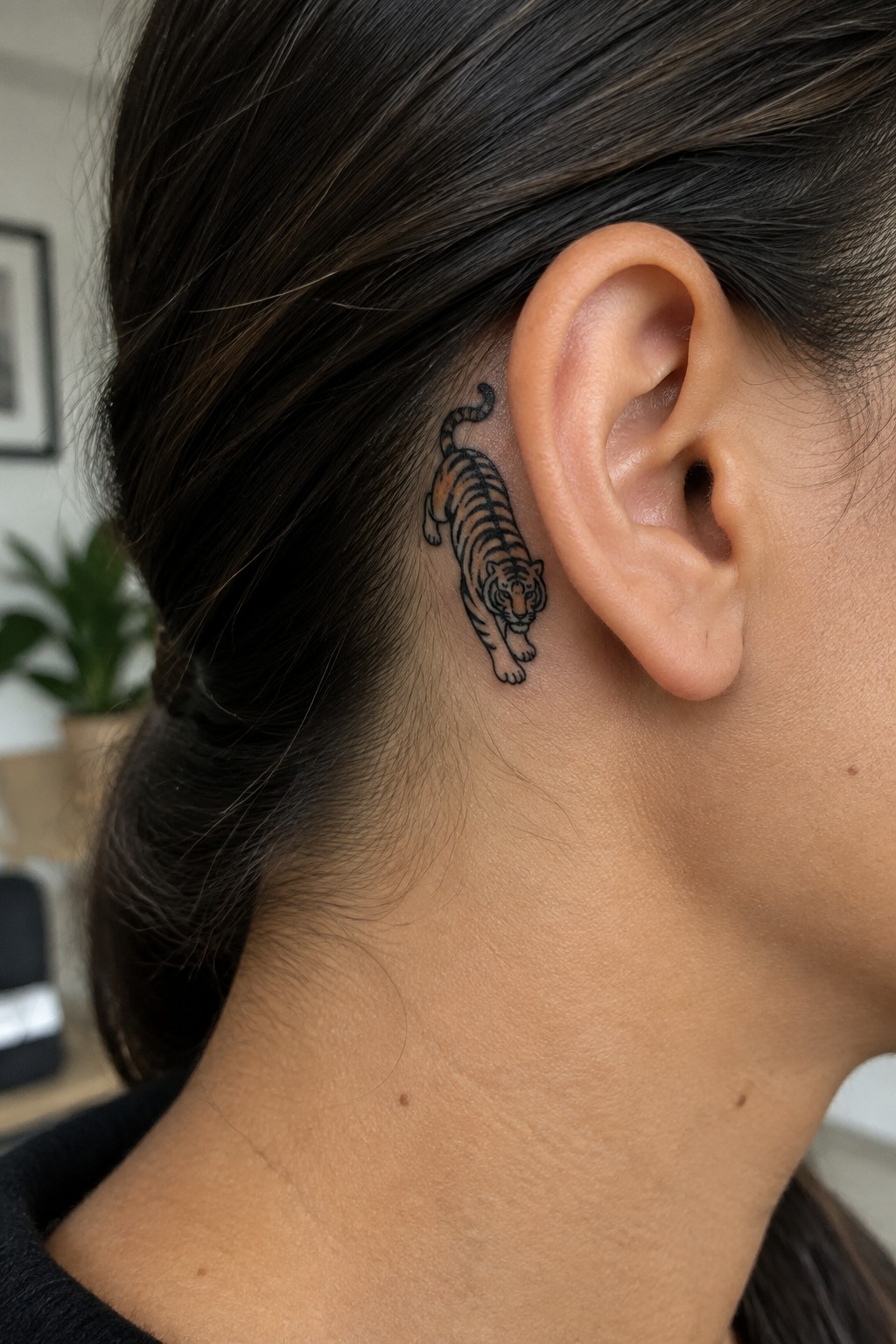
A tiger sits right behind the ear in a compact walking pose. The design uses thin black lines with light orange shading on the body. It stays small enough to fit the space without crowding the area.
I think the placement works because the tiger stays partly hidden when hair falls forward. The simple lines help it read clearly even at this size.
A snake tattoo covers the full back
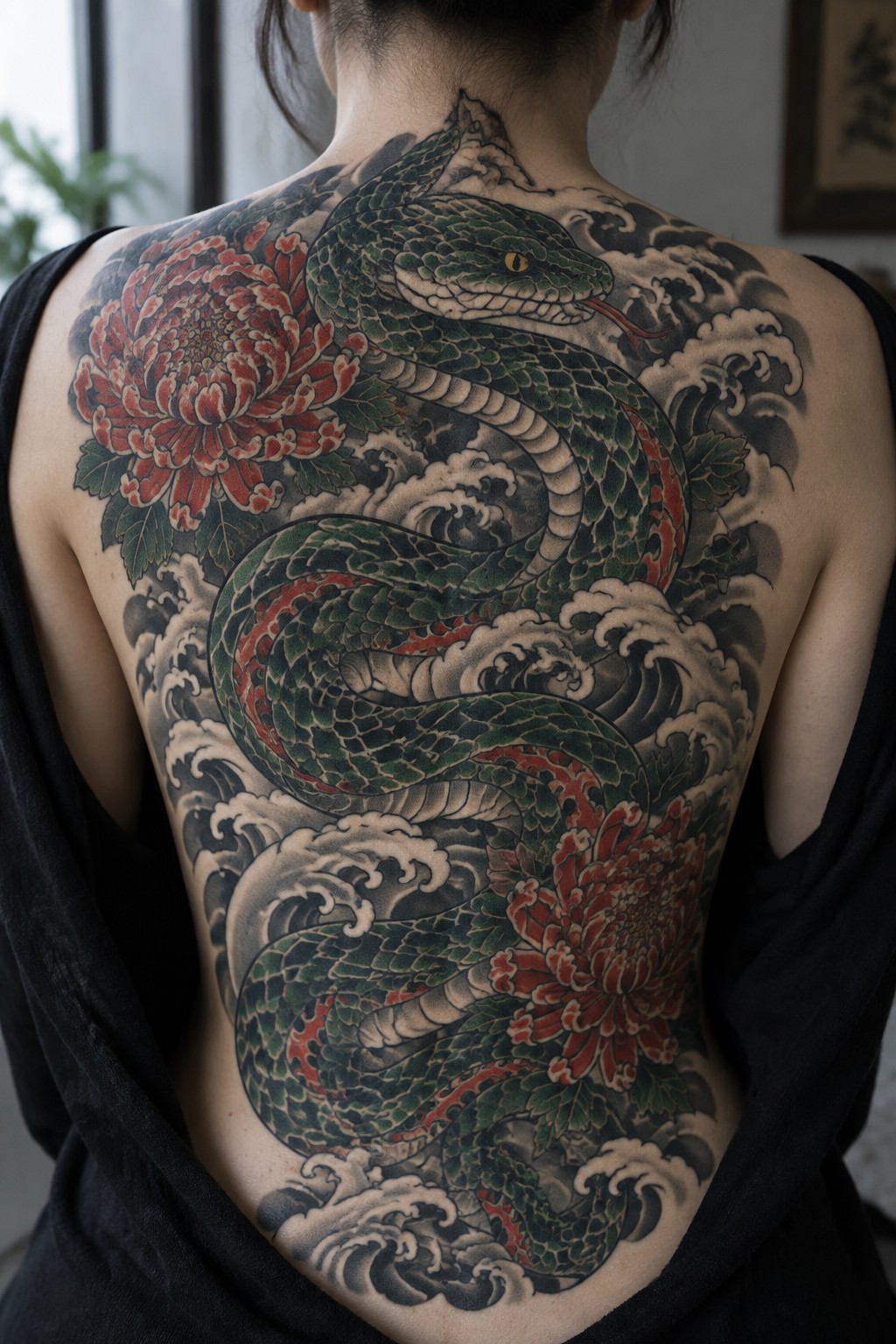
The design runs from the neck down to the waist. A green snake twists through waves and red flowers. This spread lets the coils show their full shape.
The back gives the snake room to curve without feeling tight. I think the length keeps the pattern easy to follow from top to bottom.
A snake winds down the forearm
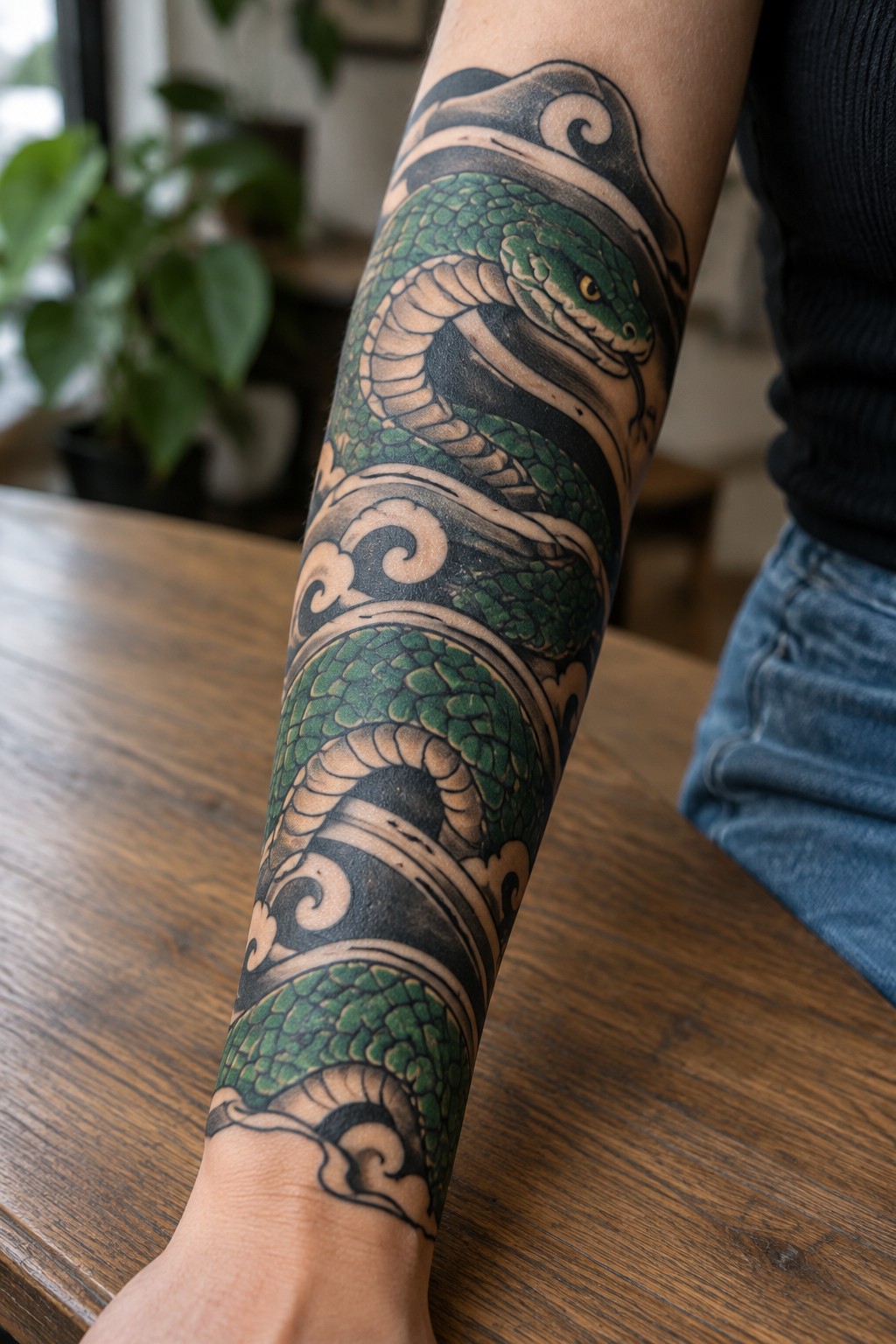
The forearm gives a long surface that lets the snake coil several times without crowding. Green scales stand out on the body while black clouds fill the negative space around it.
I picked this layout because the curves follow the arm shape and stay clear when the elbow bends. The size keeps the head and tail details easy to read from different angles.
Snake tattoo on the inner wrist
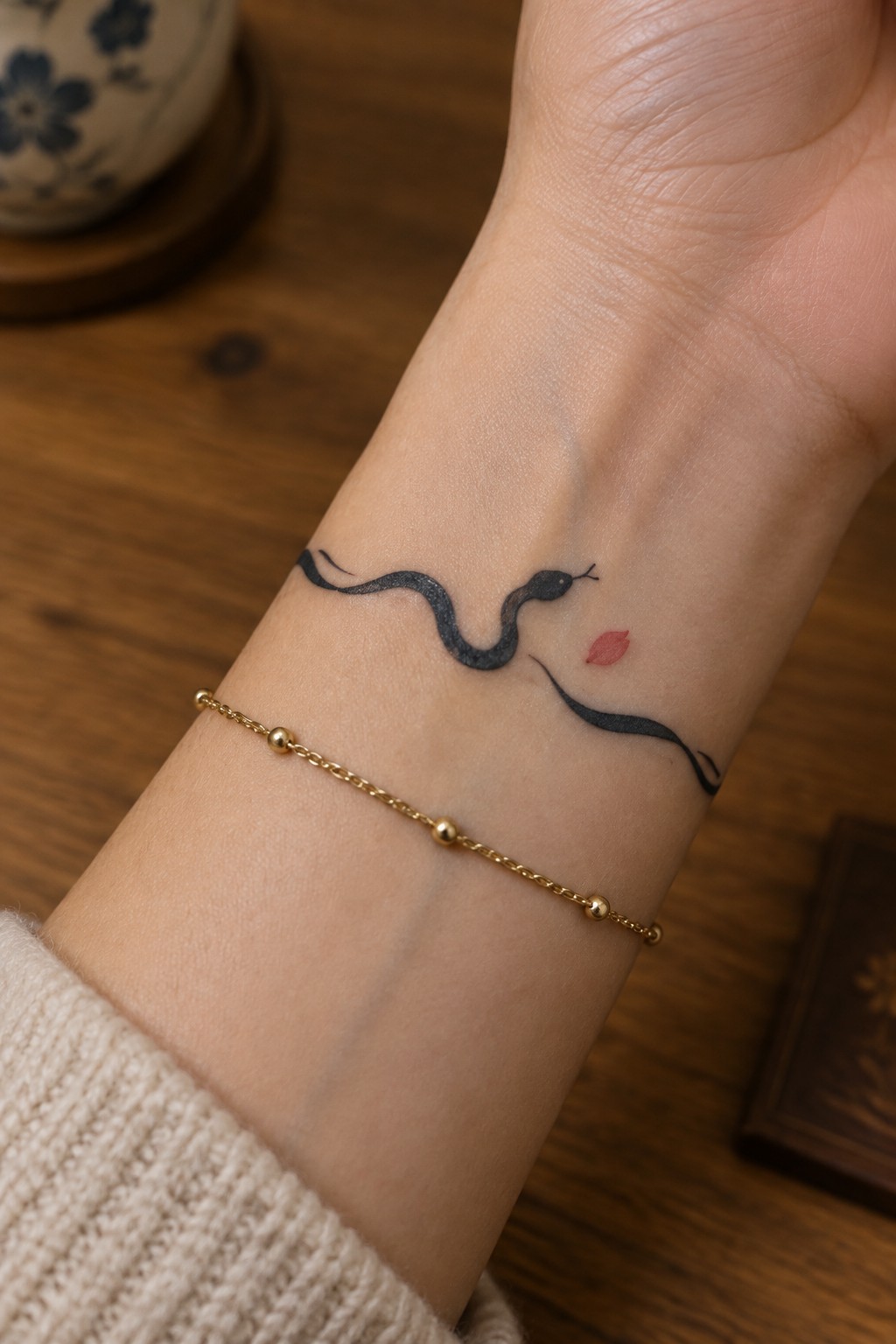
The snake curves across the inner wrist in a simple flowing line. Its body stays thin and the head faces outward with a small red leaf placed near the mouth. This placement lets the design sit naturally along the arm without crowding the area.
I think the thin lines work well here because they keep the tattoo light on a spot that sees a lot of movement. The size also leaves space to add other pieces around it later.
Snake tattoo on the thigh
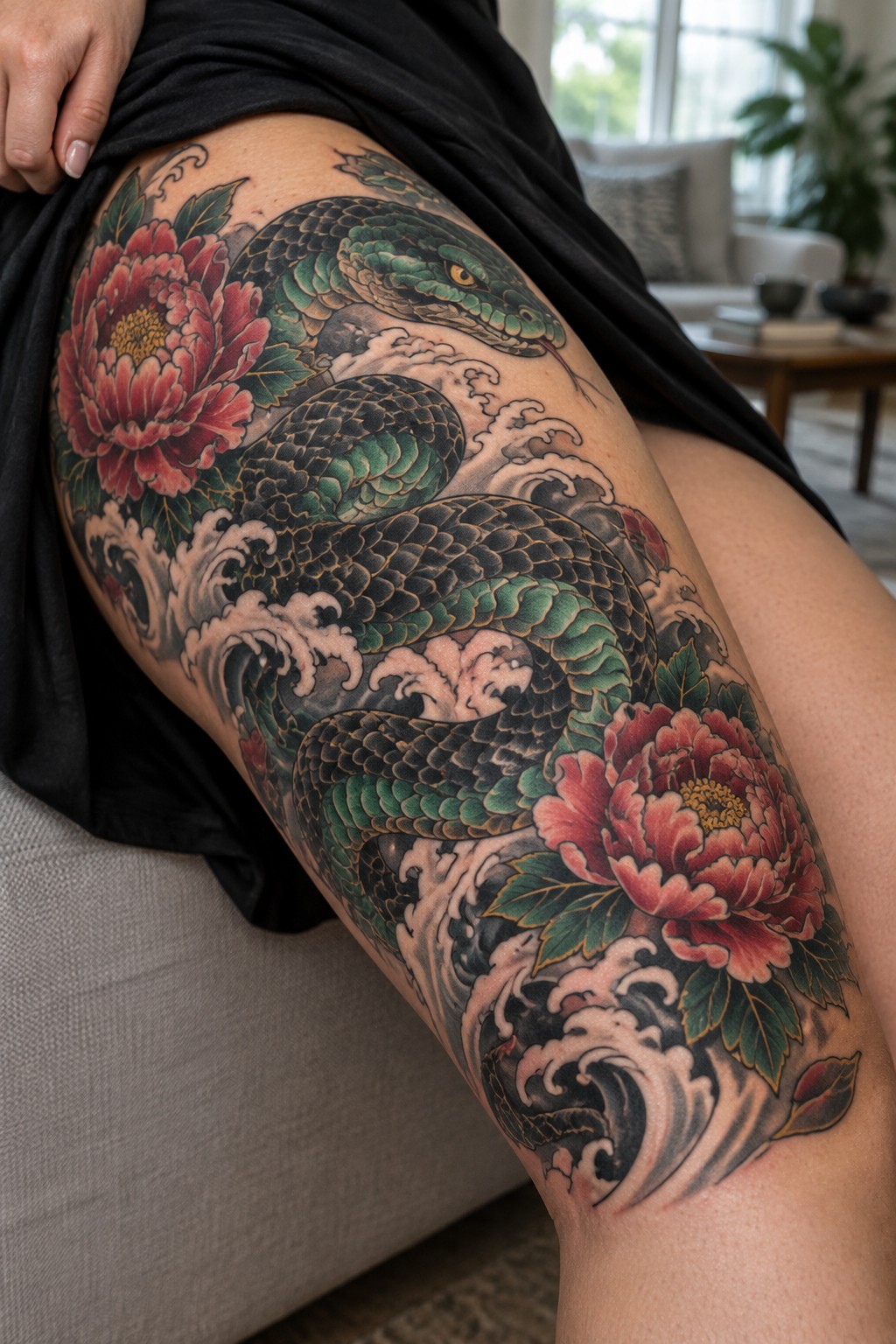
The thigh gives a snake design like this enough room to coil and wrap without feeling cramped. Waves and peonies sit between the loops in traditional japanese colors and linework. This spot lets the snake follow the natural curve of the leg as it moves.
The size helps the scales stay readable even after the skin stretches. I think the placement works because it turns the snake into part of how the leg looks rather than just sitting on top of it.
A snake tattoo wraps down the side torso
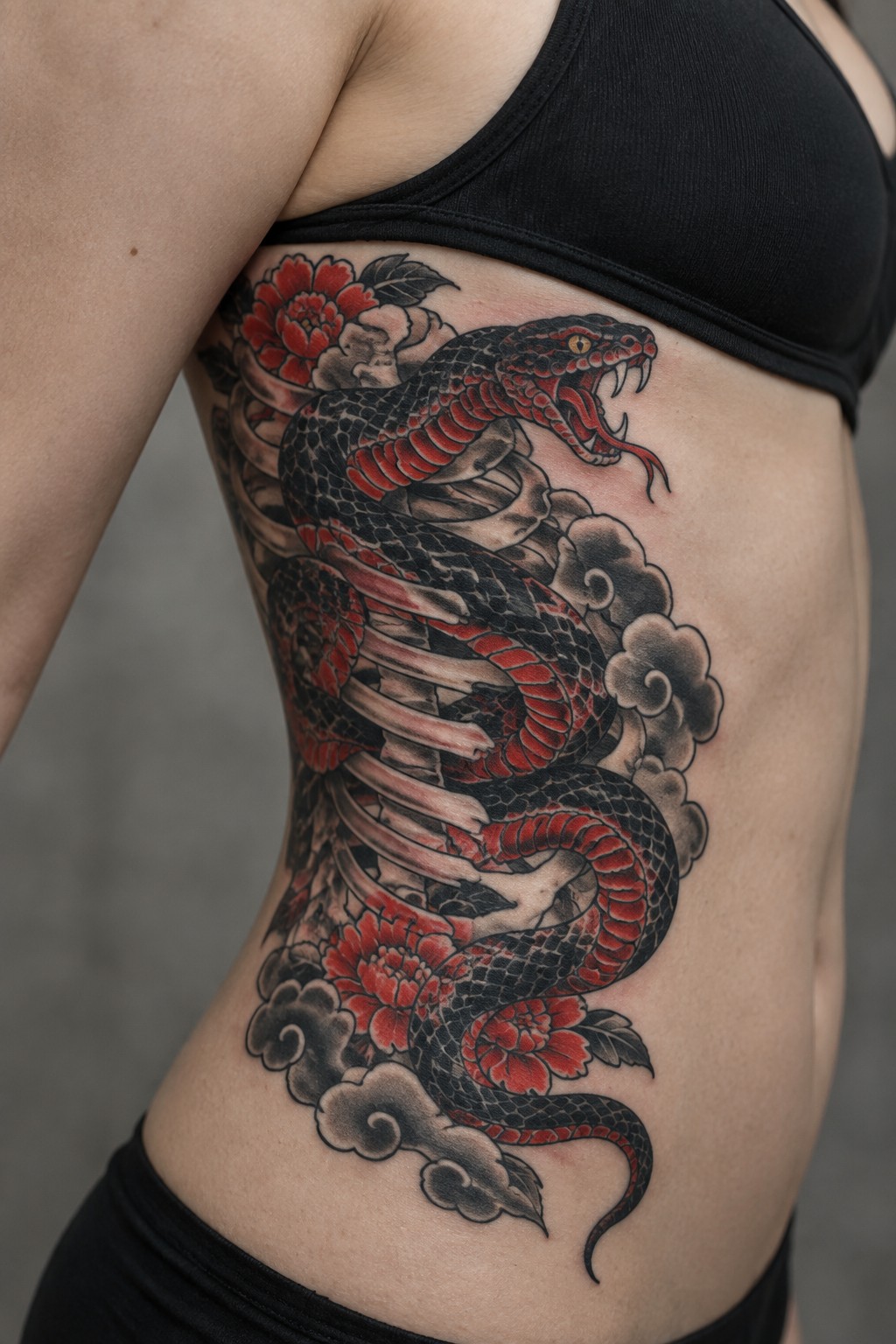
The snake follows the curve of the ribs from under the arm down toward the hip. Its body coils in a steady line that matches the shape of the torso. Red peonies sit at the top and bottom to balance the black scales.
I think this placement keeps the design readable even when the person moves. The open mouth and red accents give it a clear focal point without crowding the skin.
Snake winds around the ankle with cherry blossoms
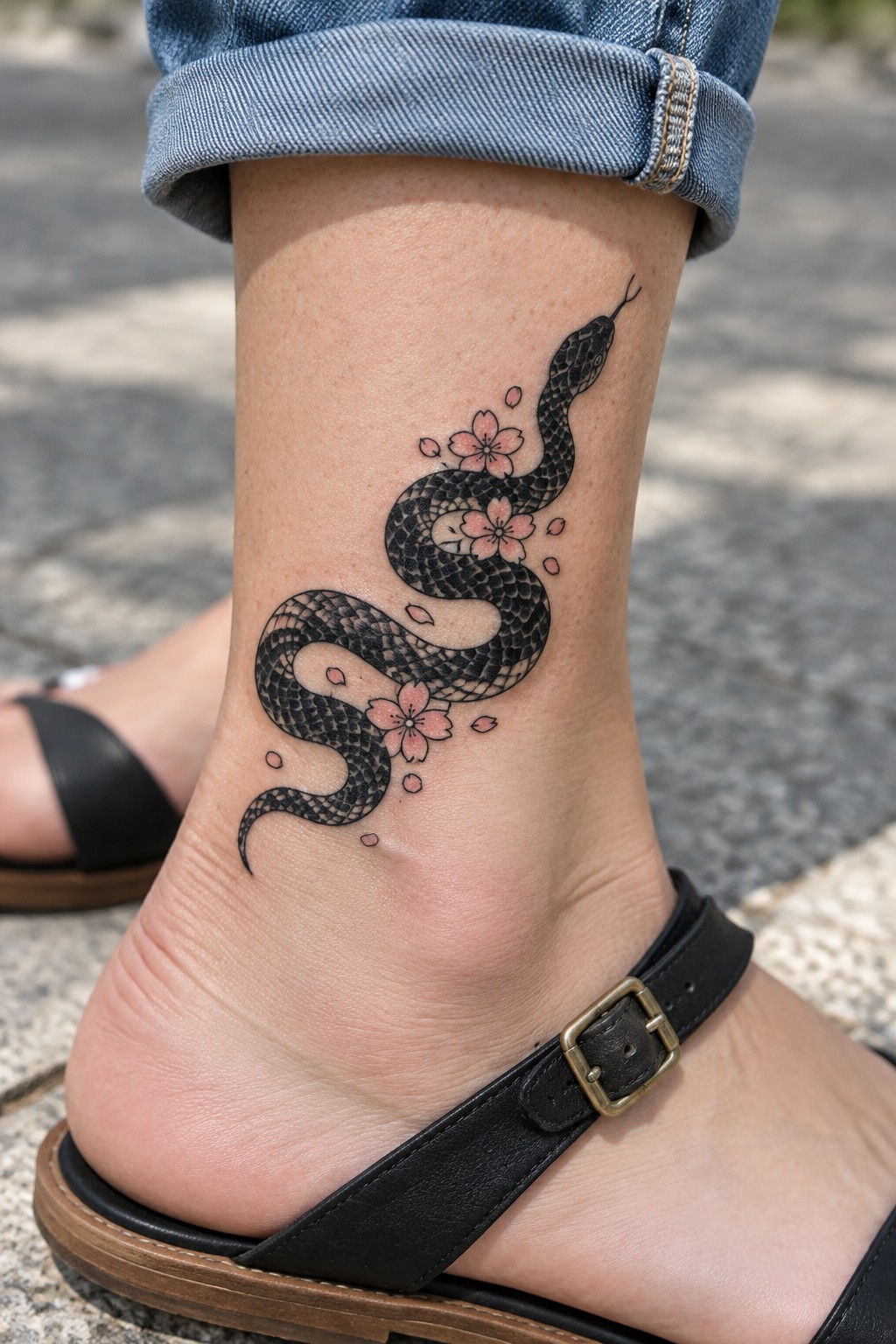
The snake starts low near the ankle bone and coils upward along the side of the foot. Black scales make up the body while pink cherry blossoms sit at a few points along the curve. A few loose petals add a light touch without crowding the space.
I think the ankle works here because the shape lets the snake twist without forcing extra lines. The small scale also keeps the whole piece readable even when the foot moves.
Koi fish tattoo on the lower leg
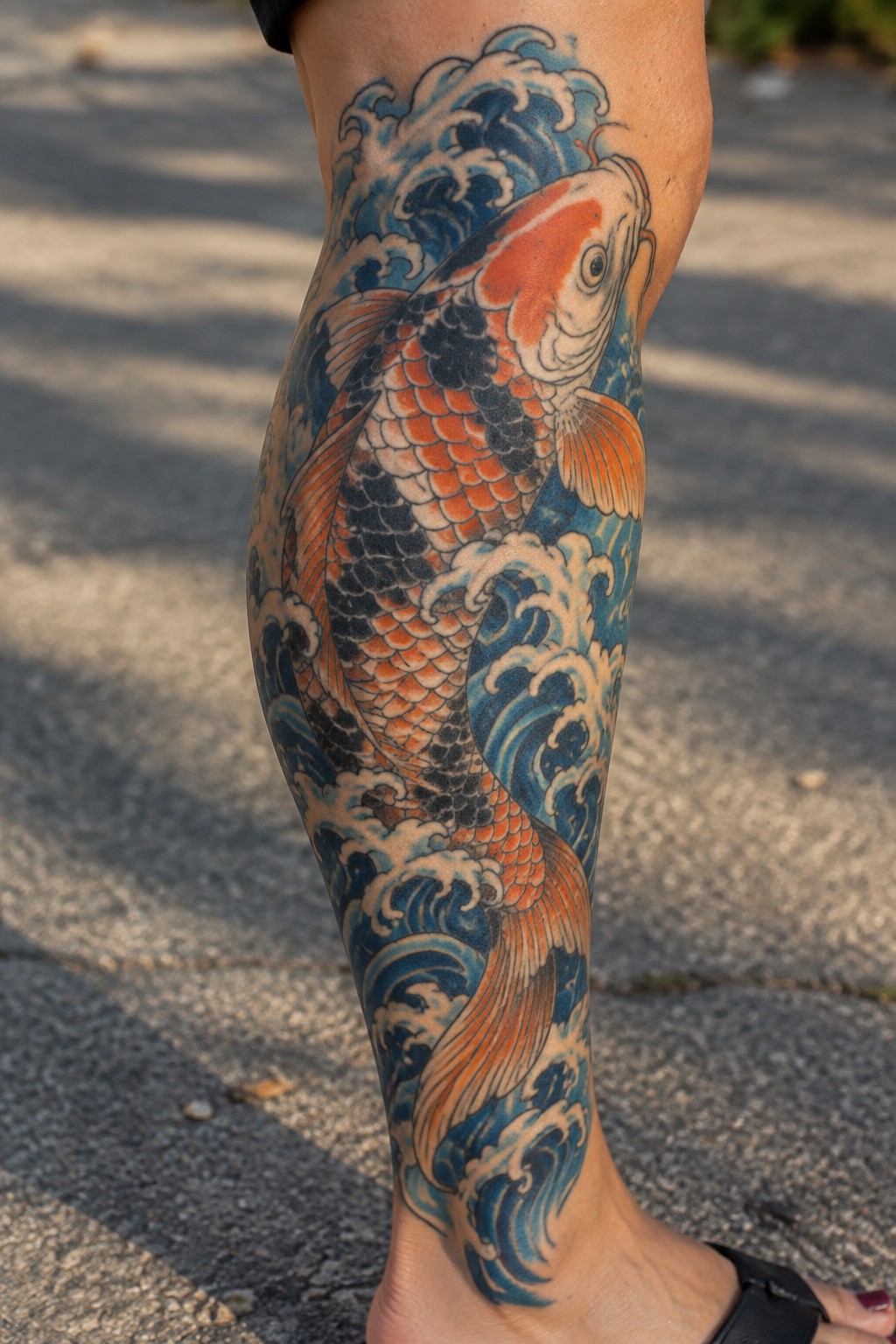
The tattoo runs down the side of the calf and into the ankle area. A koi fish swims through layered waves that follow the leg’s length. The design uses the space to show the full body of the fish without crowding.
I think this placement works because it lets the waves move naturally with the shape of the leg. The scale keeps the scales and water details clear from a normal viewing distance.
Tiger and koi cover the full back
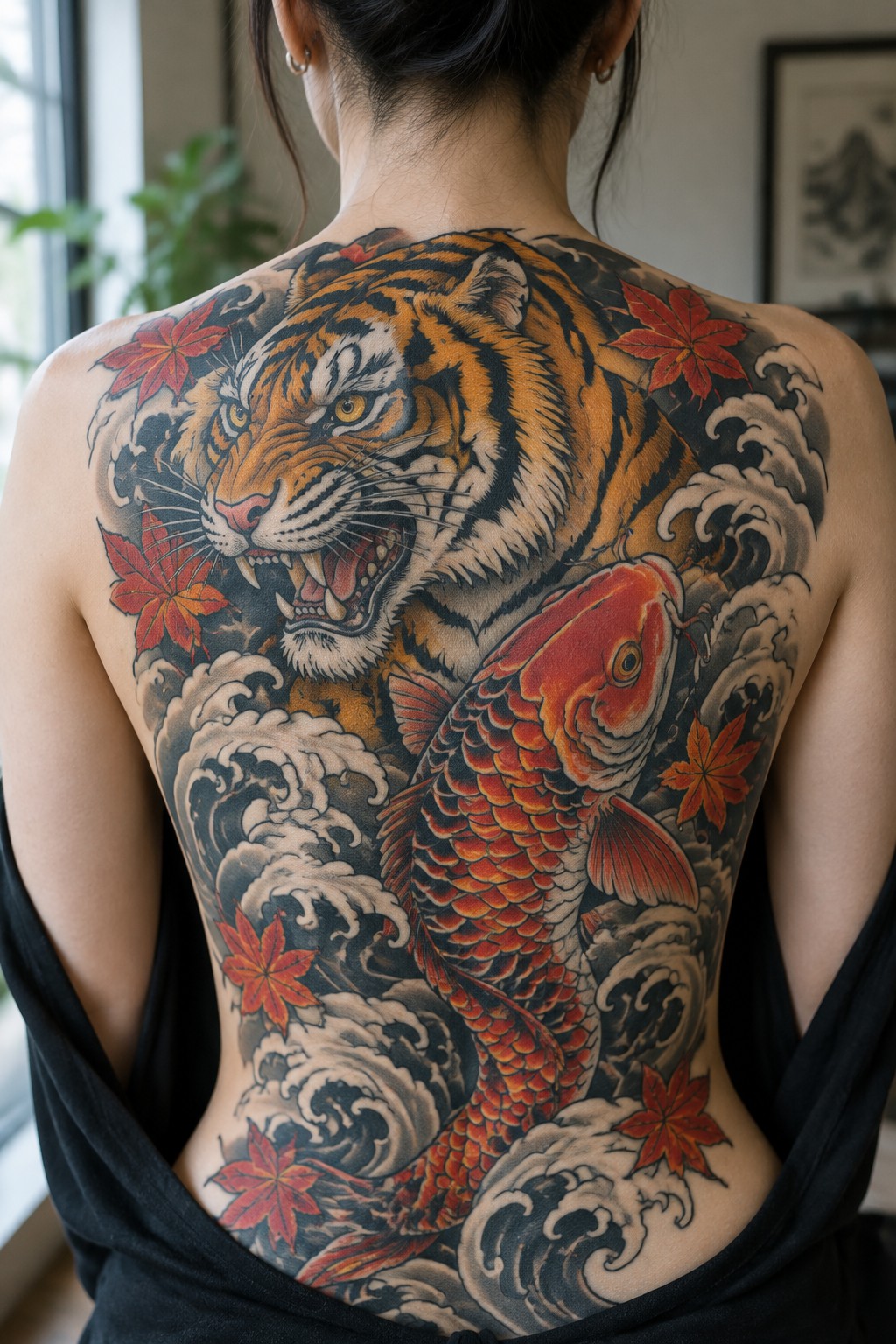
The tiger head sits high on the upper back while the koi fish curves downward through the waves. The waves run across the middle and lower back to link the two animals together. Red maple leaves break up the space around the edges.
This placement gives the design room to stretch without feeling cramped. I think the back works here because it lets the tiger and koi share the same scene at a scale that still reads clearly.
Koi fish on the wrist
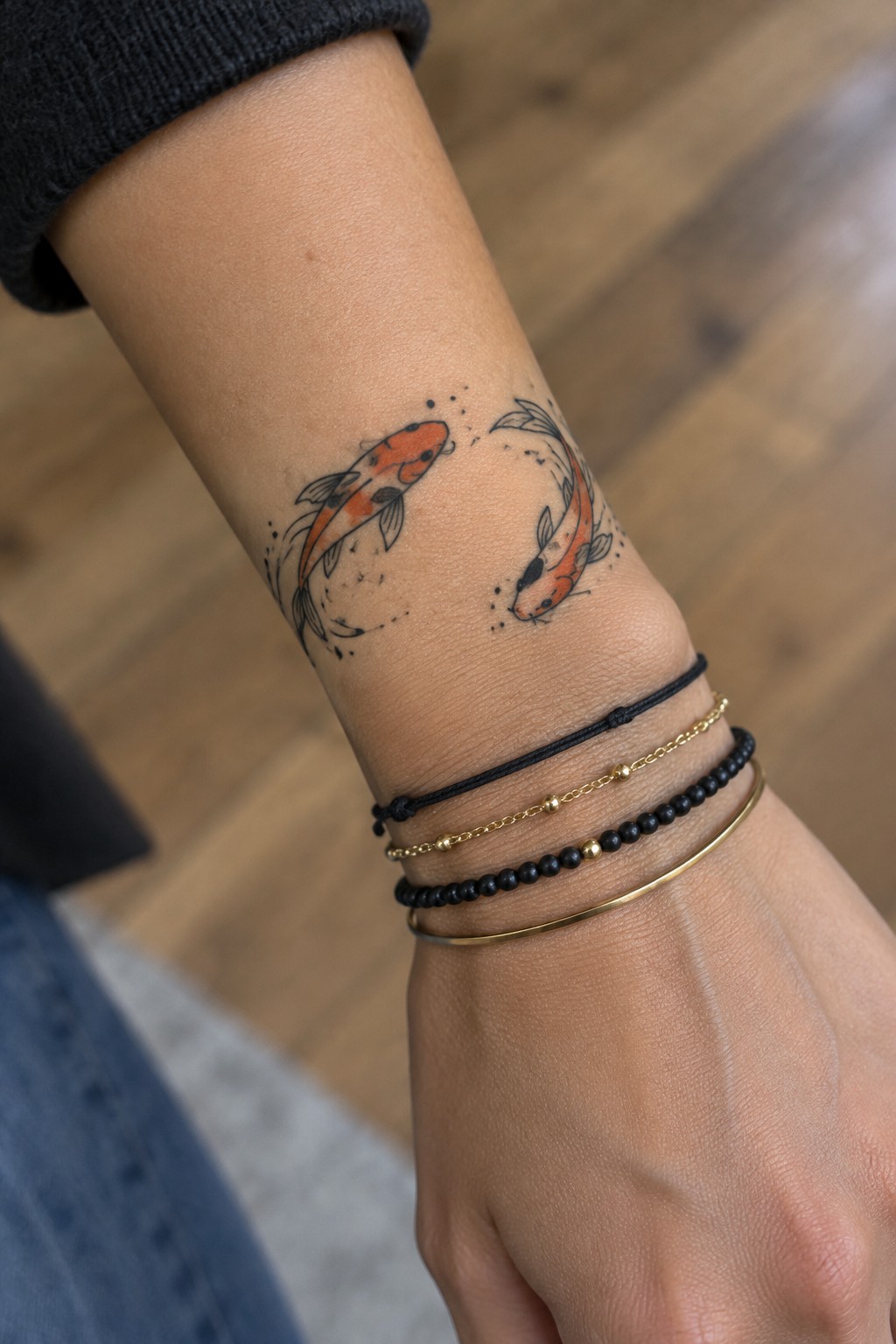
The two koi sit on the inner forearm right above the wrist bone. They face each other in a loose curve with basic orange fills and black lines. Small dots add some motion around them without extra detail.
I think the size fits the area well so the shapes stay easy to read. The wrist spot also lets the design sit beside other jewelry without competing for space.
Tiger and koi cover the upper thigh in traditional Japanese style
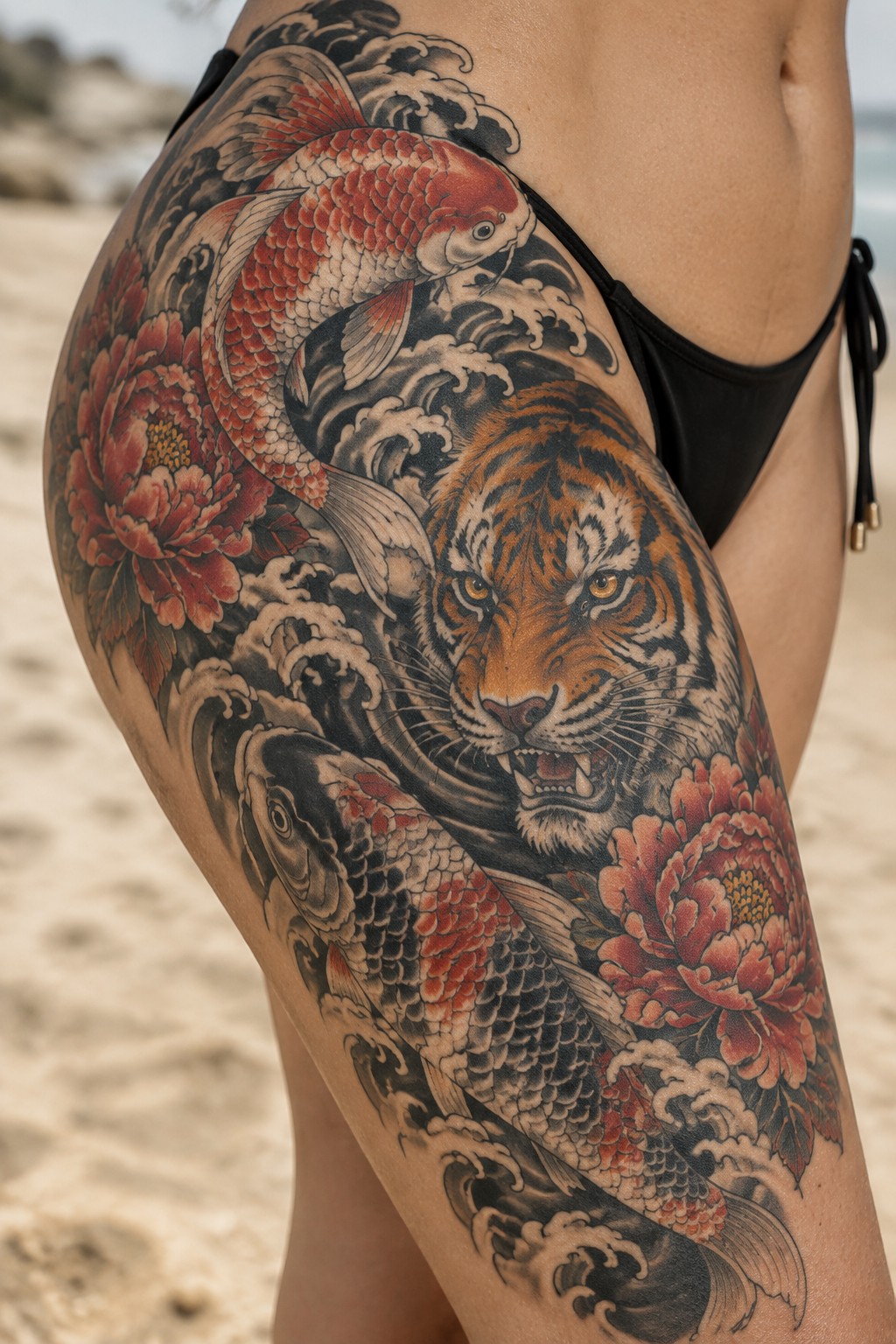
The tattoo wraps across the upper thigh and hip. A tiger head sits in the center while two koi fish curve around it with peonies and waves filling the gaps. The placement lets the main elements flow with the leg shape.
I chose this layout because the thigh gives enough room for the tiger to stay front and center without the fish getting lost. The waves tie everything together and keep the design moving downward. It feels like a solid choice when someone wants several Japanese motifs in one connected piece.
Koi fish wrap the upper arm
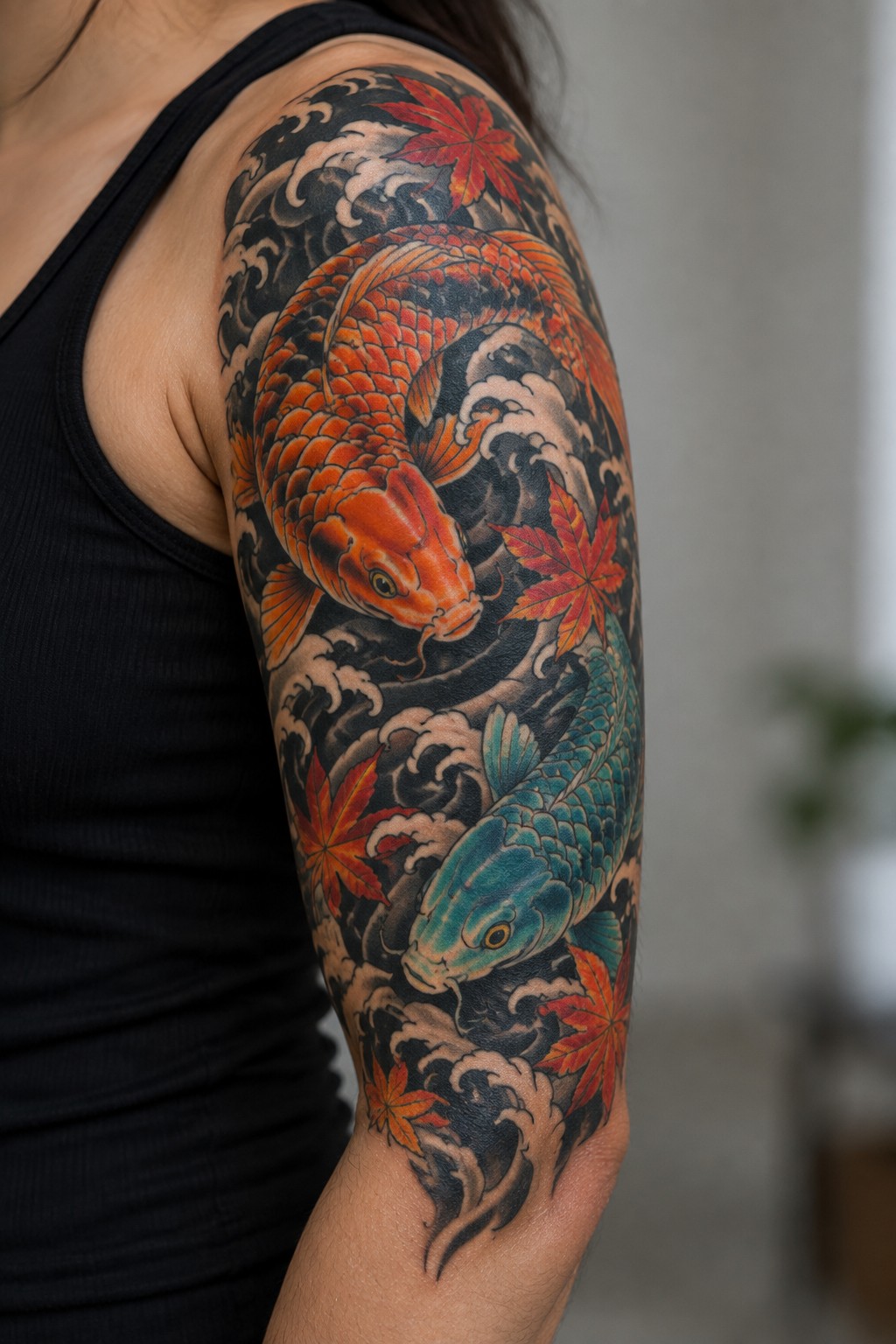
The upper arm placement lets the fish follow the curve of the muscle from shoulder to elbow. Waves fill the spaces between them and keep the design connected as it moves down the arm.
This layout gives both fish room to stay clear without overlapping too much. I think the size works because the details hold up when the arm bends or extends.
Koi fish with chrysanthemums on the upper back
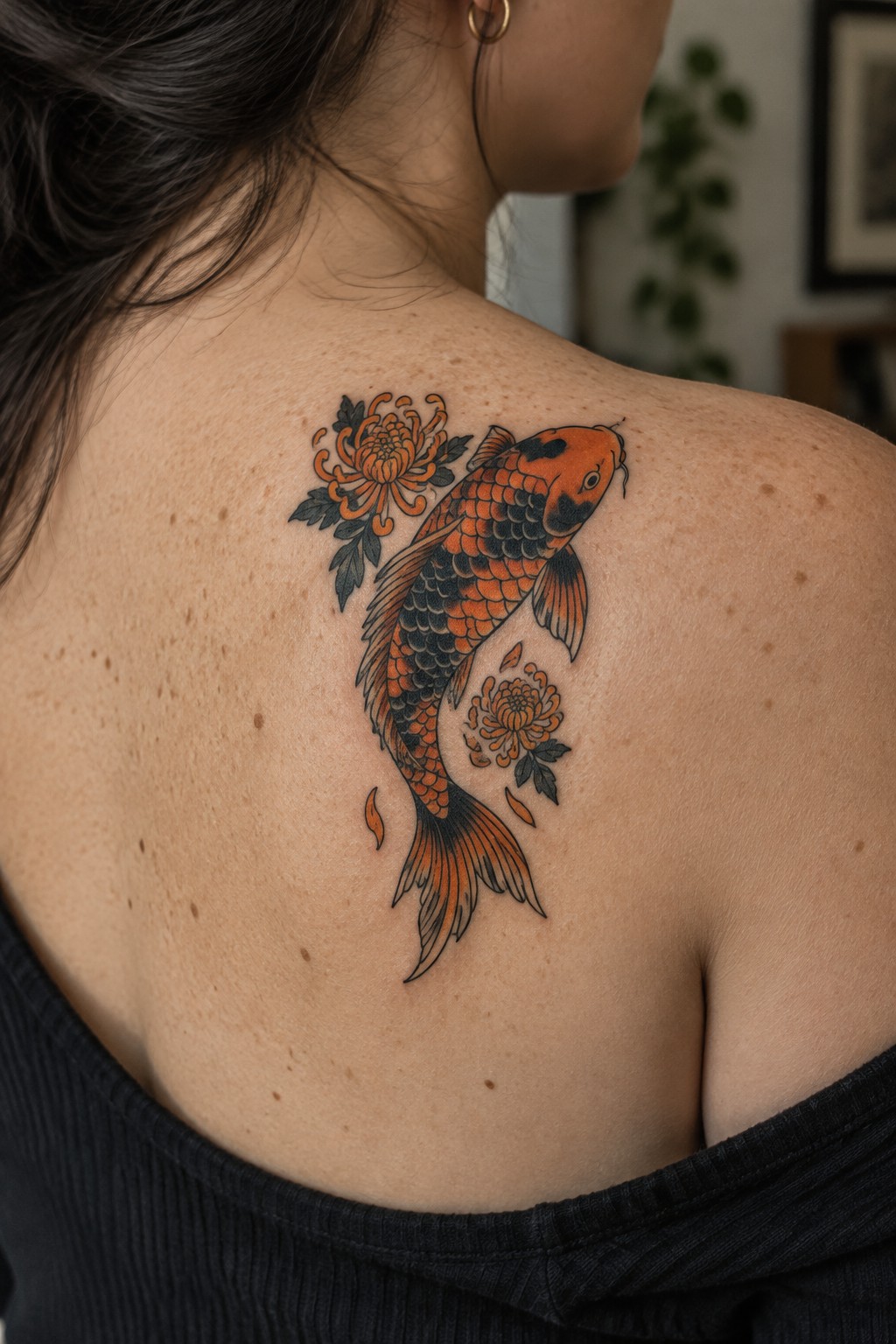
The upper back gives a koi fish room to swim downward in a natural curve. The orange scales and black accents stand out clearly on the skin. Two chrysanthemum flowers sit beside the fish to balance the layout.
I think this placement works because the fish can extend without looking cramped near the shoulder. The traditional style keeps the details sharp even with the slight bend in the body.
Snake tattoo down the back
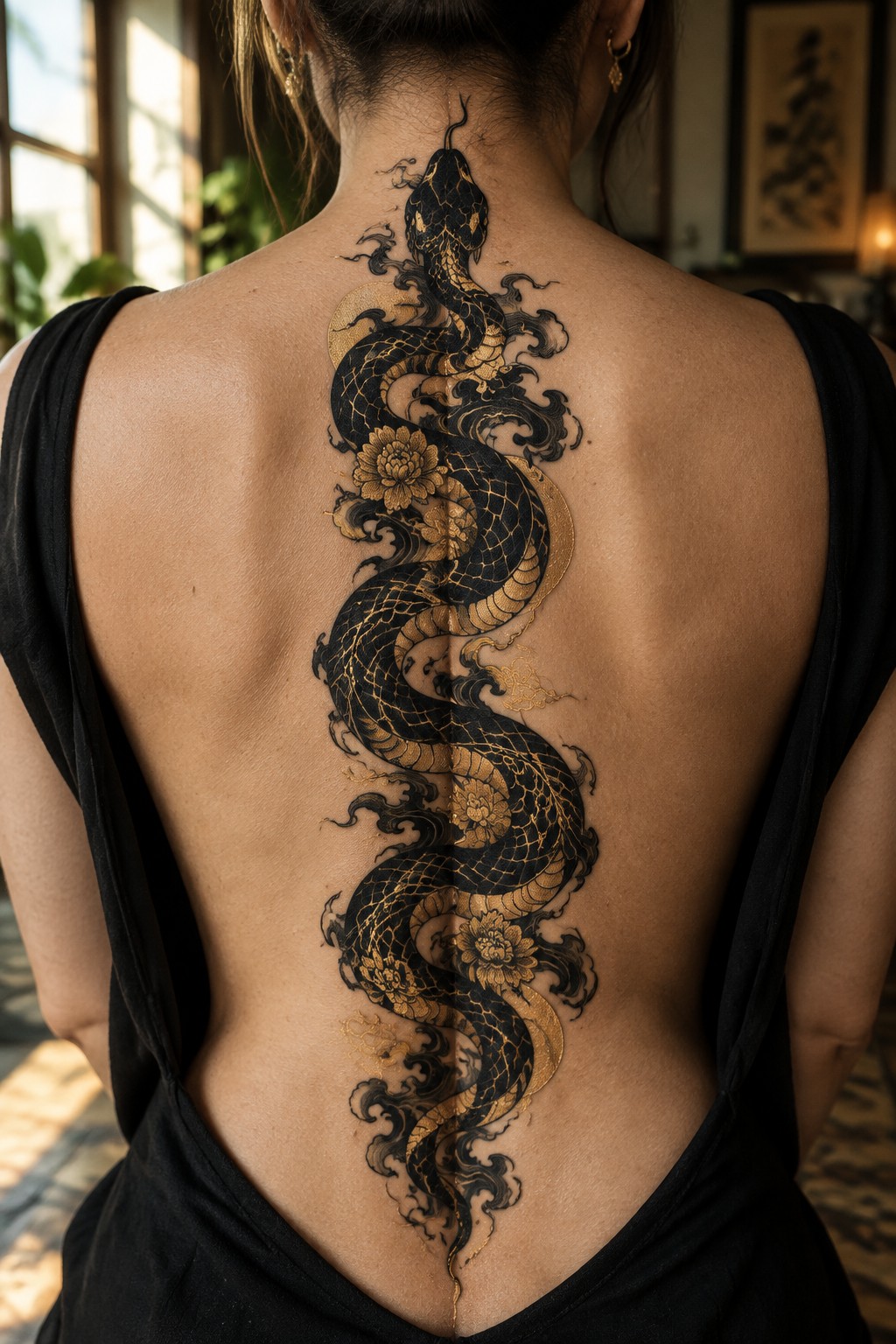
The snake starts at the neck and winds straight down the spine to the lower back. This placement lets the coils follow the natural shape of the body without forcing the lines. Black ink with gold highlights keeps the scales clear even at this size.
I think the vertical flow works because it turns the full back into one continuous shape. The added flowers sit between the curves and stop the design from looking too tight.
Snake tattoo covers the upper back and shoulder
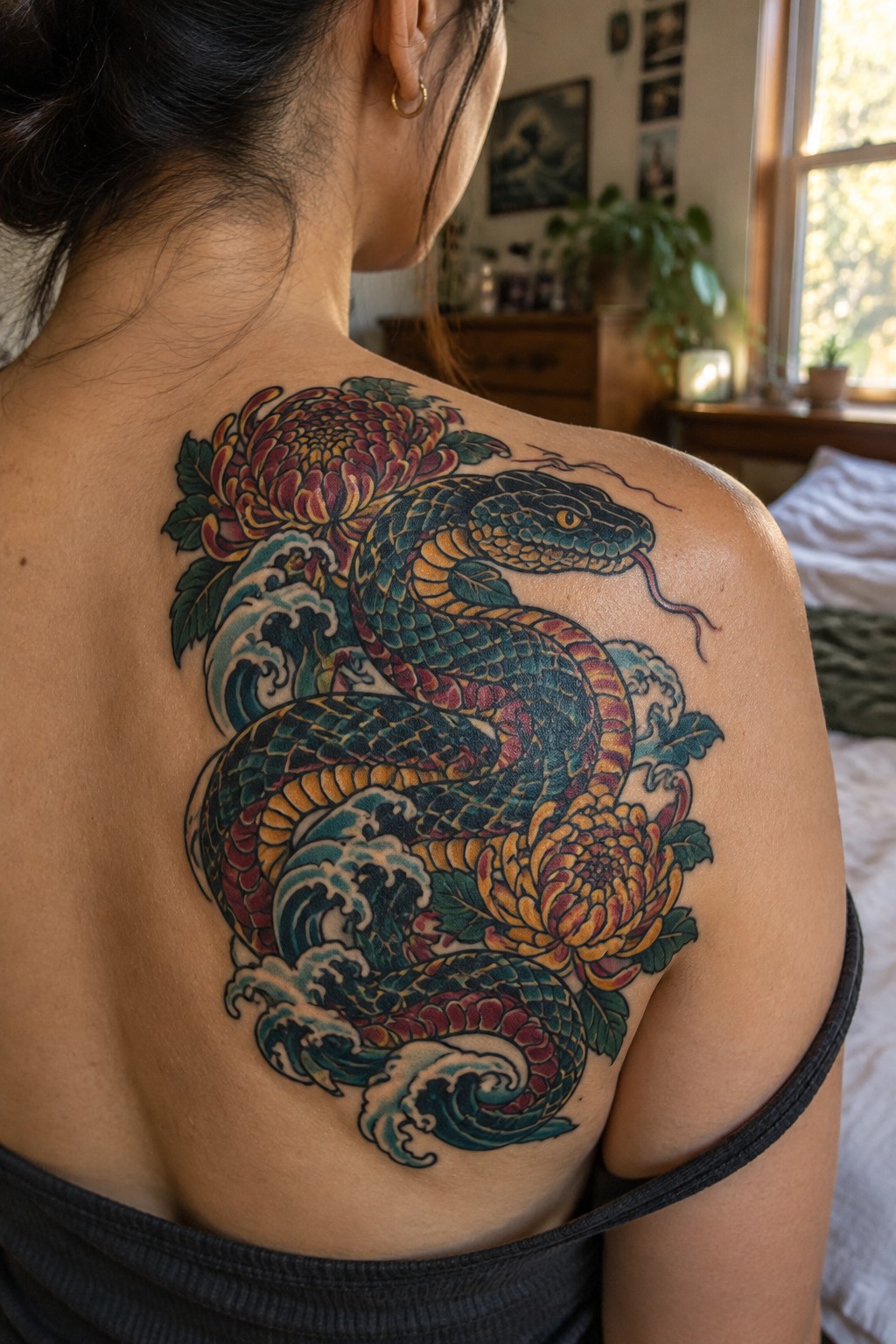
A large snake coils across the upper back and wraps onto the shoulder. It moves through chrysanthemum flowers and waves in a classic Japanese style. The placement gives the design room to curve without crowding the lines.
This spot works because the shoulder lets the snake head face outward while the body stays supported by the back. I would pick it for someone who wants a single strong piece that still feels balanced.
Tiger runs down the forearm
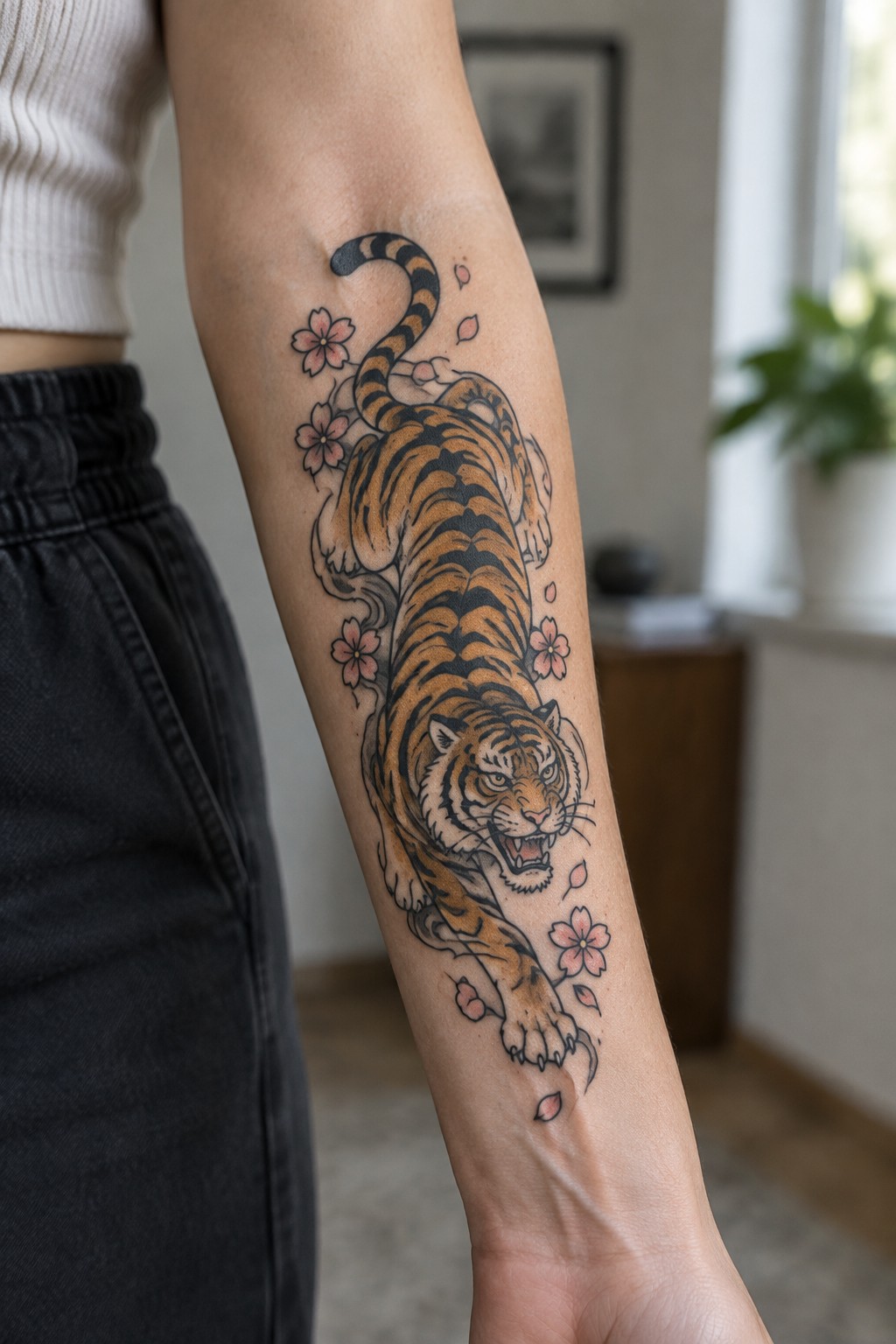
The tiger stretches along the forearm with its head near the wrist and tail higher up. Cherry blossoms sit around the edges to balance the space. The body follows the arm’s natural line so the full figure fits without feeling cramped.
I think the vertical layout keeps the tiger’s motion clear from most angles.
The flowers stop the design from looking too solid in one area.
Frequently Asked Questions
What meanings do tigers, snakes, and koi hold in Japanese tattoo traditions? Tigers symbolize strength, courage, and protection against evil, making them a popular choice for bold designs that convey personal power. Snakes represent wisdom, renewal, and guardianship, often shown coiled to highlight transformation. Koi fish stand for perseverance, good fortune, and overcoming challenges, with their flowing forms adding movement and positivity to the artwork.
Where on the body are these large animal tattoos most commonly placed for women? Popular spots include the thigh, upper arm, back, or ribcage because they offer enough space for detailed elements like scales or stripes. The shoulder and calf also work well for slightly smaller versions that still maintain the bold impact of Japanese style.
How long does a session typically last for one of these intricate designs? A full bold piece often requires multiple sessions of three to six hours each, spread over several weeks. This allows the artist to focus on shading and color layering without rushing, which helps achieve the crisp lines and depth seen in traditional Japanese work.
What aftercare steps help these colorful tattoos heal with vibrant results? Keep the area clean with gentle soap and apply a thin layer of fragrance-free moisturizer several times a day. Avoid sun exposure, tight clothing, and soaking in water for at least two weeks. Follow your artist’s specific instructions on lotions and touch-up timing to prevent fading.
How do I choose an artist skilled in Japanese-inspired animal tattoos? Look for someone with a portfolio that shows clean line work, balanced composition, and experience with traditional motifs like waves or clouds alongside animals. Schedule a consultation to discuss your ideas and confirm they understand the cultural elements behind tigers, snakes, and koi.
