

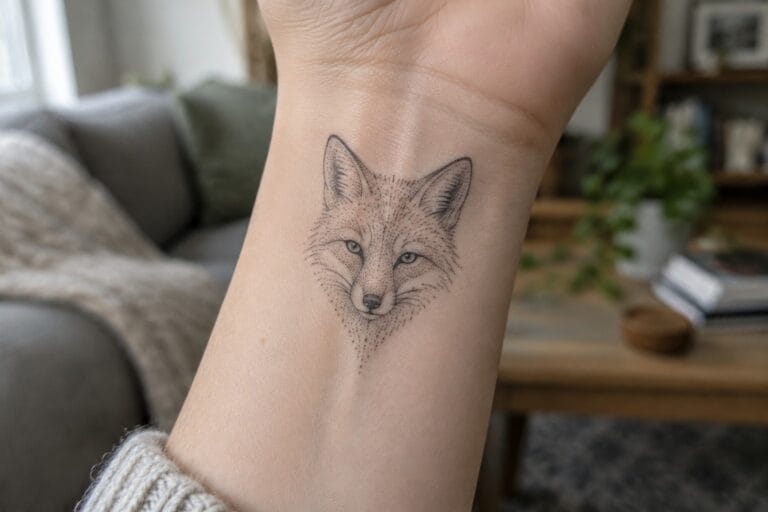
I have always loved how dotwork creates such detailed animal portraits without needing heavy lines. My first stippled tattoo taught me that shading with tiny dots can make wildlife feel alive on the skin. These designs stand out for women because they blend nature with a soft artistic touch. I find the stippled style perfect for those who want something unique yet elegant. Some people go for bright colors but I enjoy the quiet beauty of black dotwork shading.
A dotwork fox on the inner wrist
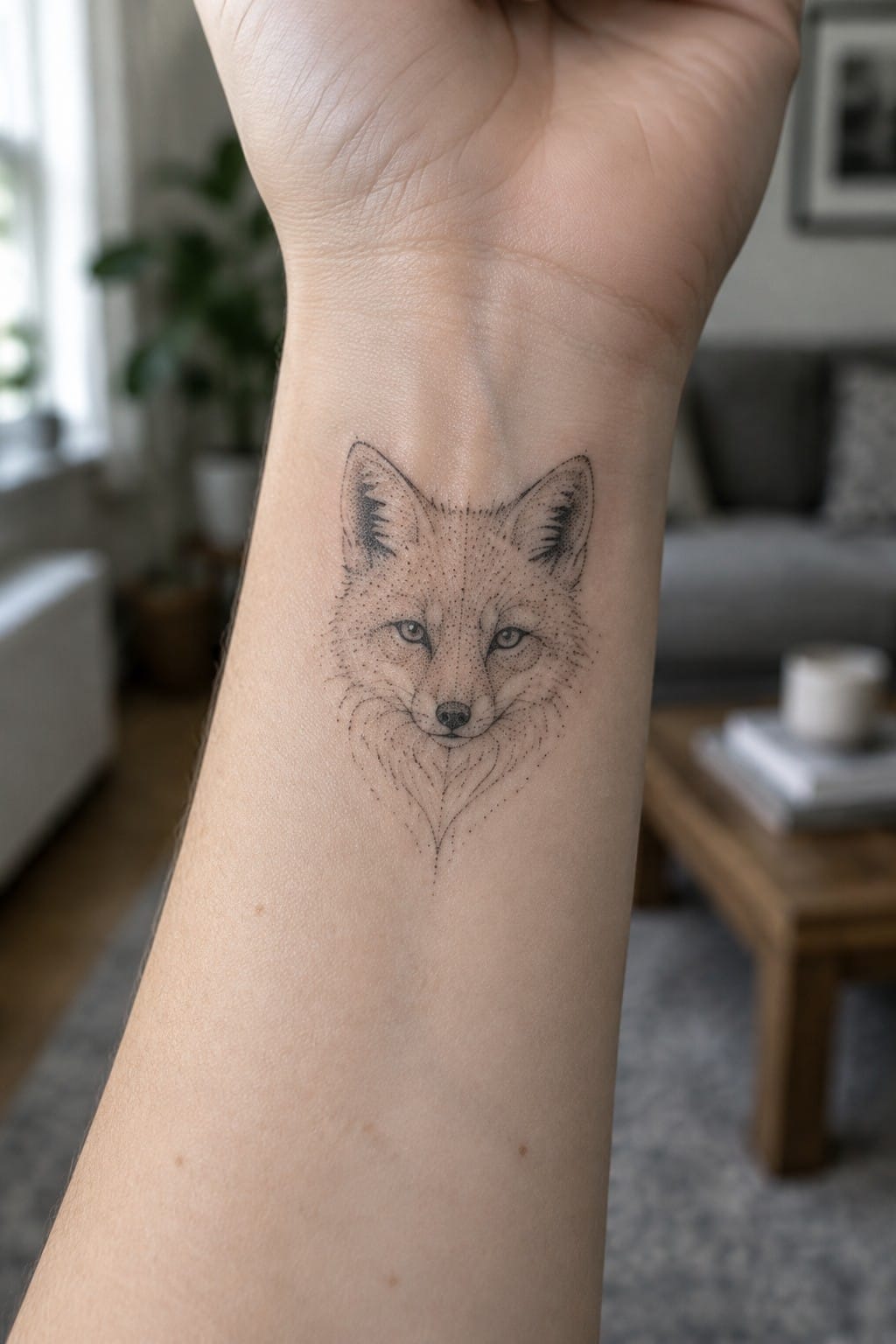
The fox head sits on the inner wrist in a compact shape. Fine dots build the fur texture and facial features without solid outlines. This keeps the whole design contained to a small area while still showing clear details in the eyes and ears.
I think the wrist works here because it gives the fox enough flat space without forcing the design to stretch or shrink. The stippled shading also helps the tattoo feel lighter on the skin instead of heavy.
Wolf portrait on the forearm
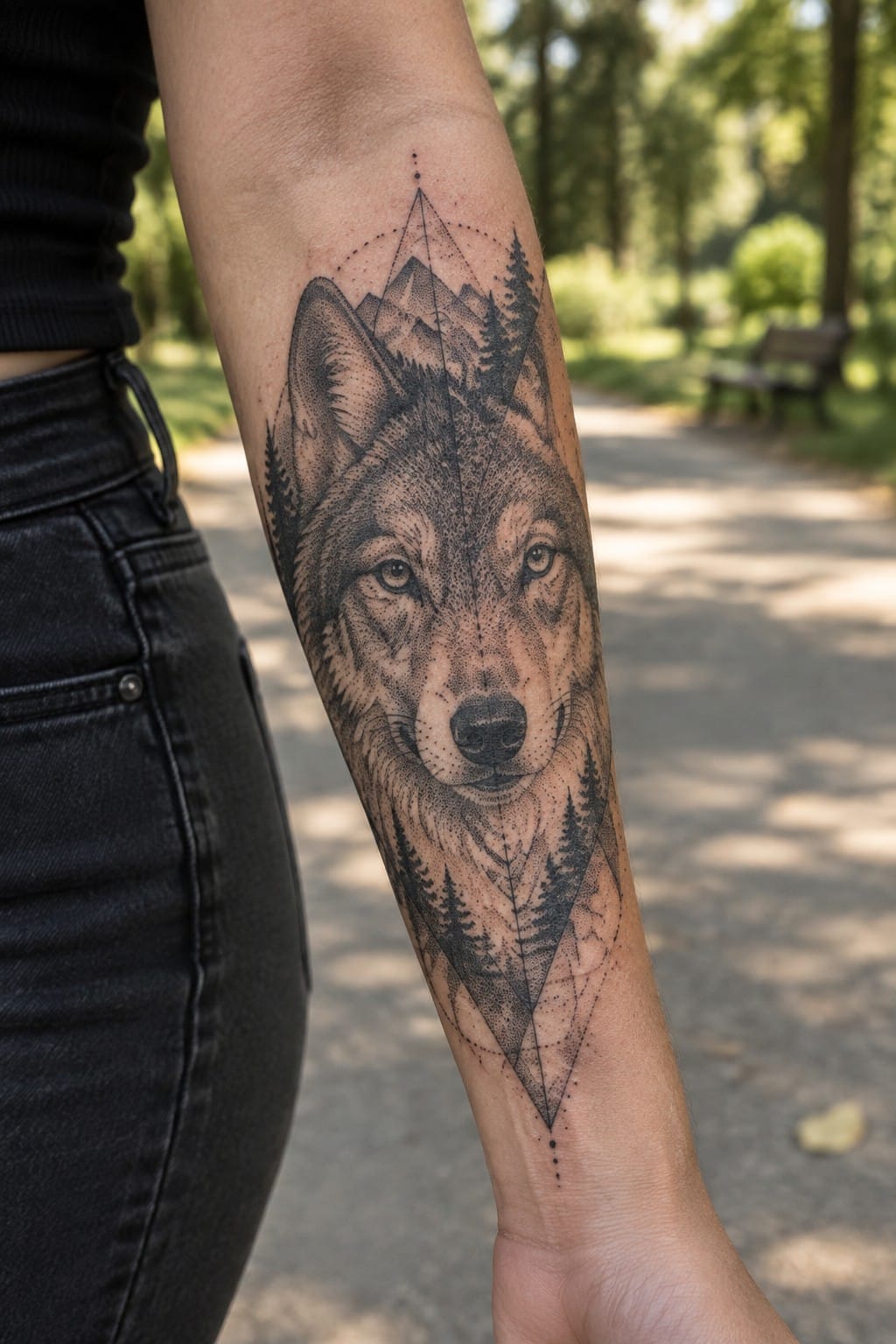
The tattoo sits along the inner forearm and runs from just below the elbow down toward the wrist. A wolf head fills most of the space while trees and mountains blend into the fur and form a loose triangle shape around it. Dotwork shading builds the image with small dots instead of heavy lines.
This placement lets the design stretch naturally with the arm shape. The stippling keeps the details readable without needing extra color.
Dotwork deer head on the upper back
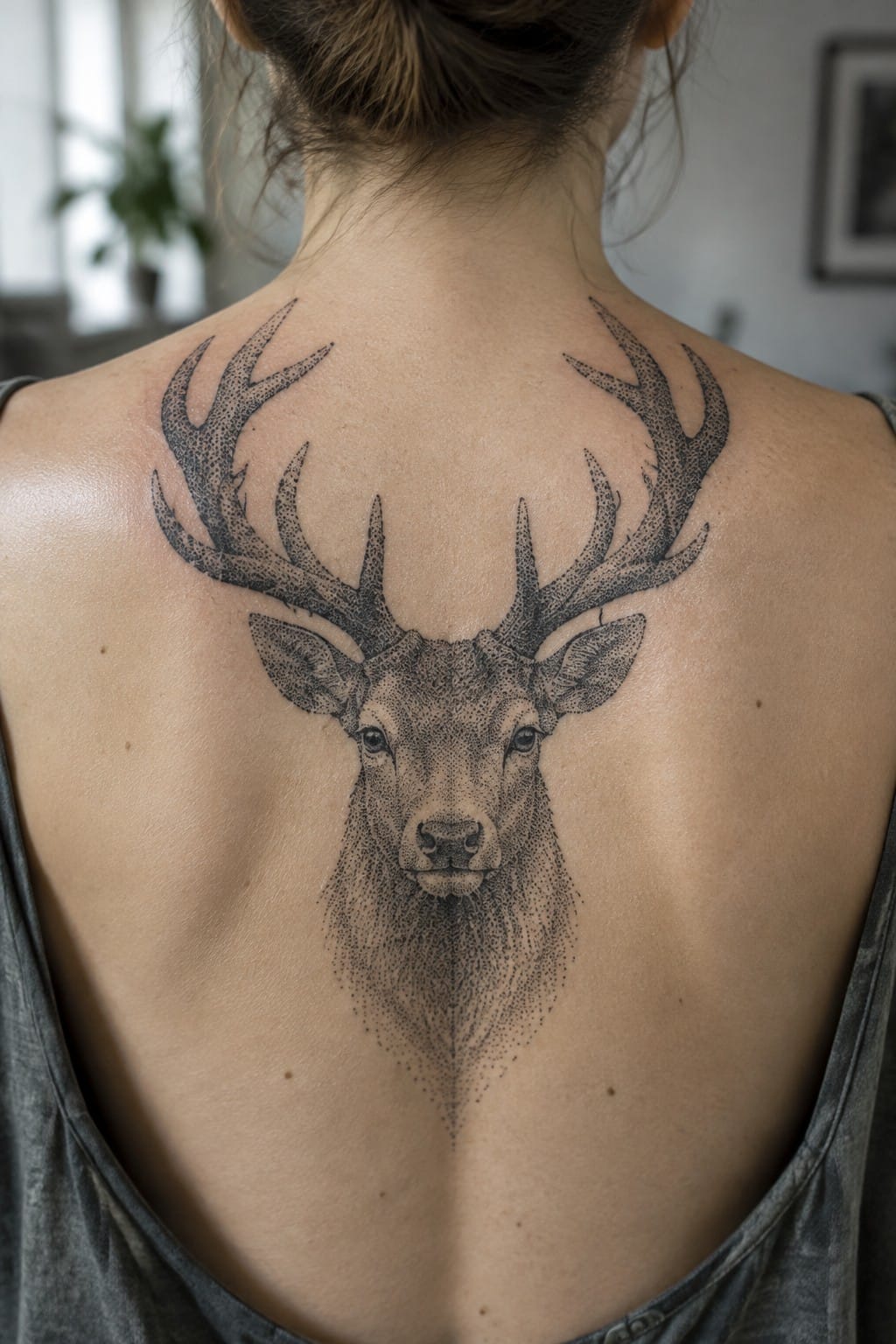
The tattoo sits on the upper back with the antlers reaching toward each shoulder. Dotwork shading builds the deer head from small dots that form the face and fur texture. The design stays centered and faces forward.
I think this placement lets the antlers fill the space without crowding the neck. The stippled style keeps the whole piece readable even when the skin moves.
Dotwork hummingbird on the shoulder
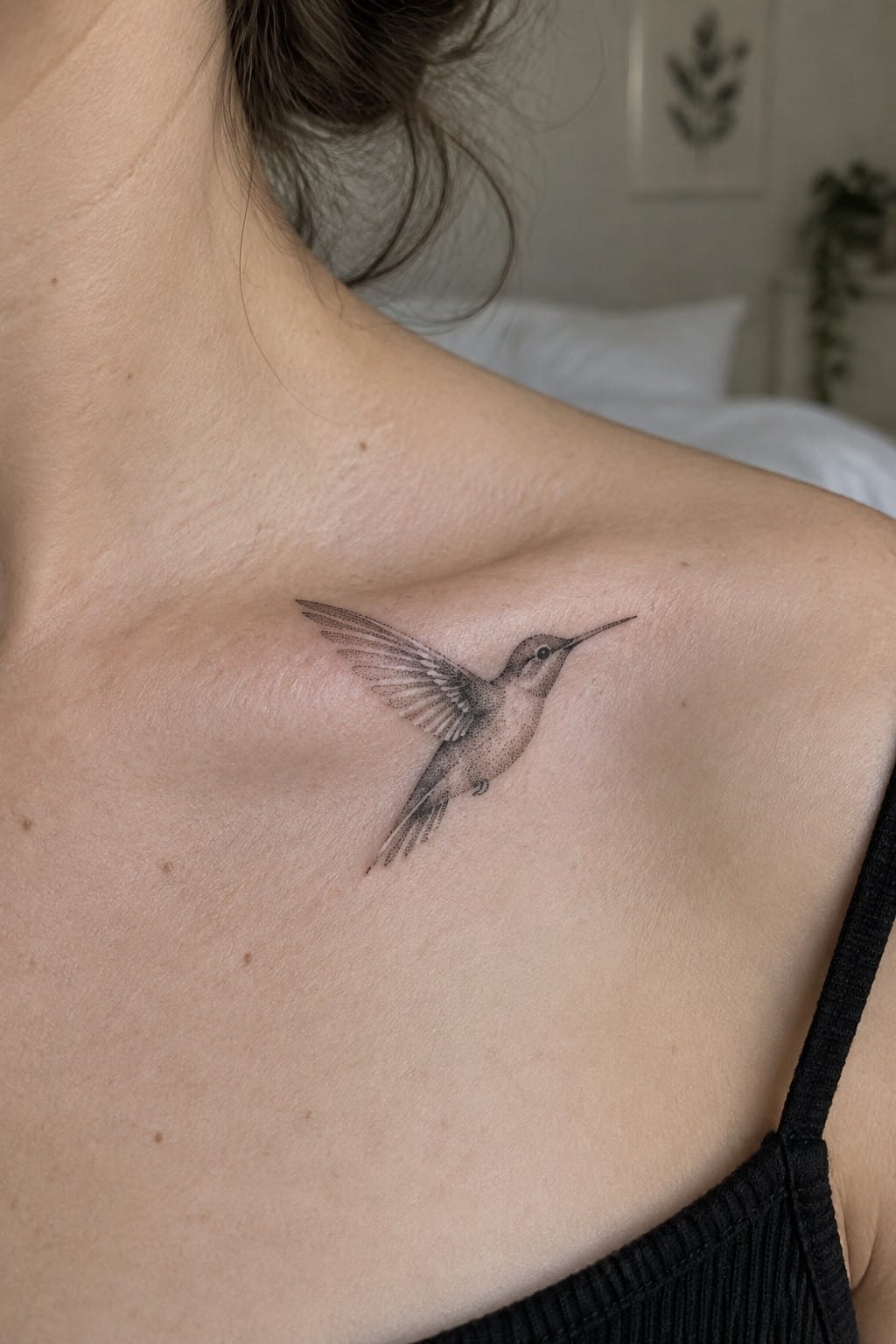
The tattoo sits on the front of the shoulder near the collarbone. It shows a hummingbird in flight with wings spread and tail extended. Dotwork shading builds the bird through fine stippled marks.
This spot lets the wings follow the natural slope of the body. I think the size works because it keeps the detail readable without filling too much space.
Hummingbird tattoo on the shoulder
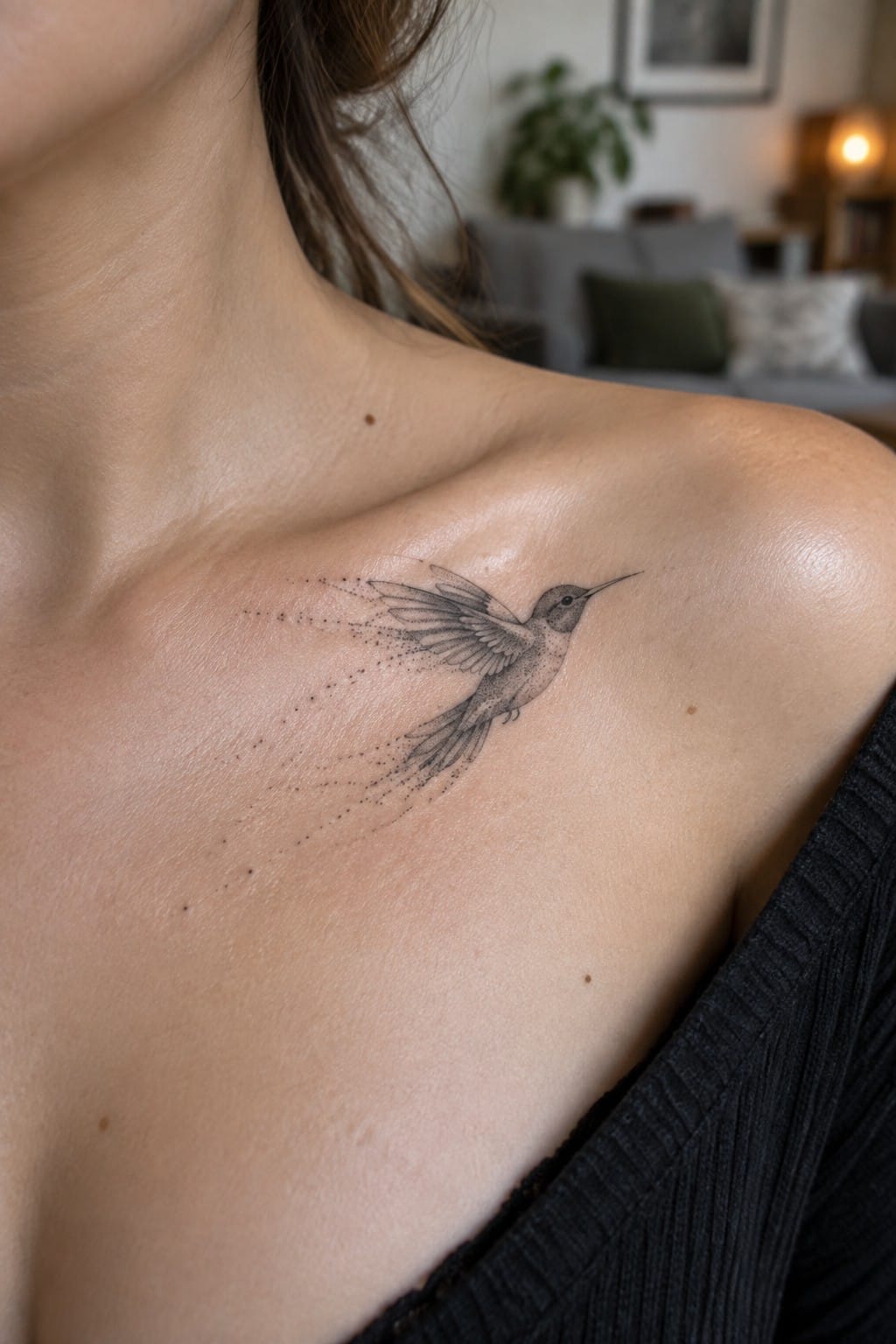
The tattoo sits on the shoulder near the collarbone. A hummingbird flies right with wings out and a trail of dots fading behind the tail. The dots build the shading and give the whole piece a light texture.
This spot lets the bird stretch across the skin without feeling cramped. I think the dotwork style helps it stay readable even though the details stay fine.
Dotwork rabbit on the ankle
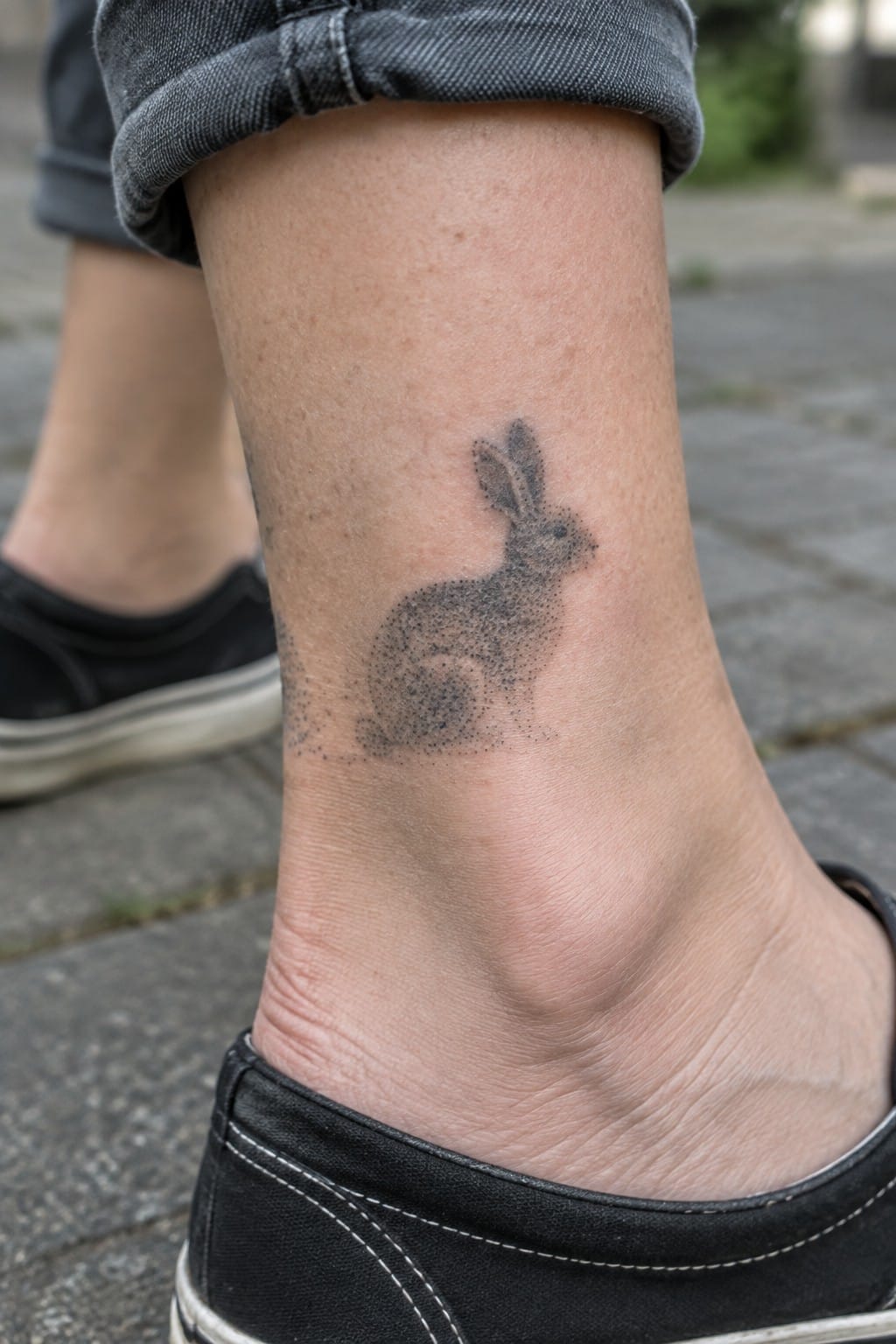
The ankle places this rabbit tattoo where the skin stays fairly flat and visible. Dotwork builds the animal from small black dots that form a side profile with upright ears. The size stays compact so the design does not crowd the area.
I think the ankle works for this idea because the shape stays clear without extra shading. The dots also hold detail well when the foot flexes during normal movement.
Dotwork elephant on the thigh
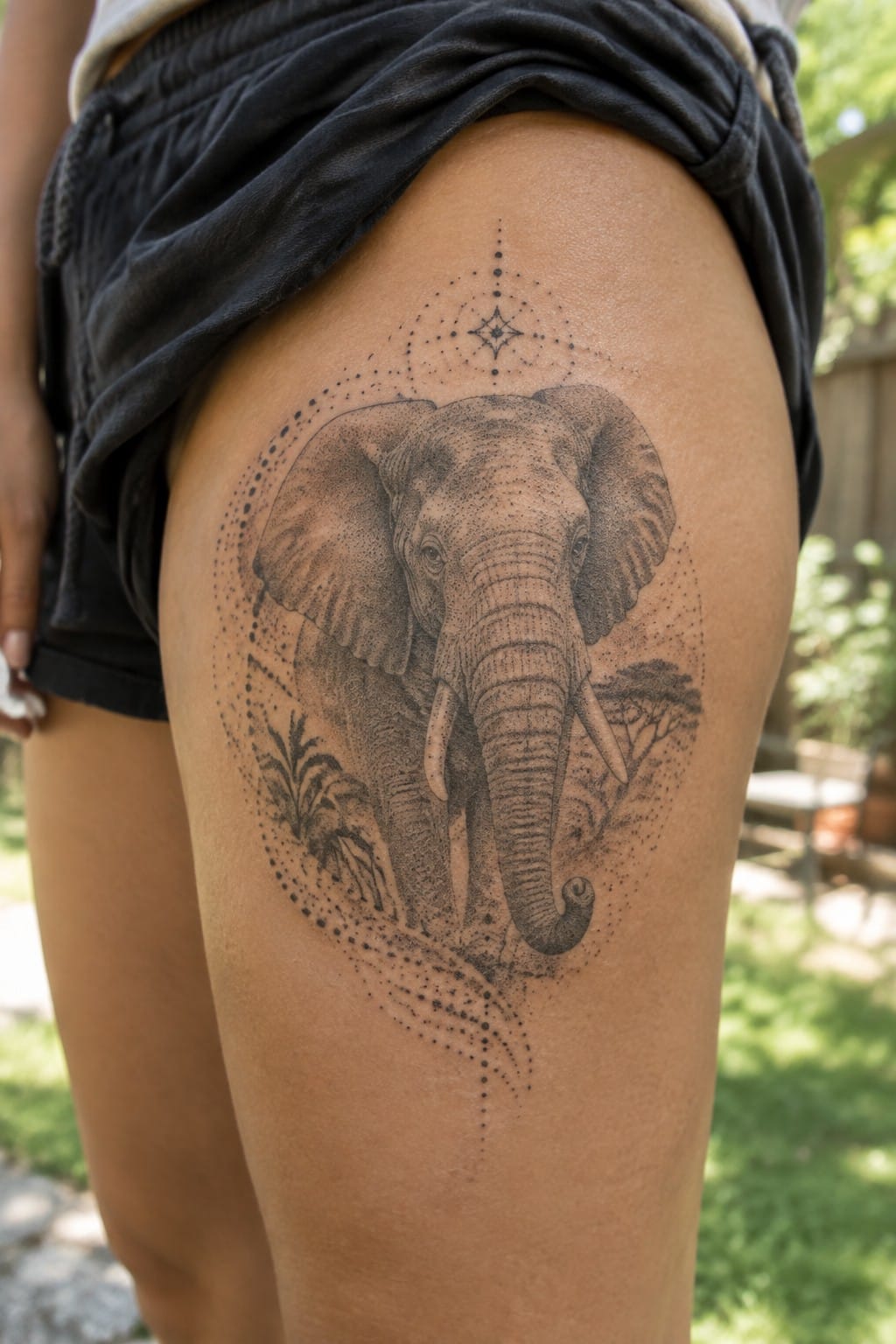
The thigh gives enough space for a full elephant with room left for trees and a pattern of dots above it. The design builds the animal through stippling so the shading stays even across the curve of the leg. Small trees sit near the bottom to fill the lower part without crowding the main figure.
The scale keeps the lines readable even up close. I think the dotwork approach stops the piece from feeling too solid on skin that moves a lot.
Fox bee tattoo behind the ear
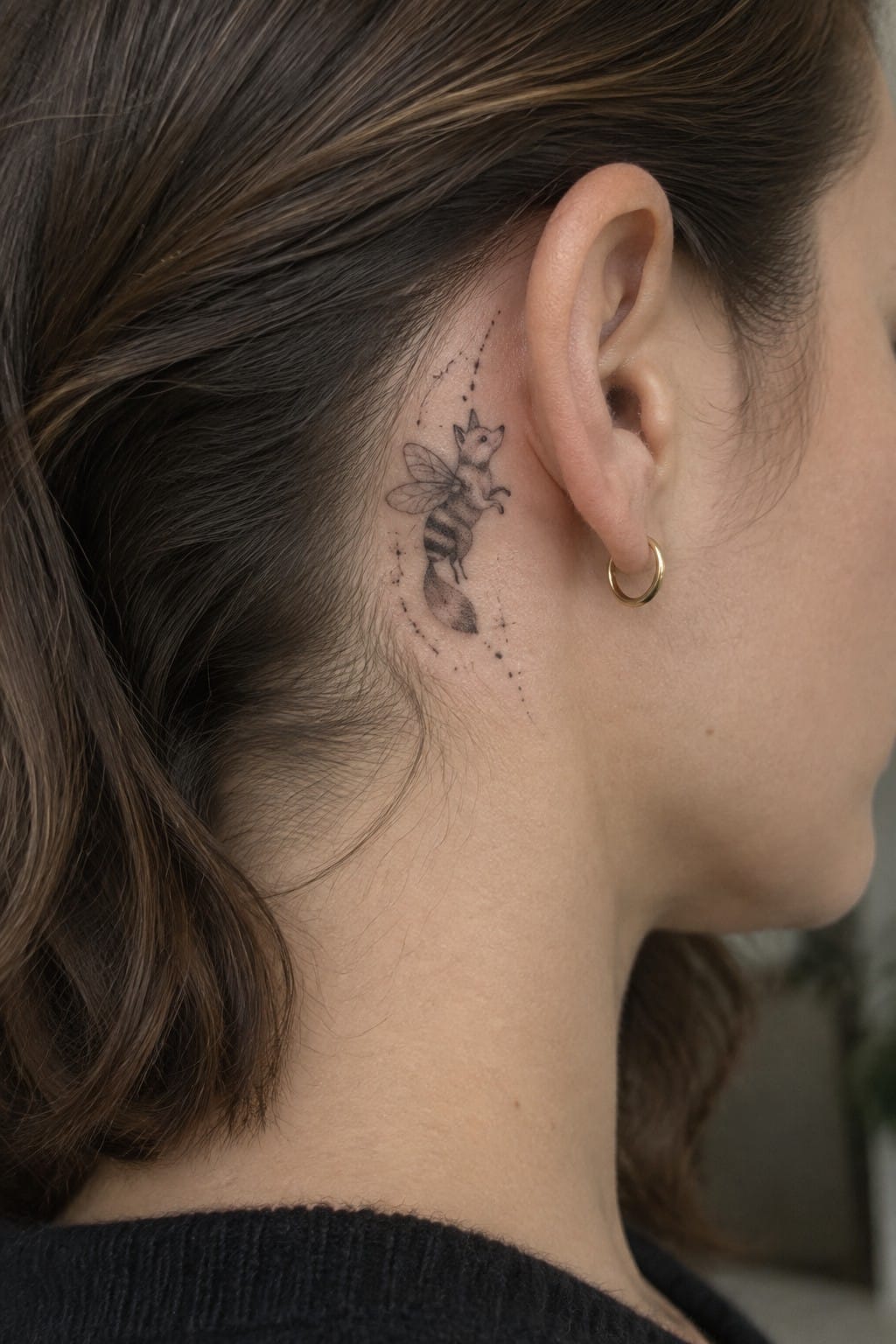
The tattoo sits tucked behind the ear on the side of the neck. It mixes a fox body with bee wings and stripes through simple dotwork shading. Scattered dots give the figure some motion while staying light.
This spot keeps the piece personal and easy to hide when needed. The compact size lets the stippled lines stay clear without extra detail. I think the hybrid subject fits the area because it stays readable at a small scale.
Panther tattoo along the side torso
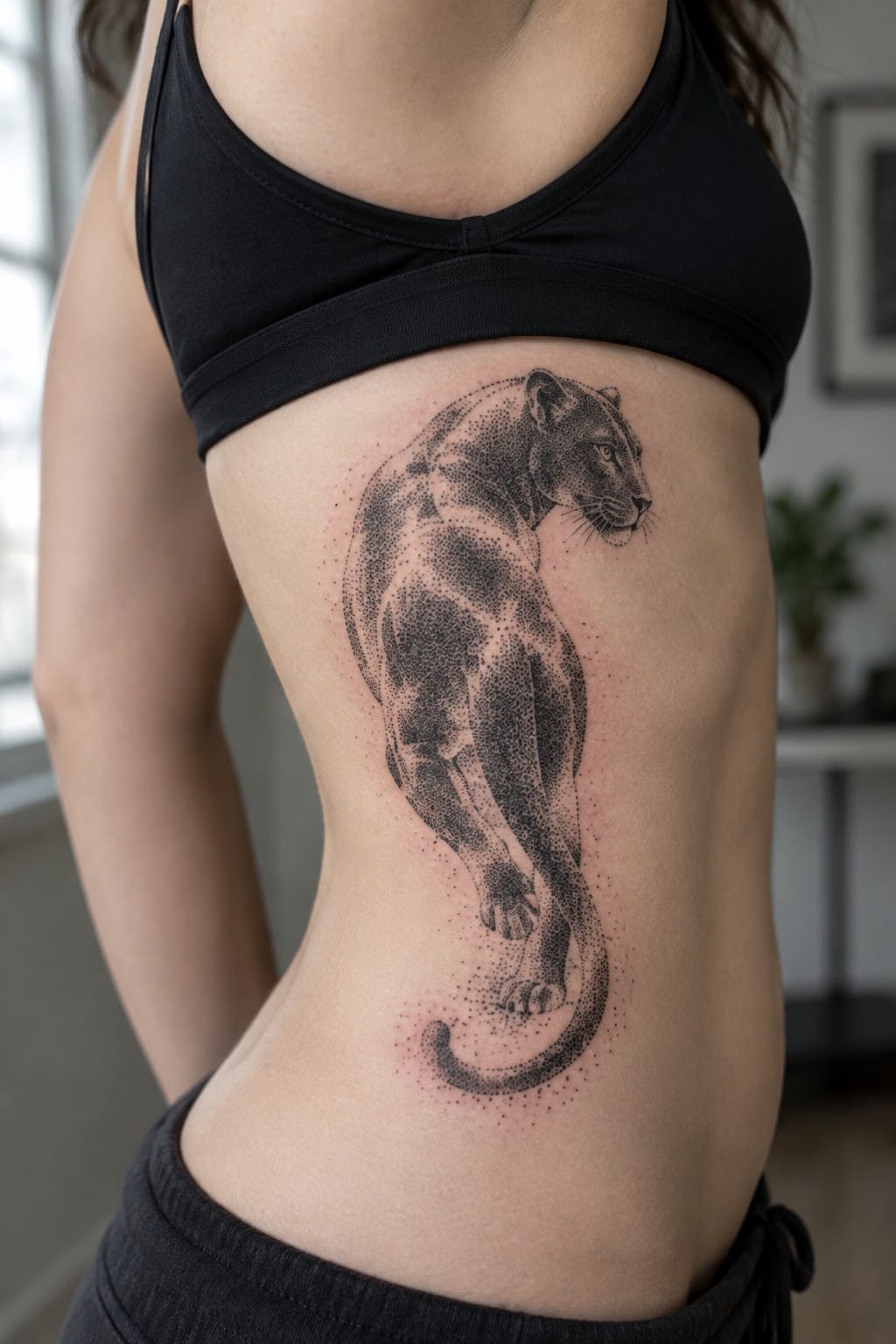
The side torso works well for this kind of design because it offers a long vertical space. The panther stretches from under the arm down toward the hip with its body and tail filling the area naturally. Dotwork shading builds the form without solid black fills.
I think the stippled approach keeps the lines readable even when the skin moves. The pose also helps the tattoo sit comfortably without needing extra filler around it.
Sparrow tattoo on the ankle
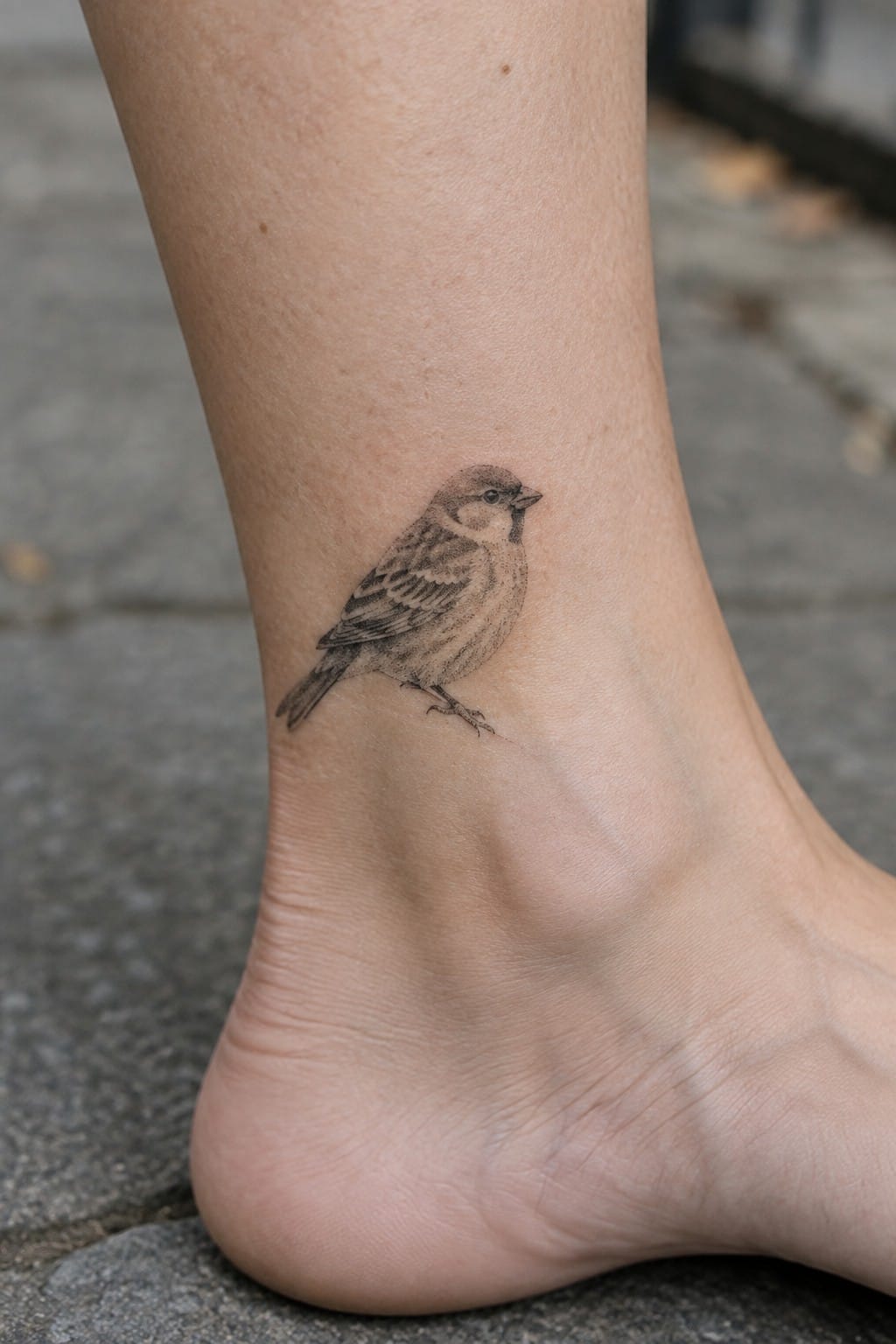
The ankle gives this sparrow enough flat space to sit without feeling cramped. Its small size keeps the whole bird contained in one view while the stippled shading builds the feathers and body shape. The profile pose shows the head, wing, and tail in a simple line.
I think the placement works because it lets the design stay visible with certain shoes but easy to cover the rest of the time. The dotwork approach also keeps the lines soft so the tattoo does not stand out too much on the lower leg.
A whale tail dotwork tattoo on the lower back
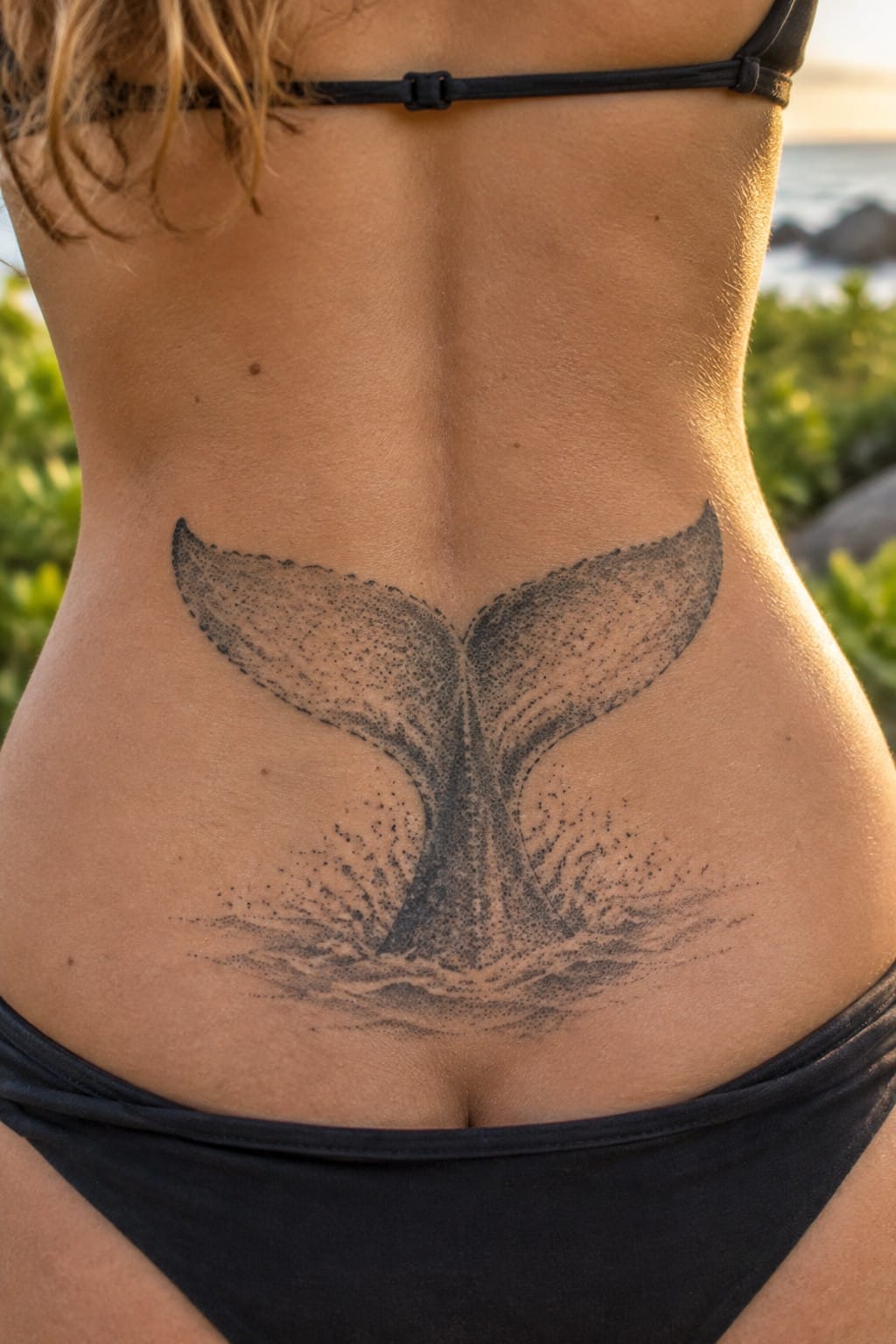
The design sits right above the hips with the tail spread wide across the skin. Dotwork shading builds the shape through dense stippling that fades toward the edges. Water lines and splashes sit at the base to give the tail something to rise from.
I think the lower back works here because the tail’s natural width matches the space without needing extra elements. The stippling also keeps the ink from looking too heavy in that area.
Deer skull tattoo on the upper arm
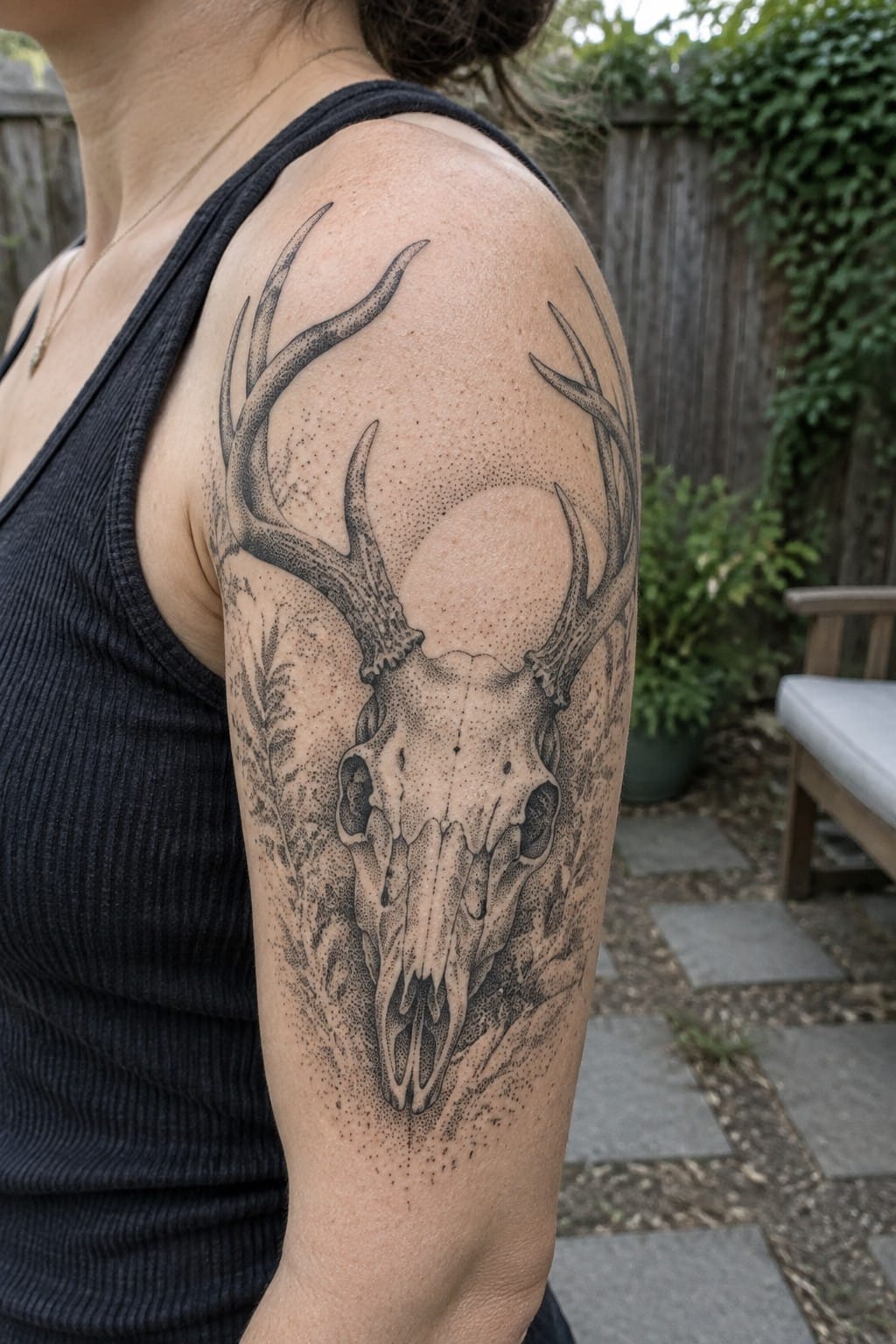
The design covers the top of the shoulder and extends down the upper arm. Antlers reach across the shoulder while the skull sits lower on the arm with some plant details around the edges. Dotwork shading builds the image through small dots instead of solid fills.
This placement lets the antlers spread naturally over the shoulder curve. The size feels right for the area and keeps the main shapes clear from different angles. I think the dot style works well here because it holds up on skin that moves and stretches.
Fox tattoo placed behind the ear
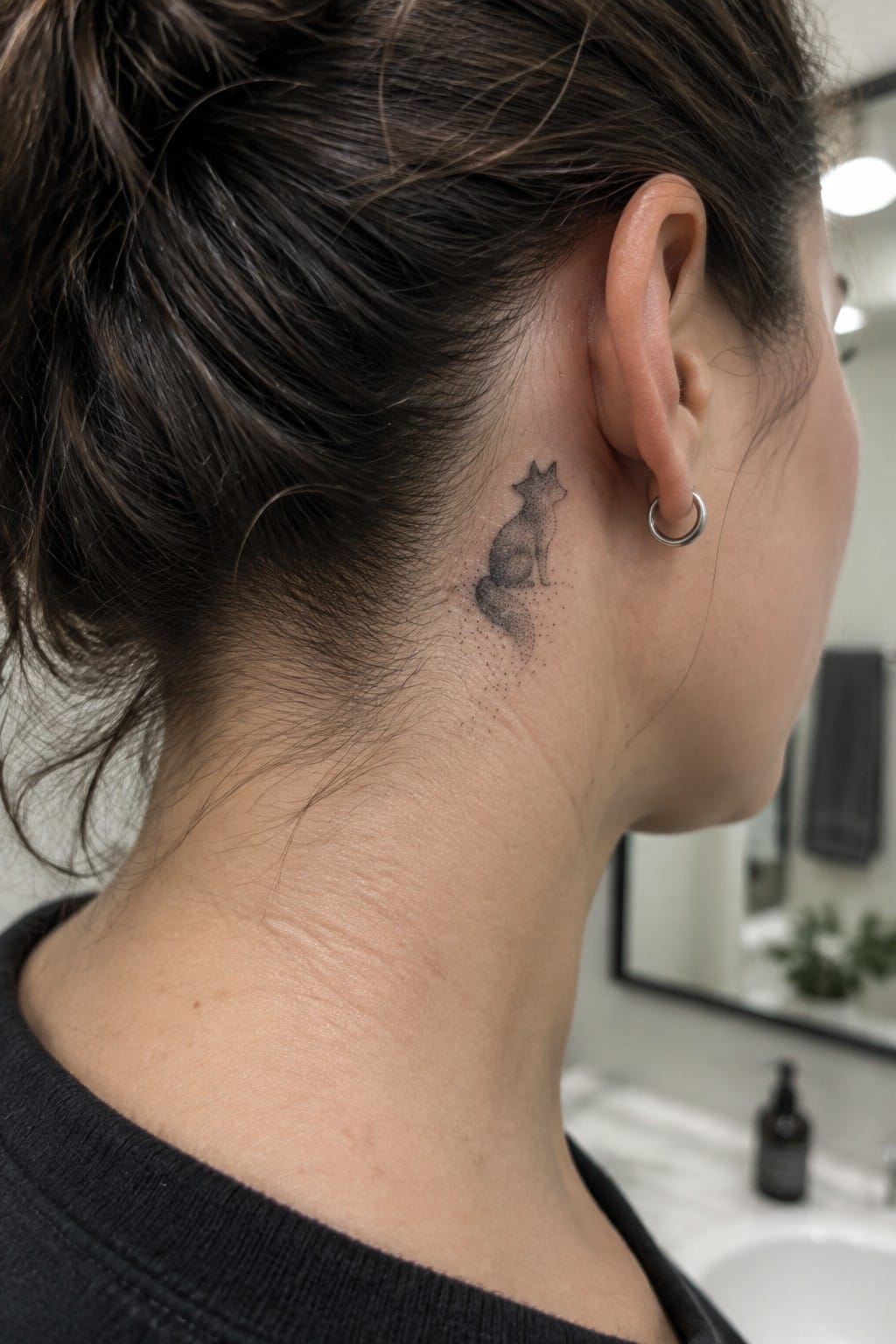
The tattoo sits right behind the ear on the neck. It shows a small sitting fox created with dotwork. The shading builds from fine stippled dots that soften toward the base.
This spot works well for a compact design like this. I like how the size keeps the whole thing readable without spreading out.
Tiger eyes center on the upper chest
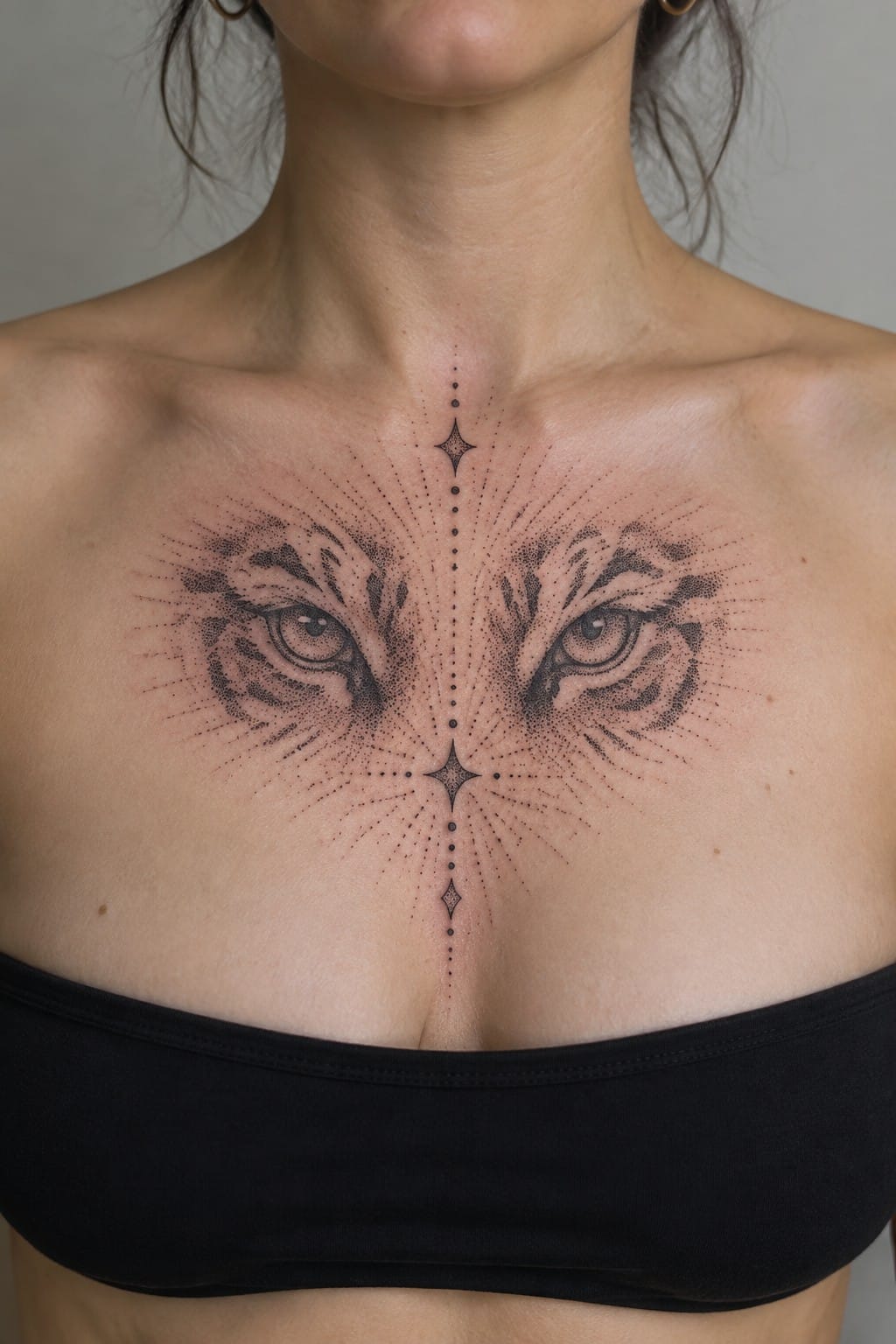
The eyes sit on either side of the sternum. Dotwork builds the shapes through tight stippling. A straight line of dots runs down the middle with small diamond accents.
This placement keeps the symmetry easy to read on the body. The vertical line helps anchor the design without extra framing.
A whale tattoo on the calf
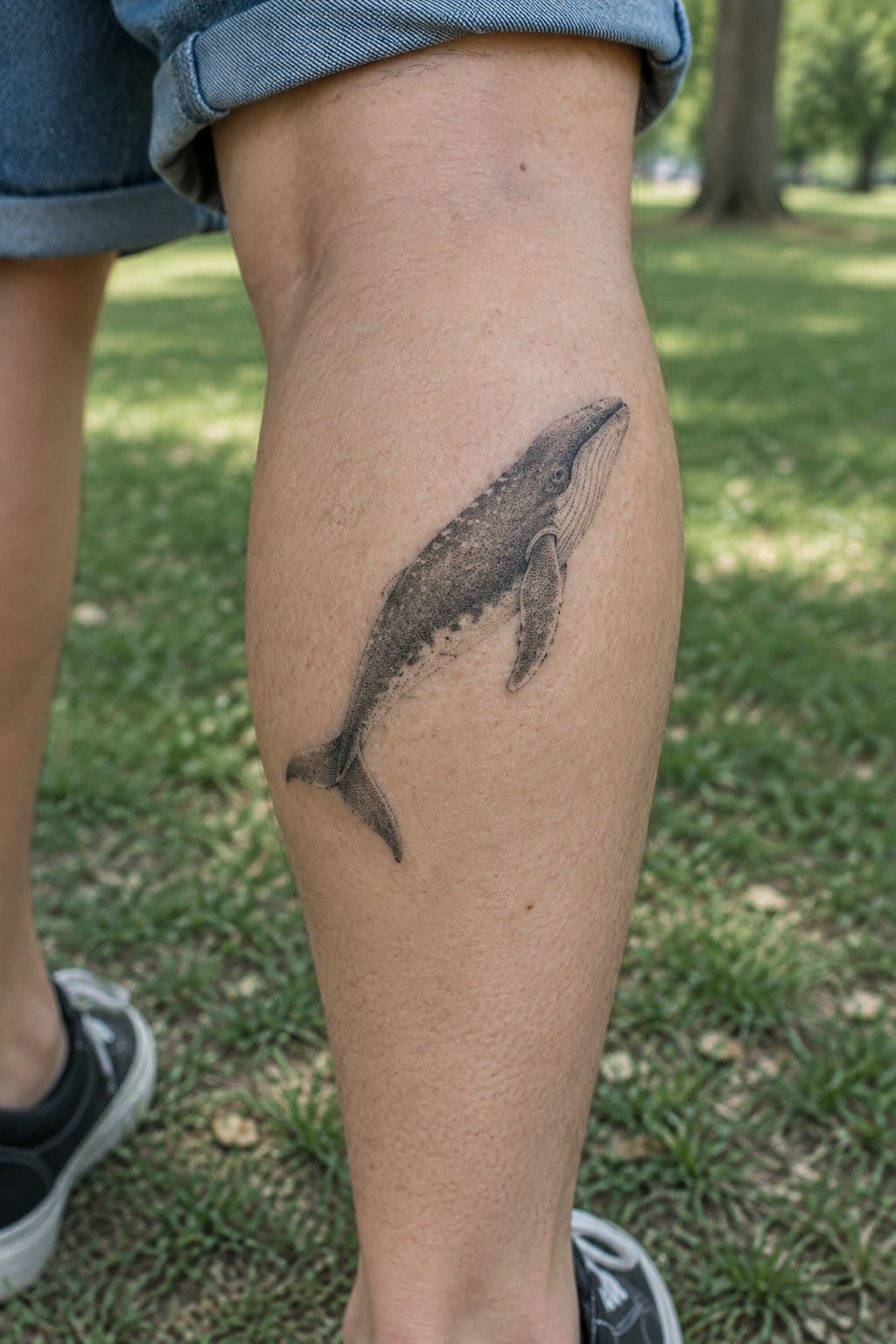
The tattoo sits on the lower leg just above the ankle. Dotwork shading builds the whale’s body and fins through small dots rather than solid lines. The design stays medium in size and faces upward along the leg.
This placement lets the whale’s shape follow the natural line of the calf. I think the stippling keeps the details clear without needing extra outline work.
Dotwork falcon on the shoulder
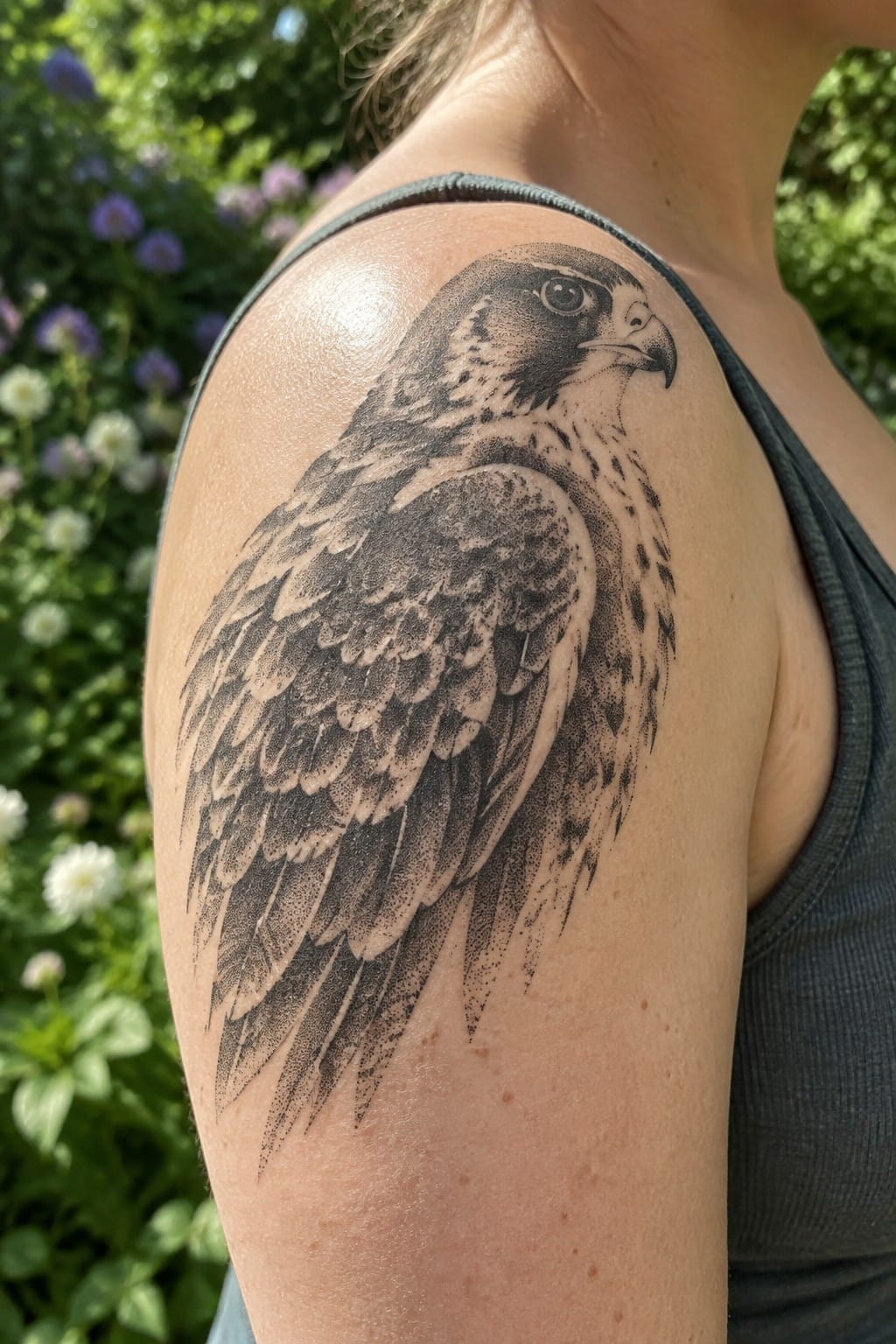
The shoulder gives the falcon room to sit upright with its head near the top of the arm. The wing then extends down the side in layers of stippled feathers that follow the natural curve.
I think the dotwork approach keeps the bird clear even when the arm is in motion. The size stays balanced so the head and eye remain the main focus without crowding the area.
Dotwork cat on the forearm
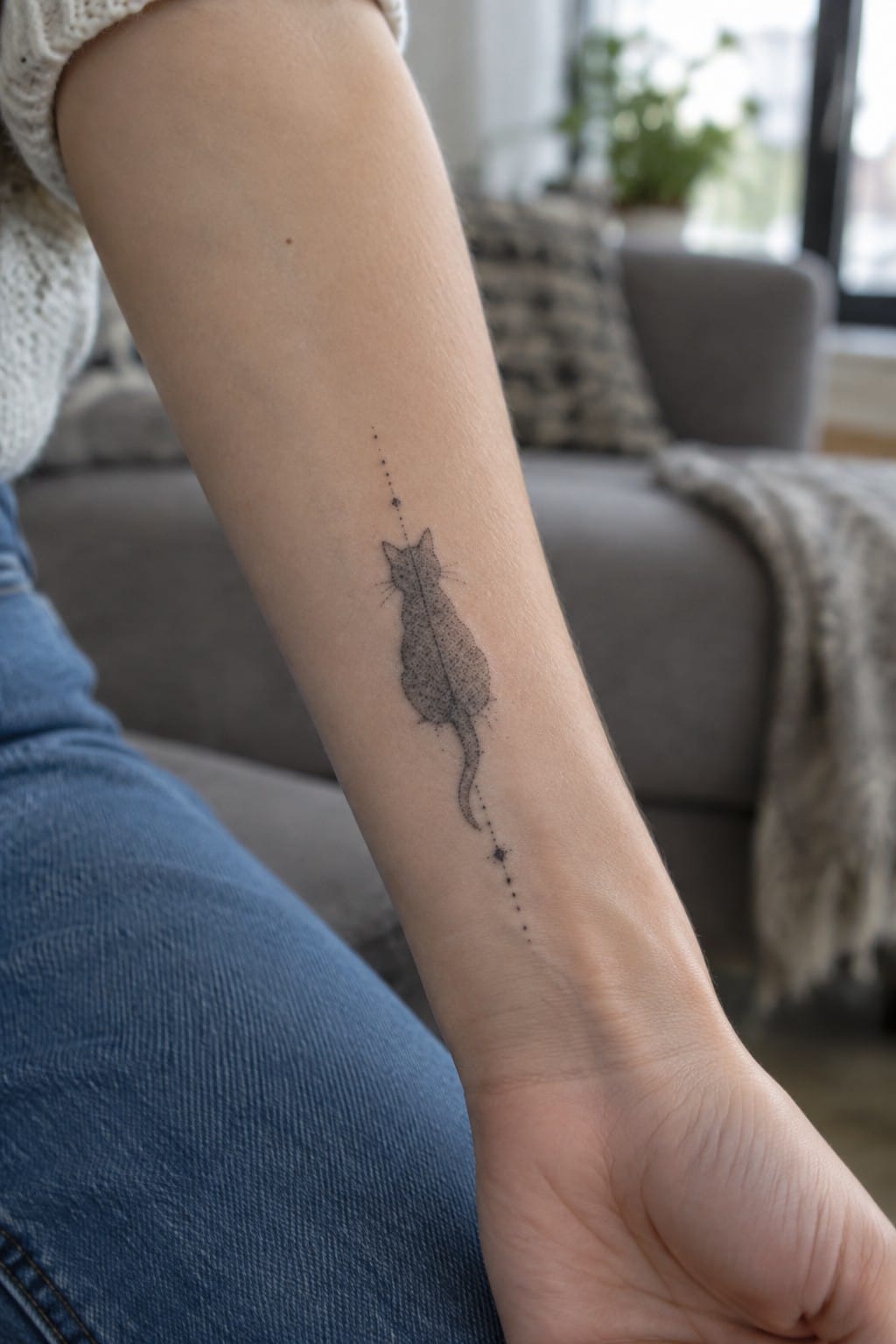
The inner forearm gives this design a clean vertical path. The dotted line runs along the length of the arm and places the cat right in the center. Stippling builds the shape without any solid black areas.
I like how the line keeps the tattoo balanced instead of floating on its own. The size stays readable while still leaving plenty of skin around it.
Dotwork horse tattoo follows the spine
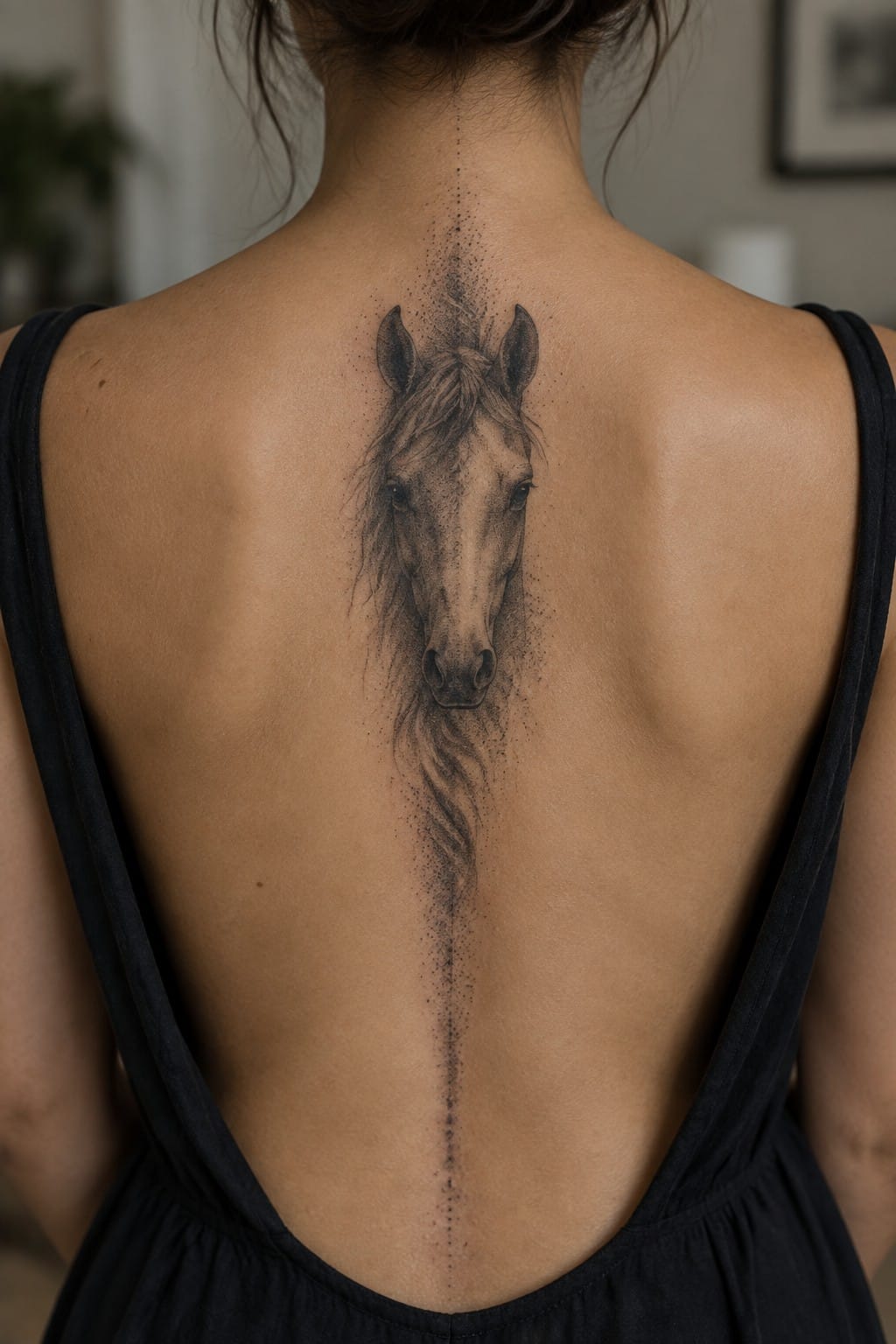
The horse head sits at the top of the back right below the neck. Dots build the face and mane then continue in a straight line down the spine. The vertical layout keeps the tattoo narrow while stretching its full length.
The spine placement gives the dots a natural path to follow. I think this keeps the whole piece balanced instead of spreading wide across the shoulders.
Paw print tattoo on the side of the hand
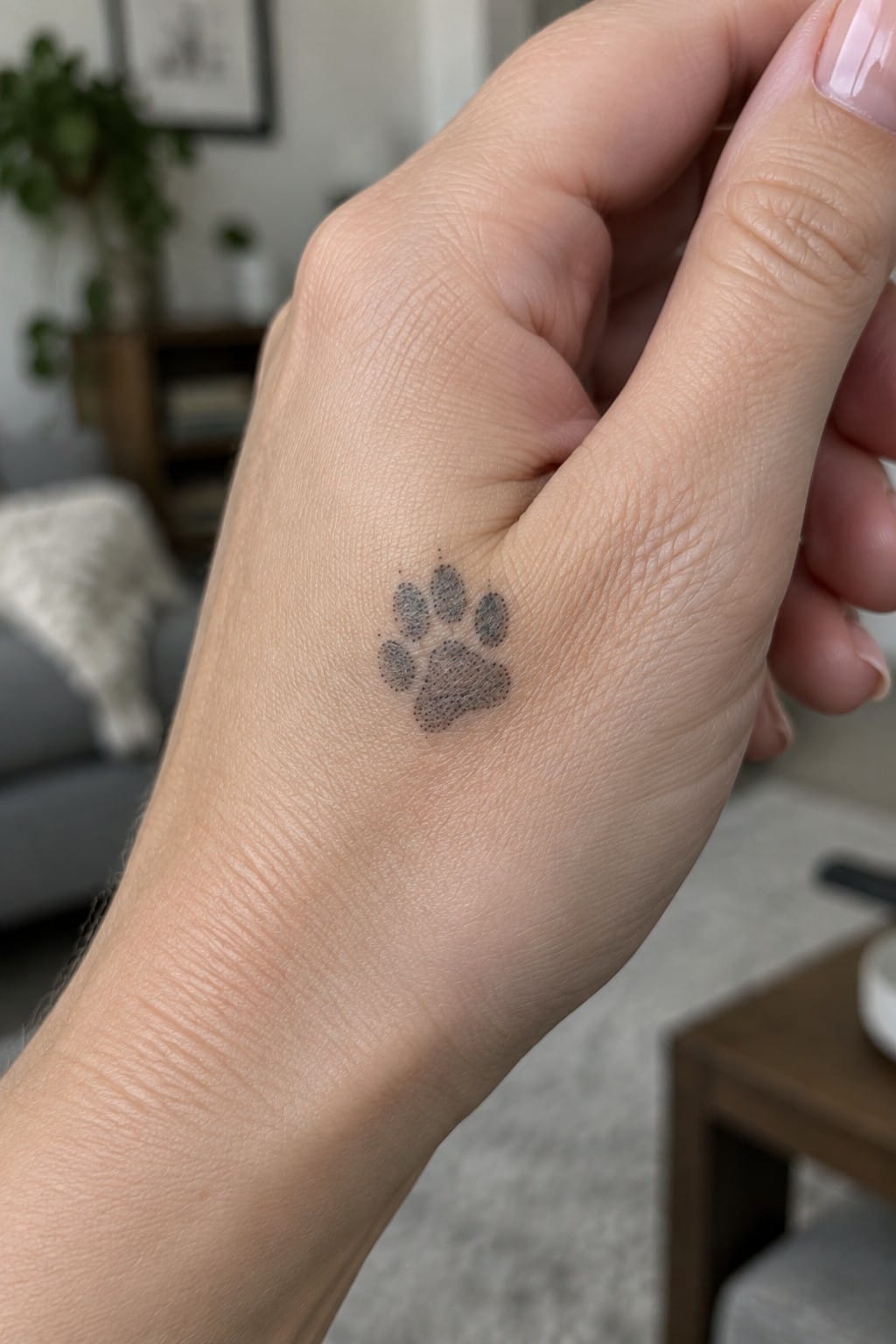
The tattoo rests on the outer edge of the hand. Dotwork builds the paw print through small stippled dots that form the pads and shape. The design stays small and contained within that area.
I think the hand placement works because the tattoo stays visible without dominating the space. The dotted texture keeps the lines soft while still readable up close. It fits someone who wants a simple animal mark they can cover or show easily.
A vertical stag down the back
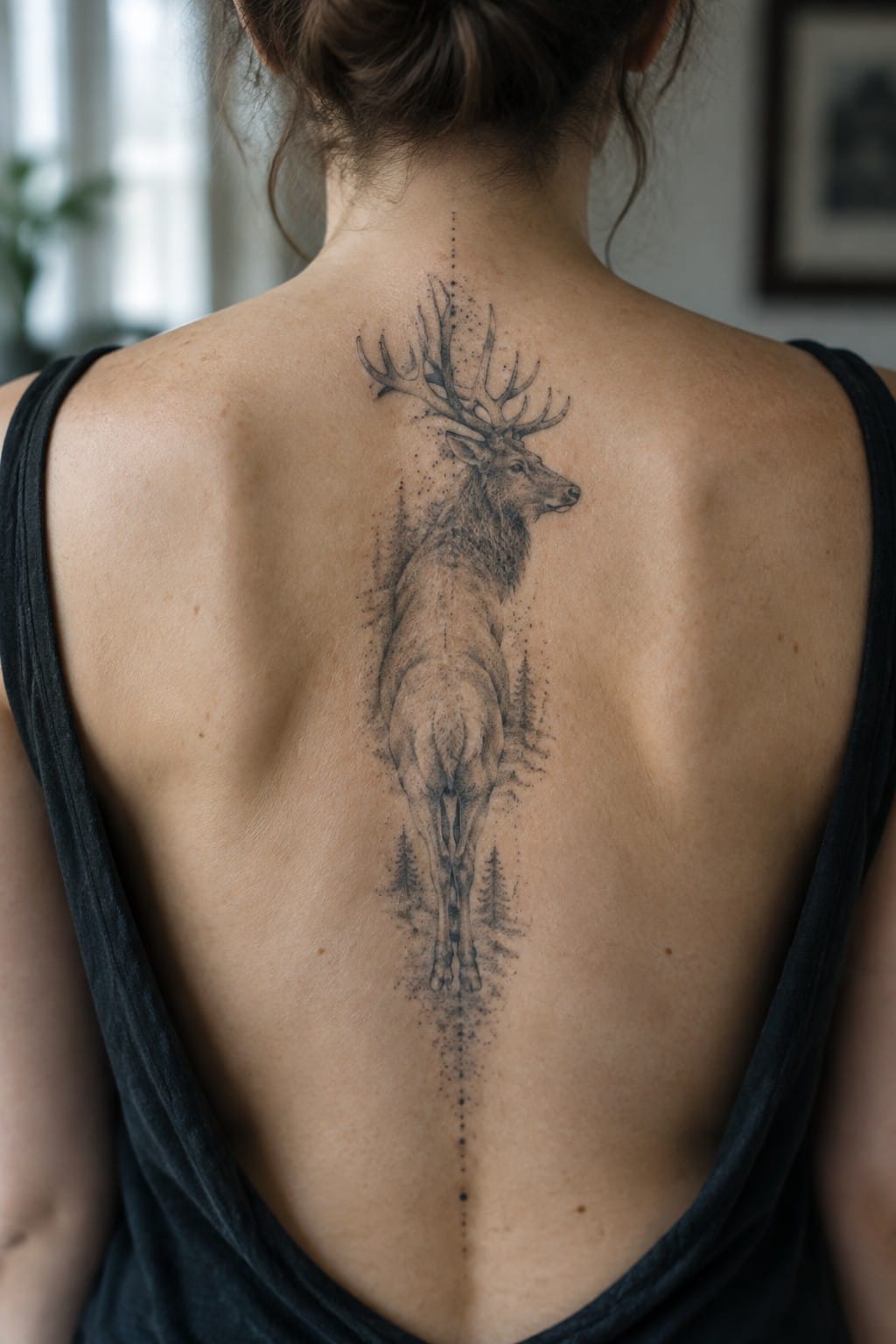
The tattoo sits along the spine and runs from the upper back down toward the lower back. The stag faces to the side with its antlers reaching upward while the body and legs stretch straight down. Small trees fill in the space around the lower half.
This placement lets the animal’s shape stretch out naturally without needing extra width. The dotwork stays light enough to follow the curve of the back. I think the dotted line at the bottom keeps the design from feeling cut off.
Mouse tattoo on the ankle
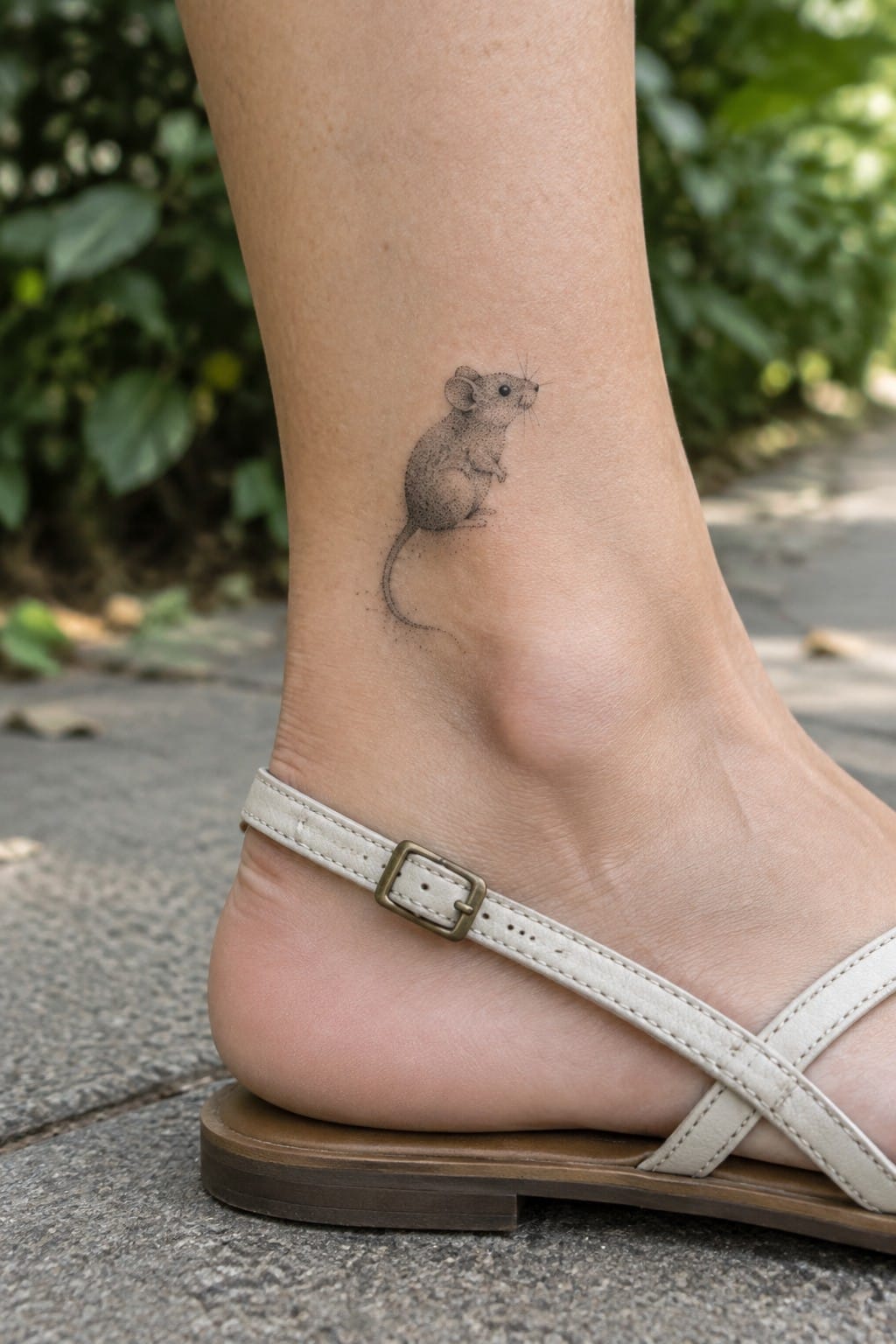
The ankle holds a small mouse tattoo in a way that keeps the whole design compact. Dotwork shading builds the shape without heavy lines so it sits lightly on the skin. The tail follows the natural line of the ankle bone.
I think this placement works because the area limits the size and stops the tattoo from needing extra details to fill space. The result stays simple and clear even after it heals.
Dotwork koi tattoo on the thigh
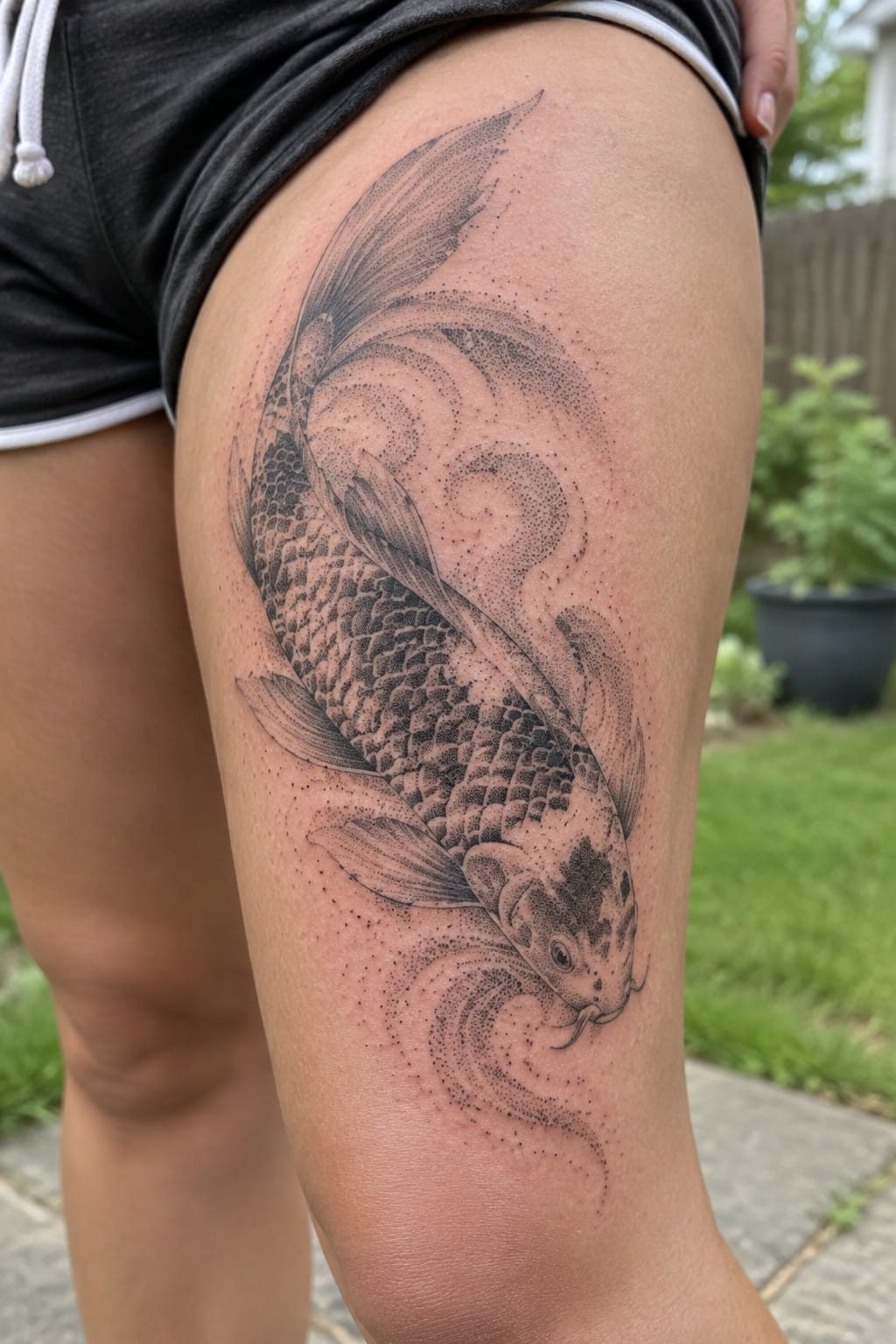
The thigh works well for this kind of design because it gives the koi enough space to curve and stretch. The fish is built with stippled dots that form the scales and body without heavy outlines. The overall size lets the tail and fins extend naturally along the leg.
I think the placement keeps the flow readable even when the leg is in motion. It also leaves room for the water swirls to wrap without crowding the main subject.
Cat tattoo on the upper arm
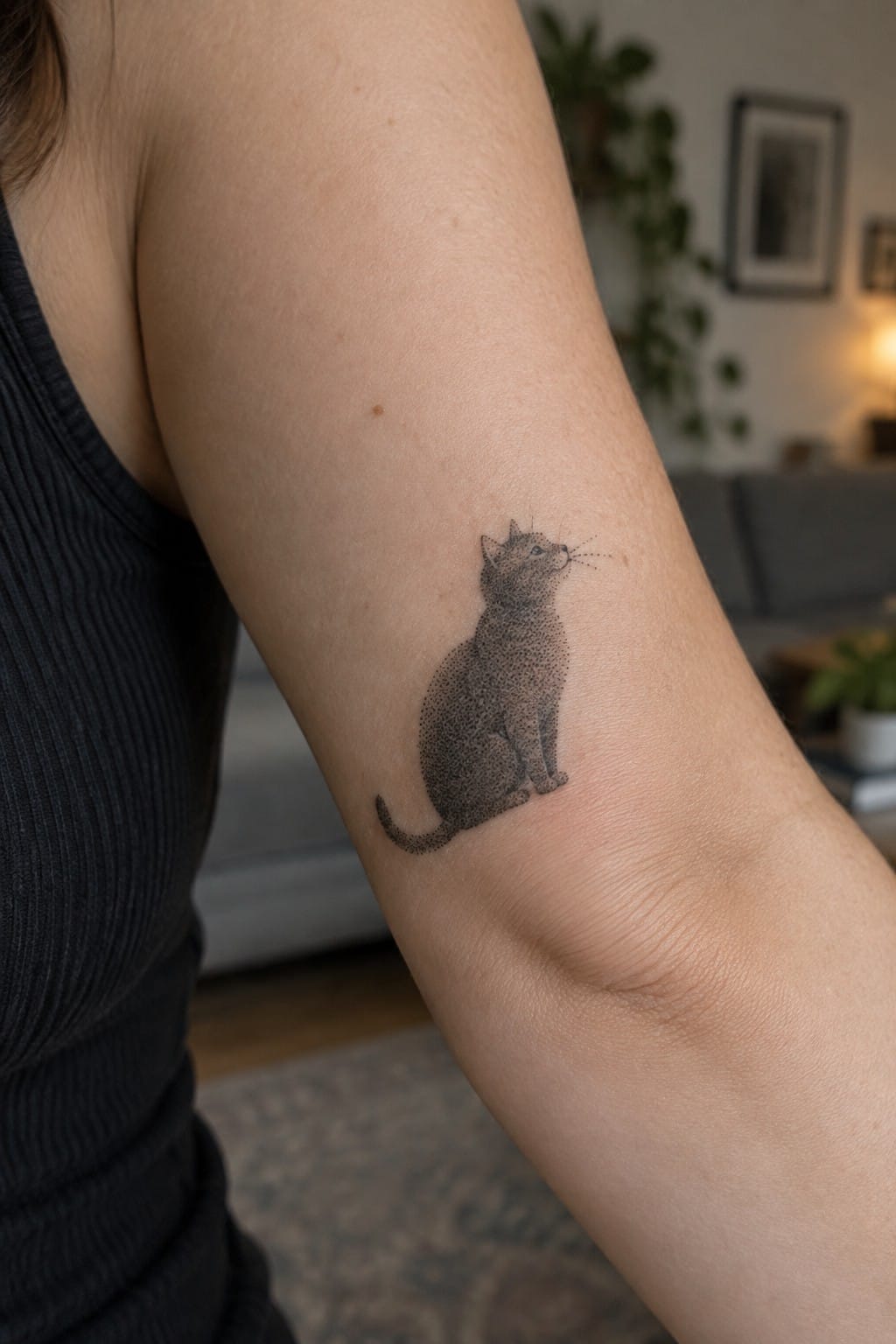
The upper arm gives this cat tattoo plenty of room to sit naturally. Dotwork shading creates the animal through tiny dots that build up the form and texture. The cat faces slightly upward with its tail curled underneath.
I think the size fits well here because it stays compact while still showing the full shape clearly. The placement avoids any awkward stretching when the arm moves.
Bear paw dotwork on the calf
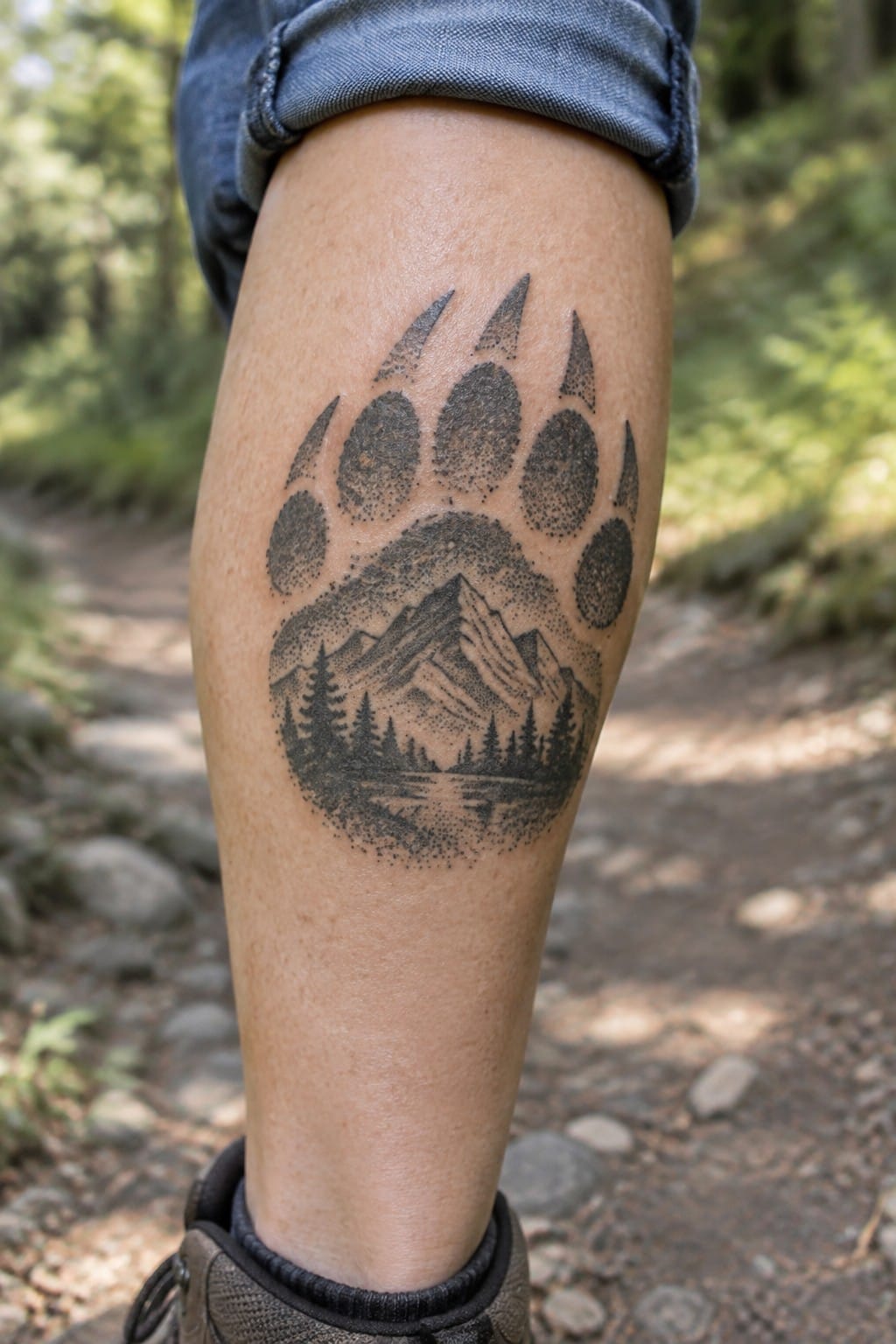
The bear paw tattoo covers the front of the calf with a clear outline of pads and claws. Dotwork fills each section and creates a mountain range complete with trees and water inside the paw shape. The stippling gives the whole design a textured look that fits both the animal print and the landscape.
I think the dot style works here because it keeps the details readable even when the tattoo sits on a larger area of skin. The shading also prevents the paw from feeling too solid against the rest of the leg.
Frequently Asked Questions
What is dotwork tattooing and why does it suit wildlife animal designs for women?
Dotwork creates images through thousands of tiny dots rather than solid lines or fills. This technique produces soft shading that mimics fur texture and natural light on animals like wolves or birds. For women it often results in delicate yet detailed pieces that blend well with feminine body curves and allow for subtle personalization without overwhelming the skin.
How long does a typical stippled animal tattoo take to complete?
Session times vary based on size and detail level but most dotwork wildlife designs require multiple visits of two to four hours each. The artist builds layers gradually to achieve depth in the shading. Rushing the process can lead to uneven dots so plan for at least two or three appointments spaced weeks apart.
Which body placements work best for these tattoos on women?
Popular spots include the inner forearm, collarbone area, ribcage side, upper thigh, and ankle. These locations allow the stippled shading to flow with natural body movement while remaining easy to cover or display. Placement should consider skin stretch and how the animal pose interacts with curves for the most artistic result.
What aftercare steps help dotwork tattoos heal evenly?
Keep the area clean with fragrance free soap and apply a thin layer of recommended ointment several times daily. Avoid sun exposure and tight clothing that could rub the dots. Moisturize consistently once the initial peeling stops and follow your artist’s specific instructions to preserve the fine shading details over time.
How do I select an artist skilled in stippled wildlife designs?
Review portfolios for examples of dotwork animals that show consistent spacing and realistic shading. Ask about their experience with fine detail work and request healed photos of similar pieces. Schedule a consultation to discuss your chosen animal and ensure their style matches the artistic vision in the designs you liked.
