

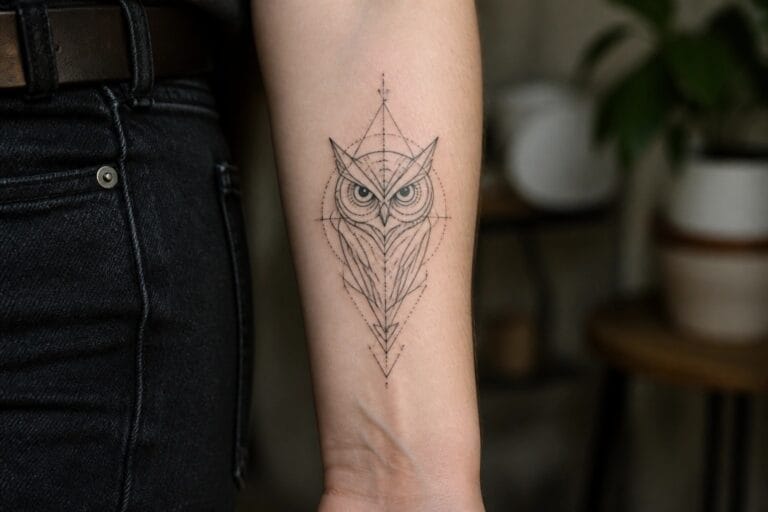
I adore the way geometric patterns bring a sleek vibe to owl tattoos.
My own sketches of symmetric designs have convinced me they add real depth and charm for women.
These ideas mix wise owl motifs with clean lines that feel fresh and fun.
I think the modern symmetry here creates looks that stand out without trying too hard.
Geometric owl on the inner forearm
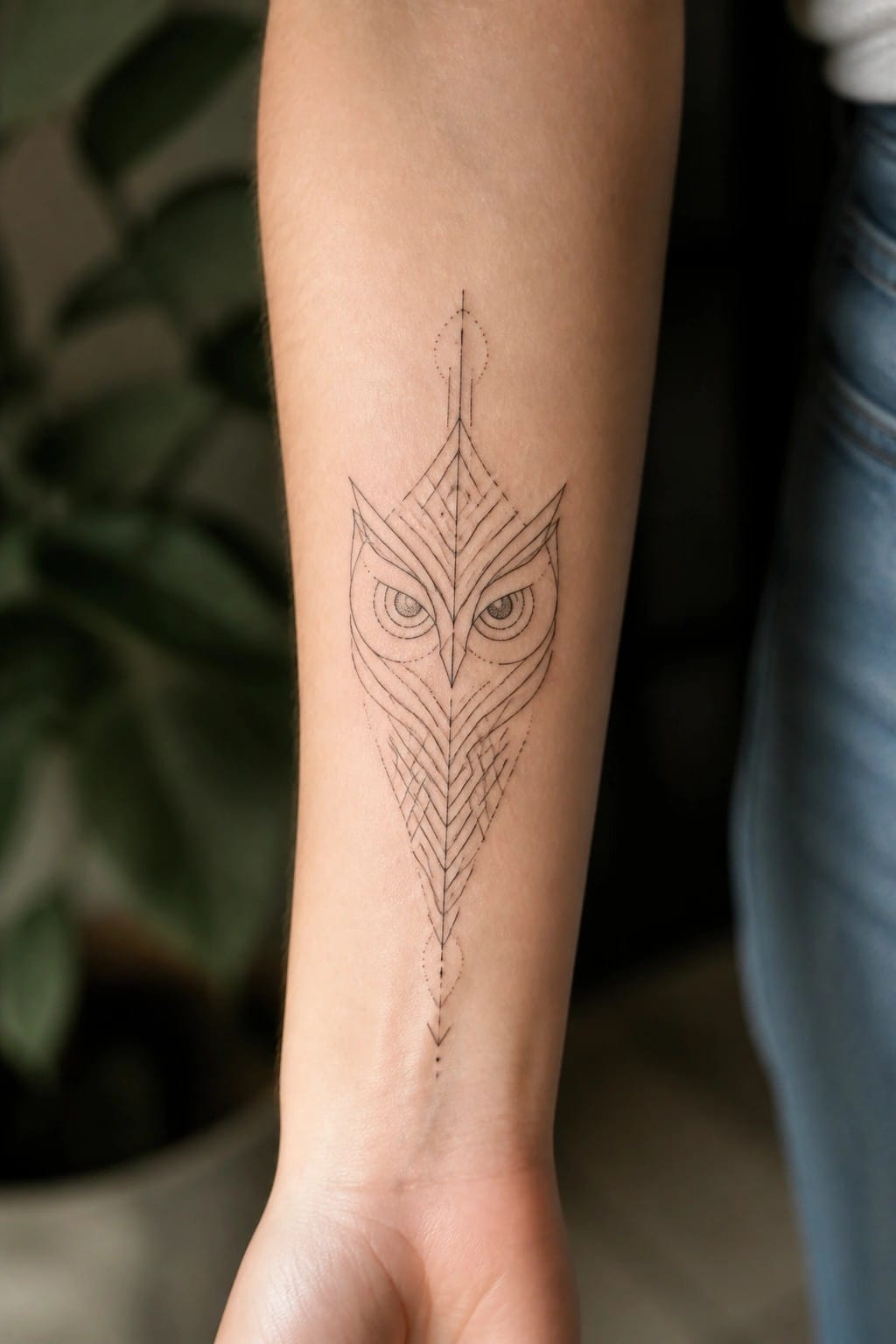
The inner forearm lets this owl stretch in a straight line from elbow toward wrist. The vertical shape keeps the symmetry intact and gives the pointed base room to taper without crowding. Clean lines form the head and body while small dots mark the upper and lower accents.
I like how the placement keeps the design readable at this size. The geometric style stays sharp because it follows the natural length of the arm rather than wrapping around it.
Geometric owl on the forearm
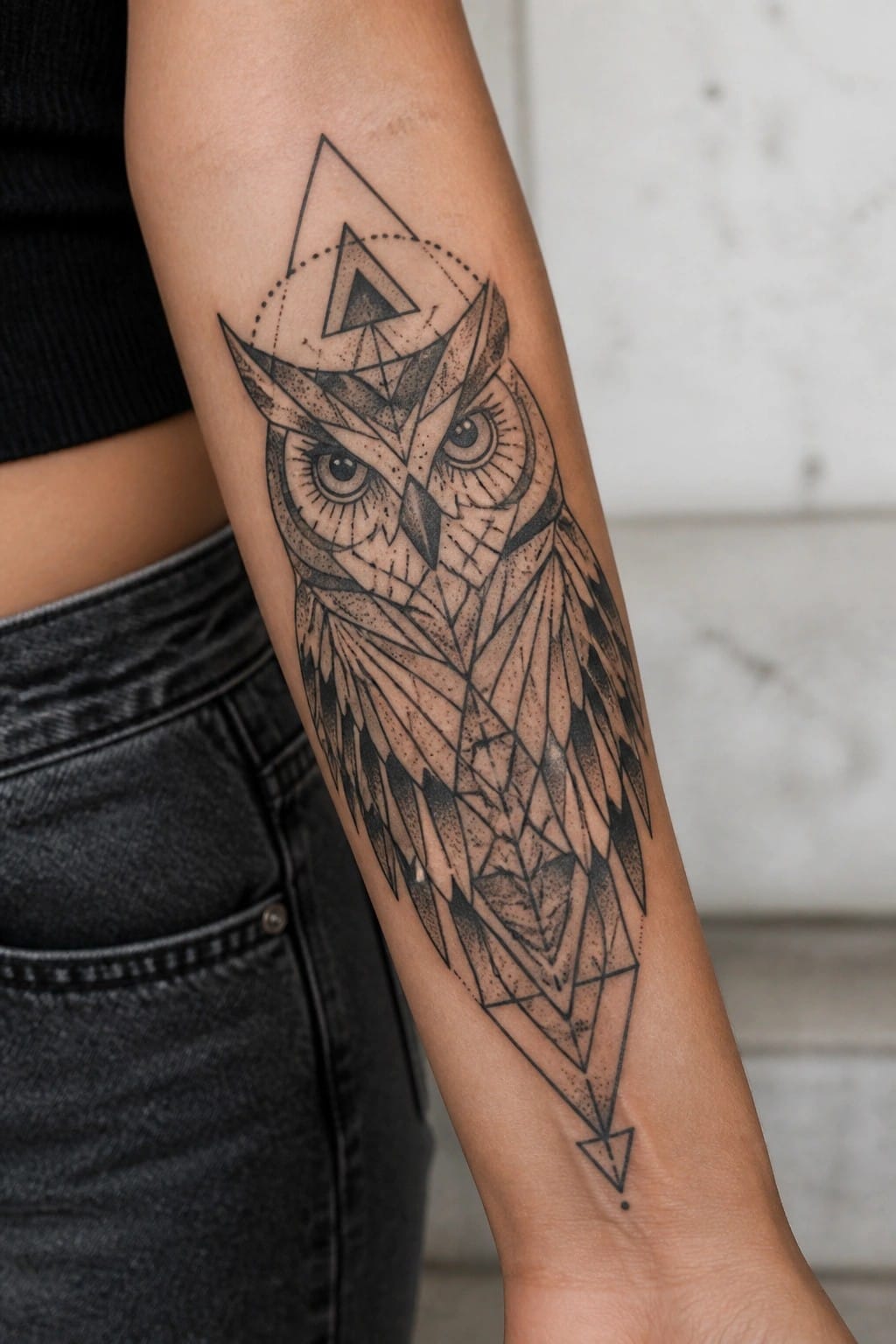
The tattoo runs down the inner forearm from near the elbow toward the wrist. An owl built from triangles and straight lines fills most of the space. A small triangle sits below the main design to close the layout.
This vertical stretch gives the geometric pattern room to stay balanced from top to bottom. The lines hold up well at this size and stay easy to read.
Geometric owl on the upper back
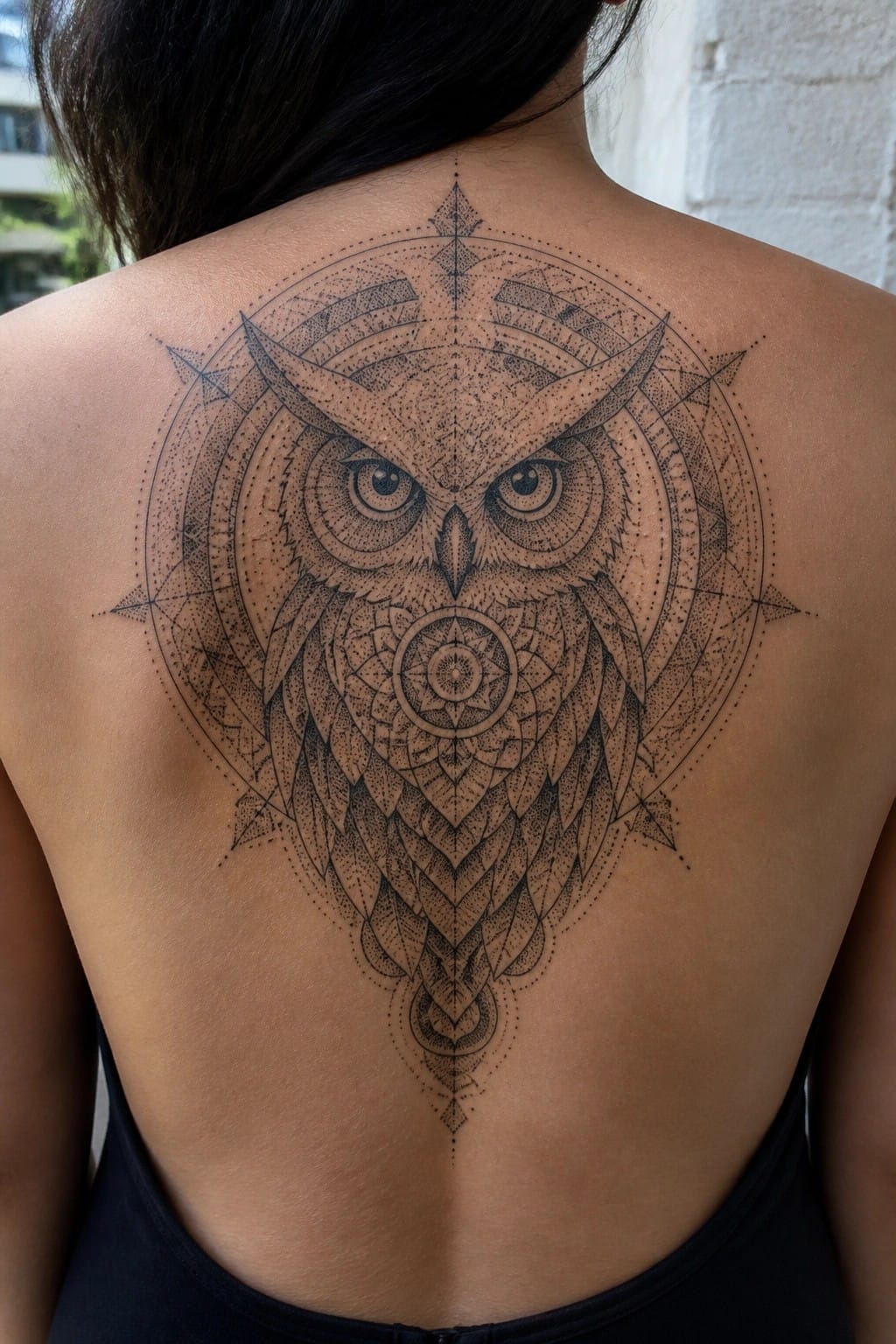
The owl takes up the full center of the upper back with its head framed inside a large circle. Lines and dots create the feathers and face in a strict symmetrical layout. The lower part tapers into a pointed tail section that follows the spine.
I think the mandala style keeps the owl from looking too literal while still showing clear eyes and beak. The size lets the pattern stay sharp without crowding the shoulders.
Geometric owl on the ankle
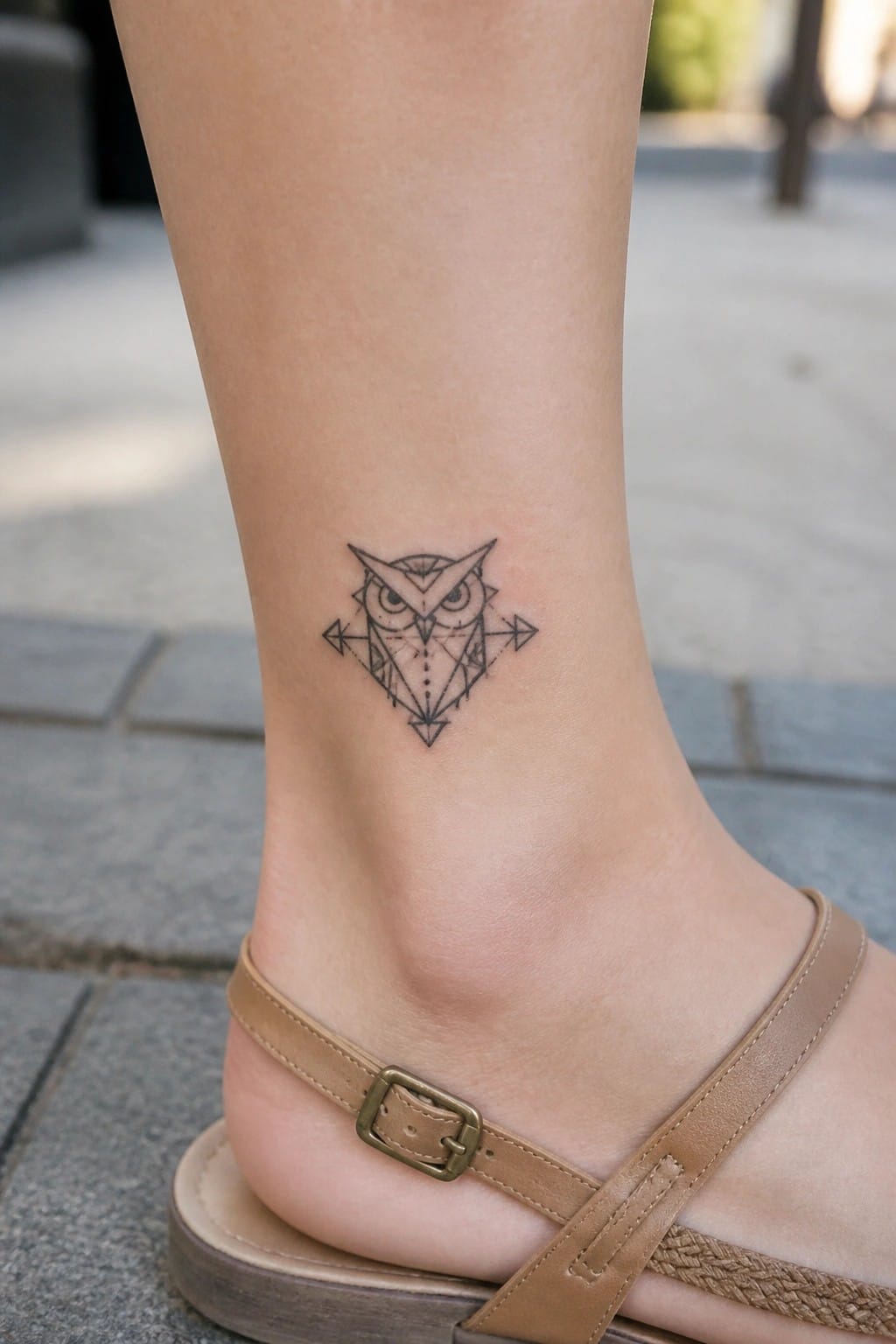
The ankle works well for a compact design like this one. The owl sits in a small space and uses straight lines to hold its shape. Side accents keep the layout even on both sides.
I think the scale prevents the pattern from feeling crowded. It stays clear even when the foot moves.
Owl tattoo on the shoulder
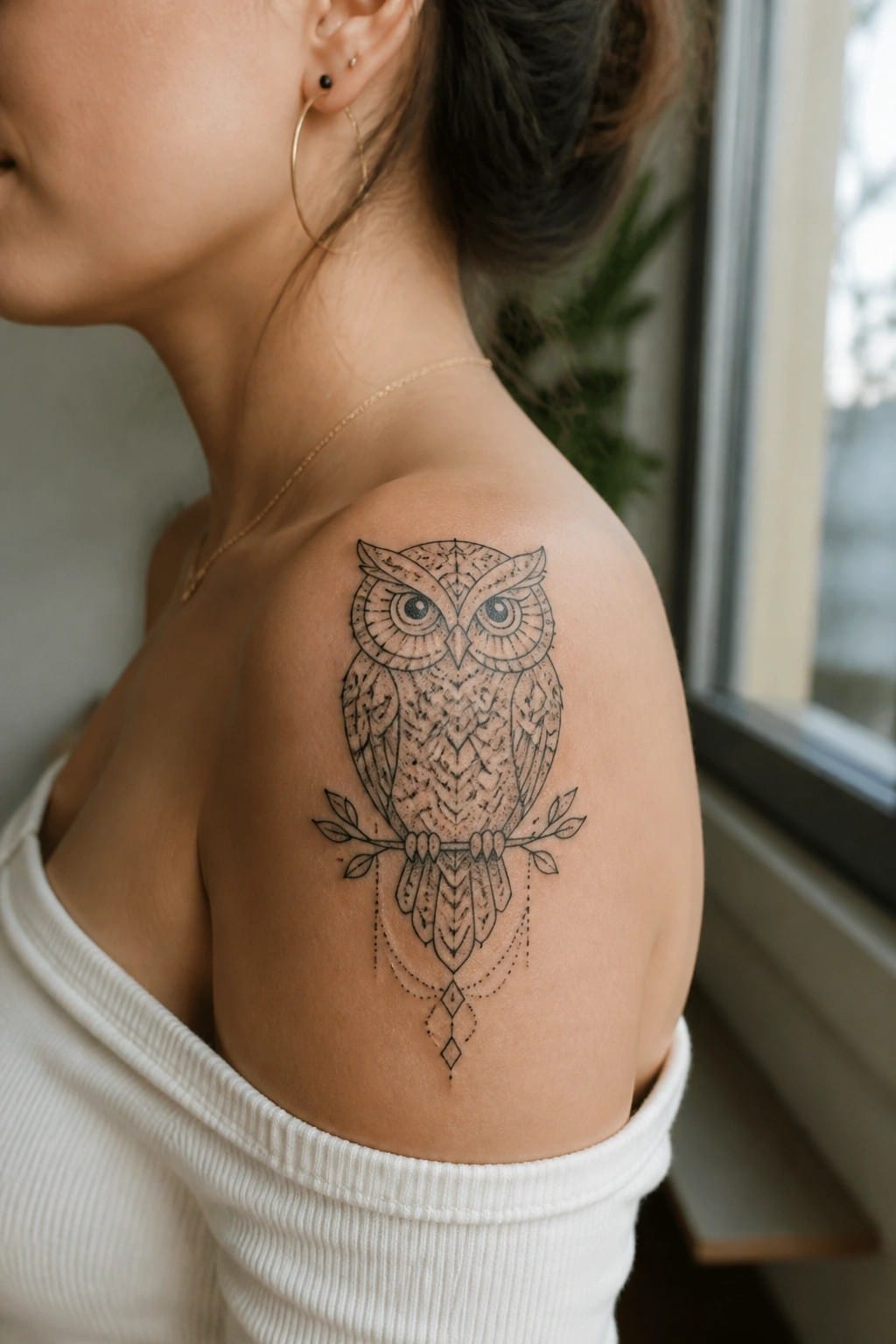
The shoulder gives this owl enough space to sit upright with its wings folded and the lower elements hanging down. The geometric patterns fill the body evenly so the whole piece stays balanced from one side to the other.
I like how the branch and leaves sit right at the base of the design. It keeps the focus on the owl while the extra lines below add length without crowding the area.
Small geometric owl behind the ear
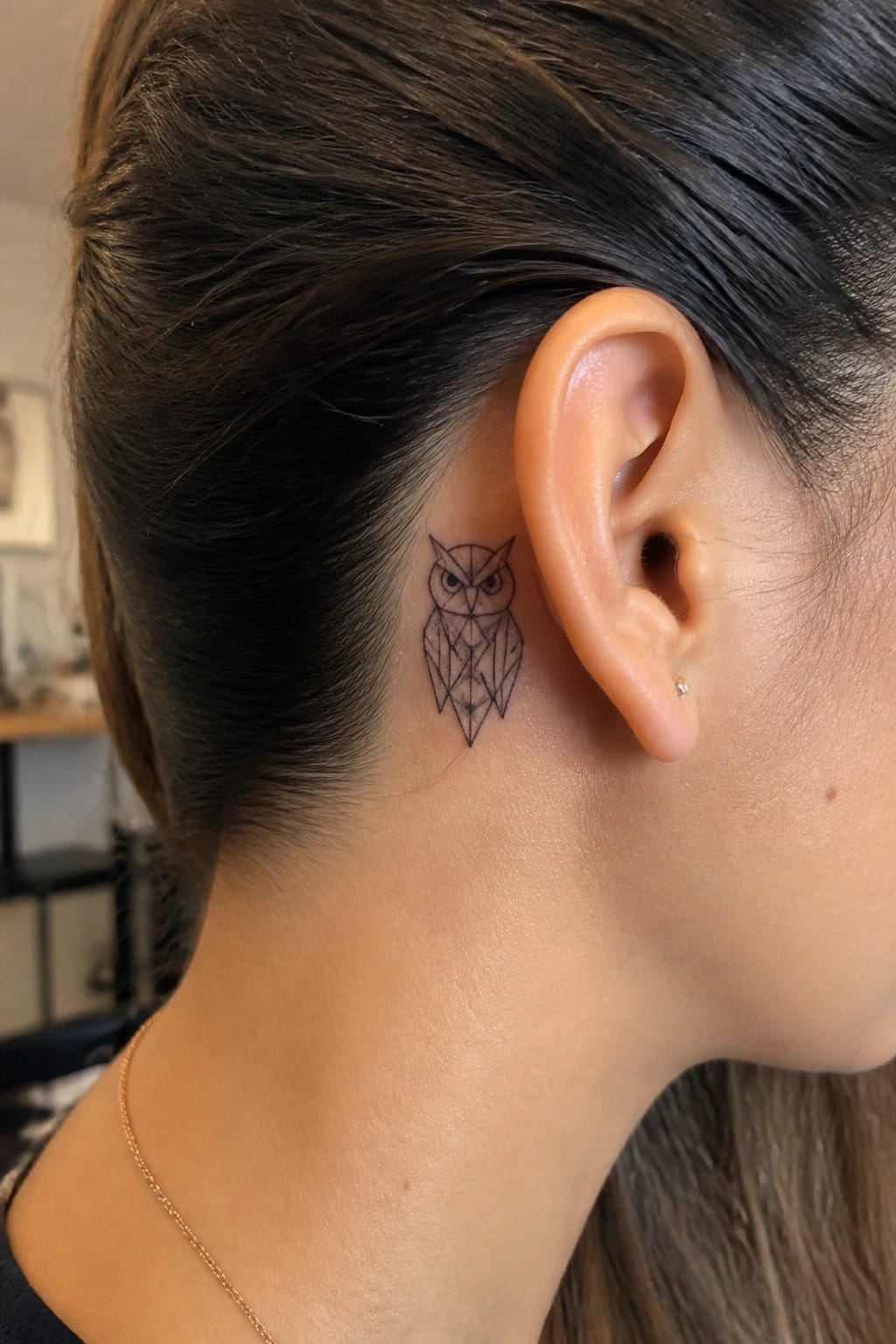
A small geometric owl sits behind the ear. The design uses straight lines and shapes to form the bird in a compact layout. This spot lets the tattoo stay out of sight most of the time.
I think the placement fits because the size stays readable without crowding the area. It also works for anyone who wants something they can cover easily.
Owl tattoo on the side torso
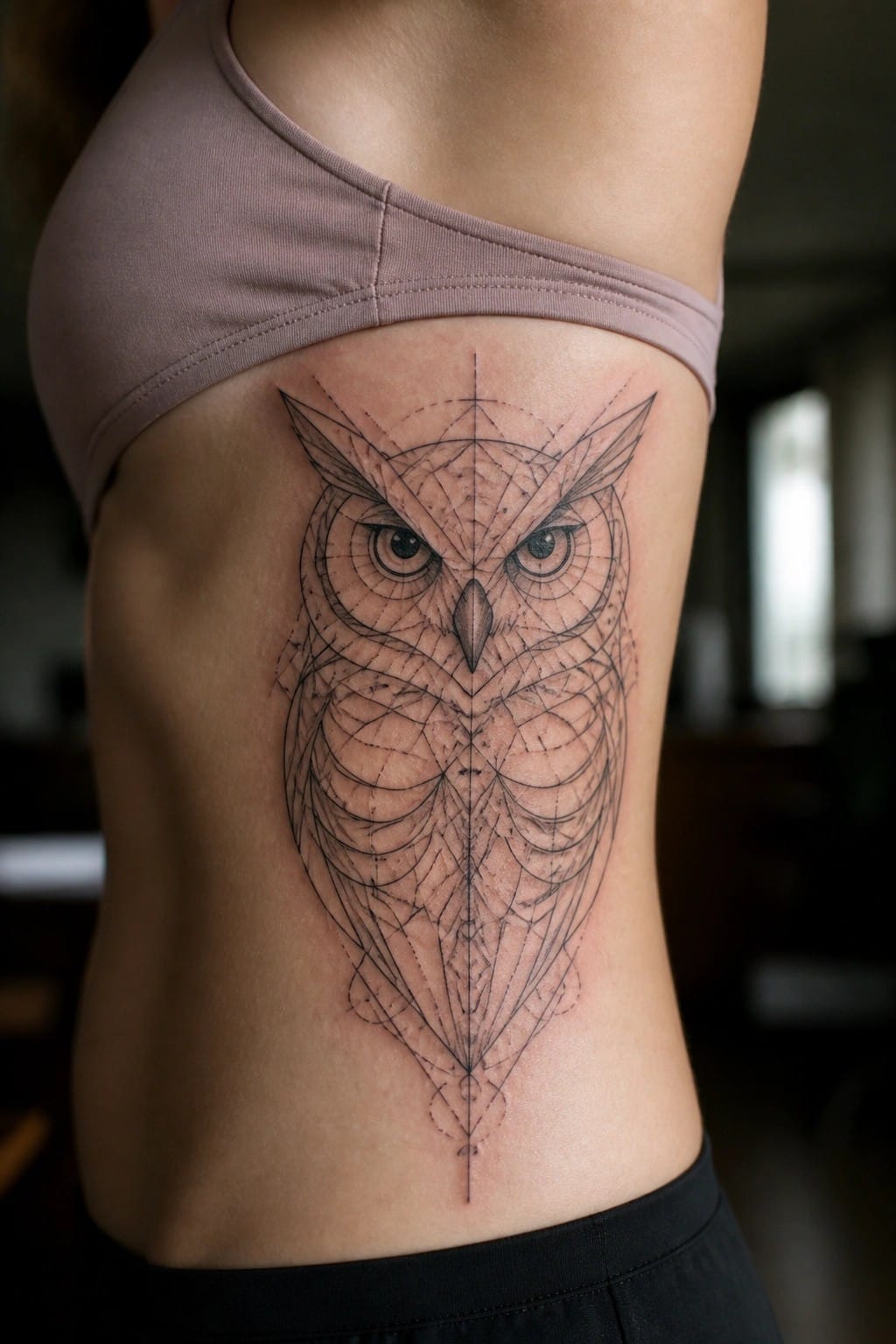
The tattoo sits on the side of the torso. This spot lets the tall shape follow the natural lines of the body. The central axis of the owl lines up with the torso without much adjustment.
The fine geometric lines keep the design balanced at this scale. I think the symmetry reads clearly because the placement gives it space to expand downward.
Geometric owl with triangle accents on the forearm
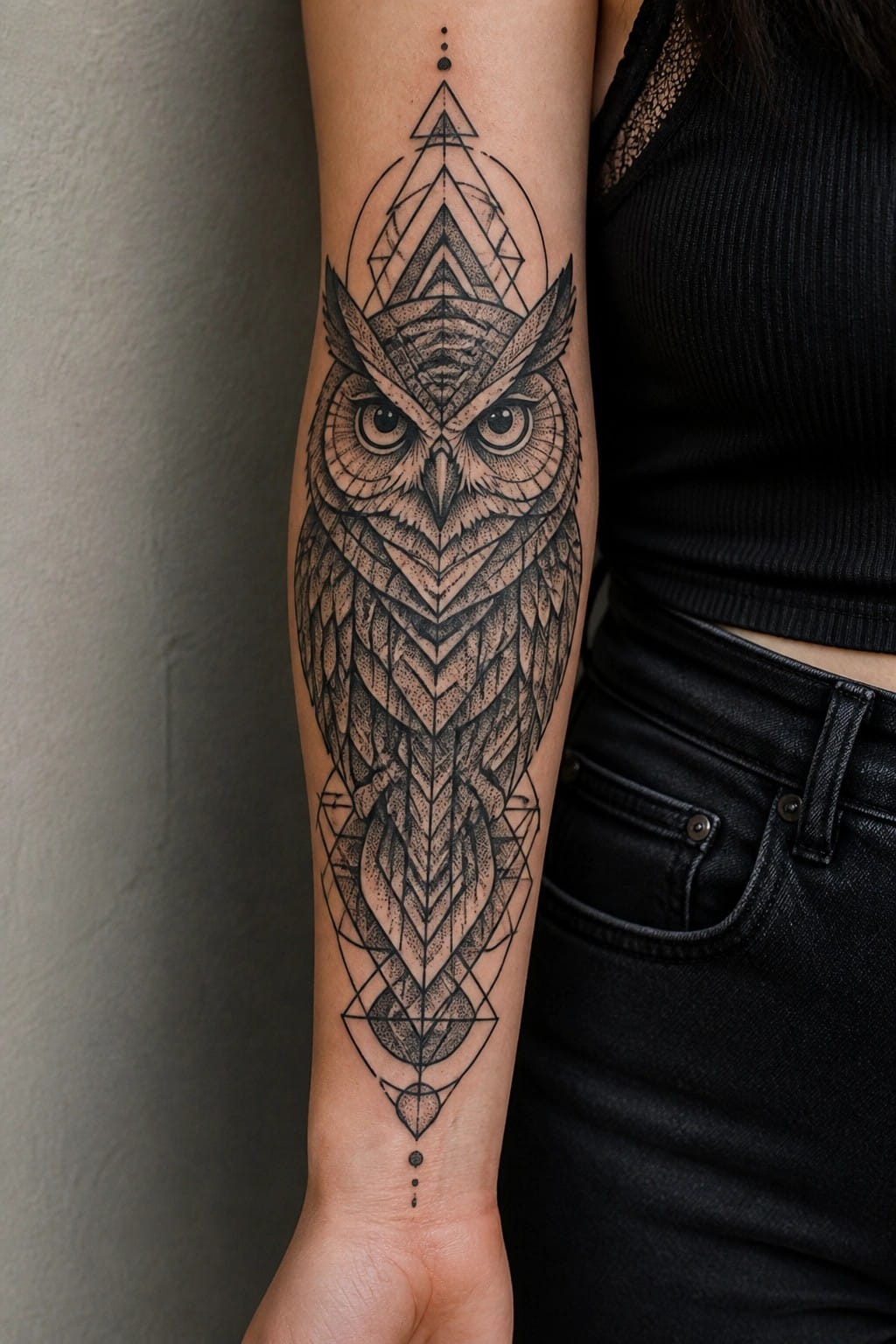
The owl runs vertically down the inner forearm. Triangles stack above and below the bird while lines and dots keep the whole shape symmetrical. The design stays narrow enough to fit the arm without wrapping around.
The length gives the pattern room to breathe from elbow to wrist. I think the forearm placement works because it lets the symmetry stay centered and easy to read.
Small geometric owl on the wrist
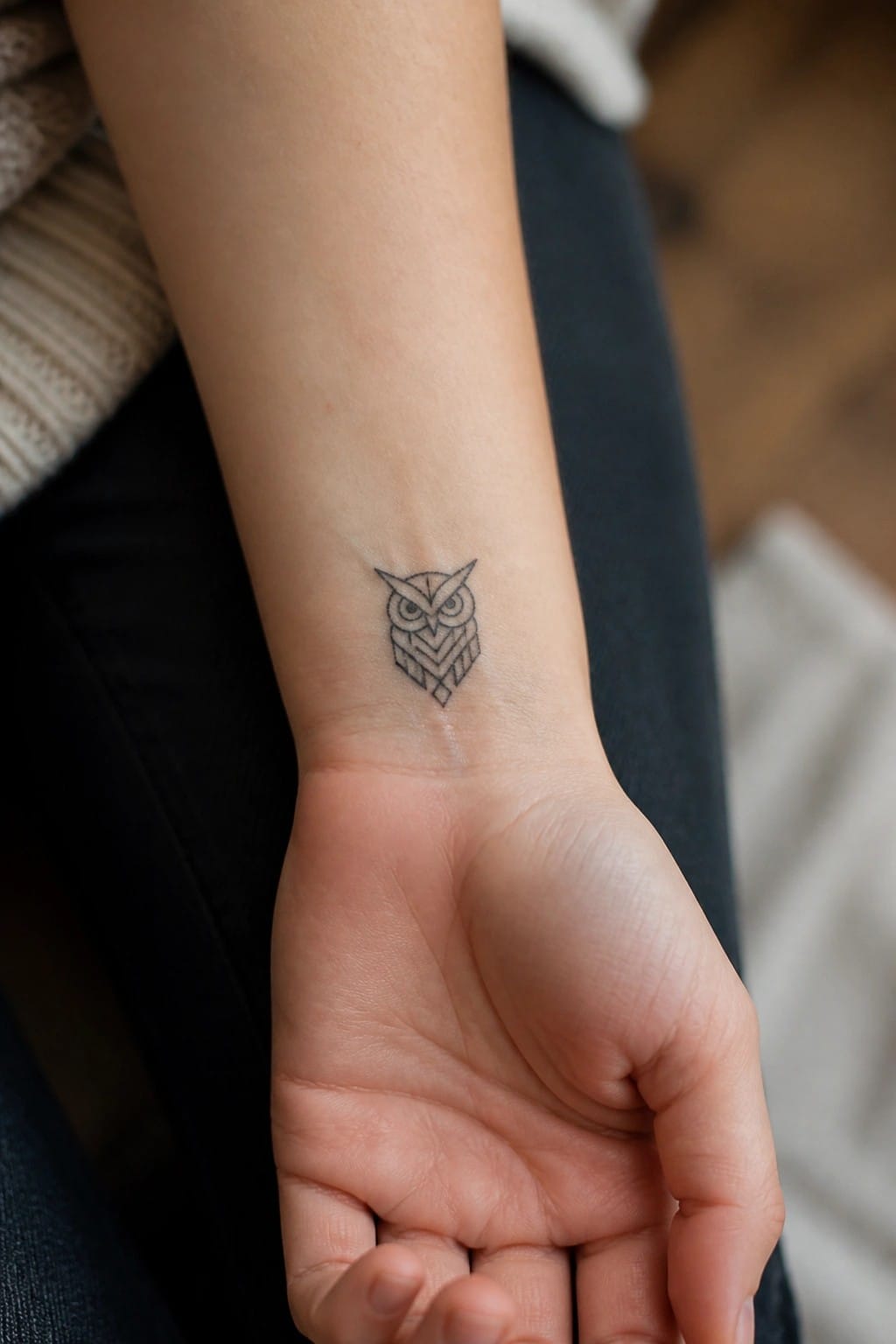
The wrist gives this owl a practical home. It stays small enough to fit neatly on the inner side while the geometric shapes stay sharp. The design does not need much room to read well.
I chose this spot because it lets the tattoo feel personal without being too prominent all the time. The lines hold up nicely at this scale.
Geometric owl on the thigh
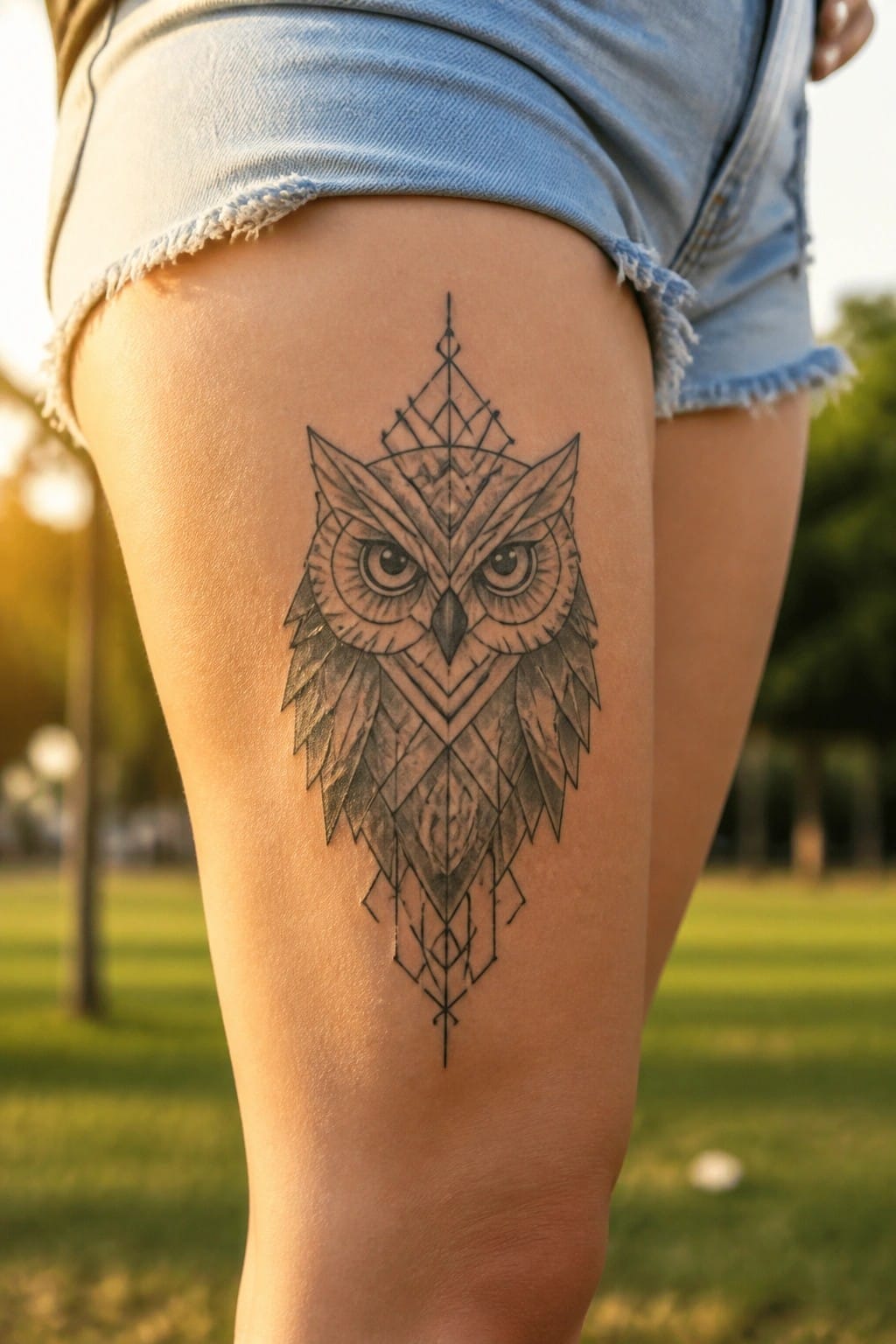
The thigh offers a good stretch of skin for this upright owl design. The geometric lines run from the top of the pattern down to a pointed base without crowding. Shading adds depth while keeping the overall shape balanced.
I think the vertical flow works because the leg stays mostly straight in that spot. It lets the symmetry show without much distortion from movement.
Spread wing geometric owl on the upper back
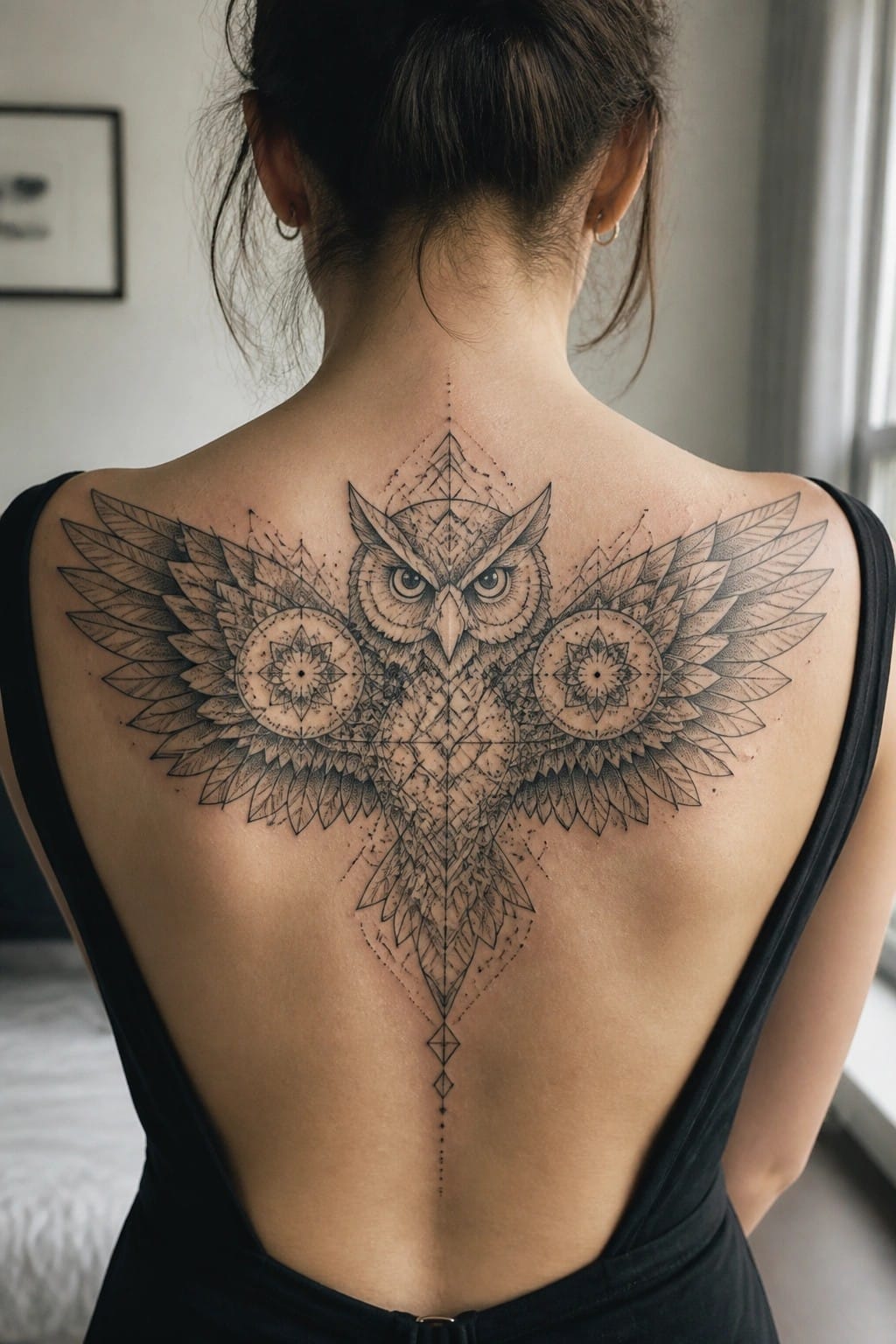
An owl with spread wings takes up the center of the upper back. Geometric shapes and mandala patterns fill the wings and body while keeping everything symmetrical. The design runs from the shoulders down toward the mid back in clean black lines.
This style turns the owl into a balanced shape that holds together well on flat skin. The level of detail stays readable without needing extra shading.
Geometric owl tattoo along the spine
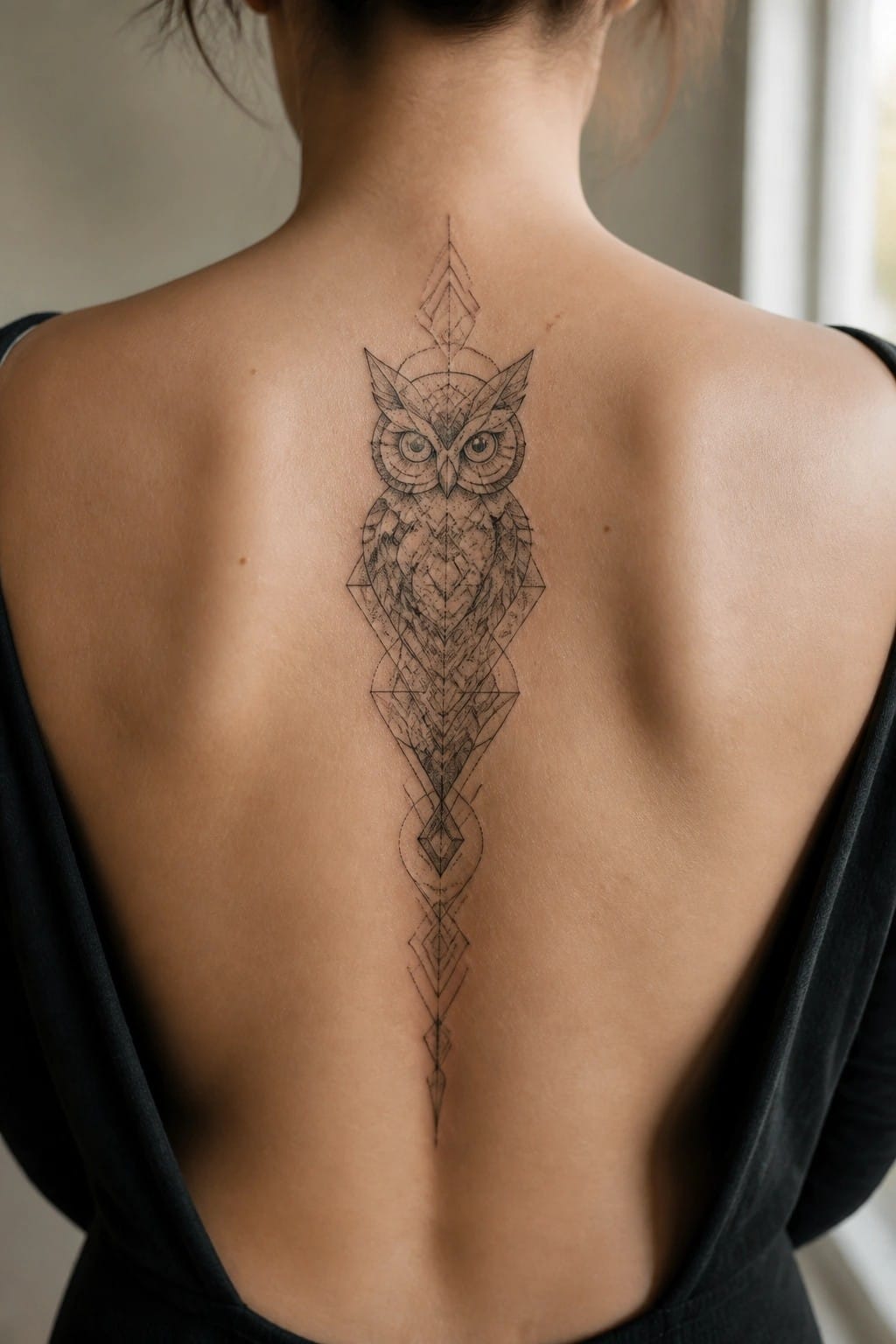
The tattoo sits centered on the back and stretches from the base of the neck down the spine. This vertical layout lets the owl face forward while the geometric shapes continue in a straight line below it. Triangles and diamonds build the body and create a balanced pattern that narrows as it moves lower.
The placement keeps the whole design readable because it follows the length of the back instead of spreading wide. I think the symmetry stops the fine lines from looking crowded even at this scale.
Geometric owl on the upper arm
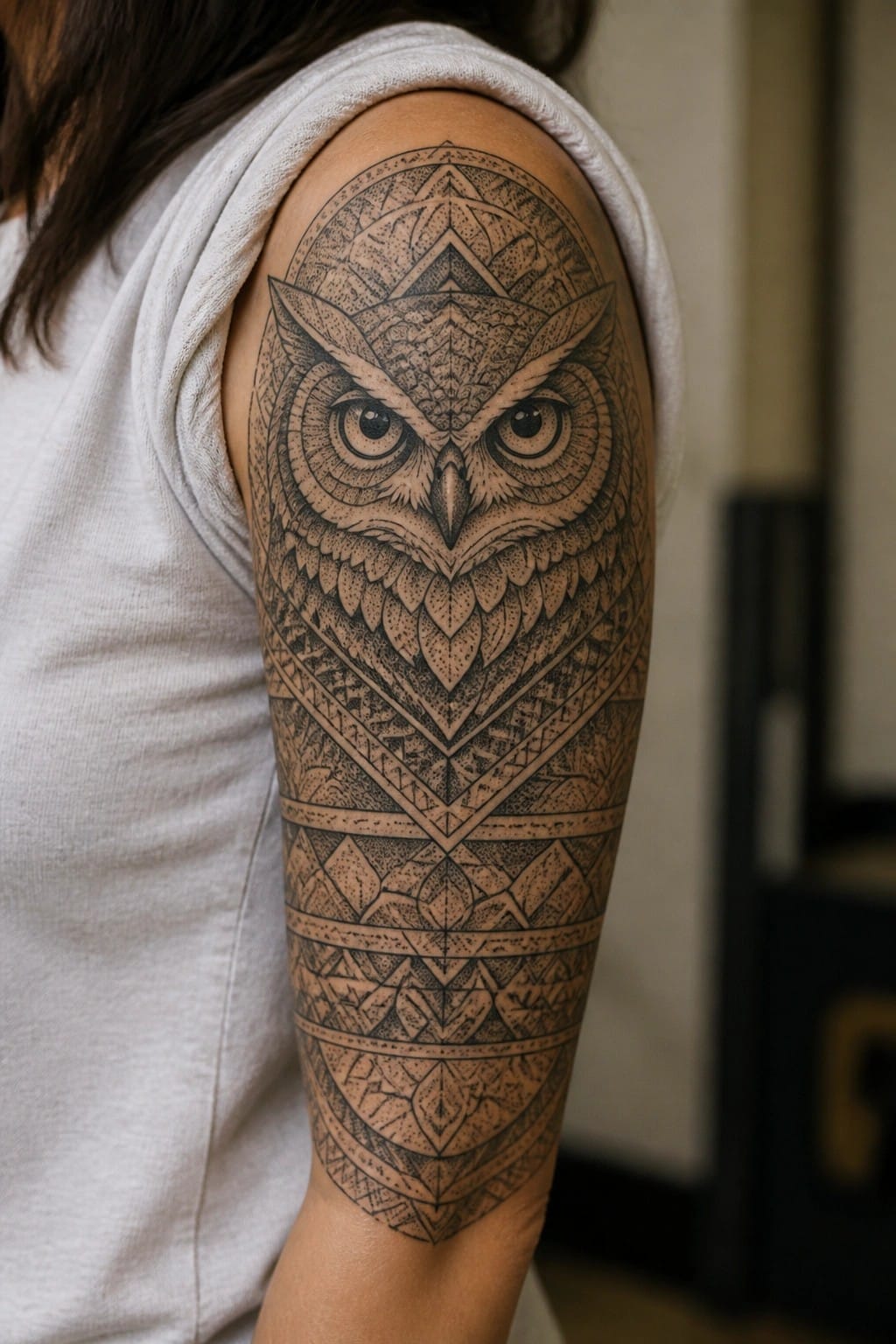
An owl forms the center of this tattoo. Geometric patterns expand outward in layers to create a symmetrical frame around it. The design runs from the shoulder area down the arm in a long vertical layout.
The style gives the owl clean edges and structure while keeping the face readable. I think this keeps the whole piece balanced and easy to follow at a larger scale.
Geometric owl on the finger
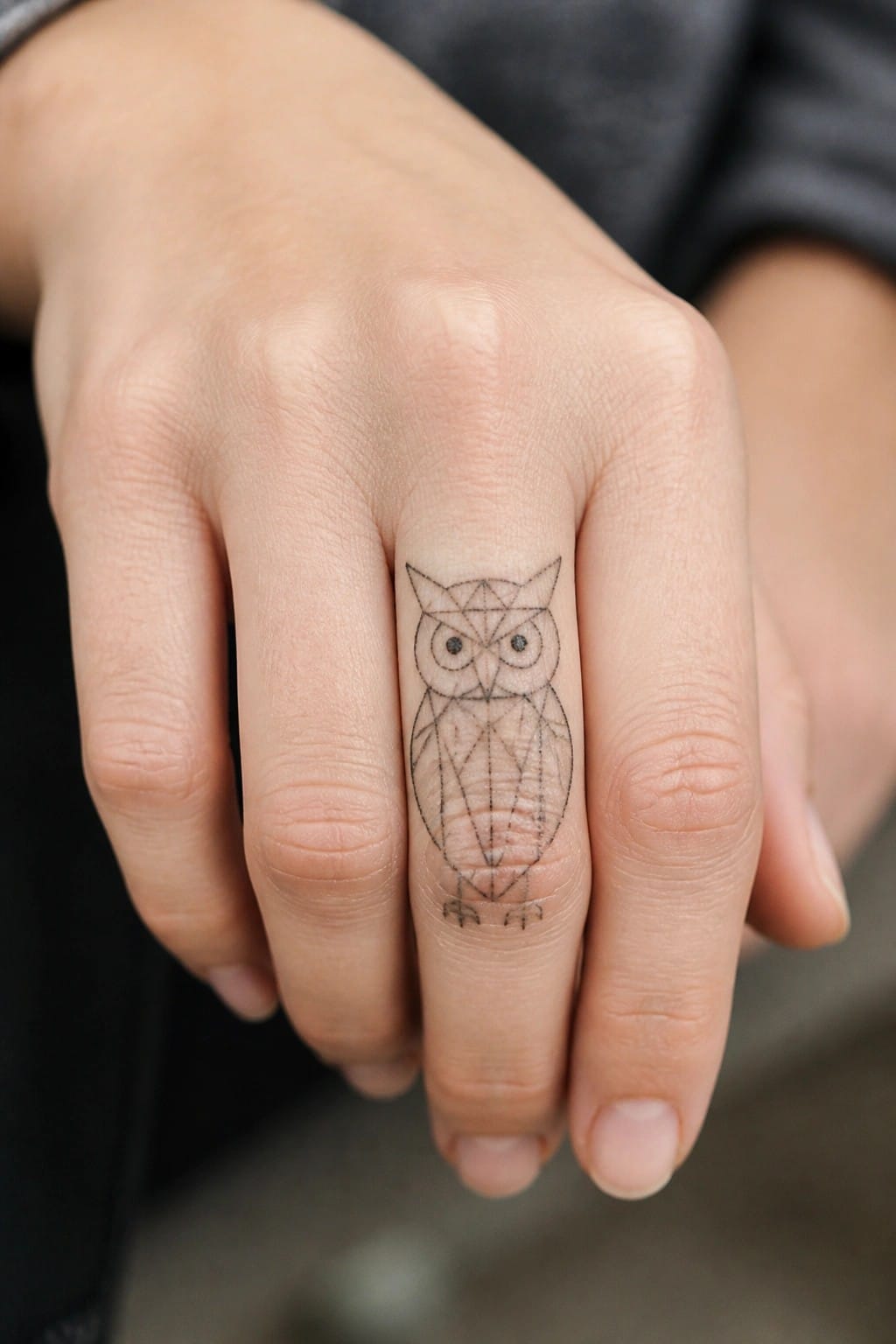
The owl runs along the side of the finger in a narrow vertical layout. Its body uses straight lines and simple shapes that follow the finger’s natural length. This keeps the whole piece compact while still showing the full bird.
I think the placement works because the design stays readable even at this small scale. It turns the owl into something you can wear without it feeling crowded.
Owl tattoo on the chest
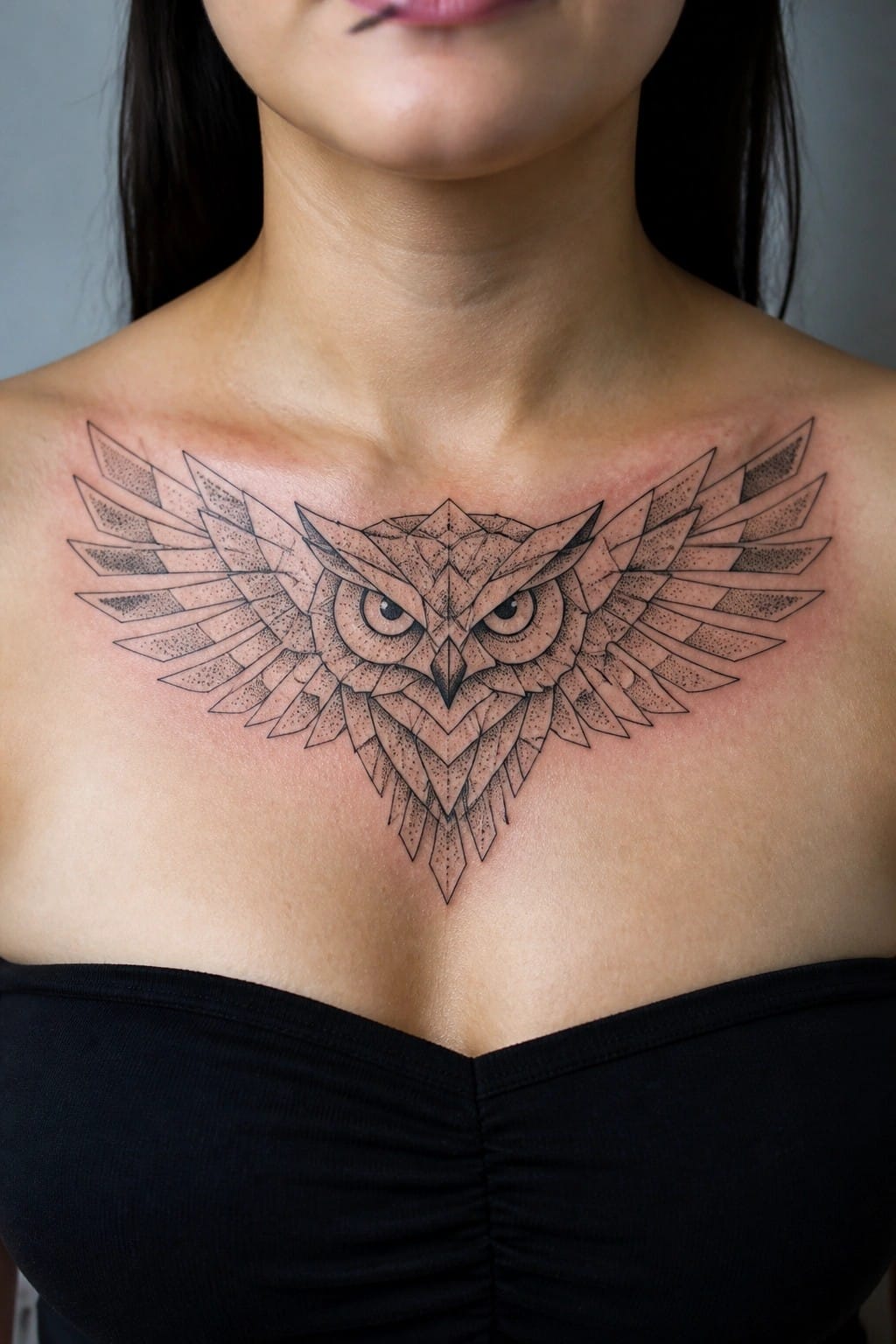
The owl sits centered on the upper chest with its wings spread wide toward each shoulder. The geometric lines keep the shape balanced and the wings fill the space evenly across the collarbone area. This layout lets the full design show without needing extra detail work.
The chest placement gives the wings room to extend naturally on both sides. I think the symmetry holds up better here than on narrower spots like the wrist or ankle.
Symmetrical geometric owl between the shoulder blades
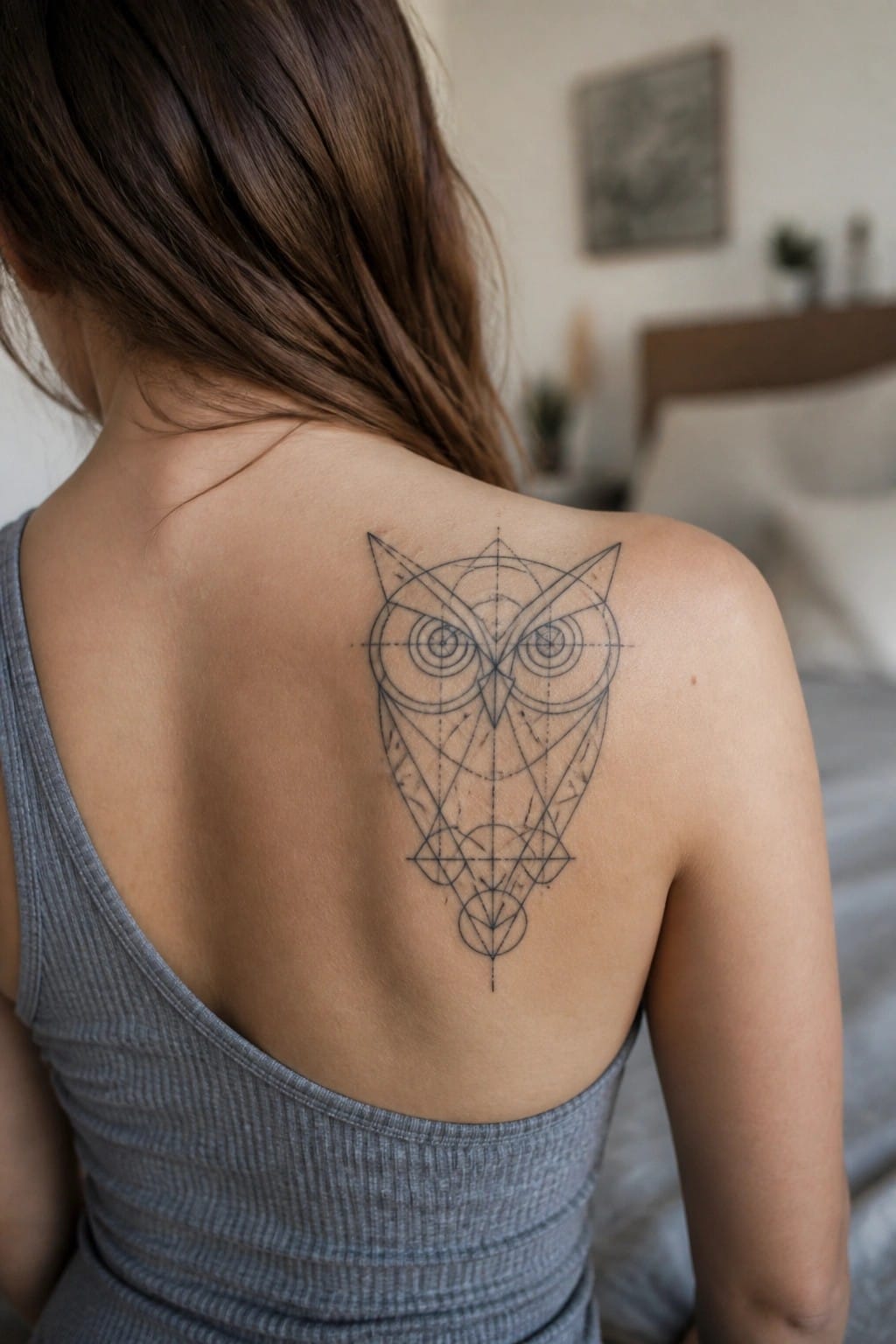
The owl sits centered on the upper back right between the shoulder blades. Clean lines and repeated circles form the face while triangles shape the body below. The vertical layout keeps the whole design balanced across the shoulders.
This spot lets the symmetry show even when a shirt covers part of the edges. The medium size stays readable without crowding the area. I think the downward point at the bottom helps it settle into the natural curve of the back.
Geometric owl on the lower back
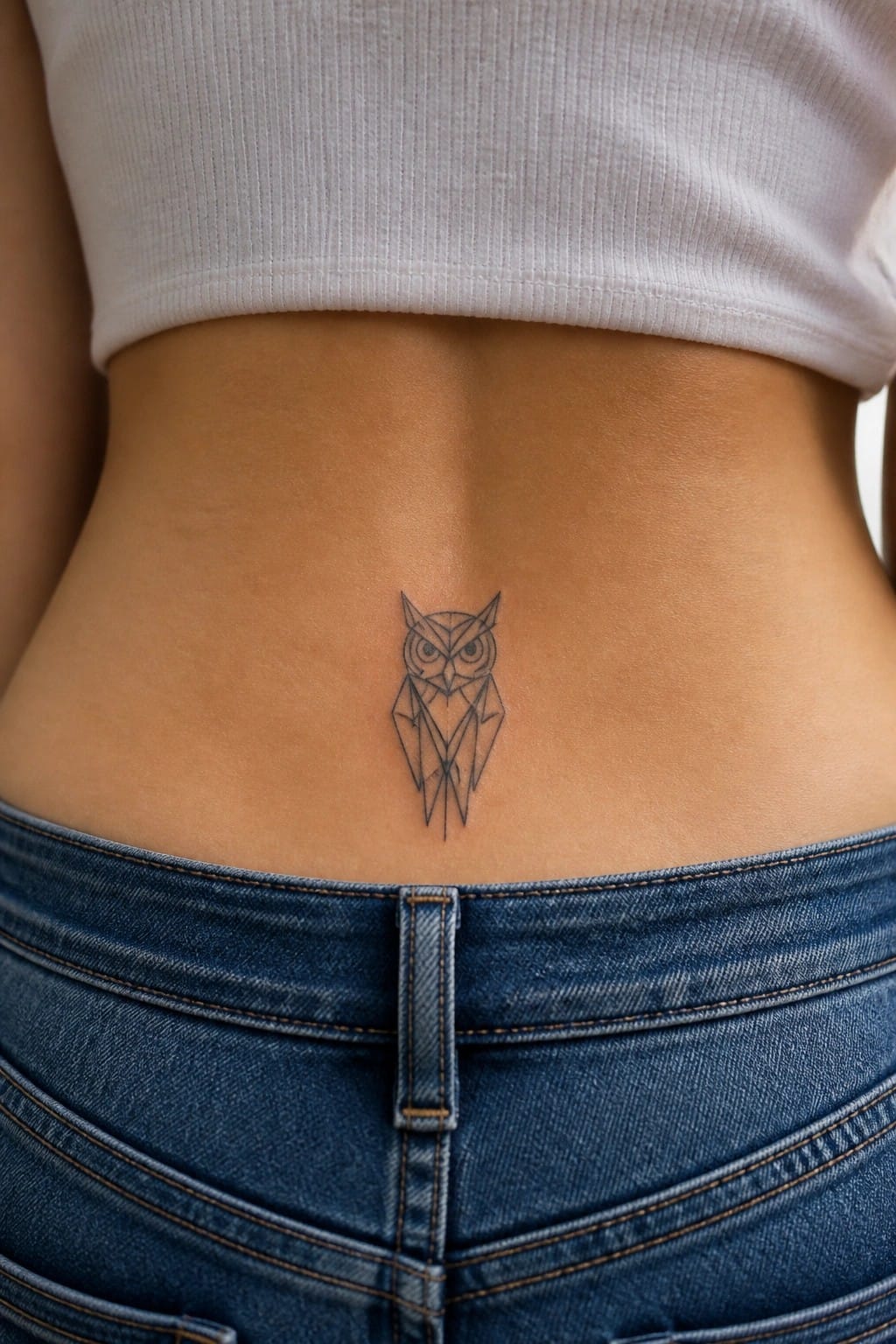
The lower back keeps this geometric owl centered and balanced. Clean lines shape the owl with straight edges and angles that hold the symmetry. The size stays small enough to fit the space without spreading out.
I think the placement works because the design stays readable even when clothes cover most of it. The outline stays simple so the shape does not fight the body curves.
Geometric owl tattoo on the lower leg
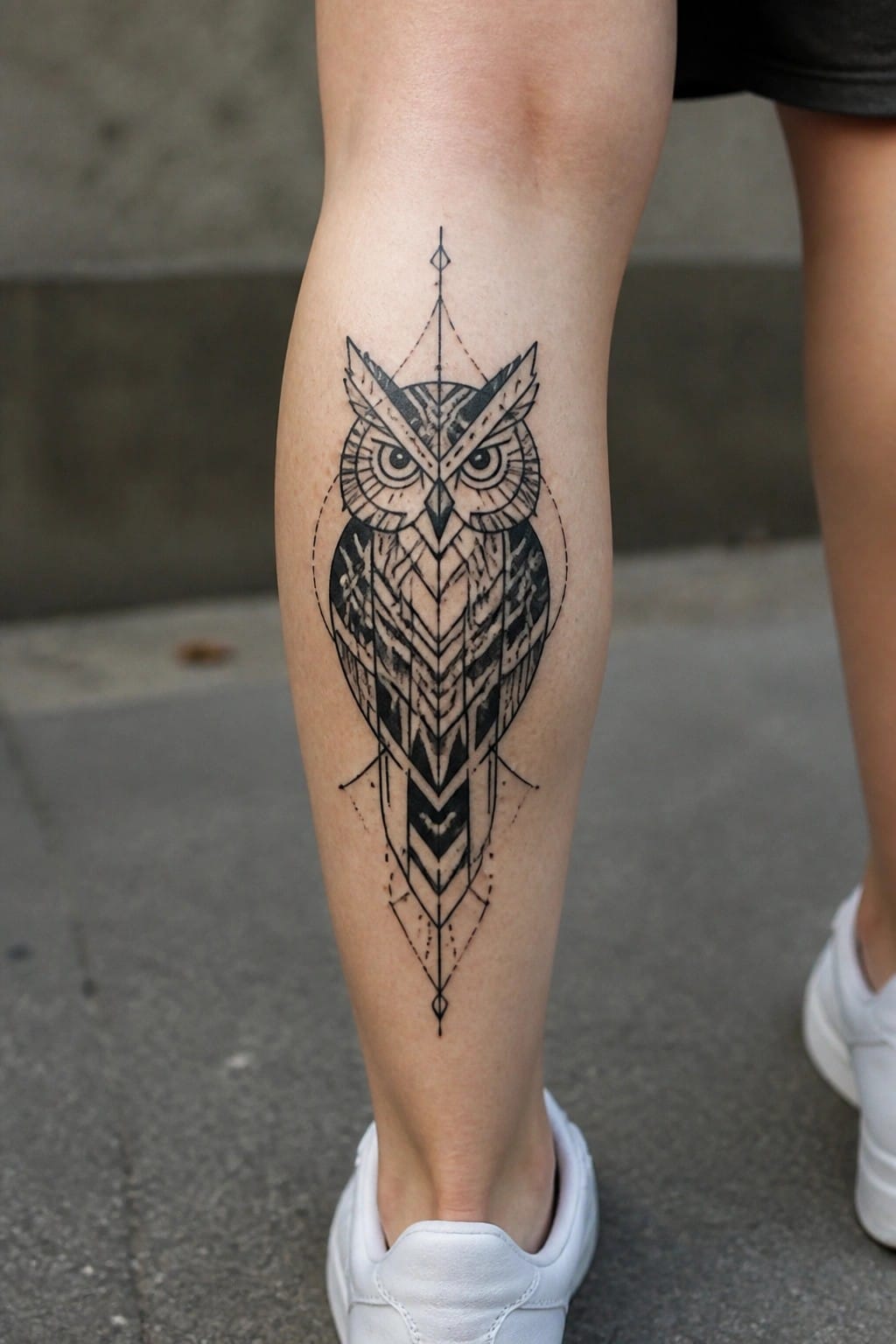
The placement on the lower leg lets the owl stretch vertically along the shin. Geometric patterns fill the body while lines reach upward and downward from the figure. This setup keeps the tattoo contained yet visible from different angles.
The symmetry works well here because the leg provides a straight surface for those clean lines to stand out. I think it avoids looking too crowded at this size.
Frequently Asked Questions
1. What body placements work best for geometric owl tattoos to maintain symmetry? The most effective placements for preserving modern symmetry in geometric owl designs include the upper back, sternum, or inner forearm, where the body’s natural lines support balanced shapes. Avoid curved areas like the ribs or ankles unless the design incorporates flowing elements that adapt to movement. Consult your artist for a stencil test to confirm alignment before committing.
2. How can I ensure my geometric owl tattoo ages well over time? Geometric tattoos rely on clean lines, so select an experienced artist who uses high-quality ink and precise techniques to minimize fading or blurring. Follow strict aftercare by keeping the area moisturized, avoiding sun exposure, and scheduling touch-ups every few years. Opt for slightly thicker lines in the design if your skin tends to heal with spread.
3. What symbolism is associated with owl tattoos in a geometric style? Geometric owl tattoos often represent wisdom, intuition, and transformation through their structured forms, blending the owl’s traditional meanings with modern precision and balance. The symmetry can symbolize harmony and personal growth, making them popular for women seeking meaningful yet stylish body art that evolves with their life stages.
4. Should I opt for black and gray or add color to my geometric owl design? Black and gray versions emphasize clean symmetry and timeless appeal, working well on various skin tones with less risk of color fading. Adding subtle color accents, such as deep blues or earth tones, can highlight specific geometric facets and add depth, but discuss skin undertones with your artist to ensure longevity and vibrancy.
5. How do I find an artist skilled in geometric and symmetrical designs? Search for tattoo professionals who specialize in geometric work by reviewing portfolios on platforms like Instagram for examples of precise symmetry and owl motifs. Schedule consultations to review their line work and discuss your ideas from the 18 concepts, ensuring they can adapt designs to your body while maintaining modern balance.
